- Joined
- 1 February 2011
- Messages
- 3,341
- Reaction score
- 5,028
H2S?Interesting. I have Red Flannel as a Q-band H2S.
Chris
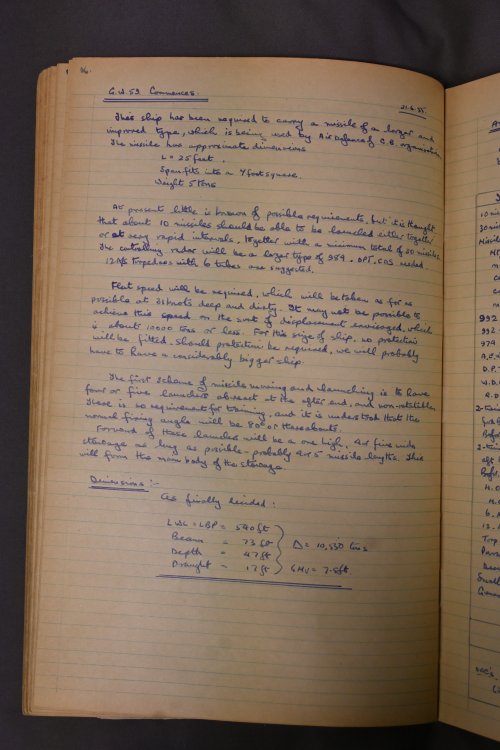
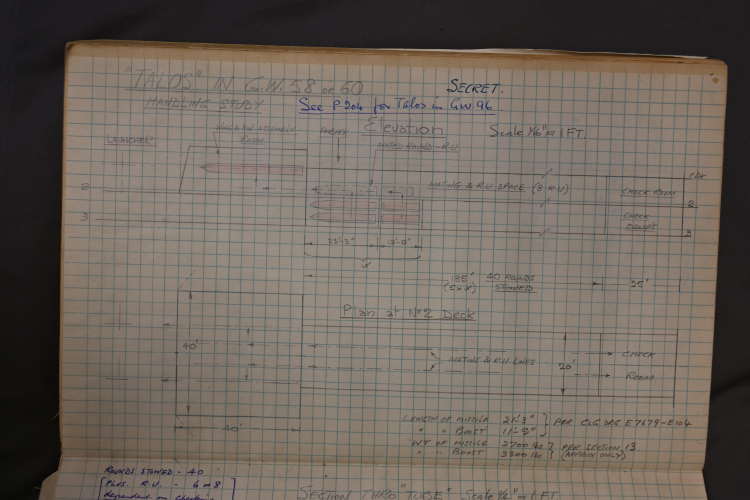
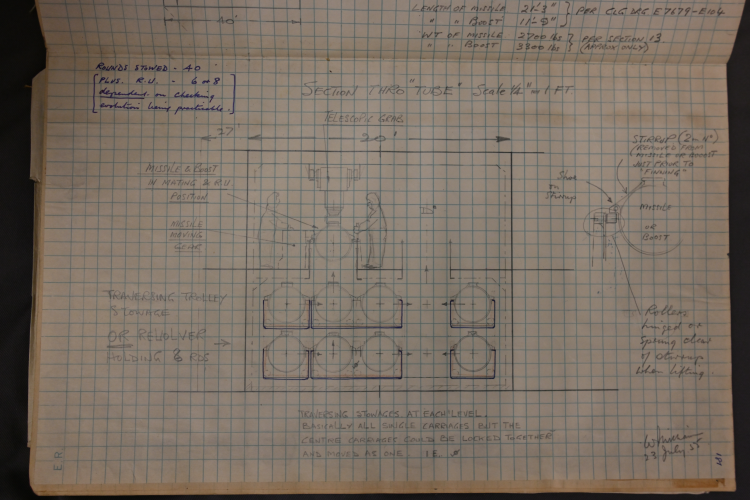
Based on the sketches it is quite a big missile

H2S?Interesting. I have Red Flannel as a Q-band H2S.
Chris
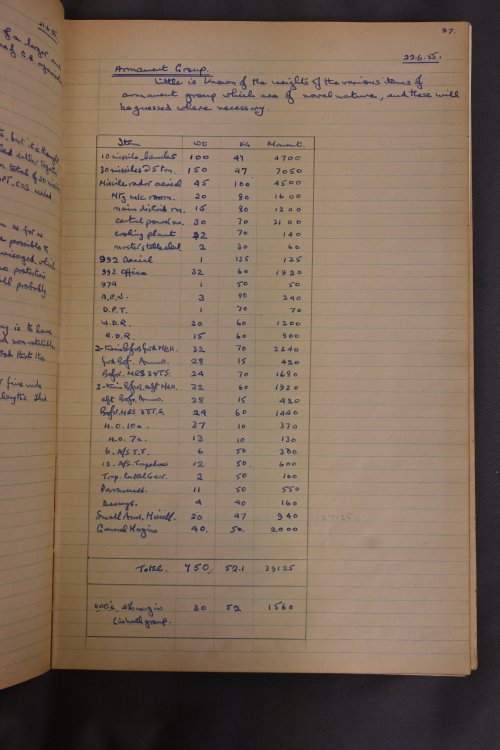
Yes, please!I'm sorting my recently acquired GW books and will share with you guys when I finish. It is sometimes difficult to read the handwritten text. And you might find things which I not seen important.

Interesting. I have Red Flannel as a Q-band H2S.
Chris
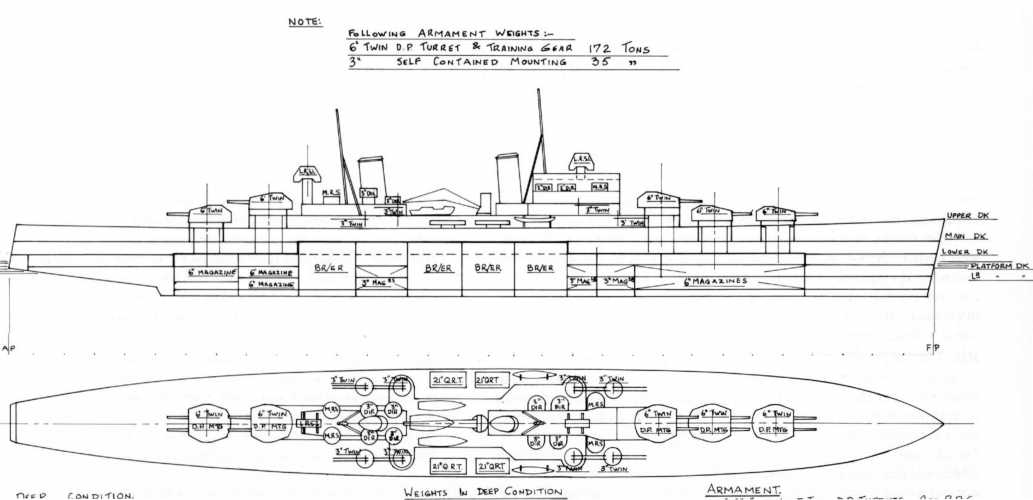
Apparently in 1959 so in the last phases of the design of the County Class Destroyers (Design GW.54), there were ideas to equip them with the large Type 984 Radar! First note tells that all gun armament had to be removed for it to be installed.
Perhaps the most interesting bit is "1 type 98- radar with aperture 2x 984", and the estimated 45 tons weight of the 98- aerial. Friedman in his list calls it the Type 985.
Well whatever it is, it's obviously a rotating single array twice the size of the 984 antenna, something of the order of 308ft2 area, weighing 15 tons more (but 16 tons less than Double 984 layout).
I wonder if there was any link with Orange Yeoman or Type 84/MEW.

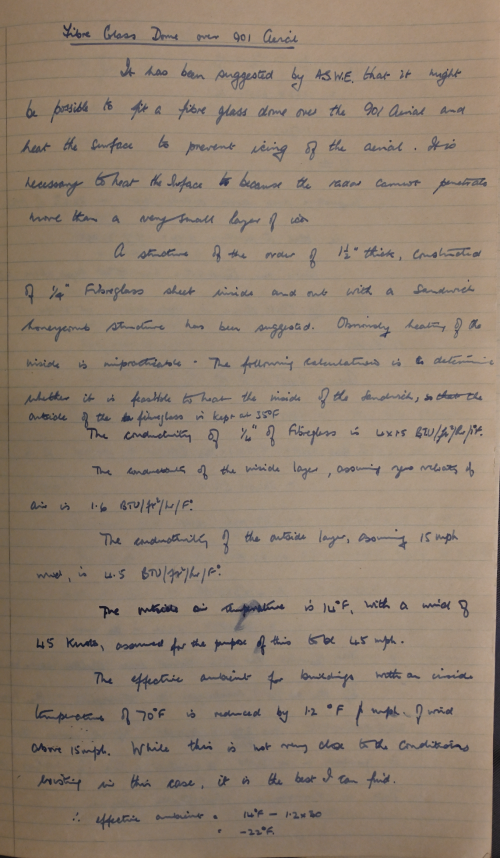
The problem is that you then have ice build-up on the dome.It occurs to me that if you shield the Type 901 from rain and ice by using a fiberglass dome. Then the de-icing system becomes unnecessary. Which would lower cost of the system.
I imagine blowing hot air into a fibreglass dome would be simpler than building a de-icing system into a radar.The problem is that you then have ice build-up on the dome.
Every time I look at a lot of British Cold War stuff I think that they had one rule: IT CANNOT BE SIMPLE!If memory serves, Type 901 used small tubes pumping ammonia to melt ice and then hot air to de-ice and dry the 'face' of the system. Quite a complex but effective setup that could clear it in seconds.
A heated environment inside a fiberglass dome is actually far simpler and keeps the mechanism free of salt encrustation.

The use of an electric/hot air had been considered, but it would have needed 200kW for 10 minutes to melt the ice. The use of ammonia was lighter, had a much lower power requirement, and was quicker -around 20-25 seconds to clear the radome front of ice.If memory serves, Type 901 used small tubes pumping ammonia to melt ice and then hot air to de-ice and dry the 'face' of the system. Quite a complex but effective setup that could clear it in seconds.
A heated environment inside a fiberglass dome is actually far simpler and keeps the mechanism free of salt encrustation.
Simple is a "relative" term. Simple as compared to what?Every time I look at a lot of British Cold War stuff I think that they had one rule: IT CANNOT BE SIMPLE!
Wasn't air used to flush out the ammonia?The use of an electric/hot air had been considered, but it would have needed 200kW for 10 minutes to melt the ice. The use of ammonia was lighter, had a much lower power requirement, and was quicker -around 20-25 seconds to clear the radome front of ice.
SRJ
Yes (having checked my own web page!) warm air was indeed blown through the system to purge the ammonia; mainly to prevent water entering and dissolving the ammonia to the point it was no longer able to melt the ice.Wasn't air used to flush out the ammonia?
Oh that's rather large!My archive on the GW designs Workbooks:
https://filebin.net/rbuejhj252fbbcy5It is available for a week if anybody wishes it to download feel free, if cannot do so after the expiration date tell me and I re-upload them.
Hope they contain some important data to you all!
It includes T.J. O'Niell's Workbooks as well
If you can download it and batch resize to half the dimensions, then the size shrinks to around 5GbOh that's rather large!
I don't think I can spare the storage for over 20GB of data.

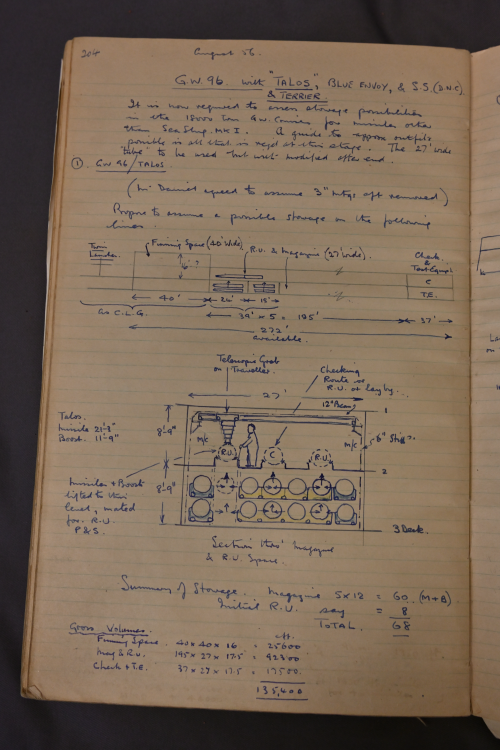
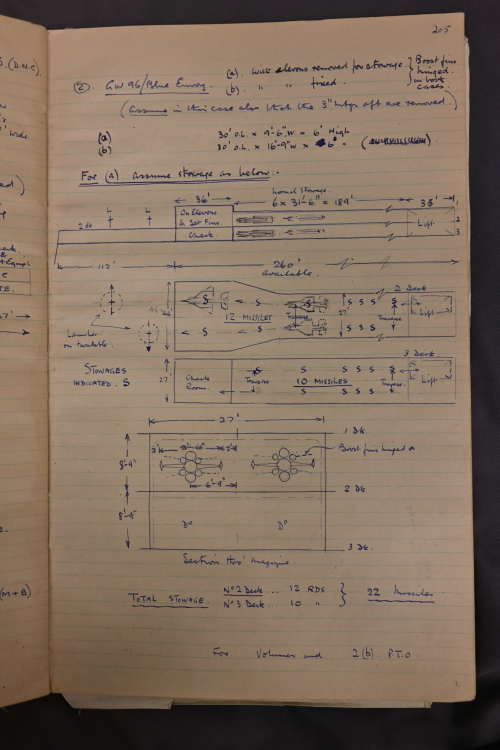
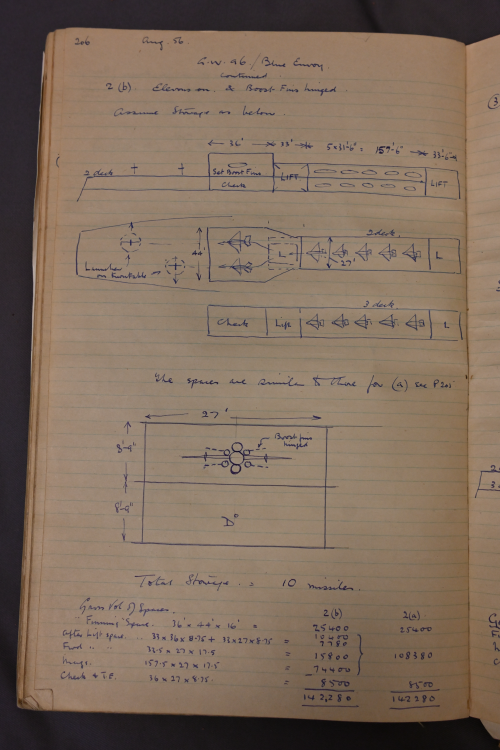
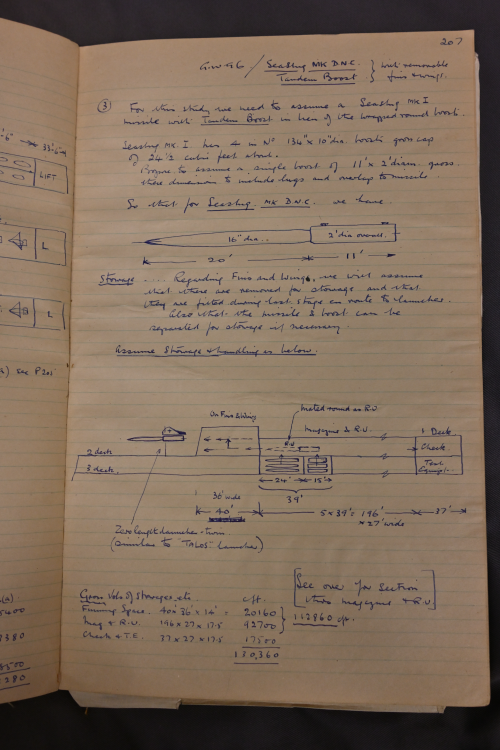
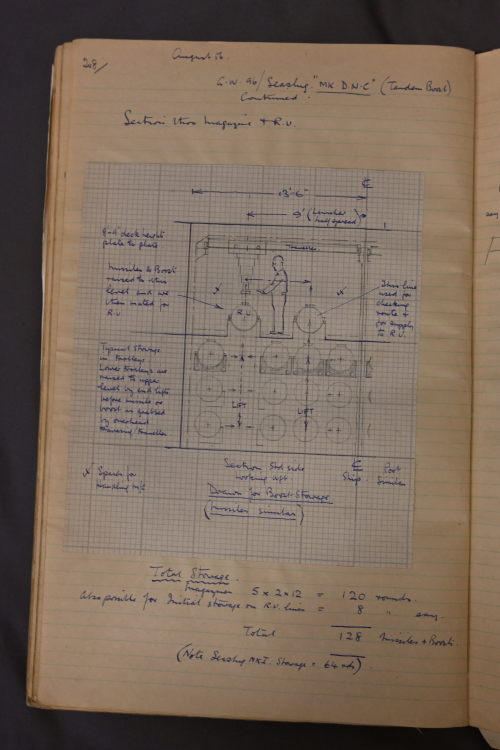
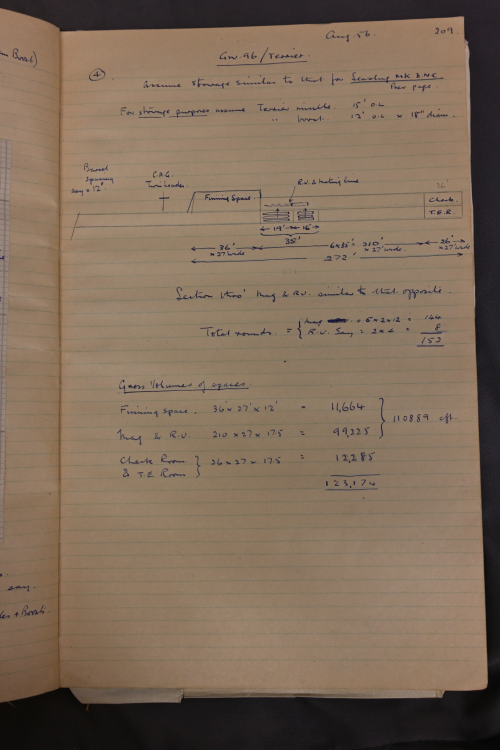
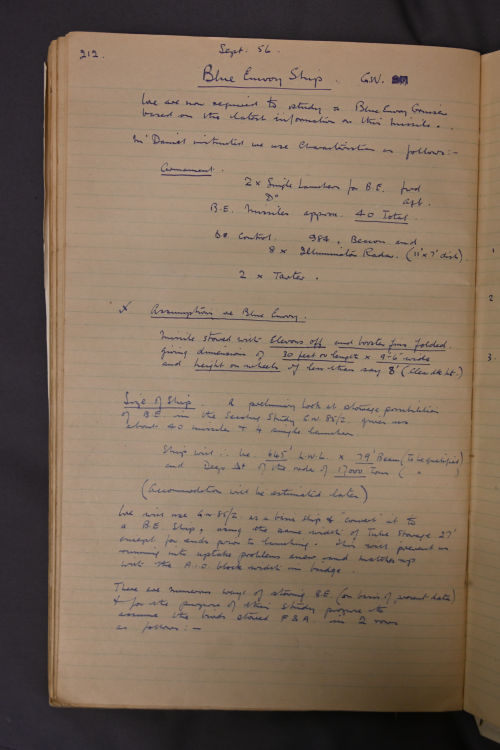
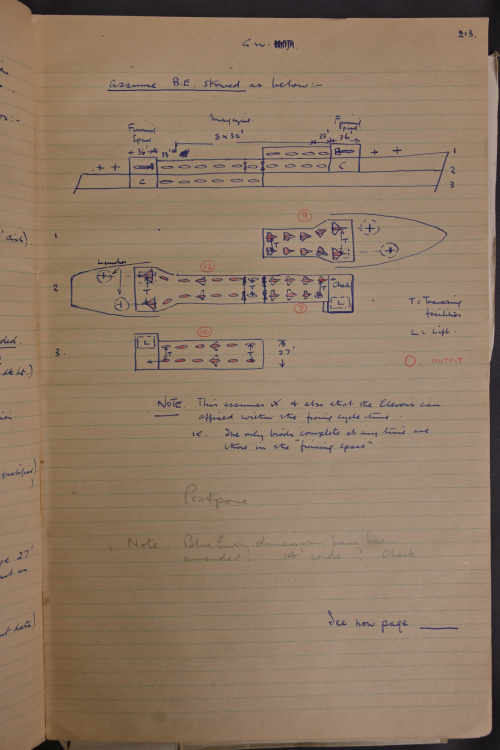
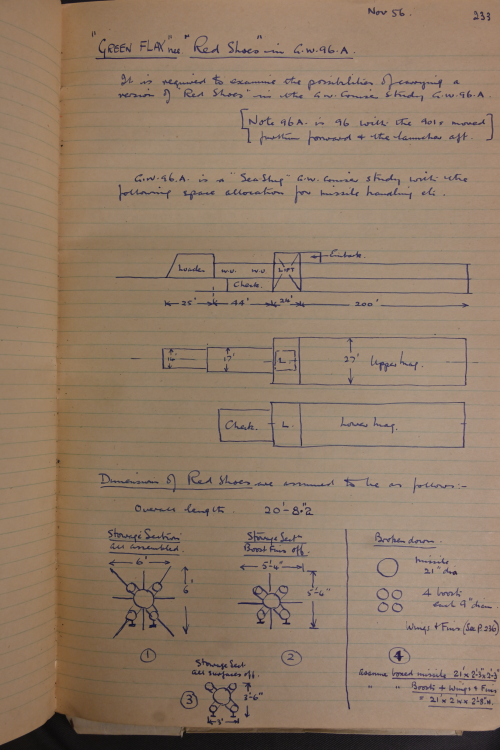
Seaslug (DNC) as sketched by Williams is reassuringly similar to my own estimate of 30 ft 9 in long and a 21-inch diameter booster. No real surprise there, but I would say that.And GW.96 with Talos, Blue Envoy & S.S. (DNC) & Terrier:
First name? No. Have his autobiography? Yes. Every single reference to him which I can easily find uses his initials. Referring to Daniel's autobiography, though, James Paffett was his predecessor in the cruiser design section. Does prompt the thought that I've definitely got three degrees of separation to R. J. Daniel, and possibly just two.R. J. Daniel (or R. G. Daniel)
Oh that's rather large!
I don't think I can spare the storage for over 20GB of data.
Could ypu re-upload it I was a few days away and missed it, so I could not download itMy archive on the GW designs Workbooks:
https://filebin.net/rbuejhj252fbbcy5It is available for a week if anybody wishes it to download feel free, if cannot do so after the expiration date tell me and I re-upload them.
Hope they contain some important data to you all!
It includes T.J. O'Niell's Workbooks as well
Seaslug (DNC) as sketched by Williams is reassuringly similar to my own estimate of 30 ft 9 in long and a 21-inch diameter booster. No real surprise there, but I would say that.
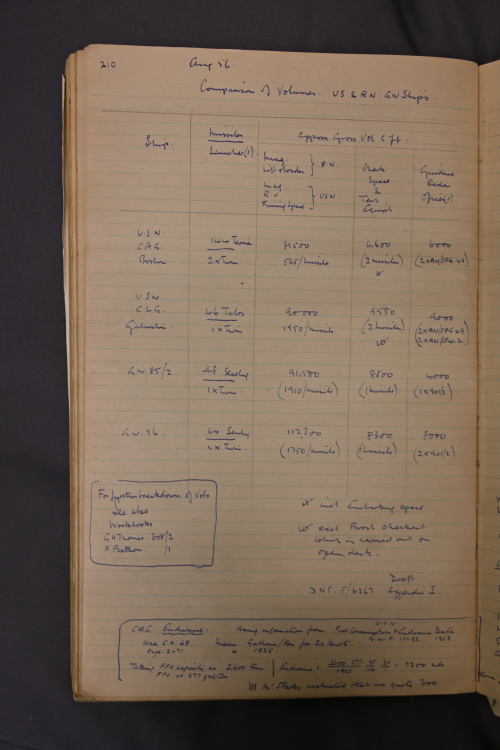
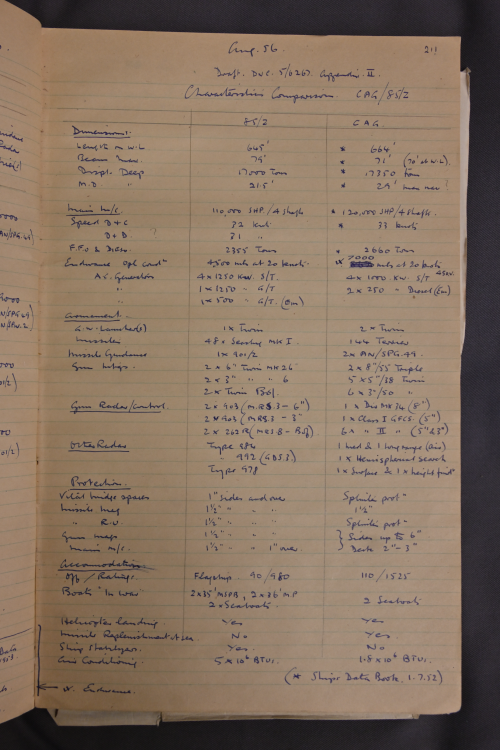
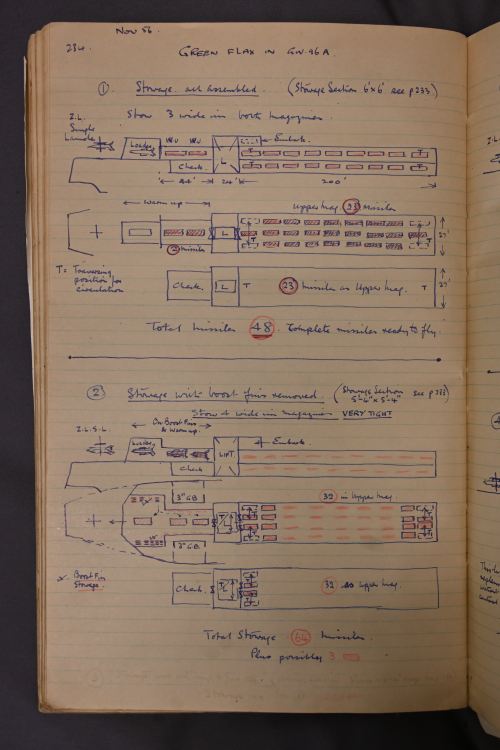
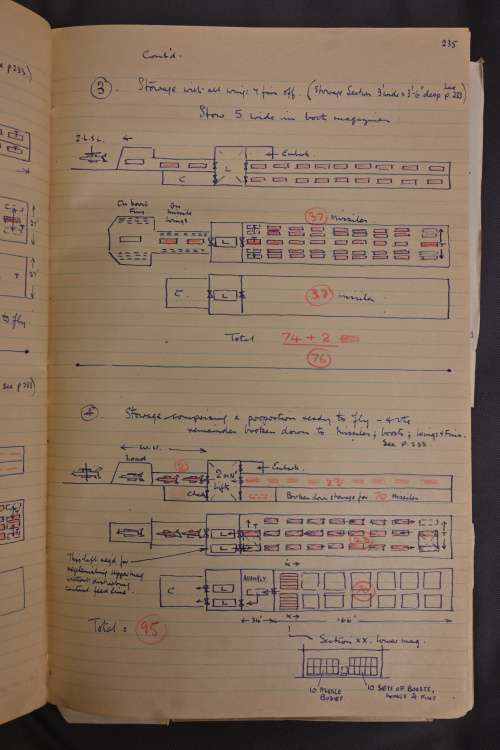
It's abundantly clear that Seaslug (DNC) is a much better use of space than the actual missile, getting 128 missiles onto a ship (GW96) that would carry 64 of the 'official' version. Using the calculation methodology shown on Page 210 of Williams's workbook, it gets 881 cubic feet per missile, compared to 1,750 cubic feet per missile for 'standard' GW96. Quite why the idea that Seaslug made efficient use of space got established I don't know: itt's manifestly incorrect.
I really must refresh my memory on the events of this period, as it does seem to be key to the UK's Cold War defence - this is the Radical Review, or something separate.disastrous recasting of the future building programme in late 1954 by 1SL Rhoderick McGrigor that turned the GW ships into hybrid missile/gun cruisers, compounded by 1SL Louis Mountbatten commanding that Seaslug be fitted to the GP destroyers (1955) that resulted from the same recasting seemingly without understanding the missile was part of a much wider system, then cancelling the cruiser (1956/7). Net result, the only ships fitted with Seaslug looked like weird hybrids and had sub-optimal installations (only one Type 901 and no 3D radar).
Yes - there's a particular tendency (for all UK weapons systems) to compare an obsolete system at the end of its life with its US counterpart that had been continually updated.The design not being taken any further.