
You are using an out of date browser. It may not display this or other websites correctly.
You should upgrade or use an alternative browser.
You should upgrade or use an alternative browser.
Raytheon (General Dynamics) AGM-129 Advanced Cruise Missile (ACM)
- Thread starter flateric
- Start date

- Joined
- 6 August 2007
- Messages
- 4,539
- Reaction score
- 10,261
No, SENIOR PROM was not part of the ACM or TEAL DAWN programs.
Just in case anyone misses this, the following were posts from the comments section from the TWZ report on the LRSO .....
https://www.twz.com/air/first-glimpse-of-air-forces-new-stealth-nuclear-cruise-missile
Credit to Davidicus Rex
13 June, 2025
For AGM-129 fans, some pics from my time on the Advanced Cruise Missile (AGM-129) program, working on hardware in the loop simulator in Systems Integration Lab at General Dynamics Convair, next to Lindberg Field in San Diego. So much innovative, impressive tech & design (airframe, materials, guidance, computer, flight surfaces, beaver-tail, fuel bladder, etc., etc.).
This, first of three pics in this reply stream, is a shot of the Lab's set up. You can see clearly the Carco Electronics Air Load Simulator (blue structure) at the tail of the missile - which was used to provide hardware feedback simulating the physical load on the flight surfaces when the missile was "flying". The missile (FSD-13, thirteenth missile off the production line) sat on pedestals in the lab, under the gantry and cable runs, with its guidance, sensors and wiring harnesses exposed (front of missile). The umbilical which connected the missile to the carrier (a B-52 or B-1 bomber), runs from a set of computers in the lab that emulate those on the carrier, and connects atop the missile. A wide variety of connections to other systems provide a feed of simulated carrier data and environmental data (e.g., barometric pressure, winds, etc.) as input as it flies the mission. During the mission, my team's system grabbed the RF telemetry (acyclic embedded streams) usually sent to a LORAL ground station (off camera) - for use in creating real-time 2D and 3D visualizations (see following pics).

13 June, 2025
Next pic from AGM-129 SIL @ GD Convair. My boss, my team and the new simulation display system we created. You can see a bit more of the missile (FSD-13) here. For test mission, the mission is loaded into the guidance systems pre flight. The the missile "launches" - the umbilical popping off as it separates from the carrier (either a wing pylon of rotary carrier internally within bomb bay).
As on the test range, the missile is launched from the carrier, begins transmitting its RF telemetry, and Pyros (pyrotechnic devices) fire to deploy flight surfaces from their folded positions. The missile is now "flying". It shudders and shimmies on the pylons as if in flight - as it responds to commands (including chase plane override joystick out of frame), the "environmental" data and feedback (simulated air load, barometric pressure, etc.), terrain (terrain contour matching, terrain-following LADAR and inertial navigation), its rather violent "WAM" (Warhead Arming Maneuver) to set the W-80 arming switch, and the Terminal Maneuver at mission's end. Dummy W-80s are behind curtain in background to left. The lab was, as you'd expect, double doored, TEMPEST construction, etc.
13 June, 2025
Last of 3 pics, with focus on our display system - a distributed system, developed to provide real-time telemetry data acquisition, processing / reduction, and presentation capabilities for ACM Hardware-in-the-Loop flight / mission simulations. It acquired acyclic embedded RF telemetry via umbilical (landline, normally transmitted to a LORAL ground station on the test range) from the production vehicle (FSD 13), as well as guidance, sensor, environmental, and carrier data.
In the course of running a mission simulation within the lab. We synchronized/decoded/translated and stored the data (included transforming data from at least three varying bit/byte architectures using custom fab'd cards), and then sent that data to a set of networked PCs, where we used it to render 2D and 3D visualizations of the simulation - e.g., Fault Isolation Tables, electrical and other sensor readings, yaw/pitch/roll, artificial horizon, etc. The system allowed simulations to be stored and replayed in their entirety or only in part. Also, just out of frame is is a panel with switches and a joystick like that in the chase plane which could be used to override the mission in the lab - that is, manually fly the missile in the lab. This photo was intended for use in publicly published article ~ 1990.
https://www.twz.com/air/first-glimpse-of-air-forces-new-stealth-nuclear-cruise-missile
Credit to Davidicus Rex
13 June, 2025
For AGM-129 fans, some pics from my time on the Advanced Cruise Missile (AGM-129) program, working on hardware in the loop simulator in Systems Integration Lab at General Dynamics Convair, next to Lindberg Field in San Diego. So much innovative, impressive tech & design (airframe, materials, guidance, computer, flight surfaces, beaver-tail, fuel bladder, etc., etc.).
This, first of three pics in this reply stream, is a shot of the Lab's set up. You can see clearly the Carco Electronics Air Load Simulator (blue structure) at the tail of the missile - which was used to provide hardware feedback simulating the physical load on the flight surfaces when the missile was "flying". The missile (FSD-13, thirteenth missile off the production line) sat on pedestals in the lab, under the gantry and cable runs, with its guidance, sensors and wiring harnesses exposed (front of missile). The umbilical which connected the missile to the carrier (a B-52 or B-1 bomber), runs from a set of computers in the lab that emulate those on the carrier, and connects atop the missile. A wide variety of connections to other systems provide a feed of simulated carrier data and environmental data (e.g., barometric pressure, winds, etc.) as input as it flies the mission. During the mission, my team's system grabbed the RF telemetry (acyclic embedded streams) usually sent to a LORAL ground station (off camera) - for use in creating real-time 2D and 3D visualizations (see following pics).
13 June, 2025
Next pic from AGM-129 SIL @ GD Convair. My boss, my team and the new simulation display system we created. You can see a bit more of the missile (FSD-13) here. For test mission, the mission is loaded into the guidance systems pre flight. The the missile "launches" - the umbilical popping off as it separates from the carrier (either a wing pylon of rotary carrier internally within bomb bay).
As on the test range, the missile is launched from the carrier, begins transmitting its RF telemetry, and Pyros (pyrotechnic devices) fire to deploy flight surfaces from their folded positions. The missile is now "flying". It shudders and shimmies on the pylons as if in flight - as it responds to commands (including chase plane override joystick out of frame), the "environmental" data and feedback (simulated air load, barometric pressure, etc.), terrain (terrain contour matching, terrain-following LADAR and inertial navigation), its rather violent "WAM" (Warhead Arming Maneuver) to set the W-80 arming switch, and the Terminal Maneuver at mission's end. Dummy W-80s are behind curtain in background to left. The lab was, as you'd expect, double doored, TEMPEST construction, etc.
13 June, 2025
Last of 3 pics, with focus on our display system - a distributed system, developed to provide real-time telemetry data acquisition, processing / reduction, and presentation capabilities for ACM Hardware-in-the-Loop flight / mission simulations. It acquired acyclic embedded RF telemetry via umbilical (landline, normally transmitted to a LORAL ground station on the test range) from the production vehicle (FSD 13), as well as guidance, sensor, environmental, and carrier data.
In the course of running a mission simulation within the lab. We synchronized/decoded/translated and stored the data (included transforming data from at least three varying bit/byte architectures using custom fab'd cards), and then sent that data to a set of networked PCs, where we used it to render 2D and 3D visualizations of the simulation - e.g., Fault Isolation Tables, electrical and other sensor readings, yaw/pitch/roll, artificial horizon, etc. The system allowed simulations to be stored and replayed in their entirety or only in part. Also, just out of frame is is a panel with switches and a joystick like that in the chase plane which could be used to override the mission in the lab - that is, manually fly the missile in the lab. This photo was intended for use in publicly published article ~ 1990.


FroggyFrog
ACCESS: Restricted
- Joined
- 12 February 2024
- Messages
- 18
- Reaction score
- 87
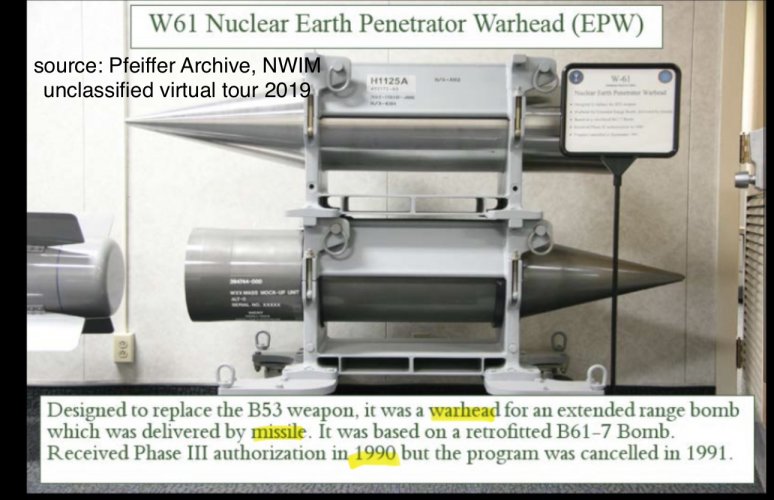
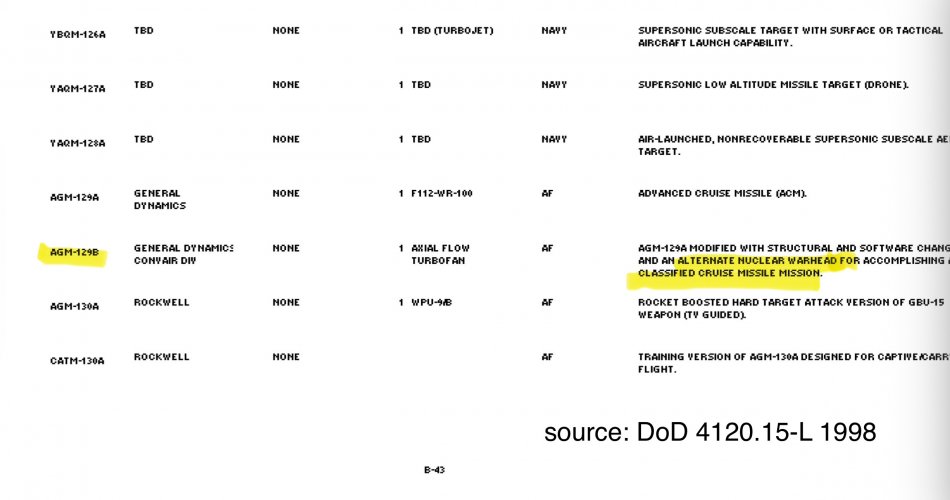
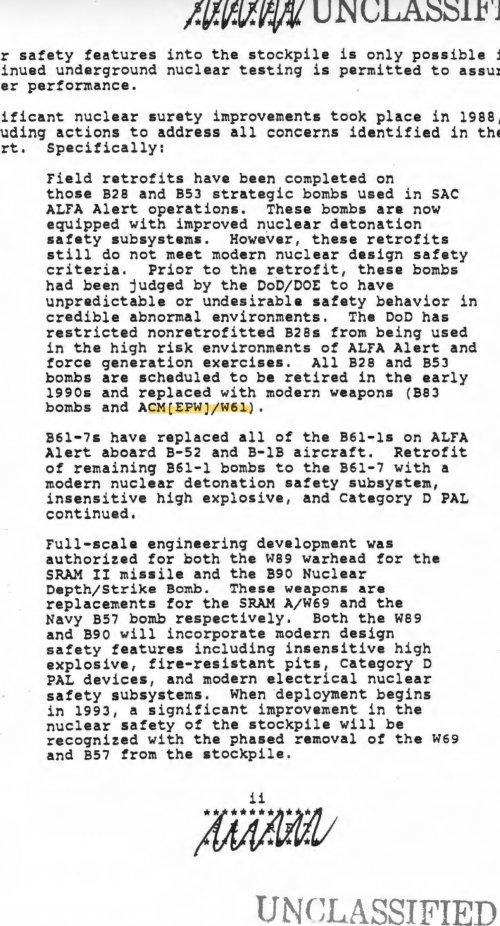
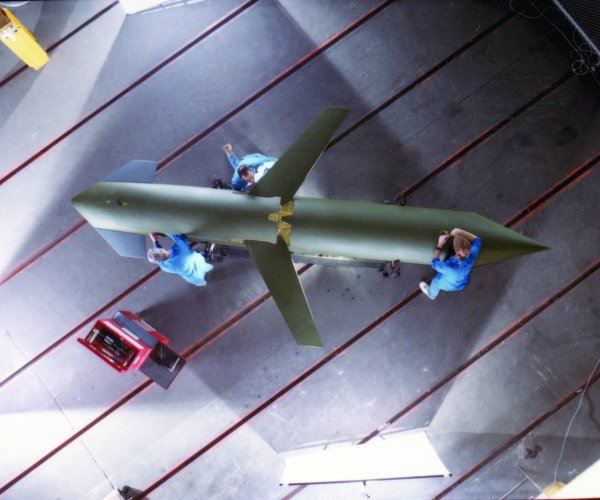
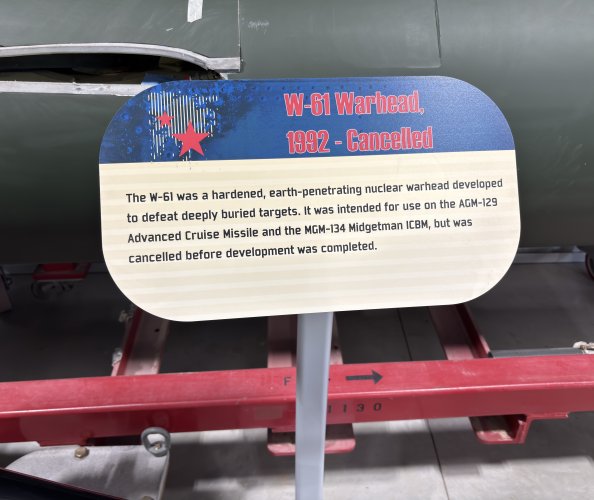
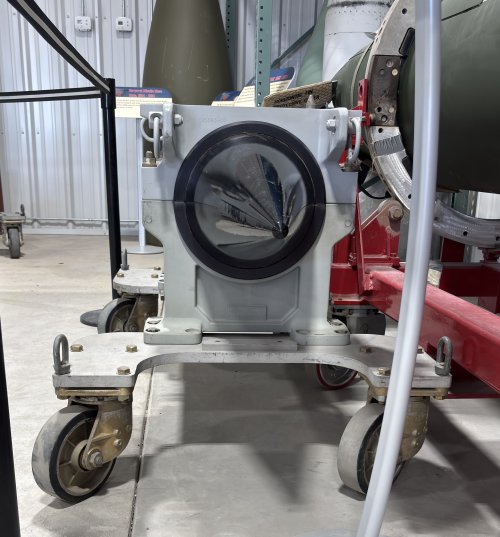
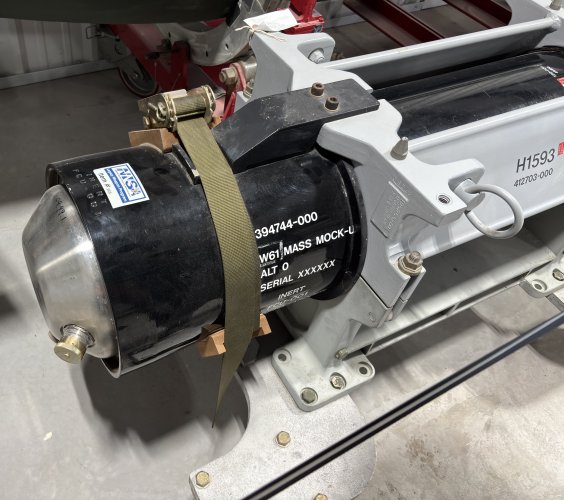
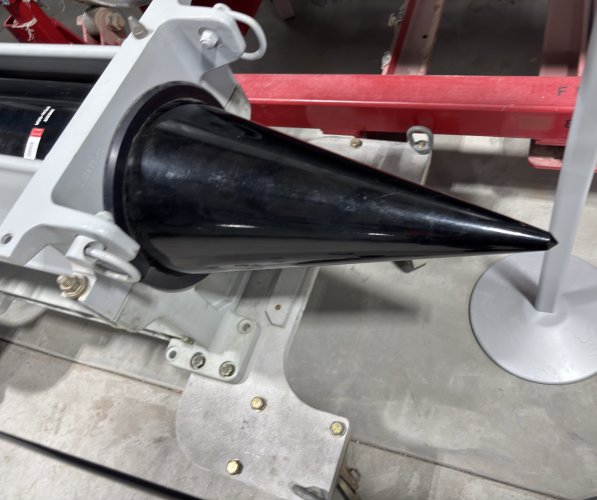
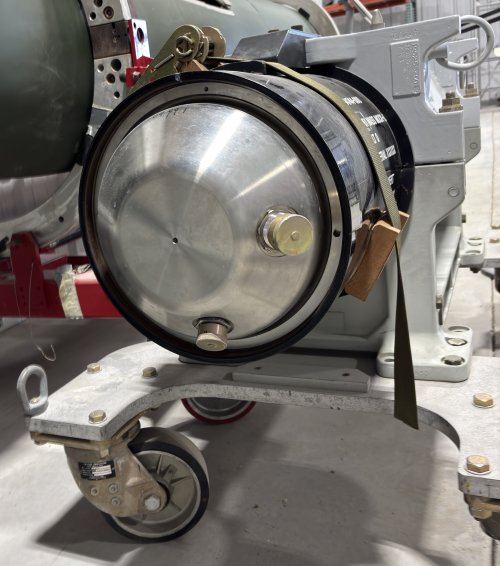
The classified variant, AGM-129B was most likely the W61 Nuclear EPW designed to take out hardened targets and replace the B53. The later B61-11 was based on this.
Attachments

Last edited by a moderator:
FroggyFrog
ACCESS: Restricted
- Joined
- 12 February 2024
- Messages
- 18
- Reaction score
- 87
Probably, the AGM-129 program (and the entire military) suffered greatly due to the lack of funding at the end of the Cold War, cutting from ~1,500 missiles to just 460. The program to replace the B53 in the bunker buster role with the W61 was cancelled around the same time as those cuts. Eventually, they did get the B61-11 to replace the B53.If the Cold War had lasted a few more years I suppose the W61 EPW (And the AGM-129B) would've gone into production?


- Joined
- 3 June 2011
- Messages
- 20,992
- Reaction score
- 19,258
There was also supposed to be a ground-penetrating warhead for the Pershing II.Probably, the AGM-129 program (and the entire military) suffered greatly due to the lack of funding at the end of the Cold War, cutting from ~1,500 missiles to just 460. The program to replace the B53 in the bunker buster role with the W61 was cancelled around the same time as those cuts. Eventually, they did get the B61-11 to replace the B53.
FroggyFrog
ACCESS: Restricted
- Joined
- 12 February 2024
- Messages
- 18
- Reaction score
- 87
Yeah, the W86, though much lower yield.There was also supposed to be a ground-penetrating warhead for the Pershing II.
FroggyFrog
ACCESS: Restricted
- Joined
- 12 February 2024
- Messages
- 18
- Reaction score
- 87
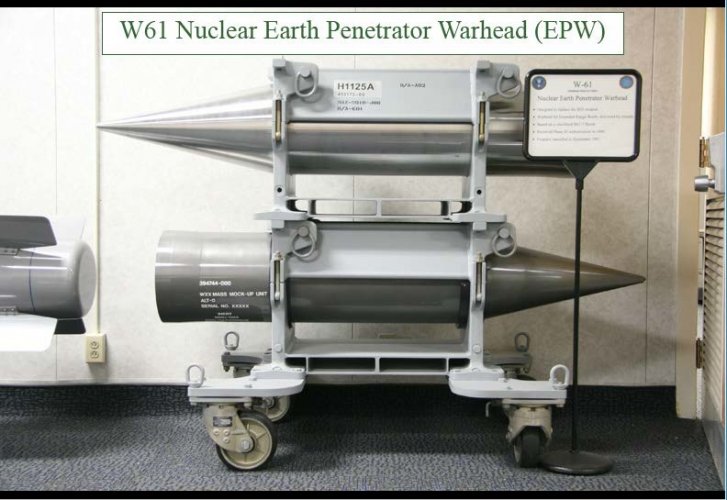
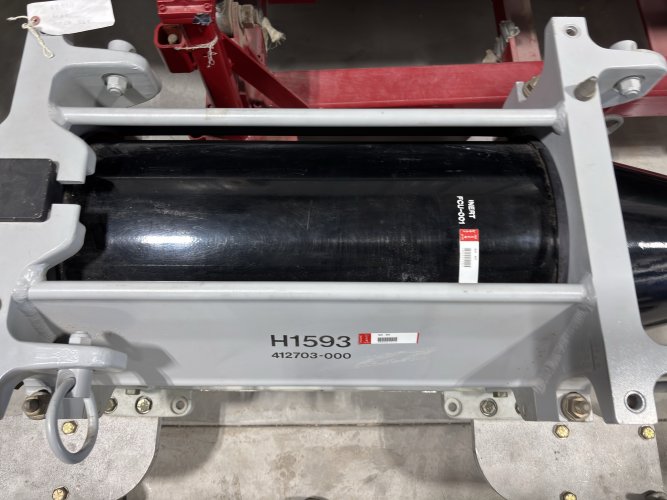
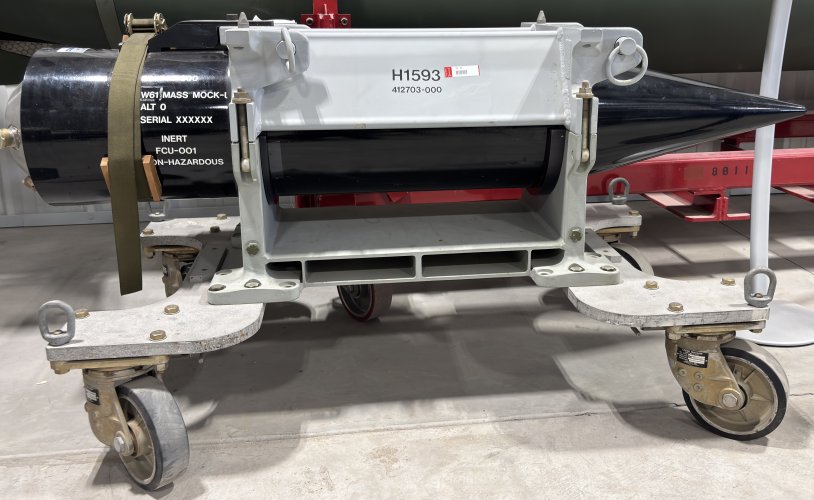
Some more shots of the W61 penetrator warhead from https://www.flickr.com/photos/nuclearanthro/sets/72177720334076035/The classified variant, AGM-129B was most likely the W61 Nuclear EPW designed to take out hardened targets and replace the B53. The later B61-11 was based on this.
Wonder if anyone knows what modifications the classified AGM-129B would've had to fit this? It's about 3-4 times heavier than the original W80 and larger too.
Attachments
Last edited:
Similar threads
-
 AGM-129 Advanced Cruise Missile: Stagger Around #3
- Started by Orionblamblam
- Replies: 5
-
1980s US intercontinental cruise missile (& ATCM program)
- Started by GeorgeA
- Replies: 37
-
 1989 Navy/USAF Long Range Conventional Standoff Weapon (LRCSW)
- Started by flateric
- Replies: 21
-
 ORCA Missile System / Project Sunrise - Containerized Seafloor-based ICBM
- Started by Boxman
- Replies: 41
-