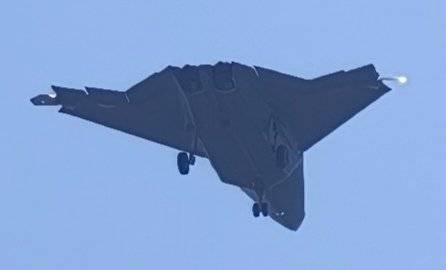
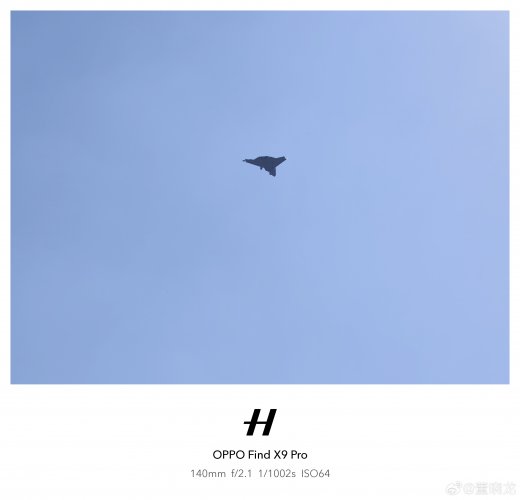
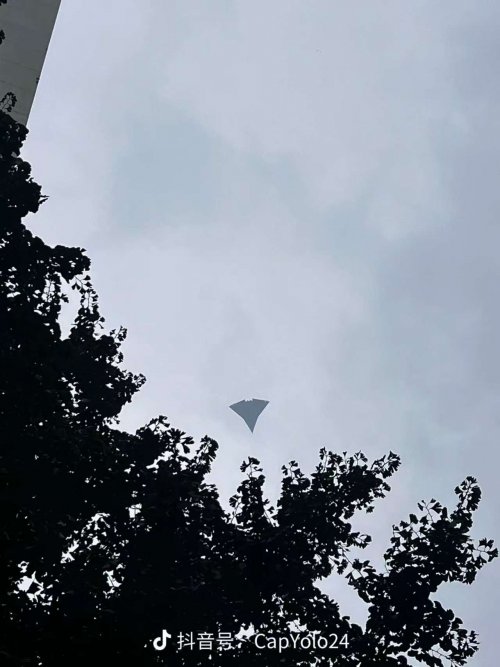
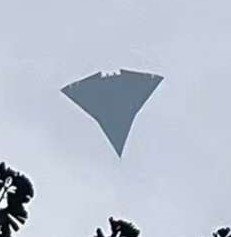
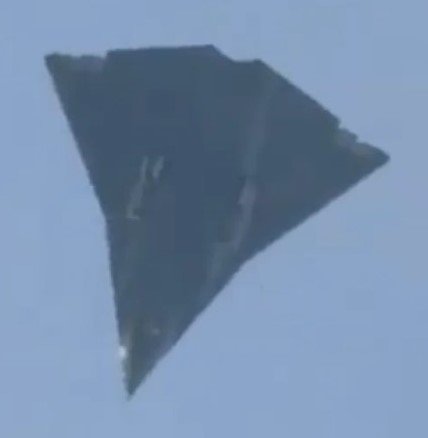
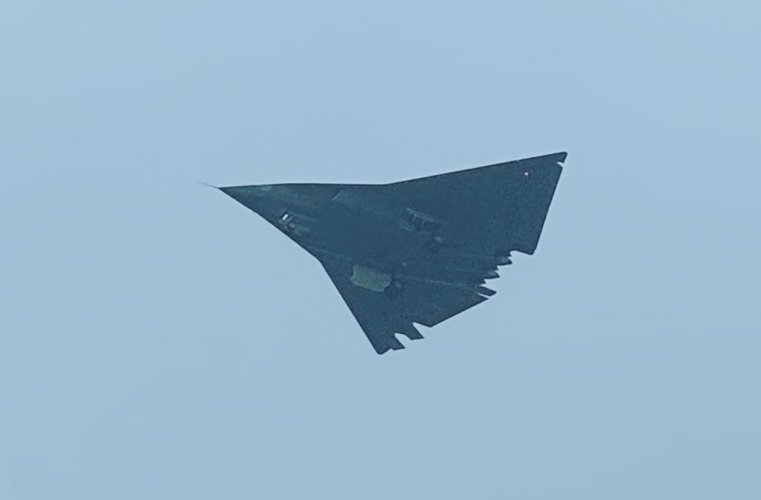
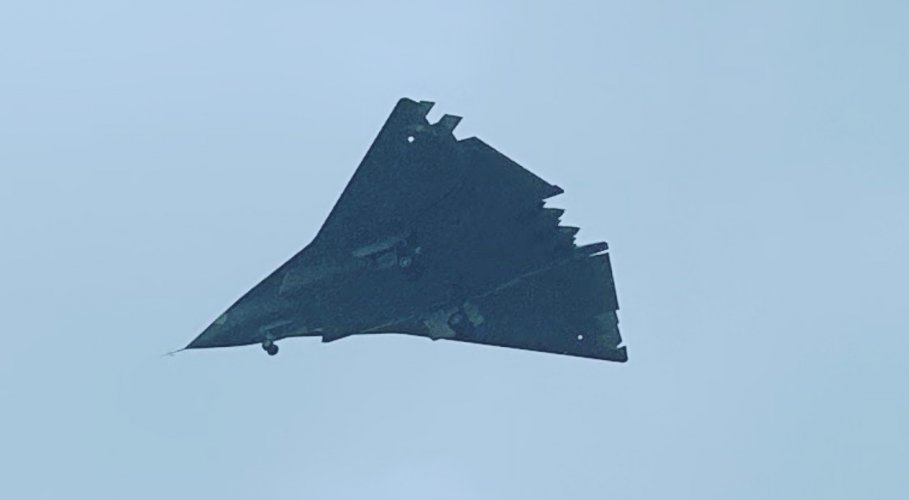
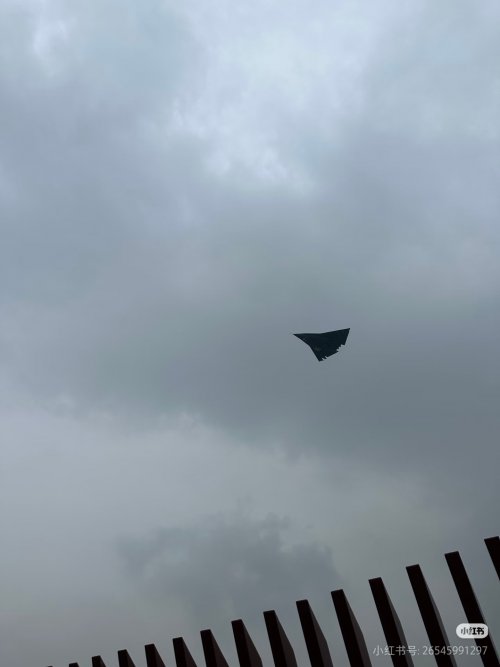
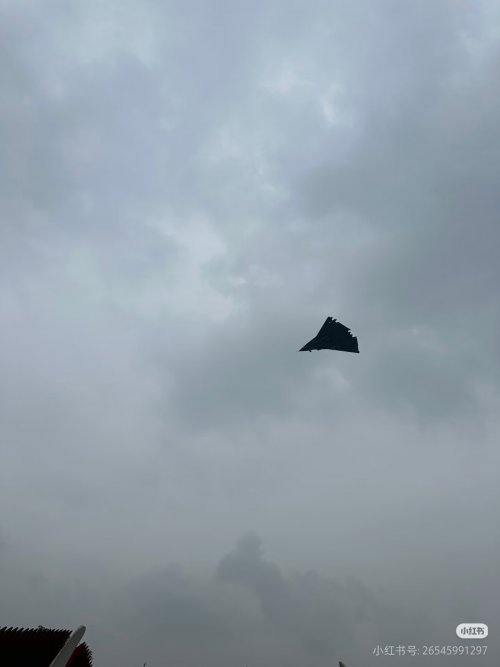
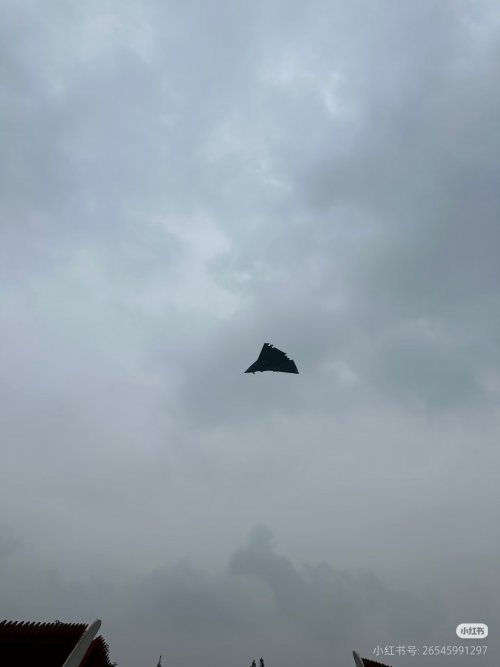
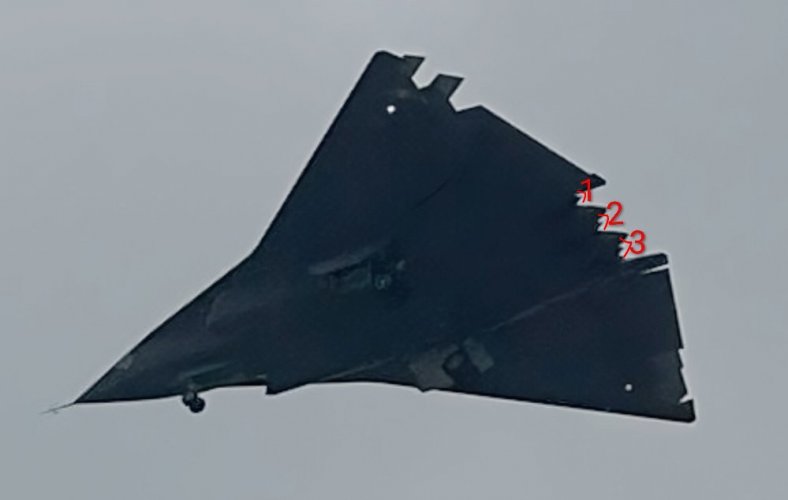
need at least Satellite photos from top so one can make good guess on wing area.

Do we?

Airfoils would have a substantial effect. The overall mass of the airplane will also impact the cruise AoA. These are huge areas of uncertainty.

What we could do though, is make assumptions about the approximate weight and planform, and the consider the overall properties of the general shape/layout vs. a conventional tailed design of similar size. That could at least give it a ballpark of its cruise performance compared to a similar sized J-20 or F-22 layout (all other things assumed to be the same inc. engines).
 
I'm also sceptical, because to me at least it seems like the "underside" shown at first has the same dorsal intake and dazzle camouflage as the top side. Maybe AI?

I could imagine the jet to pull off such moves though, especially when the video is sped up.
 
Last edited:
I would find it far more likely that they have elected to remove the nozzles on the first aircraft rather than there being a second aircraft.

Why do you doubt there would be a second aircraft? It's going on 10 months since the first prototype airframe, it's about time to expect a second prototype given usual EMD efforts.
(There's also been rumours for a few months that the second J-36 prototype would be emerging)
 
Seems that China's 6th gen fighters will all likely adopt 2D thrust vectoring... YF-22 >>indeed>> YF-23 ;) ;) ;)
I doubt it, burried exhaust have too much signature management advantages. The Americans are using it for their next generation fighter, It's baffling if China allows themselves to be behind.
 
Why do you doubt there would be a second aircraft? It's going on 10 months since the first prototype airframe, it's about time to expect a second prototype given usual EMD efforts.
(There's also been rumours for a few months that the second J-36 prototype would be emerging)
well, I will gladly eat my words with this new development! :D
 
Why do you doubt there would be a second aircraft? It's going on 10 months since the first prototype airframe, it's about time to expect a second prototype given usual EMD efforts.
(There's also been rumours for a few months that the second J-36 prototype would be emerging)
that would likely mean the no. 1 had been flying quite sometimes before the "unveiling" to the public. getting enough flight hours, learn and incorporate major changes, getting approved, then manufacture take a while.
 
that would likely mean the no. 1 had been flying quite sometimes before the "unveiling" to the public. getting enough flight hours, learn and incorporate major changes, getting approved, then manufacture take a while.

Possibly, but I suspect they had prototype no 2 under fabrication before prototype no 1 first flew.

Prototype no 1 using slightly more conservative features (like caret air intakes), and some alternative design features (trough exhausts) could be as much a reflection of pre-research and design modeling allowing them to fly prototype no 1 and then a more refined prototype no 2 without the latter needing flight test data from the former.
 
Possibly, but I suspect they had prototype no 2 under fabrication before prototype no 1 first flew.

Prototype no 1 using slightly more conservative features (like caret air intakes), and some alternative design features (trough exhausts) could be as much a reflection of pre-research and design modeling allowing them to fly prototype no 1 and then a more refined prototype no 2 without the latter needing flight test data from the former.
If no 2 doesn't need any flight test data from no. 1 what's the purpose of no. 1 then? If the research and design modeling were so much behind that they had to build no. 1 with placeholder techs then the 10 months time frame is way too narrow
 
From all the changes seen it looks to me the nozzle area is a temporary configuration and will probably be further modified/integrated in the future to better blend in with the trailing edge shape?
 
If no 2 doesn't need any flight test data from no. 1 what's the purpose of no. 1 then? If the research and design modeling were so much behind that they had to build no. 1 with placeholder techs then the 10 months time frame is way too narrow

I actually see it in the opposite direction.

It's not so much that the research and design modelling was so much behind -- rather it was so fast, they were able to iterate and refine it so quickly that as part of the development cycle it still made sense to push out an earlier less refined prototype airframe to verify other common flight control characteristics, common elements of the rest of the airframe, and possibly even certain subsystems, as part of overall risk reduction.
 
I actually see it in the opposite direction.

It's not so much that the research and design modelling was so much behind -- rather it was so fast, they were able to iterate and refine it so quickly that as part of the development cycle it still made sense to push out an earlier less refined prototype airframe to verify other common flight control characteristics, common elements of the rest of the airframe, and possibly even certain subsystems, as part of overall risk reduction.
if they are able to refine so fast that means their projection is quite spot on there's no reason to use cheap and fast to produce subscale models to validate control laws and testbeds for subsystems. no. 1 isn't just a hollow testbed. It looks quite mature with variety of intergrated apertures and avionics. The FSS for side radars are giveaway.
 
if they are able to refine so fast that means their projection is quite spot on there's no reason to use cheap and fast to produce subscale models to validate control laws and testbeds for subsystems. no. 1 isn't just a hollow testbed. It looks quite mature with variety of intergrated apertures and avionics. The FSS for side radars are giveaway.

Yes, so my suspicion is that prototype 1 and 2 have broadly similar planforms except for a few specific key areas, like intakes, landing gear and engine exhuasts.

But I suspect that the rest of the airframe -- sensor apertures, bulkheads, flight control system and surfaces, etc -- would be largely consistent between the two. The "old" features on prototype 1 therefore is an example of an EMD prototype that features a few "lower risk" or "initially modelled" configurations for the intakes +/- landing gear +/- engine exhausts, but the rest of the airframe and features between the prototypes would be similar.

As we get clearer pictures we'll be able to determine what the actual relationship is.
 
The Americans are using it for their next generation fighter, It's baffling if China allows themselves to be behind.
Is there any actual evidence for this? Almost every ATF concept shown, before the YF-22/23 were rolled out, had a canard. And we saw how that worked out. (None of the 7 ATF entries had a canard.)
 
Why would a 2IC-cruising forward network node/supremacy fighter need TVC? Exhaust trenches make perfect sense for the J-36, whereas improved maneuverability at the cost of signature reduction still makes no sense...

37bc592ba4afe2db9cab7423ceefdef4.gif


I read the discussion on Sinodef, and there are many logical points that I agree with. Obviously, I know they wouldn't do this if there weren't any technical justifications for it, but still... whyyy!?

Seems that China's 6th gen fighters will all likely adopt 2D thrust vectoring... YF-22 >>indeed>> YF-23 ;) ;) ;)
There should be a crying emoji... :(
 
Probably the need for effective control at all speeds of a supersonic, supercruising tailless design?
This, but also probably due to heating issues often seen with YF-23-style exhaust trenches. It's obvious that high supercruise is one of the most important requirements for the PLAAF with this machine, even at the marginal cost of RCS reduction.
 
If no 2 doesn't need any flight test data from no. 1 what's the purpose of no. 1 then? If the research and design modeling were so much behind that they had to build no. 1 with placeholder techs then the 10 months time frame is way too narrow

It could be simply a way to reduce design risk. For instance, let's say you have a more advanced inlet - but you are only 90% sure it will be as desirable as you think. To speed development you build prototypes with both the experimental solution and a proven solution... that way you aren't delayed if you decided to go with the conservative approach, and you also have good data on whether the more ideal alternative actually is more ideal.

If anything, it is a sign that (1) prototypes are still needed for validation and (2) they want this aircraft in mass production as soon as possible.

That latter conclusion is a reasonable take-away if they are building parallel prototypes with different features.
 
In my opinion, it is an agile development strategy based on industrial capabilities, the so-called "small steps and quick runs." Some clues can be seen from the different versions of the previously revealed J-35: there are differences in the horizontal stabilizers, vertical stabilizers and actuators.
 

Similar threads

Back
Top Bottom