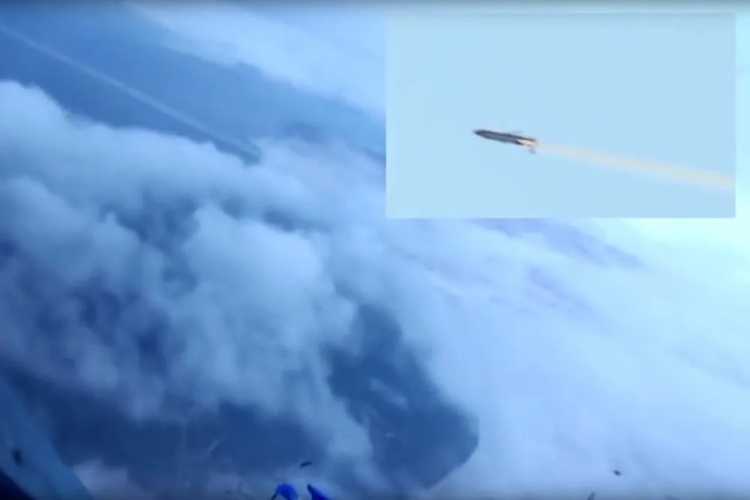
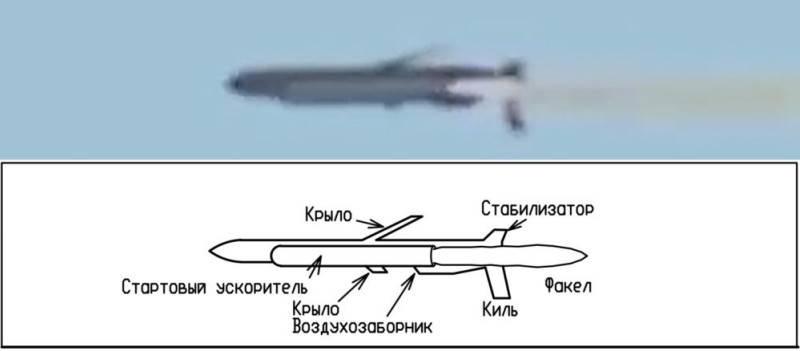
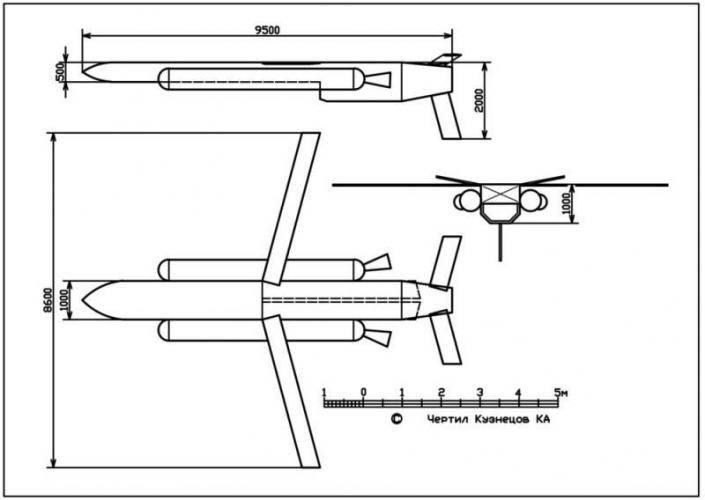
9M730 Burevestnik (SSC-X-9 Skyfall) cruise nuclear-powered missile

Highly likely. A molten-salt or liquid-metal reactor would be significantly heavier.
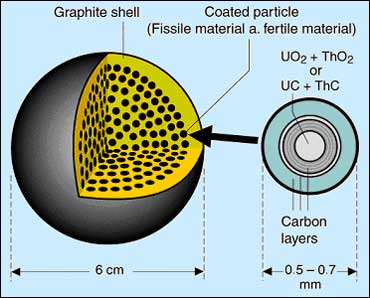
Might be similar in design to a Gen IV gas-cooled pebble-bed reactor then. They encapsulate the fuel in something possibly quite similar to the proposed graphite shells used in those and harden or cover the outer layers to deal with the airflow.

Range won't be 'unlimited', it's only a small reactor after all, but one would probably stay up for a couple of years.
1761620365051.png
 
Just look how many US allies and military bases are in close proximity of Russia. Potentially - POTENTIALLY - their territories could be used to deploy first-strike capabilities against Russia. And there are no Russia allies in the same proximity of USA.
 
I will admit perhaps a superior first strike mechanism but not to the degree that significant disarmament is a concern. If there was a time the U.S. could do that, it was in the 90s and early 2000s. And if there was a time to put China down with a nuclear war, it’s now or more probably a decade ago. The idea that the U.S. would engage in an offensive nuclear war seems rather paranoid given its history of not do that when it has a clear nuclear advantage, throughout most of the nuclear age, with the admitted exception of Japan. But they did pick that fight and were given options.
Well, the Russian fear of such attack crystallized in late 1990-early 2000s, after Yugoslavia and Iraq wars demonstrated, how devastatingly efficient could be a sudden massive attack with stealth bombers, cruise missiles, ect. And it's NOT merely "elite's fears". It's basically a well-entrenched fear of "sudden invasion" amongst the general population too.
 
I will admit perhaps a superior first strike mechanism but not to the degree that significant disarmament is a concern. If there was a time the U.S. could do that, it was in the 90s and early 2000s. And if there was a time to put China down with a nuclear war, it’s now or more probably a decade ago. The idea that the U.S. would engage in an offensive nuclear war seems rather paranoid given its history of not do that when it has a clear nuclear advantage, throughout most of the nuclear age, with the admitted exception of Japan. But they did pick that fight and were given options.
The problem is that Russia is vulnerable to a conventional first strike as well, with their bulk of nuclear forces being TELs which are not deployed all the time during peacetime. The Russian silos are also a tempting first-strike targets since they have heavily MIRVed SS-18s. A single Ohio could potential take out most of the Russian silos.

Whether the US would even consider a first-strike is a different question, what matters is what Russia believes the US will do, even if they are wrong.
 
Well, the Russian fear of such attack crystallized in late 1990-early 2000s, after Yugoslavia and Iraq wars demonstrated, how devastatingly efficient could be a sudden massive attack with stealth bombers, cruise missiles, ect. And it's NOT merely "elite's fears". It's basically a well-entrenched fear of "sudden invasion" amongst the general population too.
That is an unrealistic view of the U.S., but I will not begrudge a country its security concerns.
 
Its not whether its a realistic vulnerability, its whether Russia believes it is.
Exactly. For historical example - all Cold War US military feared the possibility of sudden Soviet nuclear attack against US nuclear forces. There were never coherent reasoning why USSR might want to do that - at most, some mumbling about "Soviet leadership just might be hell-bent on spreading Communism, because, well, they are communists, and Lenin wrote something about world revolution" - but the US military feared such technical possibility enough to took drastic measures to ensure retaliation capability.
 
Last edited:
Cruise missiles that can be launched on warning, and which can fly indefinitely over remote areas until summoned to hit their targets from any direction whatsoever, at any time*.

For the likes of UK and Western Europe that might be eastbound from the mid-Atlantic, through minimal defences. For the USA that could be straight up from South America, for example.

Finding them circling at low altitude over the vast Pacific would be 'challenging' and you'd need to find every one of them, just to be sure.

Just my take on it.

* Maybe they even have a failsafe that causes them to head to a preprogrammed target months or years after launch, if not over-ridden.
But what's the big difference in intercept difficulty between that and the 5500km-ranged Kh-102?

Closed cycle nuclear jet engine. Previously the U.S. had done some work on an open cycle system, but it was all but impossible to test due to contamination. It seems like an incredibly expensive way to power a cruise missile but it certainly is a first.
Is it definitely closed cycle?

There is additional factor - the territory of Russia is much more vulnerable to American first-strike, than visa versa. The fears, that USA could launch a sudden counter-force attack and reduce our nuclear arsenal to the level that could be handled by American anti-ballistic defense was a constant fear since 1980s.
GMTI satellites will render mobile launchers irrelevant before the end of this decade.
 
Last edited:
Но в чём разница в сложности перехвата между этой ракетой и Х-102 с дальностью полёта 5500 км?
The fact that it is easier to track the takeoff of a strategic bomber than the launch of a cruise missile from the ground of intercontinental range
 
Just to add that some obvious statements in the last decade increasingly coming from the west political/propaganda apparatus about "war with Russia", "defeating Russia", "regime change in Russia", "breaking up Russia" and other such comments in the same vein, coupled with the aforementioned ABM developments and russian numerical inferiority in conventional systems, plus the obvious conflicts on russian borders openly involving the west, and it's pretty clear why Russia felt the need chose the path of Burevestnik, Poseidon etc.
 
We can argue for days on the practicality of its purpose, but let's try our best to not have that overshadow that it's a giant engineering feat that will more than likely be dismissed by most of the world as one of the largest accomplishments for mankind as where this can lead us to.
 
We can argue for days on the practicality of its purpose, but let's try our best to not have that overshadow that it's a giant engineering feat that will more than likely be dismissed by most of the world as one of the largest accomplishments for mankind as where this can lead us to.
Fully agree!
 
Not really. A nuclear jet needs no adaptation to different atmospheres, as long as the external atmospheric pressures are the same.
To get to MAYBE using this monstrosity for flying through extraterrestrial atmospheres from its current purpose and intent (Ntm the pace of space exploration) is the distance from earth to the galactic core.

This thing has one purpose and to lipstick this is really stretching.
 
The fact that it is easier to track the takeoff of a strategic bomber than the launch of a cruise missile from the ground of intercontinental range
Not really, it needs a conventional rocket booster to take off, which gives a nice thermal plume and it shows up on GMTI satellite surveillance.
 
For the same reason Russia itself would loved to back then - it's the prestigious first world after utter collapse of entire socialist project.
The difference was really ego on one side, and bad blood on the other.

But we're so deep into offtop I'd suggest we should stop. One way or another, Russia is super suspicious, generally has bad relationship with potentially stronger entity or sum of thereof, and generally expects a chance it'll be suddenly attacked, left to fend off for itself.

Skyfall is an epitome of that - system designed just to demonstrate it won't work. Not even to really achieve that, it's a manifesto in a form of technical project.

Burevestnik is just a really long range cruise missile using the only thing Russian aerospace industry can scrounge up: a tiny nuclear reactor inside a Kh-101 motor body.

Making an intercontinental cruise missile any other way would probably require more flight hours than the Russians can manage reliably for turbines, more fuel, and a new airframe design, but a nuclear powered missile could be compact and relatively cheap. At least, you'd think it would be. They're all well understood concepts! Perhaps the budget simply got pared down to pay for the war, and this pushed the timeline back, though.

Return the dishwashers

And they say racism is dead in Europe.
 
The fact that it is easier to track the takeoff of a strategic bomber than the launch of a cruise missile from the ground of intercontinental range
That seems like a dubious assertion. The U.S. was detecting Scud launches in 1991 and now will orbit a couple dozen LEO IR tracking satellites within months. It hardly seems assured the booster launch event would go unobserved and unrecognized for what it is, even if the reactor itself manages to suppress or redirect its waste heat.
 
That seems like a dubious assertion. The U.S. was detecting Scud launches in 1991 and now will orbit a couple dozen LEO IR tracking satellites within months. It hardly seems assured the booster launch event would go unobserved and unrecognized for what it is, even if the reactor itself manages to suppress or redirect its waste heat.

The afterburners of Tu-160 and Tu-22M show up fine on SBIRS-LO. They're literally built for supersonic dashes/cruises anyway.

In such a scenario, I suspect simply being able to reach the target is more important. It's not going in alone: it'll be going in against a much degraded U.S. Homeland IADS which has suffered intercontinental bombardment from Avangards and southwards flying reentry vehicles. The U.S. only has one (under construction?) ABM radar in that direction and GBI isn't optimized for South Pole intercepts.

Not many F-15EXs or F-22s would be left, if any, to oppose the things. Even if you can see them, what could kill them, and how many? It's still statistically more dangerous than a fleet of Tu-160s carrying a dozen Kh-101s because you need to engage each missile individually instead of merely killing the archers.

It's entirely possible the strategic Tu-160 fleet gets replaced by an equivalent sized quiver of Burevestniks tbh. This would make losing individual strategic bombers much less of a concern for the Russian MOD, and reduce the training demands of the nuclear forces even more, both are good things for a country with limited economic resources.
 
Last edited:
That seems like a dubious assertion. The U.S. was detecting Scud launches in 1991 and now will orbit a couple dozen LEO IR tracking satellites within months. It hardly seems assured the booster launch event would go unobserved and unrecognized for what it is, even if the reactor itself manages to suppress or redirect its waste heat.
The booster launch could easily be hide behind multiple decoys. It's merely a cruise missile launch booster; not the ICBM/SLBM first stage. Small solid rocket, not very powerful, and burning only for a few seconds on low altitude. A thousand old boosters, slated to decommission, could be shot per each real "Burevestnik", to confuse satellite systems. Cloud cover & smoke screens also could be considered. And the booster itself could be made less detectable (sure, it would reduce its efficiently... but who cares, as long as its enough to do the job?)
 
The booster launch could easily be hide behind multiple decoys. It's merely a cruise missile launch booster; not the ICBM/SLBM first stage. Small solid rocket, not very powerful, and burning only for a few seconds on low altitude. A thousand old boosters, slated to decommission, could be shot per each real "Burevestnik", to confuse satellite systems. Cloud cover & smoke screens also could be considered. And the booster itself could be made less detectable (sure, it would reduce its efficiently... but who cares, as long as its enough to do the job?)

It's a nuclear war. You win by smashing stuff on the other continent.

Using old boosters won't help because you'd just nuke the Air National Guard bases defending that Air Defense Sector anyway. Making your big attack look bigger isn't helpful here because you actually need to blow stuff up. Burevestnik simply won't have much of an IADS threat because it would arrive hours after the main American airbases have been turned into radioactive craters by ICBMs, and with them, pretty much the entirety of the American air sovereignty/air defense forces.

It's a cruise missile presumably to kill cities after the U.S. Air Force is beaten on the ground by ICBMs.

Outside of that context, it has no use, because it solely exists to provide long range in a small package. It'll probably replace the Tu-160s carrying Kh-101s for intercontinental attacks, which frees up the Tu-160s for tactical and operational attacks on Europe instead, and makes the Russian strategic nuclear forces somewhat more resilient by divesting them of their need for airbases.
 
It's a cruise missile presumably to kill cities after the U.S. Air Force is beaten on the ground by ICBMs.
IOW it's a single shot bomber. And one with multiple shots is... SLAM/PLUTO! Well at least it doesn't spew a trail of rads behind the butt-end.
After 70 years, the Russians still has a solid foothold with their LUA doctrine.
 
It's a nuclear war. You win by smashing stuff on the other continent.
To be exact, you win by forcing your opponent not to start it. So the idea of pre-launched missile patrolling over Arctic - for days, or weeks, if required - could be a viable last-moment deterrence.

The idea about decoys was mostly an answer to the "such missiles could be tracked by satellites".
 
To be exact, you win by forcing your opponent not to start it.

I think if you're launching strategic weapons you're past that point tbf.

So the idea of pre-launched missile patrolling over Arctic - for days, or weeks, if required - could be a viable last-moment deterrence.

The idea about decoys was mostly an answer to the "such missiles could be tracked by satellites".

I don't think they can be tracked by satellites tbf they're pretty low to the ground, probably not supersonic, and likely LO.

They'll still be spotted by satellites on launch, but that just means a bolt from the blue isn't possible, which people kind of assume anyway. That means hitting with your fastest available weapons on defense sites and interceptor bases, which are ICBMs, and then following up with slower weapons on cities and electrical production which are the cruise missiles.

In reality I think it's just to get away from relying on a couple dozen crusty old bombers for cruise missiles to carry them into Canada, and simply having a few hundred cruise missile launchers that need to be individually targeted instead, because that makes the air defense job harder.
 
I think if you're launching strategic weapons you're past that point tbf.
That's the interesting thing about nuclear-powered missiles; they could be launched & stay in air as "death hand" solution. The enemy would be forced to consider the possibility, that even if he sucseed completely in his first strike, the pre-launched missiles would still hit him after their pre-set waiting period would be over. And even if the enemy would force you to surrender, he just can't be sure that you would be able to cancel the pre-launched strike; what if the enemy attacks killed anyone who have the right codes, and surrendering survivors just can't do anything to stop the retaliation? Such considerations make sucsessfull first attack even more complicated, even less likely to sucseed.
 
In reality I think it's just to get away from relying on a couple dozen crusty old bombers for cruise missiles to carry them into Canada, and simply having a few hundred cruise missile launchers that need to be individually targeted instead, because that makes the air defense job harder.
A good analysis, yep!
 
That's the interesting thing about nuclear-powered missiles; they could be launched & stay in air as "death hand" solution.

I don't think you'd want to be able to re-target them.

Autonomous weapons already struggle with heavy jamming, EW attacks, and cyber weapons redirecting them as demonstrated by the drone incident a few weeks ago, the Iranian IADS a few months ago, and the Syrian air defense a decade ago. Losing control of an already airborne nuclear arsenal would be terrifying for everyone involved, including the hijackers, but it solves a fuel problem in the airframe that is otherwise hard to do without extremely exotic turbines like the kind America makes.

It really is just about packing sufficient range into a missile body otherwise too small for fossil propulsion. Presumably it's going to be put on boats and trucks so it needs to be not much bigger than Kalibr or Kh-101.
 
Apparently such capability exists, it was officially reported.
It is technically possible of course; Tomahawk blk4 has had a satellite link to allow alternate pre loaded targets to be selected or even new GpS coordinates loaded for ever a decade. But the U.S. at least trusts no external connections for its nuclear weapons; even GPS is not used (b61-mod12/13 are INS only and retain an unguided spin stabilized mode). I would be a little surprised if Russia opted for such given its incredibly junior position in satellite coverage compared to the PRC and U.S.; it seems more like a path to interference rather than a strength.
 
The problem with both STATUS-6 and Skyfall is retargeting. STATUS-6 as an 80knot-max thing would not arrive at the target for weeks. Skyfall arrives faster but still has issues with the potential desire for retargeting.

I know that despite the nuclear reactor giving some pretty massive run-time, the nuke is still going to go boom within a day. I'd actually expect the reactor to only have enough fissionables inside to run for about a day.
 
1m x 1m back at the reactor section?

That puts it about 2/3rds the diameter of the Tory II-C reactor developed for SLAM. I mean, yes, SLAM was supposed to be supersonic, but that's a pretty impressive reduction in size!
 
So it is basically a hot air engine: no kerosene involved, hence unlimited range and endurance.
 
The problem with both STATUS-6 and Skyfall is retargeting. STATUS-6 as an 80knot-max thing would not arrive at the target for weeks.
Time to target doesn't seem like much of an issue for Poseidon, given that in time of heightened tension it can be 'ejected' by a submarine close to enemy controlled waters and lurk there or even remain dormant. Possibly waiting for a signal being broadcasted that either then sends it off to its merry, pre-determined, way to it's target or recalls it to be recovered and reused if tensions eased again. I wouldn't be surprised if Poseidon has several ways of homing in on tactical and strategic targets via noise and electromagnetic emissions among other things. I certainly expect such a weapon to have redundancy and clever ways to find targets, given that it's a late 2010s design and not another re-warmed cold war relic. I wouldn't go as far as claiming AI guidance, as I've seen others theorize online. Certainly not with a nuclear device.
 
I think there is not enough data to make any assumptions on guidance. Traditionally both sides used internal only guidance their strategic nuclear weapons during the Cold War, and the U.S. clearly still operates along that model. Russia might have changed its model since it seems that Russia is stating Skyfall can be retargetted.
 
Traditionally both sides used internal only guidance their strategic nuclear weapons during the Cold War, and the U.S. clearly still operates along that model.
Well, the MX were supposed to have some in-flight re-targeting capability, so apparently it wasn't ironclad rule - merely the desire to reduce the chances for external interference.
 

Similar threads

Back
Top Bottom