Fifteen hectares reclaimed from the sea and a bridge for the future next-generation aircraft carrier expected in Toulon
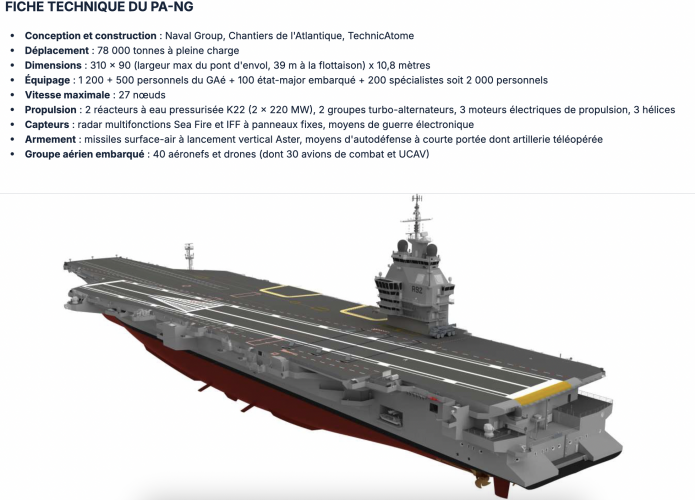
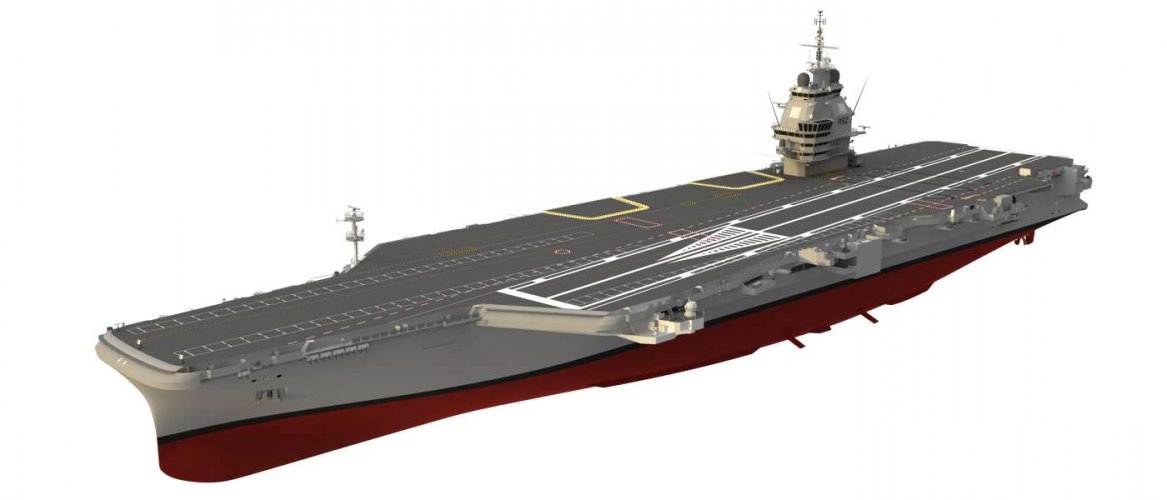
Although the next-generation aircraft carrier is not expected in Toulon until 2035, work has already begun to build the infrastructure needed to accommodate it at the naval base. Here’s an update.
The facilities dedicated to hosting, maintaining, and supporting the future nuclear aircraft carrier will be built on land reclaimed from the sea.
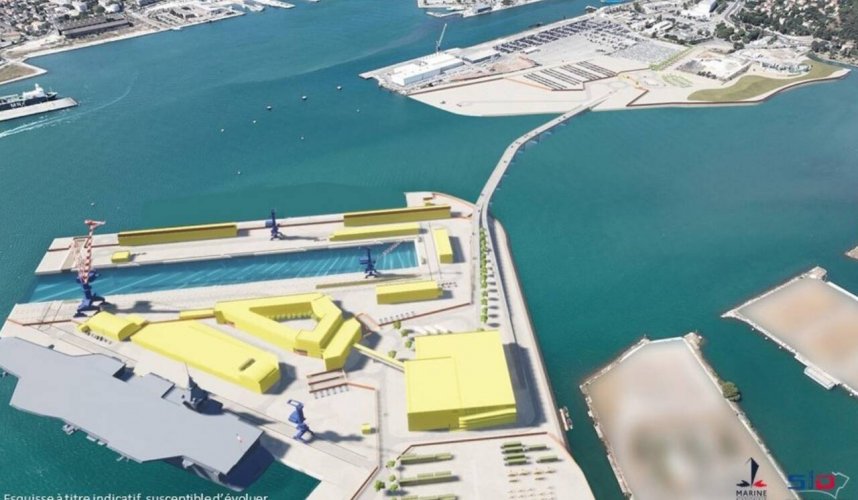
A 15-hectare polder will include 400-meter quays and a 360-meter dry dock, connected by a bridge to the Brégaillon area
For a long time, the Toulon naval base was competing with Brest to host the successor to the Charles de Gaulle. After careful consideration by the general staff, Toulon — the largest military port in Europe — ultimately won the decision in 2019. Another debate then began: where should the maintenance of this ship, far larger than the nuclear aircraft carrier currently in service with the French Navy, take place? Should one of the Vauban dry docks be converted, or should a dedicated facility be designed?
"To better control costs and scheduling, we chose to build new infrastructure, as an integral part of the combat tool. This solution also allows us to preserve the full maintenance capacity of the Vauban complex," explains Vice Admiral Christophe Lucas, Maritime Prefect for the Mediterranean.
The project of a lifetime
While the military remains discreet about the cost of the operation (1) — “It’s confidential, all the more so as we are still in the consultation phase with companies,” specifies Admiral Lucas — one thing is certain: “This is an extraordinary project, the likes of which have not been carried out within a French operational military facility for 40 years. Back then, it was Dry Dock No. 10, built for the maintenance of nuclear ballistic missile submarines,” says General Engineer Pierre-Jean Rondeau, Director of the Defense Infrastructure Service (SID) for the Mediterranean.
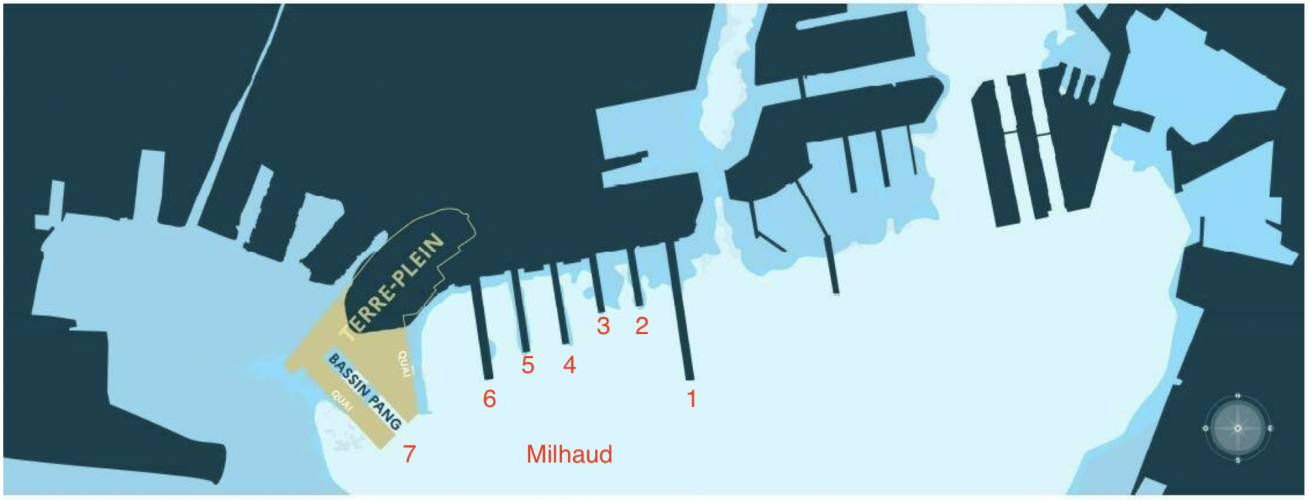
And indeed, the upcoming construction project is on an exceptional scale. “We are going to reshape the naval base for the years to come,” insists the maritime prefect. On the western side of Quai Milhaud 6 – the berth of the Charles de Gaulle – at the border with the Pyrotechnics area, the French Navy will reclaim 15 hectares from the sea. By way of comparison, the Vauban islet, where the main warships based in Toulon are currently maintained, covers “only” 11 hectares. “As an extension of the current Drop Zone, a 15-hectare polder (an artificial stretch of land reclaimed from the sea) will be created. In addition to a 400-meter-long quay and a 360-meter dry dock that meet the Navy’s strict requirements, this polder will include hangars, storage areas, offices, and a parking lot… everything necessary to maintain and support the PA-Ng (next-generation aircraft carrier),” explains Admiral Lucas.
A 500m bridge that will become a 4th entrance
But the most spectacular element of the project, at least the most visible, will undoubtedly be the construction of a 500-meter-long bridge linking Toulon’s naval base to the Brégaillon port area, located in the commune of La Seyne. In an article published on June 3, 2024, Var-matin had already raised this possibility. A year later, the French Navy has confirmed the option. “The bridge will have sufficient clearance to allow the passage of ‘bugalets,’ those small boats that transport munitions between the pyrotechnics site and the warships,” comments General Engineer Rondeau. “Twenty thousand people enter and exit the naval base every day. By absorbing the traffic related to the project, this bridge will prevent access difficulties to the military compound from worsening (…) At the end of the works, the structure will not be demolished, but converted into a 4th entrance. It will therefore help ease congestion at the three current access gates,” adds the maritime prefect.
But we are not there yet. The serious work will only begin in 2027 with dredging operations in the far western part of the small harbor. On this subject, “in a circular logic,” the sediments recovered will, whenever possible, be reused in the construction of the polder, for which Belgian or Dutch companies might be called upon. “The European leaders in land reclamation,” says Admiral Lucas.
More than 1,000 workers per day!
For now, the study phase that began in 2023 is continuing. These include clearance studies, currentology studies, studies on the biodiversity of local flora and fauna, as well as on water quality. Even preventive archaeology studies. “In the area where the PA-Ng facilities are to be built, there used to be an island. We are almost certain to discover interesting remains, such as ceramics,” explains the director of SID Méditerranée. As for pyrotechnic pollution, the military authorities are fairly confident. “We have detected metallic debris probably from the scuttling of the fleet, but since the area was relatively far from any activity during World War II, we believe there are very few unexploded munitions,” says Admiral Lucas.
The admiral emphasizes one final point: “The project, which could involve more than 1,000 workers per day, will be an economic driver for the region. But we do not have two or three years of leeway. The infrastructures must absolutely be completed by 2035, the year when the next-generation aircraft carrier is due to arrive in Toulon for its fitting-out operations.”