
You are using an out of date browser. It may not display this or other websites correctly.
You should upgrade or use an alternative browser.
You should upgrade or use an alternative browser.
PA NG - next gen French Aircraft carrier program
- Thread starter JAZZ
- Start date

Kurapika444
ACCESS: Confidential
- Joined
- 23 October 2024
- Messages
- 64
- Reaction score
- 124
No one is beefing lol.
However I'd say it's more about what the French Navy can "afford" rather than "want". I'm sure they'd love to have 4 catapults on a Gerald Ford sized carrier but without negatively impacting the rest of the fleet.
However I'd say it's more about what the French Navy can "afford" rather than "want". I'm sure they'd love to have 4 catapults on a Gerald Ford sized carrier but without negatively impacting the rest of the fleet.
Scott Kenny
ACCESS: USAP
- Joined
- 15 May 2023
- Messages
- 19,511
- Reaction score
- 27,956
Cost, both initial and maintenance. Though I'd hope the French Navy avoids "fitted for, but not with, 3 catapults" like the incoming nuke it is.If the third 'cat' is possible, why not?
That's running into manning issues more than buying the extra steel to make a 100kton ship instead of a 75kton ship. A Coral Sea-sized angled flight deck really only has space for 3x catapults, there's not enough beam to allow an inboard waist cat to clear the landing pattern. But there is space for 2 cats in the bow and 1 at the waist, and for all 3 of those cats to clear the landing pattern.However I'd say it's more about what the French Navy can "afford" rather than "want". I'm sure they'd love to have 4 catapults on a Gerald Ford sized carrier but without negatively impacting the rest of the fleet.

Grey Havoc
ACCESS: USAP
- Joined
- 9 October 2009
- Messages
- 24,500
- Reaction score
- 18,168
https://www.navalnews.com/event-new...ines-the-next-steps-of-the-rapidfire-program/
Back in December 2024, an order by the French procurement agency (DGA) has been placed for the development continuation of the A3B ammunition as well as for the procurement of additional RAPIDFire turrets. Regarding the Navy, eight systems will equip the BRF with two on each vessel. The seven future OPVs (known as PH in French) should also receive one each just as the future five future mine countermeasure vessels (BDGM program). Finally, the question remain open to equip the future aircraft carrier with such guns. Some PA-NG models showcased by Naval Group were showing four RAPIDFire systems fitted but the latter were not the final design.
https://www.navalnews.com/event-new...-programme-approaches-key-decision-point/310m
So 3 catapults seems confirmed ...
So 3 catapults seems confirmed ...
- 310m length
- 90m beam
- 17.000 m2 flight deck
- 3 cats seems confirmed along with 3 AAG
- 2 x 40 ton lifts
- Ship-wide electrification of power systems and equipment.
- Air Wing : 30 Jets/Wingman + 3 Hawkeye + 6 Helos
- Capable of a : "Single massive strike of 27 fighters and two E-2Ds"
- On the the 3 cats : "He added that the design decision to install two EMALS tracks forward had been taken “in order to be able to operate UCAVs alongside manned aircraft, because it will not be the same launching procedures [for both aircraft types].”
- Will carry Rafale the first couple of years with a loyal wingmen and then NGF/FCAS
Last edited:
Scott Kenny
ACCESS: USAP
- Joined
- 15 May 2023
- Messages
- 19,511
- Reaction score
- 27,956
Hrm. I somehow suspect that the Air Wing will have 30x manned planes, plus another 30 or more wingman drones.Air Wing : 30 Jets/Wingman + 3 Hawkeye + 6 Helos
A 90m beam sounds a bit too wide, that would make it over 10m wider than the ford wouldn't it?https://www.navalnews.com/event-new...-programme-approaches-key-decision-point/310m
So 3 catapults seems confirmed ...
Additionally :
- 310m length
- 90m beam
- 17.000 m2 flight deck
- 3 cats seems confirmed along with 3 AAG
- 2 x 40 ton lifts
- Ship-wide electrification of power systems and equipment.
- Air Wing : 30 Jets/Wingman + 3 Hawkeye + 6 Helos
Current plans envisage assembly of PA-Ng starting at Chantiers de l’Atlantique in St Nazaire in 2032. The ship will then transfer to Toulon in mid-2035 to finish outfitting work and be fuelled prior to commencing sea trials in 2036.
- Capable of a : "Single massive strike of 27 fighters and two E-2Ds"
- On the the 3 cats : "He added that the design decision to install two EMALS tracks forward had been taken “in order to be able to operate UCAVs alongside manned aircraft, because it will not be the same launching procedures [for both aircraft types].”
- Will carry Rafale the first couple of years with a loyal wingmen and then NGF/FCAS

- Joined
- 4 July 2010
- Messages
- 2,689
- Reaction score
- 3,748
No. They would either design an aircraft to fit the carrier or continue with Rafale upgrades until money (or another multinational project) came available to design a new aircraft.If the SCAF project fails and France persues a national successor to the Rafale, will the PA design be reconsidered?

FighterJock
ACCESS: Above Top Secret
- Joined
- 29 October 2007
- Messages
- 7,227
- Reaction score
- 8,538
In that situation the Rafale would continue beyond the Rafale F5 going to the Rafale F6 standard. Either way it would not be good for France.
Kurapika444
ACCESS: Confidential
- Joined
- 23 October 2024
- Messages
- 64
- Reaction score
- 124
The french gov will not give up on the catobar design. No matter what plane ends up replacing the Rafale, it will most definitely be catobar-capable.If the SCAF project fails and France persues a national successor to the Rafale, will the PA design be reconsidered?
But that means the Rafale M will be flying until 2050 because of the SCAF delays.... It'll be quite outdated and this time France can't go the solitary route as the cost for the program is much higher than it was for Rafale (even with inflation accounted for) and the finances of the country are in a catastrophic state compared to the 80s.
Unless the planners decide they need a larger air wing there won't be any changes.
PANG is designed to fit the Rafale and SCAF that don't have folded wings! So it can easily fit any current and future carrier based aircraft unless everyone suddenly decides to change their size format.
The bigger issue are the reactors. A larger carrier would have to have 3 of the same reactor. That would take up a lot of space and be inefficient. For better efficiency they would need to design new larger & more powerful reactors. The cost would skyrocket compared to the modified submarine reactors.
PANG is designed to fit the Rafale and SCAF that don't have folded wings! So it can easily fit any current and future carrier based aircraft unless everyone suddenly decides to change their size format.
The bigger issue are the reactors. A larger carrier would have to have 3 of the same reactor. That would take up a lot of space and be inefficient. For better efficiency they would need to design new larger & more powerful reactors. The cost would skyrocket compared to the modified submarine reactors.
Kurapika444
ACCESS: Confidential
- Joined
- 23 October 2024
- Messages
- 64
- Reaction score
- 124
Why would the size change?Unless the planners decide they need a larger air wing there won't be any changes.
PANG is designed to fit the Rafale and SCAF that don't have folded wings! So it can easily fit any current and future carrier based aircraft unless everyone suddenly decides to change their size format.
The bigger issue are the reactors. A larger carrier would have to have 3 of the same reactor. That would take up a lot of space and be inefficient. For better efficiency they would need to design new larger & more powerful reactors. The cost would skyrocket compared to the modified submarine reactors.
Even if SCAF was scrapped for something else, the carrier would keep the same general specifications because whatever replaces SCAF wouldn't be that different from it.
Rafale Ms will be flying until 2050+ anyway since a dozen or so Rafale M F5s will be ordered soon for delivery in the early 2030s, to help spread out fleet utilization and flight hours across more airframes. The current fleet of 40 Rafale Ms being rather overworked.But that means the Rafale M will be flying until 2050 because of the SCAF delays.... It'll be quite outdated and this time
These new Rafale M F5s will probably make it to 2070, and much like the Super Etendards before them can be expected to serve in important secondary roles such as buddy tanking, anti-shipping, close air support etc as a complement to the latest gen strike fighters.
Last edited:
Found on another forum
https://www.meretmarine.com/fr/defe...eger-surcout-pour-un-gain-operationnel-enorme
The Defense Security Cooperation Agency (DSCA) had estimated the amount of the sale at about 1.2 billion euros for 2 EMALS systems and 1 AAG with 3 arresting gears.
A configuration made possible by the ship's imposing size, this aircraft carrier with a length of 310 meters for a maximum width of 85 meters (39 at flotation) will display a displacement of 78,000 tons. Dimensions that also allow, which was not possible with the Charles de Gaulle, to be able to simultaneously carry out docking and catapulting operations, since the EMALS located on starboard will not overflow on the landing strip.
It now appears that the cost of a 3rd catapult would be much lower than it seems.
The 1.2 billion euros announced a little over three years ago integrates not only 2 EMALS, but also the AAG system, and especially that it is not really a question of acquiring a third EMALS but simply the catapult rail.
"Each EMALS system includes, in addition to a rail that will guide the aircraft and make it take the speed, an energy generation system and a control system.
However, the latter two have been sized by the Americans for two catapults, because the Fords have four rails.
This means that by purchasing two EMALS, we already have the control/command and energy generation systems sized for four catapults. We will not be able to put that many on the PA-NG but, to have a third, it is enough to acquire an additional rail, which is much less expensive."
But then, how much would the bill be for this third rail?
"It will not be in tens of millions of euros, but not in hundreds of millions either".
In short, the cost is therefore somewhere between 100 and 200 million euros.
That is a maximum of 1 to 2% of the investment that the PA-NG program will require, today valued at more than 10 billion euros, excluding on-board aviation.
It is also interesting to note, in this regard, that the cost of the third rail would therefore be barely equivalent to the purchase of a pair of combat aircraft...
"The operational consequences are enormous.
When you have to send a massive strike force, let's say about twenty combat aircraft, at the rate of one aircraft catapulted per minute on each catapult, or two devices with two catapults, it takes 20 minutes to air this bridge. However, the first aircraft launched are waiting for the last ones, thus consuming oil, which has an impact on their autonomy.
With a third catapult, the duration of this phase is reduced by a third, it is considerable. In addition, an additional catapult provides valuable redundancy in the event of damage to one of the rails. This question is therefore crucial for the operational capabilities of the future aircraft carrier.”
The Americans themselves, who follow the PA-NG project with great interest, since with it Europe and NATO will have for the first time an aircraft carrier equivalent to theirs, believe that equipping a ship of this size with only two catapults would be a "waste".
https://www.meretmarine.com/fr/defe...eger-surcout-pour-un-gain-operationnel-enorme
The Defense Security Cooperation Agency (DSCA) had estimated the amount of the sale at about 1.2 billion euros for 2 EMALS systems and 1 AAG with 3 arresting gears.
A configuration made possible by the ship's imposing size, this aircraft carrier with a length of 310 meters for a maximum width of 85 meters (39 at flotation) will display a displacement of 78,000 tons. Dimensions that also allow, which was not possible with the Charles de Gaulle, to be able to simultaneously carry out docking and catapulting operations, since the EMALS located on starboard will not overflow on the landing strip.
It now appears that the cost of a 3rd catapult would be much lower than it seems.
The 1.2 billion euros announced a little over three years ago integrates not only 2 EMALS, but also the AAG system, and especially that it is not really a question of acquiring a third EMALS but simply the catapult rail.
"Each EMALS system includes, in addition to a rail that will guide the aircraft and make it take the speed, an energy generation system and a control system.
However, the latter two have been sized by the Americans for two catapults, because the Fords have four rails.
This means that by purchasing two EMALS, we already have the control/command and energy generation systems sized for four catapults. We will not be able to put that many on the PA-NG but, to have a third, it is enough to acquire an additional rail, which is much less expensive."
But then, how much would the bill be for this third rail?
"It will not be in tens of millions of euros, but not in hundreds of millions either".
In short, the cost is therefore somewhere between 100 and 200 million euros.
That is a maximum of 1 to 2% of the investment that the PA-NG program will require, today valued at more than 10 billion euros, excluding on-board aviation.
It is also interesting to note, in this regard, that the cost of the third rail would therefore be barely equivalent to the purchase of a pair of combat aircraft...
"The operational consequences are enormous.
When you have to send a massive strike force, let's say about twenty combat aircraft, at the rate of one aircraft catapulted per minute on each catapult, or two devices with two catapults, it takes 20 minutes to air this bridge. However, the first aircraft launched are waiting for the last ones, thus consuming oil, which has an impact on their autonomy.
With a third catapult, the duration of this phase is reduced by a third, it is considerable. In addition, an additional catapult provides valuable redundancy in the event of damage to one of the rails. This question is therefore crucial for the operational capabilities of the future aircraft carrier.”
The Americans themselves, who follow the PA-NG project with great interest, since with it Europe and NATO will have for the first time an aircraft carrier equivalent to theirs, believe that equipping a ship of this size with only two catapults would be a "waste".
Last edited:
Scott Kenny
ACCESS: USAP
- Joined
- 15 May 2023
- Messages
- 19,511
- Reaction score
- 27,956
And it's honestly the redundancy that is more valuable than the faster time to get a strike fully launched most of the time."The operational consequences are enormous.
When you have to send a massive strike force, let's say about twenty combat aircraft, at the rate of one aircraft catapulted per minute on each catapult, or two devices with two catapults, it takes 20 minutes to air this bridge. However, the first aircraft launched are waiting for the last ones, thus consuming oil, which has an impact on their autonomy.
With a third catapult, the duration of this phase is reduced by a third, it is considerable. In addition, an additional catapult provides valuable redundancy in the event of damage to one of the rails. This question is therefore crucial for the operational capabilities of the future aircraft carrier.”
France, please buy the third EMALS (rails), it would add a whole lot of reliability for the money!
Consdering how expensive this carrier is going to be i don't think france can afford a third rail. (Frankly im not sure france can afford this carrier anyway, but any cost savings are probably going to be used)And it's honestly the redundancy that is more valuable than the faster time to get a strike fully launched most of the time.
France, please buy the third EMALS (rails), it would add a whole lot of reliability for the money!
Consdering how expensive this carrier is going to be i don't think france can afford a third rail. (Frankly im not sure france can afford this carrier anyway, but any cost savings are probably going to be used)
Not sure either that France, a medium+ power, can afford such a nuclear monster. But if it can, I don't think the cost of a third EMALS will be considered excessive - not against such major advantages listed above thread. France has enough carrier experience (indigenous since 1955) to get the best bang for the buck.
Agree.And it's honestly the redundancy that is more valuable than the faster time to get a strike fully launched most of the time.
I think the messaging around a massive strike is more there to appeal to the French obsession with nuclear deterrence.
The ASMPA or subsequent ASN4G will be deployed on PANG, and to be credible you need to be able to send a massive alpha strike very far away.
Scott Kenny
ACCESS: USAP
- Joined
- 15 May 2023
- Messages
- 19,511
- Reaction score
- 27,956
With the described numbers floating around for the 3rd rail being ~100mil, if France can't find enough change under the couch maybe they need new accountants?Consdering how expensive this carrier is going to be i don't think france can afford a third rail. (Frankly im not sure france can afford this carrier anyway, but any cost savings are probably going to be used)

mokahete
ACCESS: Confidential
- Joined
- 18 April 2025
- Messages
- 196
- Reaction score
- 298
Uk can afford 2 carriers, 60k+ tons each, twin islands.With the described numbers floating around for the 3rd rail being ~100mil, if France can't find enough change under the couch maybe they need new accountants?
Yet couldn't spend little more to choose catobar configuration.
Even a single EM rail would have been superior performance wise.
Scott Kenny
ACCESS: USAP
- Joined
- 15 May 2023
- Messages
- 19,511
- Reaction score
- 27,956
That was mostly due to waffling. The initial decision to go no-cats was poor, but they waited far too long to reverse it. Much of the ship would have had to be torn apart to install cats, which raised the cost far above what the UK could pay.Uk can afford 2 carriers, 60k+ tons each, twin islands.
Yet couldn't spend little more to choose catobar configuration.
Even a single EM rail would have been superior performance wise.
Lessons learned:
1) design for the most capability
2) do NOT attempt to change specifications mid-way, it will only make you look stupid.

Titus K
ACCESS: Top Secret
- Joined
- 6 September 2025
- Messages
- 817
- Reaction score
- 2,777
PA-NG: a nuclear electric propulsion
https://www.meretmarine.com/fr/defense/pa-ng-une-propulsion-electrique-nucleaire
https://www.meretmarine.com/fr/defense/pa-ng-une-propulsion-electrique-nucleaire
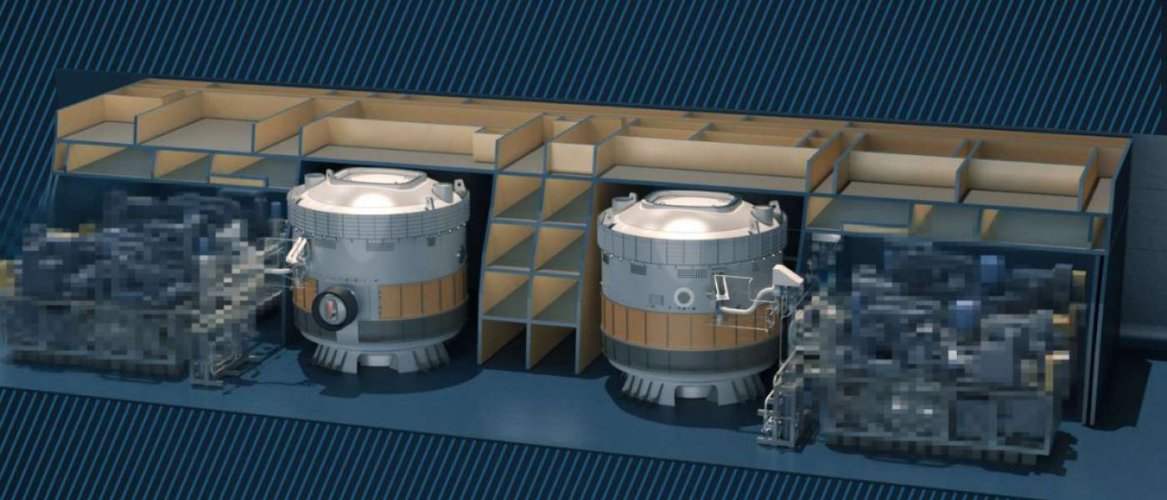
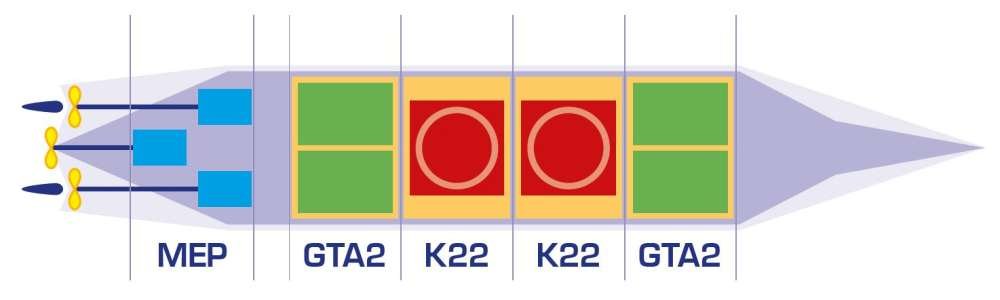
With the PA-NG, propulsion is fully electric thanks to a new Steam Energy Conversion system (CEV) developed by TechnicAtome, Naval Group, and Chantiers de l’Atlantique. All of the thermal power generated by the reactors will be converted into electricity through turbo-generator units.
A redundant power plant will manage distribution to all of the ship’s systems and equipment, from lighting and air conditioning to sensors, weapon systems, kitchen cold storage, as well as the electromagnetic catapults and arresting gear on the flight deck. But also—and this is the major innovation—to the propulsion system itself.
This fully electric architecture, already mastered by Chantiers de l’Atlantique on large cruise liners, is a first for a major warship.
The main advantage of the CEV is its flexibility of use: it allows power to be instantly distributed according to demand, optimizing energy consumption as well as reactor performance, especially during changes in operating regime when increasing speed. As a result, the reactors will be less harshly stressed by power surges.
Thanks to optimization of the energy/propulsion systems, as well as the hull design—whose hydrodynamics have been refined to minimize drag—the power required for the PA-NG to move is significantly reduced compared to its predecessor.
In fact, the installed power amounts to only 440 MW (thermal) across two reactors for a 78,000-ton ship, compared to 300 MW for the Charles de Gaulle and its 42,500 tons. These gains are achieved in particular on propulsion thanks to the electric architecture.
Given the power generated, it is necessary to move from two to three propellers. But once again, thanks to electric drive, one major constraint of traditional propulsion systems can be avoided: mechanical transmission requires long shafts running through much of the ship to connect to the engines.
Here, energy is carried simply by cables to three electric propulsion motors (MEPs), which drive much shorter shafts. This greatly eases the layout of onboard spaces, offering considerable volume savings.
Electric propulsion is also quieter, an advantage for warships in terms of acoustic stealth, making it a major step forward for the PA-NG program.
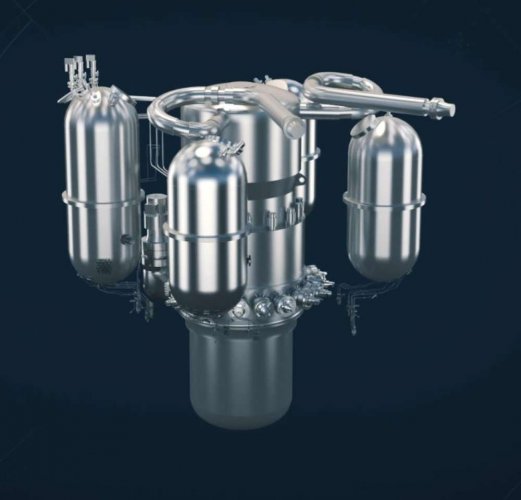
Finally, it should be noted that the large energy reserves of the K22 reactors will extend the interval between nuclear refuelings. Instead of every 8.5 years, as with the Charles de Gaulle, they will now take place every 10 years.
As for the ship’s operational availability, it will be able to reach 300 days per year.
Attachments
Last edited:
Meretmarine.com has a 14 parts (!) writing on PA-NG : unfortunately behind a paywall, albeit I respect that: they have to earn a living.
https://www.meretmarine.com/fr/dossiers/porte-avions-de-nouvelle-generation-pa-ng
https://www.meretmarine.com/fr/dossiers/porte-avions-de-nouvelle-generation-pa-ng
Scott Kenny
ACCESS: USAP
- Joined
- 15 May 2023
- Messages
- 19,511
- Reaction score
- 27,956
I expected IEP. I was not expecting the relatively reduced power installed, only +50% over the CdG.
The longer time between refuelings is a good step, too.
I'm not sure what they mean by 300 days/year operational availability, though.
The longer time between refuelings is a good step, too.
I'm not sure what they mean by 300 days/year operational availability, though.
Probably means that outside of major docking periods (every 10 years), and likely 1 or 2 shorter 4-6 month maintenance periods in between, in most years PANG will only require 2 months a year of scheduled maintenance / holiday downtime.I'm not sure what they mean by 300 days/year operational availability, though.
The other 10 months of the year it will be operational, either at sea or alongside on some alert status (48h to 1 week typically).
Given that CdG’s availability is already excellent (~1,100 days at sea during each 8 year operational cycle between major docking periods, which is basically as many sea days as the RN’s 2 carriers combined), this should be quite remarkable.
Last edited:
Titus K
ACCESS: Top Secret
- Joined
- 6 September 2025
- Messages
- 817
- Reaction score
- 2,777
The operational top speed seems to be 27 knots, wich isn't really surprising since it's the top speed of most french escorts (FREMM/FDI)
PANG should feature 17000 m2 of deck space, 4500 m2 of hangar space, 2x 50 tonnes lifts (Starboard) and 3 EMALS catapults (almost confirmed).
Despite the displacement of 78 000 tonnes, the draft should only be 30cm more than CdG (10.8 vs 10.5 meters)
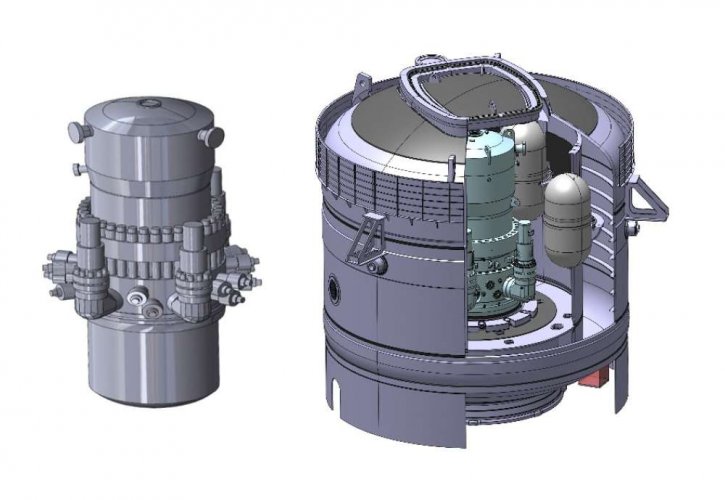
K22 with their shell (pic nº1 above) are 15 meters high and weight 2000 tonnes (vs 800 tonnes for K15)
It shoud be able to genetare 1,5 to 2 times more sorties than CdG.
Will still be capable of launch and recovery in sea states 6-7, instead of 5-6 on CdG.
Air Wing should be around 40 aircrafts : 30 fixed wing jets (manned or unmanned), 2-3 Hawkeyes, 5-6 Helicopters.
This seems to be a relatively conservative estimate, because it is stated that the flight deck alone :
PANG should feature 17000 m2 of deck space, 4500 m2 of hangar space, 2x 50 tonnes lifts (Starboard) and 3 EMALS catapults (almost confirmed).
Despite the displacement of 78 000 tonnes, the draft should only be 30cm more than CdG (10.8 vs 10.5 meters)
K22 with their shell (pic nº1 above) are 15 meters high and weight 2000 tonnes (vs 800 tonnes for K15)
It shoud be able to genetare 1,5 to 2 times more sorties than CdG.
Will still be capable of launch and recovery in sea states 6-7, instead of 5-6 on CdG.
Air Wing should be around 40 aircrafts : 30 fixed wing jets (manned or unmanned), 2-3 Hawkeyes, 5-6 Helicopters.
This seems to be a relatively conservative estimate, because it is stated that the flight deck alone :
For example, PANG is designed to be able to line up on its flight deck no less than 27 new generation fighters and 2 Hawkeye E-2D radar aircraft ready to be catapulted.
Titus K
ACCESS: Top Secret
- Joined
- 6 September 2025
- Messages
- 817
- Reaction score
- 2,777
According to Mer et Marine, a second PANG would cost roughly half the price of the first.
So around 5 Billion € ?
https://www.meretmarine.com/fr/defense/la-question-d-un-second-porte-avions
Incidentally, we know that the new facilities being built in Toulon are already designed to accommodate 2 PANGs, namely 1 dry-dock and 2 piers
https://www.meretmarine.com/fr/defe...ediees-au-pa-ng-dans-la-base-navale-de-toulon

So around 5 Billion € ?
https://www.meretmarine.com/fr/defense/la-question-d-un-second-porte-avions
Under these conditions, a combat and deterrence capability as powerful as the PA-NG, of which France will be the only European country to have one, fully deserves to be doubled.
In 2023, members of parliament had a provision written into the military programming law for a technical and operational study aimed at determining the cost and feasibility of a second aircraft carrier. A decision is expected by 2030, bearing in mind that this second PA-NG would cost roughly half as much as its predecessor, mainly because the development costs will already have been paid.
In an extremely tight budgetary context, this highly political choice will obviously not be easy. However, it concerns the security of France and Europe—an issue that underpins all the others.
Incidentally, we know that the new facilities being built in Toulon are already designed to accommodate 2 PANGs, namely 1 dry-dock and 2 piers
https://www.meretmarine.com/fr/defe...ediees-au-pa-ng-dans-la-base-navale-de-toulon
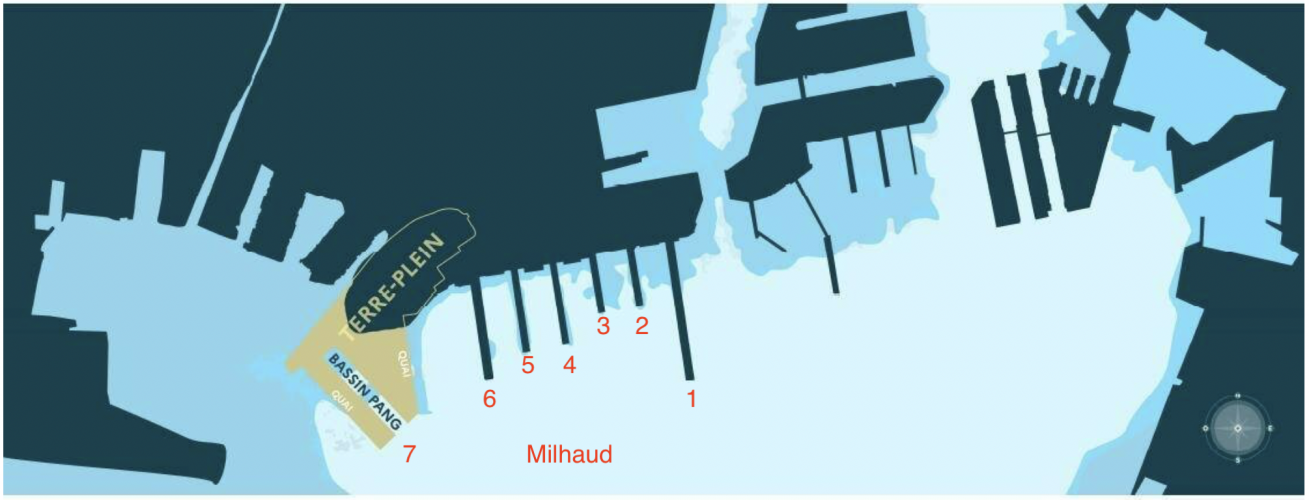
This new hub, called Milhaud 7 (the area already includes six berths, including Milhaud 6 where the Charles de Gaulledocks), will be developed on brownfield land and on a section reclaimed from the harbor. It will cover an area of 10 to 15 hectares (Vauban covers 15 ha) and will include a large dry dock, two piers, and a vast hardstand area to accommodate hangars and workshops. The nuclear facilities will remain those already in place for the SSNs and the Charles de Gaulle at Missiessy.
The new dry-dock is expected to measure over 350 meters in length and around 60 meters in width.
It should also be noted that the decision to build two large piers of about 400 meters each at Milhaud 7 will leave open the possibility of accommodating a second aircraft carrier if France decides to give the PA-NG a twin.
Last edited:
FighterJock
ACCESS: Above Top Secret
- Joined
- 29 October 2007
- Messages
- 7,227
- Reaction score
- 8,538
They should go ahead and build a second PANG carrier if the funds are available.
Titus K
ACCESS: Top Secret
- Joined
- 6 September 2025
- Messages
- 817
- Reaction score
- 2,777
A second carrier costing only 50% of the first one seems maybe a bit overly optimistic to me.They should go ahead and build a second PANG carrier if the funds are available.
Honestly 60-70% would already be great.
EMALS/AAG alone is already ~1.5 billion €, same for the 2 K22 nuclear power plants...
Last edited:
Seems possible looking at prior experience with Charles de Gaulle.A second carrier costing only 50% of the first one seems maybe a bit overly optimistic to me.
Honestly 60-70% would already be great.
EMALS/AAG alone is already 1-1.5 billion €, same for the 2 K22 nuclear power plants...
CdG's total cost was ~€3.1B, including 1/3rd R&D (i.e. €1B R&D cost + €2B production cost, both in constant 1998 values). Then a repeat carrier was expected to cost just ~€1.83B, so ~58% of CdG.
https://www.assemblee-nationale.fr/12/rap-info/i1196.asp#P446_40837
For the option of a nuclear-powered aircraft carrier directly derived from the Charles de Gaulle, DCN estimated the cost of building a nuclear aircraft carrier at €1.83 billion, plus or minus 5%, compared to €1.92 billion in May 2003. This lower number is the result of in-depth studies and functional analyses carried out by Technicatome and DCN. Although this is a firm commercial offer by DCN, the DGA considers this amount to be an underestimate, with the cost of the combat system being one of the main points of divergence.
The DGA estimate is €1.98 billion, the choice of combat system explaining the 150 million euro difference.
If one wanted to compare these numbers to PANG, one would of course have to add 30-35 years of inflation (+75-100%) and also add value added tax (+20%), which would bring CdG's cost to ~€6.5-7.5B and the cost of a follow-on CdG to €3.8-4.4B. So PANG appears to cost about 1/3rd more than CdG in an apples-to-apples comparison. A decent chunk of that is EMALS/AAG... not sure if any savings possible there.
Notice that should be a normal discount for the market.
However, the price will be highly dependent of price surges and delays that are not occasional in this industry.
Regarding the Pang surface size, @Titus K wrote :
Is that not error in the quoted hangar surface with only 4500m2 when compared to a confirmed deck surface of 17000 m2 ?
However, the price will be highly dependent of price surges and delays that are not occasional in this industry.
Regarding the Pang surface size, @Titus K wrote :
PANG should feature 17000 m2 of deck space, 4500 m2 of hangar space, 2x 50 tonnes lifts (Starboard) and 3 EMALS catapults (almost confirmed).
Is that not error in the quoted hangar surface with only 4500m2 when compared to a confirmed deck surface of 17000 m2 ?
Titus K
ACCESS: Top Secret
- Joined
- 6 September 2025
- Messages
- 817
- Reaction score
- 2,777
4500 m2 is only for the actual aircrafts, workshops and spare parts storage are not includedIs that not error in the quoted hangar surface with only 4500m2 when compared to a confirmed deck surface of 17000 m2 ?
https://www.meretmarine.com/fr/defe...tif est de lancer,aujourd'hui prévue en 2035.
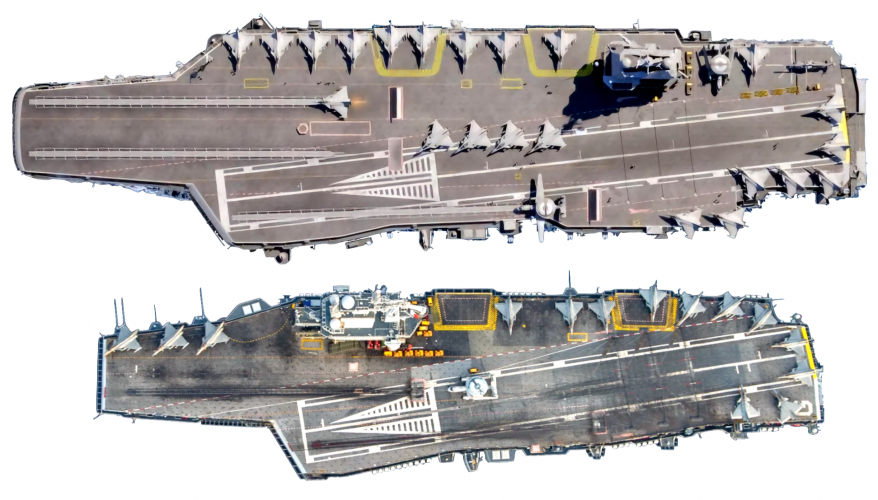
The PA-NG will measure 310 meters in length, with a maximum width of 85 meters at the flight deck and 39 meters at the waterline. Its full-load displacement will reach 78,000 tons. It will therefore indeed be significantly larger. Its flight deck will cover more than 17,000 m², compared to 12,000 m² for the Charles de Gaulle. The hangar area will increase to 4,500 m², 1,000 m² more, noting that on the PA-NG, workshops and spare parts storage areas are not included in this figure, as they will be located in dedicated spaces. The usable surface for aircraft will therefore be much greater.
- Joined
- 26 September 2008
- Messages
- 2,216
- Reaction score
- 1,541
A second carrier costing only 50% of the first one seems maybe a bit overly optimistic to me.
Honestly 60-70% would already be great.
EMALS/AAG alone is already ~1.5 billion €, same for the 2 K22 nuclear power plants...
Yeah, I don't buy it. I've seen these kinds of claims made a lot of times and they never pan out. Part of it is the assumptions--they assume that the decision to build two is made very early on, rather than later. But the problem is that there is never enough budget to pay for both at the same time, so the project gets spread out and the cost of the second one goes up. Also, there's no good way to predict inflation or supply chain costs more than a few years down the road.
Titus K
ACCESS: Top Secret
- Joined
- 6 September 2025
- Messages
- 817
- Reaction score
- 2,777
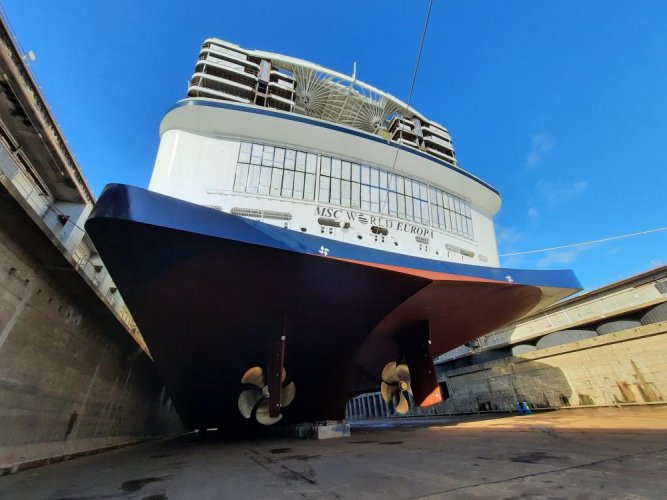
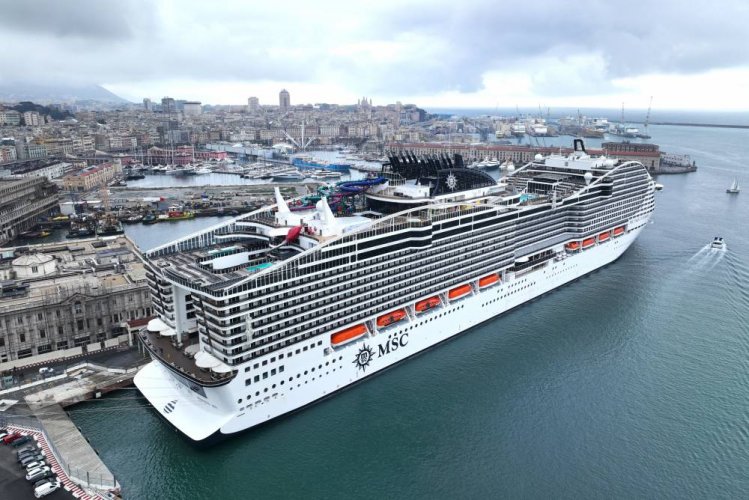
On the “ducktail” feature of the PANG, which is used to increase the waterline length
They are indeed really pushing for maximum efficiency,
This design approach may also reflect some of Chantiers de l’Atlantique’s DNA. They hold a 35% stake in the PANG joint venture (with Naval Group at 65%).
Just look at the World Class cruise ships currently under construction at Saint-Nazaire
https://en.wikipedia.org/wiki/World-class_cruise_ship
After all, the PANG will be built in the very same dry dock.
Any idea as to why other carriers aren't using the same trick? Could that indicate that the K22 reactors are somehow a bit underpowered?
They are indeed really pushing for maximum efficiency,
Thanks to optimization of the energy/propulsion systems, as well as the hull shape—whose hydrodynamics were refined to minimize drag—the power required for the PA-NG to move is significantly reduced compared with its predecessor. In fact, the installed power amounts to only 440 MW (thermal) from two boiler rooms for a 78,000-ton vessel, compared with 300 MW for the Charles de Gaulle and its 42,500 tons. The gains are achieved in particular in propulsion thanks to the electrical architecture
This design approach may also reflect some of Chantiers de l’Atlantique’s DNA. They hold a 35% stake in the PANG joint venture (with Naval Group at 65%).
Just look at the World Class cruise ships currently under construction at Saint-Nazaire
https://en.wikipedia.org/wiki/World-class_cruise_ship
After all, the PANG will be built in the very same dry dock.
Attachments
Last edited:
Yeah, this is just lenghtening the waterline without lengthening the ship itself.On the “ducktail” feature of the PANG, which is used to increase the waterline length
They are indeed really pushing for maximum efficiency,
This design approach may also reflect some of Chantiers de l’Atlantique’s DNA. They hold a 35% stake in the PANG joint venture (with Naval Group at 65%).
Just look at the World Class cruise ships currently under construction at Saint-Nazaire
https://en.wikipedia.org/wiki/World-class_cruise_ship
After all, the PANG will be built in the very same dry dock.
There's several of such tricks to lower resistance: The Dutch are looking at fitting hull vanes (basically a carefully shaped hydrofoil) to future warships. IIRC these basically lower the wake wave for decreased resistance.
Not sure if it's structurally feasible on the scale of an aircraft carrier though...
Titus K
ACCESS: Top Secret
- Joined
- 6 September 2025
- Messages
- 817
- Reaction score
- 2,777
We know the PANG will be equipped with a SEAFIRE radar mounted atop the superstructure
The 4x 5m2 pannels will provide a 360°× 90° coverage and a surveillance bubble of roughly 400 km (or about 80 km at sea level).
Also mounted on the mast will be 4 IFF antennas and an electronic-warfare suite based on R-ESM and C-ESM/COMINT systems.
But additionally :
The carrier will be fitted with at least 3 Sylver A50 VLS (24 cells) loaded with Aster 30 B1NT missiles (<150km range) ... All launchers will be sited on the port side.
The ship will also carry multiple 40mm guns (either Bofors or the CTA RapidFire).
It may additionally be equipped with SIMBAD RC Mistral launchers or the new NavalGroup MPLS/LMP launchers.
https://www.meretmarine.com/fr/defe...nt-de-general-atomics-electromagnetic-systemsScott Forney on the PANG's 3rd catapult
The 4x 5m2 pannels will provide a 360°× 90° coverage and a surveillance bubble of roughly 400 km (or about 80 km at sea level).
Also mounted on the mast will be 4 IFF antennas and an electronic-warfare suite based on R-ESM and C-ESM/COMINT systems.
But additionally :
In addition to the Sea Fire, it is planned to add a complementary rotating radar at the top of the mast, in order to guarantee monitoring capabilities and benefit from an antenna operating on a frequency band other than the main radar.
The carrier will be fitted with at least 3 Sylver A50 VLS (24 cells) loaded with Aster 30 B1NT missiles (<150km range) ... All launchers will be sited on the port side.
The ship will also carry multiple 40mm guns (either Bofors or the CTA RapidFire).
It may additionally be equipped with SIMBAD RC Mistral launchers or the new NavalGroup MPLS/LMP launchers.
https://www.meretmarine.com/fr/defe...nt-de-general-atomics-electromagnetic-systemsScott Forney on the PANG's 3rd catapult
In 2021, the U.S. government approved the export of EMALS and AAG to France, at the time citing an estimated value of about $1.3 billion. The project was based on two catapults with an option for a third. In France, many people think adding a third catapult would be very expensive, imagining a roughly 30% higher cost. In reality it would be much lower because, if a third catapult were acquired, there would be no need to buy additional energy generation and control systems — those included with the first two EMALS could handle a third, correct?
The energy generation system does not need to be increased for a third catapult, so there are no additional costs for that system.
However, additional energy management equipment as well as control and structural components are required.
The U.S. Navy regularly updates its cost estimates in accordance with the needs of the French Navy.
Last edited:
Similar threads
-
French Aircraft Carrier Never-Were Designs and Proposals
- Started by Fr05ty
- Replies: 94
-
-
 French nuclear-powered amphibious assault ship (PH 75/PA 75)
- Started by Triton
- Replies: 33
-
 Naval Group working on MUSV and LUSV concepts for French Navy (2022)
- Started by Grey Havoc
- Replies: 9
-
