My first thought when I read this thread is those UAPs being seen off the coasts. Pretty sure they are of human origins, but more of dirigible-like spheres propelled by ionic propulsion. None of the sightings go for more than a few hours, and because they are do difficult to track, you would never know their endurance. Many of them are a mere 4' in diameter, which makes me think they may not even be anything more than a hobbyist.

If you have accelerometers and near 360 degree fields of propulsion in a lighter than air sphere, you should be able to push 150+ kph in a straight line, and effortlessly adjust to wind effects, using off the shelf science. Imagine if you were using military grade technology, you could make the outer skin out of translucent, bi-directional solar collectors. That would give you significant voltage boosts for propulsion. Throw in cellphone-level cameras around the exterior, and now you have a spy probe worthy of DARPA.
 
It's amazing that some people will still invest money in such harebrained schemes, after the zillion failures.
Talk about "more money than smarts."..
 
Just for fun on Friday, I'll drop this here now,

History is positively littered with examples of world-changing innovations being dismissed by the sharpest, most-credentialed observers as pointless, dangerous, funny, or all three, before those same innovations went on to prove their critics wrong. (George Gershwin wrote a great song about it. https://genius.com/George-gershwin-they-all-laughed-lyrics)

Rail travel (1825): “The gross exaggerations of the powers of the locomotive steam-engine…may delude for a time, but must end in the mortification of those concerned.”
—Quarterly Review

The telephone (1878): “The Americans have need of the telephone, but we do not. We have plenty of messenger boys.”
—William Henry Preece, Chief Engineer of the British Post Office

Light bulbs (1879): “Everyone acquainted with the subject will recognize [Thomas Edison’s experiments] as a conspicuous failure, trumpeted as a wonderful success.”
—Henry Morton, President of the Stevens Institute of Technology

AC electricity (1889): “Fooling around with alternating current is just a waste of time. Nobody will use it, ever.”
—Thomas Edison

The automobile (1899): “The ordinary horseless carriage is, at present, a luxury for the wealthy; and although its price will probably fall in the future, it will never, of course, come into as common use as the bicycle.”
—Literary Digest

Planes (1911): “Airplanes are interesting toys but of no military value.”
—Marshal Ferdinand Foch, Supreme Commander of the Allied Armies in World War I, 1918–20

 
How "Hybrid" were Flying Whales' craft meant to be? They don't immediately look as if they're designed as an aerostat. Just a modern take on the nonrigid/semi-rigid airship (not that such an approach doesn't have its merits, I'm sure).

Well, at least there's still HAV and Lockheed... Maybe...
 
Last edited:
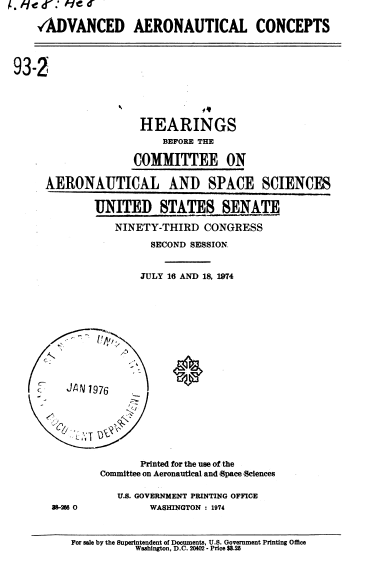
A couple of reports for the US Congress on LTAs that ye may be interested in, one from 2004, the other from 2012:
The Department of Defense (DOD) has a history of using lighter-than-air (LTA) platforms such as airships (blimps) and aerostats (tethered balloons). Aerostats have recently been fielded to protect U.S. troops in the field. Contemporary interest is growing in using airships for numerous missions. This report examines the various concepts being considered and describes the issues for Congress. This report will be updated as events warrant.

EXECUTIVE SUMMARY

In the Senate report accompanying S.1253 (S. Rept. 112-26) of the National Defense Authorization Act (NDAA) for Fiscal Year 2012, Congress tasked the Department of Defense(DoD) to provide the congressional defense committees a report that “reviews the status and future plans for DoD funded aerostats, airships, and rigid aeroshell variable buoyancy vehicle programs to ensure that the most cost-effective systems are being pursued and that the highest priority science and technology challenges for persistent unmanned capabilities are being addressed.” This document fulfills that tasking. Specifically, individual profiles for each DoD funded program are given on pages 13–36 and 40–60. The profiles detail the program origin, current status, operational characteristics, and future plans for each of the DoD funded aerostat, airship, and rigid aeroshell variable buoyancy vehicles. Where applicable, the collaboration among stakeholder organizations is noted in the program overview tables. The profiles also highlight technical objectives and science and technology challenges that are being addressed as part of the programs. Many of these challenges are being assessed through development of demonstrator-scale and hangar-model systems to establish a baseline prior to full scale system development. Moreover, small initial procurements and test platforms are being used in some cases to assess system and subsystem performance prior to higher volume acquisitions.1After comprehensive review of the DoD funded aerostat and airship programs, the investments made within DoD (including Service specific efforts) are addressing key technology areas that will enable viable lighter-than-air vehicles to contribute to our short, mid, and long term strategy for national security and defense. These technical challenges include:
Developing smaller aerostat systems with enhanced lift capabilities to provide small, mobile, tactical units with organic surveillance capabilities

  • Improving aerostat platform survivability through the development of better flightguidelines, weather forecasting architecture, and software to provide automatic alerts forprotection against environmental stress factors such as lightning and wind microbursts

  • Increasing mission duration of airships through advanced hull designs, internal structures and materials

  • Enabling vertical take-off and landing capabilities with minimal ground handling crews through development of a variable buoyancy control system and advanced forward/aft motion controls

  • Developing advanced intelligence, surveillance, reconnaissance and communications capabilities through integrated sensor payloads and on-board processing for real-time intelligence and post-mission forensics

Moreover, advances and investment in aerostat and airship technology are also being made in the private sector. The DoD is monitoring this progress and will continue to look for opportunities to advance our objectives through commercially available technology. The data and information provided in this report is accurate as of June 2012.
 
Not even a car bomb can do a 9/11...besides, DC has barriers to stop that too. Airships are fuel sippers compared to a lot of other things.
 
Not even a car bomb can do a 9/11...besides, DC has barriers to stop that too. Airships are fuel sippers compared to a lot of other things.
Not really the point. Outlawing a technology as useful as commercial fixed wing aviation in favour of the less useful airship on the basis that fixed wing aviation was once used for a terror attack is as hard to justify as outlawing all motor vehicles in favour of bikes on the basis that they could possibly be used as car bombs. The response does not match the reason.
 

Similar threads

Back
Top Bottom