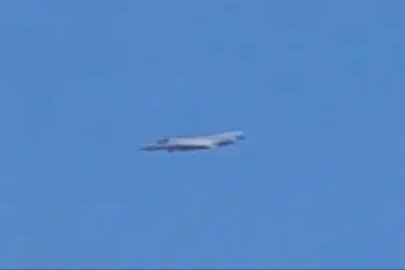
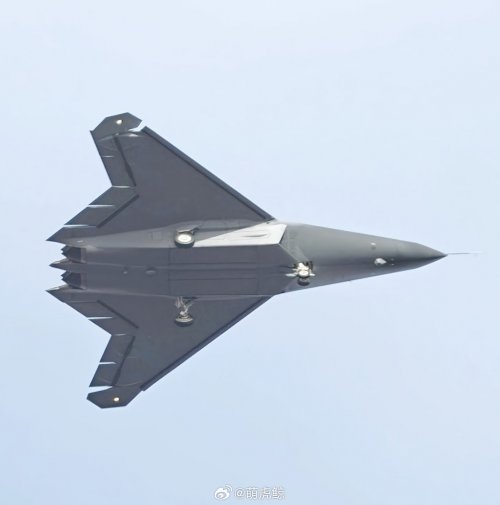
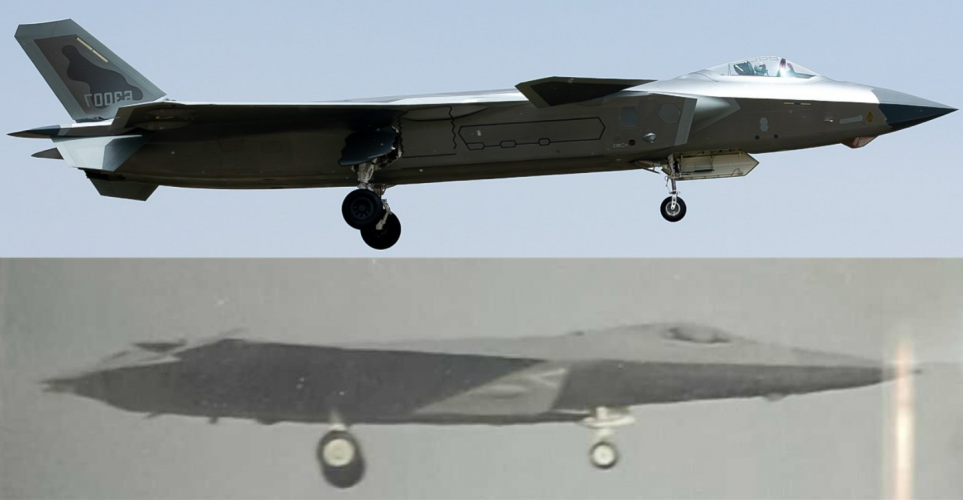
That's a rather aft position for a cockpit - what's it hiding in the nose? A weapons bay? Liftjets?

p13-side-jpg.622794
1748428419572.png
That's because J-XDS's radome is twice as long as J-20's. If you look closely you'll see the radome being a tad shadier color of grey right in front of the EOTS window. So really the actual distance between the cockpit and radome is about the same.
 
We would be rightfully curious about why such a design decision (probably a combination of drag reduction and massive front and side AESA arrays)
Fineness ratio for low drag - supercruise/high speed - maybe. No need to make a massive nose just to put your side arrays forward.
, but really alluding to something like the WW2 P13 or some other germans designs just because they were designed with cockpits far back has nothing to do with this thread.
Humour is dead, it seems.
The only modern design i can think of remotely comparable is the VTOL Yak 201 or whatever it was called.
Which put a liftjet in front of the cockpit.
 
Last edited:
One subjective, superficial and unpopular opinion, perhaps worthy of a slap in the face: That plane is simply not pretty.
 
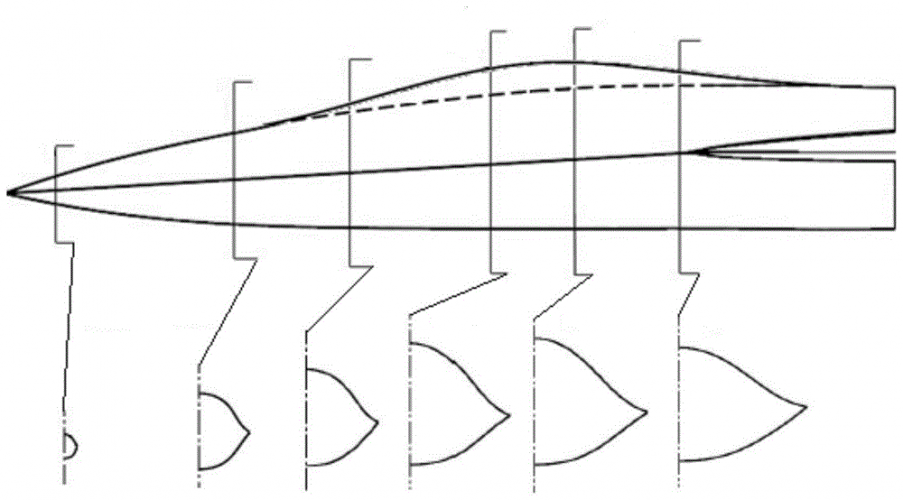
Big AESA antenna normally means WIDE radome, not LONG and pointy. Long & pointy radome is typically a bad shape for best radar performance compared to some kind of ogive.
It is WIDE though, you're forgetting that this thing has an extremely wide platypus nose. The nose array by some estimates could be as large as the V004 on the Su-34.
 
Speaking of long noses and looking for some kind of previous analogies, Su-15TM and Yak-28PM received long radomes (admittedly freaking cool looking) to iirc counter some radar interference caused by the initial shorter radome design. No idea if any of this applies to J-50 though.
Another vague theory, could the radar have a repositioner for the AESA array, so the array is further forward under the radome so as to cover the maximum side scanning area practicable (this will preclude the need for fixed side arrays)?
 
Big AESA antenna normally means WIDE radome, not LONG and pointy. Long & pointy radome is typically a bad shape for best radar performance compared to some kind of ogive.
Narrow fuselage shape (required for other reasons) means a long radome in order to have space for a wide antenna.

Another vague theory, could the radar have a repositioner for the AESA array, so the array is further forward under the radome so as to cover the maximum side scanning area practicable (this will preclude the need for fixed side arrays)?
That's another possibility, though I still suspect fixed side arrays.

Which generally means that the antenna is also farther forward from the bulkhead than a normal antenna, which forces a longer radome...
 
Operating the J-36 as a mini-AWACS would be a first for the PLAAF Scott Kenny and it could operate alongside the other AWACS in the PLAAF as well filling in gaps in the detection areas.
 
The long nose is also the result of the small buried canopy. But who knows, China is well able to experiment with flow effectors or, who knows...

... plasma stealth!
 
Speaking of long noses and looking for some kind of previous analogies, Su-15TM and Yak-28PM received long radomes (admittedly freaking cool looking) to iirc counter some radar interference caused by the initial shorter radome design. No idea if any of this applies to J-50 though.
Conical to ogival.

Another vague theory, could the radar have a repositioner for the AESA array, so the array is further forward under the radome so as to cover the maximum side scanning area practicable (this will preclude the need for fixed side arrays)?
Yep, could be. I think multiple arrays is better if you can afford cost, weight, power, volume.
 
Maybe they just put it there for area rule reasons?
This Lippisch design based on the DM-1 was to be a coal-fired ram jet fighter and only armed with cannons. A prototype with a ram jet was never flown to my knowledge but the configuration does have quite an aft cg, probably would have been difficult to fly. The XF-92 was spawned from this configuration which then evolved into the F-102 and F-106 fighters.
 
This Lippisch design based on the DM-1 was to be a coal-fired ram jet fighter and only armed with cannons. A prototype with a ram jet was never flown to my knowledge but the configuration does have quite an aft cg, probably would have been difficult to fly. The XF-92 was spawned from this configuration which then evolved into the F-102 and F-106 fighters.
I was responding to Overscan's original question about the canopy position on the J-50.
 
Big AESA antenna normally means WIDE radome, not LONG and pointy. Long & pointy radome is typically a bad shape for best radar performance compared to some kind of ogive.

The cross section of this aircraft's nose is such that the radome bulkhead will be wide.

Remember, that is just a side image and from the side profile the radome looks long and pointy. From the underside it will look wide and long and pointy.

Meaning for where the radome bulkhead is actually located -- rearward, on a wide and long radome/nose, you'll probably get a rather large radar out of that.

20250528_181314.jpg
 
I would assume this is an air superiority fighter where the J-36 seems to be a medium attack platform. To maintain LO, they would have to lock-out the wing tip surfaces for penetration, the SU-57 would have to lock-out the LEX surfaces to maintain LO as well if the Russian are planning to operate the -57 as an LO or semi-LO platform.
 
I would assume this is an air superiority fighter where the J-36 seems to be a medium attack platform. To maintain LO, they would have to lock-out the wing tip surfaces for penetration, the SU-57 would have to lock-out the LEX surfaces to maintain LO as well if the Russian are planning to operate the -57 as an LO or semi-LO platform.

We've been through this before.

Both are air superiority aircraft, but the J-36 is arguably more bleeding edge from the perspective of system of systems, power generation, EW and range.
 
So whaat are the benefits of those movable wingtips?

Relative to what?

It's a tailless delta/lambda wing aircraft, so the all moving wingtips are a control surface for maneuvering when needed, and when cruising, they are in a position that is blended with the rest of the wing.

Essentially -- benefits in signature reduction, compared to having a more traditional separate control surface. In fact the front of the all moving wing tip has an angle to it so the moving joint itself is obscured from the frontal aspect, likely to further benefit signature reduction.
 
That's a rather aft position for a cockpit - what's it hiding in the nose? A weapons bay? Liftjets?
My guess is it's due to the design being tailless. Generally, you don't want the cockpit being too far forward and sticking up too high, especially with a higher fineness ratio design, as it can be destabilizing in yaw at high speeds and at low speeds with moderate crosswinds. It's going to be directly proportional to how much yaw power can be generated to maintain stability throughout the entire envelope.
 
Of a sort. Not so much a highly maneuverable dogfighter, the operational concept is closer to an interceptor.
the more lift and the less weight, means a lower corner velocity, the more weight higher torsional forces, the wingtips will suffer a lot of buffeting, since modern aircraft use basically the same fuel, more fuel, more weight, in few words most 6 generation aircraft are not that nimble, higher corner velocity will make lower G load and lower turn rate, higher altitude the same.

1748488759700.png
 
So without a tail fin/rudder these aircraft have reduced manoeuvrability due to controllability issues (More prone to departing from controlled flight)?
 
the more lift and the less weight, means a lower corner velocity, the more weight higher torsional forces, the wingtips will suffer a lot of buffeting, since modern aircraft use basically the same fuel, more fuel, more weight, in few words most 6 generation aircraft are not that nimble, higher corner velocity will make lower G load and lower turn rate, higher altitude the same.

View attachment 771638
Exactly.

For all the talk about the F-22 having an 83klbs MTOW, the basic mission weight with no external tanks is down around 65klbs takeoff weight. While the basic mission weight for the F-47 is around an 80klbs takeoff weight. And I suspect that the J-36 mission takeoff weight is more like 110klbs. The J-50 looks to be a smaller airframe than the J-36, so it's probably only an 80klbs mission takeoff weight.
 
We've been through this before.

Both are air superiority aircraft, but the J-36 is arguably more bleeding edge from the perspective of system of systems, power generation, EW and range.
I'll give you the J-50 for air superiority but the J-36, in my opinion looking at it's configuration and with the number of elevons plus the four (2 per side) split wingtip surfaces, not so much. The J-36 is a large platform and could function as an interceptor and medium strike but it's not designed for maneuverability. The number of elevons scream supersonic trim similar to the XB-70. Not unless you're tied to the program in some manner; systems of systems, power generation, EW, range and bleeding edge, maybe or maybe not.
 
The J-36 is a large platform and could function as an interceptor and medium strike but it's not designed for maneuverability.
Why does dogfight maneuverability matter with all-aspect ARH and IIR missiles?

All of the concepts for the US NGAD that were being publicly discussed specifically mentioned trading maneuverability for better stealth.
 
From a dead forum:


As for perforations near the intake, it looks similar to YF-23 solution:

View attachment 770677

Northrop did a lot of boundary layer laminar flow development work for sub and supersonic inlets including the airfoil work (along with NASA) with its X-21 testbed aircraft, so you can see why Northrop designed the YF-23 inlets in this manner. The X-21 was somewhat difficult in keeping the airfoil orifices open and preventing clogging to maintain maximum efficiency of the boundary layer for the purpose of drag reduction. It did make improvements but deemed not feasible for operational aircraft and for standard maintenance practices.
 
Why does dogfight maneuverability matter with all-aspect ARH and IIR missiles?

All of the concepts for the US NGAD that were being publicly discussed specifically mentioned trading maneuverability for better stealth.
Agreed, I've seen some previous posts hinting at maneuverability due to the number and configuration of the flight surfaces.
 
We've been through this before.

Both are air superiority aircraft, but the J-36 is arguably more bleeding edge from the perspective of system of systems, power generation, EW and range.
I generally agree with you that it's air superiority but think it's more. I think it's meant to do carry out a modern day pearl harbor. There's no way that chinese transport ships can reach taiwan shores without suffering heavy heavy cost unless china can preemptively destroy runways surrounding it. The range, speed, stealth, sensor package and large payload are meant for it to be self sufficient without relying on traditional strike package (electronic and surveillance support assets etc) which could give away a preemptive strike.

Also I'm not completely sold on J-36 being the more bleeding edge. There's no guarantee that J-36 3 engines are designed around the idea that a 3 stream adaptive engine with enough power generation from just 2 engines to accomplish x, y, z while the J-50 was built around the premise of the success of developing such engine and novel miniaturization of components. China has done this before with the j-20 where the overall layout is dictated by the premise that the engines it would receive were inferior to US counterparts.

Perhaps the lockheed vs boeing NGAD mirror the same history, with lockheed telling the airforce, "if you want this range and speed combo, and power generation the aircraft gonna have to be this huge" and the airforce said, "no it would cost too much to mass produce" and went with boeing more ambitious design that deliver those capabilties with a smaller aircraft, potentially more expensive and riskier development but cheaper to mass produce.
 

Similar threads

Back
Top Bottom