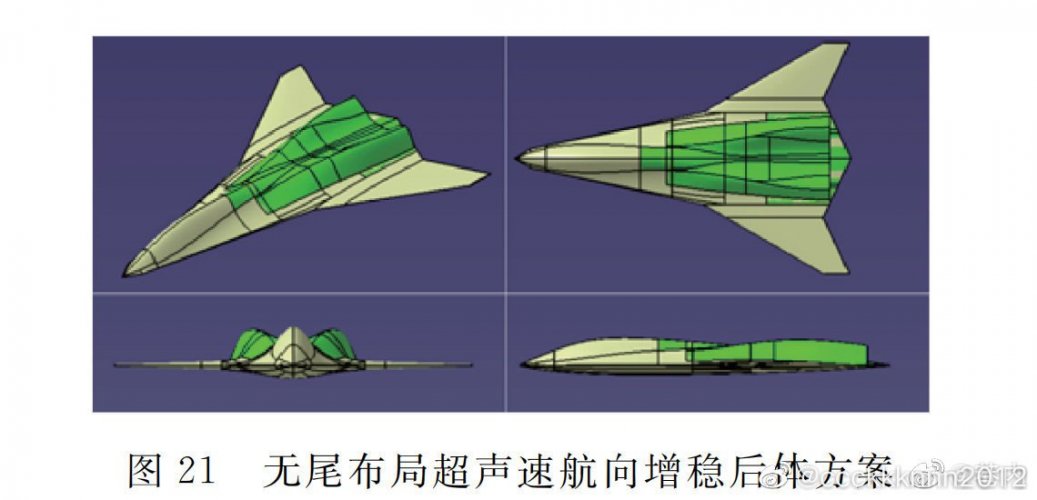
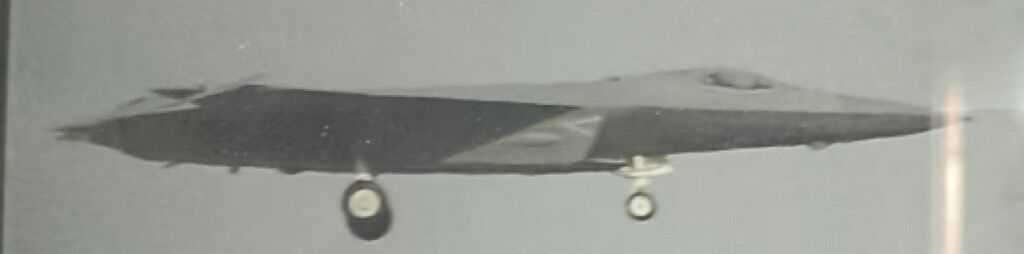
Is there any research on getting a tailless blended body aircraft to fly supersonically? I can't seem to find too many publications on this matter or is it actually just a non-issue compared to a normal aircraft?
DH.108?
 
2 supersonic all wings, one with all moving tips and the other with gapless control surfaces. But when it comes to intakes they must be stuck with a similar porous bleed to a 30 year old aircraft...:rolleyes:
From SR-71, to Eurofighter and JF-17 to YF-23 all have air bleed systems to get rid of air boundary layer, but the J-50 lacks a moving Spike like SR-71, a diverter and splitter plate like Eurofighter, a bump like JF-17 and the distance compared to YF-23 porous bleed system is much farther.

On a regular aircraft with diverters you can calculate the boundary layer thickness by the distance separating the fuselage from the intake or on a DSI from the size of the bump and the number of intakes feeding the engines YF-17 has shallower bumps than J-10C..
1747694732737.png
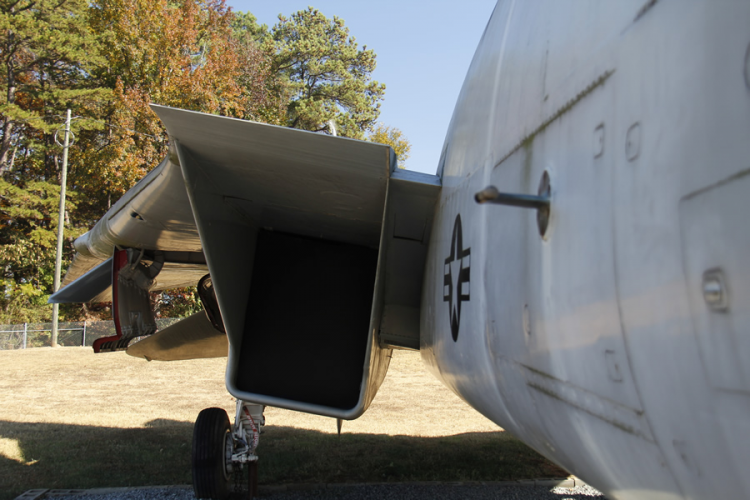
by looking to the F-14 you can see it has a wide gap between the intake and fuselage and you can calculate the air boundary layer thickness it has and the need for clean airflow for an aircraft with Mach 2.4 speed requirements
1747692767615.png

The bump on the DSI on J-20 is huge then you can calculate the air intake air flow needs and the bumps design Mach number and air boundary layer thickness it has


When you look at the F-117 you see it has very swept wings but it is subsonic, remember stealth also is a factor on wing swept too
 
Last edited:
From SR-71, to Eurofighter and JF-17 to YF-23 all have air bleed systems to get read of air boundary layer, but the J-50 lacks a moving Spike like SR-71, a diverter and splitter plate like Eurofighter, a bump like JF-17 and the distance compared to YF-23 porous bleed system is much farther.

On a regular aircraft with diverters you can calculate the boundary layer thickness by the distance separating the fuselage from the intake or on a DSI from the size of the bump and the number of intakes feeding the engines YF-17 has shallower bumps than J-10C..
View attachment 770625
by looking to the F-14 you can see it has a wide gap between the intake and fuselage and you can calculate the air boundary layer thickness it has and the need for clean airflow for an aircraft with Mach 2.4 speed requirements
View attachment 770626

The bump on the DSI on J-20 is huge then you can calculate the air intake air flow needs and the bumps design Mach number and air boundary layer thickness it has


When you look at the F-117 you see it has very swept wings but it is subsonic, remember stealth also is a factor on wing swept too
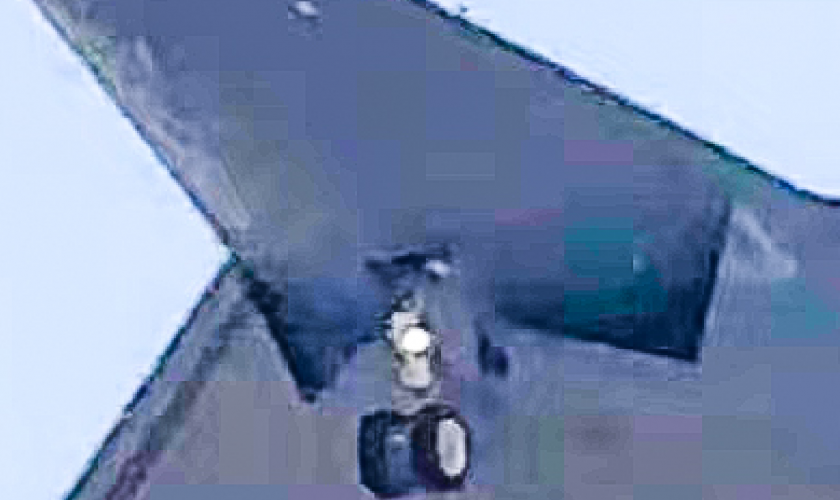
Yeah except we don't exactly know what kind of intake the J-XDS uses, surely you can't be extrapolating a blurry photo from 1 angle to definitively say it ONLY has a Boundary Layer Control System like the YF-23, and that it won't be enough for the boundary air it likely will have to direct away.

You know it could feature a novel solution which may appear similar to what you may be familiar with, but have some optimized differences to achieve sufficient boundary air removal right?
 
Have we ever seen an aircraft with what appears to be a BLCS and a bump of some kind all in the intake? Maybe just maybe it's not completely obvious what's going on, on this completely new aircraft.. Which has already introduced other novel solutions. And maybe it's not what you think it is.
1747694860011.png
1747694892419.png
1747694956998.png

Not to mention we don't have any clear imagery that shows directly Into the intake
 
From SR-71, to Eurofighter and JF-17 to YF-23 all have air bleed systems to get rid of air boundary layer, but the J-50 lacks a moving Spike like SR-71, a diverter and splitter plate like Eurofighter, a bump like JF-17 and the distance compared to YF-23 porous bleed system is much farther.

On a regular aircraft with diverters you can calculate the boundary layer thickness by the distance separating the fuselage from the intake or on a DSI from the size of the bump and the number of intakes feeding the engines YF-17 has shallower bumps than J-10C..
View attachment 770629
by looking to the F-14 you can see it has a wide gap between the intake and fuselage and you can calculate the air boundary layer thickness it has and the need for clean airflow for an aircraft with Mach 2.4 speed requirements
View attachment 770626

The bump on the DSI on J-20 is huge then you can calculate the air intake air flow needs and the bumps design Mach number and air boundary layer thickness it has


When you look at the F-117 you see it has very swept wings but it is subsonic, remember stealth also is a factor on wing swept too
What is most likely;
1. Its a subsonic aircraft despite the statements of various chinese and the mach cone/sweep/finness ratio of the airframe
2. Shenyang somehow forgot that ingesting turbulent boundary layers is bad
3. They are using some combination of DSI/bleed or even a new solution that isn't apparent in the low res/poor angle photos available

And please keep in mind that virtually all subsonic jet trainers have bleed/diverters, as did very early jet fighters like the P-80 and even piston aircraft like the P-51 or MB5. Boundary layer bleed is not exclusive to supersonic aircraft.
 
What is most likely;
1. Its a subsonic aircraft despite the statements of various chinese and the mach cone/sweep/finness ratio of the airframe
2. Shenyang somehow forgot that ingesting turbulent boundary layers is bad
3. They are using some combination of DSI/bleed or even a new solution that isn't apparent in the low res/poor angle photos available

And please keep in mind that virtually all subsonic jet trainers have bleed/diverters, as did very early jet fighters like the P-80 and even piston aircraft like the P-51 or MB5. Boundary layer bleed is not exclusive to supersonic aircraft.
1747696910692.png
And you know for 1. they gave it afterburners for an odd reason.
 
What is most likely;
1. Its a subsonic aircraft despite the statements of various chinese and the mach cone/sweep/finness ratio of the airframe
2. Shenyang somehow forgot that ingesting turbulent boundary layers is bad
3. They are using some combination of DSI/bleed or even a new solution that isn't apparent in the low res/poor angle photos available

And please keep in mind that virtually all subsonic jet trainers have bleed/diverters, as did very early jet fighters like the P-80 and even piston aircraft like the P-51 or MB5. Boundary layer bleed is not exclusive to supersonic aircraft.
supersonic aircraft need shock wave formation, F-14 has ramps, F-22 has ramps, F-35 a bump, SR-71 or Mirage 2000 cone spikes.
1747699695254.png
On F-16, F-18 or Rafale they have splitter plates with small shock wave formation for speeds below Mach 2.

The DSI has a bump to get rid of the air boundary layer but also shock wave formation.

On YF-23, its bleed system has shock waves created by the wing leading age.


J-50 has not a bump, if it has it it is too shallow for a specific high mach number.

You can be like X files motto, I want to believe, the evidence is it has not a well defined shock wave system as F-22 or J-20, not a wing leading edge like YF-23, a transonic speed of Mach 0.9 to Mach 1.1 seems more likely

 
Last edited:
It seems larger tip effectors could provide more control authority. On an LO platform, larger surfaces result in less deflection for the same required flight condition plus this goes in line with the aircraft's cg.
My guess is you're seeing the high deflections due to the relatively low speed. They may be working on "dailing in" the control responses as such. I'm willing to bet they were optimized for the cruise condition, which we haven't seen the aircraft flying at, yet and as such, they have to deflect to a much higher degree at low speeds to have any effect, as opposed to the cruise speed. Just my two cents.
 
supersonic aircraft need shock wave formation, F-14 has ramps, F-22 has ramps, F-35 a bump, SR-71 or Mirage 2000 cone spikes.
View attachment 770657
On F-16, F-18 or Rafale they have splitter plates with small shock wave formation for speeds below Mach 2.

The DSI has a bump to get rid of the air boundary layer but also shock wave formation.

On YF-23, its bleed system has shock waves created by the wing leading age.


J-50 has not a bump, if it has it it is too shallow for a specific high mach number.

You can be like X files motto, I want to believe, the evidence is it has not a well defined shock wave system as F-22 or J-20, not a wing leading edge like YF-23, a transonic speed of Mach 0.9 to Mach 1.1 seems more likely
The YF-23 had a very effective inlet system, very good performance across the altitude and mach number range. We put a lot of effort into YF-23 propulsion and aircraft performance. For example from what I understand, the 22 and 23 during dem-val had an informal ("drag race"), the 23 rapidly out accelerated the 22, the 22 could not keep up. I think it was with the YF119 22 and 23 vehicles.
 
The whole "J-50 may be subsonic" gives off huge "J-36 is a bomber not a fighter" vibes.

There isn't really any reason nowadays to develop a manned, fighter-sized, subsonic, low observable aircraft. Not even the F-35, the Joint Strike Fighter, is a purely subsonic aircraft although it's arguably optimized for sub and transsonic strike missions and intended to replace various subsonic platforms for the Air Force (A-10), Navy (A-6) or USMC (AV-8).

And given the history of SAC providing the PLAN with their carrier based fighters, one would assume this is (at least in a future iteration) a carrier borne strike fighter. Not really something you'd want to be subsonic these days. I'd expect a VLO subsonic striker to look more akin to Northrop Grummans ATA proposal, or all the various subsonic LO drones like the S-70 or X-47B. Ironically enough that's exactly how such a mission profile would be filled these days, with drones. Not with a large, manned, expensive, twin engine aircraft. Let alone one that's fighter sized and not optimized for payload and range like a B-2/A-12esque design would be.

The fact of the matter is that all of the footage we've seen so far is of incredibly poor quality and any hard guesses are just shots into the blue until better footage/info surfaces. But this being some subsonic striker seems highly unlikely given all the circumstances and the modern environment of air warfare imo.
 
With a fighter IRST sure but not a missile. It will likely be multispectral missiles like RIM-156B or AIM-7R. IIR as a terminal/CM defeat for an otherwise radar + datalink missile. Even very small missiles like MHTK have radar guidance now.
Why not IIR+datalink? IRST sends image the missile will be chasing to missile guidance, lofted flight for range, midcourse update, IIR gets lock at whatever range, boom.
 
I think people who are trying to eyeball these aircraft in a vacuum -- i.e.: without guidance form/deference to PRC language credible rumours -- are doing so with both hands tied behind their back.

For projects like this, the way that the process works is:
1. We receive guidance from PRC language credible rumours telling us what the approximate role/conops/idea of a new platform is (whether it's an aircraft, ship, missile etc)
2. We gradually receive visual evidence of various features and details...
A) the role of visual evidence is not to prove that the credible rumours are correct, instead --
B) the role of visual evidence is to see if they can disprove the credible rumours (aka the rumours form the null hypothesis)


To operate without deference to the PRC language credible rumour base is to abandon nearly 20 years of established PLA watching track record and comes across as misguided at best, or contrarian or malicious at worst.
 
You can be like X files motto, I want to believe, the evidence is it has not a well defined shock wave system as F-22 or J-20, not a wing leading edge like YF-23, a transonic speed of Mach 0.9 to Mach 1.1 seems more likely

I think we've found the new 'The Su-57 is structurally an Su-27' theory.

Setting that aside though. Why go above Mach 0.85 then? The transonic realm isn't the best place to be in. Wouldn't it make more sense to argue that this is a subsonic drone in that case?

Of course, that would also then lead to the question as to why it would have such a high power-to-weight ratio.
 
I think we've found the new 'The Su-57 is structurally an Su-27' theory.

Setting that aside though. Why go above Mach 0.85 then? The transonic realm isn't the best place to be in. Wouldn't it make more sense to argue that this is a subsonic drone in that case?

Of course, that would also then lead to the question as to why it would have such a high power-to-weight ratio.
Seriously. It's 75-90klbs thrust.
 
From a dead forum:

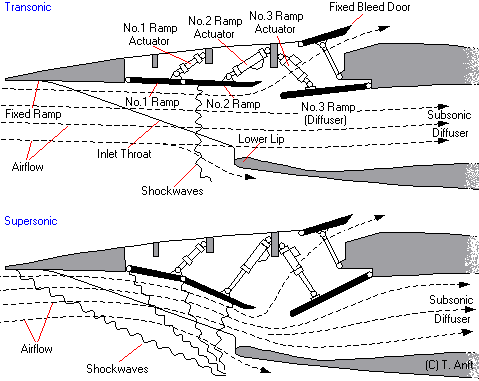
Supersonic airplanes use at least one oblique shock and one normal shock and a divergent inlet duct to recover pressure before the airflow enters the fan.
Legacy jet technology used moving inlet ramps or spikes to control the position of the final normal shock and may provide the benefit of reducing spillage drag by altering capture area.

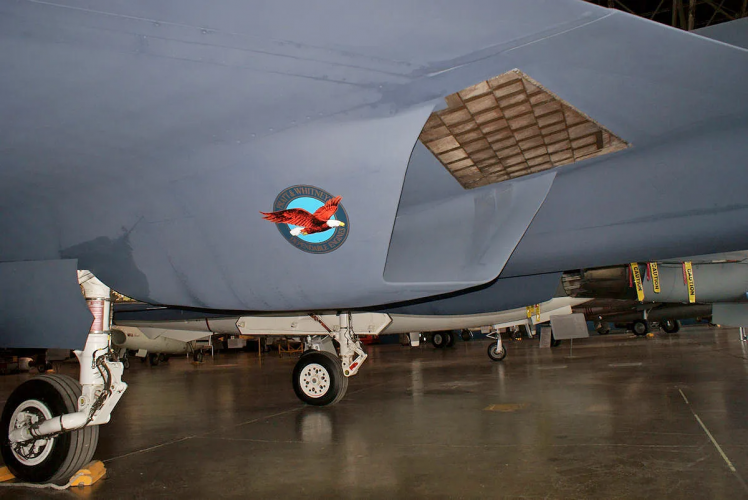
For the F-22 and F-35, oblique shocks are created by the forward most corner of the inlet lip and the normal shock is captured just behind the oblique shocks. Excess airflow is dumped overboard by pressure relief valves on the dorsal side of F-22 via sawtooth louvers, or into the F-35's engine bay through a series of slots where it ventilates the bay and exits through the sawtooth gap between the aft fuselage and engine nozzle.


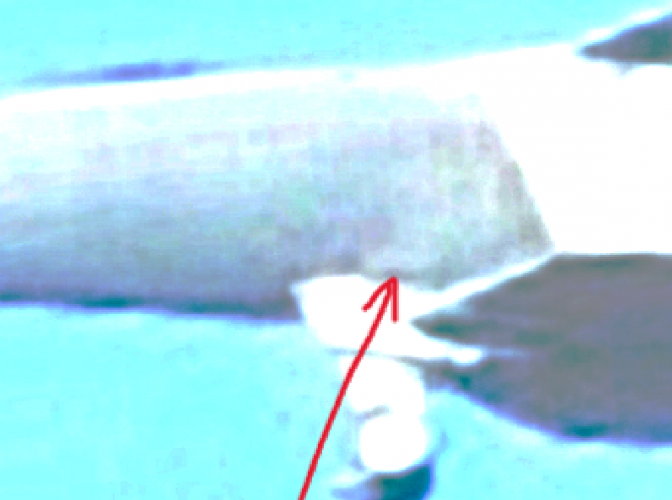
As for perforations near the intake, it looks similar to YF-23 solution:

IMG_5134.png

 
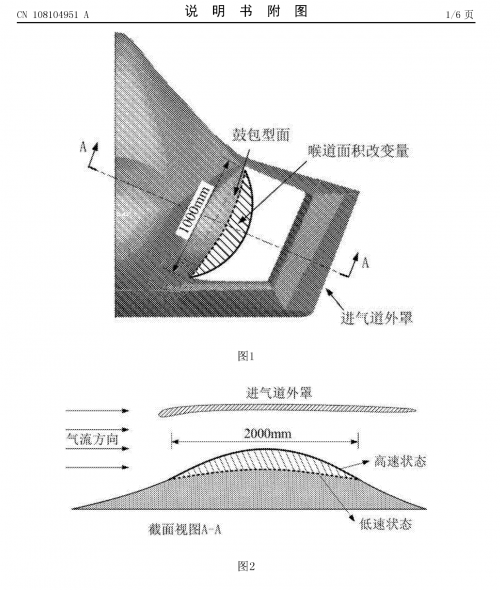
What if the suspicious surface is not actually perforated, but flexible and morphing in flight? Looking at the J-50 airbrake hinges, obviously our Chinese friends have made quite some progress with flexible RAM materials, so maybe what we actually see here is a DSI bump, but "deflated" for optimal air flow at low speed. Furthermore, being flexible doesn't mean it cannot be perforated for boundary layer suction AND "inflatable" (I have no better word) for generating supersonic shock compression wave. I admit this is very exotic and wild theory, but at this stage every theory is wild :)
 
What if the suspicious surface is not actually perforated, but flexible and morphing in flight? Looking at the J-50 airbrake hinges, obviously our Chinese friends have made quite some progress with flexible RAM materials, so maybe what we actually see here is a DSI bump, but "deflated" for optimal air flow at low speed. Furthermore, being flexible doesn't mean it cannot be perforated for boundary layer suction AND "inflatable" (I have no better word) for generating supersonic shock compression wave. I admit this is very exotic and wild theory, but at this stage every theory is wild :)
iirc there have been studies that do similar things with shape memory materials that deforms to provide better performance (can’t remember if it’s active or passive from aerodynamic heating), but I can’t locate the source rn. It’s definitely possible but as always, we’ll need higher resolution pictures to know for sure
 
What if the suspicious surface is not actually perforated, but flexible and morphing in flight? Looking at the J-50 airbrake hinges, obviously our Chinese friends have made quite some progress with flexible RAM materials, so maybe what we actually see here is a DSI bump, but "deflated" for optimal air flow at low speed. Furthermore, being flexible doesn't mean it cannot be perforated for boundary layer suction AND "inflatable" (I have no better word) for generating supersonic shock compression wave. I admit this is very exotic and wild theory, but at this stage every theory is wild :)
Boeing has patented a spiral-shaped variable DSI, I assume that the spiral portion is under a suffficiently-flexible skin material.
 
A quick question: It is now clear that the engine cowlings are rounded on top (with a trough in between the engines), somewhat similar to the underside.

It would seem to increase wetted area and also seems less ideal from a radar stealth perspective.

Any ideas why this design choice might have been made?

Increased surface area for heat dissipation? Easier access for maintenance?
Area ruling?
 
A quick question: It is now clear that the engine cowlings are rounded on top (with a trough in between the engines), somewhat similar to the underside.

It would seem to increase wetted area and also seems less ideal from a radar stealth perspective.

Any ideas why this design choice might have been made?

Increased surface area for heat dissipation? Easier access for maintenance?
Area ruling?
IIRC for supersonic flight stability.
20250520_220913.jpg
 
What if the suspicious surface is not actually perforated, but flexible and morphing in flight? Looking at the J-50 airbrake hinges, obviously our Chinese friends have made quite some progress with flexible RAM materials, so maybe what we actually see here is a DSI bump, but "deflated" for optimal air flow at low speed. Furthermore, being flexible doesn't mean it cannot be perforated for boundary layer suction AND "inflatable" (I have no better word) for generating supersonic shock compression wave. I admit this is very exotic and wild theory, but at this stage every theory is wild :)

There is this from Shenyang's sister company Chengdu aircraft corporation, it shows some sort of adjustable supersonic intake with flexible skin. Also seems to be mostly internal so if indeed related to the intake on J-XDS we probably wouldn't be able to tell unless someone peered directly into the intakes while it is deployed. Bad thing is that this intake design is for a diamond cross sectional area only (Suspiciously like the J-36, which also happens to be from Chengdu aircraft company). But it isn't to say that Shenyang couldn't have something similar working under the hood.
 
What if the suspicious surface is not actually perforated, but flexible and morphing in flight? Looking at the J-50 airbrake hinges, obviously our Chinese friends have made quite some progress with flexible RAM materials, so maybe what we actually see here is a DSI bump, but "deflated" for optimal air flow at low speed. Furthermore, being flexible doesn't mean it cannot be perforated for boundary layer suction AND "inflatable" (I have no better word) for generating supersonic shock compression wave. I admit this is very exotic and wild theory, but at this stage every theory is wild :)

Resisting the temptation to post crude comment… keep mind out of gutter… failing…
 
Have we ever seen an aircraft with what appears to be a BLCS and a bump of some kind all in the intake? Maybe just maybe it's not completely obvious what's going on, on this completely new aircraft.. Which has already introduced other novel solutions. And maybe it's not what you think it is.
View attachment 770631
View attachment 770632
View attachment 770633

Not to mention we don't have any clear imagery that shows directly Into the intake
What really puzzles me is the positioning of the nose gear and how the intake merges with the fuselage in that area.
 
this video might help to have a clue about j-50´s intakes. I hope.

View: https://www.youtube.com/watch?v=bxXSQFdYZYg
I have to admit the explanation is interesting but speculative

View: https://www.youtube.com/watch?v=RgpuReoirzk
Engineers from NASA’s Glenn Research Center, NASA’s Armstrong Flight Research Center and Boeing have successfully used shape memory alloys (SMA) to move a full-sized wing section of an F/A-18 Hornet. This test is part of a project investigating the use of shape memory alloys to fold aircraft wings in flight for enhanced aircraft performance. Get the full story at go.nasa.gov/2vUsVwg Credit: NASA
View: https://www.youtube.com/watch?v=EgLM2CHzBD8


Nasa tested a new lightweight alloy to fold the outer portions of aircraft wings during flight. The alloy is a shape-memory material, and is triggered by controlling the temperature, moving the outer wings up or down. Having flexible wings could make flights more aerodynamic for both subsonic and supersonic aircraft.


And its seems the West is not behind

But the video seems a bit speculative since the air bleeding system the intake has might not well go with that explanation.

1747785055636.png

plus is not official information but an opinion a guy made for the internet
 
Last edited:
What if the suspicious surface is not actually perforated, but flexible and morphing in flight? Looking at the J-50 airbrake hinges, obviously our Chinese friends have made quite some progress with flexible RAM materials, so maybe what we actually see here is a DSI bump, but "deflated" for optimal air flow at low speed. Furthermore, being flexible doesn't mean it cannot be perforated for boundary layer suction AND "inflatable" (I have no better word) for generating supersonic shock compression wave. I admit this is very exotic and wild theory, but at this stage every theory is wild :)
AVIC patent - https://patents.google.com/patent/CN108104951A/
morphing dvi.png
 
there is a small detail, shock waves in external compression they move aft or fore thus there is a mobile cone or ramps have variable geometry unless that is internal compression.


Supersonic Internal-Compression Inlets

For supersonic flight, the inlet must capture the airflow and decelerate it to subsonic speeds for use by the engine. An internal-compression inlet performs all of the supersonic compression within the inlet. An internal terminal shock system decelerates the flow to subsonic speed for the engine.

Supersonic External-Compression Inlets
An external-compression inlet creates an oblique shock wave system on the exterior forebody of the inlet with a strong oblique or normal shock at the entrance of the internal ducting of the inlet such that subsonic flow enters the inlet.

External-compression inlets are favorable for supersonic flight up to Mach 2. Key technologies that have been explored include vortex generators for flow control, simulation of inlet unsteadiness and buzz, reduction of a sonic boom from inlets, and the design and analysis of efficient streamline-traced external-compression inlets. The exploration of these technologies provides data for the development of future commercial supersonic aircraft.


At higher supersonic speeds, due to the nature of shock waves, the best inlet must have a variable geometry. These often produce one or several oblique shocks, as well as a normal shock, to reduce the flow to subsonic speed. They also have the ability to aid in compresion, and in the case of a ramjet do ALL the compression. Examples of this kind of inlet can be found on the F-15, the Concorde, and many other aircraft.


One other type of variable-geometry supersonic nozzle combines the internal/external compression nozzle with a mobile cone to achieve a similar effect. Nozzles of this type can be found on several older Soviet fighters like the MIG-21, as well as on the SR-71 Blackbird.
 
Last edited:
But the video seems a bit speculative since the air bleeding system the intake has might not well go with that explanation.

View attachment 770769

plus is not official information but an opinion a guy made for the internet
Sorry sir, this man is not reliable. This person has a lot of fabricated fake stuff in it. He has a precedent for falsification.
 
there is a small detail, shock waves in external compression they move aft or fore thus there is a mobile cone or ramps have variable geometry unless that is internal compression.


Supersonic Internal-Compression Inlets


One other type of variable-geometry supersonic nozzle combines the internal/external compression nozzle with a mobile cone to achieve a similar effect. Nozzles of this type can be found on several older Soviet fighters like the MIG-21, as well as on the SR-71 Blackbird.
Not to quibble with the quoted source, I believe that the MiG-21 inlet was an external compression design, with the center cone moving forward with increasing Mach number to maintain the leading oblique shock forward of the inlet lip where the normal shock was positioned.

The SR-71 with mixed compression had the cone retracting with increasing Mach number, increasing the capture area while maintaining multiple oblique shocks inside the duct to the minimum flow area where there was a terminal normal shock

Similar looking inlets, different operation.
 
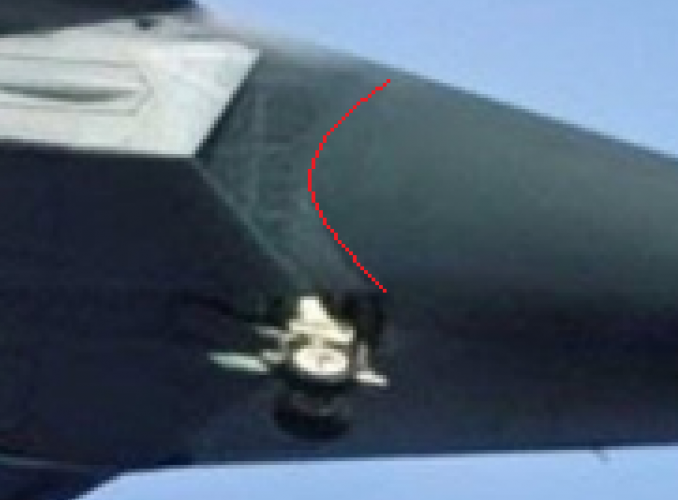
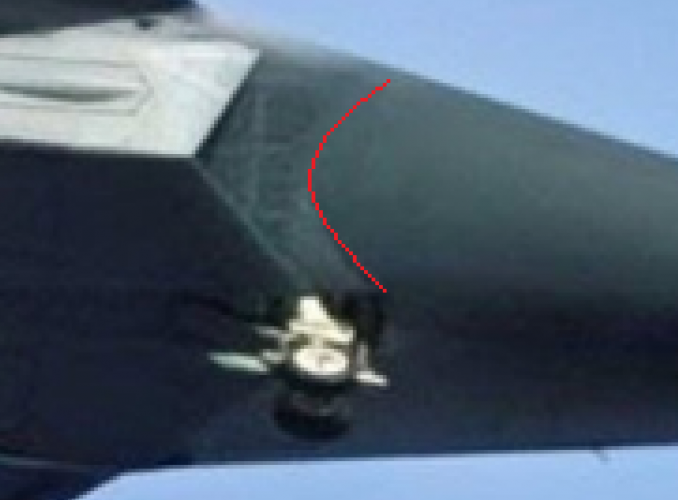
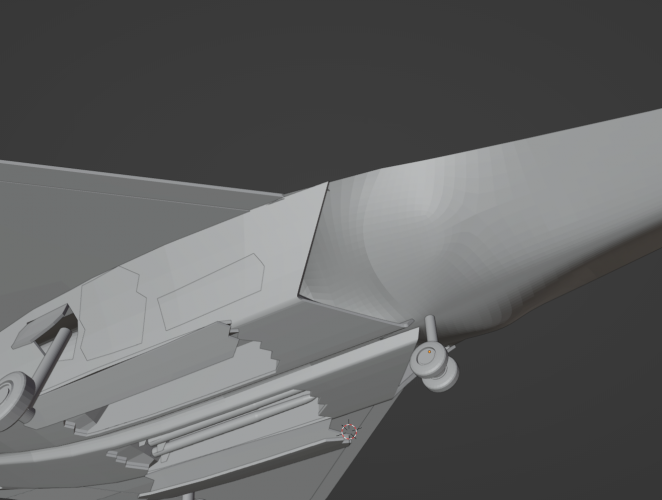
I was making a 3d model, and looking at this weirdly definite curve present in this image:
is definitely from a bump. Just an observation.
View attachment 771000
View attachment 771001
Not sure if it’s a bump in the traditional sense (if it is a bump as in bump for a DSI then it seems to be way too forward to work properly). My interpretation of it is that the underside of the nose has some weird profiles going on, and the panel at the intake section (the one with what we think are holes for BL management) is mostly flat, and that the curve we observe is simply the result of the flat plate intersecting with the curved nose profile.

Unfortunately this interpretation doesn’t explain how the intake works, and still leaves a ton of questions though, for example the exact shape and profile of the nose (and whether it serves any aerodynamic purpose regarding those intakes), and whether the flat face of the intake are parallel to the flow or have an angle to serve as a sort of compression surface.
 
That's a rather aft position for a cockpit - what's it hiding in the nose? A weapons bay? Liftjets?

p13-side-jpg.622794
 
We would be rightfully curious about why such a design decision (probably a combination of drag reduction and massive front and side AESA arrays), but really alluding to something like the WW2 P13 or some other germans designs just because they were designed with cockpits far back has nothing to do with this thread.

The only modern design i can think of remotely comparable is the VTOL Yak 201 or whatever it was called.
 

Similar threads

Back
Top Bottom