The outer 2 control surfaces can split one up one down to create yaw, maybe we'll be able to see it when we start getting non phone videos. That's my bet anyway.


Ha, it just reminds me - "all the time all the same" - some walls (this time of aerodynamic) are not easily breakable.
Here is a piece about about Horten Ho 229, dealing with it and finding similar solution with drag rudders:

 
The outer 2 control surfaces can split one up one down to create yaw, maybe we'll be able to see it when we start getting non phone videos. That's my bet anyway.

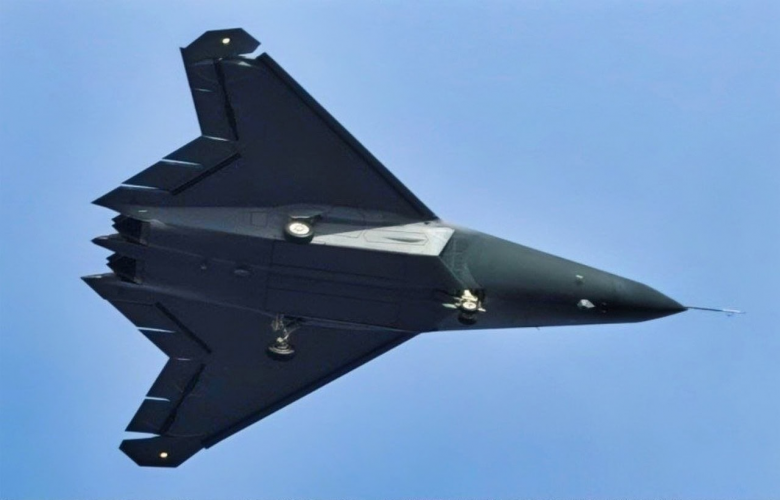
Split brakes for yaw control (like B-2, B-21 and apparently J-36) are one option, but then what these movable wingtips do? I guess it is the same principle, just instead of one split surface, they have wingtip moving in one direction, its adjacent surface in the other. Leading edge slats too. In fact, with the modern flight control systems, every surface will probably move in concert to get yaw, but in any case those wingtips play important role.

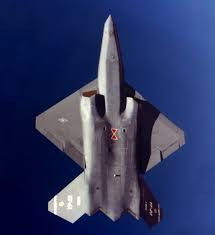
On the other hand, movable surfaces that are visible directly from the front seem to increase RCS. As far as I know, the split brakes of B-2 are locked in place in "stealth mode" and yaw is controlled by differential thrust instead. Airbrakes are used only at low speed / low power, at takeoff and landing. The same thing probably goes for J-36 and J-50, but B-2's engines are spaced very wide apart and the split airbrakes are even wider. Furthermore, it doesn't go transonic. With engines closer together and with bigger speed envelope, it seems problematic to control yaw by differential thrust only. That is why I suspect there is something more there. Engine nozzles look a lot like the 2D TVC nozzles of F-22, but as I said, I think I can see something on the side of the "sting" between them. Maybe they are not 2D but 3D after all? Or 2.5D with full pitch control and some degree of yaw? It may be some image compression artifact or just my imagination, but if it really is anything there, we can only speculate what it is, even if we had some clear photos.

 
Split brakes for yaw control (like B-2, B-21 and apparently J-36) are one option, but then what these movable wingtips do? I guess it is the same principle, just instead of one split surface, they have wingtip moving in one direction, its adjacent surface in the other. Leading edge slats too. In fact, with the modern flight control systems, every surface will probably move in concert to get yaw, but in any case those wingtips play important role.

On the other hand, movable surfaces that are visible directly from the front seem to increase RCS. As far as I know, the split brakes of B-2 are locked in place in "stealth mode" and yaw is controlled by differential thrust instead. Airbrakes are used only at low speed / low power, at takeoff and landing. The same thing probably goes for J-36 and J-50, but B-2's engines are spaced very wide apart and the split airbrakes are even wider. Furthermore, it doesn't go transonic. With engines closer together and with bigger speed envelope, it seems problematic to control yaw by differential thrust only. That is why I suspect there is something more there. Engine nozzles look a lot like the 2D TVC nozzles of F-22, but as I said, I think I can see something on the side of the "sting" between them. Maybe they are not 2D but 3D after all? Or 2.5D with full pitch control and some degree of yaw? It may be some image compression artifact or just my imagination, but if it really is anything there, we can only speculate what it is, even if we had some clear photos.
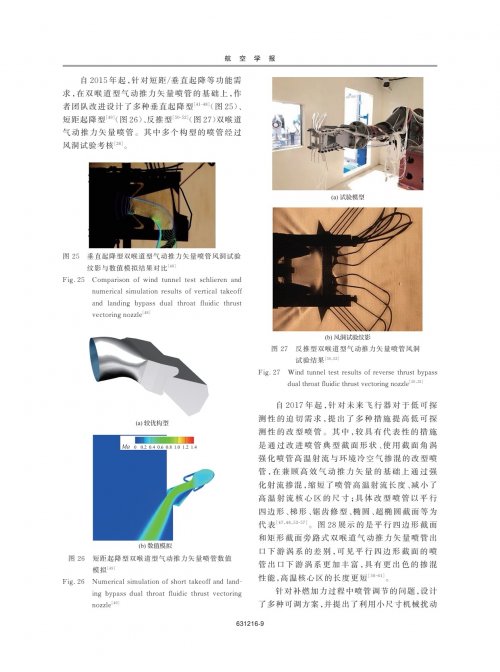
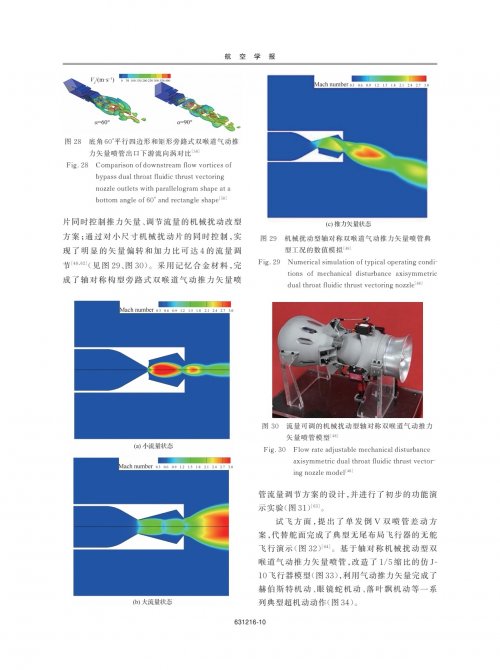
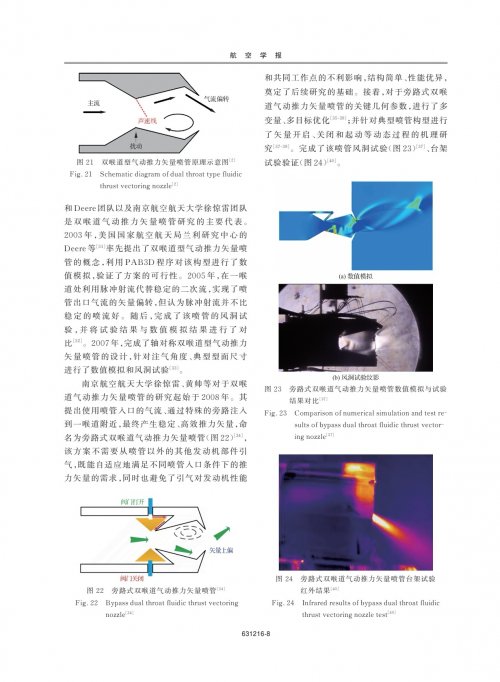
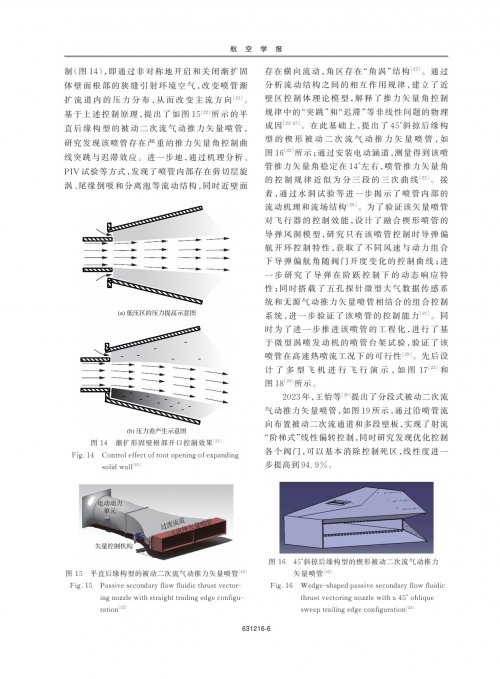
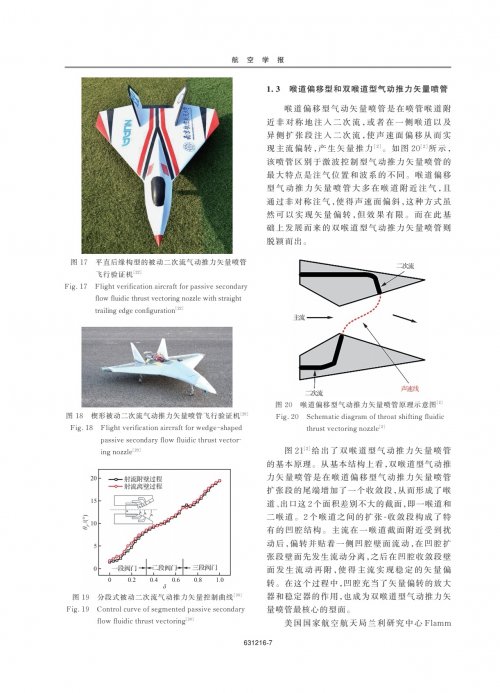
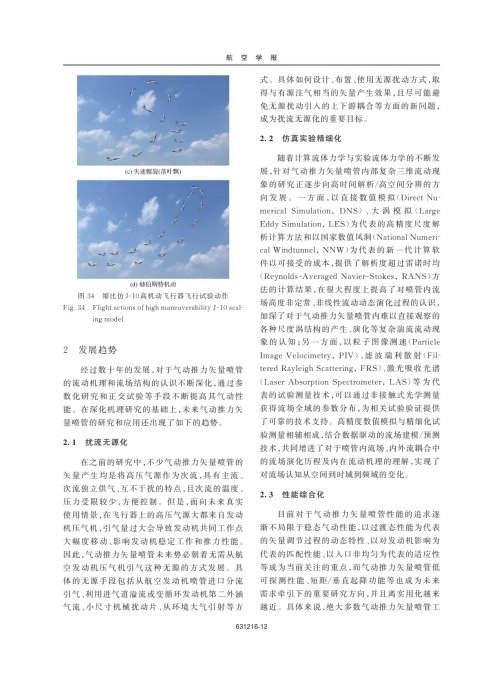
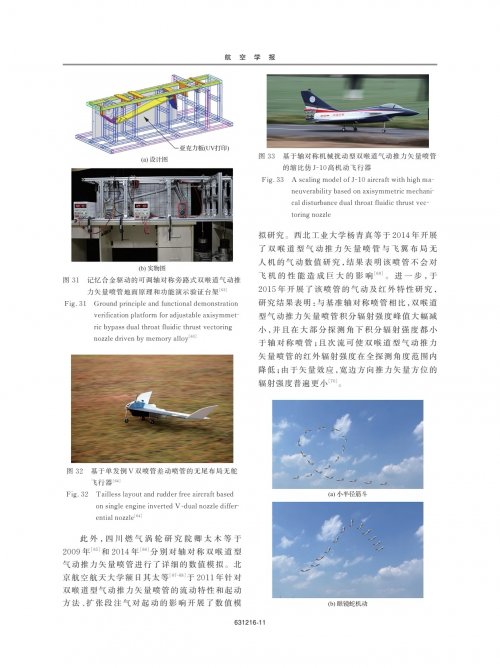
Chinese engineers at CAC and SAC have been publishing papers and patents on fluidic thrust vectoring for a good while by now. It is likely that both J-36 and J-50 have some sort of fluidic yaw vectoring for use when in "stealth mode". Theoretically depending on how these systems are designed it could be possible that in cruise these aircraft could rely on TVC only and lock all surfaces in place. Below is one example of such paper.


54494558911_32fa0a4482_o.jpg

54494746734_862a12cb9f_o.jpg 54494905800_5a744ff661_o.jpg 54494746649_fe32917a9c_o.jpg 54494746639_a0ccebb060_o.jpg 54493698242_d53db9a3e5_o.jpg 54494824403_0d6ea4a1fe_o.jpg
 
I´m not familiar with test flights of the Chinese Military Aircraft, but they produce one prototype and execute all tests flight with it?
Or it will be like in the West, others prototypes will be produced to perform different missions?

thanks in advance
 
I´m not familiar with test flights of the Chinese Military Aircraft, but they produce one prototype and execute all tests flight with it?
Or it will be like in the West, others prototypes will be produced to perform different missions?

thanks in advance
Multiple prototypes. Six were spotted for the J-20, and currently four are known for the FC-31/J-35.
 
Yes fluidic thrust vectoring is clearly an option, as are fluidic effectors located in the nose or in certain area of the forward fuselage. The US studied these many decades ago. It’s also clear that mating the flexibility of the third stream of a three stream variable cycle engine to novel fluidic based effector systems is especially appealing.
 
From the videos, the Tiperons do not look very effective, surfaces just alternating from left to right with no real authority, other comments please, they may have to be larger in order to be effective?
No, they are flapping because they generate too much force in the given angle of deflection, at low angles of deflection there is a far greater roll moment than a yaw moment, in order to perform this low speed banked turn the flight computer wants yaw control, but without a vertical stabilizer, the deflection angle of the tiperons needs to be greater, but that generates a strong roll moment as well. You can see the ailerons are aggressively trying to compensate. It can't stay at a high deflection for long so it reduces deflection in order to reduce roll, repeat.
 
No, they are flapping because they generate too much force in the given angle of deflection, at low angles of deflection there is a far greater roll moment than a yaw moment, in order to perform this low speed banked turn the flight computer wants yaw control, but without a vertical stabilizer, the deflection angle of the tiperons needs to be greater, but that generates a strong roll moment as well. You can see the ailerons are aggressively trying to compensate. It can't stay at a high deflection for long so it reduces deflection in order to reduce roll, repeat.
not using vertical fins means killing lift, that is the big problem of flying wings, thus is is far more practical a vertical fin and a vertical tail. No matter how they try to justify them flying wings need to kill lift, stall even the tiperons to produce yaw movement.

So far it is better to have a vertical tail rather than increase drag or reduce lift over the wing

even Trump is right
View: https://www.youtube.com/watch?v=KeBBWfvlW_Y

I recommend you give it a read

What causes adverse yaw?

Adverse yaw is caused by a lift and drag differential between your two wings. To initiate a right banking turn, you need to roll the plane to the right.

This is done by raising the right aileron and lowering the left. Raising an aileron decreases both the lift and drag it generates. In our example, raising your right aileron will cause the right wing to dip, initiating your right roll.

In contrast, lowering an aileron generates more lift and correspondingly more induced drag. The reason a lowered aileron generates more lift is because it alters the chord line and increases the angle of attack.

Angle of Attack

At a higher angle of attack, more lift is generated. When we lower our left aileron, it will result in the left wing lifting.

If the drag decrease on one wing were perfectly balanced by the drag increase on the other, the plane would simply roll without yawing, however in real life there is a drag differential between the two wings.

A drag differential occurs because the raised aileron is deflecting into lower pressure airflow and the lowered aileron is deflecting into higher pressure airflow.

If the amount of deflection is the same, the drag on the lowered aileron will be greater than it is on the higher aileron. This causes the plane to yaw in the direction of the lowered aileron which is the opposite direction of your roll.
 
Last edited:
not using vertical fins means killing lift, that is the big problem of flying wings, thus is is far more practical a vertical fin and a vertical tail. No matter how they try to justify them flying wings need to kill lift, stall even the tiperons to produce yaw movement.

So far it is better to have a vertical tail rather than increase drag or reduce lift over the wing

even Trump is right
View: https://www.youtube.com/watch?v=KeBBWfvlW_Y

I recommend you give it a read

What causes adverse yaw?

Adverse yaw is caused by a lift and drag differential between your two wings. To initiate a right banking turn, you need to roll the plane to the right.

This is done by raising the right aileron and lowering the left. Raising an aileron decreases both the lift and drag it generates. In our example, raising your right aileron will cause the right wing to dip, initiating your right roll.

In contrast, lowering an aileron generates more lift and correspondingly more induced drag. The reason a lowered aileron generates more lift is because it alters the chord line and increases the angle of attack.


Angle of Attack

At a higher angle of attack, more lift is generated. When we lower our left aileron, it will result in the left wing lifting.

If the drag decrease on one wing were perfectly balanced by the drag increase on the other, the plane would simply roll without yawing, however in real life there is a drag differential between the two wings.

A drag differential occurs because the raised aileron is deflecting into lower pressure airflow and the lowered aileron is deflecting into higher pressure airflow.

If the amount of deflection is the same, the drag on the lowered aileron will be greater than it is on the higher aileron. This causes the plane to yaw in the direction of the lowered aileron which is the opposite direction of your roll.
Yeah, when looking at the video, it seems it lifts the left aileron, while depressing the right aileron and wingtip to induce a roll into the banked turn. To combat the adverse yaw, the left wingtip is deflected a lot. But a deflection backwards by the left wingtip actually generates a roll moment clockwise, further banking to the right, to control stability, the aircraft uses the right wingtip coupled with the ailerons to stabilize itself. I believe this is causing the fluttering effect of the wingtips.
 
Last edited:
No, they are flapping because they generate too much force in the given angle of deflection, at low angles of deflection there is a far greater roll moment than a yaw moment, in order to perform this low speed banked turn the flight computer wants yaw control, but without a vertical stabilizer, the deflection angle of the tiperons needs to be greater, but that generates a strong roll moment as well. You can see the ailerons are aggressively trying to compensate. It can't stay at a high deflection for long so it reduces deflection in order to reduce roll, repeat.
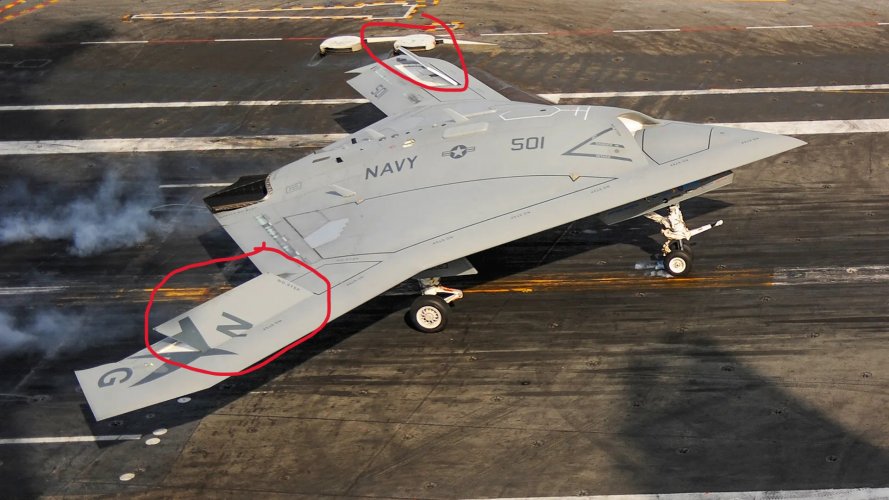
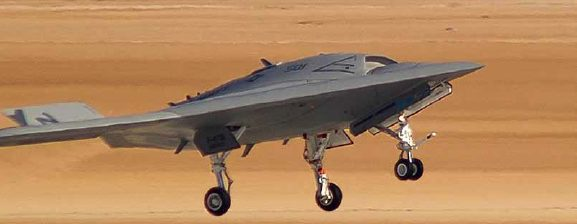
The aircraft was in a constant right banking turn and both left and right wing tip surfaces were just alternating back and forth and I saw some left and right outboard elevon deflection but not much. For a the same right banking turn, the X-47B as shown deflects the outboard elevon down and the right upper wing inlaid surface to induce a yaw and rolling moment, like the B-21, simple. The wing tip surfaces on the J-50 seem to be useless and seem to be undersized for the purpose.
 
Yes fluidic thrust vectoring is clearly an option, as are fluidic effectors located in the nose or in certain area of the forward fuselage. The US studied these many decades ago. It’s also clear that mating the flexibility of the third stream of a three stream variable cycle engine to novel fluidic based effector systems is especially appealing.
Fluidic effectors in the nose or fuselage would most certainly have negative effect on the frontal RCS. Thrust vectoring seems more plausible. It is much simpler too.
 
From the videos, the Tiperons do not look very effective, surfaces just alternating from left to right with no real authority, other comments please, they may have to be larger in order to be effective?
It looks more like minor control inputs to maintain smooth flight to me. With FCS-driven flight-controls and unstable aircraft the FCS is reacting in a much faster cycle than we're used to seeing with more conventional controls, so you may get many minor inputs, rather than the fewer, larger ones we're used to.
 
It looks more like minor control inputs to maintain smooth flight to me. With FCS-driven flight-controls and unstable aircraft the FCS is reacting in a much faster cycle than we're used to seeing with more conventional controls, so you may get many minor inputs, rather than the fewer, larger ones we're used to.
It seems larger tip effectors could provide more control authority. On an LO platform, larger surfaces result in less deflection for the same required flight condition plus this goes in line with the aircraft's cg.
 
It seems larger tip effectors could provide more control authority. On an LO platform, larger surfaces result in less deflection for the same required flight condition plus this goes in line with the aircraft's cg.
Maybe it's a strength thing: the larger the control surface the higher forces become, and the pivot & actuators of the movable wingtips are on the outboard where the wing's inherently thinner and prone to flex. If the wingtips are meant to work at high-ish speeds having smaller area makes sense.


Also, Ive included a Chinese paper on all-moving wingtips that may help with understanding its use and design.
https://www.researchgate.net/profil...formance-of-tailless-flying-wing-aircraft.pdf
No, they are flapping because they generate too much force in the given angle of deflection, at low angles of deflection there is a far greater roll moment than a yaw moment, in order to perform this low speed banked turn the flight computer wants yaw control, but without a vertical stabilizer, the deflection angle of the tiperons needs to be greater, but that generates a strong roll moment as well. You can see the ailerons are aggressively trying to compensate. It can't stay at a high deflection for long so it reduces deflection in order to reduce roll, repeat.
The paper seems to mostly agree with Nx4eu's observations above: at low deflection flow over AMTs are attached, creating small amounts of yaw moment; as deflection increases the flow detaches, and the resulting yaw moment increases substantially. In addition, this creates differing roll behaviors for small and large deflections: small deflection upward on the left wingtip creates negative (left) roll while large deflection tends to create positive (right) roll although the trend is subject to the specific test case. In addition to all of this deflecting the AMT first creates a nose-down pitch moment which gradually turns into nose-up as the deflection increases.

tldr: it's pretty complex, nonlinear and all 3 axes are coupled together with yaw (generally speaking) being the most significant effect. Judging by how complex the AMTs' effects are and how it depends very strongly to AoA as well as deflection angle, imo them moving pretty wildly as in the video makes sense on an aerodynamic level.
 
Last edited:
Maybe it's a strength thing: the larger the control surface the higher forces become, and the pivot & actuators of the movable wingtips are on the outboard where the wing's inherently thinner and prone to flex. If the wingtips are meant to work at high-ish speeds having smaller area makes sense.
There is also the issue of flutter though I have no idea how bad that might be for moving tips.
 
[...]

tldr: it's pretty complex, nonlinear and all 3 axes are coupled together with yaw (generally speaking) being the most significant effect. Judging by how complex the AMTs' effects are and how it depends very strongly to AoA as well as deflection angle, imo them moving pretty wildly as in the video makes sense on an aerodynamic level.
Man, figuring out the flight laws must have sucked big-time...
 
There is also the issue of flutter though I have no idea how bad that might be for moving tips.
Yeah about that… there’s another paper from 2023 iirc that discusses flutter modes and basically came down to the conclusion that “for a design with AMTs, if you find excess flutter you betcha it’s those AMTs causing it”

So it’s a bitch for the FCS crew and a nightmare for aeroelasticity guys, I can only imagine the aerodynamic advantage over other forms of control surfaces is large enough for the aero people to have the final say on the matter and bully everyone else into submission xd

Link to the paper here, it’s probably been posted somewhere but I’ll include it for ease of access
 
Is there any research on getting a tailless blended body aircraft to fly supersonically? I can't seem to find too many publications on this matter or is it actually just a non-issue compared to a normal aircraft?
 
Last edited:
Is there any research on getting a tailless blended body aircraft to fly supersonically? I can't seem to find too many publications on this matter or is it actually just a non-issue compared to a normal aircraft?
Provided you adhere to area ruling should be fine, so long as the aspect ratio and sweep are appropriate.
 
I do agree with it other than the fact that he says this aircraft probably will be transonic because of the intakes, he clearly has not heard of BLCS on the YF-23
YF-23 had intakes not far from the wing leading edge, thus the air boundary layer build up was not strong so the tiny holes could suck up the air boundary layer that formed ahead of them; the J-50 has a long nose and fuselage thus is highly unlikely the air boundary layer build up will be weak, so two engines mean a large air intake so you could expect a big bump as on J-20.
1747651836654.png

1747651883594.png

So he predicts low speeds like a subsonic drone using similar air intakes

1747652131250.png
 
YF-23 had intakes not far from the wing leading edge, thus the air boundary layer build up was not strong so the tiny holes could suck up the air boundary layer that formed ahead of them; the J-50 has a long nose and fuselage thus is highly unlikely the air boundary layer build up will be weak, so two engines mean a large air intake so you could expect a big bump as on J-20.
View attachment 770588

View attachment 770589

So he predicts low speeds like a subsonic drone using similar air intakes

View attachment 770590
I guess it is a fair assumption based on previous aircraft, but IMO surely, they wouldn't regress from super-cruising 5th generation to subsonic 6th generation aircraft. That's just a odd assumption especially when Shenyang's head engineer did in his paper for next generation air combat outlined specifically efficient super cruising capability.
 
I guess it is a fair assumption based on previous aircraft, but IMO surely, they wouldn't regress from super-cruising 5th generation to subsonic 6th generation aircraft. That's just a odd assumption especially when Shenyang's head engineer did in his paper for next generation air combat outlined specifically efficient super cruising capability.
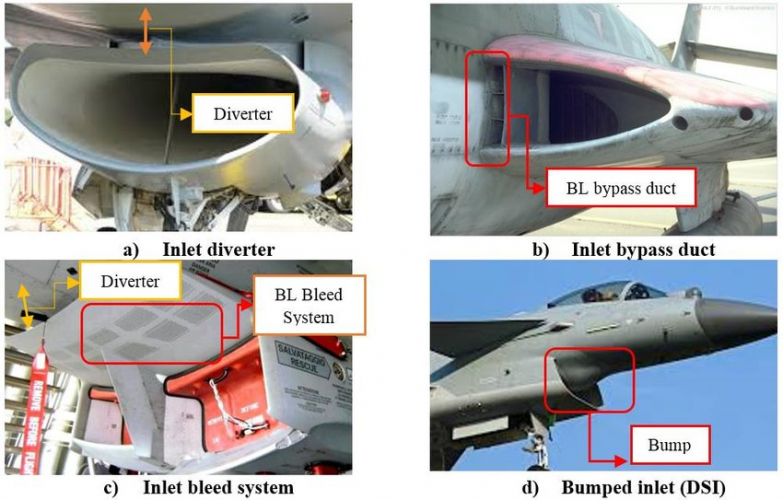
The problem is not an assumption, all modern jet aircraft have boundary layer intake splitters/diverters or DSI bumps to deal with the air boundary layer formation.


The sea harrier does not use it but it is known it is subsonic, F-8 or A-7 had very short noses, pitot tube intakes did not use those either in those you find A-10, MiG-15 or Embraer Phenom (the last is a civil jet).

YF-23 had intakes almost at the wing leading edge and almost you can consider them pitot tube intakes.


Modern drones use similar intakes but it is known they are subsonic, In my humble opinion he is right.
 
Last edited:
The problem is not an assumption, all modern jet aircraft have boundary layer intake splitters or DSI bumps to deal with the air boundary layer formation.


The sea harrier does not use it but it is known it is subsonic, F-8 or A-7 had very short noses, pitot tube intakes did not use those either in those you find A-10, MiG-15 or Embraer Phenom (the last is a civil jet).

YF-23 had intakes almost at the wing leading edge and almost you can consider them pitot tube intakes.


Modern drones use similar intakes but it is known they are subsonic, In my humble opinion he is right.
A subsonic aircraft with... afterburners? I know that all aircraft has to have some sort of way to deal with boundary layer but surely that's what the bunch of little holes are there for, there also seems to be a very slight bump or atleast discontinuity from the long nose to the fuselage right in front of the intakes. The thing about supersonic intake is for it to slow the air coming to subsonic speeds and IMO it might be why the intake looks oddly triangular. It is an assumption in the sense that you and Millenium think that these measures are not enough for supersonic flight, I tend to think otherwise due to the overwhelming evidence that would seem to indicate that this aircraft should be supersonic capable.
 
Last edited:
A subsonic aircraft with... afterburners? I know that all aircraft has to have some sort of way to deal with boundary layer but surely that's what the bunch of little holes are there for, there also seems to be a very slight bump or atleast discontinuity from the long nose to the fuselage right in front of the intakes. The thing about supersonic intake is for it to slow the air coming to subsonic speeds and IMO it might be why the intake looks oddly triangular. It is an assumption in the sense that you and Millenium think that these measures are not enough for supersonic flight, I tend to think otherwise due to the overwhelming evidence that would seem to indicate that this aircraft should be supersonic capable.
it is unlikely that aerodynamic papers support that believe, you are free to believe whatever you want, but current aerodynamic papers do not support that, specially since the J-36 has air intake splitters/diverters on the caret air intakes and a bump on the dorsal intake,

See the J-36 has a shorter nose and still uses air boundary splitters/diverter on its caret intakes, we do not need to go 60 pages discussion just find a paper in aerodynamics that supports your "overwhelming evidence"
1747661486151.png
Sorry but known aerodynamics support those claims

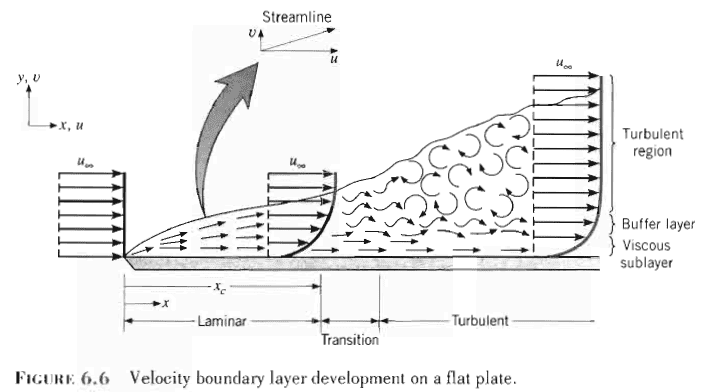
Development of a Boundary Layer

It should be appreciated that a boundary layer is not a static phenomenon. It is said to “grow” as it develops with downstream distance over a surface. Thus, a boundary layer’s thickness and other properties will change continuously as it develops downstream over any given surface. Furthermore, the development of a boundary layer may also be affected by other factors, such as pressure gradients and surface roughness.
The boundary layer begins in laminar form, at least over smooth surfaces, in which the fluid moves in smooth layers or laminae. As the laminar boundary layer increases in thickness and develops downstream, the fluid layers naturally tend to mix. The location of transition, which happens over a finite distance, depends primarily on the Reynolds number. Finally, the boundary layer transforms itself into a well-mixed turbulent boundary layer. Even when the boundary layer becomes turbulent, there is still a thin layer next to the wall with laminar flow, called the laminar sublayer.
The air boundary layer and its interaction with aircraft air intakes is a significant consideration in aircraft design, particularly for supersonic and high-speed applications. The boundary layer is the thin layer of air that adheres to the aircraft's surface and can affect the performance of the intake if ingested.
 
Last edited:
I think there will, because you can fairly easily detect a fighter at ~50+km via thermals and it's a lot harder to suppress IR.

With a fighter IRST sure but not a missile. It will likely be multispectral missiles like RIM-156B or AIM-7R. IIR as a terminal/CM defeat for an otherwise radar + datalink missile. Even very small missiles like MHTK have radar guidance now.
 
it is unlikely that aerodynamic papers support that believe, you are free to believe whatever you want, but current aerodynamic papers do not support that, specially since the J-36 has air intake splitters on the care air intakes and a bump on the dorsal intake,

See the J-36 has a shorter nose and still uses air boundary splitters on its caret intakes, we do not to need to go 60 pages discussion just find a paper in aerodynamics that supports your "overwhelming evidence"

Sorry but known aerodynamics support those claims
Known aerodynamics on what? No one has ever seen this type of intake before, and this is likely the first ever use of aforementioned intake, in fact we don't even know what it's called as there is no publicly available paper concerning this design. Closest thing we've got is BLCS on the YF-23 and even that may or may not be what it is here. We should wait for better pictures and more papers to be found before coming to such a ridiculous conclusion that Shenyang built a subsonic fighter as their next generation program.
 
Last edited:
it is unlikely that aerodynamic papers support that believe, you are free to believe whatever you want, but current aerodynamic papers do not support that, specially since the J-36 has air intake splitters/diverters on the care air intakes and a bump on the dorsal intake,

See the J-36 has a shorter nose and still uses air boundary splitters/diverter on its caret intakes, we do not to need to go 60 pages discussion just find a paper in aerodynamics that supports your "overwhelming evidence"

Sorry but known aerodynamics support those claims
Or, maybe, just maybe, it's a novel solution that SAC came up with and is under trials on the J-XD-S, because, well, they can innovate too. While the J-36 seems to have opted for a more mature intake solution.

I don't see how your notion is more logical considering the PLA's projection of future air combat isn't exactly unknown (which places a heavy emphasis on supersonic performance).
 
Or, maybe, just maybe, it's a novel solution that SAC came up with and is under trials on the J-XD-S, because, well, they can innovate too. While the J-36 seems to have opted for a more mature intake solution.

I don't see how your notion is more logical considering the PLA's projection of future air combat isn't exactly unknown (which places a heavy emphasis on supersonic performance).
my answer to you

1747662179967.png

figure out with that the solution and explain the J-50`s intake
 
Last edited:
my answer to you

View attachment 770594

figure out with that the solution and explain the J-50 intake
Active boundary layer control system? Because all modern jet aircraft that fly needs such a design to eliminate the boundary layer not just supersonic aircrafts, as you said before normal subsonic aircraft do away without a complex system since they just use a pitot intake due to short intake distance but as you mentioned again J-XDS has a ridiculously long nose which means obviously there is some sort of mechanism here to remove the boundary layer. By your logic J-XDS shouldn't even be able to fly safely without risking a compressor stall/surge. Supersonic intake is really only there to slow air down to subsonic speed for the engine to ingest which nothing seems to be against J-XDS's intake being not capable of doing that as your argument is mostly just based on the fact that J-XDS's intake seems like there is no way for it to remove the boundary layer.
 
Last edited:

Similar threads

Back
Top Bottom