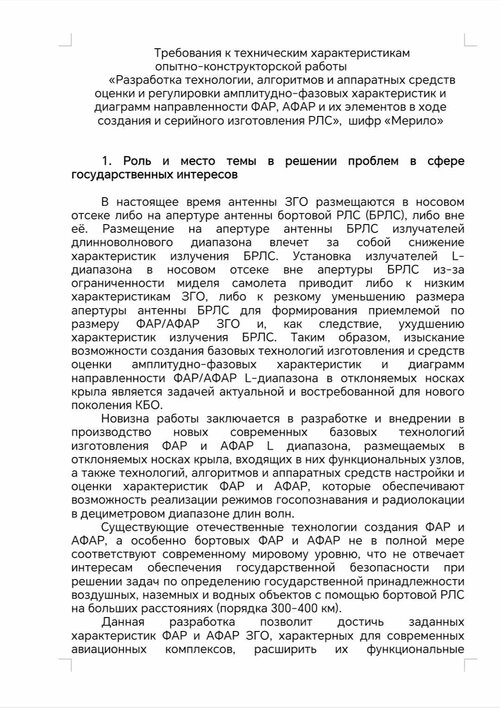
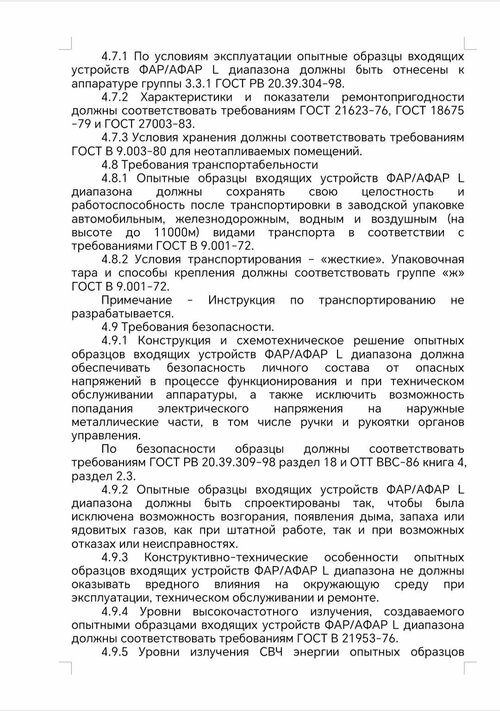
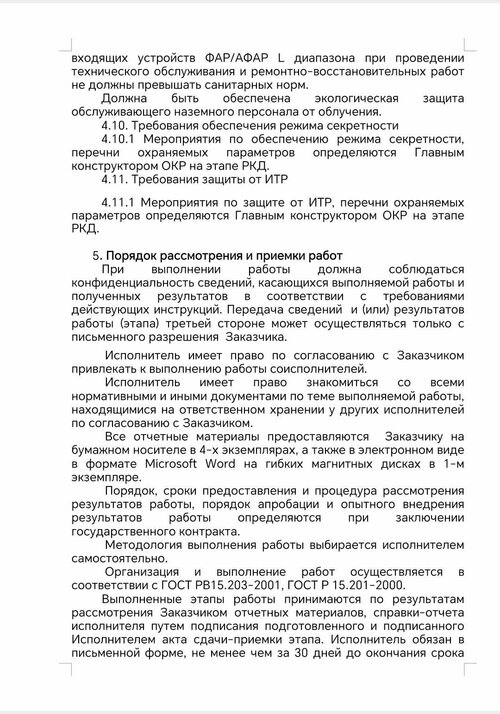
So that mean if you only put it on 1 side of the wing, it won’t cover the other side. That why both side need the transmitterAs we can see from the Doc. , FoV for L-Band PESA/AESA is 110° or+/-55°..

You are using an out of date browser. It may not display this or other websites correctly.
You should upgrade or use an alternative browser.
You should upgrade or use an alternative browser.
Sukhoi Su-57 flight testing and development
- Thread starter overscan (PaulMM)
- Start date
I don’t quite understand. What is the name of that document? Is it the flight manual of Su-57?. Where do you got it from?
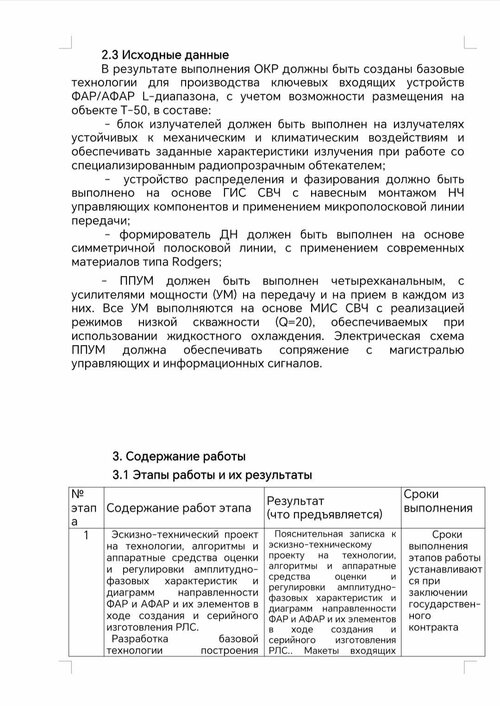
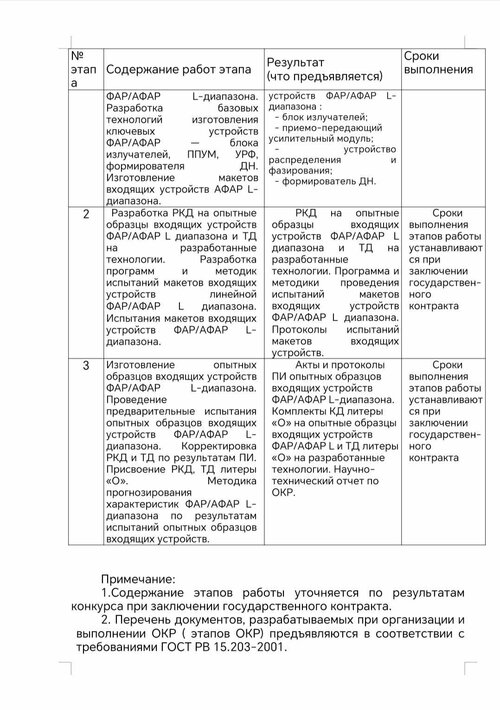
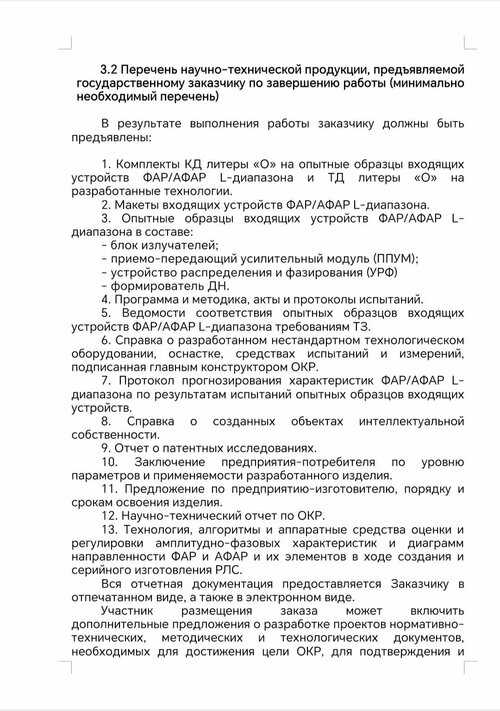
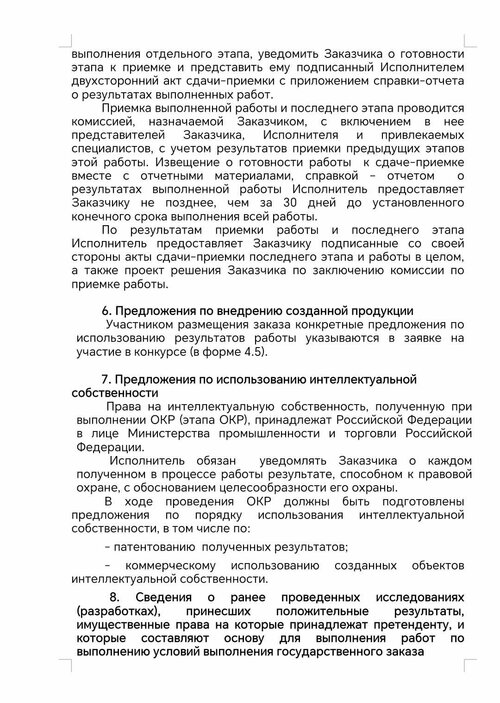
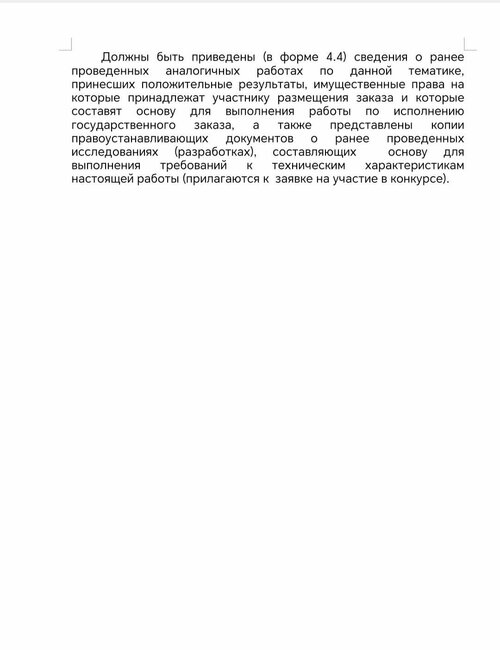
This is that document. No ,it is not FM for the Su-57. It is about Project 'The Scale' ,about developing those decimetric L-band N036L PESA/AESA radars for the Su-57. If I may ....


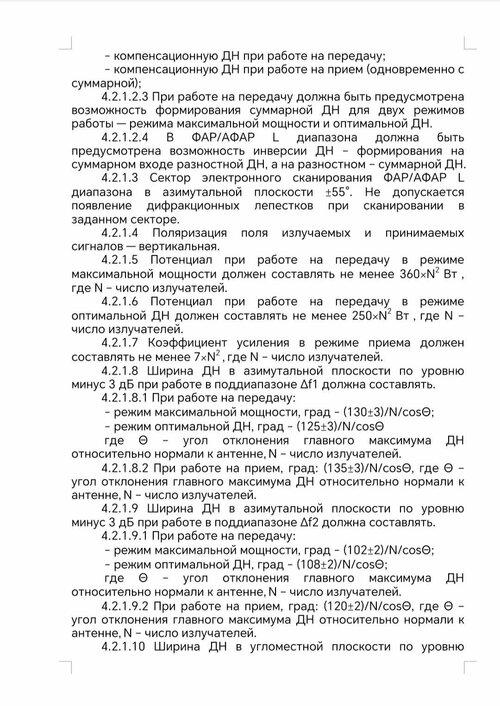
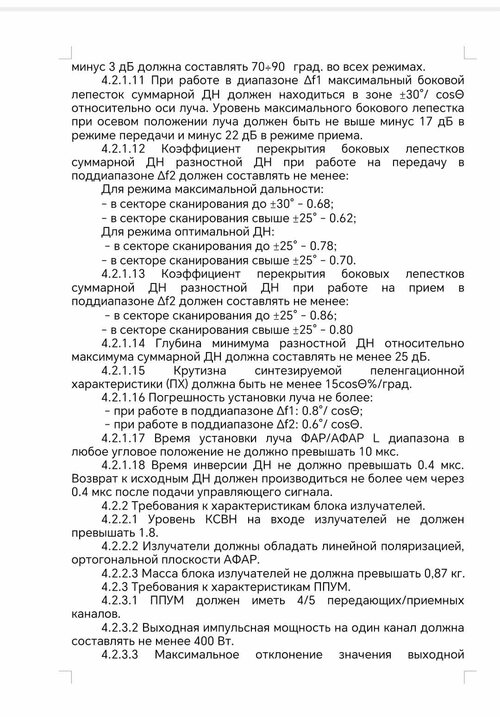
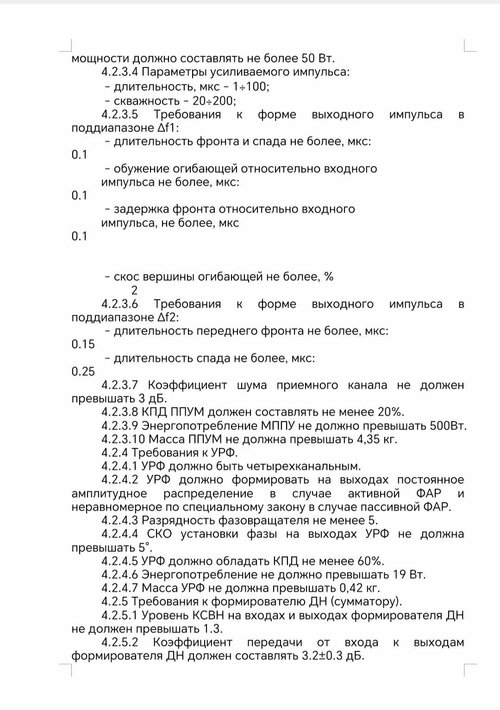
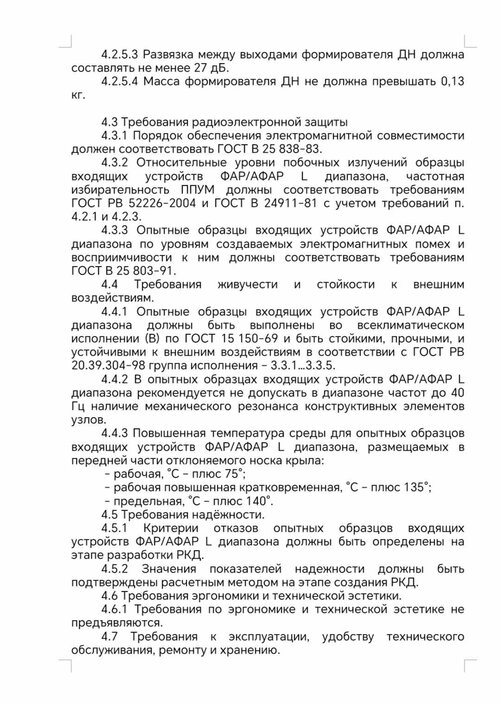

Last edited:
So that mean if you only put it on 1 side of the wing, it won’t cover the other side. That why both side need the transmitter
Of course, it's logical. Btw ,Su-57 for RuA&SF has 4 L-band antennas, Su-57E for export has only two of them.
Ainen
I really should change my personal text
- Joined
- 25 August 2011
- Messages
- 2,114
- Reaction score
- 3,599
There are 4 of them(2 in LERX, two in wing), or two per side, for combined 220 deg AoR.Well, maybe so that you can jam and perform IFF fucntion at once?. Or maybe simply so that you can cover both side since Su-57 wing has very big swept angle and ESA aren’t exactly known for high boresight capability
Life of Tyo
ACCESS: Confidential
- Joined
- 23 January 2022
- Messages
- 127
- Reaction score
- 474
wow so interesting , how about the MAWS for Su-57E option I see only 3 sensor on T-50 KNS ( Su-57E markerting )Of course, it's logical. Btw ,Su-57 for RuA&SF has 4 L-band antennas, Su-57E for export has only two of them.
i compare from T-50KNS (up) and Su-57 serial (T-50S-2) (down)
Attachments
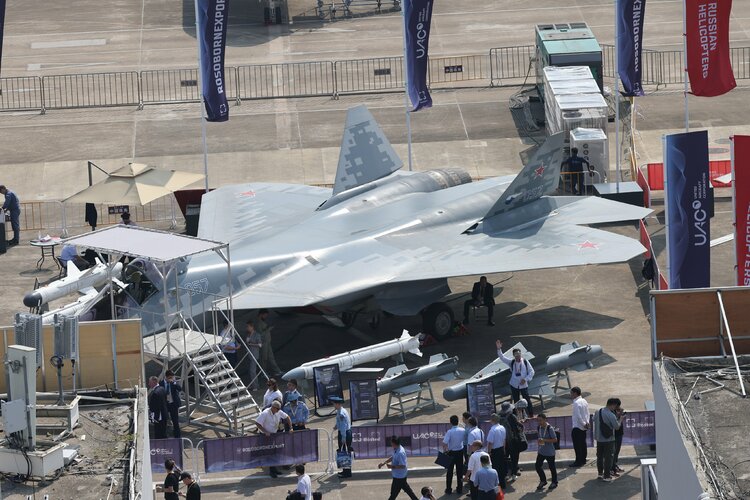
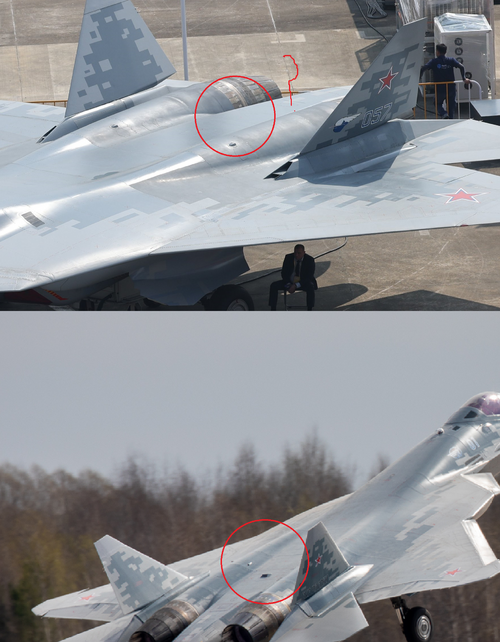
wow so interesting , how about the MAWS for Su-57E option I see only 3 sensor on T-50 KNS ( Su-57E markerting )
i compare from T-50KNS (up) and Su-57 serial (T-50S-2) (down)
Hi ! Su-57E for the export will be certainly much downgraded when we talk about avionics in comparison with the Su-57(S) for RuA&SF. When we look on the technological demonstrator of Su-57E Bort number 057 blue, we can see that there is even no N036B as SLAR-X band AESA. So Su-57E will have four instead of eight radars.
We will definitely be waiting for pictures of the Algerian Su-57Es when they are produced, so we can see how many radars and optoelectronic modules they will have.

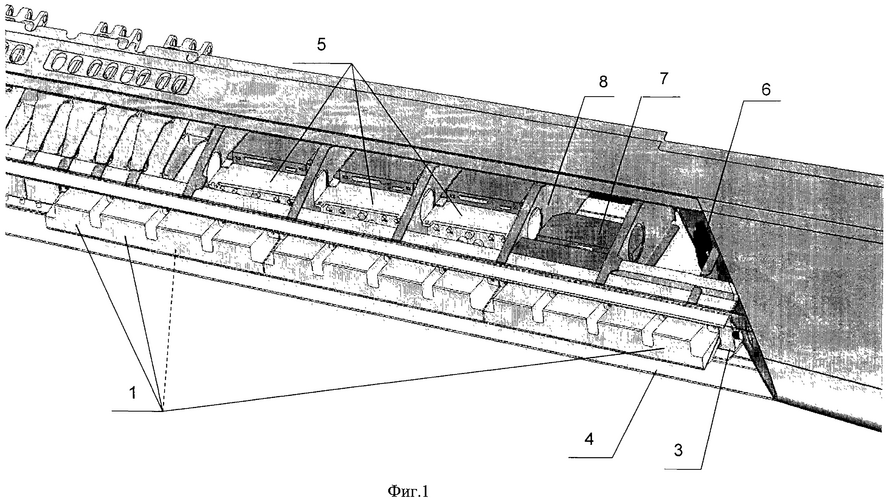
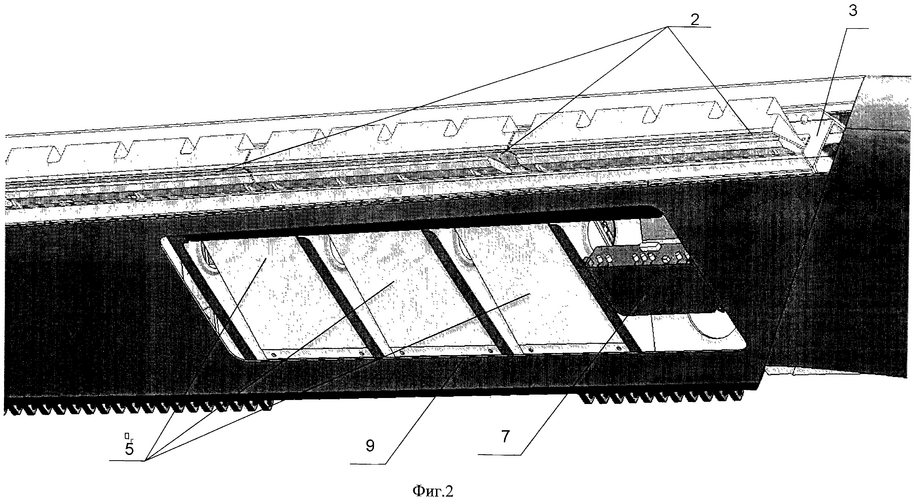
Patent of the linear L-band PESA/AESA for the Su-57.

 i.moscow


САМОЛЕТНАЯ АНТЕННАЯ РЕШЕТКА
САМОЛЕТНАЯ АНТЕННАЯ РЕШЕТКА. Патент № RU 2453955 МПК H01Q21/00 | Биржа патентов - Московский инновационный кластер
САМОЛЕТНАЯ АНТЕННАЯ РЕШЕТКА. Номер патента: RU 2453955. МПК H01Q21/00. Авторы: Седов Вячеслав Викторович (RU), Наркевич Андрей Леонидович (RU), Мосейчук Георгий Феодосьевич (RU), Синани Анатолий Исакович (RU), Агеев Павел Алексеевич (RU), Ломовская Татьяна Алексеевна (RU), Васин Анатолий...
i.moscow

Null
ACCESS: Secret
- Joined
- 16 December 2024
- Messages
- 221
- Reaction score
- 393
I wonder how many pages of repetitive information we have received on the Su-57 at this point. Can we talk about newer information on the aircraft.

 tass.com
tass.com
tass.com
Russia offers India very favorable deal on Su-57 fighter jet â ambassador to New Delhi
Denis Alipov expressed confidence that Russia was "in a very good position," if India announced a tender
tass.com
India can launch Russian Su-57E fighter production within short time â Rosoboronexport
Indiaâs HAL aerospace and defense company has produced already more than 220 Su-30MKI fighter jets at its production capacities, Rosoboronexport stressed
tass.com

- Joined
- 1 April 2006
- Messages
- 12,024
- Reaction score
- 13,950
Video is from August 2018 but no signs of cameras on first sight.Cameras ??? Three ball-like cameras one to the each other, hm. I first saw those 'balls' in one reportage from Russia 1HD TV on May 2018 several days before Victory Parade. Famous reporter Nayla Asker-Zade interviewed Sukhoi test pilot Taras Artsebarsky. I have some sequences from that video but video itself, I could not find.

Действующие лица с Наилей Аскер-заде. Юрий Слюсарь
Героем программы "Действующие лица" стал президент Объединенной авиастроительной корпорации Юрий Слюсарь. Автору и ведущей Наиле Аскер-заде он рассказал о…
 smotrim.ru
Joint Soviet Fighter
ACCESS: Secret
- Joined
- 14 January 2025
- Messages
- 254
- Reaction score
- 290
I wonder how many pages of repetitive information we have received on the Su-57 at this point. Can we talk about newer information on the aircraft.
Russia offers India very favorable deal on Su-57 fighter jet â ambassador to New Delhi
Denis Alipov expressed confidence that Russia was "in a very good position," if India announced a tenderIndia can launch Russian Su-57E fighter production within short time â Rosoboronexport
Indiaâs HAL aerospace and defense company has produced already more than 220 Su-30MKI fighter jets at its production capacities, Rosoboronexport stressed

Now that's interesting.
- Joined
- 11 February 2010
- Messages
- 1,714
- Reaction score
- 3,122
Just don't expect the change to be beyond the baseline Su-57.

Airborne2001
ACCESS: Secret
- Joined
- 19 June 2020
- Messages
- 330
- Reaction score
- 483
Russia offers India very favorable deal on Su-57 fighter jet â ambassador to New Delhi
Denis Alipov expressed confidence that Russia was "in a very good position," if India announced a tenderIndia can launch Russian Su-57E fighter production within short time â Rosoboronexport
Indiaâs HAL aerospace and defense company has produced already more than 220 Su-30MKI fighter jets at its production capacities, Rosoboronexport stressed
It looks like India is finally starting to move back into the Su-57 interest. It also looks like Russia might be caving more to demands to the configuration, though I agree with @stealthflanker that no changes will take place that would change the base Su-57.View attachment 762034
Now that's interesting.
Video is from August 2018 but no signs of cameras on first sight.
grabbed https://cloud.mail.ru/public/L1LC/QPuXbTpSUДействующие лица с Наилей Аскер-заде. Юрий Слюсарь
Героем программы "Действующие лица" стал президент Объединенной авиастроительной корпорации Юрий Слюсарь. Автору и ведущей Наиле Аскер-заде он рассказал о…
Tnx for that. Obviously that's not the video I meant. First I found this one, but it's not that one either.
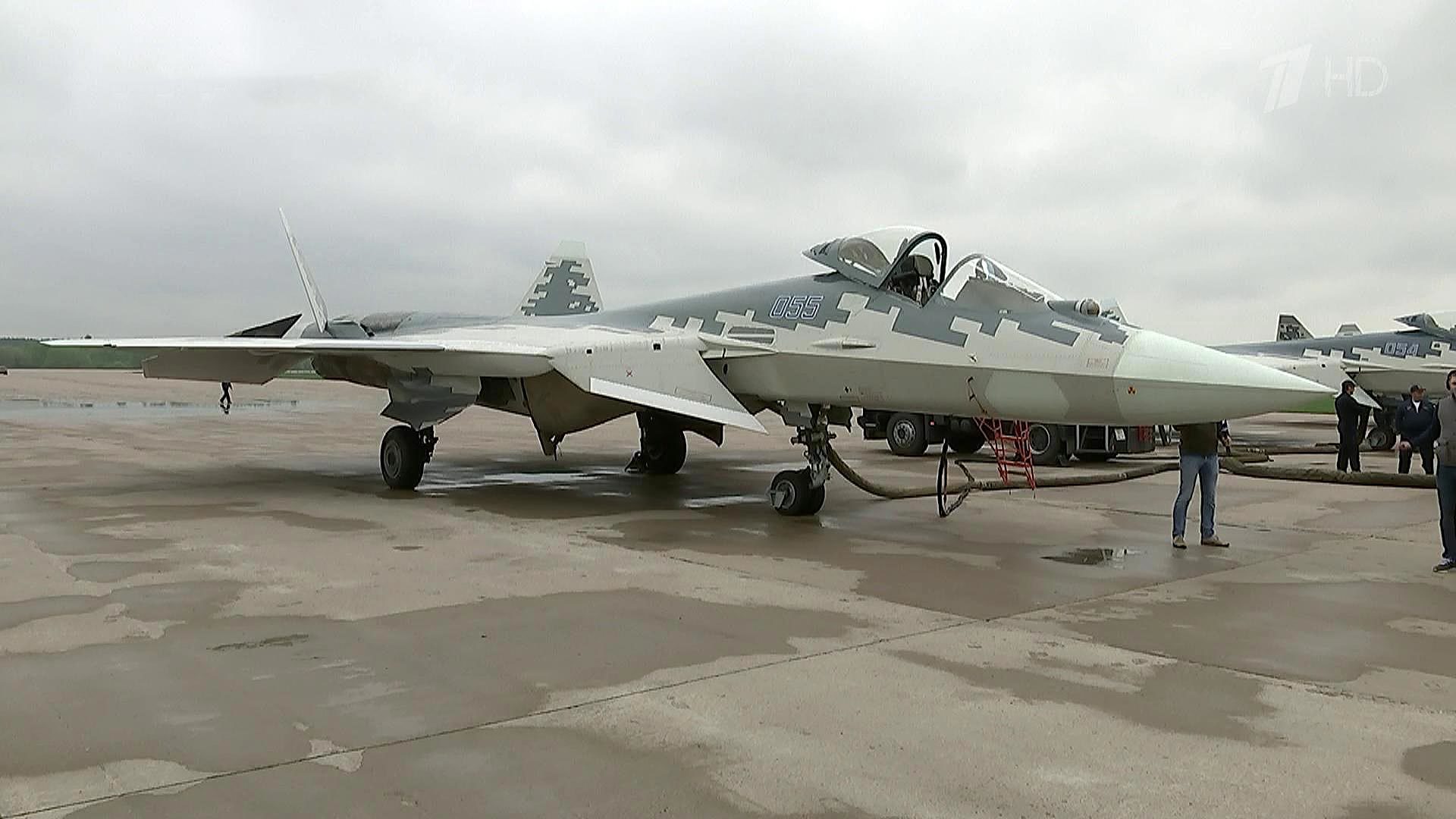
Су-57 — звезда Парада на Красной площади: захватывающее видео действительно красивого самолета
9 мая — День Победы. Военный парад на Красной площади. Звезда парада — боевой самолет Су-57. Вот он. Абсолютный и законченный шедевр. Достойный гигантов Возрождения. Ему нет равных в воздушном бою. Он не просто быстрее летает и лучше маневрирует. Он дальше видит. А это в современном бою решающее...
 www.1tv.ru
I'm now 100% sure that video is from May 2018 ( made before V.P.) and in that video ,Taras A. after the interview was in the cockpit with his thumb up.
@Null
That's right, Let's see the latest news. So the Indians were even offered license serial production of the Su-57E (maybe with limited transfer of technologies), which is fantastic because who else offered to produce the 5th generation fighter under license? Let's keep in mind that the Russians recently made it known that the Su-57 could very easily get a two-seat version, which was one of the requirements in the FGFA program.Personally, I think it's the best possible offer.
Last edited:
Now some I hope interesting can I call it ''Squirrel-details''.
There was one article from 2015 in the famous Russian journal ''Takeoff''. Yuri Beliy was interviewed.
 military.wikireading.ru
Question was :
''Юрий Иванович, что нового планируете показать на авиасалоне МАКС-2015?
-На предыдущих выставках МАКС мы уже демонстрировали экспериментальные и опытные образцы АФАР для ПАК ФА — в 2009 г. мы впервые показали АФАР переднего обзора (ПО) Х-диапазона, в 2013 г. — АФАР бокового обзора (БО), а ранее — и крыльевые АФАР L-диапазона.''
Transl: He was asked what they plan to show on MAKS 2015. He said that the main X-band AESA( test model) for the front hemisphere search was shown on MAKS 2009,then that N036B X-band AESA as SLAR was shown on MAKS 2013 and N036L L-band radars (PESA/AESA) was shown even earlier, on MAKS 2007.
This modified ( I added some white lines) photo has description : ''Слева направо: Крыльевая АФАР L-диапазона, АФАР бокового обзора Х-диапазона, АФАР переднего обзора Х-диапазона. '' From left to right: L-band AESA in wingslats and of course LEVCON's, X-band AESA as SLAR and X-band AESA for the front hemisphere.

When we mentioned those L-band radars it is interesting to note this .Let us see this next photo.
Первый экспериментальный образец АФАР ПО на испытаниях в радио безэховой камере НИИП им. В.В. Тихомирова, ноябрь 2008 г.

So as we can see, the test model of the main X-band AESA was on static tests during 2008.As we know now ,L-band AESA was on static tests much earlier. But this is not the point of the story. In the meantime I tried to find that interview with Yuri Beliy in National Defence (detail about L-band radars wavelength) and I 've found some additional articles:
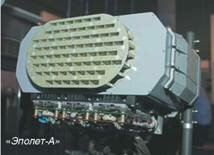
Point of the story is this .What was going on with that X-band AESA inside of the tailboom for the rear hemisphere search (rear-looking )? The story about that radar is even more interesting.This X-band AESA was shown ever earlier than any other,he was shown on MAKS 2005. Citations:
''At the MAKS-2005 air show in August, Russia's NIIP (the prime contractor for the PAK FA radar), demonstrated a working model of its Epolet-A active phased-array radar for the first time. The antenna uses domestically produced key components. According to its designers, the radiated power on each of its 68 elements reaches 10 Watts, compared to 5-8 Watts for foreign radars. The small-sized Epolet-A is considered to be an auxiliary antenna but it employs serial technologies developed by the key Russian electronics manufacturers: the St. Petersburg's Svetlana and Fryazino-based Istok companies. NIIP Deputy General Director Anatoly Sinani hopes flight test radar will be built in late 2006 or early 2007, as called for by a government program.''
''В развитие технологий фазированной антенной решетки "Эполет", ОАО "Научно-исследовательский институт приборостроения имени В.В. Тихомирова" впервые на МАКС-2005 представил образец передовых технологий АФАР - действующую станцию "Эполет-А".
Данная разработка скорее всего не является окончательным продуктом (показанный образец проходит ряд лабораторных испытаний по отработке технологий), но может стать ключевым элементом многофункционального РЭК перспективного самолета 5-го поколения (ПАК ФА), в создании которого предприятие принимает активное участие.
АФАР выполнена на отечественной элементной базе и технологии, что соответствует основному требованию к программе ПАК ФА, состоит из 8 многоканальных приемо-передающих модулей, обеспечивающих излучение и приема радиосигналов в X диапазоне волн. Максимальная мощность излучения в каждом канале 10 Вт, сектор электронного сканирования 110 град.
Как известно для обеспечения серийного производства перспективной АФАР, стоимость одного приемно-передающего модуля не должна превышать1000$ (по некоторым данным 500$). Согласно информации, полученной от представителя НИИП, технология, заложенная в АФАР "Эполет-А", позволяет достигнуть приемлемого ценового уровня.''
''К вопросу создания бортовых РЛС с АФАР в России удалось вернуться только в 2001 г., когда в «ОКБ Сухого» развернулись работы по проектированию истребителя пятого поколения – Перспективного авиационного комплекса фронтовой авиации ПАК ФА. В 2002 г. по итогам тендера ВВС России «Сухой» был определен головным исполнителем работ по ПАК ФА.
Ведущим разработчиком многофункциональной интегрированной радиоэлектроной системы (МИРЭС) для нового самолета, основным информационным каналом которой станет РЛС с АФАР, по итогам тендера определен НИИП им. В.В. Тихомирова. Работы ведутся в кооперации с НПО
«Исток» (разработчик приемо-передающих модулей), Государственным Рязанским приборным заводом и рядом других предприятий промышленности. Участвовал в них и санктпетербургский холдинговый концерн «Ленинец», также довольно давно занимавшийся исследованиями в области создания АФАР. Разработка МИРЭС с АФАР для ПАК ФА ведется в рамках государственного оборонного заказа, в 2006 г. успешно завершен ее технический проект. Первый образец РЛС для стендовых испытаний может быть построен к концу этого года.
Первые практические результаты экспериментальных работ НИИП по РЛС с АФАР были представлены в августе 2005 г. на МАКС-2005, на котором предприятие продемонстрировало уже испытанный на стенде действующий экспериментальный образец малоразмерной АФАР, состоящей из 68 ППМ – «Эполет-А» (подробнее об этом – см. «Взлёт» №10/2005, с. 11). Его можно рассматривать не только как автономную систему целеуказания и наведения ракет «воздух–воздух», но и как своего рода демонстратор технических решений, которые будут использоваться в МИРЭС будущего ПАК ФА.''
military.wikireading.ru
Practically, this X-band rear-looking AESA 'Epolet-A' was the first one to be developed and tested for the N036 Byelka dual-band radar system as part of the Sh121 MIRES. Some photos:


There was one article from 2015 in the famous Russian journal ''Takeoff''. Yuri Beliy was interviewed.
АФАР для ПАК ФА: испытания показывают отличные результаты
АФАР для ПАК ФА: испытания показывают отличные результаты . Взлёт, 2015 № 08-09 (128-129)
Question was :
''Юрий Иванович, что нового планируете показать на авиасалоне МАКС-2015?
-На предыдущих выставках МАКС мы уже демонстрировали экспериментальные и опытные образцы АФАР для ПАК ФА — в 2009 г. мы впервые показали АФАР переднего обзора (ПО) Х-диапазона, в 2013 г. — АФАР бокового обзора (БО), а ранее — и крыльевые АФАР L-диапазона.''
Transl: He was asked what they plan to show on MAKS 2015. He said that the main X-band AESA( test model) for the front hemisphere search was shown on MAKS 2009,then that N036B X-band AESA as SLAR was shown on MAKS 2013 and N036L L-band radars (PESA/AESA) was shown even earlier, on MAKS 2007.
This modified ( I added some white lines) photo has description : ''Слева направо: Крыльевая АФАР L-диапазона, АФАР бокового обзора Х-диапазона, АФАР переднего обзора Х-диапазона. '' From left to right: L-band AESA in wingslats and of course LEVCON's, X-band AESA as SLAR and X-band AESA for the front hemisphere.
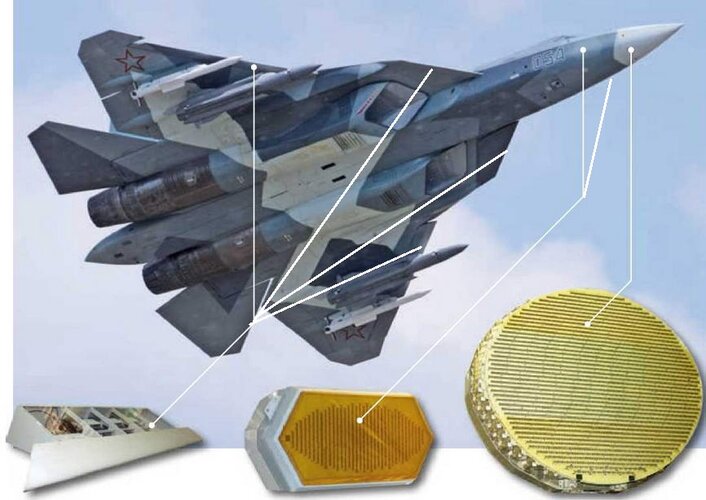
When we mentioned those L-band radars it is interesting to note this .Let us see this next photo.
Первый экспериментальный образец АФАР ПО на испытаниях в радио безэховой камере НИИП им. В.В. Тихомирова, ноябрь 2008 г.
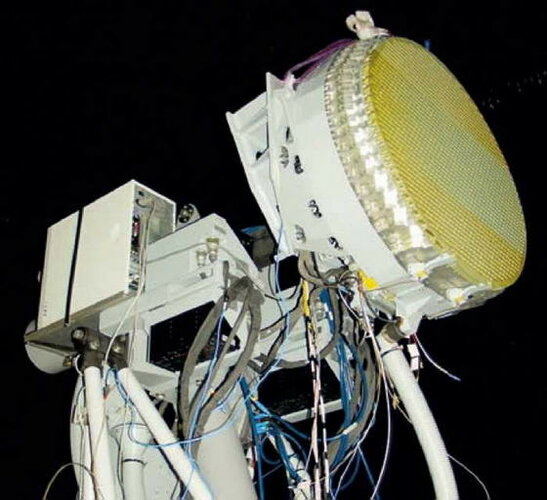
So as we can see, the test model of the main X-band AESA was on static tests during 2008.As we know now ,L-band AESA was on static tests much earlier. But this is not the point of the story. In the meantime I tried to find that interview with Yuri Beliy in National Defence (detail about L-band radars wavelength) and I 've found some additional articles:
Point of the story is this .What was going on with that X-band AESA inside of the tailboom for the rear hemisphere search (rear-looking )? The story about that radar is even more interesting.This X-band AESA was shown ever earlier than any other,he was shown on MAKS 2005. Citations:
''At the MAKS-2005 air show in August, Russia's NIIP (the prime contractor for the PAK FA radar), demonstrated a working model of its Epolet-A active phased-array radar for the first time. The antenna uses domestically produced key components. According to its designers, the radiated power on each of its 68 elements reaches 10 Watts, compared to 5-8 Watts for foreign radars. The small-sized Epolet-A is considered to be an auxiliary antenna but it employs serial technologies developed by the key Russian electronics manufacturers: the St. Petersburg's Svetlana and Fryazino-based Istok companies. NIIP Deputy General Director Anatoly Sinani hopes flight test radar will be built in late 2006 or early 2007, as called for by a government program.''
''В развитие технологий фазированной антенной решетки "Эполет", ОАО "Научно-исследовательский институт приборостроения имени В.В. Тихомирова" впервые на МАКС-2005 представил образец передовых технологий АФАР - действующую станцию "Эполет-А".
Данная разработка скорее всего не является окончательным продуктом (показанный образец проходит ряд лабораторных испытаний по отработке технологий), но может стать ключевым элементом многофункционального РЭК перспективного самолета 5-го поколения (ПАК ФА), в создании которого предприятие принимает активное участие.
АФАР выполнена на отечественной элементной базе и технологии, что соответствует основному требованию к программе ПАК ФА, состоит из 8 многоканальных приемо-передающих модулей, обеспечивающих излучение и приема радиосигналов в X диапазоне волн. Максимальная мощность излучения в каждом канале 10 Вт, сектор электронного сканирования 110 град.
Как известно для обеспечения серийного производства перспективной АФАР, стоимость одного приемно-передающего модуля не должна превышать1000$ (по некоторым данным 500$). Согласно информации, полученной от представителя НИИП, технология, заложенная в АФАР "Эполет-А", позволяет достигнуть приемлемого ценового уровня.''
''К вопросу создания бортовых РЛС с АФАР в России удалось вернуться только в 2001 г., когда в «ОКБ Сухого» развернулись работы по проектированию истребителя пятого поколения – Перспективного авиационного комплекса фронтовой авиации ПАК ФА. В 2002 г. по итогам тендера ВВС России «Сухой» был определен головным исполнителем работ по ПАК ФА.
Ведущим разработчиком многофункциональной интегрированной радиоэлектроной системы (МИРЭС) для нового самолета, основным информационным каналом которой станет РЛС с АФАР, по итогам тендера определен НИИП им. В.В. Тихомирова. Работы ведутся в кооперации с НПО
«Исток» (разработчик приемо-передающих модулей), Государственным Рязанским приборным заводом и рядом других предприятий промышленности. Участвовал в них и санктпетербургский холдинговый концерн «Ленинец», также довольно давно занимавшийся исследованиями в области создания АФАР. Разработка МИРЭС с АФАР для ПАК ФА ведется в рамках государственного оборонного заказа, в 2006 г. успешно завершен ее технический проект. Первый образец РЛС для стендовых испытаний может быть построен к концу этого года.
Первые практические результаты экспериментальных работ НИИП по РЛС с АФАР были представлены в августе 2005 г. на МАКС-2005, на котором предприятие продемонстрировало уже испытанный на стенде действующий экспериментальный образец малоразмерной АФАР, состоящей из 68 ППМ – «Эполет-А» (подробнее об этом – см. «Взлёт» №10/2005, с. 11). Его можно рассматривать не только как автономную систему целеуказания и наведения ракет «воздух–воздух», но и как своего рода демонстратор технических решений, которые будут использоваться в МИРЭС будущего ПАК ФА.''
Дебют «активных» . Взлёт 2005 10
Practically, this X-band rear-looking AESA 'Epolet-A' was the first one to be developed and tested for the N036 Byelka dual-band radar system as part of the Sh121 MIRES. Some photos:
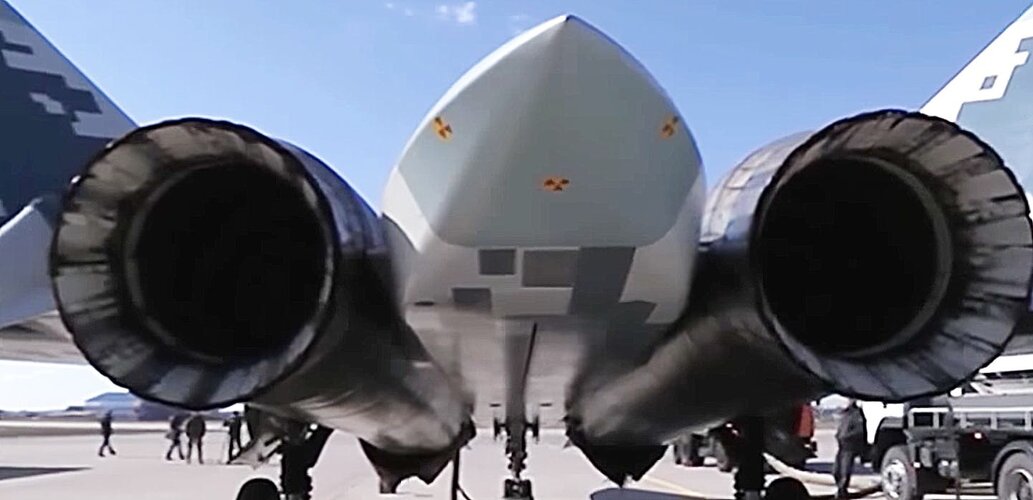
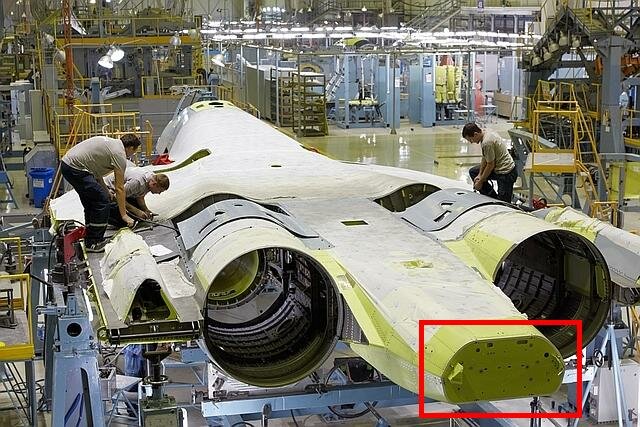
Life of Tyo
ACCESS: Confidential
- Joined
- 23 January 2022
- Messages
- 127
- Reaction score
- 474
you have infromation Epolet-A on test another Aircraft , and on rear tail is ECM suit L402 Himalaya we can,t more infromation about this
Last edited by a moderator:
you have infromation Epolet-A on test another Aircraft , and on rear tail is ECM suit L402 Himalaya we can,t more infromation about this
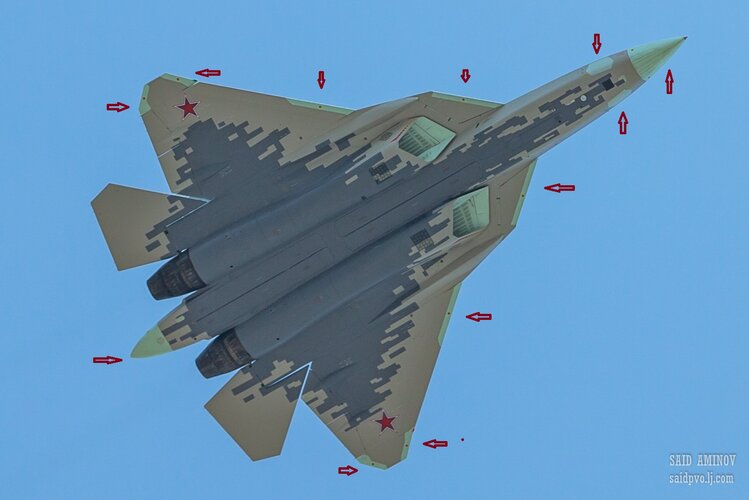
When we talk about EW (ELINT/ECM) AESA-stations of the L402 Himalay system ,those stations/antennas are positioned in the wingtips.Btw, L402 uses all other AESA radars with their centimetric and decimetric interference signals.
''Бортовой комплекс обороны Л402 «Гималаи» разработки АО «Калужский научно-исследовательский радиотехнический институт» и производства ставропольского ПАО «Сигнал» имеет собственные антенны, но поскольку он работает на тех же волнах, что и РЛС, он использует антенны Н036.''
''The L402 Himalaya airborne defense system, developed by JSC Kaluga Research Radiotechnical Institute and manufactured by Stavropol-based PJSC Signal, has its own antennas, but since it operates on the same wavelengths as the radar, it uses N036 antennas.''
Last edited:
Illustration made by Piotr Butowski several years ago.There is some corrections and adds.

It is interesting to note that even many Russian sources do not mention that rear looking X-band AESA called 'Epolet-A' and they mention only two from four L-band AESA.
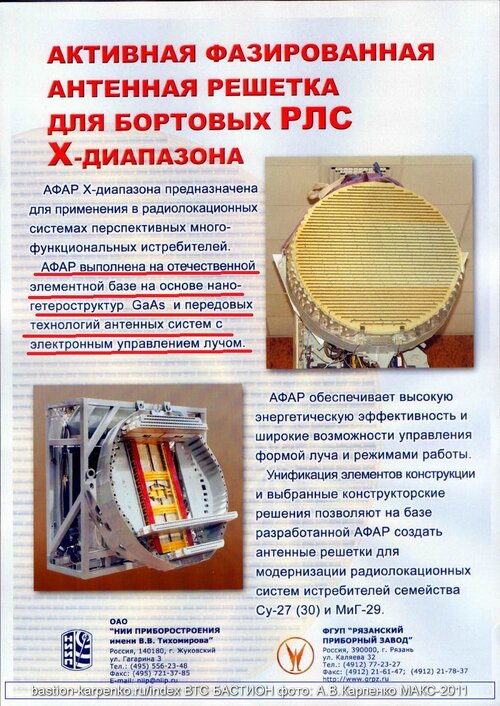
''Важно отметить, что Су-57 оснащается не просто РЛС в классическом понимании, а комплексом антенн, которые распределены по самолету и составляют так называемую "умную обшивку". В комплекс входит сразу несколько активных фазированных антенных решеток: АФАР X-диапазона в носовом отсеке и две бокового обзора, а также две АФАР L-диапазона в кромках крыльев. "Белка" создана полностью на российской компонентной базе на основе наногетероструктур арсенида галлия (GaAs) и передовых технологий антенных систем с электронным управлением лучом. Характеристики новой БРЛС пока держатся в секрете. ''
 www.aviationunion.ru
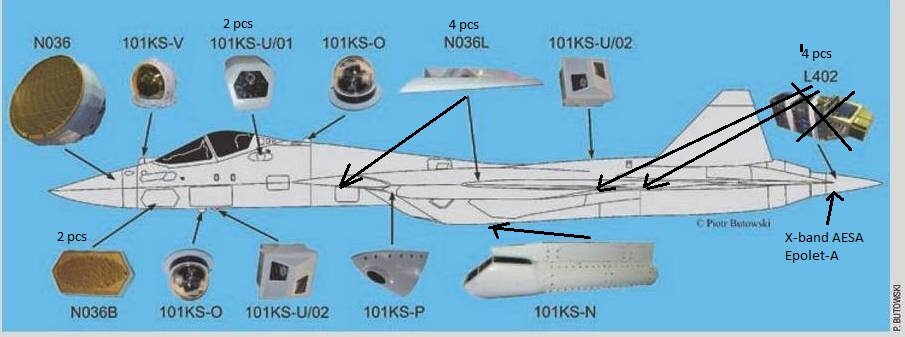
It is interesting to note that even many Russian sources do not mention that rear looking X-band AESA called 'Epolet-A' and they mention only two from four L-band AESA.
''Важно отметить, что Су-57 оснащается не просто РЛС в классическом понимании, а комплексом антенн, которые распределены по самолету и составляют так называемую "умную обшивку". В комплекс входит сразу несколько активных фазированных антенных решеток: АФАР X-диапазона в носовом отсеке и две бокового обзора, а также две АФАР L-диапазона в кромках крыльев. "Белка" создана полностью на российской компонентной базе на основе наногетероструктур арсенида галлия (GaAs) и передовых технологий антенных систем с электронным управлением лучом. Характеристики новой БРЛС пока держатся в секрете. ''
Как это работает. АФАР
More details about those centimetric X-band AESA ....
Development started in 2001/2003 in NIIP named after V.V. Tikhomirov ( Zhukovsky-Moscow).First static tests of the first developed X-band AESA called 'Epolet-A' started in 2005 , then of the main/forward looking/ AESA N036 started in 2008.First flight trials with N036 and SLAR N036B started from 2012 ( prototypes 053 and 054 then 055 blue).Serial production of all X-band AESA's is held by GRPZ-Ryazan. TRM's are developed and are serial produced in NPP ''Istok'' named after Shokyn ( Fryazino).
These are some additional data about those centimetric super high-frequency /short-wave AESA radars which I collected through the time from the 'open /especially Russian/ sources'. Open sources or as I use to call them ,''civilian sources of info/data''.
Those X-band /f=8.5-11.5 GHz, λ≈3cm/ AESA 3D-radars are : the main one N036 in the front position (15° angled upward), with 1526 four-channeled GaAs based TRM's and with 900x700mm( width/height) antenna dimension .Then two AESA as SLAR designated as N036B (15° angled downward) ,with 358 TRM's each in the sides of the front part of the fuselage .Fourth X-band AESA is in fact called ''Epolet-A'' , radar with 68 TRM's which is positioned in the tailboom for the rear looking. Three of them have 120° (+/-60°) radar envelope in azimuth/elevation and the Epolet-A has 110° of envelope. With a total of 2242 TRM's in these three X band AESA ,total radar coverage in azimuth is 270° (+/-135°). This is by far the largest constant FoV and for comparison all other fighters have 120°/140° FoV. FoV 270° x 120° can be practically instantly monitored. In that FoV, three AESA are capable of automatically track 60 aircraft?
The main AESA for the front looking and the one for the rear looking have vertical polarisation and those two SLAR/AESA have horizontal polarisation.Dimensions of the TRM : 150x53.5x8mm,weight is 150gr, area 90-100cm2. Two different current are used for supplying : AC 115/200V,f=50Hz and DC 27V. The average output pulse power at 1dB gain compression is 5W in the operating frequency range 8.5 GHz -11.5 GHz. The maximum output pulse power on HPRF mode is 8W-10W for the each channel. The signal gain is 35dB. All of them can be used for radar searching,detecting/tracking and lock-on. Then for IFF/ID, comm,nav ,ESM ,ECM and RWR modes. AESA radars, if I understand well, can simultaneously work in HPRF and MPRF working modes and can simultaneously work in search ( detect/track) modes and lock-on mode in A2A/A2G/A2S combat modes.Max detection range of the main,frontal N036 antenna in HPRF mode is 400km.
Are these presented data precise,I can not tell/write. These are data from many comments/citations.
Now if you don't mind I will ask some questions about those X-band AESA radars as part of the N036 Byelka dual-band radar system.I hope members like 'stealthflanker','paralay','flateric' and many others will help,tnx.
First question is, why they used the same technical solution for the reflector of the antenna as used for the PESA radar N035 Irbis on Su-35S ( slotted antenna array)?
https://upload.wikimedia.org/wikipedia/commons/1/18/Electronically_Scanned_Array_IRBIS_E.jpg

 en.wikipedia.org
Second q.... is, besides the Titanium Alloy used for plating ,which material is used for the reflector of the antenna with their waveguides? Probably some heat-conductive material 'cause some of the radar energy is being converted to the heat energy?
Then the 3rd q.... , is N036 Byelka pulse-Doppler radar like N007AM Zaslon-AM and N011M Bars-M or monopulse radar like N035 Irbis?
Next question will be about PRT and PRF.Has anyone data what is the PRT and PRF in HPRF/MPRF mode? About radar beam width e.g. or frequency agility? I suppose that many of data are hidden from the public which is to be expected.
Now some YT-videos from 2009/2010.
View: https://www.youtube.com/watch?v=bNyfClu4HVA
View: https://www.youtube.com/watch?v=JVpvZoKHT0s
View: https://www.youtube.com/watch?v=QFnXQ6O8mSQ
TRM is on Russian ППМ or ППУМ ( ПРИЕМО-ПЕРЕДАЮЩИЙ УСИЛИТЕЛЬНЫЙ МОДУЛЬ / RECEIVE-TRANSMIT AMPLIFIER MODULE).
On the photo we can see cassette with 4 four-channel GaAS based TRMs...

The main AESA with its cassettes of TRM's

SLAR N036B
''Cheek mounted X-Band AESA radars for better angular coverage as well as GMTT/GMTI functions.''


What about this comment?
''The side looking N036B X-band AESA radars of the Su-57 with 358 T/R modules embedded in the cheeks of the forward fuselage for increased angular coverage.They could enable the Su-57 to employ extreme beaming tactics (fighter turns 90 degrees away / perpendicular to an enemy's pulse doppler radar array, so that the enemy's radar would not detect / misinterpret it as a non-moving object).They can be used to guide a BVRAAM missile in it's initial phase while turning away from the enemy fighter. This turning away decreases the chances of getting hit by enemy's missile while the enemy would still have pretty good chances of getting hit by your BVRAAM.''
P.S. There is some videos where we can see that Su-35S after launch of R-77-1 did just as explained thanks to the antenna reflector with its electro-hydraulic gimball of N035 Irbis radar.
Development started in 2001/2003 in NIIP named after V.V. Tikhomirov ( Zhukovsky-Moscow).First static tests of the first developed X-band AESA called 'Epolet-A' started in 2005 , then of the main/forward looking/ AESA N036 started in 2008.First flight trials with N036 and SLAR N036B started from 2012 ( prototypes 053 and 054 then 055 blue).Serial production of all X-band AESA's is held by GRPZ-Ryazan. TRM's are developed and are serial produced in NPP ''Istok'' named after Shokyn ( Fryazino).
These are some additional data about those centimetric super high-frequency /short-wave AESA radars which I collected through the time from the 'open /especially Russian/ sources'. Open sources or as I use to call them ,''civilian sources of info/data''.
Those X-band /f=8.5-11.5 GHz, λ≈3cm/ AESA 3D-radars are : the main one N036 in the front position (15° angled upward), with 1526 four-channeled GaAs based TRM's and with 900x700mm( width/height) antenna dimension .Then two AESA as SLAR designated as N036B (15° angled downward) ,with 358 TRM's each in the sides of the front part of the fuselage .Fourth X-band AESA is in fact called ''Epolet-A'' , radar with 68 TRM's which is positioned in the tailboom for the rear looking. Three of them have 120° (+/-60°) radar envelope in azimuth/elevation and the Epolet-A has 110° of envelope. With a total of 2242 TRM's in these three X band AESA ,total radar coverage in azimuth is 270° (+/-135°). This is by far the largest constant FoV and for comparison all other fighters have 120°/140° FoV. FoV 270° x 120° can be practically instantly monitored. In that FoV, three AESA are capable of automatically track 60 aircraft?
The main AESA for the front looking and the one for the rear looking have vertical polarisation and those two SLAR/AESA have horizontal polarisation.Dimensions of the TRM : 150x53.5x8mm,weight is 150gr, area 90-100cm2. Two different current are used for supplying : AC 115/200V,f=50Hz and DC 27V. The average output pulse power at 1dB gain compression is 5W in the operating frequency range 8.5 GHz -11.5 GHz. The maximum output pulse power on HPRF mode is 8W-10W for the each channel. The signal gain is 35dB. All of them can be used for radar searching,detecting/tracking and lock-on. Then for IFF/ID, comm,nav ,ESM ,ECM and RWR modes. AESA radars, if I understand well, can simultaneously work in HPRF and MPRF working modes and can simultaneously work in search ( detect/track) modes and lock-on mode in A2A/A2G/A2S combat modes.Max detection range of the main,frontal N036 antenna in HPRF mode is 400km.
Are these presented data precise,I can not tell/write. These are data from many comments/citations.
Now if you don't mind I will ask some questions about those X-band AESA radars as part of the N036 Byelka dual-band radar system.I hope members like 'stealthflanker','paralay','flateric' and many others will help,tnx.
First question is, why they used the same technical solution for the reflector of the antenna as used for the PESA radar N035 Irbis on Su-35S ( slotted antenna array)?
https://upload.wikimedia.org/wikipedia/commons/1/18/Electronically_Scanned_Array_IRBIS_E.jpg
Byelka (radar) - Wikipedia
Second q.... is, besides the Titanium Alloy used for plating ,which material is used for the reflector of the antenna with their waveguides? Probably some heat-conductive material 'cause some of the radar energy is being converted to the heat energy?
Then the 3rd q.... , is N036 Byelka pulse-Doppler radar like N007AM Zaslon-AM and N011M Bars-M or monopulse radar like N035 Irbis?
Next question will be about PRT and PRF.Has anyone data what is the PRT and PRF in HPRF/MPRF mode? About radar beam width e.g. or frequency agility? I suppose that many of data are hidden from the public which is to be expected.
Now some YT-videos from 2009/2010.
TRM is on Russian ППМ or ППУМ ( ПРИЕМО-ПЕРЕДАЮЩИЙ УСИЛИТЕЛЬНЫЙ МОДУЛЬ / RECEIVE-TRANSMIT AMPLIFIER MODULE).
On the photo we can see cassette with 4 four-channel GaAS based TRMs...
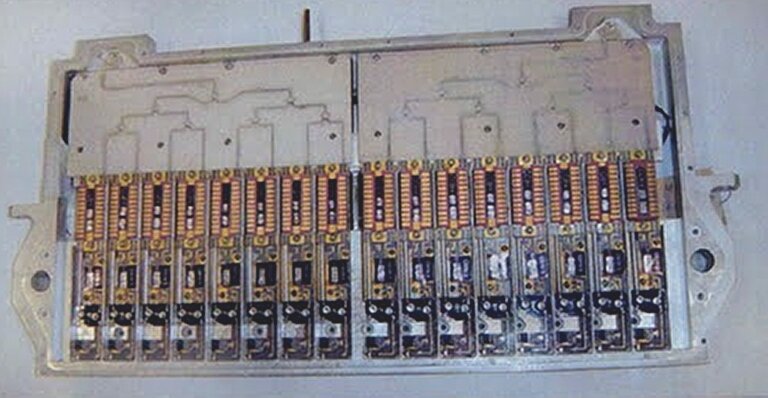
The main AESA with its cassettes of TRM's
SLAR N036B
''Cheek mounted X-Band AESA radars for better angular coverage as well as GMTT/GMTI functions.''
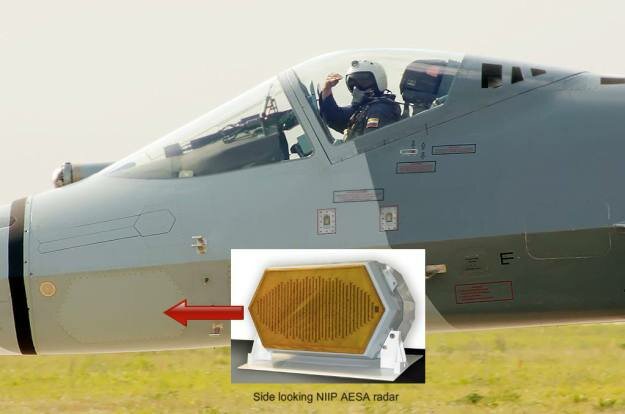
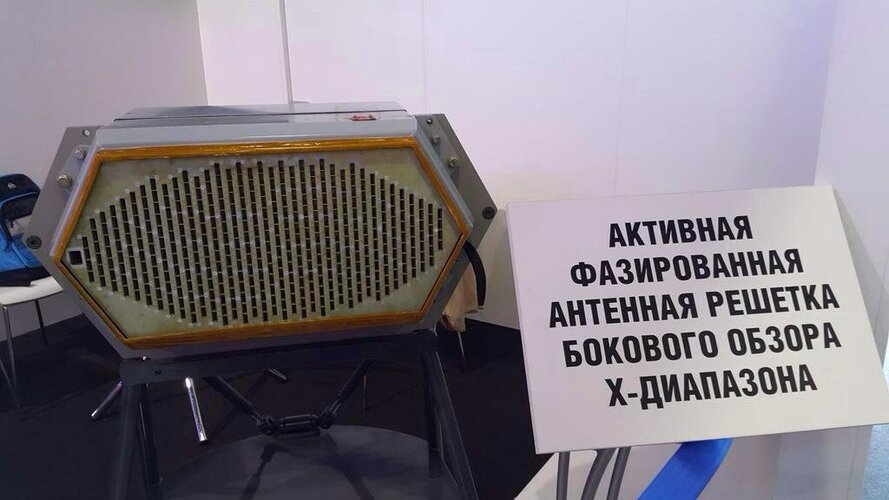
What about this comment?
''The side looking N036B X-band AESA radars of the Su-57 with 358 T/R modules embedded in the cheeks of the forward fuselage for increased angular coverage.They could enable the Su-57 to employ extreme beaming tactics (fighter turns 90 degrees away / perpendicular to an enemy's pulse doppler radar array, so that the enemy's radar would not detect / misinterpret it as a non-moving object).They can be used to guide a BVRAAM missile in it's initial phase while turning away from the enemy fighter. This turning away decreases the chances of getting hit by enemy's missile while the enemy would still have pretty good chances of getting hit by your BVRAAM.''
P.S. There is some videos where we can see that Su-35S after launch of R-77-1 did just as explained thanks to the antenna reflector with its electro-hydraulic gimball of N035 Irbis radar.

- Joined
- 27 December 2005
- Messages
- 18,718
- Reaction score
- 33,077
Monopulse and Pulse-doppler are totally different things. Pretty much every radar since 1960s uses monopulse tracking techniques, whether pulse or pulse doppler.Then the 3rd q.... , is N036 Byelka pulse-Doppler radar like N007AM Zaslon-AM and N011M Bars-M or monopulse radar like N035 Irbis?
- Joined
- 11 February 2010
- Messages
- 1,714
- Reaction score
- 3,122
Yeah.
Monopulse = Type of angle Tracking technique
Pulse, Pulse doppler = types of radar or how they emit their waveform
So a radar can be Pulsed and use monopulse technique for angle tracking.
For addition AESA and PESA is types of radar antenna. AESA have active components (power amplifier) Within the radiating elements while PESA doesnt (only phase shifters and perhaps 1st stage of receiver e.g Aegis and Bars). So a radar can be Pulse or pulse doppler using monopulse angle tracking technique and use AESA antenna.
Monopulse = Type of angle Tracking technique
Pulse, Pulse doppler = types of radar or how they emit their waveform
So a radar can be Pulsed and use monopulse technique for angle tracking.
For addition AESA and PESA is types of radar antenna. AESA have active components (power amplifier) Within the radiating elements while PESA doesnt (only phase shifters and perhaps 1st stage of receiver e.g Aegis and Bars). So a radar can be Pulse or pulse doppler using monopulse angle tracking technique and use AESA antenna.
Monopulse and Pulse-doppler are totally different things. Pretty much every radar since 1960s uses monopulse tracking techniques, whether pulse or pulse doppler.
Yeah.
Monopulse = Type of angle Tracking technique
Pulse, Pulse doppler = types of radar or how they emit their waveform
So a radar can be Pulsed and use monopulse technique for angle tracking.
For addition AESA and PESA is types of radar antenna. AESA have active components (power amplifier) Within the radiating elements while PESA doesnt (only phase shifters and perhaps 1st stage of receiver e.g Aegis and Bars). So a radar can be Pulse or pulse doppler using monopulse angle tracking technique and use AESA antenna.
Thank you both.We can say that N036 is pulse-Doppler radar with monopulse modes.
If I understood well, there is some 'only' monopulse radar ( with monopulse pelengation-''Моноимпульсная радиолокация'') ? So called monopulse pelengation is used by some A2A missiles ,AD-target tracking radar systems... Monopulse meaning pulses with the same PRT,power etc?
- Joined
- 11 February 2010
- Messages
- 1,714
- Reaction score
- 3,122
Thank you both.We can say that N036 is pulse-Doppler radar with monopulse modes.
If I understood well, there is some 'only' monopulse radar ( with monopulse pelengation-''Моноимпульсная радиолокация'') ? So called monopulse pelengation is used by some A2A missiles ,AD-target tracking radar systems... Monopulse meaning pulses with the same PRT,power etc?
All military radars of today are monopulse. Even radar missile seekers of today be it Russian, Chinese and Western etc can be expected to use monopulse for angle tracking.
Monopulse here means the ability of a radar to gain information on target angular position within the beam of the radar based on just single pulse. There is no relations between Monopulse and pulse power, prt etc. No. If your radar can measure target angular position with just single pulse, it's essentially monopulse.
The term monopulse means that a tracking solution may be determined on the basis of a single pulse rather than the beam sequence (sequential lobing) or a complete conical scan. The tracking data rate is therefore much higher and therefore potentially more accurate. Another advantage is that the tracking is based on the simultaneous reception of the target return in all four channels and any variation in the echo in time can be readily accommodated which is not the case with the other techniques.Thank you both.We can say that N036 is pulse-Doppler radar with monopulse modes.
If I understood well, there is some 'only' monopulse radar ( with monopulse pelengation-''Monopulse radar'') ? So called monopulse pelengation is used by some A2A missiles ,AD-target tracking radar systems... Monopulse meaning pulses with the same PRT,power etc?
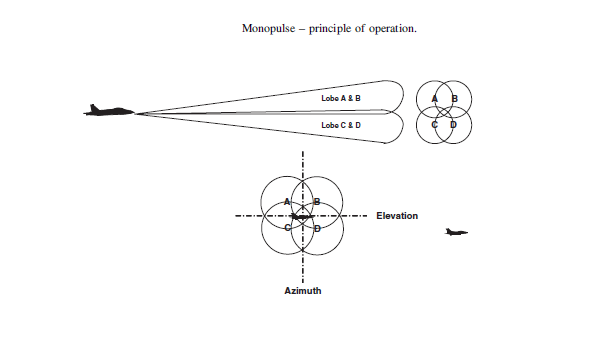
The basic principal of monopulse is shown in the photo above, monopulse uses two to four simultaneous beams , in which the beams are stacked in elevation and side by side. Monopulse tracking techniques may use either phase or amplitude comparison to perform the tracking task.
For amplitude comparison monopulse, all four beams squint away from the antenna boresight by a small amount (usually such that they overlap at the half power beam width point of the beam).The beams often have different polarization. When the reflected signals are received they are amplified separately and compared to each other, indicating which direction has a stronger return, and thus the general direction of the target relative to the bore sight.
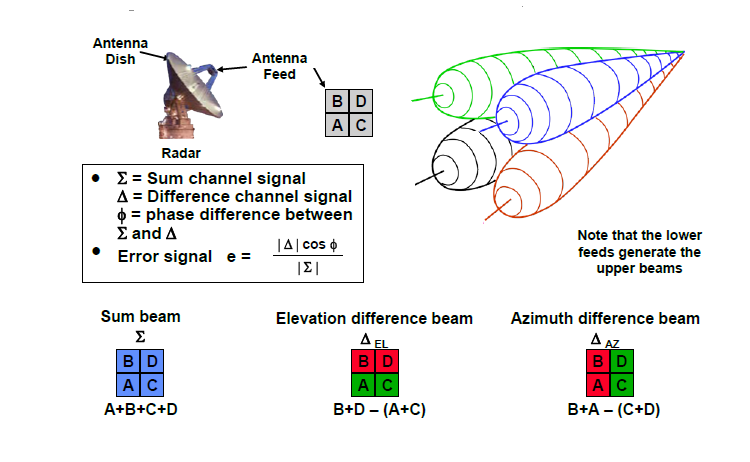
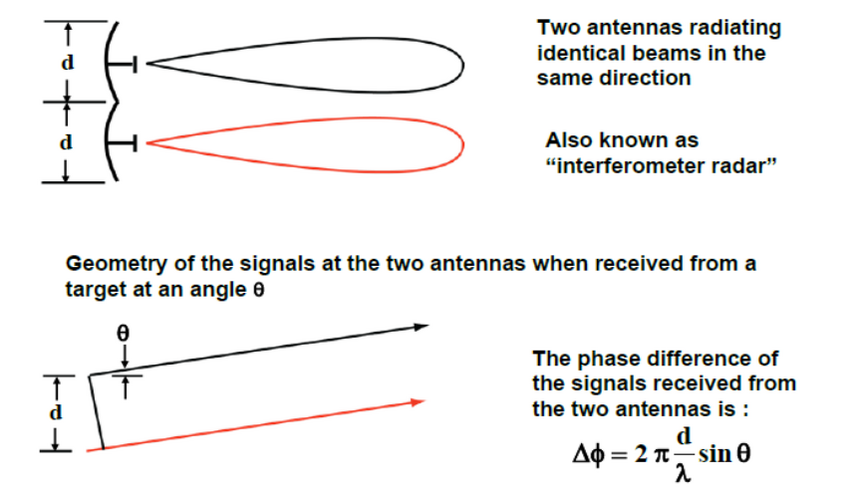
For phase comparison monopulse, the system use 2 separate antennas (can be 4 antennas too) and illuminate the same volume in space.
Instead of being squinted like in amplitude comparison monopulse system, the beams are kept parallel in phase comparison monopulse system. Because the beams are parallel, if the target is at the centre, the radar reflection will arrive at the 2 antennas at the same time and has the same phase.On the other hand, if the target is at an angle to the bore sight then the radar reflection will arrive at one antenna later than the other.
Last edited:
Thank you all again. I've found some interesting info on this Russian source ...
''Полотно АФАР в целом, в итоге имеет характеристики усиления, сопоставимые с аналоговой ПФАР, но в общем случае уступает ПФАР с цифровым управлением по этому параметру. Например, гибридная бортовая РЛС с ПФАР Н035, устанавливаемая на Су-35, за счет большого коэффициента усиления ФАР и внешней цифровой обработки имеет значительно большую дальность обнаружения целей в сравнении с любой современной АФАР зарубежного производства.
Типичная современная ПФАР с цифровым управлением обеспечивает позиционирование луча в пределах +- 60 градусов без потери чувствительности на краях, а АФАР типично позиционирует луч в пределах +-45-50 градусов. При этом полотно ПФАР можно еще довернуть механически, а вот с АФАР это сделать сложнее, поскольку ее ППМ крайне капризны в отношении даже микронных изменений взаимного положения, которые могут возникнуть при повороте. По сектору обзора ПФАР с цифровым управлением и механизмом поворота безоговорочно выигрывает у действующих АФАР, которые, как правило, закреплены неподвижно. Например, БРЛС Су-35 обеспечивает обзор в секторе 240 градусов (120 при только электронном сканировании), а БРЛС F-22 AN/APG-77 ограничена 100-120 градусами, причем на краях обозреваемого сектора снижается разрешение и дальность.''
Transl....
''The antenna reflector of the AESA as a whole ultimately has gain characteristics comparable to an analog PESA, but in general is inferior to a digitally controlled PESA in this parameter. For example, the hybrid onboard PESA radar N035 , installed on the Su-35, due to the high gain of the PESA and external digital processing, has a significantly greater target detection range in comparison with any modern AESA of foreign manufacture.
A typical modern digitally controlled PESA provides beam positioning within +- 60 degrees without loss of sensitivity at the edges, while an AESA typically positions the beam within +- 45-50 degrees.
In this case, the PESA antenna can be further turned mechanically, but with AESA this is more difficult to do, since its TRMs are extremely capricious with regard to even micron changes in relative position that can occur when turning.
In terms of the viewing sector, a digitally controlled PESA with a rotation mechanism is clearly superior to existing AESAs, which are usually fixed in place.
For example, the Su-35's radar provides a 240-degree sector coverage (120 with only electronic scanning), while the F-22 AN/APG-77 radar is limited to 100-120 degrees, with resolution and range decreasing at the edges of the sector being covered.''
If all of this mentioned is right,then we can see what kind of technical and tactical potential has Su-57 with its three X-band AESA for the frontal and side looking(searching).Note: if I am right ,two western fighters,Gripen and Typhoon have their AESA on the gimbal for widening its FoV.
Фазированная антенная решетка. Простыми словами и с анимашками. ПФАР-АФАР-ЦАР


''Полотно АФАР в целом, в итоге имеет характеристики усиления, сопоставимые с аналоговой ПФАР, но в общем случае уступает ПФАР с цифровым управлением по этому параметру. Например, гибридная бортовая РЛС с ПФАР Н035, устанавливаемая на Су-35, за счет большого коэффициента усиления ФАР и внешней цифровой обработки имеет значительно большую дальность обнаружения целей в сравнении с любой современной АФАР зарубежного производства.
Типичная современная ПФАР с цифровым управлением обеспечивает позиционирование луча в пределах +- 60 градусов без потери чувствительности на краях, а АФАР типично позиционирует луч в пределах +-45-50 градусов. При этом полотно ПФАР можно еще довернуть механически, а вот с АФАР это сделать сложнее, поскольку ее ППМ крайне капризны в отношении даже микронных изменений взаимного положения, которые могут возникнуть при повороте. По сектору обзора ПФАР с цифровым управлением и механизмом поворота безоговорочно выигрывает у действующих АФАР, которые, как правило, закреплены неподвижно. Например, БРЛС Су-35 обеспечивает обзор в секторе 240 градусов (120 при только электронном сканировании), а БРЛС F-22 AN/APG-77 ограничена 100-120 градусами, причем на краях обозреваемого сектора снижается разрешение и дальность.''
Transl....
''The antenna reflector of the AESA as a whole ultimately has gain characteristics comparable to an analog PESA, but in general is inferior to a digitally controlled PESA in this parameter. For example, the hybrid onboard PESA radar N035 , installed on the Su-35, due to the high gain of the PESA and external digital processing, has a significantly greater target detection range in comparison with any modern AESA of foreign manufacture.
A typical modern digitally controlled PESA provides beam positioning within +- 60 degrees without loss of sensitivity at the edges, while an AESA typically positions the beam within +- 45-50 degrees.
In this case, the PESA antenna can be further turned mechanically, but with AESA this is more difficult to do, since its TRMs are extremely capricious with regard to even micron changes in relative position that can occur when turning.
In terms of the viewing sector, a digitally controlled PESA with a rotation mechanism is clearly superior to existing AESAs, which are usually fixed in place.
For example, the Su-35's radar provides a 240-degree sector coverage (120 with only electronic scanning), while the F-22 AN/APG-77 radar is limited to 100-120 degrees, with resolution and range decreasing at the edges of the sector being covered.''
If all of this mentioned is right,then we can see what kind of technical and tactical potential has Su-57 with its three X-band AESA for the frontal and side looking(searching).Note: if I am right ,two western fighters,Gripen and Typhoon have their AESA on the gimbal for widening its FoV.
This part honestly just sound like utter nonsense. Beside, at the moment, there is no digital beam forming electronic scanned array currently used on fighter either.''The antenna reflector of the AESA as a whole ultimately has gain characteristics comparable to an analog PESA, but in general is inferior to a digitally controlled PESA in this parameter. For example, the hybrid onboard PESA radar N035 , installed on the Su-35, due to the high gain of the PESA and external digital processing, has a significantly greater target detection range in comparison with any modern AESA of foreign manufacture.
A typical modern digitally controlled PESA provides beam positioning within +- 60 degrees without loss of sensitivity at the edges, while an AESA typically positions the beam within +- 45-50 degrees.
In this case, the PESA antenna can be further turned mechanically, but with AESA this is more difficult to do, since its TRMs are extremely capricious with regard to even micron changes in relative position that can occur when turning.
Irbis-e is also analog beam forming just like any fighter radar currently in use, it has long range because it is a big, powerful radar
@Ronny
Tnx for the comment. For the N035 Irbis ( Irbis-E is its export version) ,I 've found this info :
''цифровое гетеродинирование сигнала'' or ''digital signal heterodyning'' if I am right ?
Yes, N035 Irbis is very powerfull ,max output pulse power in HPRF mode is 20kW ( average transmitter power in HPRF mode is 5kW).
One question pls ....As we know max output pulse power of the radars with TWT's ( either with Cassegrain antennas,flat plannar array,PESA ) is measured in several kW's or several tens of kW's when we talk about MPRF or HPRF working mode. Also they have PRF in HPRF mode e.g. measured in several hundreds of kHz. When we talk about that AESA ,max output pulse power is measured in several Watts. Now what about their PRF in HPRF mode e.g. ,is it measured in several GHz or more ?
Tnx for the comment. For the N035 Irbis ( Irbis-E is its export version) ,I 've found this info :
''цифровое гетеродинирование сигнала'' or ''digital signal heterodyning'' if I am right ?
Yes, N035 Irbis is very powerfull ,max output pulse power in HPRF mode is 20kW ( average transmitter power in HPRF mode is 5kW).
One question pls ....As we know max output pulse power of the radars with TWT's ( either with Cassegrain antennas,flat plannar array,PESA ) is measured in several kW's or several tens of kW's when we talk about MPRF or HPRF working mode. Also they have PRF in HPRF mode e.g. measured in several hundreds of kHz. When we talk about that AESA ,max output pulse power is measured in several Watts. Now what about their PRF in HPRF mode e.g. ,is it measured in several GHz or more ?
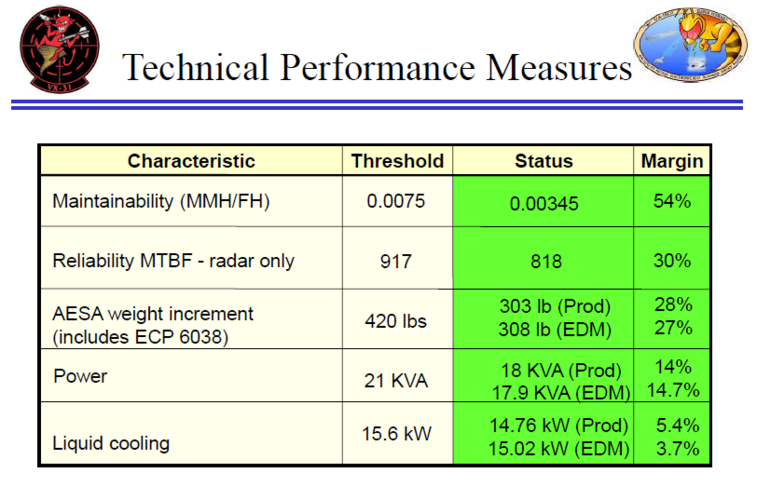
I think you are confused between the peak power of the whole radar with the peak power of individual T/R modules. So for example, if peak power of each individual module is 11 watts, with 1368 T/R modules, the peak power of your AESA would be around 15 kW.. When we talk about that AESA ,max output pulse power is measured in several Watts.
Typically, you can infer peak power from the cooling limit of the radar
@Ronny
Yes, tnx. I've found some data :
Pulse Doppler radars remain the primary long range sensors used by fighter aircraft for BVR combat.Peak Power (Ppeak) [kW] is the maximum pulsed power the radar can emit.
So what we have ... 1526 TRM's in the main forward N036 AESA x 10W =15.26 kW + 2 SLAR N036B AESA with 358 TRM's each is 716 x 10W=7.16 kW ,total= 22.42 kW ?
Yes, tnx. I've found some data :
Pulse Doppler radars remain the primary long range sensors used by fighter aircraft for BVR combat.Peak Power (Ppeak) [kW] is the maximum pulsed power the radar can emit.
Flanker Radars in Beyond Visual Range Air Combat
fighter radar, guided missile, sukhoi, flanker, niip, tikhomirov, phazotron
www.ausairpower.net
So what we have ... 1526 TRM's in the main forward N036 AESA x 10W =15.26 kW + 2 SLAR N036B AESA with 358 TRM's each is 716 x 10W=7.16 kW ,total= 22.42 kW ?
Null
ACCESS: Secret
- Joined
- 16 December 2024
- Messages
- 221
- Reaction score
- 393
I am dumping all the Su-57 radar articles from the radar website that works with the Su-57 here for those that want to read it but will give a short summary down below for those that dont want to read too much text.
Since Niip's latest radar articles are from 2021 and they got rid of the radar articles and are talking about underwater detection and trains instead, there is a high chance we won't get any good details on the avionics of the Su-57M.
In December 2008, bench tests confirmed that the "birth" of the forward-looking AFAR had taken place. On April 26, 2012, Honored Test Pilot, Hero of Russia Sergei Bogdan made his first flight on the third PAK FA prototype with the inclusion of the radar in the
AFAR L-band is installed in the nose of the Su-57 wing. "air-to-surface" mode. According to the pilot's report and the subsequent analysis of the information received, the results of the NIIP work turned out to be quite worthy. By 2016, NPP Istok had mastered serial production of microwave modules on gallium arsenide, and the manufacturing technology of front and side antennas with AFAR were transferred to the State Ryazan Instrument Plant. Both NIIP and NPP Istok began work on creating new transceiver modules on gallium nitride with a high degree of integration, with improved characteristics and reduced weight. Unfortunately, as Yuri Bely noted in an interview with the National Defense magazine in 2019, there is still no program at the state level to develop gallium nitride technology for the AFAR PPM, which would link the entire line, starting with raw materials and further along all
X-range side-looking AFAR.
Russian fifth-generation Su-57 fighters will be equipped with additional radar antennas to expand the aircraft's field of view. This was reported to Izvestia by Yuri
Bely, General Director of the V.V. Tikhomirov Research Institute of Instrument Engineering.
The institute's employees will place the N036 "Belka" radar stations all over the
surface of the aircraft, and not just in its nose. In total, the Su-57 design will include six such systems. This will expand the fighter's field of view, and the pilot will be able to notice an enemy approaching from behind.
"The radar's characteristics have been confirmed in the main modes - when scanning the airspace and the earth's surface," the general director of the institute explained.
As experts note, additional radars will ensure the superiority of the Russian aircraft over any enemy, including the fifth-generation F-22 and F-35 fighters of the US Air Force. Read more in the exclusive Izvestia article:
According to the information available to date, during 2021,— About ten years ago, experts noted that Russia was lagging behind the United States in the development of
aircraft radars with active phased array antennas (AESA).
For example, the American fifth-generation aircraft F-35 is equipped with such radars. Its Russian competitor Su-57 with a similar system is undergoing tests. Will you catch up with your competitors?
— In the 80s of the last century, NIIP was “ahead of the rest of the world” in terms of radars based on a phased array antenna with
electronic beam control. But after
the “dashing 1990s,” we found ourselves in an unusual role of catching up. Our overseas colleagues
already have hundreds of fighters with onboard radars based on AESA, and we have only a dozen prototypes. The lag is a fact. But we look to the future with optimism. This optimism is not out of
nowhere. NIIP has perhaps the most experience among developers in the field of
electronic scanning. More than 70% of Russian combat aircraft exported
are equipped with our radars.
Su-57
Photo: IZVESTIA/Alexander Kazakov
Foreign and domestic developers of airborne radars for various reasons skipped
the creation of radars with passive phased antenna arrays (PAR), moving
straight to a new technological stage - with AFAR. Our institute has developed and brought to serial
implementation five systems with PAR, including "Irbis" for the Su-35S fighter of the "4++" generation.
This is invaluable experience. At least in terms of detection range, "Irbis" surpasses all
known airborne radars in the world with conventional phased antenna arrays and with AFAR.
And more. Having started later, we were able to assess the shortcomings of previous developments and
use the latest scientific achievements, for example, in terms of the so-called smart
skin, when AESA of different ranges are distributed "over the body" of the fighter. This
technology was first used on the fifth-generation Su-57 aircraft. Official
representatives of the Ministry of Defense have repeatedly noted that its tests with our
"Belka" radar are on schedule, and the comments are being eliminated in the usual
manner. As for the NIIP, no serious
deficiencies were identified. I hope that we will also pass the state testing stage with a
positive conclusion. Test flights confirmed, for example, one of the main
advantages of systems with AESA - significantly greater operational reliability.
- Is the experience of designing the "Belka" radar applicable, for example, when designing
a radar for a new strategic missile carrier? — In the project of the prospective long-range aviation complex (PAK DA) we are full participants in the experimental design work and have already defended the draft design.
KNAAZ should manufacture and transfer two Su-57s to the Aerospace Forces. At first, the Su-57s will be delivered from the factory with the so-called “first stage” AL-41F-1 engines (previously known under the designation “product 117”).
The completely new engine will begin to be installed on the fifth-generation aircraft later, after its testing is completed and it is put into serial production.
But the main element of the on-board radio-electronic equipment (avionics) - the radar complex (RLK) with active phased antenna arrays (APAA) took its place on the fifth-generation fighter from the very beginning. Of course, in the future, the radar complex,
known under the designation
"Belka", will be improved, in particular, complex modes of use have yet to be implemented (including the joint
use of the so-called unmanned wingman - UAV
No. 7 July 2021
Summary of articles.surveillance and targeting systems, but also intellectual support for the pilot - it implements the so-called "electronic pilot" function. As Nikita Dorofeev, Head of the Sukhoi Design Bureau's Cockpit Department, said in an interview with the UAC corporate magazine "Gorizonty", the Su-57 has achieved maximum automation of the "routine" processes of piloting and combat use. "Theoretically, after takeoff and until the landing approach, the pilot may not be involved in piloting at all, but rather search for and attack targets. Moreover, this process is also automated to a sufficient degree," Nikita Dorofeev noted. In the process of conceptual development of the radar system for the Russian fifth-generation fighter, NIIP specialists came to the firm conclusion that it was necessary to install not one but several phased arrays with electronic beam scanning on the new aircraft. As a result of long, painstaking work, NIIP created a multifunctional integrated radar system (MIRES), known as "Belka", which includes, in addition to the X-band forward-looking AESA, two more pairs of AESA: side-looking (also X-band) and L-band, located in the deflectable tips of the wings. It should be noted that the multifunctional radar
complex with AFAR and the on-board information and control system of the Su-57 aircraft
also integrates an on-board defense system developed at KNIRTI.
3
The L-band AFAR is installed in the nose
of the Su-57 wing.
All this gives the Su-57 certain advantages in
airspace surveillance. In particular, such a
solution with multi-band AFARs distributed over sections of the airframe
increases the capabilities for detecting enemy aircraft built using stealth
technology.
- 2019 spokesman stated they don't have the necessary materials or production line to produce GaN to replace the existing front and side X-band arrays according to the article they published in 2021.
- 2018 article states additional radar antennas to expand the view of the Su-57. This might imply that they mean extra modules were added to the antennas? The earliest mak 2009 airshow has shown the front, 2 side x-bands, and 2 l-bands which is 5 and i don't think they ever shown the back until Squirrel referenced it which would make it 6 antennas. https://jamestown.org/program/mosco...riting,spectrum and infrared wavelength range. Article states 4 Decimeter(range L-band operates) radars have been added with the 4 centimeter(range X-band operates and those 4 radars is the front, 2 sides and back) radars.
- 2021 article states they will improve the byelka and since the Su-57M is based on the modernization testing of project megapolis 2022-2024 it will more than likely be on the new serial produced Su-57s for this year. Though I have no idea if they the newer radar modules that will improve the byelka are GaN MMICs, GaAs MMICs or PICs.
Since Niip's latest radar articles are from 2021 and they got rid of the radar articles and are talking about underwater detection and trains instead, there is a high chance we won't get any good details on the avionics of the Su-57M.
@Null
Nice work....
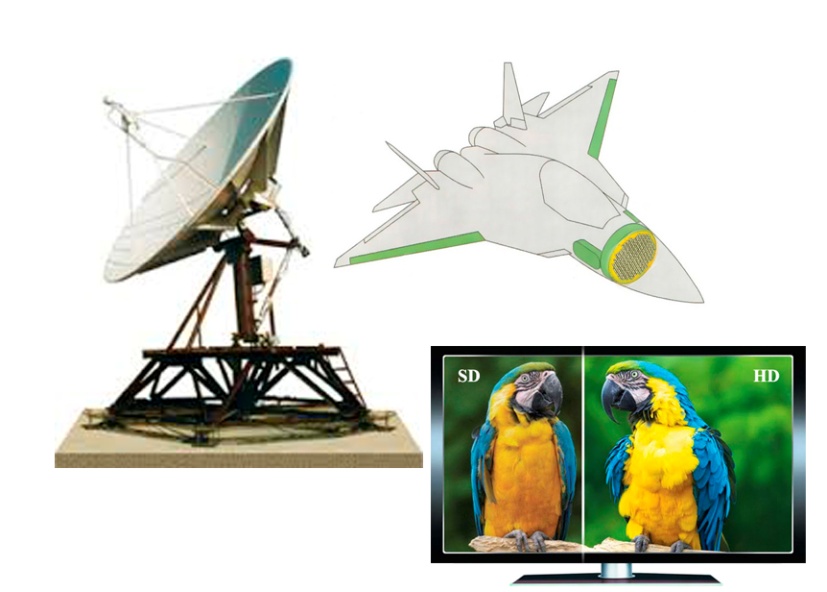
About GaAs and GaN based TRM's.... This article is more then 10 years old.
 vpk.name
''Представлены результаты разработки нового типа мощных полевых транзисторов Х-диапазона длин волн на основе арсенидгаллиевых гетероструктур с дополнительными потенциальными барьерами, сформированными с помощью слоёв, легированных донорами и акцепторами. Транзисторы на новой гетороструктуре показали почти двукратное увеличение выходной мощности и коэффициента усиления. В ближайшее время, после незначительной доработки технологии, могут быть получены транзисторы на основе GaAs по мощности соответствующие транзисторам на основе GaN.
Это уникальная прорывная технология основана на фундаментальных исследованиях, проведённых коллективом авторов из ОАО НПП «Исток» им. Шокина и ИФП СО РАН.''
Transl
''The paper presents the results of the development of a new type of powerful X-band field-effect transistors based on gallium arsenide heterostructures with additional potential barriers formed using layers doped with donors and acceptors.
Transistors on the new heterostructure showed almost a twofold increase in output power and gain. In the near future, after minor improvements to the technology, transistors based on GaAs can be obtained in power corresponding to transistors based on GaN.
This unique breakthrough technology is based on fundamental research conducted by a team of authors from the Shokin Research and Production Enterprise Istok and the Institute of Physical Problems of the Siberian Branch of the Russian Academy of Sciences.''
Additional comment from one article about those L-band PESA/AESA radars :
''THE TWO WING MOUNTED L-BAND AESA RADARS OF PAK-FA DESIGNATED N036L-1-01 WHICH IS UNLIKE ANYTHING THAT THE WEST HAS. THE L-BAND OCCUPIES THE 1.0GHZ TO 2.0GHZ REGION OF THE RADIO SPECTRUM CORRESPONDING TO WAVE LENGTHS OF BETWEEN 15CM TO 30CM. IT IS OF A SIGNIFICANTLY LOWER FREQUENCY AND THEREFORE LONGER WAVELENGTHS COMPARED WITH THE X-BAND WHICH STRADDLES THE 8.0GHZ TO 12.0GHZ REGION AND HAVE WAVELENGTHS BETWEEN 2.5CM TO 3.75CM. THE L-BAND IS ALSO A VERY CONGESTED BAND UTILIZED BY BOTH MILITARY AND CIVILIAN APPLICATIONS.
WHEN FULLY FUNCTIONAL AND MATURE, THIS L-BAND AESA RADAR HAS THE POTENTIAL TO BE A GAME CHANGER IN AERIAL WARFARE. FIRSTLY IT STANDS A BETTER CHANCE OF DETECTING FIGHTER-SIZED STEALTH AIRCRAFT COMPARED WITH ITS X-BAND COUNTERPARTS AS MOST LOW OBSERVABLE AIRCRAFTS HAVE DESIGNS OPTIMIZED FOR STEALTHINESS IN THE X-BAND. MANY STEALTH SHAPING FEATURES SUCH AS JAGGED EXHAUST NOZZLES, FACETED SURFACES AND SPECIALLY SHAPED ENGINE INLETS BECOME INEFFECTIVE IN THE CONTROLLED SCATTERING OF INCOMING RADAR WAVES WHEN THEIR SIZE APPROXIMATES THE WAVELENGTH OF THE INBOUND PULSE.
AND ,SINCE THE L-BAND IS UTILIZED BY SO MANY APPLICATIONS, THE L-BAND RADAR MAY ALSO BE USED TO PASSIVELY TRACK AND LOCATE L-BAND RADAR EMISSIONS FROM AWACS/AEW AIRBORNE RADARS, GROUND BASED SEARCH RADARS, EMISSIONS FROM JITDS/MIDS/LINK-16 AND HOSTILE IFF / SSR EMISSIONS AT LONG RANGE.
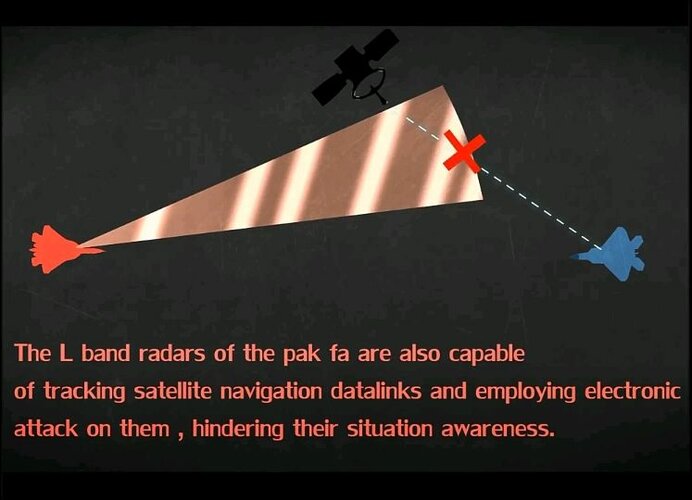
IT CAN THEN BE USED TO EXECUTE HIGH POWERED ACTIVE JAMMING ON THOSE INDIVIDUAL L-BAND SOURCES, AN ELECTRONIC ATTACK TO BLIND HOSTILE AWACS RADARS AND SEVER COMMAND AND COMMUNICATIONS DATALINKS. BROAD AREA JAMMING OF GPS / SATNAV RECEIVERS MAY ALSO BE POSSIBLE RENDERING NAVIGATION MORE DIFFICULT FOR HOSTILE FORCES AND THE ACCURATE DELIVERY OF GPS GUIDED MUNITIONS TO THOSE JAMMED AREAS QUITE IMPOSSIBLE.
SO A L-BAND RADAR MIGHT JUST PICK UP A FAINT SIGNATURE WHERE THE X-BAND SEES NOTHING. LARGER VLO AIRCRAFTS LIKE THE B-2 BOMBER ARE MORE OR LESS IMMUNE AS THEY HAVE STRUCTURES LARGER THAN THE TYPICAL 15CM TO 30CM WAVELENGTH OF THE L-BAND WAVES. AT THE SAME TIME THE L-BAND RADAR MAY ALSO HAVE A SECONDARY FUNCTION AS A IFF TRANSPONDER SINCE THE PROCESS UTILIZES A SIMILAR FREQUENCY BAND, THUS REDUCING WEIGHT, VOLUME AND COOLING REQUIREMENTS BY SAVING ON ANTENNAE AND T/R MODULE NUMBERS.''
Of course there is four instead of two decimetric L-band radars ( two in the wingslats and two in the LEVCON's).
Two illustrations from the article...
This is not right because data-link between fighter's radar and AAM works in the centimetric X-band.

Something like this can be possible ?
Nice work....
About GaAs and GaN based TRM's.... This article is more then 10 years old.
Разработка технологии изготовления нового типа мощных СВЧ транзисторов на основе структур с донорно-акцепторным легированием
Разработка технологии изготовления нового типа мощных СВЧ транзисторов на основе структур с донорно-акцепторным легированием
Одним из важнейших элементов твердотельной сверхвысокочастотной (СВЧ) электронной компонентной базы являются усилители мощности на гетероструктурных полевых транзисторах. Они используются для разработки и производства систем беспроводной связи, в том числе стационарной и мобильной...
''Представлены результаты разработки нового типа мощных полевых транзисторов Х-диапазона длин волн на основе арсенидгаллиевых гетероструктур с дополнительными потенциальными барьерами, сформированными с помощью слоёв, легированных донорами и акцепторами. Транзисторы на новой гетороструктуре показали почти двукратное увеличение выходной мощности и коэффициента усиления. В ближайшее время, после незначительной доработки технологии, могут быть получены транзисторы на основе GaAs по мощности соответствующие транзисторам на основе GaN.
Это уникальная прорывная технология основана на фундаментальных исследованиях, проведённых коллективом авторов из ОАО НПП «Исток» им. Шокина и ИФП СО РАН.''
Transl
''The paper presents the results of the development of a new type of powerful X-band field-effect transistors based on gallium arsenide heterostructures with additional potential barriers formed using layers doped with donors and acceptors.
Transistors on the new heterostructure showed almost a twofold increase in output power and gain. In the near future, after minor improvements to the technology, transistors based on GaAs can be obtained in power corresponding to transistors based on GaN.
This unique breakthrough technology is based on fundamental research conducted by a team of authors from the Shokin Research and Production Enterprise Istok and the Institute of Physical Problems of the Siberian Branch of the Russian Academy of Sciences.''
Additional comment from one article about those L-band PESA/AESA radars :
''THE TWO WING MOUNTED L-BAND AESA RADARS OF PAK-FA DESIGNATED N036L-1-01 WHICH IS UNLIKE ANYTHING THAT THE WEST HAS. THE L-BAND OCCUPIES THE 1.0GHZ TO 2.0GHZ REGION OF THE RADIO SPECTRUM CORRESPONDING TO WAVE LENGTHS OF BETWEEN 15CM TO 30CM. IT IS OF A SIGNIFICANTLY LOWER FREQUENCY AND THEREFORE LONGER WAVELENGTHS COMPARED WITH THE X-BAND WHICH STRADDLES THE 8.0GHZ TO 12.0GHZ REGION AND HAVE WAVELENGTHS BETWEEN 2.5CM TO 3.75CM. THE L-BAND IS ALSO A VERY CONGESTED BAND UTILIZED BY BOTH MILITARY AND CIVILIAN APPLICATIONS.
WHEN FULLY FUNCTIONAL AND MATURE, THIS L-BAND AESA RADAR HAS THE POTENTIAL TO BE A GAME CHANGER IN AERIAL WARFARE. FIRSTLY IT STANDS A BETTER CHANCE OF DETECTING FIGHTER-SIZED STEALTH AIRCRAFT COMPARED WITH ITS X-BAND COUNTERPARTS AS MOST LOW OBSERVABLE AIRCRAFTS HAVE DESIGNS OPTIMIZED FOR STEALTHINESS IN THE X-BAND. MANY STEALTH SHAPING FEATURES SUCH AS JAGGED EXHAUST NOZZLES, FACETED SURFACES AND SPECIALLY SHAPED ENGINE INLETS BECOME INEFFECTIVE IN THE CONTROLLED SCATTERING OF INCOMING RADAR WAVES WHEN THEIR SIZE APPROXIMATES THE WAVELENGTH OF THE INBOUND PULSE.
AND ,SINCE THE L-BAND IS UTILIZED BY SO MANY APPLICATIONS, THE L-BAND RADAR MAY ALSO BE USED TO PASSIVELY TRACK AND LOCATE L-BAND RADAR EMISSIONS FROM AWACS/AEW AIRBORNE RADARS, GROUND BASED SEARCH RADARS, EMISSIONS FROM JITDS/MIDS/LINK-16 AND HOSTILE IFF / SSR EMISSIONS AT LONG RANGE.
IT CAN THEN BE USED TO EXECUTE HIGH POWERED ACTIVE JAMMING ON THOSE INDIVIDUAL L-BAND SOURCES, AN ELECTRONIC ATTACK TO BLIND HOSTILE AWACS RADARS AND SEVER COMMAND AND COMMUNICATIONS DATALINKS. BROAD AREA JAMMING OF GPS / SATNAV RECEIVERS MAY ALSO BE POSSIBLE RENDERING NAVIGATION MORE DIFFICULT FOR HOSTILE FORCES AND THE ACCURATE DELIVERY OF GPS GUIDED MUNITIONS TO THOSE JAMMED AREAS QUITE IMPOSSIBLE.
SO A L-BAND RADAR MIGHT JUST PICK UP A FAINT SIGNATURE WHERE THE X-BAND SEES NOTHING. LARGER VLO AIRCRAFTS LIKE THE B-2 BOMBER ARE MORE OR LESS IMMUNE AS THEY HAVE STRUCTURES LARGER THAN THE TYPICAL 15CM TO 30CM WAVELENGTH OF THE L-BAND WAVES. AT THE SAME TIME THE L-BAND RADAR MAY ALSO HAVE A SECONDARY FUNCTION AS A IFF TRANSPONDER SINCE THE PROCESS UTILIZES A SIMILAR FREQUENCY BAND, THUS REDUCING WEIGHT, VOLUME AND COOLING REQUIREMENTS BY SAVING ON ANTENNAE AND T/R MODULE NUMBERS.''
Of course there is four instead of two decimetric L-band radars ( two in the wingslats and two in the LEVCON's).
Two illustrations from the article...
This is not right because data-link between fighter's radar and AAM works in the centimetric X-band.

Something like this can be possible ?
Null
ACCESS: Secret
- Joined
- 16 December 2024
- Messages
- 221
- Reaction score
- 393
They went from a 1,500km S-111 HF communication range for the su-57 to a 6,000km HF communication range project.
 would be nice if the S-111 gets replaced later.
Разработка «Росэлектроники» повысит надежность и помехоустойчивость загоризонтной связи
Холдинг «Росэлектроника» Госкорпорации Ростех разработал технологию, которая позволяет повысить надежность и помехоустойчивость коротковолновой радиосвязи вне прямой видимости на расстоянии до 6000 км. Решение успешно опробовано при организации связи с летательными аппаратами, которые находились...
ruselectronics.ru
Btw, NPP ''Istok'' produces TRM's for the X-band AESA and NPP ''Pulsar'' produces TRM's for the L-band AESA.
This is article from 2005 ...
''Базовая структура МИС – транзистор. У нас отработан процесс изготовления полевых GaAs-транзисторов (MESFET – гетероструктурные полевые транзисторы) с шириной затвора 13,5 мм и размером кристалла 2,3 х 0,5 мм (см. рисунок). Такие приборы можно изготавливать только на нашей пилотной линии. Одна из основных проблем при создании СВЧ МИС – отвод тепла. У наших GaAs-транзисторов с толщиной подложки 100 мкм уже при температуре окружающей среды 40°С управляющий p-n-переход разогревается до критических 150°С. И лишь подложки толщиной 30 мкм позволяют работать при расширенных температурных диапазонах, соответствующих требованиям к военной технике. Однако 30-мкм подложки обладают низкими механическими свойствами, проявляющимися при скрайбировании пластины и монтаже кристаллов на теплоотвод. Для таких структур требуются специализированные установки вакуумной пайки, которые мы в ближайшее время должны приобрести.
В области гетероструктур на основе нитрида галлия специалисты "Истока" занимаются активными исследованиями на уровне экспериментов. Проводится даже специальная НИР, в которой "Исток" – головное предприятие. Но он выполняет 20% всех работ, остальные предприятия – соисполнители, в частности – Институт СВЧ- и полупроводниковой электроники РАН. Но ситуация с использованием GaN осложняется тем, что в России не производятся необходимые для работы с этим материалом подложки, прежде всего – с хорошими теплопроводящими свойствами.Мое твердое убеждение – сегодня аппаратуру для АФАР, для систем вооружения пятого поколения нужно создавать на GaAs. В течение ближайших 10 лет GaN-монолитные схемы вряд ли будут использоваться в системах вооружений. Кончено, возможны и прорывы, прогнозировать что-либо в столь новых направлениях сложно. Однако без создания СВЧ МИС на GaAs, соответствующих мировому уровню 2005 года, наша военная техника не преодолеет барьер требований к вооружениям пятого поколения. Для АФАР мы осваиваем производство СВЧ-субмодуля. В нем восемь функциональных узлов: двухкаскадные усилители приемного и передающего каналов, 6-разрядный фазовращатель, 5-разрядный аттенюатор, три промежуточных усилителя, а также драйвер – цифровая интерфейсная схема, которую должен разработать и производить "Ангстрем". Уже отработана технология двухкаскадных усилителей с выходной мощностью 10 Вт и площадью кристалла порядка 20 мм2, и мы готовы к их серийному выпуску. Общая площадь всех функциональных узлов СВЧ-субмодуля – 55 мм2.''
The basic structure of the MIS is a transistor. We have developed a process for manufacturing GaAs field-effect transistors (MESFETs – heterostructure field-effect transistors) with a gate width of 13.5 mm and a crystal size of 2.3 x 0.5 mm (see figure). Such devices can only be manufactured on our pilot line.
One of the main problems in creating microwave MMICs is heat dissipation. In our GaAs transistors with a substrate thickness of 100 µm, the control p-n junction heats up to a critical 150°C already at an ambient temperature of 40°C.
And only 30-micron-thick substrates allow operation in extended temperature ranges that meet the requirements for military equipment. However, 30-micron substrates have low mechanical properties, which manifest themselves during scribing of the plate and mounting of crystals on the heat sink.
Such structures require specialized vacuum soldering units, which we should acquire in the near future.In the field of heterostructures based on gallium nitride, Istok specialists are actively conducting research at the experimental level.
There is even special R&D work being carried out, in which Istok is the lead enterprise. But it carries out 20% of all the work, the other enterprises are co-executors, in particular, the Institute of Microwave and Semiconductor Electronics of the Russian Academy of Sciences. But the situation with the use of GaN is complicated by the fact that the substrates necessary for working with this material, primarily those with good heat-conducting properties, are not produced in Russia.
I am firmly convinced that today the equipment for AESA, for the fifth generation weapons systems should be created on GaAs. In the next 10 years, GaN monolithic circuits are unlikely to be used in weapons systems. Of course, breakthroughs are possible, but it is difficult to predict anything in such new directions.
However, without the creation of microwave MIS on GaAs, corresponding to the world level of 2005, our military equipment will not overcome the barrier of requirements for fifth-generation weapons. For AESA, we are mastering the production of microwave submodule.
For the AESA, we are mastering the production of a microwave submodule. It has eight functional units: two-stage amplifiers for the receiving and transmitting channels, a 6-bit phase shifter, a 5-bit attenuator, three intermediate amplifiers, and a driver – a digital interface circuit that Angstrem must develop and manufacture.
The technology of two-stage amplifiers with an output power of 10 W and a crystal area of about 20 mm2 has already been developed, and we are ready for their serial production. The total area of all functional units of the microwave submodule is 55 mm2.''
This is article from 2005 ...
''Базовая структура МИС – транзистор. У нас отработан процесс изготовления полевых GaAs-транзисторов (MESFET – гетероструктурные полевые транзисторы) с шириной затвора 13,5 мм и размером кристалла 2,3 х 0,5 мм (см. рисунок). Такие приборы можно изготавливать только на нашей пилотной линии. Одна из основных проблем при создании СВЧ МИС – отвод тепла. У наших GaAs-транзисторов с толщиной подложки 100 мкм уже при температуре окружающей среды 40°С управляющий p-n-переход разогревается до критических 150°С. И лишь подложки толщиной 30 мкм позволяют работать при расширенных температурных диапазонах, соответствующих требованиям к военной технике. Однако 30-мкм подложки обладают низкими механическими свойствами, проявляющимися при скрайбировании пластины и монтаже кристаллов на теплоотвод. Для таких структур требуются специализированные установки вакуумной пайки, которые мы в ближайшее время должны приобрести.
В области гетероструктур на основе нитрида галлия специалисты "Истока" занимаются активными исследованиями на уровне экспериментов. Проводится даже специальная НИР, в которой "Исток" – головное предприятие. Но он выполняет 20% всех работ, остальные предприятия – соисполнители, в частности – Институт СВЧ- и полупроводниковой электроники РАН. Но ситуация с использованием GaN осложняется тем, что в России не производятся необходимые для работы с этим материалом подложки, прежде всего – с хорошими теплопроводящими свойствами.Мое твердое убеждение – сегодня аппаратуру для АФАР, для систем вооружения пятого поколения нужно создавать на GaAs. В течение ближайших 10 лет GaN-монолитные схемы вряд ли будут использоваться в системах вооружений. Кончено, возможны и прорывы, прогнозировать что-либо в столь новых направлениях сложно. Однако без создания СВЧ МИС на GaAs, соответствующих мировому уровню 2005 года, наша военная техника не преодолеет барьер требований к вооружениям пятого поколения. Для АФАР мы осваиваем производство СВЧ-субмодуля. В нем восемь функциональных узлов: двухкаскадные усилители приемного и передающего каналов, 6-разрядный фазовращатель, 5-разрядный аттенюатор, три промежуточных усилителя, а также драйвер – цифровая интерфейсная схема, которую должен разработать и производить "Ангстрем". Уже отработана технология двухкаскадных усилителей с выходной мощностью 10 Вт и площадью кристалла порядка 20 мм2, и мы готовы к их серийному выпуску. Общая площадь всех функциональных узлов СВЧ-субмодуля – 55 мм2.''
The basic structure of the MIS is a transistor. We have developed a process for manufacturing GaAs field-effect transistors (MESFETs – heterostructure field-effect transistors) with a gate width of 13.5 mm and a crystal size of 2.3 x 0.5 mm (see figure). Such devices can only be manufactured on our pilot line.
One of the main problems in creating microwave MMICs is heat dissipation. In our GaAs transistors with a substrate thickness of 100 µm, the control p-n junction heats up to a critical 150°C already at an ambient temperature of 40°C.
And only 30-micron-thick substrates allow operation in extended temperature ranges that meet the requirements for military equipment. However, 30-micron substrates have low mechanical properties, which manifest themselves during scribing of the plate and mounting of crystals on the heat sink.
Such structures require specialized vacuum soldering units, which we should acquire in the near future.In the field of heterostructures based on gallium nitride, Istok specialists are actively conducting research at the experimental level.
There is even special R&D work being carried out, in which Istok is the lead enterprise. But it carries out 20% of all the work, the other enterprises are co-executors, in particular, the Institute of Microwave and Semiconductor Electronics of the Russian Academy of Sciences. But the situation with the use of GaN is complicated by the fact that the substrates necessary for working with this material, primarily those with good heat-conducting properties, are not produced in Russia.
I am firmly convinced that today the equipment for AESA, for the fifth generation weapons systems should be created on GaAs. In the next 10 years, GaN monolithic circuits are unlikely to be used in weapons systems. Of course, breakthroughs are possible, but it is difficult to predict anything in such new directions.
However, without the creation of microwave MIS on GaAs, corresponding to the world level of 2005, our military equipment will not overcome the barrier of requirements for fifth-generation weapons. For AESA, we are mastering the production of microwave submodule.
For the AESA, we are mastering the production of a microwave submodule. It has eight functional units: two-stage amplifiers for the receiving and transmitting channels, a 6-bit phase shifter, a 5-bit attenuator, three intermediate amplifiers, and a driver – a digital interface circuit that Angstrem must develop and manufacture.
The technology of two-stage amplifiers with an output power of 10 W and a crystal area of about 20 mm2 has already been developed, and we are ready for their serial production. The total area of all functional units of the microwave submodule is 55 mm2.''
They went from a 1,500km S-111 HF communication range for the su-57 to a 6,000km HF communication range project.
would be nice if the S-111 gets replaced later.Разработка «Росэлектроники» повысит надежность и помехоустойчивость загоризонтной связи
Холдинг «Росэлектроника» Госкорпорации Ростех разработал технологию, которая позволяет повысить надежность и помехоустойчивость коротковолновой радиосвязи вне прямой видимости на расстоянии до 6000 км. Решение успешно опробовано при организации связи с летательными аппаратами, которые находились...ruselectronics.ru
S-111 as comm complex with AIST-50M antenna-fider system.
Некоторые характеристики комплекса средств связи (КСС) С-111 самолёта Су-57
Некоторые характеристики комплекса средств связи (КСС) С-111 самолёта Су-57
Таблица из статьи: Понаморев А.В. "Повышение эффективности функционирования сети воздушной радиосвязи боевого управления авиацией путем адаптации каналов управления к интенсивности передаваемого в них трафика" опубликованной в журнале "Экономика и качество систем связи" № 3 2018 г.
 ak-12.livejournal.com
I think Polishman properly marked AIST-50M antennas for the front and rear hemisphere.
Several months ago Vadim Badekha as CEO of the UAC said some very interesting details :
“We designed this platform with a 50-year development horizon in mind. From the outset, our engineers built in the ability to upgrade and adapt the aircraft to meet evolving requirements. We are already introducing sixth-generation elements into this fighter,” Badekha told the state news agency TASS.
''Russia’s Su-57 stealth fighter has reportedly taken a bold leap into the future, integrating advanced sixth-generation technologies, according to Vadim Badekha, CEO of the United Aircraft Corporation [UAC]. This revelation highlights Moscow’s commitment to keeping its cutting-edge warplanes relevant for decades to come.While Badekha refrained from specifying the exact technologies involved, experts are buzzing with speculation. The upgrades likely include modular solutions designed to future-proof the Su-57 and enhance its capabilities over time.
Sixth-generation fighter tech is generally associated with breakthroughs in artificial intelligence, networked warfare, advanced sensors, and next-gen weaponry. If these features are indeed being incorporated, the Su-57 could mark a significant shift in Russia’s airpower projection strategy.
The Su-57 fighter jet could soon use AI to command unmanned platforms like the S-70 “Okhotnik-B” drone, potentially forming a highly coordinated “swarm” of combat units.This next-generation fighter has the ability to act as a command-and-control hub for autonomous operations, including reconnaissance and strike missions. This isn’t just speculative: Russia has already conducted several joint test flights between the Su-57 and the S-70, showing the viability of manned-unmanned teaming.
In a notable development, BulgarianMilitary.com reports that United Aircraft Corporation [UAC] has secured a patent for an air-launched attack drone, capable of being deployed directly from the Su-57.The patent, which surfaced on March 27 via Russian news outlet Mashnews, was uncovered in Rospatent, Russia’s official patent registry, highlighting another step in Russia’s push toward cutting-edge combat technology.
When it comes to AI, the onboard system is designed to assist the pilot with real-time battlefield analysis, threat assessment, and the selection of the most appropriate countermeasures or weapons. The AI can also learn from past missions, constantly improving its target recognition algorithms and mission optimization.
The Su-57 likely operates with a network-centric system, allowing real-time data exchange between aircraft, ground units, and command centers—critical for effective coordination in large-scale military operations.
In the face of modern cyber warfare, the Su-57 needs robust defenses against electronic attacks, including jamming and hacking attempts. Thankfully, the aircraft is already equipped with powerful electronic warfare systems like the Himalayas, which can be further upgraded to block more sophisticated enemy networks and communications.
The Su-57 also boasts the N036 “Belka” radar, which is capable of multitasking—tracking targets while simultaneously relaying vital reconnaissance data. Further improvements could enable it to detect even smaller, stealthier targets at extended ranges.Additionally, the aircraft’s IRST [Infrared Search and Track] systems are poised for upgrades, allowing better detection of thermal signatures from enemy aircraft, including stealth units.
Incorporating sensors that combine visible light, infrared radiation, and radio waves will further enhance the Su-57’s ability to operate across a broader range of conditions, ensuring it remains a dominant force in modern aerial warfare.
Last but not least, it is entirely possible that the Su-57 is equipped with sixth-generation sensors. The N036 “Belka” radar is already installed on the Su-57, but it could be further refined to detect smaller, stealthy targets at long ranges. This type of radar allows for multitasking—such as tracking targets while simultaneously transmitting reconnaissance data.
The Su-57’s IRST [Infrared Search and Track] systems can be upgraded for better detection of thermal signatures from enemy aircraft, including stealth units.Adding sensors that combine visible light, infrared radiation, and radio waves will enable the aircraft to “see” across a broader range of conditions.''
Now, if I understood well from reading many articles and sources ,there will be Su-57M as almost 6gen fighter and there is a plan that it shoud become operational in period 2035-2040 ,so ten years from now. As we know, first flying prototype of the Su-57M is Bort number 511 blue which had first test flight on Oct 21. 2022. Project 'Megapolis' resulted in much modernised 'standard' or now serial/operational Su-57 with improved avionics,control systems,engines,maybe new weapons etc.Control system of aerodynamic control surfaces will be based on electro-mechanical parts and components ,not hydraulical.There is that new engine with flat stealthy rotatable nozzle e.g ...
Also as some news tell us ,from this year ,they will produce Su-57 with AL-51F and maybe with some changes in the cockpit.There will be that big panoramic LED from Elkus company instead of two MFI-50 LCD and with new HUD, practicaly it will be cockpit just the same as of Su-57E demonstrator ,Bort number 057 blue.We will see if operational Su-57 will get that 'S' for serinii or stroyevoy ( serial or 'in combat units') sign.
Now besides new 'things' which future Su-57M will get ,let us see what nowdays operational Su-57's really have as something populary refered as 'game-changing'. From the dual-band radar system N036 Byelka with almost 360° of azimuthal FoV , especially those long-range decimetric L-band AESA ,multi-band electro-optical self-defence combat system 101KS Atol,especially with that self-defence lasers in 101KS-O modules,wide variety of AAM's etc. But there is one combat system that really can deserve our attention. It is completely new and very innovative combat system known as BOSES-TU for the BVR aerial combat called 'Duel'. Yes,that is the combat system mentioned in the bolded citation. It is operative not only in Su-57 but also in Su-35S and maybe in Su-30SM2. What does BOSES-TU mean? It stands for 'On-board Operational Reccomendation and Expertise System of Tactical Level'.
''Например, в государственном научном центре Российской федерации научноисследовательском институте авиационных систем (ГосНИИАС) создана бортовая оперативно-советующая экспертная система «Дуэль», предъявляющая рекомендации по совершению различных маневров современными ЛА (включая ЛА пятого поколения). При разработке таких автоматизированных бортовых систем нового поколения одним из обязательных этапов является моделирование с оценкой эффективности выполнения полётных заданий ЛА, на которые они установлены.''
 studfile.net
''For example, the State Scientific Center of the Russian Federation, the Research Institute of Aviation Systems (GosNIIAS), has created an onboard operational advisory expert system, “Duel,” which provides recommendations on how to perform various maneuvers by modern aircraft (including fifth-generation aircraft).When developing such automated onboard systems of the new generation, one of the mandatory stages is modeling with an assessment of the efficiency of the flight missions of the aircraft for which they are installed.''
One citation:
''This is the first time we have seen such a system anywhere. This system enables the aircraft to be programmed with the capabilities of its adversary, allowing for the aircraft to track its opponent and recommend optimized decisions to the pilot, creating a fine balance of man and machine. Such a system is only the tip of the iceberg with what can be done, it's the first time we have seen the introduction of AI on a combat platform.''
This combat system is in fact based on many algorithms,mathematical modelling and computer simulations. I supose that something similar have other 5th gen fighters: F-22A,F-35 and J-20A.
Now one question.... the core of the BOSES-TU 'Duel' are two IMA-BK digit comps with Elbrus-8S processors. What is going on with the new Elbrus-16S? Is there any news about them?
IMA-BK as the core of the IUS Su-57.

 bmpd.livejournal.com
“We designed this platform with a 50-year development horizon in mind. From the outset, our engineers built in the ability to upgrade and adapt the aircraft to meet evolving requirements. We are already introducing sixth-generation elements into this fighter,” Badekha told the state news agency TASS.
Su-57 stealth fighter jet packs game-changing sixth-gen tech
''Russia’s Su-57 stealth fighter has reportedly taken a bold leap into the future, integrating advanced sixth-generation technologies, according to Vadim Badekha, CEO of the United Aircraft Corporation [UAC]. This revelation highlights Moscow’s commitment to keeping its cutting-edge warplanes relevant for decades to come.While Badekha refrained from specifying the exact technologies involved, experts are buzzing with speculation. The upgrades likely include modular solutions designed to future-proof the Su-57 and enhance its capabilities over time.
Sixth-generation fighter tech is generally associated with breakthroughs in artificial intelligence, networked warfare, advanced sensors, and next-gen weaponry. If these features are indeed being incorporated, the Su-57 could mark a significant shift in Russia’s airpower projection strategy.
The Su-57 fighter jet could soon use AI to command unmanned platforms like the S-70 “Okhotnik-B” drone, potentially forming a highly coordinated “swarm” of combat units.This next-generation fighter has the ability to act as a command-and-control hub for autonomous operations, including reconnaissance and strike missions. This isn’t just speculative: Russia has already conducted several joint test flights between the Su-57 and the S-70, showing the viability of manned-unmanned teaming.
In a notable development, BulgarianMilitary.com reports that United Aircraft Corporation [UAC] has secured a patent for an air-launched attack drone, capable of being deployed directly from the Su-57.The patent, which surfaced on March 27 via Russian news outlet Mashnews, was uncovered in Rospatent, Russia’s official patent registry, highlighting another step in Russia’s push toward cutting-edge combat technology.
When it comes to AI, the onboard system is designed to assist the pilot with real-time battlefield analysis, threat assessment, and the selection of the most appropriate countermeasures or weapons. The AI can also learn from past missions, constantly improving its target recognition algorithms and mission optimization.
The Su-57 likely operates with a network-centric system, allowing real-time data exchange between aircraft, ground units, and command centers—critical for effective coordination in large-scale military operations.
In the face of modern cyber warfare, the Su-57 needs robust defenses against electronic attacks, including jamming and hacking attempts. Thankfully, the aircraft is already equipped with powerful electronic warfare systems like the Himalayas, which can be further upgraded to block more sophisticated enemy networks and communications.
The Su-57 also boasts the N036 “Belka” radar, which is capable of multitasking—tracking targets while simultaneously relaying vital reconnaissance data. Further improvements could enable it to detect even smaller, stealthier targets at extended ranges.Additionally, the aircraft’s IRST [Infrared Search and Track] systems are poised for upgrades, allowing better detection of thermal signatures from enemy aircraft, including stealth units.
Incorporating sensors that combine visible light, infrared radiation, and radio waves will further enhance the Su-57’s ability to operate across a broader range of conditions, ensuring it remains a dominant force in modern aerial warfare.
Last but not least, it is entirely possible that the Su-57 is equipped with sixth-generation sensors. The N036 “Belka” radar is already installed on the Su-57, but it could be further refined to detect smaller, stealthy targets at long ranges. This type of radar allows for multitasking—such as tracking targets while simultaneously transmitting reconnaissance data.
The Su-57’s IRST [Infrared Search and Track] systems can be upgraded for better detection of thermal signatures from enemy aircraft, including stealth units.Adding sensors that combine visible light, infrared radiation, and radio waves will enable the aircraft to “see” across a broader range of conditions.''
Now, if I understood well from reading many articles and sources ,there will be Su-57M as almost 6gen fighter and there is a plan that it shoud become operational in period 2035-2040 ,so ten years from now. As we know, first flying prototype of the Su-57M is Bort number 511 blue which had first test flight on Oct 21. 2022. Project 'Megapolis' resulted in much modernised 'standard' or now serial/operational Su-57 with improved avionics,control systems,engines,maybe new weapons etc.Control system of aerodynamic control surfaces will be based on electro-mechanical parts and components ,not hydraulical.There is that new engine with flat stealthy rotatable nozzle e.g ...
Also as some news tell us ,from this year ,they will produce Su-57 with AL-51F and maybe with some changes in the cockpit.There will be that big panoramic LED from Elkus company instead of two MFI-50 LCD and with new HUD, practicaly it will be cockpit just the same as of Su-57E demonstrator ,Bort number 057 blue.We will see if operational Su-57 will get that 'S' for serinii or stroyevoy ( serial or 'in combat units') sign.
Now besides new 'things' which future Su-57M will get ,let us see what nowdays operational Su-57's really have as something populary refered as 'game-changing'. From the dual-band radar system N036 Byelka with almost 360° of azimuthal FoV , especially those long-range decimetric L-band AESA ,multi-band electro-optical self-defence combat system 101KS Atol,especially with that self-defence lasers in 101KS-O modules,wide variety of AAM's etc. But there is one combat system that really can deserve our attention. It is completely new and very innovative combat system known as BOSES-TU for the BVR aerial combat called 'Duel'. Yes,that is the combat system mentioned in the bolded citation. It is operative not only in Su-57 but also in Su-35S and maybe in Su-30SM2. What does BOSES-TU mean? It stands for 'On-board Operational Reccomendation and Expertise System of Tactical Level'.
Бортовая оперативно советующая экспертная система дуэльной ситуации дальнего воздушного боя
''Например, в государственном научном центре Российской федерации научноисследовательском институте авиационных систем (ГосНИИАС) создана бортовая оперативно-советующая экспертная система «Дуэль», предъявляющая рекомендации по совершению различных маневров современными ЛА (включая ЛА пятого поколения). При разработке таких автоматизированных бортовых систем нового поколения одним из обязательных этапов является моделирование с оценкой эффективности выполнения полётных заданий ЛА, на которые они установлены.''
Структура босэс «Дуэль».
Работа по теме: 2лабаИПК. Глава: Структура босэс «Дуэль».. ВУЗ: УГАТУ.
''For example, the State Scientific Center of the Russian Federation, the Research Institute of Aviation Systems (GosNIIAS), has created an onboard operational advisory expert system, “Duel,” which provides recommendations on how to perform various maneuvers by modern aircraft (including fifth-generation aircraft).When developing such automated onboard systems of the new generation, one of the mandatory stages is modeling with an assessment of the efficiency of the flight missions of the aircraft for which they are installed.''
One citation:
''This is the first time we have seen such a system anywhere. This system enables the aircraft to be programmed with the capabilities of its adversary, allowing for the aircraft to track its opponent and recommend optimized decisions to the pilot, creating a fine balance of man and machine. Such a system is only the tip of the iceberg with what can be done, it's the first time we have seen the introduction of AI on a combat platform.''
This combat system is in fact based on many algorithms,mathematical modelling and computer simulations. I supose that something similar have other 5th gen fighters: F-22A,F-35 and J-20A.
Now one question.... the core of the BOSES-TU 'Duel' are two IMA-BK digit comps with Elbrus-8S processors. What is going on with the new Elbrus-16S? Is there any news about them?
IMA-BK as the core of the IUS Su-57.
БЦВМ ИМА БК информационно-управляющей системы самолета Су-57 (Т-50)
Источником является конкурсная работа Бортовая цифровая вычислительная машина на основе принципов интегрированной модульной авионики боевых комплексов для информационно-управляющей системы самолета Су-57, поданная специалистами АО Государственный Рязанский приборный завод…
bmpd.livejournal.com

snne
ACCESS: Top Secret
- Joined
- 3 July 2022
- Messages
- 2,047
- Reaction score
- 7,557
So *checks notes* for the next 35 years, that is? Even less, if we consider that Russian equipment are usually cheaper because they have less usable life built into them...Several months ago Vadim Badekha as CEO of the UAC said some very interesting details :
“We designed this platform with a 50-year development horizon in mind. From the outset, our engineers built in the ability to upgrade and adapt the aircraft to meet evolving requirements. We are already introducing sixth-generation elements into this fighter,” Badekha told the state news agency TASS.
So, in short, sensor fusion and MUM-T? That hardly makes the Su-57 a 6th-gen fighter—at most, it's a 5.5th-gen.One citation:
''This is the first time we have seen such a system anywhere. This system enables the aircraft to be programmed with the capabilities of its adversary, allowing for the aircraft to track its opponent and recommend optimized decisions to the pilot, creating a fine balance of man and machine. Such a system is only the tip of the iceberg with what can be done, it's the first time we have seen the introduction of AI on a combat platform.''
And if we consider that broadband-VLO is typically considered a critical design element of what makes a jet '6th gen,' this is another aspect where the Felon falls short compared to its competitors...
Last edited:
- Joined
- 11 February 2010
- Messages
- 1,714
- Reaction score
- 3,122
So what we have ... 1526 TRM's in the main forward N036 AESA x 10W =15.26 kW + 2 SLAR N036B AESA with 358 TRM's each is 716 x 10W=7.16 kW ,total= 22.42 kW ?
Given that those antenna facing different direction, you might as well consider them separate antenna, and if you want to calculate radar range from it.. you should calculate them separately. You wont use 22.43 KW but you use 15.26 KW Because you only get that 15 KW to the frontal direction. You cannot use the side aperture to look forward.
Same goes for comparing peak or any form of power. If you want to compare say, N036 peak power with say F-35. F-35 doesnt have side array but its nose APG-81 can emit something like 14-16 KW. You then compare it with the nose aperture of the N036. 15 KW vs 14 KW and so on.
Peak power however doesnt mean much without specifying duty cycle or the ratio between how long a radar is transmitting vs listening at a time. Multiply that duty cycle with Peak power and you can get Average power which is a more useful metric and directly related to range. Typical fighter radars of today have duty cycle of some 5-30%. Typical Russian fighters e.g Su-27,35 and others are 25%.
Thus 15 KW with 25% duty cycle yield average power of 3.75 KW. Higher duty cycle is possible but that will result with considerable impact namely Eclipsing loss which adversely affect range performance thus typically duty cycle wont exceed 30% today. One can of course go higher like 50% but you cannot measure range with highly accurate pulse delay ranging, but instead resort to FM ranging, which is inaccurate, instead you can measure velocity thus why such modes with very high duty cycle are often referred to as "VS" or Velocity Search.
Ainen
I really should change my personal text
- Joined
- 25 August 2011
- Messages
- 2,114
- Reaction score
- 3,599
I think we shouldn't read deep into features of 27th generation from interviews.And if we consider that broadband-VLO is typically considered a critical design element of what makes a jet '6th gen,' this is another aspect where the Felon falls short compared to its competitors...
Something like Gripen E isn't 5th gen, but it isn't hard to see it's onboard electronics having features beyond F-22(as design was sealed almost 30 years ago).
So *checks notes* for the next 35 years, that is? Even less, if we consider that Russian equipment are usually cheaper because they have less usable life built into them...
So, in short, sensor fusion and MUM-T? That hardly makes the Su-57 a 6th-gen fighter—at most, it's a 5.5th-gen.
And if we consider that broadband-VLO is typically considered a critical design element of what makes a jet '6th gen,' this is another aspect where the Felon falls short compared to its competitors...
Keep in mind that MiG-31( basic version or Izdeliye 01) built in the first half of the 1980's is used for the modernisation to level MiG-31BM.They are forty or more then forty years old aircraft.Equipment (avionics) is almost intact besides new digit comps,new LCD's in the both cockpits and some new components for the PESA N007AM Zaslon-AM etc .Those fighters will be operational for another 10-15 years.
About that 5 or 5.5 ( 5+) or 6th gen etc... One example.Sukhoi chief test pilot Sergey Bogdan achieved several test flights in the first flying prototype of the Su-57M in which he wasn't do anything at all.But literally, from the starting of the engines,take off phase, flight phases and even landing. That was big technical and tactical breakthrough 'cause there is no fighter in the world right now that is capable of something like that.Yes, old Soviet 3rd and 4th gen fighters ( MiG-25,MiG-29,MiG-31 and Su-27/-30 or FFF-Flanker Family Fighters) are capable to achieve some combat missions in full automatic combat mode without any pilot's action except AAM's launch and could/can fly back to the air base again without pilot's actions but landing must be achieved by the pilot.
When we talk about that ''generations'' it is not only about stealthiness but about the level of the automatization,integration etc.
Last edited:
Given that those antenna facing different direction, you might as well consider them separate antenna, and if you want to calculate radar range from it.. you should calculate them separately. You wont use 22.43 KW but you use 15.26 KW Because you only get that 15 KW to the frontal direction. You cannot use the side aperture to look forward.
Same goes for comparing peak or any form of power. If you want to compare say, N036 peak power with say F-35. F-35 doesnt have side array but its nose APG-81 can emit something like 14-16 KW. You then compare it with the nose aperture of the N036. 15 KW vs 14 KW and so on.
Peak power however doesnt mean much without specifying duty cycle or the ratio between how long a radar is transmitting vs listening at a time. Multiply that duty cycle with Peak power and you can get Average power which is a more useful metric and directly related to range. Typical fighter radars of today have duty cycle of some 5-30%. Typical Russian fighters e.g Su-27,35 and others are 25%.
Thus 15 KW with 25% duty cycle yield average power of 3.75 KW. Higher duty cycle is possible but that will result with considerable impact namely Eclipsing loss which adversely affect range performance thus typically duty cycle wont exceed 30% today. One can of course go higher like 50% but you cannot measure range with highly accurate pulse delay ranging, but instead resort to FM ranging, which is inaccurate, instead you can measure velocity thus why such modes with very high duty cycle are often referred to as "VS" or Velocity Search.
Thank you for all the data.What is the main problem for us ('public') is that we don't know real characteristics of those TRMs inside of the four centimetric X-band AESA.Especially when we talk about max output signal power. For comparison, several years ago, some constructors-engineers of the NPP 'Istok' as the main producer of those TRMs gave some of the results of testing and experimental work of the new GaAS based multifunctional TRM. It was made from composites ,very light and has max output power in the range of 14-18W depending on the working frequency.
New edition of the 'Military acepptance'.
View: https://www.youtube.com/watch?v=eH_tG1MBcwI&t=75s
Военная приемка. Индийская дуэль. Су-57 vs F-35
Similar threads
-
 Sukhoi Su-57 / T-50 / PAK FA first flight - pictures, videos and analysis [2010]
- Started by flateric
- Replies: 872
-
 Sukhoi Su-57 / T-50 / PAK FA - flight testing and development Part I [2010-2012]
- Started by Matej
- Replies: 760
-
-
 Sukhoi PAK FA news and speculation (T-50, I-21) Part I [2006-2008]
- Started by overscan (PaulMM)
- Replies: 455
-