Electric and Hydrogen aeroplanes - feasibility and issues

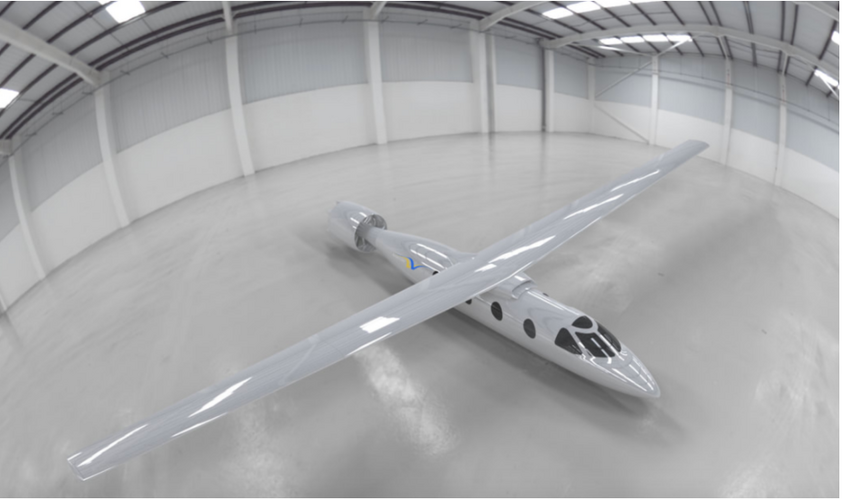
MHI RJ Aviation Group (MHIRJ) and Maeve Aerospace B.V. have partnered to develop the Maeve M80, a hybrid-electric regional aircraft designed to revolutionize regional aviation with reduced environmental impact and enhanced economics. MHIRJ will provide engineering and advisory expertise to accelerate the M80's design, industrialization, and commercialization. Both organizations emphasize their shared commitment to innovation and sustainability, aiming to meet the future needs of regional flight. The M80 represents a transformative step for regional aviation, leveraging cutting-edge technology to reduce emissions and fuel consumption.

https://www.asdnews.com/news/aerosp...-maeve-groundbreaking-sustainability-projects
 
Regarding Electra design, I am surprised by the location of the turbo generator inlet: one side only and behind, slightly below the wing root. I wonder if that will not compete with the airflow above the wing to suck it out of the extrados.
 
Calculating the performance of electric aeroplanes is quite straightforward so I’m surprised the above publications don’t include such, they just repeat the manufacturer’s claims.

So 4 people, 90 minutes endurance, 10k ft, and 156 kts, 300km sounds pretty reasonable, indeed impressive..

Now for grim reality;-

On its 100 KWHr no combination of these is possible;- 90 minutes might be possible with one pilot at an altitude of 30cm at 65 knots… if the wing is kept clean from bugs. If this is done with a 20 knot tail wind then it’ll go 300km.

If a reasonable assumption is made of altitude/speed profile for a four passenger touring aircraft with a single go around reserve, the maths gives about a 22 minute cruise…. Maybe a bit more, maybe a bit less depending on fitting into airfield traffic, taxi distance and battery temperature. Also this is with a new battery, they only get worse with age.

For comparison most 4 seat touring aircraft will easily manage 3 hours.
 
Airbus kicks the can of hydrogen down the road……What a shocker

https://www.reuters.com/business/ae...rs),than expected developments in technology.
It looks like Airbus finally got around to doing half a page of maths and believing the answer.

Possibly this is market positioning for a new dinosaur burner which would be difficult to sell if all your customers think that a hydrogen miracle is just around the corner…..Still the hydrogen gravy train was lucrative while it lasted.
 
Last edited:
Airbus kicks the hydrogen can down the road……What a shocker

https://www.reuters.com/business/ae...rs),than expected developments in technology.
It looks like Airbus finally got around to doing half a page of maths and believing the answer.

Possibly this is market positioning for a new dinosaur burner which would be difficult to sell if all your customers think that a hydrogen miracle is just around the corner…..Still the hydrogen gravy train was lucrative while it lasted.
Unlikely. But as I keep harping, hydrogen just SUCKS as an aircraft fuel. It is far too bulky, something like 12x the volume compared to kerosene for the same weight.
 
Unlikely. But as I keep harping, hydrogen just SUCKS as an aircraft fuel. It is far too bulky, something like 12x the volume compared to kerosene for the same weight.
but requires 1/3 mass for given energy requirement, so actually it needs 3~4 times of volume.

real problem is structural design, infrastructure of airport, production, delivery and managememt of hydrogen.
 
Airbus is pausing development of EVTOLs, it says the minimum range needs to be 80-100km to be commercially viable, but the battery technology just isn't there yet.
 
but requires 1/3 mass for given energy requirement, so actually it needs 3~4 times of volume.
Plus volume of insulation for the tanks.

real problem is structural design, infrastructure of airport, production, delivery and managememt of hydrogen.
Which, in the example of truly green hydrogen production, means enough electrical production to crack water at immense scale.

Oh, crap. That also means introducing megatonnes of pure oxygen into the atmosphere...

Let's see here... Earth's atmosphere is 5.1x10^18 kg, Earth burns about 35.4 billion barrels of oil annually, and supposedly, 6.66kg of hydrogen equals the energy in one barrel/42 gallons of crude oil. So, that means we're talking about the whole earth requiring enough electrolysis capacity to make 235.7x10^9kg of hydrogen. Times 18 due to molar weights to get to water mass, so that's 4,243,752,000,000kg of water. Four and a quarter BILLION TONNES of water, which means 4 billion tonnes of pure oxygen getting dumped into the atmosphere.

While I don't think that's enough to globally increase the oxygen percentage (Don't want to grind the numbers that far), it's enough to make living next to one of those electrolysis plants more than a little exciting due to high local oxygen content.
 
Meanwhile, synfuels became about as efficient as hydrigene and are a much better alternative, the problem is, they just don't fit into the ideology...

In any case, for a CO2 neutral mobility, a gigantic amount of CO2 free energy production will be needed, but this is not undoable. Synfuels might be produced by thermochamical processes out of the heat produced by high temperature nuclear power reactors and/or with intermitend surplus energy from nuclear/solar/wind power via electrolysis and hydrogen as step in between.
 
From July of last year:
hydrogen aircraft
https://techxplore.com/news/2024-07-hydrogen-flight-ready-advances.html
The study, led by doctoral student Christian Svensson in Tomas Grönstedt's research group, also showcased a new fuel tank that could hold enough fuel, was insulated enough to hold the super-cold liquid hydrogen and at the same time was lighter than today's fossil-based fuel tank systems.

More
https://www.sciencedirect.com/science/article/pii/S0360319924008243?via=ihubhttps://www.sciencedirect.com/science/article/pii/S1359431124002060?via=ihub
 
Hi,

Ampaire is a recent startup currently undertaking the big task of developing a retrofitted electric aircraft with the aim to be FAA certified by the end of 2020. The aircraft will be able to carry 7-9 passengers, and have a range of up to 100 miles. The company is hoping to develop a battery-swapping system, and is hoping to test fly next year.

https://techcrunch.com/2018/07/08/the-electric-aircraft-is-taking-off/
 

Attachments

  • 20.png
    20.png
    475.4 KB · Views: 29
Hi,

Ampaire is a recent startup currently undertaking the big task of developing a retrofitted electric aircraft with the aim to be FAA certified by the end of 2020. The aircraft will be able to carry 7-9 passengers, and have a range of up to 100 miles. The company is hoping to develop a battery-swapping system, and is hoping to test fly next year.

https://techcrunch.com/2018/07/08/the-electric-aircraft-is-taking-off/
Battery swapping is gonna SUCK. They did not do the paperwork on how easy that is to do in planes.

First, the battery is probably 1200lbs (same weight as a Tesla battery, though it would probably have to be smaller). This means you need to use a forklift to handle the batteries. Hope the person working the lift doesn't mess up and drop the tines onto the aircraft. If the battery is going into an existing airframe, you're probably looking at splitting the thing into 3 pieces as a retrofit, and then running traction cables between the batteries.

Second, you're swapping in a fully charged 450+volt battery pack. Which must be done by a licensed aircraft mechanic by law. You'd better design an absolutely moron-proof battery connection that cannot spark, because no aircraft mechanic likes going anywhere near 450V power supplies. The guys at Boeing managed to blow one up about once a year in Everett, and if they were lucky they didn't kill both people working the cart.
 
You could split the batteries in many smaller ones, like Volocopter does it for swapping batteries. Still the concept is not viable when every airport has to be prepared for handling a large number of batteries.

I believe, there is no real concept behind this announcement, the graphic is very basic and nothing has been toy thought through. I can't see were they want to store the batteries, the fuselage is very small with windows everywhere except in there very rear. The fragile wings are surly not an option for swapping batteries...

Could be, that they use multiple small batteries in the wings and drop them during the flight one by one when they are empty, to decease the landing weight... ;)
 
You could split the batteries in many smaller ones, like Volocopter does it for swapping batteries. Still the concept is not viable when every airport has to be prepared for handling a large number of batteries.
Multiple smaller batteries just increases the time required to change them all. And probably increases the risk of sparks/shocks the more batteries you're handling. At probably $500/hr A&P mechanic rate for the shop.

No, if you're battery swapping, you want that to go as quickly as possible! 10 minutes for a small plane, which is just barely enough to do the paperwork. Maybe a half hour so the pilot can offload the used coffee out of his system, get fresh weather briefing, and refill the coffee container(s).


I believe, there is no real concept behind this announcement, the graphic is very basic and nothing has been toy thought through. I can't see were they want to store the batteries, the fuselage is very small with windows everywhere except in there very rear. The fragile wings are surly not an option for swapping batteries...
Especially with the idea that they'd have a conversion approved by the FAA in 2 years!
 
I wanted to say something about the current climate, over there, but it would be shot down. Basically the life expectancy of the FAA from here on.
 
Second, you're swapping in a fully charged 450+volt battery pack. Which must be done by a licensed aircraft mechanic by law. You'd better design an absolutely moron-proof battery connection that cannot spark, because no aircraft mechanic likes going anywhere near 450V power supplies. The guys at Boeing managed to blow one up about once a year in Everett, and if they were lucky they didn't kill both people working the cart.
Swapping 440V 3phase jumper(mainly for AC,a pair of each ~250kw) between locomotives and coachs within 15mins(remove-loco change-connect) were common on passanger trains.
similar concept seems acceptable for such small plane?
 
Swapping 440V 3phase jumper(mainly for AC,a pair of each ~250kw) between locomotives and coachs within 15mins(remove-loco change-connect) were common on passanger trains.
similar concept seems acceptable for such small plane?
Easier to do on trains because of how big everything is.

Whereas on a plane you're packed into tight spaces and better hope your hand doesn't complete the circuit...
 
In the Volocopter, the batteries are put into a deep shaft so that no arc can escape to the outside when loosening. Looks quite save in my view, but of course, the manually handling afterwards can still be quite dangerously.
 
This news from last year it’s so underrated:

The world’s largest EV battery maker is powering up something even bigger. CATL successfully tested a 4-ton electric plane powered by its ultra-high energy density battery. By 2028, CATL expects to reveal an 8-ton civil electric aircraft with around 1,200 to 1,800 miles (2,000 to 3,000 km) range.


My prediction is that things are gonna go down the same way they’re going in automotive sector. China dominating in electric cars while the west with the exception of Tesla limping along.

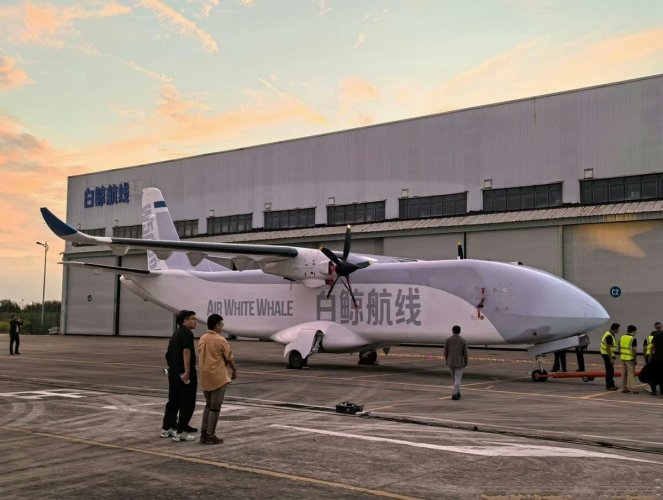
In ~5 years, the sky is in China will be buzzing with autonomous electric cargo aircraft for their low level economy.

IMG_5579.jpeg
Note - not electric!

After they prove safety and reliability, next step would be autonomous electric passenger aircraft.
 
This news from last year it’s so underrated:

The world’s largest EV battery maker is powering up something even bigger. CATL successfully tested a 4-ton electric plane powered by its ultra-high energy density battery. By 2028, CATL expects to reveal an 8-ton civil electric aircraft with around 1,200 to 1,800 miles (2,000 to 3,000 km) range.


My prediction is that things are gonna go down the same way they’re going in automotive sector. China dominating in electric cars while the west with the exception of Tesla limping along.

In ~5 years, the sky is in China will be buzzing with autonomous electric cargo aircraft for their low level economy.

View attachment 773982
Note - not electric!

After they prove safety and reliability, next step would be autonomous electric passenger aircraft.
Guess this shall be some kind of air breathing battery, everything else would be very suprising.. Air breathing batteries do have a lot of disadvantages, like not beeing rechargable...
 
No, it’s a type of semi solid state battery:

CATL's Condensed Battery is a high-energy density battery technology aimed at electric aviation and vehicles, offering up to 500 Wh/kg in a single cell, which is double the energy density of current mainstream EV batteries. It's a type of lithium battery with a gel-like electrolyte, positioned between all-solid and liquid electrolyte.
 
https://aviationweek.com/aerospace/...-selects-aerotec-hybrid-electric-demonstrator 1750163900473.png
Credit: GN/AWST
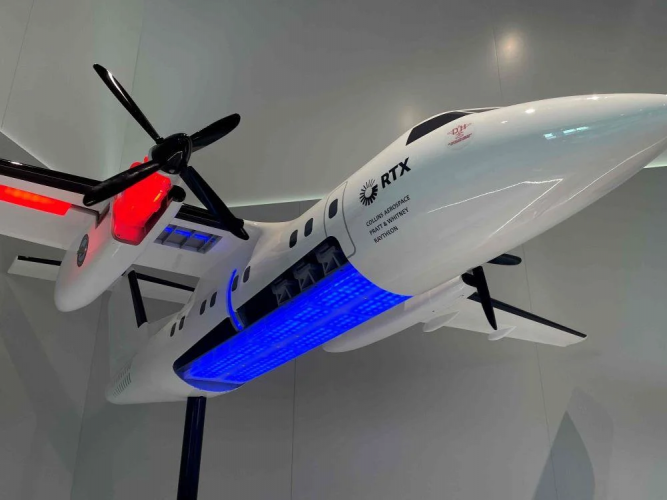
LE BOURGET—RTX company Pratt & Whitney has appointed modification specialist AeroTEC to convert a De Havilland Canada Dash 8-100 turboprop into its long-planned Hybrid-Electric Propulsion (HEP) flight demonstrator.

The modified aircraft, which was originally targeted to start flight tests in 2024, will incorporate a 2-megawatt parallel hybrid-electric powertrain system in place of one of the Dash 8’s two Pratt & Whitney Canada PW120-class turboprops. In addition to a 1-megawatt thermal engine, the system will also include a 1-megawatt, 1-kilovolt electric drive from sister RTX company Collins Aerospace and a battery system supplied by Swiss startup H55.

Conversion work will take place at AeroTEC’s Moses Lake, Washington, facility, where the company has amassed experience on several previous and ongoing hybrid and electric power modification programs. AeroTEC is currently modifying a MagniX-owned Dash 7 for NASA’s electrified powertrain flight demonstrator program, and a Cessna Caravan for Surf Air Mobility’s hybrid and all-electric Caravan project. The company previously also modified a Dash 8-300 into a hydrogen-powered demonstrator for now-defunct Universal Hydrogen. It also supported ground and flight tests of Eviation’s all-electric Alice aircraft and completed the initial conversion of MagniX’s battery-electric Cessna eCaravan.

Efforts to develop the powertrain have taken longer than expected. But Michael Winter, chief scientist at Pratt & Whitney parent company RTX, says the company is "doing this to learn. We want to do it right, and we want to do it carefully. We want to build these building blocks and put them together in ways that we understand how to safely and reliably certify it, to bring it into the fleet.”


Speaking at the Paris Air Show, Winter added that “our partnership with AeroTEC will actually be the unlock that lets us really bridge that. If we were to do a flight demonstrator with, say, a prime airframer looking to the future, then there might be opportunities to work directly with them to do the integration. But we don’t have that luxury this time, and so AeroTEC is a wonderful partnership that allows us to bring that forward and to burn down those barriers and unlock getting to that flight test.”

Pratt’s move to contract with AeroTEC follows a recent successful ground test of the hybrid propulsion system at full power for a simulated full mission. The company previously reported running the system to full power before the Farnborough Airshow in 2024, but the latest test exercised the system for a longer period.

“We ran the entire system up to the full required power for the full mission, including the takeoff, as well as the recharge cycle on the batteries within the mission profile. That achieved more than 1,800 shaft horsepower, and we did this with a combination of drawing the power from the batteries as well as from the thermal engine. That’s actually a challenge for the batteries, because typically [the] batteries are designed for reducing the possibility of thermal runaway. That tends to limit how fast you can pull the current out and how fast you can put it back in. So we’re working closely with H55, which we are partnered with through RTX ventures, and we’ve achieved the full cycle,” Winter says.

 
Parallel-hybrid?!? Ewwwwwww, bad engineer, bad!

(That means there's still a turbine engine there, it just has a big electric motor wrapped around it to also power the prop)
 
No, it’s a type of semi solid state battery:

CATL's Condensed Battery is a high-energy density battery technology aimed at electric aviation and vehicles, offering up to 500 Wh/kg in a single cell, which is double the energy density of current mainstream EV batteries. It's a type of lithium battery with a gel-like electrolyte, positioned between all-solid and liquid electrolyte.
I heared so many promisis about solid state batteries over the last 15 years.... The only real world application i
I heard of (surly not the only one in existance) ended up with three totally burned bus yards in Germany (Düsseldorf, Stuttgard and I guess it was Hamburg). This happened with Mercedes Benz supersafe solid state batteries....
 
Last edited:

Similar threads

Back
Top Bottom