Joby Aviation

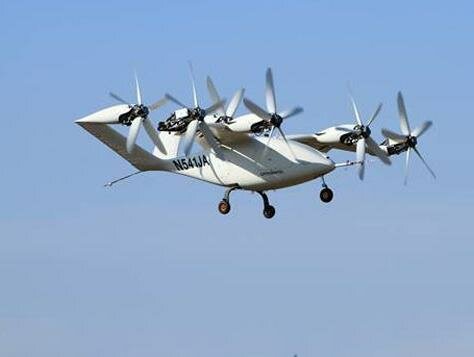
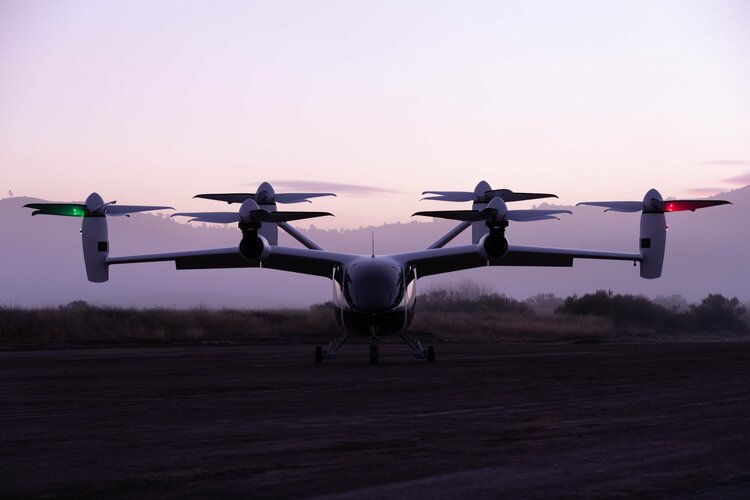
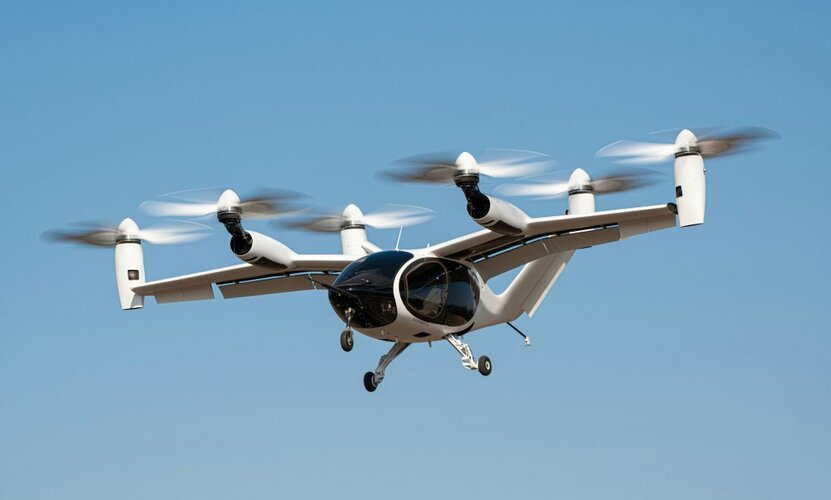
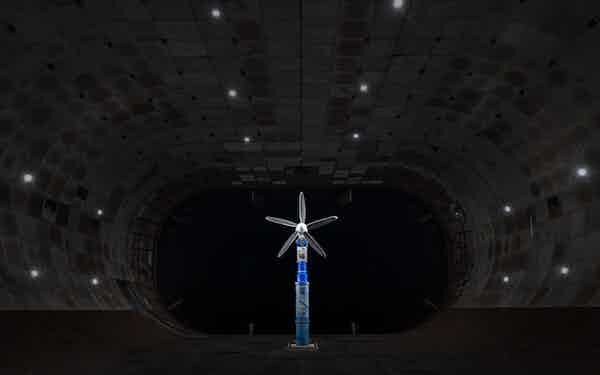
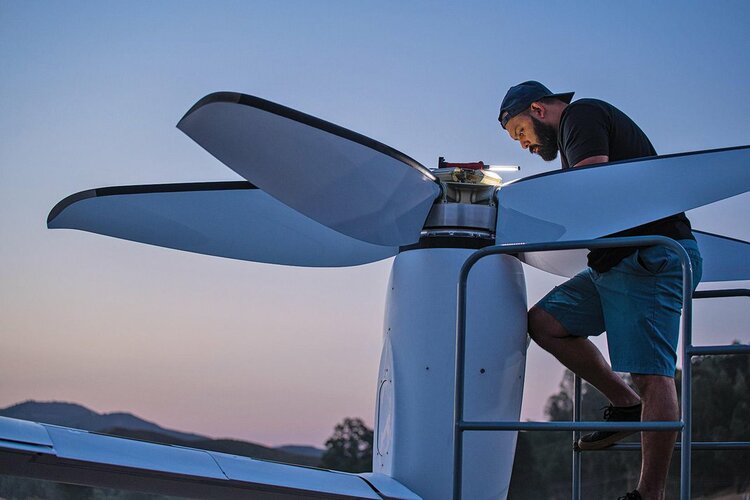
Yes, in general terms this architecture is a good compromise of disc loading, low prop tip velocity (noise), transition characteristics and low drag aero performance, However it’s a rather complex solution, with will inherently has some challenges with safety.

I see six motor rotating actuators , flap actuators, landing gear actuators, primary flying control actuators and probably wheel brake actuators. Are the prop blades pitch controlled (suspect so) ? It would be reasonable to assume all are electrical and probably half of them will be dual for redundancy hence maybe 20 without vp props & 26 + with). Linear electric actuators have the added challenge that they’re considerably more jam prone than hydraulic. All of this kit will be subjected to lots of vibration so would not have a happy life. The potential for resonance by modal coupling requires a comprehensive investigation in all flight, ground and failure conditions;- seriously hard core vibration analysis but quite manageable.

So how does it compare to a helo? Well in essence one big power gear box on the helo is being replaced by a plethora of smaller low power gearboxes and ball screw drives. My guess is that a lot of the propulsion simplification gains are eroded by the increase in control system complexity. So it will be more in line with Helo safety standards than fixed wing. If VP props this will present a big problem;- just ask anyone who’s owned one. Operation costs largely depends on battery technology, which is not transferred from the auto sector, due to the operational cycle, in particular the large power demands for hovering its bespoke, therefore expensive. The large cyclic power demands tends to adversely impact battery life, thus this will dominate the cost. These cost are only known to a few close to the project and everyone else is just guessing.

The one area that’s unexplored within these concepts is all weather operation. If you’re business model is based on a commercial operation then it’s not a nice to have. Electric de icing is power hunger, props can present unique difficulties as do high performance CFRP sandwich structures. All this will impact availability and maybe range.

All that said, of all the eVTOL schemes, if any are worth a go, this is the one with the highest chance of working........but still no guarantee’s.
 
Last edited:
The problem will also comes from traditional helicopters that could close the gap in cost with the advantages of safety and adaptability when realistic revenues and pricing from those platforms start to come into scrutiny.

The counter effect might be deadly for many models outhere.
 
While a very attractive aircraft I have to agree that the complexity, and thus operating cost will make it tougher to get past the bottom line, especially when there are other feasible options in the pipeline. If it were focused on longer ranges (like the northeast corridor in the US) than most EVTOL concepts, thus avoiding airports all together, there might be a more compelling argument.
 
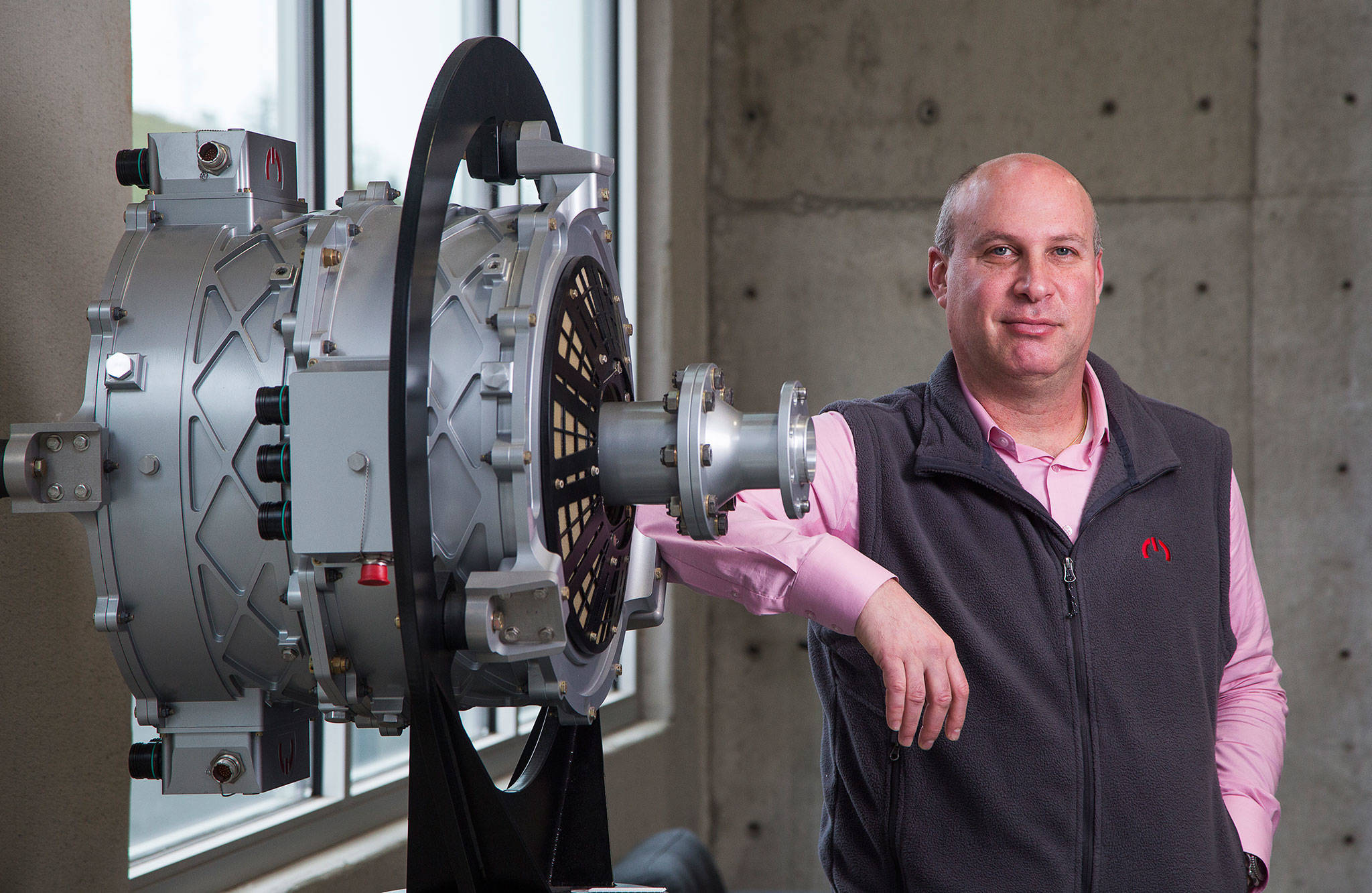
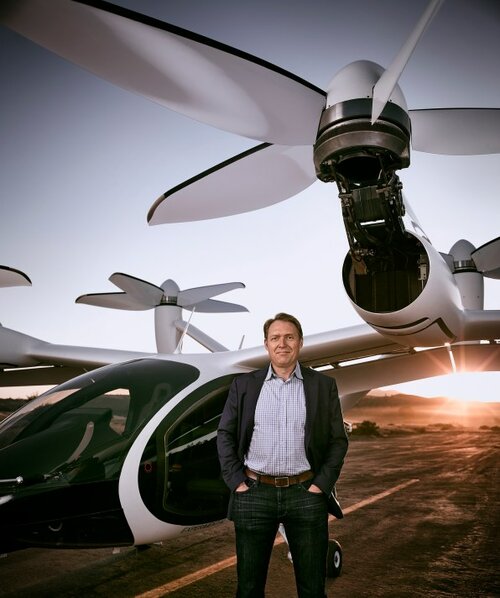
Is there any information related to motor nacelle? - they insist that each nacelle has two motors but not easy to imagine
 
Is there any information related to motor nacelle? - they insist that each nacelle has two motors but not easy to imagine
While I don't have the specifics of their design, remember that most of the electric motors used in these sorts of applications are quite small. for instance, the MagniX Magni500, which generates 750hp, is shown below:

23922196_web1_L1-magniX-EDH-011821-FS.jpg
 
Last edited:

Attachments

  • 130ff9de-4576-494a-abdc-43adc384121b_Joby_Propeller_NFAC_5.jpg
    130ff9de-4576-494a-abdc-43adc384121b_Joby_Propeller_NFAC_5.jpg
    5.6 KB · Views: 15
  • 05h_on2021_airtaxiawaits-joby_406382edit_live.jpg
    05h_on2021_airtaxiawaits-joby_406382edit_live.jpg
    83 KB · Views: 23
  • i-JoeBen-Bevirt-Founder-and-Chief-Executive-Officer-Joby-Aviation.jpg
    i-JoeBen-Bevirt-Founder-and-Chief-Executive-Officer-Joby-Aviation.jpg
    76.8 KB · Views: 24
Last edited:

Plant tour: Joby Aviation​

https://www.compositesworld.com/articles/plant-tour-joby-aviation-marina-calif-us
"Many years from now, when historians write about the history of the commercial aerospace industry in the 2020s and 2030s, there will be chapters, if not whole volumes, on advanced air mobility (AAM)."

Oh I bet there will.... ;) All joking aside, an interesting enough article (if composites interest you, that is).

The last section on what it's like to pilot the aircraft is very interesting. If fly by wire technology really makes flying this thing a breeze, could pilots without a helicopter rating be qualified to operate it ? I imagine Joby will be pushing the FAA on this in order to widen the possible pilot pool.
 

Plant tour: Joby Aviation​

https://www.compositesworld.com/articles/plant-tour-joby-aviation-marina-calif-us
"Many years from now, when historians write about the history of the commercial aerospace industry in the 2020s and 2030s, there will be chapters, if not whole volumes, on advanced air mobility (AAM)."

Oh I bet there will.... ;) All joking aside, an interesting enough article (if composites interest you, that is).

The last section on what it's like to pilot the aircraft is very interesting. If fly by wire technology really makes flying this thing a breeze, could pilots without a helicopter rating be qualified to operate it ? I imagine Joby will be pushing the FAA on this in order to widen the possible pilot pool.
Just get rid of the pilot completely and go full autonomous...
 
The basic idea is to scale the UAM operations to thousands of flights over a single city, therefore you need a lot of pilots, but only till you figured out full autonomy. So you have to decrease quickly necessary skill level for pilots that you can find more of them, just to get rid of them in the next step. This was never a problem for Uber or Lyft since everyone already can drive a car. But the goal is the same: get rid of the human.
 
https://aviationweek.com/aerospace/...oby-flies-hydrogen-electric-uncrewed-aircraft
Joby Aviation appears to have conducted an almost-9-hr. flight of a previously unknown hydrogen-electric-powered uncrewed aircraft.

Conducted at the Pendleton UAS Range in Oregon on June 30, the flight was first reported by Hunterbrook Media, the investigative reporting arm of Hunterbrook Capital, which photographed the aircraft being worked on by ground crew at Pendleton Airport.

FlightAware tracked the aircraft as it flew a racetrack pattern over the range. The record was subsequently removed and public tracking of the aircraft is no longer available at the owner’s request, FlightAware says. Joby declined to comment.

Joby acquired autonomous flight system developer Xwing in June 2024, and in the photographs Xwing’s clearly marked mobile ground control station is visible parked next to the aircraft undergoing work at Pendleton Airport.


The FAA registry says the aircraft, tail number N30FR, was manufactured by Joby Aero Inc. and is designated the JAI30. The certificate of registration, issued on April 22, says the aircraft has two electric engines and is the first of its type.

Photographs taken by Hunterbrook show an aircraft with a high sailplane-style wing and two-blade propellers mounted on the tips of a V-tail–reminiscent of the V-tail tilt prop mounting on Joby’s S4 eVTOL aircraft.

Joby has previously hinted it intends to address emerging Defense Department needs for longer-range uncrewed and crewed aircraft by building on its experience modifying an S4 prototype to hybrid hydrogen-electric propulsion.

Dubbed the SHy4, the aircraft conducted a 561-mi. uncrewed test flight in July 2024, powered by batteries and a liquid hydrogen fuel cell system developed with Joby’s German subsidiary H2Fly. This compares with the 100-mi. design range of the battery-powered S4 eVTOL.

Photographs of the JAI30 on the ground show a conventional-takeoff-and-landing (CTOL) aircraft with a simple tubular frame structure, the fuselage possibly covered with plastic film for light weight. This suggests it is a testbed rather than being fully representative of a production vehicle.

The aircraft’s nose has been removed, revealing the tubular structure and elements of the propulsion system including what appears to be the fuel cell stack as well as a large hydrogen tank mounted in the center of the boxy fuselage under the wing.

The tail-mounted propeller was developed by the University of Stuttgart in Germany for its E-Genius electric-powered motor glider. This arrangement leaves the wing clear of propeller wash for maximum aerodynamic efficiency. The propellers are in undistributed air, for improved efficiency, and only the lower blades cross the tails, reducing drag.

 
While hydrogen might be an eco-friendly solution for civil applications, I am not sure that it is any less risky for DoD applications than hydrocarbon-based solutions.
 
Fuel cells can work with plenty of other fuels. Startups are focusing on H2 mainly for the sparkling performances they can achieve (Startups are bread and live in a world of superlatives).
Still, the demo could raise market attention.
 
Last edited:

Similar threads

Back
Top Bottom