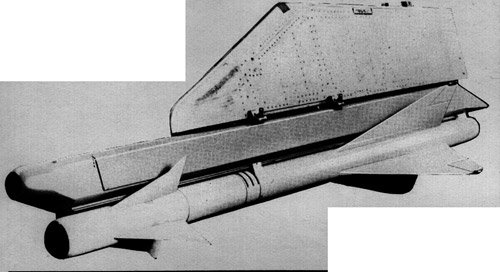
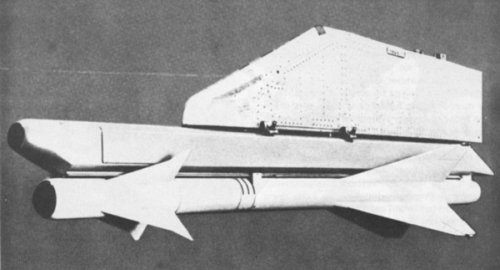
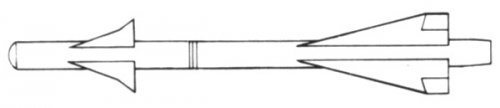
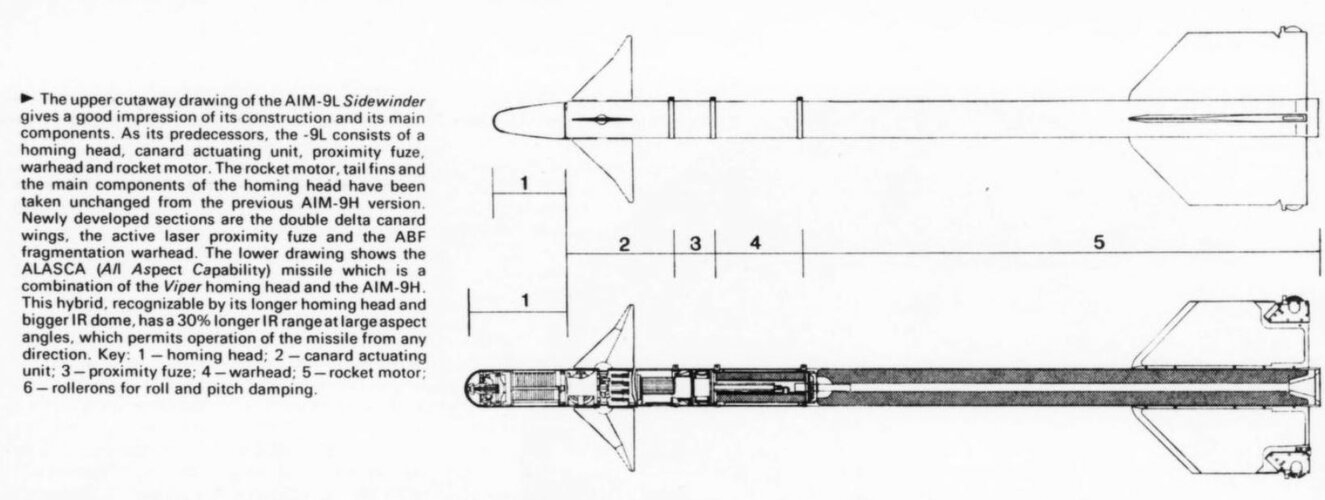
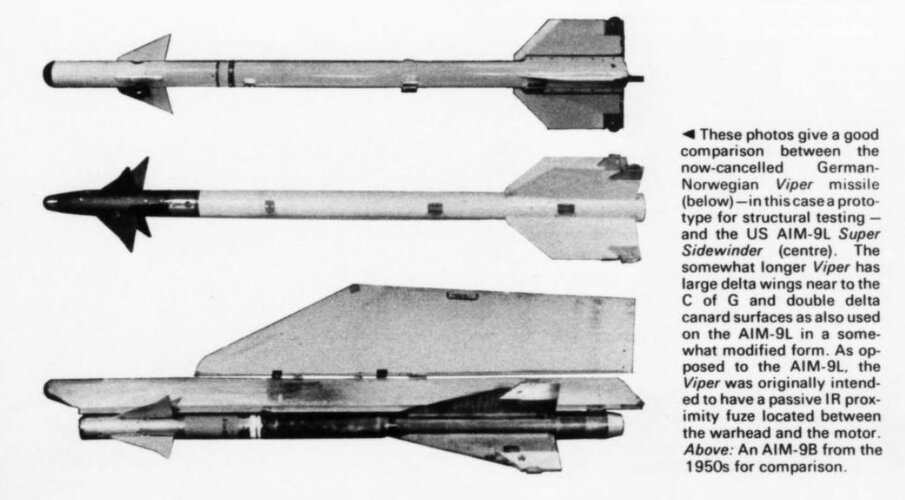
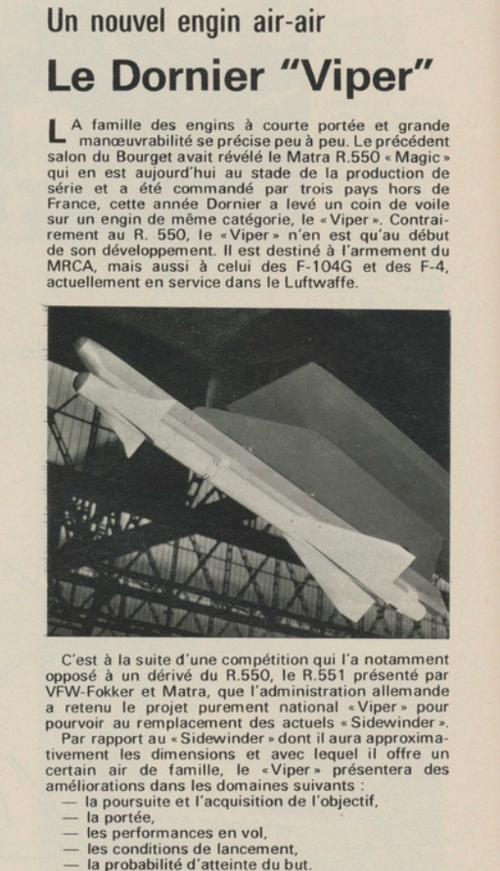
However, the AIM-9B Sidewinder, equipped with an infrared seeker and originally developed to intercept bombers at high altitudes, quickly reached its inherent physical limits when deployed in Europe under European weather conditions and at low altitudes, and when facing small, manoeuvrable aircraft. A rapid solution had to be found so that the F-104G Starfighter interceptors, which were also built under licence in Europe, could carry out their tasks effectively.
First steps of our own
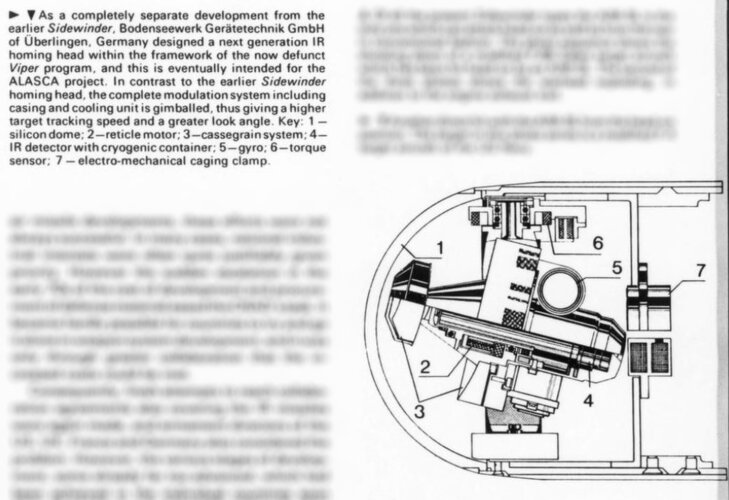
For BGT, as the main contractor, this meant taking a serious look at the missile’s design and performance, understanding the weaknesses that had emerged during deployment, and rectifying them as cost-effectively as possible. The outcome of these considerations led to modifications to the seeker and warhead. To reduce troublesome interference from the sun and sunlit cloud edges, the sensitivity of the lead sulphide detector was shifted from the near to the mid-infrared range using a Joule-Thomson cooler. The cooling gas supply required for this, in the form of a small cylinder, was housed in a separate compartment in the rear section of the seeker head. At the same time, the glass dome of the IR seeker head was replaced with a silicon dome more resistant to rain-erosion, the outdated tube-based electronics were converted to semiconductor technology, and the energy saved was used to introduce a permanent drive for the seeker head’s attitude gyroscope. The warhead was also given better insulation against the aerokinetic heating of the outer skin and the explosive charge beneath it, which occurs at high Mach numbers. A titanium casing, which provides better insulation, was used in place of the previous aluminium outer skin.
These modifications, developed primarily by BGT, led in 1969 to a second European Sidewinder production and modification programme under the designation AIM-9B/FGW Mod. 2. Germany once again took on the role of lead nation and BGT was once more appointed prime contractor. The customer nations included Germany, Denmark, the Netherlands and Norway. As in the first Sidewinder programme, the passive infrared proximity fuse was sourced from the USA. The entire development, testing and set-up of the production line were carried out in just four years, between 1965 and 1969, with a budget of 1.7 million DM – a modest sum by today’s standards. This also included the first attempts at missile system simulation at BGT, which were developed in collaboration with the German Aerospace Research and Test Institute (DFVLR) using analogue computers. By 1973, in addition to the production of 2,800 complete missiles for the German Air Force, a total of 3,779 retrofits of guidance and control components had been carried out for Germany, Denmark, the Netherlands and Norway. The AIM-9B/FGW Mod.2 Sidewinder programme laid the foundations for the development of the company’s own, albeit modest, development and systems capabilities in the field of guided missiles.