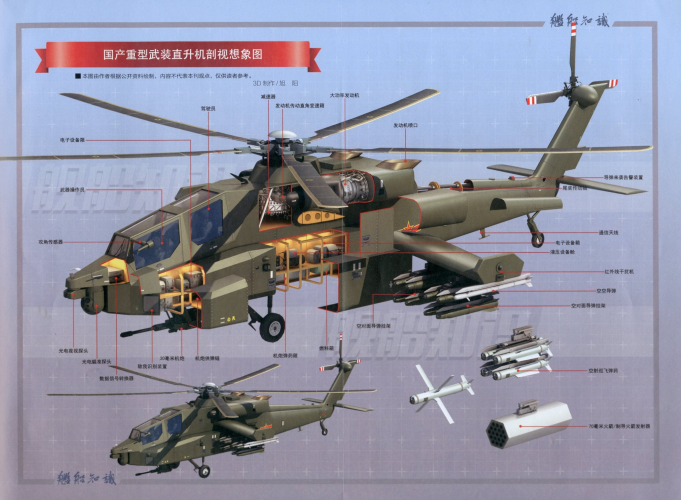
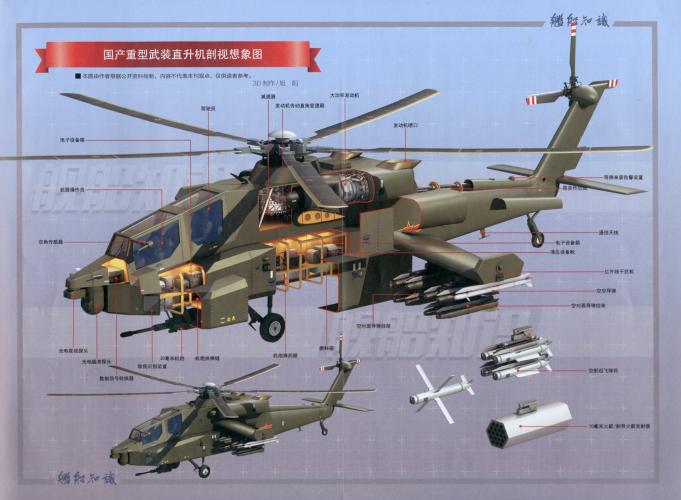
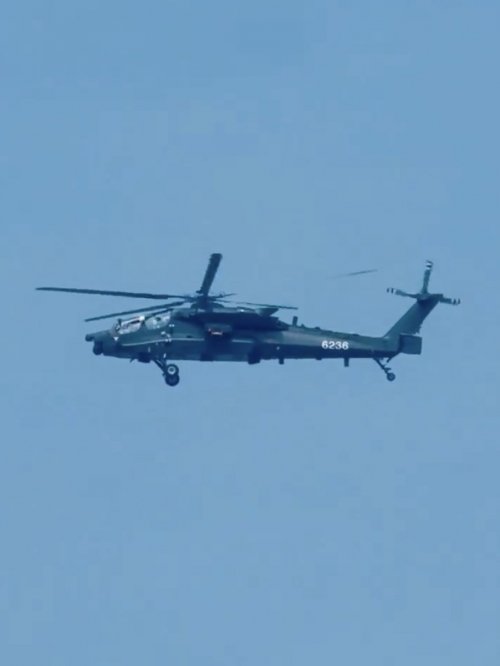
Z-21 (?) - New Chinese Heavy Attack Helicopter

Not really

Back in the days of the parade in 19999, the Type 99s MBT were prototypes, same for WZ-8 during the last parade
WZ-8 was operational at the time, Type 98 was just another case of CJ-100 where it was accepted into service in a tiny amount but due to unsatisfactory performance was quickly phased out or went back into development.
 
WZ-8 was operational at the time, Type 98 was just another case of CJ-100 where it was accepted into service in a tiny amount but due to unsatisfactory performance was quickly phased out or went back into development.
The Type 98s were literally a parade version with little to no combat ability, the PLA found the performance issues way after 1999 (especially on the laser jammer and "flashbang grenades")

WZ-8 barely take off from ground before the parade, and did not enter service until 2023
 
Is it said that the tail number has changed? Could it already be in service?
 
Is it said that the tail number has changed? Could it already be in service?

Based on what rumour or image? The latest alleged one with a tail-number was so much obviously a CG only, that I really Wonder why it Must be discussed!
 
Is it said that the tail number has changed? Could it already be in service?

Me again with a more detailed reply to this claim and IMO I'm 100% convinced these are all still prototypes:

By the way, an interesting detail, the Z-21 follows the Z-20-naval variants numbering system, namely no. 62TP with T standing for type or variant and P for individual prototype.

Z-20J as the first major variant with 621X: at least 4 prototypes are known (6211, 6212, 6213, 6215)

Z-20F as the second major variant with 622X: also at least 4 prototypes (6221, 6222, 6223, 6225)

Z-21 as the third major variant with 623X: 6231 (unconfirmed), 6232, 6233

However since the original Army Z-20 use a simpler system based on 63P (with so far at least likely 5 prototypes built (631 unconfirmed), 632, 633, 635, 636) it could indeed be that the Z-21 is more a naval project.

By the way, IMO one of the best Images of the Z-21 so far.

1764577246022.png
 
@Deino - I would not pretend to argue with your expertise on this. This may very well be a marinized attack helicopter intended to operate off of naval vessels. However I would also expect to see this platform taken on by some of the Army Aviation units as well. Like the ubiquity of the Z-20.
 
It would be a mistake for the PLA Army Aviation units not to purchase the Z-20 and operate them alongside the Z-10 yasotay, imagine the possibilities of that paring.
I agree that there is great potential there. Maybe the Chinese can rationalize a larger heavier attack helicopter exclusively to support amphibious operations. The United States has had discreet attack helicopters for the Marine Corps since they put twin engines on the Cobra.
That said the economy of two platforms based on the same rotor dynamics, engines and a number of other components is also a compelling case.
 
I agree that there is great potential there. Maybe the Chinese can rationalize a larger heavier attack helicopter exclusively to support amphibious operations.
Seems like a logical fit for the Type 076 which will also support strike UCAVs.
 
I agree with you yasotay, perhaps an attack helicopter along the size of the Hind would be a good idea.
 
Seems like a logical fit for the Type 076 which will also support strike UCAVs.
The economies of scale for what y’all are suggesting just aren't there, even for China. A navalized Z-20T would make more sense for this, but I don’t think it’s even necessary.
 
Not sure on Chinese aircraft planning. In the west we would expect to see several prototypes, so pre-production would be consistent.
 
Simply put, the video shot by a mobile phone is made up of frames connected one after another, with very tiny time intervals in between. In reality, a helicopter's rotor might happen to move to a position slightly behind the previous rotor within these tiny intervals. As a result, in two consecutive frames captured by the phone, the rotor may appear to rotate in opposite directions. This cycle continues, so the rotation direction of the helicopter in the video may differ from the actual rotation direction. At certain times, the rotors in the video may even seem like they aren't moving at all. This is mainly an illusion caused by the sampling principle of video recording.
 
Great to finally see closer views of the helicopter. It certainly is following the conventions of most of the previous attack helicopters. One thing that I think may change as the program progresses would be to see the main rotor gain some separation from the fuselage. It reminds me of the original rotor system on the UH-60A prototype. Vibratory and impulse loads might be a bit excessive for the flight crew. That is my coloring book aerodynamist opinion.
 
Notice the light-weight landing gear indicating a rather small MGTOW, something not surprising if we understand that the rotor system is yet another putative derivative of the Aérospatiale Puma rotors.

It's a 10t class helicopter, and its engines, rotors and overall drive train is from Z-20...

I'm not even sure which PRC helicopter has a rotor derived from Puma (unless you're thinking of Dauphin, and the Z-9 and Z-19 lineage)
 
Rotor may have Mil lingering. Simple and robust.
 
Kamov had a hand in the early years with the designing of the Z-20, or so I read somewhere online many years ago now.
 
kamov designed the initial z-10.
This z-21 is essentially a z-20 powerplant and rotor, mated to a new attack helicopter chassis.
Compared to z-10 it is much heavier. As z-20 itself is essentially uh-60m class helicopter.
 
Hmm @FighterJock what do you think the high altitude performance is? Since it has Z20 engines so it should be pretty decent right? It could be a heavier counterpart to the Indian LCH prachand.

Wikipedia(lol) says 2100-2700 Hp but 2700 seems to be the emergency limit and 2400 seems to be the max. 2*2400 4800 hp. The heli is 11-12 tonnes to that about 400hp per tonne. the WZ10 is also significantly more optimised towards high altitudes so it will lose less performance per in lower densities compared to the apache E.
Could be pretty decent high altitude performance vs the LCH if it takes off from the lower altitudes(relatively speaking) of the tibetian platue. The chinese seem to be specifically testing it for high altitude combat
 
Interesting discussion on platforms in high altitude. There are several factors that will come into play as to optimized attack platform for the PLA in mountainous terrain. The leading factor I believe will be specific power to weight ratio and what altitudes are the rotor systems (both main and tail rotor) optimized for.
AH-64 while able to operate in the Hindu Kush, were weapon restricted in many cases due to power margins although one could argue that there was little need for a full compliment of Hellfire for the environment. Still they, to my
knowledge, never operated in the mountains with extra fuel tanks. The CH-47 was called on to do many of the missions that the UH-60 was designed to do, because the Black Hawk did not have the power available to carry a full load. Both Apache and Black Hawk had restrictions regarding tail rotor authority and had to be careful about wind direction for landings and hover (if they had to).
I believe the main rotor system for the Z-20 and Z-21 is based on Mi-28, which lineage comes from Mi-8-24. I would note that while Mi-8 is known for its ability to operate at higher altitudes, Mi-24 is not such a performer in the same regime. How much has to do with engine power vice airfoil design is out of my realm of credible conversaton. So in my opinion the Z-21 is optimized for longer range missions at or close(r) to sea level with a heavy payload, operating over extended distances. Like most other heavy attack helicopters it will be very well protected in anticipation of a heavy fight. Z-10 with lower mass/weight probably has more tailrotor authority at higher altitudes and is probably a betterr platform for combat in mountanious regions.
There are of course a myriad of other factors that ought be considered, and I could be completely wrong.

 
Last edited:
Interesting discussion on platforms in high altitude. There are several factors that will come into play as to optimized attack platform for the PLA in mountainous terrain. The leading factor I believe will be specific power to weight ratio and what altitudes are the rotor systems (both main and tail rotor) optimized for.
AH-64 while able to operate in the Hindu Kush, were weapon restricted in many cases due to power margins , although one could argue that there was little need for a full compliment of Hellfire for the environment. Still they, to my
knowledge never operated in the mountains with extra fuel tanks. The CH-47 was called on to do many of the missions that the UH-60 was designed to do, because the Black Hawk did not have the power available to carry a full load. Both Apache and Black Hawk had restrictions regarding tail rotor authority and had to be careful about wind direction for landings and hover (if they had to).
I believe the main rotor system for the Z-20 and Z-21 is based on Mi-28, which lineage comes from Mi-8-24. I would note that while Mi-8 is known for its ability to operate at higher altitidues, Mi-24 is not such a performer in the same regime. How much has to do with engine power vice airfoil design is out of my realm of credible conversaton. So in my opinion the Z-21 is optimized for longer range missions at or close(r) to sea level with a heavy payload, operating over extended distances. Like most other heavy attack helicopters it will be very well protected in anticipation of a heavy fight. Z-10 with lower mass/weight probably has more tailrotor authority at higher altitudes and is probably a betterr platform for combat in mountanious regions.
There are of course a myriad of other factors that ought be considered, and I could be completely wrong.
It's my understanding that much of the Mi24's issue at higher altitudes was due to all the armor it has. It's heavy.

So I suspect that the (armored) Z-21 will also have issues, but the Z-20 may not.
 
kamov designed the initial z-10.
This z-21 is essentially a z-20 powerplant and rotor, mated to a new attack helicopter chassis.
Compared to z-10 it is much heavier. As z-20 itself is essentially uh-60m class helicopter.
Pseudo communists of a feather stick together?
 

Similar threads

Back
Top Bottom