Interesting discussion on platforms in high altitude. There are several factors that will come into play as to optimized attack platform for the PLA in mountainous terrain. The leading factor I believe will be specific power to weight ratio and what altitudes are the rotor systems (both main and tail rotor) optimized for.
AH-64 while able to operate in the Hindu Kush, were weapon restricted in many cases due to power margins , although one could argue that there was little need for a full compliment of Hellfire for the environment. Still they, to my
knowledge never operated in the mountains with extra fuel tanks. The CH-47 was called on to do many of the missions that the UH-60 was designed to do, because the Black Hawk did not have the power available to carry a full load. Both Apache and Black Hawk had restrictions regarding tail rotor authority and had to be careful about wind direction for landings and hover (if they had to).
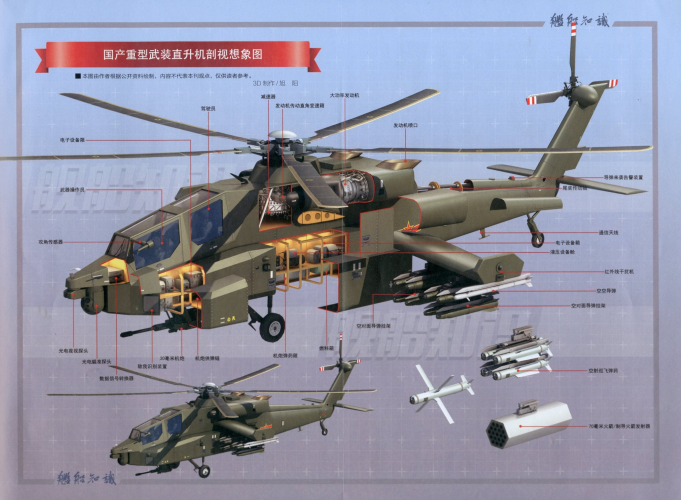
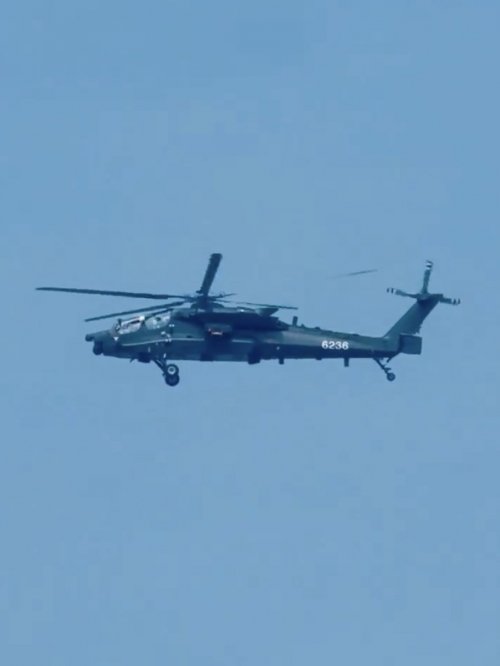
I believe the main rotor system for the Z-20 and Z-21 is based on Mi-28, which lineage comes from Mi-8-24. I would note that while Mi-8 is known for its ability to operate at higher altitidues, Mi-24 is not such a performer in the same regime. How much has to do with engine power vice airfoil design is out of my realm of credible conversaton. So in my opinion the Z-21 is optimized for longer range missions at or close(r) to sea level with a heavy payload, operating over extended distances. Like most other heavy attack helicopters it will be very well protected in anticipation of a heavy fight. Z-10 with lower mass/weight probably has more tailrotor authority at higher altitudes and is probably a betterr platform for combat in mountanious regions.
There are of course a myriad of other factors that ought be considered, and I could be completely wrong.