Weymann Aircraft List

hesham

ACCESS: USAP
Senior Member
Joined
26 May 2006
Messages
38,288
Reaction score
20,425
Hi,

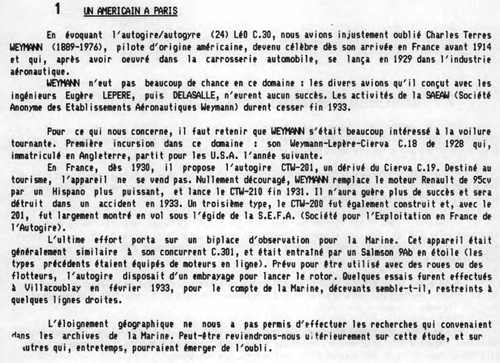
Mr. Charles Terres Weymann was born in Haiti,and became a French pilot and designer after moved to France,he made some aircraft and Projects,until he opened Société des Avions Weymann-Lepère in 1929,and his list was as
following;

WEL-10 was a two-seat parasol wing recce monoplane,powered by one 650 hp Hispano-Suiza 12Nb engine
WEL-11 was a two-seat parasol wing observation monoplane,developed from WEL-10
CTW-20 was a the same as Lepere/Cierva C.18,need confirm
WEL-30 ------?
WEL-40 was a colonial transport aircraft Project,intended to compete in 1930 competition
WEL-50 was a high-wing tourist monoplane,powered by one 95 hp Renault 4Pb pusher engine,mounted on pylon
WEL-51 was a development of WEL-50,ordered in two prototypes but never completed,need confirm
WEL-52 was a refined version of WEL-50,also a tourist aircraft
WEL-60 was a three engined colonial transport high-wing monoplane of 1930,powered by three 250 hp Wright-Hispano 9 Qa engines
WEL-63 was a three engined colonial/transport high-wing monoplane,need confirm;
https://www.secretprojects.co.uk/th...-père-aircraft-and-projects.5091/#post-364868CTW-66 was a three-seat colonial aircraft,powered by three 300 hp Lorraine 9Na engines
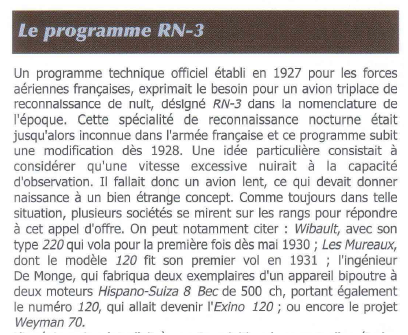
WEL-70 was a three-seat night recce aircraft Project,intended for RN.3 contest
WEL-80 was a two-seat recce biplane aircraft,powered by one 650 hp Hispano-Suiza 12Nb engine
WEL-81 was a two-seat recce biplane,derivative of WEL-80,need confirm
WEL-90 ------?
CTW-100 was a three-seat recce biplane developed from WEL-80,powered by one 575 hp Hispano-Suiza 9Va engine
CTW-110 ------?
CTW-120 ------?
CTW-130 was a two-seat tourist biplane aircraft,powered by one 95 hp Renault 4Pb engine
CTW-131 was a modified version of CTW-130 as a tourist aircraft,powered by 150 hp Hispano-Suiza 5Q engine
CTW-132 was a light and tourist aircraft,based on CTW-130,need confirm
CTW-140 to CTW-190 ------?,probably not used
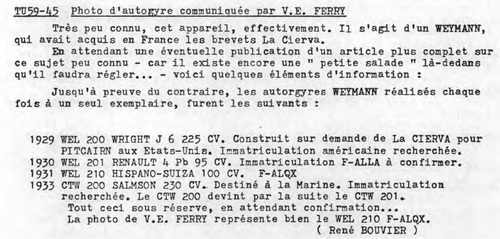
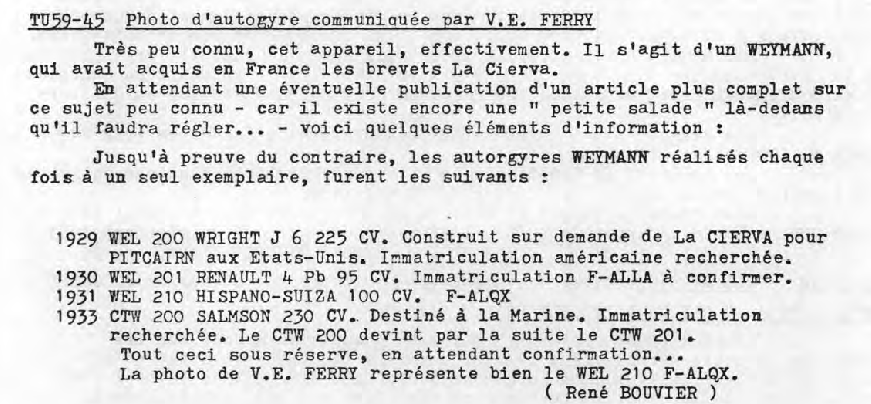
WEL-200 was a two-seat autogiro built on request of La Cierva for Pitcairn in the United States,powered by one 225 hp Wright J 6 engine,1929
WEL-201 was a two-seat autogiro,powered by one 95 hp Renault 4 Pb engine,1930
CTW-200 was a two-seat tourist autogiro,powered by one 100 hp Renault 6Pa engine,1933
CTW-201 was a two-seat tourist autogiro,derivative of Cierva C.19/3,powered by one 95 hp Renault 5Pb engine
CTW-210 was a two-seat tourist autogiro,powered by one 100 hp Hispano-Suiza 6Pa engine
CTW-220 ------?
CTW-230 & CTW-231 was a two-seat tourist biplane aircraft,powered by one 100 hp Hispano-Suiza 6Pa engine


- the early aircraft and Projects will illustrate later
 
Last edited:
Hi,

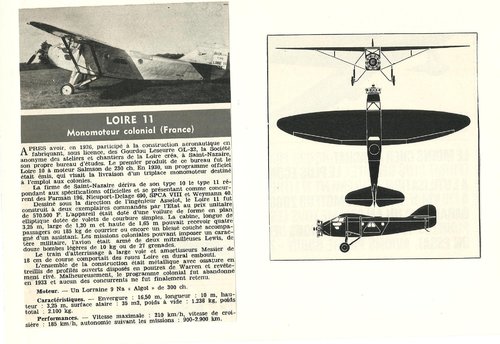
I edit the WEL-40, it was a colonial light transport aircraft Project for 1930 contender,and here is the proof.

For WEL-70, I remember the source for it was RN.3,or a three seat night recce aircraft Project,from AFM magazine.
 

Attachments

  • Loire-11.jpg
    Loire-11.jpg
    606.7 KB · Views: 60
  • 2.png
    2.png
    143.5 KB · Views: 55
Last edited:
For non-standard series and early one;

W-1 was a single-seat biplane fighter,powered by one 80 hp Clegret pusher engine
1918 was colonial all-metal wing aircraft Project,powered by one engine
1919 was a single seat biplane experimental fighter Project,based on W-1,also powered by one pusher engine


any additions or corrections are welcome
 
Thanks hesham. As noted before, the correct company name was: Société des Avions Weymann-Lepère - not 'Leper'. Some sources give the name as Weymann-LePère (Societé des Avions).

Minor biographical notes:

Charles Terres Weymann was indeed born in Port-au-Prince but since his father was an American, he too became a US citizen. After testing aircraft for Nieuport during WWI, he became best known for automotive coachwork - Société de Carrosserie Weymann (Paris); Weymann Motor Body Co. (London), and later Weymann American Body Co. (Indianapolis).

Capt. Georges LePère was a French aeronautical engineer with a previous American connection. While attached to the French Aeronautical Mission to the US, Capt. LePère was approached to design what became the Packard-Le Père LUSAC-11.

LePère later became the chief designer for Aviméta (Société pour la Construction d'Avions Métallique) - part of Schneider et Cie. There, in 1927-29 he designed such all-metal aircraft as the Aviméta A.V.M. 88 2-seat fighter, A.V.M. 92 cabin monoplane, and A.V.M. 132 trimotor.
 
Hi,

I add WEL-200 & WEL-201 to the list,they differ from CTW-200 & CTW-201.

TU magazine.
 

Attachments

  • W-1.png
    W-1.png
    448.2 KB · Views: 70
  • W-2.png
    W-2.png
    286.2 KB · Views: 36
I don't remember the source ?,maybe a magazine !.
The C.18 was the same thing as the Weymann-Lepère CTW.200.
The C.31 was the same thing as the Cierva-Lepère C.L.20.
Perhaps you got the two mixed up?
 
The CTW.200 was the same as Cierva C.19
NO.
The C.19 was the same as the Avro 620.
The C.18 was the same as the CTW.200. my bad (see further below)
 

Attachments

  • Déc. 1930.jpg
    Déc. 1930.jpg
    580.4 KB · Views: 11
  • Weymann-Lepere C.18.jpg
    Weymann-Lepere C.18.jpg
    70 KB · Views: 17
Last edited:
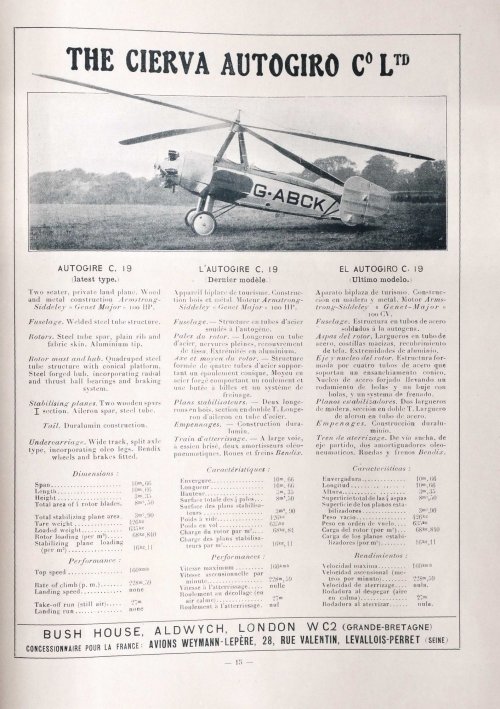
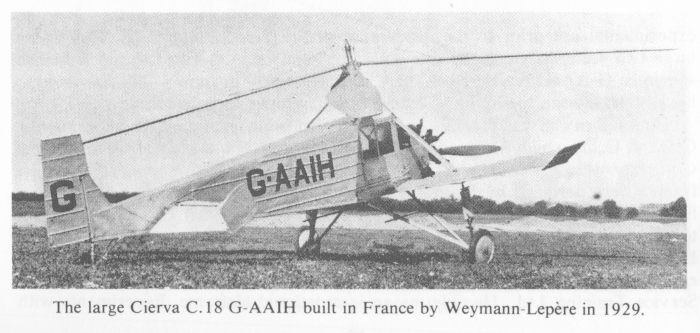
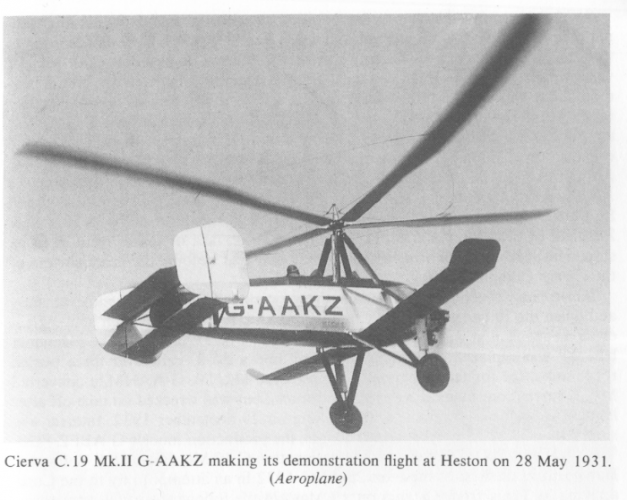
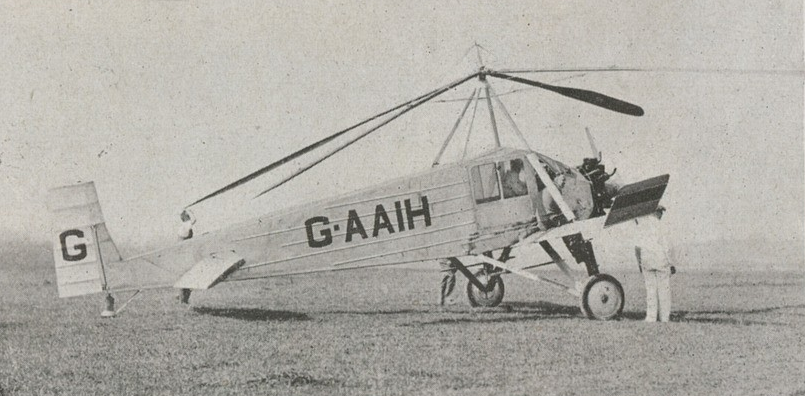
Images from British Civil Aircraft 1919-1972: Volume II by A.J Jackson, Putnam 1988.
Identification of identical image of C.18 confirmed in The Sycamore Seeds by Charles E Mac Kay, self published 2014.
Identification of G-AAKZ as C.19 confirmed in the same book.
In my opinion @Stargazer is right.
 

Attachments

  • Cierva C.18.png
    Cierva C.18.png
    234 KB · Views: 14
  • Cierva C.19 Mk.II.png
    Cierva C.19 Mk.II.png
    342.9 KB · Views: 15
Last edited:
Identification of G-AAKZ as C.19 confirmed in the same book.
In my opinion @Stargazer is right.

How come,of course I know Weymann built C.18,but without any
any designation,from TU also ?.
 

Attachments

  • 4.png
    4.png
    423.7 KB · Views: 16
A detour into Cierva/Avro cooperation.
I did a bit more reading.
In Avro Aircraft since 1908 by AJ Jackson, Putnam 1990, Avro type numbers are associated with the Cierva C.17, page 263:
- type 612 for C.17 Mk.I
- type 620 for C.17 Mk.II
Avro and Cierva were active for years of joint experiment. Most of the types produced received both Cierva and Avro designations, but not all.
On page 455:
one [...] other Cierva Autogiro, the C.19 designed and built at Hamble beginning in 1929, was associated with A.V. Roe and Co. Following the transfer of the Avro design office to Manchester at the end of 1928, some of the staff remained at Hamble working under contract to the Cierva company. This resulted in Avro constructor's numbers being allocated to the C.19s but because the machines were wholly designed and built by the Cierva Autogiro Co no Avro type number was allocated.
In The Sycamore Seeds author Charles E Mac Kay writes, page 37:
On the continent the Germans were impressed by the performance of the C19 and the Focke-Wulf Company took out a licence in Germany to produce the type
A few C.19 Mk.IV were built by Focke-Wulf from 1932 onwards.

In British Civil Aircraft 1919-1972: Volume II, author AJ Jackson writes, pages 14-15:
A licence to build the Autogiro in France was obtained by Weymann-Lepère, and its is probable that the C.8L was handed over to that concern for experimental use prior to the appearance of the French-built C.18. This was a large two seater powered by one 195 h.p. Salmson A.C.7 radial and a British specimen G-AAIH registered to the Cierva Company in June 1929 is believed to have been taken to the U.S.A. by Loel Guinness three months later.
The text-image you posted earlier...
w-1-png.621795

... implies a few more C.19 derived autogiros were in fact produced by Weymann-Lepère.
First, the CTW-201. This was re-engined to become the CTW-210, which was destroyed in a 1933 accident. Then the CTW-200.
I am now, however, not certain that either of the following statements ...
The C.18 was the same thing as the Weymann-Lepère CTW.200.
The CTW.200 was the same as Cierva C.19
... is completely accurate.
Somebody with access to more information on Weymann-Lepère could maybe shed more light on this matter?
 
Last edited:
I'm trying to make sense of all the contradicting information over these aircraft, and honestly I still don't know what to conclude. Apparently I made a mistake thinking the C.18 was the same as the CTW.200. See post #18 below.
 
Last edited:
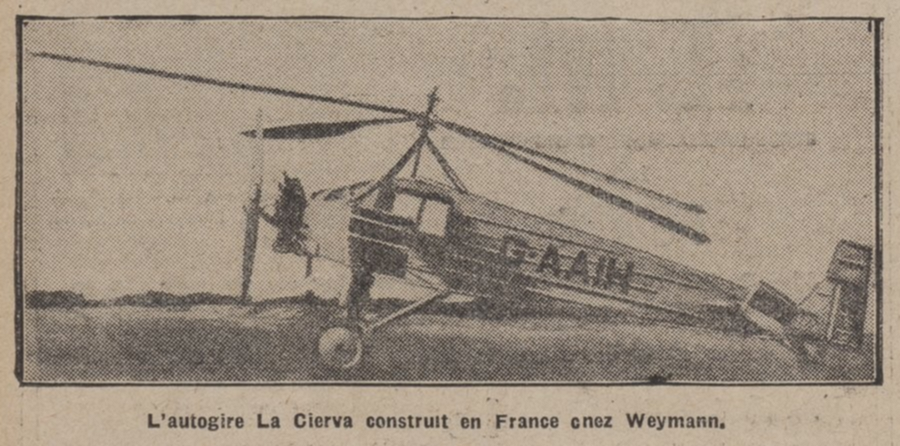
I've found two other photos of the C.18. Clearly it was a very different machine from the later CTW.201 and 200:

1763163896440.png
1763164199142.png
 
Last edited:
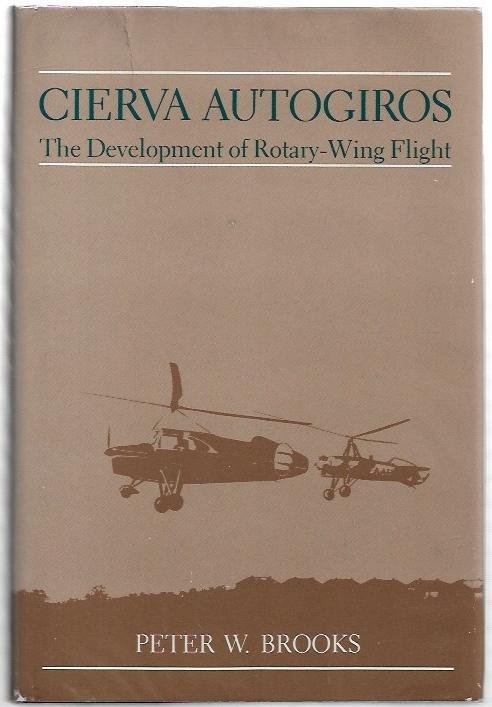
1763215674907.jpeg Okay, so I've taken the time to re-read the definitive book on Cierva by Peter W. Brooks, which sheds light on the whole thing (although the author himself admits he hasn't quite clarified the CTW.200 question). I'm retyping the entire entries below, hoping there will be no typos...

About the initial allocation of the C.18 designation:
The C.18 designation was originally used for a projected small single-seat Autogiro schemed by Cierva in 1927. It would have been powered with a 30-hp Bristol Cherub or 56-hp Siemens-Halske five-cylinder radial engine. This Autogiro was not built.

About the Weymann-Lepère C.18:
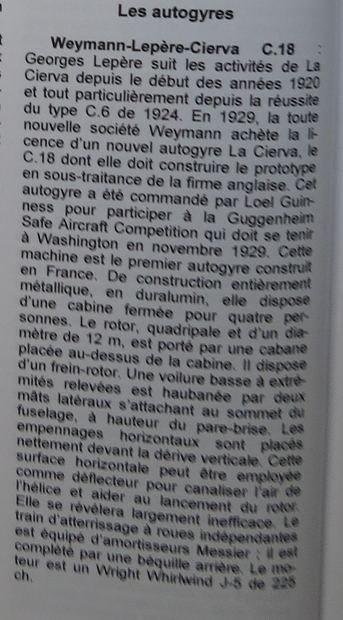
Weymann-Lepère C.18 (225-hp Wright R-760 Whirlwind J-5 and later J-6). This was a large two- to four-seat cabin Autogiro built under Cierva license in France by the Weymann-Lepère Company to the designs of Cierva and Captain Georges Lepère. The C.18 was ordered by the Cierva Company for Loel Guinness, probably early in 1929 for entry in the Guggenheim Safe Aircraft Competition announced in Washington in April 1927, wth entries being accepted from September 1, 1927. The competition was to be held in November 1929.
The designer of the C.18, Lepère, was an experienced aircraft engineer who had been responsible for a number of successful airplanes in France and the United States during and after World War I. Returning to France, he had worked until 1928 in the Schneider armaments firm, where he was involved in the development of the prototype of an all-metal stressed-skin twin-engine bomber. With the formation of the new company, Lepère was able to develop a new type of stressed-skin all-metal construction in which the skin consisted of duralumin sheets riveted together by means of edge-flanges,the sheets being stiffened by widely spaced extruded semicircular grooves. the internal wing and tail structures consisted of single-plate spars and plate ribs, while the fuselage had bulkheads built up of duralumin channels. This advanced form of construction was used for the prototypes of two airplane designs as well as for the C.18. It had similarities with the earlier Wibault system of metal construction quite widely used in the 1920s and '30s for a variety of successful French airplanes and, under license, by Vickers in England.
The C.18 was thus notable in a number of respects: its all-metal stressed-skin structure was advanced for its day; it was the first cabin Autogiro; and it had a rather ineffective monoplane deflector tail for rotor starting very similar to the first type fitted, at about the same time, to the Loring C.12 prototype in Spain. Other innovations on the C.18 were the rotor brake—one of the first on a rotary-wing aircraft—and the upturned wing tips, which were like those on the Spanish C.12. The landing gear incorporated Messier shock-absorbing struts.
The C.18, like the C.12, was fitted with a four-blade cable-braced rotor of similar diameter and technology to that of the C.8 (with Avro F.1017 paddle blades). Later, as we shall see, the C.18 was fitted with an American PCA-1 rotor hub and probably "planked skin" blades supplied from England (Type RB-55). Completed in June 1929, the C.18 was first flown at Villacoublay on August 12, possibly by La Cierva just before his departure for his first visit to the United States, probably without its engine. This was about the same time that the first C.19 Mk.II was taken to America by Cierva and nine months after the C.8W had introduced the Autogiro to North America.
Pitcairn had intended to enter the PCA-1, the first American Autogiro, in the Guggenheim Safe Aircraft Competition. However, he realized that it would not be ready in time and decided to enter the C.18 instead.
When the C.18 arrived at the Pitcairn plant at Willow Grove, Pennsylvania, Pitcairn installed one of the new seven-cylinder R-760 geared J-6 versions of that light and efficient air-cooled radial, the American Wright Whirlwind of 225 hp, which he was also proposing to use on the PCA-1B. He fitted a cable-braced rotor with one of the new PCA-1 hubs designed and built by the Machine and Tool Designing Co. In this form and with a highter rotor pylon and other changes, the C.18 was first flown in America probably by Cierva in September 1929, some of the flights being witnessed by James Weir and Hugh Kindersley, who were on a visit to the United States. Earlier the C.18 had been given the British registration G-AAIH on June 5, 1929, but it was struck off the United Kingdom Register at the end of 1930. In spite of being flown in America and later fitted with an improved landing gear, its high vibration levels (also experienced by the PCA-1s) and poor performance meant that it was still not ready by the September 1 closing date for entries in the Guggenheim Competition.
The Autogiros would, in any case, have been at a decisive disadvantage in the competition. Under the rules, an arbitrary and, for Autogiros, irrelevant gliding angle requirement would have unfairly penalized them. The competition was held at Mitchell Field, Long Island, in November 1929 and the $100,000 prize (equivalent to about $600,000 now) was won by a specially designed conventional airplane, the Curtiss Tanager. There is no record of the ultimate fate of the C.18, although it is believed not to have flown after November 1929.

Rotor diameter 12.0 m (39 ft 41/2 in), later 12.6 m (41 ft 41/16 in)—unconfirmed, rotor blade section Gö 429. No other data available.

About the Weymann CTW.200/201:
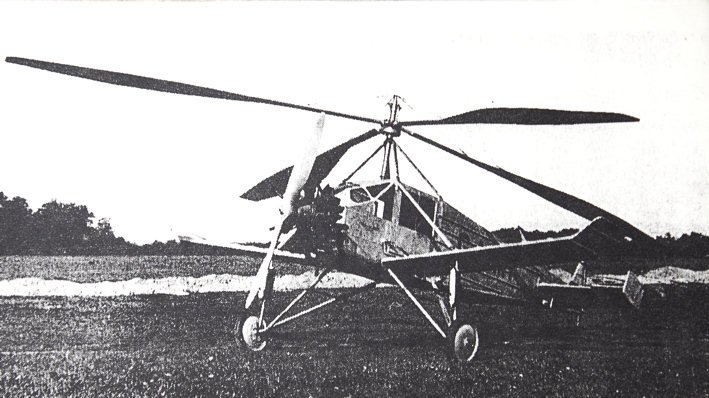
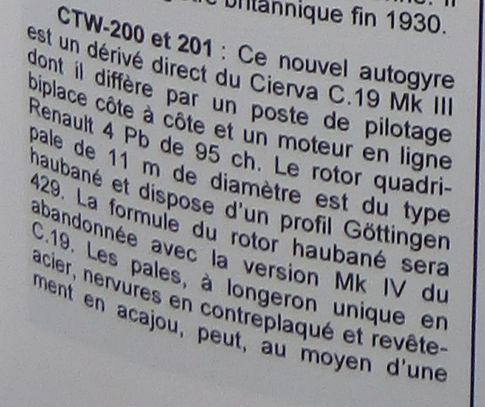
Weymann CTW.200. (One 95-hp Renault 4Pb). Georges Lepère left Avions Weymann-Lepère during 1930 and the company was thereupon renamed Établissements Aéronautiques Weymann. Before he left, Lepère launched the design of an Autogiro for the French Navy, which had issued a requirement in May 1930. This was later ordered under Contract no. 921/0 of February 7, 1931, modified by Amendment no. 1 of September 28, 1932. The CTW.200 or WEL.200 as it was first known, was considerably smaller that the C.18 and was, in fact, of similar weight and power to the C.19. A side-by-side two-seater, with an open cockpit and dual control, the CTW.200 had a conventional fabric-covered welded chromemolybdomen steel tube structure similar to that of later Weymann airplanes. The cable-braced four-blade rotor was 11 m (36 ft 11/16 in) in diameter and was mounted on a four-leg pylon. It was apparently of C.19 technology built by Avro while the wooden wings, landing gear with Bendix brakes, and deflector tail built-up of steel tubes seem to have been similar to those of the C.19 Mk.III. The CTW.200 was exhibited in mostly mocked-up form at the XII Paris Salon (November 28–December 14, 1930) and was first flown by Cierva during Easter week in 1931. It was subsequently flown on a number of occasions by Pierre Martin, the Weymann test pilot, who also flew the first production aircraft—the CTW.201 at Villacoublay in April 1931. A 95-hp Salmson A.C.7 radial was offered as alternative power plant and a cabin top over the cockpit was also an option.
It is not known whether both Autogiros ordered by the French navy were completed and delivered. It seems that at least the CTW.200 prototype and the first production aircraft, the CTW.201 no. 1 (F-ALLA), were completed and flown.

Rotor diameter 11 m (36 ft 11/16 in); rotor blade section Gö 429; length 5.5 m (18 ft 01/2 in); span of fixed wing 6.5 m (21 ft 4 in). Empty weight 430-450 kg (948–992 lb); maximum take-off weight 636-650 kg (1,402–1,433 lb). Fuel 48 liters (10.7 Imp gal). Maximum speed 150 km/h (93 mph); minimum speed 30 km/h (19 mph); absolute ceiling 2,800 m (9,185 ft); range 400 km (248 miles) at 125 km/h (77 mph).

About the Weymann CTW.210:
Weymann CTW.210. (One 100/145-hp Hispano-Suiza 6Pa). This was a cabin development of the CTW.200 wih the gross weight increased from 640 kg (1,410 lb) to 750 kg (1,653 lb) and a more powerful engine. A Weymann brochure offered the CTW.210 as a touring Autogiro that could be alternatively fitted with the 95-hp Renault 4Pb, the 90-hp Salmson A.C.7, or the 130-hp Renault radial engine. The first CTW.210 (F-ALQX) was fitted with an engine-powered rotor drive and was probably the second European Autogiro to fly with this important device, having done so less than a year after the British C.19 Mk.IV, which first flew in June 1931.
Georges Lepère maintained his interest in rotary wings after leaving Weymann. He soon joined the Lioré-et-Olivier company where he was responsible for the design of other Autogiros.

Rotor diameter 11 m (36 ft 11/16 in); rotor blade section Gö 429; length 5.5 m (18 ft 01/2 in); span of fixed wing 6.8 m (22 ft 33/4 in). Empty weight 570 kg (1,257 lb); maximum take-off weight 750 kg (1,653 lb). No other data available.

And so, from the above information, we now have proof that:
  1. CTW.200/201 and WEL.200/201 were different designations for the same machines;
  2. The C.18 never received an specific Weymann-Lepère designation;
  3. As Cierva's exclusive US agent, Pitcairn reworked the C.18 but could not get it ready in time;
  4. The CTW.200 was just the prototype of the CTW.201 and also had an open-cockpit;
  5. The aircraft identified as the CTW.200 in many sources is actually the CTW.210;
  6. The CTW.200/201/210 series never received any Cierva C. designation.
 
Last edited:
Before he established his firmhe also designed,

- 1915 was a single seat biplane fighter prototype,and powered
by one 80 hp Clerget engine,all metal construction
- 1918 was also a biplane,with only metal wing,no more details
- 1919 was a military colonial aircraft project
 

Similar threads

Back
Top Bottom