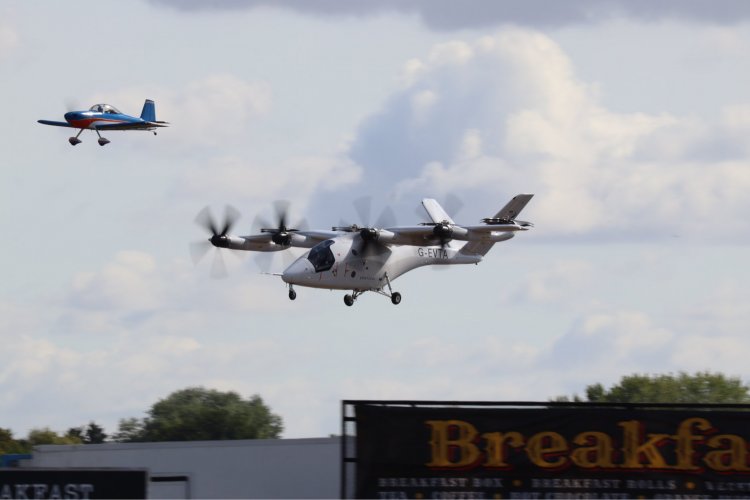
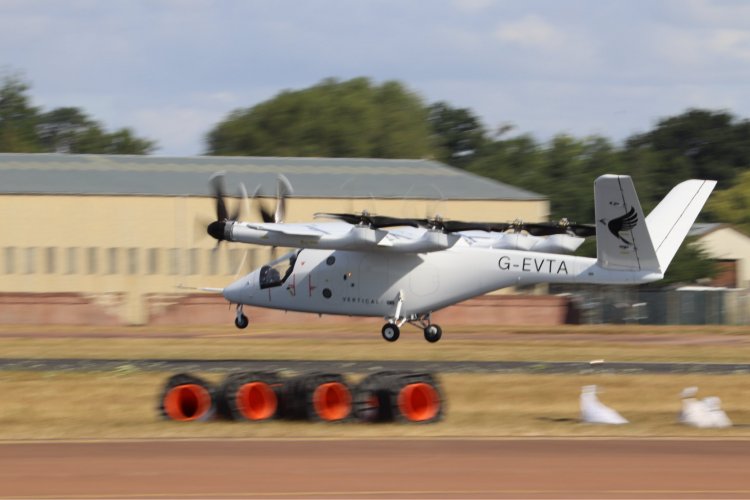
A sober look at the brutal reality facing these startups.

To be fair, even conventionally powered CTOL start-ups have a horrendous rate of failure, but it should have been obvious from the start it would be worse for eVTOLs, which are adding three major risks over and above the normal CTOL certification problems (battery powered, VTOL, entirely novel ground ops).
 
Tesla is about to launch an eVTOL.

They are obviously waiting until after their robotaxi service has rolled out to multiple cities. Most would have laughed at a Tesla eVTOL launch a couple years ago but now it is hard to doubt their transport as a service model.

It appears Tesla plans to have 3 tiers of service to dominate the market.

1) 14 seat robovan with trip costs equivalent to public transport.
2) 2 seater cybercab with trip costs a fraction of a normal taxi roughly equivalent to the running costs of an average car.
3) 2 seat eVTOL for premium customers with trip costs only slightly higher than uber Black or a booked premium vehicle.

I assume Tesla will use their existing charging network and simply build elevated landing pads above the car. Quite logical with everything booked in one app.

Every eVTOL posted in this thread are great technology demonstrators but will be commercial failures. The key is the infrastructure and the customer booking system. None of these companies are willing to roll out tens of thousands of landing pads that charge the eVTOL after it lands.

My analysis from a specification perspective I expect the average flight to be only 20-50kms. Tesla will only hit the lower end of the current helicopter market. I think the average eVTOL customer will come from high end vehicle chauffeur services.

Longer the flight distance the eVTOL will need wings to reduce energy consumption during cruise. I don't think the Tesla eVTOL will need wings. The passenger cabin can be shaped to provide enough body lift to reach the range requirement. The rotors/ducted fans will then need to rotate so that the passenger body produces lift. This has the advantage of keeping the passenger cabin level during flight.

Fun times ahead.

 
Last edited:
Which year?
If we are talking hand built demonstrators like every other eVTOL in this thread then the Tesla one probably flew in 2024.

If we are talking paying passengers flying autonomously over populated area then that is entirely up to government regulation. There is a very obvious path to be taken. You would first have the eVTOL perform thousands of real flights without humans inside. We already have cargo delivery drones over cities. Then can have Tesla staff inside for thousands of flights. I expect 2030 we will have a dozen eVTOL accumulating flight hours.

The obvious first passenger route would be over shallow water where a 60 minute drive by car can be shortened to a 15 minute flight. The Fremont Tesla factory or Palo Alto Tesla factory would be an ideal test. Flying over the wetlands in 10 minutes instead of 35 minute drive. Miami and San Francisco are ideal with the many short routes over water. I expect full thousands of Tesla eVTOL operating by 2035.

Flying in the air autonomously is a much easier programming problem compared to a car on busy roads.
 
I assume Tesla will user their existing charging network and simply build elevated landing pads above the car
The idea of using existing ground infrastructure is a non-starter. FAA's standard for vertiport pads is a takeoff and landing area of DxD, final approach and takeoff area of 2Dx2D, and a Safety Area of 2.5DxD, where D is the Controlling Dimension - the maximum horizontal diameter of turning rotors, wingspan or whatever for the largest eVTOL expected to use the pad, so rather bigger than the average e-vehicle charging bay (plus at least 5ft of horizontal safety netting around any elevated FATO). Downdraft caution areas are required anywhere downdraft velocities exceed 34.5mph, which is substantially larger than the pad size, and there is a transitional approach /departure surface extending 4000ft from the pad with a width of 500ft that must be clear of vertical obstacles, which rules out e-vehicle charging bays for their lighting poles.

As a reminder of how serious downdraft is, a woman in the UK was killed when blown over by downdraft from a Coastguard S-92, and the landing pad at Cambridge's Addenbrookes hospital was lifted and destroyed by the downdraft from a USAF V-22.

I suspect sandblasting parked cars with your downdraft is also going to be frowned on, which likely extends potential legal liability even beyond the 34.5mph zone - though the FAA has that at least partially covered with 2.3 9) The FATO surface prevents loose stones and any other flying debris caused byrotor/propeller downwash or outwash.


Flying over the wetlands
Sounds like the perfect recipe for birdstrikes.

If Tesla are actually flying something already, presumably there should be an FAA aircraft registration for it.

WRT autonomous flight, one issue is going to be prompt processing of NOTAMs and emergency airspace closures and the ability to respond to ATC instructions. Flying is ostensibly simpler than driving, but its restrictions are more dynamic.
(Which also makes me wonder how good robotaxis are at being flagged down by the police, responding to a road closure and obeying dynamic signage/speed limits).

The problem that arises from ideas of flying thousands of Teslas or other eVTOL Urban Air Mobility vehicles, as special purpose powered lift vehicles under SFAR 120, is where are you going to find the certificate holding aircraft mechanics to maintain them? And that's assuming autonomy is established and you don't also need 1000s of commercial pilots.
 
The idea of using existing ground infrastructure is a non-starter. FAA's standard for vertiport pads is a takeoff and landing area of DxD, final approach and takeoff area of 2Dx2D, and a Safety Area of 2.5DxD,
Totally incorrect. Hundreds of Tesla supercharger stations already have massive solar panels above the chargers. These huge solar panel structures already exceed the FAA landing platforms dimensions for something like an Xpeng X2 flying car.

95% of the work needed to have landing pads is already done. High voltage power, foundations for the pads, taxis to get people to and from the pads.

NealTalaske_atTeslaStation_0.jpg


I suspect sandblasting parked cars with your downdraft is also going to be frowned on, which likely extends potential legal liability even beyond the 34.5mph zone
This is ridiculous. A flying Tesla will approach at 200+ feet to a position directly above the landing platform. It will descend straight down. A 2,000lb eVTOL is a bit different to a 50,000lb V-22 osprey landing. The downdraft will not be a problem.

The problem that arises from ideas of flying thousands of Teslas or other eVTOL Urban Air Mobility vehicles, as special purpose powered lift vehicles under SFAR 120, is where are you going to find the certificate holding aircraft mechanics to maintain them? And that's assuming autonomy is established and you don't also need 1000s of commercial pilots.
So based on this you are saying we will never have any eVTOL operating in an urban area?

If it comes down to maintaining thousands of eVTOL I would expect a trillion dollar company like Tesla to do a better job than some brand new start up company with 50 employees.
 
WRT autonomous flight, one issue is going to be prompt processing of NOTAMs and emergency airspace closures and the ability to respond to ATC instructions. Flying is ostensibly simpler than driving, but its restrictions are more dynamic.

Good questions.

(Which also makes me wonder how good robotaxis are at being flagged down by the police, responding to a road closure and obeying dynamic signage/speed limits).

Material about those issues is available.
In both the mechanical and psychological realms.
Here are a couple examples;

Michaela Jarvis / Feb 24, 2021, 8:41 AM

Embry-Riddle researchers are working on a solution to a significant safety problem involving semi-autonomous vehicles after crashes occurred when the vehicles did not detect firetrucks or police cars in the roadway.

Partnering with the Emergency Responder Safety Institute and a private company called HAAS Alert, Scott Parr, assistant professor of Civil Engineering, and Patrick Currier, associate professor and associate chair of the Mechanical Engineering Department, plan to employ digital signals to alert the autonomous vehicles (AVs) of the presence of emergency response vehicles. The plan would effectively employ emergency vehicle location signals — now provided by HAAS Alert to route mapping applications whenever a geolocation device mounted to the lighting bar of emergency vehicles is activated — and extend them to also communicate with AVs.

“We’re trying to demonstrate that this technology does work and that it can be a solution to the problem,” said Parr, adding that a response system to the alerts will be manually programmed into AVs owned by Embry-Riddle as a demonstration. The system would enact an automatic protocol to slow or stop the AV depending on how close it was to the emergency vehicle.

By the end of the month, Parr and Currier will submit an application to the Fire Prevention and Safety Grants program of the Federal Emergency Management Agency (FEMA).

According to Parr, the automation systems in AVs are “prone to errors in unexpected and atypical driving situations.”


Work in Progress

Exploring User Needs in Fully Driverless Robotaxis: A Think-Aloud Study of First-Time On-Road Rides
Authors: Zhenyu Wang, Haolong Hu, Weiyin Xie, Xiang Chang, Peixuan Xiong, Dengbo HeAuthors Info & Claims
AutomotiveUI Adjunct '25: Adjunct Proceedings of the 17th International Conference on Automotive User Interfaces and Interactive Vehicular Applications
Pages 209 - 213

Abstract
As fully driverless robotaxi services emerge, understanding user needs under real-world conditions is critical. This study employed the think-aloud method to capture real-time cognitive and emotional responses during users’ first ride in a fully driverless robotaxi. Analysis of 30 participants’ verbal reports revealed three key user needs: perceived safety, efficiency, and comfort. We found that users’ trust can be enhanced by conservative driving behaviors and transparent human–machine interface (HMI) design. Conversely, inconsistencies between user expectations and driving behaviors, potentially stemming from technical limitations, and individual differences, can undermine trust. Further, while conservative driving enhanced perceived safety, it can also reduce efficiency, especially in time-sensitive scenarios. Finally, comfort can be shaped by both driving behaviors and HMI interactivity. These findings highlight the importance of user-adaptive interfaces and context-aware driving strategies to balance perceived safety, efficiency, and comfort, thereby supporting the acceptance and deployment of driverless mobility services.

 
You have to wonder by what magics they can be certified.

Anyhow, yet another striking example of how Startups do work:
1. Identify a problem
2. simplify the problem
3. solve the simplified problem
4. pretend loudly you have designed a solution
5. lather. sale your company, rinse and repeat
 
Totally incorrect. Hundreds of Tesla supercharger stations already have massive solar panels above the chargers. These huge solar panel structures already exceed the FAA landing platforms dimensions for something like an Xpeng X2 flying car.

95% of the work needed to have landing pads is already done. High voltage power, foundations for the pads, taxis to get people to and from the pads.

NealTalaske_atTeslaStation_0.jpg


This is ridiculous. A flying Tesla will approach at 200+ feet to a position directly above the landing platform. It will descend straight down. A 2,000lb eVTOL is a bit different to a 50,000lb V-22 osprey landing. The downdraft will not be a problem.


So based on this you are saying we will never have any eVTOL operating in an urban area?

If it comes down to maintaining thousands of eVTOL I would expect a trillion dollar company like Tesla to do a better job than some brand new start up company with 50 employees.
The Vortex Ring State will still be a key risk if open rotors are used. Approach profiles matter, and straight down may not be the best. See https://sophrodyne-aerospace.com/resources_VRS/
 
Flying taxi CEO said Embraer's yet-to-fly aircraft will soar over traffic by 2027 and eventually be pilotless.


Regards,
 
Totally incorrect.

I'm just repeating the FAA standards, take it up with them.

Hundreds of Tesla supercharger stations already have massive solar panels above the chargers.

9. Meets general surface characteristics and pavement guidelines including the following:
a. Has a paved or aggregate-turf surface (see AC 150/5370-10, Standard Specifications for Construction of Airports, Items P-217, Aggregate-Turf Runway/Taxiway, and P-501, Cement Concrete Pavement).
[...]
c. Has a roughened pavement finish (e.g., brushed or broomed concrete) to provide a skid-resistant surface for VTOL aircraft and a non-slippery footing for people.
[...]
e. Surface is stabilized to prevent erosion or damage from rotor/propeller downwash or outwash from VTOL aircraft operations.
f. Preferred surface of elevated TLOFs is concrete. Preferred material for elevated structures is metal or coated metal with an approved coating. If the surface is conductive, it may need to be insulated and/or grounded to the extent feasible toeliminate the threat of conducting electricity in cases of a short circuit or lightning strike. If the surface is metal, it should be grounded. Insulation is permissible if grounding is not feasible. Construct rooftop and other elevated TLOFs of metal, concrete, or other materials subject to local building codes.


95% of the work needed to have landing pads is already done. High voltage power, foundations for the pads, taxis to get people to and from the pads.

Based on the structure shown, that remaining 5% appears to include ripping down the existing structure and replacing it with something strong enough to take 150% of MTOW, as opposed to a glorified tin-roof.

Load-bearing (static and dynamic for Design VTOL aircraft). See Figure 2-2.
a. Supports the static load of the Design VTOL aircraft and/or any ground support vehicles, whichever is more demanding for pavement design. The static loads are e qual to the aircraft’s maximum takeoff weight applied through the total contact area of the landing gear.
b. Supports the dynamic loads based on 150 percent of the maximum takeoff weight of the Design VTOL aircraft. For design purposes, assume the dynamic load at 150 percent of the maximum takeoff weight applied over the whole landing gear for a landing gear with wheels, and at the single point of contact for a landing gear with skids


Good luck finding a solar panel that meets those requirements.

You're also going to need a lift (elevator) for access to each pad, because I don't see the type of customer willing to shell out for Urban Air Mobility being happy with having to hump a huge suitcase up and down a set of outside stairs in all weathers (or business insurance being willing to cover it), while the lack of wheelchair access would just invite an ADA class action.

This is ridiculous. A flying Tesla will approach at 200+ feet to a position directly above the landing platform. It will descend straight down. A 2,000lb eVTOL is a bit different to a 50,000lb V-22 osprey landing. The downdraft will not be a problem.

I didn't write the regs, the FAA did. Beyond the downdraft issues, the straight down approach is technically challenging and would require an additional set of downward facing sensors, whether the vehicle is autonomous or piloted. which raises the issue of what happens if the downward sensors fail and you need to do a conventional approach? There's also the interaction of descent angle and wind-direction, which means even a 'straight down' descent is likely to have a non-zero horizontal element.

The lightest Tesla is the Model 3 at 3,500lbs. You might get an eVTOL that's lighter, but if Musk actually means a roadable flying car as opposed to just an eVTOL then you're almost certainly looking at adding weight to the basic car design because of the need for the car aspect of the vehicle to still meet vehicle impact regulations. In either case you're probably also looking at increasing battery mass over the baseline Tesla because of the increased power demand of vertical flight

CAA paper on downwash research: CAP 3075

Vertical Flight Society presentation on downwash research:
View: https://www.youtube.com/watch?v=UYmyS09GWJY


So based on this you are saying we will never have any eVTOL operating in an urban area?
How common are urban helicopter operations after 75 years of civil helicopter operations?

We already know they're tightly controlled by the FAA and other airworthiness authorities where they do exist, and the UAM regs have been developed out of those existing regs. The willingness to implement UAM exists, but it can't be a free for all, it has to be implemented within a set of rules to ensure the safety of both those travelling and those below.

If it comes down to maintaining thousands of eVTOL I would expect a trillion dollar company like Tesla to do a better job than some brand new start up company with 50 employees.
This is the same Tesla that has duct-taped panels blowing off its vehicles? The issue is the availability of thousands of aviation certificated mechanics, when there is already a shortage industry-wide and an oncoming generational crash (average A&P mechanic age of 51-59). Tesla's going to be competing with airlines and MROs who actually understand the value of an A&P rated mechanic, vs it's record of exploiting minimum wage staff. I'd honestly be surprised to see Tesla set up its own MRO organisation, I'd expect it to try and shed that responsibility/liability down to operators
 
Based on the structure shown, that remaining 5% appears to include ripping down the existing structure and replacing it with something strong enough to take 150% of MTOW, as opposed to a glorified tin-roof.
This is totally incorrect. The structures holding these solar panels have to be rated for wind loads exceeding 100mph. The structural wind loads generated with such large surface areas are a order of magnitude higher than a 2,000lb eVTOL landing on the roof.

Good luck finding a solar panel that meets those requirements.
You are suggesting the eVTOL will land on solar panels. Tesla will obviously remove the solar panels on the section where the eVTOL lands and it will have the correct non slip surfaces. This is all common sense and very straight forward. Most of the solar panels can remain as it stops the cars being "sandblasted".

You're also going to need a lift (elevator) for access to each pad, because I don't see the type of customer willing to shell out for Urban Air Mobility being happy with having to hump a huge suitcase up and down a set of outside stairs in all weathers
You clearly don't understand the market at all based on you bringing up suitcases. The eVTOL network will be for the top 5% wealthiest to travel to and from work every day and to major events.

It is common for large companies to have contracted drivers taking their upper management to and from work. The autonomous eVTOL will actually save them money. The premium wealthy suburbs of most cities are often an hour drive from the business district. This is a 15 minute eVTOL trip to work.

Many rich people even rent a secondary apartment walking distance from their office because the transit by car during peak hour might approach 2 hours to their primary residence. These top 5% individuals will each do hundreds of eVTOL trips per year.


How common are urban helicopter operations after 75 years of civil helicopter operations?
This is an irrelevant comparison.

For example let's pick two points 100 miles apart and estimate trip costs.
Helicopter $1,000 per person
Chauffeur $300 per person
Uber Black $200 per person
UberX $100 per person
Public transport $20 per person

People willing to pay $1,000 for such a distance will never be common. Helicopters will then never be common. People commonly pay $200-300 so if eVTOL is also $200-300 then it will be common.

The busiest day for helicopter usage in my city is for a horse race. Dozens of helicopters doing dozens of trips per helicopter in a single day. Helicopters are still far too expensice per trip for it to be common. eVTOL will be a fraction of the cost of a helicopter shuttle so the number of potential passengers will be much higher the the current helicopters.


(or business insurance being willing to cover it), while the lack of wheelchair access would just invite an ADA class action.
So every eVTOL in this thread will get a class action for not being wheelchair friendly.


Beyond the downdraft issues, the straight down approach is technically challenging and would require an additional set of downward facing sensors, whether the vehicle is autonomous or piloted. which raises the issue of what happens if the downward sensors fail and you need to do a conventional approach?
It's called redundant sensors.
 
Last edited by a moderator:
This is ridiculous. A flying Tesla will approach at 200+ feet to a position directly above the landing platform. It will descend straight down. A 2,000lb eVTOL is a bit different to a 50,000lb V-22 osprey landing. The downdraft will not be a problem.

There's also the interaction of descent angle and wind-direction, which means even a 'straight down' descent is likely to have a non-zero horizontal element.

That brings this to mind,

Apr 25, 2022
A break from the blustery days is finally in the forecast. Tuesday and Wednesday will be quieter. As long as anemometers don't clock wind gusts over 20 mph, the streak of windy days in St. Louis will come to an end.
Monday, April 25, marked the 41st consecutive day of gusts over 20 mph in the St. Louis area. Meteorologist Marshall Pfahler tracks our weather at the regional National Weather Service office in St. Charles.
View: https://www.youtube.com/watch?v=8tEutmRGBY8
 
@DWG : it´s curious how the FAA doc appears to contain an error when stating 150% for the max dyn load.

At static, the helipad structure has to carry 100% of the MTOW of the vehicle. But then just prior to liftoff the rotor system impart another 100% of equivalent force on the structure to make it 200% of MTOW. It then diminish instantly to k*MTOW with k generally b/w 1,2 and 1,4 as the vehicle rises from the ground. So, if the object of the minimum indicated value was to provide designer a recommended safety margin of 1,5, it won't be 150% but 200% MTOW time 1,5, what is 300% MTOW, the double of the intended margin!

So the document seems to state an apparently erroneous design variable when it's rather important to have a correct assessment of the dynamic efforts imparted on the structure as, particularly with elevated helipads, this will drive the structure modal response. :rolleyes:
 
Last edited:
The busiest day for helicopter usage in my city is for a horse race. Dozens of helicopters doing dozens of trips per helicopter in a single day. Helicopters are still far too expensice per trip for it to be common. eVTOL will be a fraction of the cost of a helicopter shuttle so the number of potential passengers will be much higher the the current helicopters.
London (UK) since 2014 has a limit to the maximum number of Helicopters copters that can fly at any one time. If a Helo-med or Police has to fly a civilian one has to land. A high percentage of London helicopter complains come from “Visual intrusion”…. So how’s evtol going to fix that?

E-vtol operations within a city just hasn’t been thought through in any study I’ve read. The number of pads required for safe operation (a clear the sky order), the pad occupancy (all based on SiFi batteries) and charging pads power demands are all marketing department fantasy.

Also you don’t really believe those car port EV panels generate enough power to run the cars underneath? Have a look at the maths, …e-vtol will be an order of magnitude worse.
 
A high percentage of London helicopter complains come from “Visual intrusion”…. So how’s evtol going to fix that?
That is 100% false. This is common sense. You nearly always hear a helicopter before you see it. Only once you hear the noise do you look up and identify the helicopter visually. If the helicopter was silent there would be nearly no visual complaints. Everyone would agree with this.

E-vtol operations within a city just hasn’t been thought through in any study I’ve read. The number of pads required for safe operation (a clear the sky order), the pad occupancy (all based on SiFi batteries) and charging pads power demands are all marketing department fantasy.
So you are saying every eVTOL posted in this thread are all fantasy and every manufacturer should give up?

Or does these safety issues only apply to Tesla?

Also you don’t really believe those car port EV panels generate enough power to run the cars underneath? Have a look at the maths, …e-vtol will be an order of magnitude worse.
I never said the cars charge entirely off the solar panels. That would mean the Tesla chargers wouldn't work when it is cloudy or at night. A 16 year old apprentice electrician could tell you that is impossible without even doing the maths.

The Tesla superchargers have a very large electrical connection to the power grid. That is why Tesla has 95% of the work done to have eVTOL landing pads. The power, the space and the platform structures are already there.

The elevated solar panels provide negligible power relative to what the car chargers consume. The only reason Tesla would bother installing elevated solar would be if the structures could serve a different purpose in the future.
 

This is totally incorrect. The structures holding these solar panels have to be rated for wind loads exceeding 100mph. The structural wind loads generated with such large surface areas are a order of magnitude higher than a 2,000lb eVTOL landing on the roof.
There's a difference between vertical loading and horizontal loading. If you want to use these structures as a landing pad you have to strip off the solar panels (apparently the entire roof structure from the picture you posted), then add a significant roof/pad structure and allow for the 150% MTOW of the highest weight eVTOL likely to use it. That's a significant weight increase, and raises the obvious question of why would the existing recharging station structure have been built to take it?

I also wonder just how favourably the FAA is going to assess a landing pad with vehicle parking and pedestrians immediately under it.

You are suggesting the eVTOL will land on solar panels.
Sarcasm, it's a thing.

You clearly don't understand the market at all based on you bringing up suitcases.
Airport traffic has been the one getting much of the attention this side of the Pond.

The eVTOL network will be for the top 5% wealthiest to travel to and from work every day and to major events.
Which major events are likely to have them taking luggage if they're overnight or multi-day events.

So every eVTOL in this thread will get a class action for not being wheelchair friendly.
eVTOL aircraft have a get out of jail card under the Air Carrier Access Act, they must assist wheelchair using passengers if they have 19 or more seats, but not if they have less. ISTR Embraer claiming their eVTOL was wheelchair accessible, but as far as I could see this simply meant they thought they had the space to accommodate a folding manual chair, which is only one segment of wheelchair users.

Airports don't have that same ACAA exclusion:
1) You must ensure that terminal facilities providing access to air transportation are readily accessible to and usable by individuals with disabilities, including individuals who use wheelchairs. You are deemed to comply with this obligation if the facilities meet requirements applying to places of public accommodation under Department of Justice (DOJ) regulations implementing Title III of the Americans with Disabilities Act (ADA).

Where Vertipads stand, particularly if they have associated ground-level electric vehicle charging and are electing to be elevated above ground level, rather than on top of a building, is an interesting point of law that someone is likely to explore.
 
Last edited by a moderator:
China's 2-tonne eVTOL completes cross-city cargo test flight

Regards,
 
(BTW, it's legally impossible for me to be a Democrat voter given I'm not actually American)
Certain people are unable to comprehend even the possibility of things outside their frame of reference. There's a bitterly hilarious line in a film set in the Troubles in Ireland in which a police inspector interviewing a suspect mentions that he's Jewish. The suspect immediately asks 'Are you a Catholic Jew or a Protestant Jew?'
 
Certain people are unable to comprehend even the possibility of things outside their frame of reference. There's a bitterly hilarious line in a film set in the Troubles in Ireland in which a police inspector interviewing a suspect mentions that he's Jewish. The suspect immediately asks 'Are you a Catholic Jew or a Protestant Jew?'
Or when the late , great , Patrick Moore (as he then was) became chief of the Armagh Planetarium . Fed up with constantly being asked which denomination he was , and even more fed up when his answer of 'neither' refused to be accepted , on his next trip to London , he purchased a large , gold , Buddha statue , placed it on his front room window sill , and every morning went out into his front garden and prostrated himself before it . The questions soon stopped . . .

cheers .
Robin .
 
I think a lot of the problems with these EVTOLs arise from the fact that the 'Tech Bros' running the companies involved are still using the Silicon Valley Software model , which is 'whoever is first to market becomes the standard' and 'early availability outweighs reliability' . It's not too serious when your social media app crashes , but when it's your EVTOL . . .

cheers ,
Robin .
 
I think a lot of the problems with these EVTOLs arise from the fact that the 'Tech Bros' running the companies involved are still using the Silicon Valley Software model , which is 'whoever is first to market becomes the standard' and 'early availability outweighs reliability' . It's not too serious when your social media app crashes , but when it's your EVTOL . . .

cheers ,
Robin .
I think a lot of the problems with these eVTOLs arise from the fact they are hand built toys that could never be produced safely or in any meaningful volume.

The only successful eVTOL will come from a company with large volume production experience. For instance a car manufacturer where every vehicle they produce are in the top 10 Euro NCAP and ANCAP safety ratings. This high standard of engineering and safety is critical to a successful eVTOL.

The 2025 EURO NCAP safety scores were just realised a few days ago here are the top 3 vehicles.

1) Tesla Model Y — 362 points
2) Tesla Model 3 — 359 points
3) Smart #5 — 357 points

The Tesla Model Y in Australia for instance was the first vehicle in over 30 years to go a full 3 years without a recall back to the dealership.

I am aware there was automatic software update performed while the Model Y owner slept. The cars ability to make fart noises from its speakers had to be disabled. The biased media and industry bodies tried to label this as a recall.

The definition of a recall is: "request to return a product to the manufacturer or retailer, usually because of a safety risk, defect, or contamination". A software update is not a recall.

I think we have a fair bit of bias in this thread. Rubonus trying to put Tesla in the same safety category as the "tech bro" eVTOL start-ups. I think the Tesla bias stems from aviation enthusiasts generally having a dislike for electric cars. We like fast jets and loud noises. It also doesn't help that the Tesla CEO is crashing and blowing up rockets as his favourite hobby.

Remove the bias. Tesla is in the eVTOL box seat.

The electric motor experience.
The battery experience.
The autonomous software experience.
The large volume production experience.
Access to aerodynamic knowledge from SpaceX
Global charging network with high power installed.
Taxi app where the eVTOL can be premium service.
$100+ bllion in cash to self fund the network

No other company has even half of this list. The only other potential eVTOL competitor will come from China.

 
Remove the bias. Tesla is in the eVTOL box seat.

The electric motor experience.
The battery experience.
The autonomous software experience.
The large volume production experience.
Access to aerodynamic knowledge from SpaceX
Global charging network with high power installed.
Taxi app where the eVTOL can be premium service.
$100+ bllion in cash to self fund the network

No other company has even half of this list. The only other potential eVTOL competitor will come from China.
And as of today Tesla have zero official engagement in e-vtol… tells anyone that’ll listen something quite profound doesn’t it.
 
I have no particular pet device in this race, but I am confident that the capitalist drive to efficiency will sort it out before long.
 
The definition of a recall is: "request to return a product to the manufacturer or retailer, usually because of a safety risk, defect, or contamination". A software update is not a recall.
There are many things in modern ground vehicles that are software driven, for instance drive-by-wire and brake-by-wire. If one make needs to be returned to the dealer for a software update because of safety concerns, and another can have the same change done via download over the net, then is one having a safety recall and the other not, or are they both having safety recalls?

The quoted definition doesn't reflect current technological reality. Every software update doesn't necessarily reflect a safety recall, but some clearly do. The definition needs to change if it's being used for comparisons of safety recalls between vehicles using solely dealer installed updates and vehicles using downloads.
 
Vtol news


Regards,
 
Air taxi ‘certification tourism’ draws industry criticism

Regards,
 
So six rotors, two fixed vertical (and apparently stoppable in flight), two tilting, two tilting with wing segment attached, and at least two, if not three rotor designs.

Well that's definitely going to exercise your certification authority, isn't it! The failure scenarios to be worked through are going to be all over the place.
 

Similar threads

Back
Top Bottom