
You are using an out of date browser. It may not display this or other websites correctly.
You should upgrade or use an alternative browser.
You should upgrade or use an alternative browser.
Various Post-War Yakovlev (Yak) Projects & Prototypes
- Status
- Not open for further replies.

- Joined
- 25 June 2009
- Messages
- 15,515
- Reaction score
- 9,444
famvburg said:That drawing shows an aircraft with a radial engine tho, doesn't it?
You've got a point there! English-language descriptions of the Yak-152 pointed to a turboprop variant, but this plan clearly shows something else... :

Hi Stéphane ;D
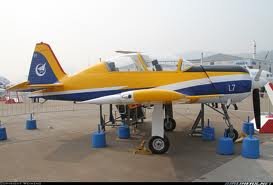
Thanks for the drawings of the Yak-152. When I saw tyem, it immediately reminded me of the Hongdu (formerly Nanchang) L-7/CJ-7 which apparently was basically the Yak-152K project. Attached a photo by Weimeng. This prototype was completed October 2010 and had a 360hp (400hp?) Vedeneyev/OKBM M14X radial.
Thanks for the drawings of the Yak-152. When I saw tyem, it immediately reminded me of the Hongdu (formerly Nanchang) L-7/CJ-7 which apparently was basically the Yak-152K project. Attached a photo by Weimeng. This prototype was completed October 2010 and had a 360hp (400hp?) Vedeneyev/OKBM M14X radial.
Attachments

- Joined
- 28 January 2008
- Messages
- 656
- Reaction score
- 615
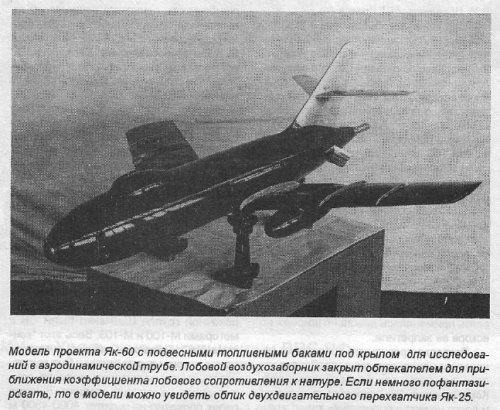
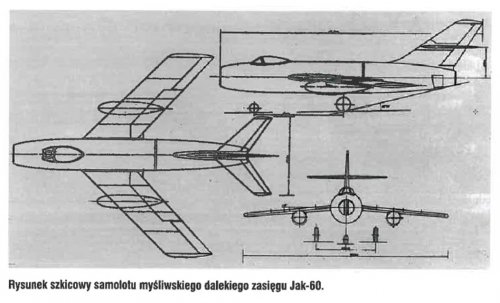
In a feature in Aerospace Review magazine about unknown Yakovlev projects, Viktor Drushlyakov wrote about the Yak-60, a light single seat fighter project. It was developed to meet a Soviet Ministry resolution of 1949 for a Mach 1.0 fighter using a VL-1 engine.
The general arrangement drawings were approved by A.S.Yakovlev on 20th November 1948 and was developed alongside the Yak-50 (first use of the designation) which did eventually fly.
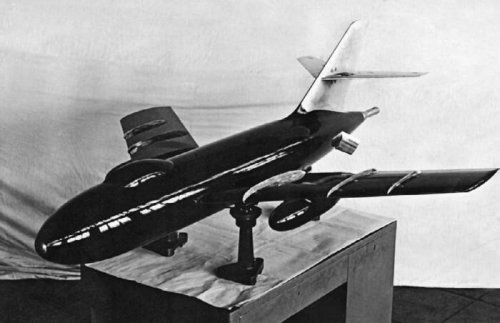
The Yak-60 remained unbuilt although a scale wind tunnel model was tested at TsAGI in December 1948 and January 1949. The tests examined the main aerodynamic parameters at both low and high speeds as well as at critical angles of attack. From the results of drag, lift and longitudinal stability of the scale model, it was concluded that the type to register a maximum speed of Mach 0.9. As this was below the requirement set the project ceased.
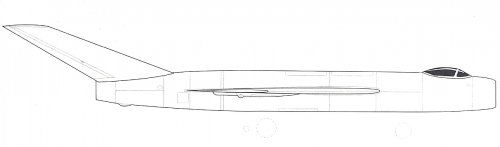
With the aerodynamic success of a highly swept wing of the Yak-30 fighter the Yak-60 project had a 45 degree of swept wing in attempt to produce a fast fighter. The wing also had an anhedral of 5 degrees and three boundery layer fences on each side.
The type had a nose wheel and long main gear undercarriage that retracted partially into the fuselage.
The Yak-60 was to be larger than the MiG-17 and La-176. A development was a project to carry thr Korshun AI radar which was to be mounted above the engine air intake and zero track undercarriage (as seen later on the Yak-50).
Despite the work stopping, a lot of the data gathered was used in the development of the Yak-120 all-weather fighter which was to enter service as the Yak-25.
Length: 12.22 m
Wing Span: 9.58 m
Tail Span: 3.74 m
Wing Area: 23 sq m
Engine: 1 x VK-1 Turbojet 2,700 kg st
Wing Sweep: 45 degrees
Track: 2.8 m
Wheelbase: 4.15 m
Armament: 2 or 3 23 mm cannon (600 shells per gun)
The Yakovlev Yak-60 was also a mentioned designation for an experimental Yakovlev heavy-lift helicopter design of the late 1960s.
Source:
Aerospace Review 2012(3)
History of Aircraft Design in the USSR 1951-65 (Shavrov) - brief textual mention only
The general arrangement drawings were approved by A.S.Yakovlev on 20th November 1948 and was developed alongside the Yak-50 (first use of the designation) which did eventually fly.
The Yak-60 remained unbuilt although a scale wind tunnel model was tested at TsAGI in December 1948 and January 1949. The tests examined the main aerodynamic parameters at both low and high speeds as well as at critical angles of attack. From the results of drag, lift and longitudinal stability of the scale model, it was concluded that the type to register a maximum speed of Mach 0.9. As this was below the requirement set the project ceased.
With the aerodynamic success of a highly swept wing of the Yak-30 fighter the Yak-60 project had a 45 degree of swept wing in attempt to produce a fast fighter. The wing also had an anhedral of 5 degrees and three boundery layer fences on each side.
The type had a nose wheel and long main gear undercarriage that retracted partially into the fuselage.
The Yak-60 was to be larger than the MiG-17 and La-176. A development was a project to carry thr Korshun AI radar which was to be mounted above the engine air intake and zero track undercarriage (as seen later on the Yak-50).
Despite the work stopping, a lot of the data gathered was used in the development of the Yak-120 all-weather fighter which was to enter service as the Yak-25.
Length: 12.22 m
Wing Span: 9.58 m
Tail Span: 3.74 m
Wing Area: 23 sq m
Engine: 1 x VK-1 Turbojet 2,700 kg st
Wing Sweep: 45 degrees
Track: 2.8 m
Wheelbase: 4.15 m
Armament: 2 or 3 23 mm cannon (600 shells per gun)
The Yakovlev Yak-60 was also a mentioned designation for an experimental Yakovlev heavy-lift helicopter design of the late 1960s.
Source:
Aerospace Review 2012(3)
History of Aircraft Design in the USSR 1951-65 (Shavrov) - brief textual mention only
from the book N.Yakubovich "Yakovlev Fighters"
- Yauza / Eksmo 2008
see also : http://www.e-reading-lib.org/chapter.php/1010126/39/Yakubovich_-_Neizvestnyy_Yakovlev._Zheleznyy_aviakonstruktor.html
- Yauza / Eksmo 2008
see also : http://www.e-reading-lib.org/chapter.php/1010126/39/Yakubovich_-_Neizvestnyy_Yakovlev._Zheleznyy_aviakonstruktor.html
Attachments
- Joined
- 25 June 2009
- Messages
- 15,515
- Reaction score
- 9,444
Thought we already had this one on the forum but was unable to find it...
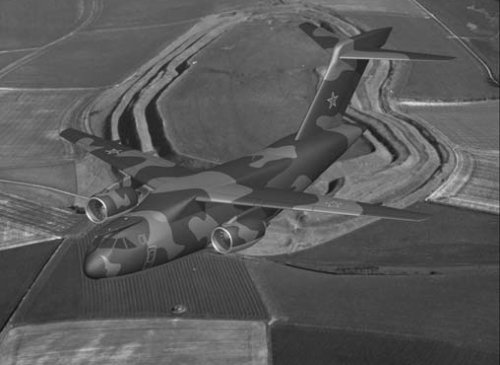
Yakovlev MTS (for Mnogotselyevoy Transportney Samolyet, or "Multi-purpose Transport Aircraft")
The MTS (multi-purpose transport aircraft) has a carrying capacity of 20 tons with a range of 2,500 km. It is being developed jointly by Russia and India, for military as well as civilian transportation. Design originates at the beginning of 2006, a joint design of the A. S. Yakovlev and S. V. Ilyushin design bureaus. Following the signing of an intergovernmental agreement, India (through its company HAL) joined in the financing and development of the project. Completion of preliminary design is planned for 2008, with completion of the first aircraft in 2012. Construction will be split between Russia and India.
The aircraft will be powered by two advanced Russian or foreign turbofan designs. By utilizing the latest advances in aerodynamics, structural materials and avionics, the MTS will be competitive on the global market and will replace the aging An-12 aircraft both in Russia and abroad.
From the May 2005 issue of Yakovlev's company publication Polyet ("Flight").
Yakovlev MTS (for Mnogotselyevoy Transportney Samolyet, or "Multi-purpose Transport Aircraft")
The MTS (multi-purpose transport aircraft) has a carrying capacity of 20 tons with a range of 2,500 km. It is being developed jointly by Russia and India, for military as well as civilian transportation. Design originates at the beginning of 2006, a joint design of the A. S. Yakovlev and S. V. Ilyushin design bureaus. Following the signing of an intergovernmental agreement, India (through its company HAL) joined in the financing and development of the project. Completion of preliminary design is planned for 2008, with completion of the first aircraft in 2012. Construction will be split between Russia and India.
The aircraft will be powered by two advanced Russian or foreign turbofan designs. By utilizing the latest advances in aerodynamics, structural materials and avionics, the MTS will be competitive on the global market and will replace the aging An-12 aircraft both in Russia and abroad.
From the May 2005 issue of Yakovlev's company publication Polyet ("Flight").
Attachments

- Joined
- 27 December 2005
- Messages
- 19,230
- Reaction score
- 35,692
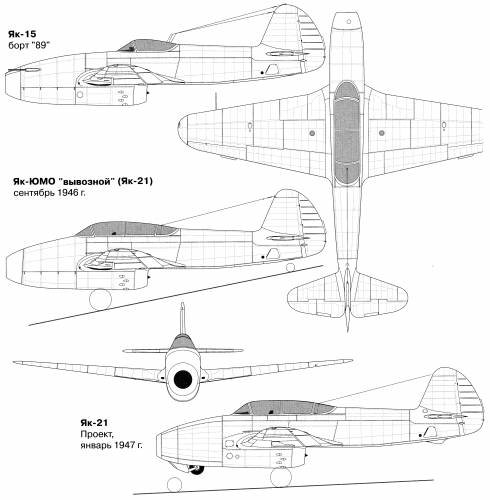
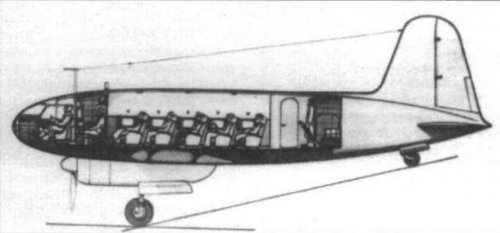
Yak-45 & big brother Yak-47 were their MiG-29/Su-27 rival designs.
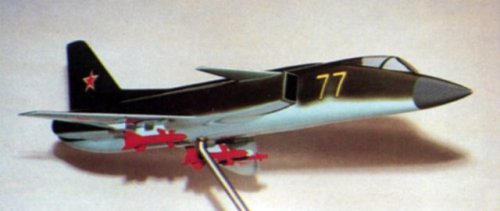
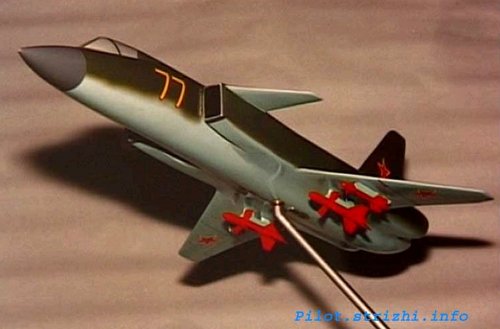
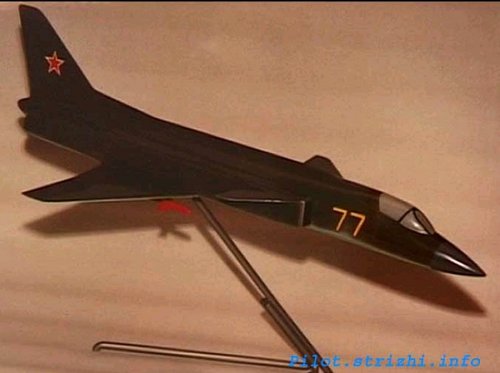
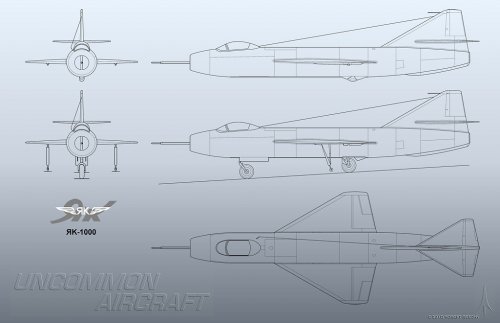
What about this design? Piotr Butowski gave it as "Kashka", no details. Armament looks like R-27 and K-14 which places it in the mid / late 1970s.
What about this design? Piotr Butowski gave it as "Kashka", no details. Armament looks like R-27 and K-14 which places it in the mid / late 1970s.
Attachments

- Joined
- 3 June 2006
- Messages
- 3,543
- Reaction score
- 6,230
walter said:Hi Stéphane,Thanks for the drawings of the Yak-152. When I saw tyem, it immediately reminded me of the Hongdu (formerly Nanchang) L-7/CJ-7 which apparently was basically the Yak-152K project. Attached a photo by Weimeng. This prototype was completed October 2010 and had a 360hp (400hp?) Vedeneyev/OKBM M14X radial.
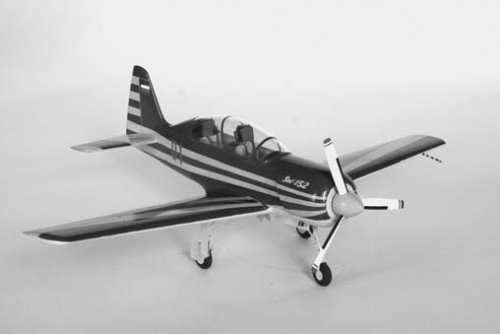
Rosoboronpostavka issued a tender for development of the Yak-152 trainer.
The Yak-152 will be powered by the German-produced RED A03 V12 diesel engine and fitted with a variable-pitch propeller. The new trainer will have a retractable landing gear and two ejection seats.
Link: http://www.ruaviation.com/news/2014/3/21/2240/
"Long Nose"
;D Attachment source: Air & Cosmos (France) - N° 2403 - April 25th, 2014 - page 64
Attachments
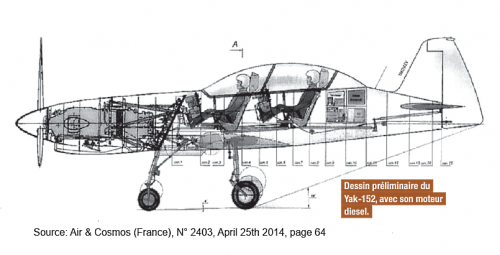
Fightingirish,
the picture shows a turbine engine. The RED diesel looks different.
http://www.red-aircraft.com/engines/red-a03-v12/
the picture shows a turbine engine. The RED diesel looks different.
http://www.red-aircraft.com/engines/red-a03-v12/

- Joined
- 26 May 2006
- Messages
- 38,284
- Reaction score
- 20,422
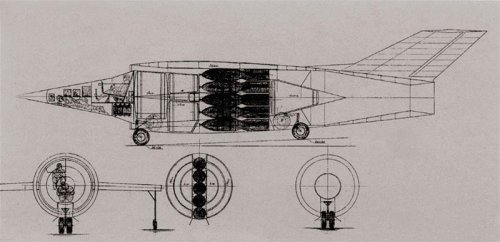
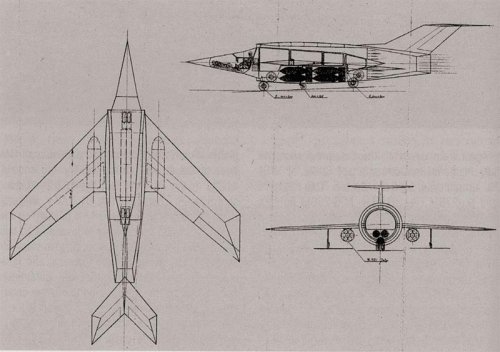
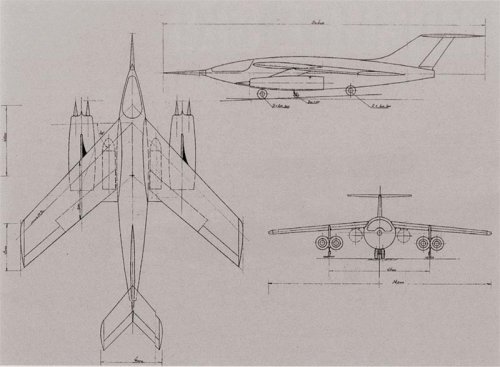
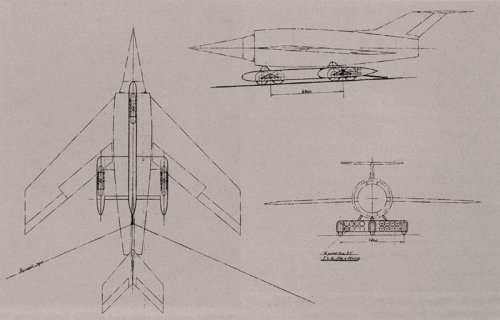
ucon said:Yak-PVRD project
Yak-ramjet
Since the mid 40's in the OKB Yakovlev investigated a large number of schemes jet combat aircraft. Some of them have been implemented in the metal, and the rest can be considered as exploratory, giving answers to certain questions.
The international situation in the years continued to worsen. To counter this, needed a strong defense and supersonic fighter-bombers.
For the design of such an aircraft in the Yakovlev Design Bureau started in late 1947, and only 26 June 1948 L. Schechter presented a draft single-seat fighter-bomber with four ramjet.
Choosing a propulsion system for experimental aircraft was not random, especially at EDO had experience designing and building the Yak-7P, and then the Yak-3RD.
Ramjet - a jet engine, which is continuously fed into the combustion air is compressed by the action of the velocity head. The main advantage of the ramjet is their ability to operate at very high speeds and at higher altitudes than the turbojet, which is determined when the fighter-bomber.
For such engines is characterized by the absence of moving parts, respectively, and the simplicity of design, technology in production and low cost.
However, a significant drawback of the ramjet, which negates all of the benefits is the lack of static thrust and should be forced to start. Yes, and at subsonic speeds these engines were extremely uneconomical.
The project envisaged Yucca with liquid ramjet boosters hanging under swept (45 degrees) wing.
Under the scheme of the plane is a single vysokoplan with four engines and bike chassis, which was followed by the classic series of Yak-25 - Yak-28.
Wingspan was 14.20 m, wing area - 59 m2, the length of the plane 19.82 m span horizontal tail 4, 0 m, track chassis between supporting pillars - 6, 4 pm
Considered options fighter, fighter-bomber and reconnaissance aircraft. Speed performance and massive data known.
Project was not implemented due to complexity with engines.
Sorry for Google translation
My dear Ucon,
here is the story of this beast.
http://otvaga2004.ru/kaleydoskop/kaleydoskop-air/bombardirovshhiki-s-pvrd/
Attachments

- Joined
- 2 January 2006
- Messages
- 4,251
- Reaction score
- 8,355
Just found at the German FF posted by "Feldmaus": Finally a mock up of the new Yak-152 ! ... looks different to the one Rolf posted above. ??? ... and even more to the Chinese off-spring the CJ-7/L-7:
Deino
Feldmaus;2071904 said:Zukünftiger neuer Trainerkomplex Yak-152:
http://www.yak.ru/FIRM/arch_news.php?item=348
http://cs617723.vk.me/v617723323/1a032/o66iOz4DsUs.jpg
http://cs617723.vk.me/v617723323/1a044/QsXNbHrpM0k.jpg
http://cs617723.vk.me/v617723323/1a04d/gm-6vcNI-YI.jpg
http://cs617723.vk.me/v617723323/1a056/8DRBptdZcaQ.jpg
http://cs617723.vk.me/v617723323/1a11b/JWSDmwungIQ.jpg
http://cs617723.vk.me/v617723323/1a124/J5VKQ-7XE6o.jpg
http://cs619819.vk.me/v619819685/157d9/bzPz-HbFE4o.jpg
http://cs619819.vk.me/v619819685/157cf/w8RsBj1zdUo.jpg
Deino
- Joined
- 26 May 2006
- Messages
- 38,284
- Reaction score
- 20,422
borovik said:from the book N.Yakubovich "Yakovlev Fighters"
- Yauza / Eksmo 2008
see also : http://www.e-reading-lib.org/chapter.php/1010126/39/Yakubovich_-_Neizvestnyy_Yakovlev._Zheleznyy_aviakonstruktor.html
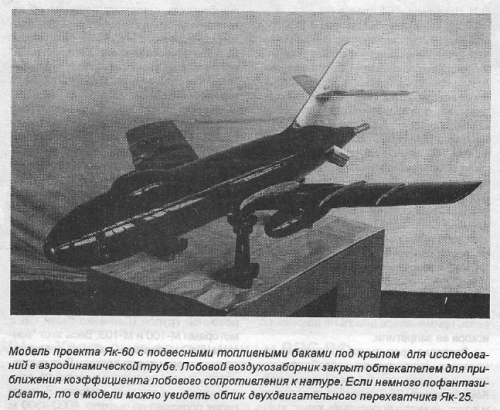
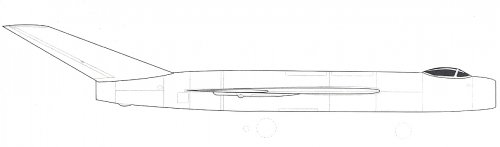
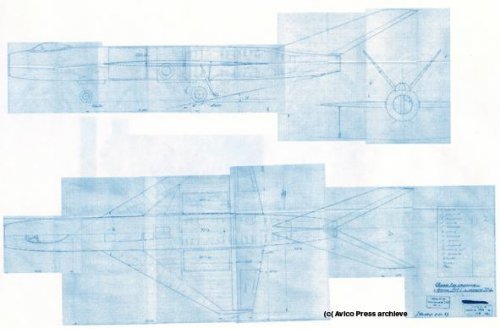
From Kryl'ya Rodine 10/1998,here is the Yak-60 with more info.
Attachments
Silencer1
That now I am the Ruler of the Queen's Navee!
- Joined
- 3 August 2009
- Messages
- 943
- Reaction score
- 703
Hello!
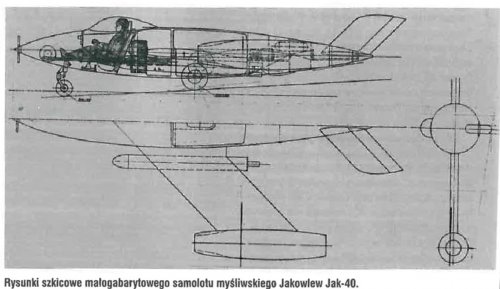
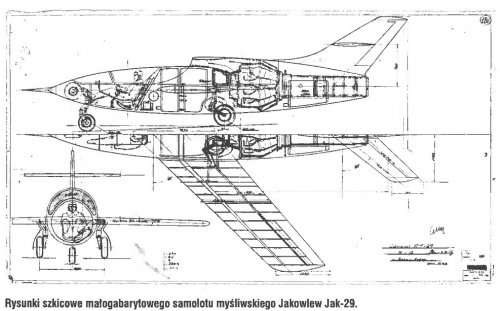
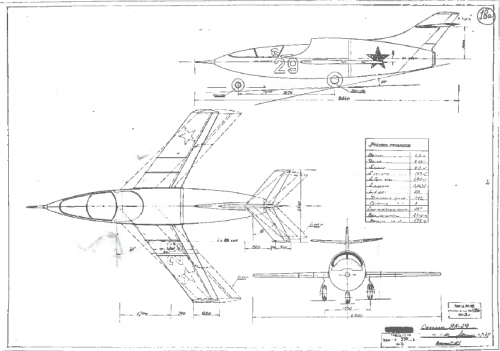
I hope, that this small pictures from Polish magazine "Lotnictwo" 2015-06 could be a good teaser to Wiktor Druszlakov article about little-known Yakovlev fighter projects.
Types, mentioned: Yak-29, -30; Yak-40, -41; Yak-60; Yak-50.
The images was absolutely new to me!
All copyright belongs to author and magazine.
I hope, that this small pictures from Polish magazine "Lotnictwo" 2015-06 could be a good teaser to Wiktor Druszlakov article about little-known Yakovlev fighter projects.
Types, mentioned: Yak-29, -30; Yak-40, -41; Yak-60; Yak-50.
The images was absolutely new to me!
All copyright belongs to author and magazine.
Attachments

visvirtusvoluntas
Never Enough
- Joined
- 29 August 2012
- Messages
- 113
- Reaction score
- 54
Hi all,
Yak-29 and Yak-40 are both described in "Early Soviet Jet Fighters" by Yefim Gordon & Dmitriy Komissarov (2014) as well as Yak-U and Yak-M. Yak-50/60/70 are described in "Storia ed Evoluzione dei Caccia Sovietici a Reazione, 1945-55" by Alberto Trevisan (2013).
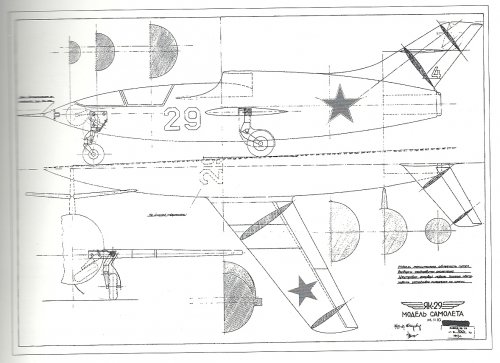
Yak-29 was developed between July and October 1947 as a light fighter. Powered by a RD-500 turbojet, the machine had a wingspan of 6.3 m, lenght of 8.64 m, and a wing area of 8.0 sqm. The all-up weight was 2300 kg and the armament consisted of 2x23 mm cannons in conformal underwing pods. Not built.
Yak-30 is well known.
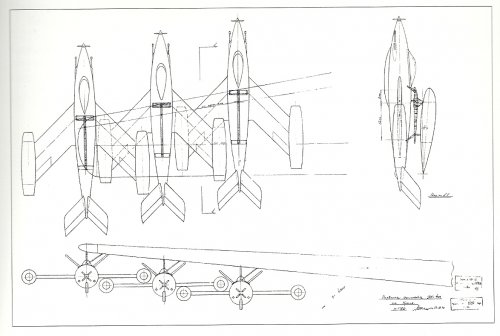
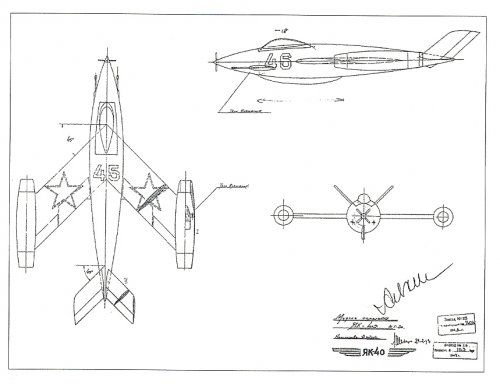
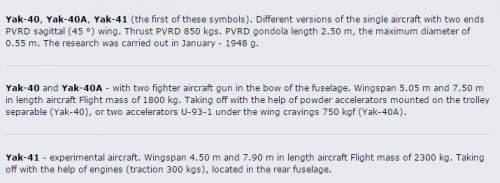
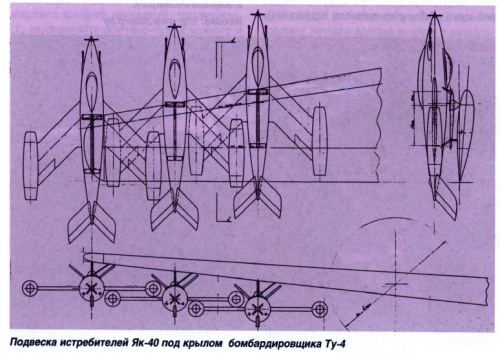
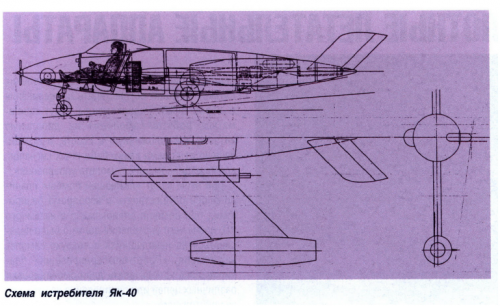
Yak-40 designed between January and June 1948. It was a single seat fighter powered by two 850 kgp ramjet engines mounted at the wingtips. The aircraft was 7.5 m long, with a wingspan of 5.05 m and an all-up weight of 1800 kg. Normally the fighter was to take off from a wheeled launch dolly accelerated by solid fuel rocket, landing on a centerline skid. Yakovlev OKB suggested using Yak-40 as parasite fighter to be suspended under Tu-4 wings in number of 6 (see image). The Yak-40A introduced a bicycle retractable landing gear and two rocket boosters for take off. Not built.
Yak-50 is well known also.
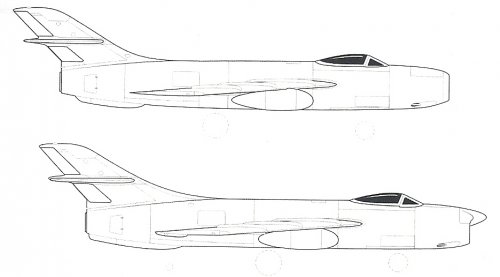
Yak-60 was an intermediate project between Yak-50 and Yak-120 (the series built Yak-25). Approved by Yakovlev in 1948 November 20. General aspect as Yak-50, VK-1 engine, 45° swept wings, tricycle landing gear, underwing drop tanks. Between 1948 and 1949 several wing tunnel (TsAGI T-106) tests were conducted. A second version of Yak-60 had bicycle landing gear and bullet radome above air intake. Limited range as interceptor led to cancellation. Twin engined Yak-120 was preferred.
Yak-70 was a supersonic single seat fighter designed in 1950. Powered by a TR-3 engine (4500 kgp), butterfly tail, bicycle landing gear, 15,24 m long. Second version radar equipped.
Yak-M was a single seat light fighter
Yak-U single seat twin engined fighter
Yak-29 and Yak-40 are both described in "Early Soviet Jet Fighters" by Yefim Gordon & Dmitriy Komissarov (2014) as well as Yak-U and Yak-M. Yak-50/60/70 are described in "Storia ed Evoluzione dei Caccia Sovietici a Reazione, 1945-55" by Alberto Trevisan (2013).
Yak-29 was developed between July and October 1947 as a light fighter. Powered by a RD-500 turbojet, the machine had a wingspan of 6.3 m, lenght of 8.64 m, and a wing area of 8.0 sqm. The all-up weight was 2300 kg and the armament consisted of 2x23 mm cannons in conformal underwing pods. Not built.
Yak-30 is well known.
Yak-40 designed between January and June 1948. It was a single seat fighter powered by two 850 kgp ramjet engines mounted at the wingtips. The aircraft was 7.5 m long, with a wingspan of 5.05 m and an all-up weight of 1800 kg. Normally the fighter was to take off from a wheeled launch dolly accelerated by solid fuel rocket, landing on a centerline skid. Yakovlev OKB suggested using Yak-40 as parasite fighter to be suspended under Tu-4 wings in number of 6 (see image). The Yak-40A introduced a bicycle retractable landing gear and two rocket boosters for take off. Not built.
Yak-50 is well known also.
Yak-60 was an intermediate project between Yak-50 and Yak-120 (the series built Yak-25). Approved by Yakovlev in 1948 November 20. General aspect as Yak-50, VK-1 engine, 45° swept wings, tricycle landing gear, underwing drop tanks. Between 1948 and 1949 several wing tunnel (TsAGI T-106) tests were conducted. A second version of Yak-60 had bicycle landing gear and bullet radome above air intake. Limited range as interceptor led to cancellation. Twin engined Yak-120 was preferred.
Yak-70 was a supersonic single seat fighter designed in 1950. Powered by a TR-3 engine (4500 kgp), butterfly tail, bicycle landing gear, 15,24 m long. Second version radar equipped.
Yak-M was a single seat light fighter
Yak-U single seat twin engined fighter
Attachments
- Joined
- 27 December 2005
- Messages
- 19,230
- Reaction score
- 35,692
Thanks, nice stuff. Would be nice to have Alberto's book in English.
visvirtusvoluntas
Never Enough
- Joined
- 29 August 2012
- Messages
- 113
- Reaction score
- 54
PaulMM (Overscan) said:Thanks, nice stuff. Would be nice to have Alberto's book in English.
Distant hope, I guess.
- Joined
- 26 May 2006
- Messages
- 38,284
- Reaction score
- 20,422
- Joined
- 26 May 2006
- Messages
- 38,284
- Reaction score
- 20,422
Hi,
in the article of Polish magazine,they mentions the Yak-41,and there is two Yak-40 &
two Yak-41 designs;
http://www.secretprojects.co.uk/forum/index.php/topic,4180.msg33059.html#msg33059
in the article of Polish magazine,they mentions the Yak-41,and there is two Yak-40 &
two Yak-41 designs;
http://www.secretprojects.co.uk/forum/index.php/topic,4180.msg33059.html#msg33059
Attachments
Silencer1
That now I am the Ruler of the Queen's Navee!
- Joined
- 3 August 2009
- Messages
- 943
- Reaction score
- 703
Dear moderators!
Perhaps, it would be appropriate to merge this topic with the other, where much more Yakovlev' project have been described?
When I starts it, I checked forum for Yak-29 - and obtain only text page with it's description.
Now, it's figured out, that this topic already exists
http://www.secretprojects.co.uk/forum/index.php/topic,18107.0.html
and would be better place for images and data, posted by other members.
Of course, just my humble opinion.
Perhaps, it would be appropriate to merge this topic with the other, where much more Yakovlev' project have been described?
When I starts it, I checked forum for Yak-29 - and obtain only text page with it's description.
Now, it's figured out, that this topic already exists
http://www.secretprojects.co.uk/forum/index.php/topic,18107.0.html
and would be better place for images and data, posted by other members.
Of course, just my humble opinion.
- Joined
- 27 December 2005
- Messages
- 19,230
- Reaction score
- 35,692
.
visvirtusvoluntas
Never Enough
- Joined
- 29 August 2012
- Messages
- 113
- Reaction score
- 54
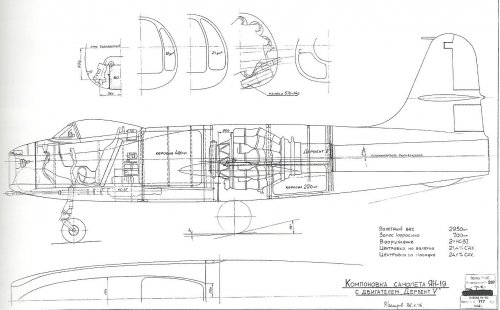
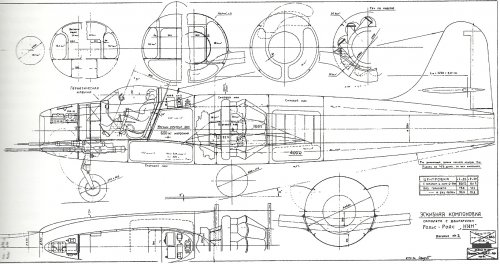
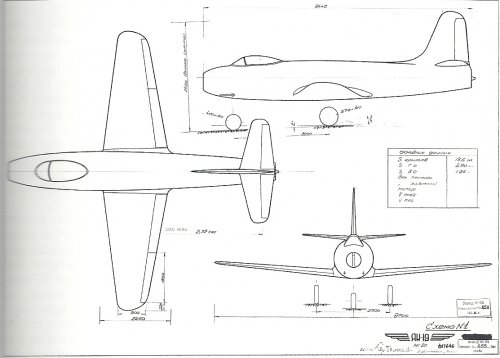
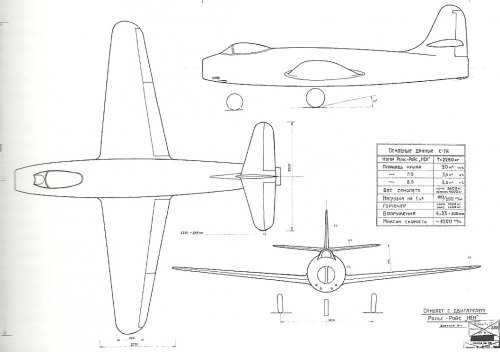
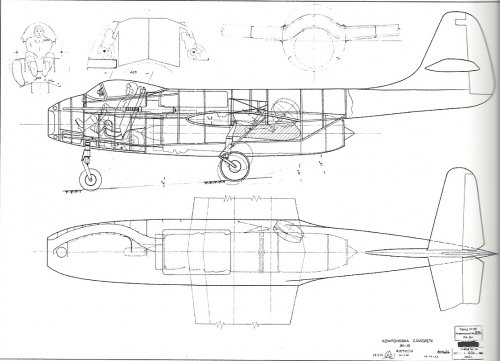
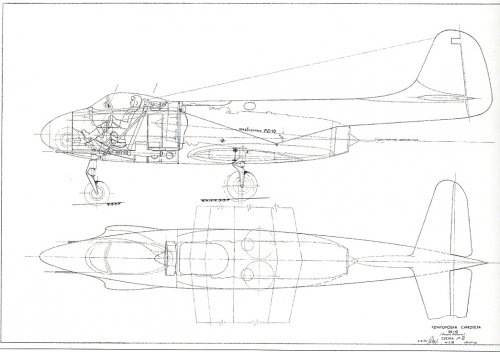
Yak-19
More infos from "Early Soviet Jet Fighters", a superb book that I bought immediately after the publication, but left on my shelf for a while. I'm sorry for the quality of the scans, but my scanning device is small and I'm afraid to spoil the book...
This is the Yak-19 development:
1- First version with RD-10 engine, low wing, lateral air intakes, pod-and-boom layout. 6th June 1946.
2- Subsequent variant with same engine, mid wing, pod-and-boom. Closely reminding Lavochkin Samolet 150. 15th June 1946.
3- Definitive layout but Nene engine (not installed on the real thing).
4- Same layout but Lyul'ka TR-1 engine (same fate).
5- Yak-19 with Nene engine.
6- Yak-19 with Derwent engine.
In the real Yak-19 was installed the RD-10F afterburning turbojet.
More infos from "Early Soviet Jet Fighters", a superb book that I bought immediately after the publication, but left on my shelf for a while. I'm sorry for the quality of the scans, but my scanning device is small and I'm afraid to spoil the book...
This is the Yak-19 development:
1- First version with RD-10 engine, low wing, lateral air intakes, pod-and-boom layout. 6th June 1946.
2- Subsequent variant with same engine, mid wing, pod-and-boom. Closely reminding Lavochkin Samolet 150. 15th June 1946.
3- Definitive layout but Nene engine (not installed on the real thing).
4- Same layout but Lyul'ka TR-1 engine (same fate).
5- Yak-19 with Nene engine.
6- Yak-19 with Derwent engine.
In the real Yak-19 was installed the RD-10F afterburning turbojet.
Attachments
visvirtusvoluntas
Never Enough
- Joined
- 29 August 2012
- Messages
- 113
- Reaction score
- 54
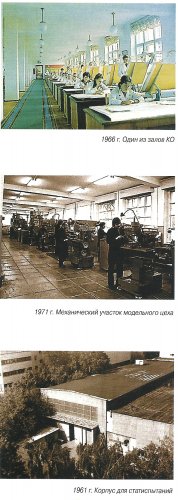
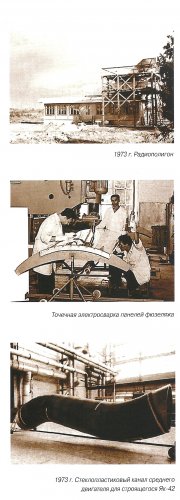
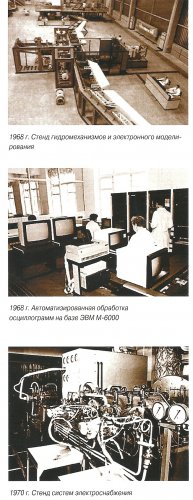
Yakovlev Factory
These are from the book "ОПЫТНОЕ КОНСТРУКТОРСКОЕ БЮРО ИМЕНИ А.С. ЯКОВЛЕВА" - Experimental Design Bureau named after A. S. YAKOVLEV
Various aspects of the Yakovlev's production plants.
These are from the book "ОПЫТНОЕ КОНСТРУКТОРСКОЕ БЮРО ИМЕНИ А.С. ЯКОВЛЕВА" - Experimental Design Bureau named after A. S. YAKOVLEV
Various aspects of the Yakovlev's production plants.
Attachments
- Joined
- 26 May 2006
- Messages
- 38,284
- Reaction score
- 20,422
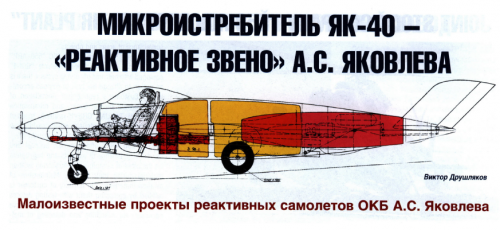
visvirtusvoluntas said:Yak-40 designed between January and June 1948. It was a single seat fighter powered by two 850 kgp ramjet engines mounted at the wingtips. The aircraft was 7.5 m long, with a wingspan of 5.05 m and an all-up weight of 1800 kg. Normally the fighter was to take off from a wheeled launch dolly accelerated by solid fuel rocket, landing on a centerline skid. Yakovlev OKB suggested using Yak-40 as parasite fighter to be suspended under Tu-4 wings in number of 6 (see image). The Yak-40A introduced a bicycle retractable landing gear and two rocket boosters for take off. Not built.
From; Аэрокосмическое обозрение №06 (67) 2013
here is again Yak-40 drawings in colors.
Attachments
visvirtusvoluntas
Never Enough
- Joined
- 29 August 2012
- Messages
- 113
- Reaction score
- 54
Great color drawing. The inscription reads: "Microfighter Yak-40 Jet Powered Zveno (Coupling) - Little known jet aircraft's project by Yakovlev"
- Joined
- 25 June 2009
- Messages
- 15,515
- Reaction score
- 9,444
Re: Yak-19
A fabulous book indeed. Truly one of the highlights of the Red Star series.
visvirtusvoluntas said:More infos from "Early Soviet Jet Fighters", a superb book that I bought immediately after the publication, but left on my shelf for a while.
A fabulous book indeed. Truly one of the highlights of the Red Star series.

- Joined
- 28 November 2006
- Messages
- 734
- Reaction score
- 867
Re: Yak-19
What is the source of the drawings of Yak-19 early concepts? In the "Early Soviet Jet Fighters" by Yiefim Gordon there is no such drawings.
Piotr
visvirtusvoluntas said:More infos from "Early Soviet Jet Fighters", a superb book that I bought immediately after the publication, but left on my shelf for a while. I'm sorry for the quality of the scans, but my scanning device is small and I'm afraid to spoil the book...
This is the Yak-19 development:
1- First version with RD-10 engine, low wing, lateral air intakes, pod-and-boom layout. 6th June 1946.
2- Subsequent variant with same engine, mid wing, pod-and-boom. Closely reminding Lavochkin Samolet 150. 15th June 1946.
3- Definitive layout but Nene engine (not installed on the real thing).
4- Same layout but Lyul'ka TR-1 engine (same fate).
5- Yak-19 with Nene engine.
6- Yak-19 with Derwent engine.
In the real Yak-19 was installed the RD-10F afterburning turbojet.
What is the source of the drawings of Yak-19 early concepts? In the "Early Soviet Jet Fighters" by Yiefim Gordon there is no such drawings.
Piotr
- Status
- Not open for further replies.
Similar threads
-
-
-
 History of aircraft design in USSR 1951-65 / Chapter 10: Yakovlev
- Started by hesham
- Replies: 18
-
-