

You are using an out of date browser. It may not display this or other websites correctly.
You should upgrade or use an alternative browser.
You should upgrade or use an alternative browser.
UK-Japan-Italy Global Combat Air Programme (GCAP) News & Technical Analysis
- Thread starter Deltafan
- Start date

- Joined
- 24 November 2008
- Messages
- 1,858
- Reaction score
- 4,327
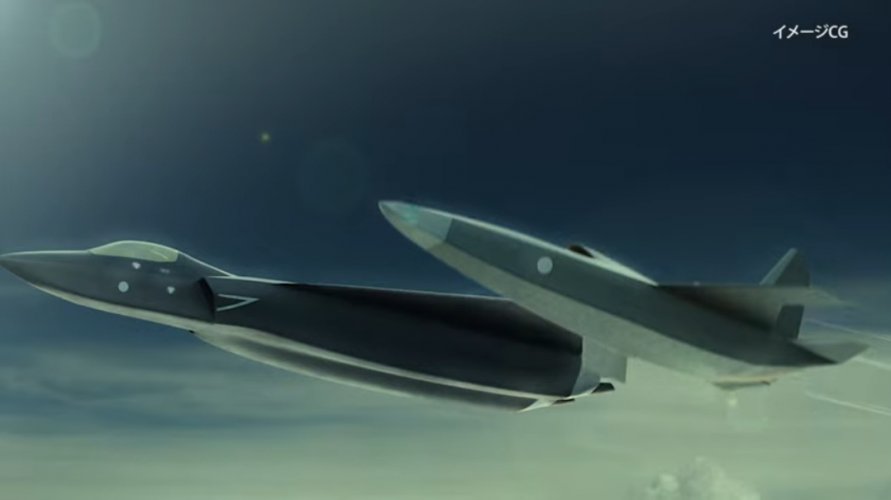
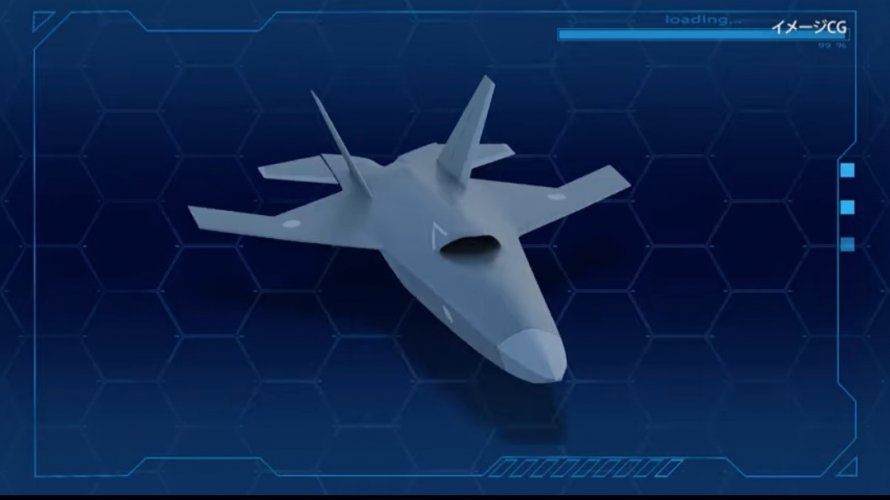
...The aircraft that does eventually
enter service in 2035 may look
nothing at all like the model displayed
at Farnborough, or illustrated in
dozens of GCI artworks and videos.
Some details of the current concept
have likely been ‘finessed’ for
security reasons while the concept
shown represents no more than an
illustration of what UK concepting
to date shows could meet today’s
UK requirement. And digital
techniques (including computational
fluid dynamics) allow concepting
to be undertaken at a previously
unimaginable pace, resulting in large
numbers of different configurations
being assessed and analysed.
BAE Systems’ managing director of
Future Air Combat Systems, Herman
Claesen ackowledged that the design
would continue to be to tested and evolved ahead of the Trinational Joint
Design and Development phase,
launched last year, when Italian and
Japanese requirements might have
been expected to start to shape
the design. This may not be the
case, as BAE Systems’ concepting
was based on one requirements
document, as Claesen explained: “All
the requirements managers from the
three countries have established one
single set of requirements, and our
engineers are currently concepting
against that requirement set, and you
can see a physical product outside.”
Broad hints were dropped that we
may be closer to seeing a definitive
GCAP design than has sometimes
been realised.
“We are rapidly homing in on the
final configuration, and the outer
mould line of the aircraft is always one
of the big milestones that we need to
be achieving,” Claesen said.
But what is inside GCAP is every
bit as important as what the aircraft
looks like on the outside.
...A quite separate Combat Air Flying
Demonstrator (previously known as the
Crewed Combat Air Demonstrator, and
before that as the Flying Technology
Demonstrator) is in production. This is
not a Tempest prototype, but will be
used to develop both technologies and
to develop the S4UEP (suitably qualified
and experienced personnel) that the
GCAP programme will require. It is, after
all, several decades since UK industry
last developed a ‘clean sheet’ combat
air aircraft, and the Combat Air Flying
Demonstrator will provide personnel
with invaluable skills and experience,
‘rehearsing’ for GCAP/Tempest.
Aerospace Innovations - Q2 May 2026

Approaching the size of an F-111, yet with thrust under 60,000 pounds, is GCAP capable of supercruise?https://m.cafe.daum.net/NTDS/515G/4865
I came across a post on a Korean site regarding a GCAP webinar. It claims the GCAP engine's thrust is actually under 30,000 pounds? Is this meeting even legit?
The translated content:
At yesterday's Aviationweek webinar, Tony Osborne said that GCAP's combat action radius is 900+ NM and its size is almost that of an F-111, so it could be large enough that it won't fit in the RAF's existing hardened shelters. Guy Norris says that the engine thrust for GCAP will be 25,000~30,000 pounds (it's not a variable cycle engine that changes the bypass ratio).
The Future Combat Air Demonstrator, set to fly in 2027, will reportedly fire an air-to-air missile from its weapon bay, something the UK has never done before.
When asked about the GCAP's payload for a 900+ NM round trip, the response was deferred, and the answer session ended.
Approaching f111 is really undefined. Is it 45 tonnes mtow? Or 40? Or maybe it's 35, but its length and wings are approaching f111 dimensions? And modern engines likely operate differently. All the available engine ratings are for uninstalled, static sea level thrust. they all scale differently when on a plane, supersonic, at altitude. So a direct comparison is hard to do.
Approaching the size of an F-111, yet with thrust under 60,000 pounds, is GCAP capable of supercruise?
Bill Sweetman thinks the GCAP is not designed to supercruise.
https://www.aerosociety.com/news/gcap-analysed-not-a-traditional-fighter/
" My guess from the sweep angle and wing size is that GCAP is not designed to supercruise. Sustained flight and manoeuvre at supersonic speed had merit when Advanced Tactical Fighter Program Director, Al Piccirillo and his team were starting on the path which led to the F-22. Together with high altitude, they shrank the engagement envelope of surface-to-air missiles.
But infra-red search and track (IRST) has entered the chat, as team GCAP knows better than most. IRST has challenges, the biggest being that dialing up sensitivity can lead to unacceptable false-alarm rates. The USAF dropped IRST from F-22 and US technology stalled, but the RAF believed in it as a counter to RF jamming and made it a priority on Typhoon. The consortium developing the Pirate IRST, all now part of Leonardo, made it work. F-22s have been detected and tracked since the early 2010s.
Against IRST, you don’t want to be hot, and supercruise not only makes you hot but makes your IR signature unique. It requires either a compromised engine – the F-22 engine is the former, with higher than desirable fuel burn at subsonic speed – or an expensive and complex adaptive engine. "

Sintra
ACCESS: Confidential
- Joined
- 7 April 2008
- Messages
- 197
- Reaction score
- 542
Oh God
The "Torygraph" at it... Again.
The idea that the UK Government could delay by several years its part of the development money for GCAP without destroying the entire program is just silly.
Last edited by a moderator:

SlowHandClap
ACCESS: Confidential
- Joined
- 5 December 2024
- Messages
- 54
- Reaction score
- 77
Don't worry, I'm sure that will be their "headline news" by the end of the week...The idea that the UK Government could delay by several years its part of the development money for GCAP without destroying the entire program is just silly.
https://news.yahoo.co.jp/articles/5358960ee32a8627941194b67c3353d8e0626db8
Discussions have begun to create a framework for observer participation, which will allow for the sharing of development status and other information with a view to exporting to third countries.
The framework is intended for countries that are interested in purchasing the technology but will not participate in its development. The defense ministers of Japan, the UK, and Italy are expected to meet in the UK in late July, and Canada is likely to be approved as the first country to participate.
「第三国輸出を見据え開発状況などを共有するオブザーバー参加の枠組みを創設する方向で調整に入った。開発には加わらないものの、購入に関心を寄せる国を想定。7月後半に日英伊3カ国の防衛相が英国で会談し、第1弾としてカナダの参加を認める見通しだ。」
Discussions have begun to create a framework for observer participation, which will allow for the sharing of development status and other information with a view to exporting to third countries.
The framework is intended for countries that are interested in purchasing the technology but will not participate in its development. The defense ministers of Japan, the UK, and Italy are expected to meet in the UK in late July, and Canada is likely to be approved as the first country to participate.
「第三国輸出を見据え開発状況などを共有するオブザーバー参加の枠組みを創設する方向で調整に入った。開発には加わらないものの、購入に関心を寄せる国を想定。7月後半に日英伊3カ国の防衛相が英国で会談し、第1弾としてカナダの参加を認める見通しだ。」

vikmto999
ACCESS: Confidential
- Joined
- 3 September 2025
- Messages
- 82
- Reaction score
- 320
Does this count as news or technical analysis? It's someone with contacts being the ex defence minister for the UK
View: https://x.com/BenWallace70/status/2061694189901860960They will be hoping that Japan ( who cannot tolerate an extended time line) will pull out and blame can be avoided.
LightningFan1959
ACCESS: Confidential
- Joined
- 11 May 2020
- Messages
- 71
- Reaction score
- 159
I'd take it with a few spoons of salt, he is/was a member of a political party that despises the current one in power and which sees it as vulnerable, and is also a partner in an American-British defence investment firm (who would probably love to kill off what seems to be the most promising/likely to survive non-American 6th Gen jet fighter project at the moment, making the three partners dependant on American products).Does this count as news or technical analysis? It's someone with contacts being the ex defence minister for the UK
View: https://x.com/BenWallace70/status/2061694189901860960
vikmto999
ACCESS: Confidential
- Joined
- 3 September 2025
- Messages
- 82
- Reaction score
- 320
Mmm, not sure I like the idea of this. The treasury taking control..
https://www.ft.com/content/f910fdc1-5721-41b7-8727-d5fb1f4ff4e0?shareType=nongift
https://www.ft.com/content/f910fdc1-5721-41b7-8727-d5fb1f4ff4e0?shareType=nongift
The Treasury is preparing to seize control from the Ministry of Defence of spending on a multibillion-pound fighter jet programme in an effort to ensure that the UK’s planned increase in military expenditure avoids a repeat of past cost overruns.
The move comes as wrangling over the government’s delayed 10-year military funding plan enters its final phase.
Prime Minister Sir Keir Starmer is expected to announce an injection of about £15bn for Britain’s military up until 2030 as part of the settlement for the long-awaited Defence Investment Plan, people familiar with the matter said.
That total is a compromise between the £12bn that chancellor Rachel Reeves attempted to impose and the £18bn that defence secretary John Healey and military chiefs insisted was the least they could accept, the people added.
The settlement is expected to include up to £6bn extra for the Global Combat Air Programme, the sixth-generation stealth fighter jet that the UK is developing alongside Japan and Italy.
As part of the deal to inject fresh funding, the Treasury is proposing to take control of the spending on the programme, people close to the situation said.
The department is poised to justify the move in part by pointing to the complexity of the programme and its structure involving international partners, and in part by pointing to the MoD’s dismal record of cost overruns on big military projects.
One Whitehall figure said the MoD is viewed as having a “delinquent” attitude towards taxpayer cash and achieving value for money.
Reeves fears GCAP is “just the next HS2”, another government figure said, referring to the high-speed railway that has been hit by soaring costs, extensive delays and a shrinking scope. The person claimed there was “fundamental disagreement” about the fighter jet programme between the prime minister and Reeves, although a person close to the chancellor denied the characterisation.
The Treasury’s push for control would involve it having greater oversight, although some government figures said the programme’s international structure and the status of external contracts will make spending hard to rein in.
The arrangement is not finalised as negotiations over the DIP continue.
Officials said there was a push to announce the DIP as soon as next week, with June 11 mooted as a target date.
If the extra defence expenditure is confirmed as roughly £15bn, it will entail significant cuts to planned military programmes, which are facing a funding gap of £28bn over the next four years.
The government’s internal projections for the cost of GCAP have spiralled and some British officials believe delivery is likely to slip beyond the date pinpointed when the three countries announced plans to develop a joint stealth fighter in December 2022.
Under the plans, London, Tokyo and Rome have pledged to have a fighter in service by 2035. Industry executives insist it is on track to meet the deadline.
One option, according to two industry figures, could involve designating GCAP as one of the government’s “mega projects”, those deemed to be critical to delivering on the UK’s strategic priorities.
HS2 and Dreadnought, the successor to the Trident nuclear programme, are among the mega projects and are overseen by a cross-government governance board that tracks major milestones.
It would also involve enhanced support from the National Infrastructure and Service Transformation Authority, an agency that sits within the Treasury and Cabinet Office, under this option, according to a government figure.
A decision on long-term funding for GCAP is critical because an interim deal runs out at the end of June. The uncertainty over London’s ability to commit significant sums has caused alarm in Japan, whose Prime Minister Sanae Takaichi is due to visit the UK next week.
People familiar with plans for the visit said Takaichi was likely to put GCAP at the top of her agenda for discussions with Starmer. The three nations signed a treaty in December 2023, committing to the programme, which is managed by a separate entity.
The government entity works with Edgewing, the industrial joint venture made up of the three countries’ defence champions, BAE Systems, Leonardo and Mitsubishi Heavy Industries-backed Japan Aircraft Industrial Enhancement.
Healey told the House of Commons on Monday that Starmer — who has been trying for weeks to break the deadlock over DIP — would publish the plan before a Nato summit in Ankara on July 7-8.
Repeated delays to the DIP have fuelled frustration among allies and despair in the defence sector. Kevin Craven, chief executive of aerospace and defence trade association ADS, said: “Our armed forces, allies and industry are all waiting for the certainty we need.”
The government said Britain “remains committed” to GCAP, adding: “Our focus is on continuing to work closely with Italy and Japan on the next steps towards the full international contract.”

TorpedoJ
ACCESS: Secret
- Joined
- 11 October 2023
- Messages
- 433
- Reaction score
- 867
Ah yes, the famous British tactic: a compromise below the minimum acceptable funding.That total is a compromise between the £12bn that chancellor Rachel Reeves attempted to impose and the £18bn that defence secretary John Healey and military chiefs insisted was the least they could accept, the people added.
End of FCAS
If there was ever a time where the Germans could maybe muscle in on some of the workshare for GCAP, now would be the time.
The DIP has been so shaky with funding that being able to reduce spending in return for ceding some of the UK's own workshare might be looking very tempting for Westminster right now as short-sighted that may be.
https://www.spiegel.de/politik/deut...t-fcas-a-7e9fbe17-7f39-4259-981b-e3f00c0da9a9The German-French fighter jet project FCAS has failed: German Chancellor Friedrich Merz (CDU) and French President Emmanuel Macron have agreed to end the billion-dollar armaments project, according to SPIEGEL information. Together, they had come to the conclusion that the companies Dassault and Airbus would not come together in the construction of a joint fighter jet, according to German government circles.
https://www.latribune.fr/article/de...554979114223914/le-scaf-cest-bel-et-bien-finiThe miracle did not happen... German Chancellor Friedrich Merz is expected to announce on Wednesday at the inauguration of the Berlin Air Show (ILA) the end of the Franco-German FCAS (Future Combat Air System) programme, according to concordant sources. Despite Emmanuel Macron's political will to maintain at all costs this program, which was until now in absolute emergency, Friedrich Merz will pull the plug. It takes note of the deep differences over the governance of the programme between Airbus and Dassault Aviation, which is the prime contractor. The two industrialists were irreconcilable...
If there was ever a time where the Germans could maybe muscle in on some of the workshare for GCAP, now would be the time.
The DIP has been so shaky with funding that being able to reduce spending in return for ceding some of the UK's own workshare might be looking very tempting for Westminster right now as short-sighted that may be.
ATP i think the F-35 will end up as the only successful example of a Multi-national 5th+ gen fighter.
Hopefully GCAP succeeds, if not, there's always the option to buy KAAN (not sure if Turkey can produce enough though) or KF-21 Block 3/4 (if they ever do end up going into service).
Of course the F-35 is an option, but...
Hopefully GCAP succeeds, if not, there's always the option to buy KAAN (not sure if Turkey can produce enough though) or KF-21 Block 3/4 (if they ever do end up going into service).
Of course the F-35 is an option, but...

snne
ACCESS: Top Secret
- Joined
- 3 July 2022
- Messages
- 2,408
- Reaction score
- 8,848
This is a legitimate point you brought up, but Germany would rather order even the Su-57 than the Kaan if it ever came to that. Moreover, even after IOC, Kaan will still require a couple of years to mature with all of its intended systems and upgrades.(not sure if Turkey can produce enough though) or KF-21 Block 3/4 (if they ever do end up going into service).
IMHO, what'll end up happening is that Germany will order additional F-35s and try to buy into GCAP industrially (very unlikely, as I don't see any partner willing to give up their share of development), or try to come up with something alongside Saab and any other willing participant from continental Europe. Turkey and South Korea will each go down the 6th-gen route alone, as neither will be able to find any credible partners. In the meantime, Kaan is still under development, yet it's already shaping up to be a proper 5.5th-gen fighter without ACE/VCE, if you think about it.
The US/UK/JP/IT/GR/FR, etc., didn't have any recently developed heavy-class 5th(+) generation aircraft to complement the F-35, which is why they're all pursuing larger, more voluminous designs to bridge the capability gap created by relying on the relatively compact F-35 airframe as their sole Western 5th-generation platform throughout the 2010s, 2020s, and into the 2030s. It eventually became apparent that they had misread the geopolitical realities of the 21st century and the pace of China's rise.
Last edited:
Alternately, what if it’s France that ends up wanting to buy into GCAP?
Two of the sticking points on requirements for FCAS was that the French wanted it to be carrier-capable and nuclear-delivery-capable, both things the Germans didn’t want. The UK, Japan, and Italy all operate carriers (albeit, non-CATOBAR ones), and the UK likes to retain an air-delivered nuclear deterrent.
I know, I know, France doesn’t play well with anyone on these sort of projects, but in this case their goals and requirements might actually align.
Two of the sticking points on requirements for FCAS was that the French wanted it to be carrier-capable and nuclear-delivery-capable, both things the Germans didn’t want. The UK, Japan, and Italy all operate carriers (albeit, non-CATOBAR ones), and the UK likes to retain an air-delivered nuclear deterrent.
I know, I know, France doesn’t play well with anyone on these sort of projects, but in this case their goals and requirements might actually align.

- Joined
- 15 July 2020
- Messages
- 2,084
- Reaction score
- 7,452
IMHO, what'll end up happening is that Germany will order additional F-35s and try to buy into GCAP industrially (very unlikely, as I don't see any partner willing to give up their share of development), or try to come up with something alongside Saab and any other willing participant from continental Europe. Turkey (and South Korea as well) will go down the 6th-gen route alone, as neither will be able to find any credible partners. In the meantime, Kaan is still under development, yet it's already shaping up to be a proper 5.5th-gen fighter without ACE/VCE, if you think about it.
I can see couple of GCAP countries parting with industrial share just so they can find funding for the programme.
snne
ACCESS: Top Secret
- Joined
- 3 July 2022
- Messages
- 2,408
- Reaction score
- 8,848
Germany has a serious industrial base it needs to keep alive, just like each member of the trio -- this is a major part of why they even want to develop a new fighter in the first place. Do you really think any participant would relinquish its share of development of the aircraft design, radar, the engine, key airframe structures, etc., and adjust the design for a new participant when the program has already gone through significant design work and is slated to fly a demonstrator in 2028?I can see couple of GCAP countries parting with industrial share just so they can find funding for the programme.

dark sidius
ACCESS: Top Secret
- Joined
- 1 August 2008
- Messages
- 1,618
- Reaction score
- 1,710
European lose the 5th gen party , they are losing the 6th gen too, end of the Air dominance with European Fighters , Lockheed winner for the decades to come.End of FCAS
https://www.spiegel.de/politik/deut...t-fcas-a-7e9fbe17-7f39-4259-981b-e3f00c0da9a9
https://www.latribune.fr/article/de...554979114223914/le-scaf-cest-bel-et-bien-fini
If there was ever a time where the Germans could maybe muscle in on some of the workshare for GCAP, now would be the time.
The DIP has been so shaky with funding that being able to reduce spending in return for ceding some of the UK's own workshare might be looking very tempting for Westminster right now as short-sighted that may be.
Sintra
ACCESS: Confidential
- Joined
- 7 April 2008
- Messages
- 197
- Reaction score
- 542
Alternately, what if it’s France that ends up wanting to buy into GCAP?
Right after a snowstorm hits Ougadougou...
The French will do what the French have always done. By the beggining of the thirties there will be a UCAV plus the Rafale F5 flying with Adla colours, by the 40's there will be something French to replace the Rafale. The end.
Last edited:
For what it's worth apparently the French Air Force is having second thoughts about a big UCAV aka Neuron 2.0.By the beggining of the thirties there will a UCAV and the Rafale F5 flying with Adla colours, by the 40's there will be something French to replace the Rafale.
They are still trying to determine whether Rafale F5 needs a cheap and attritable remote carrier (which seems to be the currently preferred option), a midsized loyal wingman (similar to USAF CCA Increment 1 or 2) or a large high-end UCAS. So Dassault hasn't yet received funding to proceed.
Presumably cost is one of the key concerns, as is technology readiness for the more sophisticated UCAVs. This might be good news as it could help align requirements with other European air forces and open up the opportunity for joint development. IMHO Italy or Sweden are the most likely to be looking for joint development, whereas the UK and Germany will probably proceed with their own UCAV designs.
Last edited:
Why not both? You would eventually need a stealthy UCAV to carry large payloads for strike missions while you have 2-4 loyal wingman drones to act as your bodyguards or external missile carriers for A-A combat or even limited A-G combat.They are still trying to determine whether Rafale F5 needs a cheap and attritable remote carrier (which seems to be the currently preferred option), a midsized loyal wingman (similar to USAF CCA Increment 1 or 2) or a large high-end UCAS. So Dassault hasn't yet received funding to proceed.
Not James Stockdale
ACCESS: Secret
- Joined
- 29 August 2025
- Messages
- 239
- Reaction score
- 454
I don't think there's anywhere near enough information and experience to make a decision about high-end air-to-air UCAVs at this point. Functionally, that means they need to hedge by investing everywhere, which is not going to be cheap or easy.
vikmto999
ACCESS: Confidential
- Joined
- 3 September 2025
- Messages
- 82
- Reaction score
- 320
I'll tell you now, Germany will be banging on the GCAP door asking to have access to the underlying source code to add the cloud into it, their own weapons onto it, and for them to have production line build in Germany and their own servicing.
GCAP fits them like a glove, they know they can't get partner status for Tranche1 or Tranche 2, but with a big enough order, they get to be a Tier1 operator, saving face and jobs, while concentrating on Cloud, Drones and their own production.
GCAP fits them like a glove, they know they can't get partner status for Tranche1 or Tranche 2, but with a big enough order, they get to be a Tier1 operator, saving face and jobs, while concentrating on Cloud, Drones and their own production.
The « Team Gen 6 » led by Airbus DS have explicitly dismissed GCAP as not meeting German requirements, in their letter to the German MoD. (See today’s Spiegel article quoted in the FCAS thread)GCAP fits them like a glove, they know they can't get partner status for Tranche1 or Tranche 2, but with a big enough order, they get to be a Tier1 operator, saving face and jobs, while concentrating on Cloud, Drones and their own production.
Now of course industry doesn’t have the final say. BUT given how successful Airbus DS have been in their lobbying campaign over the last 2 years to shape the NGF decision, first by leaking lies about Dassault’s workshare proposals, then by discrediting the NGF platform because it supposedly didn’t meet requirements (that had been approved by the German Air Force staff), and finally by pushing for a 2 fighter solution, well it’s safe to say that Manching is probably the primary decision maker in Germany. And they don’t want GCAP… they want German taxpayer euros to subsidize their business and help them gain the technological know-how that they don’t currently have.

- Joined
- 11 February 2007
- Messages
- 4,132
- Reaction score
- 8,872
[Christine Keeler]The « Team Gen 6 » led by Airbus DS have explicitly dismissed GCAP as not meeting German requirements, in their letter to the German MoD. (See today’s Spiegel article quoted in the FCAS thread)
Well, he would say that, wouldn't he!
[/Christine Keeler]
Scott Kenny
ACCESS: USAP
- Joined
- 15 May 2023
- Messages
- 19,517
- Reaction score
- 27,965
Disagree. If for some reason SCAF/Dassault completely screws up, France might be willing to buy American FAXX, but GCAP isn't going to be carrier compatible.Alternately, what if it’s France that ends up wanting to buy into GCAP?
Two of the sticking points on requirements for FCAS was that the French wanted it to be carrier-capable and nuclear-delivery-capable, both things the Germans didn’t want. The UK, Japan, and Italy all operate carriers (albeit, non-CATOBAR ones), and the UK likes to retain an air-delivered nuclear deterrent.
I know, I know, France doesn’t play well with anyone on these sort of projects, but in this case their goals and requirements might actually align.
Those two French requirements were non-negotiable items.
With the UK unable to approve the DIP, the best option would likely be for Germany to buy some GCAP production slots and attempt to acquire some workshare to develop the German industrial base.
Linking GCAP into the euro cloud would add value for UK & Italy so I dont see why that would have to be done in Germany. If they buy enough there might be a German servicing hub, and there might not be restrictions on integrating new weapons anyway. Otherwise Edgewing does integration and the Germans have a chance to sell weapons to 3rd countries.I'll tell you now, Germany will be banging on the GCAP door asking to have access to the underlying source code to add the cloud into it, their own weapons onto it, and for them to have production line build in Germany and their own servicing
Ainen
I really should change my personal text
- Joined
- 25 August 2011
- Messages
- 2,819
- Reaction score
- 4,926
Money? And what's happened with FCAS doesn't really help.Why not both?

scautomoton
ACCESS: Secret
- Joined
- 19 January 2024
- Messages
- 315
- Reaction score
- 788
I would certainly expect anything bringing money to the table would be grasped with both hands by the current lot in Westminster to prevent them being even more of a roadblock than they currently are.
Yet I don't expect Germany will be chasing GCAP for all the reasons previously mentioned.
Yet I don't expect Germany will be chasing GCAP for all the reasons previously mentioned.
I personally think the german can afford to wait and make this project on their own considering the fact that they now have the F35 and in a absolute worst case scenario can simply get more F35s. The russians are not going to have a 6th gen for a very significant amount of time and there is no other threat for germany.
The only question now is the cost for development for a seperate 6th gen fighter.
GCAP is something they could go for if everything fails in the late 2030s and the russians also magically have a 6th gen flying.
The only question now is the cost for development for a seperate 6th gen fighter.
GCAP is something they could go for if everything fails in the late 2030s and the russians also magically have a 6th gen flying.
Last edited:

Ares
Man from Far East
- Joined
- 15 October 2018
- Messages
- 116
- Reaction score
- 577
Canada will join GCAP as an observer in July.
https://www.jiji.com/jc/article?k=2026061000891&g=pol
https://www.jiji.com/jc/article?k=2026061000891&g=pol
It has been learned that Canada is likely to participate as an observer country in the joint development plan for the next-generation fighter jet by Japan, the UK, and Italy. Japanese Defense Minister Shinjiro Koizumi is scheduled to visit the UK in mid-July to arrange a meeting of the three countries' defense ministers, and an announcement is expected at that time.
Multiple Japanese government sources revealed this on the 10th. While an observer country will not be directly involved in the joint development, it will be able to receive sensitive information, such as the progress of the plan, in preparation for future full participation or aircraft purchase.
Some analysts consider the European pacing threat to actually be China--not because of potential European involvement in a Pacific conflict, but because the Foreign Military Sales flow between Russia and China might fully reverse, and China might sell one of their 6th gen efforts to them. But like you say, if Russia ends up buying a 6th gen from an ally, Germany can as well.GCAP is something they could go for if everything fails in the late 2030s and the russians also magically have a 6th gen flying.
Unsere Industrie verfügt über die Kompetenzen, ein solches Programm im europäischen bzw. internationalen Rahmen zu leiten oder substanziell mitzugestalten. Die Bundesregierung setzt sich daher für eine entsprechende Beteiligung der deutschen Luftfahrtindustrie an entsprechenden Programmen ein, damit die politischen, militärischen, technologischen und industriellen Interessen der Bundesrepublik Deutschland Berücksichtigung finden. Diese Interessen umfassen eine signifikante Beteiligung an der Konzeption, Entwicklung und Fertigung des Systemverbundes und seiner Komponenten – von den fliegenden Plattformen bis hin zu Antrieb und kritischen Subsystemen – sowie die Fähigkeit zur eigenständigen logistischen Betreuung, Integration und Weiterentwicklung des Systems und seiner Bestandteile. Die Einbindung der deutschen Luftfahrtindustrie soll dabei sowohl in Qualität als auch in Quantität dem finanziellen Beitrag Deutschlands entsprechen.
From: https://www.bundeswirtschaftsminist...likationen/Technologie/luftfahrtstrategie.pdfOur industry possesses the expertise to lead such a program at the European or international level or to play a substantial role in shaping it. The Federal Government is therefore committed to ensuring that the German aerospace industry participates in such programs in a manner that takes into account the political, military, technological, and industrial interests of the Federal Republic of Germany. These interests include significant involvement in the design, development, and production of the integrated system and its components—from the air platforms to the propulsion system and critical subsystems—as well as the capability for independent logistical support, integration, and further development of the system and its components. The involvement of the German aerospace industry should correspond to Germany’s financial contribution in terms of both quality and quantity.
Is there literally nothing that will humble these people in the slightest? Before FCAS is even cold in the ground, after constantly complaining about French arrogance in their demands that they are basically saying they won't accept anything less than Tier 1 partnership in GCAP. And their bargaining chip for such lofty demands? "We will build our OWN 6th gen fighter with uhhhhh, Spain and uhhhhhh"
As people pointed out already, Germany had a perfect entry point into GCAP by offering to take off some of the UKs workshare in exchange for covering some of the bill, but they've basically shot themselves in the foot by having their industry demands being so absurdly unrealistic that it will never be considered. It's not even like they are asking for a leadership role in a single subsystem like the CCA and taking a lesser role in the rest. NO, they want a leadership role in literally every single aspect of GCAP. And for what?
God the French and the Germans were a perfect match made in hell for each other when it comes to international military partnerships. Glad they got together early on to burn their little containment project to the ground and gave GCAP time to get it's contracts in place.
Last edited:
Ainen
I really should change my personal text
- Joined
- 25 August 2011
- Messages
- 2,819
- Reaction score
- 4,926
Strange logic. If China sells fighter to Russia, Germany is going to bomb Chengdu?Some analysts consider the European pacing threat to actually be China--not because of potential European involvement in a Pacific conflict, but because the Foreign Military Sales flow between Russia and China might fully reverse, and China might sell one of their 6th gen efforts to them. But like you say, if Russia ends up buying a 6th gen from an ally, Germany can as well.
- Joined
- 15 July 2007
- Messages
- 5,728
- Reaction score
- 6,303
I wouldn't assume German finances be as elastic as they'd like everyone to think.
In fact I wouldn't assume that they be any more competent in these domains than other states.
While there is a degree of weakness inside the UK political environment. I wouldn’t assume that stretches to include all of UK Gov or BAE Systems.
Granted my German isn't good enough to pick out the nuance, but if Germany has been behaving like this towards France.....no wonder this is done.
In fact I wouldn't assume that they be any more competent in these domains than other states.
While there is a degree of weakness inside the UK political environment. I wouldn’t assume that stretches to include all of UK Gov or BAE Systems.
Granted my German isn't good enough to pick out the nuance, but if Germany has been behaving like this towards France.....no wonder this is done.

kqcke for you
PUMA PUMA PUMA
- Joined
- 3 November 2022
- Messages
- 1,866
- Reaction score
- 2,702
This is the whole Paragraph:I wouldn't assume German finances be as elastic as they'd like everyone to think.
Edit:
For those who don't want to read it all this is probaly the most important part:
1. "Substantial participation by the German aerospace industry in the development of this system of systems is a prerequisite for ensuring technological expertise, shaping operational architectures, securing sovereign access to key technologies, and generating positive economic effects from the necessary investments."
2. "The involvement of the German aerospace industry is intended to be commensurate with Germany's financial contribution, both in terms of quality and quantity."
In english:
Sixth-Generation Airborne Weapon System To ensure the long-term military operational capability of Germany and Europe in the airspace, a gradual build-up of new capabilities in the field of airborne effects is required, culminating in the development of a latest-generation weapon system.
This "system of systems" is expected to continue to include a manned component; from 2040 onwards, this central component will be closely networked with a growing fleet of unmanned systems designed to provide support and reinforcement. These unmanned systems will complement manned capabilities and are intended to be available for operational use in stages starting as early as 2029.
Substantial participation by the German aerospace industry in the development of this system of systems is a prerequisite for ensuring technological expertise, shaping operational architectures, securing sovereign access to key technologies, and generating positive economic effects from the necessary investments.
Our industry possesses the expertise to lead such a program—or play a substantial role in shaping it—within a European or international framework. The Federal Government therefore advocates for appropriate participation by the German aerospace industry in such programs to ensure that the political, military, technological, and industrial interests of the Federal Republic of Germany are taken into account.
These interests encompass significant involvement in the conceptualization, development, and manufacturing of the integrated system and its components—ranging from the airborne platforms to propulsion systems and critical subsystems—as well as the capability for independent logistical support, integration, and further development of the system and its constituent parts.
The involvement of the German aerospace industry is intended to be commensurate with Germany's financial contribution, both in terms of quality and quantity. The Federal Government will also support efforts to build expertise in areas of future relevance, such as autonomy, secure communication, intelligent networking, sensor and effector technologies, avionics, and propulsion and materials technologies.
This explicitly includes the acquisition of relevant capabilities at the subsystem and equipment levels, as well as their integration into the overall system and its components.
Edit:
For those who don't want to read it all this is probaly the most important part:
1. "Substantial participation by the German aerospace industry in the development of this system of systems is a prerequisite for ensuring technological expertise, shaping operational architectures, securing sovereign access to key technologies, and generating positive economic effects from the necessary investments."
2. "The involvement of the German aerospace industry is intended to be commensurate with Germany's financial contribution, both in terms of quality and quantity."
In english:
Sixth-Generation Airborne Weapon System To ensure the long-term military operational capability of Germany and Europe in the airspace, a gradual build-up of new capabilities in the field of airborne effects is required, culminating in the development of a latest-generation weapon system.
This "system of systems" is expected to continue to include a manned component; from 2040 onwards, this central component will be closely networked with a growing fleet of unmanned systems designed to provide support and reinforcement. These unmanned systems will complement manned capabilities and are intended to be available for operational use in stages starting as early as 2029.
Substantial participation by the German aerospace industry in the development of this system of systems is a prerequisite for ensuring technological expertise, shaping operational architectures, securing sovereign access to key technologies, and generating positive economic effects from the necessary investments.
Our industry possesses the expertise to lead such a program—or play a substantial role in shaping it—within a European or international framework. The Federal Government therefore advocates for appropriate participation by the German aerospace industry in such programs to ensure that the political, military, technological, and industrial interests of the Federal Republic of Germany are taken into account.
These interests encompass significant involvement in the conceptualization, development, and manufacturing of the integrated system and its components—ranging from the airborne platforms to propulsion systems and critical subsystems—as well as the capability for independent logistical support, integration, and further development of the system and its constituent parts.
The involvement of the German aerospace industry is intended to be commensurate with Germany's financial contribution, both in terms of quality and quantity. The Federal Government will also support efforts to build expertise in areas of future relevance, such as autonomy, secure communication, intelligent networking, sensor and effector technologies, avionics, and propulsion and materials technologies.
This explicitly includes the acquisition of relevant capabilities at the subsystem and equipment levels, as well as their integration into the overall system and its components.
Fliegendes Waffensystem der sechsten Generation
Um die langfristige militärische Handlungsfähigkeit Deutsch-
lands und Europas im Luftraum zu gewährleisten, ist ein
sukzessiver Aufbau neuer Fähigkeiten im Bereich Wirkung aus
der Luft erforderlich, der in die Entwicklung eines Waffen-
systems neuester Generation münden soll.
Dieses System von
Systemen wird voraussichtlich weiterhin eine bemannte
Komponente umfassen, die ab 2040 als zentrale Systemkomponente eng mit einer wachsenden Flotte
unbemannter Systeme zur Unterstützung und Verstärkung vernetzt sein wird. Diese unbemannten
Systeme werden die bemannten Fähigkeiten ergänzen und sollen sukzessive bereits ab 2029 einsatz-
bereit zur Verfügung stehen.
Zur Sicherstellung technologischer Kompetenz, der operativen Gestaltung von Architekturen, eines
souveränen Zugangs zu Schlüsseltechnologien sowie positiver volkswirtschaftlicher Effekte aus den
notwendigen Investitionen, ist eine maßgebliche Beteiligung der deutschen Luftfahrtindustrie an der
Entwicklung dieses Systems von Systemen Voraussetzung. Unsere Industrie verfügt über die Kompe-
tenzen, ein solches Programm im europäischen bzw. internationalen Rahmen zu leiten oder substanziell
mitzugestalten. Die Bundesregierung setzt sich daher für eine entsprechende Beteiligung der deutschen
Luftfahrtindustrie an entsprechenden Programmen ein, damit die politischen, militärischen, techno-
logischen und industriellen Interessen der Bundesrepublik Deutschland Berücksichtigung finden.
Diese Interessen umfassen eine signifikante Beteiligung an der Konzeption, Entwicklung und Fertigung
des Systemverbundes und seiner Komponenten – von den fliegenden Plattformen bis hin zu Antrieb und
kritischen Subsystemen – sowie die Fähigkeit zur eigenständigen logistischen Betreuung, Integration
und Weiterentwicklung des Systems und seiner Bestandteile. Die Einbindung der deutschen Luftfahrt-
industrie soll dabei sowohl in Qualität als auch in Quantität dem finanziellen Beitrag Deutschlands ent-
sprechen. Die Bundesregierung wird zudem die Beteiligung am Aufbau von Know-how in zukunfts-
relevanten Bereichen wie Autonomie, sicherer Kommunikation, intelligenter Vernetzung, Sensorik,
Effektorik, Avionik sowie Antriebs- und Materialtechnologie unterstützen. Dies beinhaltet ausdrücklich
auch den Erwerb entsprechender Kompetenzen auf Subsystem- und Ausrüstungsebene sowie deren
Integration in den Systemverbund und seine Komponenten.
Um die langfristige militärische Handlungsfähigkeit Deutsch-
lands und Europas im Luftraum zu gewährleisten, ist ein
sukzessiver Aufbau neuer Fähigkeiten im Bereich Wirkung aus
der Luft erforderlich, der in die Entwicklung eines Waffen-
systems neuester Generation münden soll.
Dieses System von
Systemen wird voraussichtlich weiterhin eine bemannte
Komponente umfassen, die ab 2040 als zentrale Systemkomponente eng mit einer wachsenden Flotte
unbemannter Systeme zur Unterstützung und Verstärkung vernetzt sein wird. Diese unbemannten
Systeme werden die bemannten Fähigkeiten ergänzen und sollen sukzessive bereits ab 2029 einsatz-
bereit zur Verfügung stehen.
Zur Sicherstellung technologischer Kompetenz, der operativen Gestaltung von Architekturen, eines
souveränen Zugangs zu Schlüsseltechnologien sowie positiver volkswirtschaftlicher Effekte aus den
notwendigen Investitionen, ist eine maßgebliche Beteiligung der deutschen Luftfahrtindustrie an der
Entwicklung dieses Systems von Systemen Voraussetzung. Unsere Industrie verfügt über die Kompe-
tenzen, ein solches Programm im europäischen bzw. internationalen Rahmen zu leiten oder substanziell
mitzugestalten. Die Bundesregierung setzt sich daher für eine entsprechende Beteiligung der deutschen
Luftfahrtindustrie an entsprechenden Programmen ein, damit die politischen, militärischen, techno-
logischen und industriellen Interessen der Bundesrepublik Deutschland Berücksichtigung finden.
Diese Interessen umfassen eine signifikante Beteiligung an der Konzeption, Entwicklung und Fertigung
des Systemverbundes und seiner Komponenten – von den fliegenden Plattformen bis hin zu Antrieb und
kritischen Subsystemen – sowie die Fähigkeit zur eigenständigen logistischen Betreuung, Integration
und Weiterentwicklung des Systems und seiner Bestandteile. Die Einbindung der deutschen Luftfahrt-
industrie soll dabei sowohl in Qualität als auch in Quantität dem finanziellen Beitrag Deutschlands ent-
sprechen. Die Bundesregierung wird zudem die Beteiligung am Aufbau von Know-how in zukunfts-
relevanten Bereichen wie Autonomie, sicherer Kommunikation, intelligenter Vernetzung, Sensorik,
Effektorik, Avionik sowie Antriebs- und Materialtechnologie unterstützen. Dies beinhaltet ausdrücklich
auch den Erwerb entsprechender Kompetenzen auf Subsystem- und Ausrüstungsebene sowie deren
Integration in den Systemverbund und seine Komponenten.
Last edited:
Similar threads
-
BAE Systems CAFD (Combat Air Flying Demonstrator)
- Started by Jackonicko
- Replies: 122
-

-
-
 MBDA Future Cruise / Anti-Ship Weapon (FC / ASW)
- Started by Triton
- Replies: 396
-
Leonardo Britecloud and associated developments
- Started by timmymagic
- Replies: 9