Practically every 5th gen had to sacrifice either range, payload, or both - to employ stealth design.
Payload was lost due to constraints of internal bays, and less versatility when not having the centerline for outsized payload.
Range was lost when drop tanks became non-trivial.

These can be mitigated by building a generally larger aircraft.
But this is sort of contradictory. All 5th gens sacrificed payload, but it just is not the case with range. Range was whatever whoever requested. Su-57 flies further than any Flanker and any 4th-gen fighter, by far. F-35 is also substantially longer ranged than the replaced aircraft.
 
But this is sort of contradictory. All 5th gens sacrificed payload, but it just is not the case with range. Range was whatever whoever requested. Su-57 flies further than any Flanker and any 4th-gen fighter, by far. F-35 is also substantially longer ranged than the replaced aircraft.
I said they sacrified payload OR range OR both.
 
I said they sacrified payload OR range OR both.
All sacrificed payload; only 1 really sacrificed range (YF-22->F-22).
I.e. second OR is wrong, and general point of switch is questionable.

For example, if we count GCAP as 6 - sure, but then we also count Su-75. Which is shorter-ranged than the Russian 5th generation fighter and the corresponding 4th generation Sukhoi fighters in service. It's also substantially smaller. If we exclude it for the inconvenience caused - sure, but why? How should we treat Chinese VTOL in development, which is, in all likelihood, at most as large?
 
I'm gonna throw my hat in the ring and say that if 5th gen was about introducing stealth, a 6th gen would optimize a stealth design for greater range, payload, and loiter time. i.e. the things sacrificed to enable stealth in a 5th gen fighter platform.
IMO, the most important aspect in 6th gen would be Electrical power generation & cooling capacity which would support powerful Next gen sensors & High end seamless networking capability that will allow them to manage battlespace as command nodes as part of a broader system of systems.

Other aspects being better stealth & more broadband stealth to varying degrees, not necessarly highly manoeuvrable by high kinematic performance, generally growing in size compared to 5th gen.


While 5th gen were an overall revolution as they brought a new concept of Stealth with them along with major evolutions in other aspects.

6th gen are an overall evolution of 5th gen's own capabilities(stealth, kinematics, sensors, networking, part of a larger system)
 
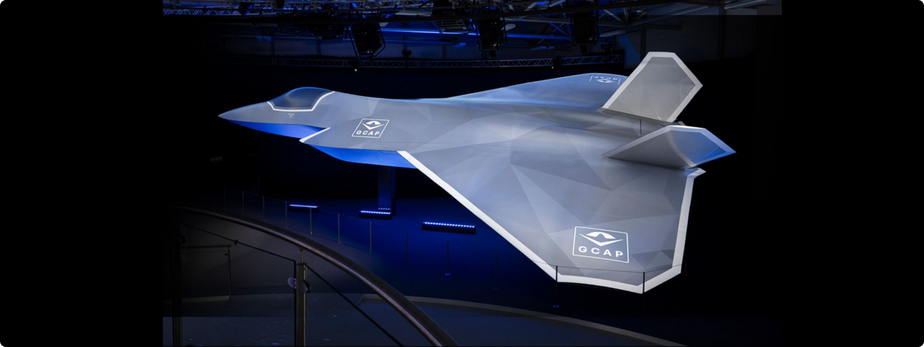
Because it's the same problem: the vertical fins do with the fuselage what horizontal tailplanes do with the wings. It was easier to explain that way.

If you say so. I re-read all the answers and didn't get a clear answer why the GCAP needs tail fins but not planes. Must be me :(

Maybe the closest was the answer that said they helped control yaw. Which kinda poses the question: how does a tailless design accomplish that. Unless it has 3D thrust vectoring which I imagine would do the same thing.
 
Which kinda poses the question: how does a tailless design accomplish that. Unless it has 3D thrust vectoring which I imagine would do the same thing.
Differential drag, like on B-2 etc. Which is accomplished through rudders or active flow control (as on the Demon UAV). Thrust vectoring also assists in enhancing responsiveness.
 
Maybe the closest was the answer that said they helped control yaw. Which kinda poses the question: how does a tailless design accomplish that. Unless it has 3D thrust vectoring which I imagine would do the same thing.
Split ailerons, like on the B2. Differential drag. And the Chinese birds have shown 3D thrust vectoring.
 
Don't forget boundary layer control with, for example, as we have seen detailed design picture of that, boundary layer growth with high pressured air injection at the forward part of the aircraft (nose).

And then you can play the yaw game with the lift vector working on Asymmetrically Variable Camber (with LEVCON for example), that fits particularly the large delta design choice of GCAP.
 
Last edited:
Of course we may be overlooking that there would be good reasons to potentially target tail-less but not want to commit until the tradeoffs are fully established. The GCAP/Tempest renders predate the Chinese aircraft debuts and there wasn't the same pressure to match any other aircraft even though tail-less has been in the public domain for a long time.

If you look at the demonstrator images and the mockups, I wouldn't describe the area around the joint between fuselage and tail fins as very convincing. I think this is possibly work in progress in that a major part of the engineering effort is looking to deliver a tail-less capability while protecting for a tail option.

One other point, a fully dielectric fin is an option that has probably been mentioned. If you could make the joint between plastic fin structure and the OML electrically continuous that might be interesting. The aerodynamic benefits of tailess come with significant tradeoffs. Getting the RCS goal without the agility tradeoff or program risks would be attractive if possible.

Will be interesting to see a more accurate design when it gets revealed but suspect that's a long way aways.
 
Japan has decided to upgrade its relationship with Poland to that of a comprehensive strategic partner.
Furthermore, we agreed to enhance our bilateral relationship and deepen cooperation in a wide range of fields, including economics and security.

It is unclear whether this is related to GCAP.
If a defense equipment and technology transfer agreement is concluded after this decision, it is highly likely that GCAP will be discussed.

https://www.mofa.go.jp/erp/seb/pl/pageite_000001_01582.html
 
Looks like a possible future sale to Poland of GCAP is in the early stages. Wonder how many Poland would purchase if they eventually agree to the deal.
 
We could consider that Number by the Number of Migs they still have in service or even what Planes are slated to be retired soon, or those F-15 that i think they wanted to get (i havent got news about them) are possibly not in consideration anymore
 
Considering that Poland still has F-16's and FA-50s I would think that then next fighters to get the chop after the MiG-29s are the F-16s. Don't know what the current condition the Polish F-16s are in at the present time.
 
https://www.ft.com/content/8766b40b-7692-4173-8754-fec49180efdc?syn-25a6b1a6=1

Britain’s stealth fighter project faces 10-week funding deadline​

Britain’s stealth fighter project faces a 10-week deadline to secure new government funds or risk its teams being disbanded, one of the defence groups involved has warned.
A stopgap funding deal for the projects, agreed in March, is set to expire at the end of June.

“If there is no contract, if there’s no money flowing, then as industries we have no choice but to contain our cost and redeploy these people,” said Herman Claesen, managing director for future combat air systems at BAE.
 
To be fair, the funding was given to make sure teams didn't disband. So yes, once that funding goes, the teams disband.

That doesn't mean more funding will not appear, or the mythical DiP wont arrive.

If anything, the fact they gave a half a billion to fill the gap, probably means GCAP is safe.
 
I suppose it depends on if you think say the F22 with its tails is some flying brick or not.

Tails add stability and reduce cost, I imagine that is the scenario at play here.

The money needed for it to fly without tails is probably just not justified for the small LO gain from certain angles.

I'd also imagine that drawing is not the final submission. Close, but not the final submission. So those tails might be smaller.
 
hmmm not tailless? wouldn't that come with compromises to stealth vs other tailless aircraft?
The less tail, the less canard, the more stealthy it is !
The less tail, the less canard, the less agile it is !
All is a matter of compromise.
 
Last edited:
The presence or absence of a vertical stabilizer has no necessary connection with the agility of a fighter jet. Theoretically, with proper flight control, a fighter jet without a vertical stabilizer can have a higher upper limit of agility.
 
"a realistic concept model"

I don't think those words mean what people here seem to think.

"realistic" - looks real (- ish)
"concept" - a idea (- but not necessarily the one we're using)
"model" - something we can show (- but that isn't real hardware)

Something can be 'a realistic concept model' and bear no resemblance whatsoever to what's actually being built.
 
https://www.ft.com/content/7c9cfe0e-7ac9-457c-b111-b9f7bfea9a74?syn-25a6b1a6=1

UK prepares multibillion-pound boost for joint stealth jet project​

The UK is preparing a multibillion-pound injection of cash into the development of a stealth fighter jet with Japan and Italy amid mounting pressure from Tokyo about the absence of long-term funding for the ambitious project.
The funding, estimated at around £6bn, would allow Britain and its two partners to agree a multiyear contract with industry for the Global Combat Air Programme to cover design and development, according to three people briefed on the situation. A short-term funding deal, announced in March, runs out at the end of next month.
The agreement comes amid intense political pressure on the UK government’s commitment to defence spending, which has become a key issue in Sir Keir Starmer’s battle to remain as prime minister. Any funding deal for GCAP is expected to be announced as part of a wider defence settlement, said two of the people, who cautioned that it still needed to be approved by the Treasury.
In recent weeks Japan has stepped up its warnings about the programme’s future, reflecting concerns that it could become mired in the UK’s wider wrangling about increased defence spending. The issue was raised during UK home secretary Yvette Cooper’s recent visit to Tokyo, according to officials in Tokyo one official said that Japan’s defence minister Shinjirō Koizumi had been unusually blunt during the conversation, in which he made it clear that the UK needed to sign a full, long-term contract, rather than another short-term one, without any further delay.
The same official said that Japan is concerned that a planned visit to the UK by Prime Minister Sanae Takaichi next month was at risk of cancellation given the uncertainties around Starmer’s leadership.GCAP, which aims to put next-generation fighters in the skies by 2035, is an effort by the three nations to challenge US dominance in military technology. The project, which is focused on stealth fighter jets that will be equipped with cutting-edge weapons, is underpinned by an international treaty signed by the three in December 2023.
A long-term contract had been expected to be signed with the project’s industrial partners at the end of last year but has been held up amid a series of delays to Britain’s Defence Investment Plan, its 10-year military strategy.The funding will allow the three main companies involved in the project — BAE Systems, Leonardo and Mitsubishi Heavy Industries-backed Japan Aircraft Industrial Enhancement Company — to progress with critical design and development work.
More than 4,000 UK-based staff are already working on the project, as well as on a demonstrator aircraft designed to test a series of technologies for GCAP. Japanese and UK officials warned privately that any threat of failure for GCAP went beyond the programme itself, and could potentially harm both the UK-Japan relationship and the UK and Japan’s strategic positioning in the Asia-Pacific region.The Treasury and Edgewing, the joint venture between BAE, Leonardo and Japan Aircraft Industrial Enhancement, did not immediately respond to a request for comment.The Ministry of Defence said the UK remained “committed” to GCAP. “Our focus is on continuing to work closely with Italy and Japan on the next steps towards the full international contract,” it added.

 
Will British funding eliminate the need for investment from countries other than these three?

[The British government is reportedly planning to contribute £6 billion in funding. Amid concerns that the project may be delayed due to Britain's financial difficulties, the Japanese government has reportedly increased pressure on Britain to secure the funds quickly.]
https://www.ft.com/content/7c9cfe0e-7ac9-457c-b111-b9f7bfea9a74
 
Will British funding eliminate the need for investment from countries other than these three?

[The British government is reportedly planning to contribute £6 billion in funding. Amid concerns that the project may be delayed due to Britain's financial difficulties, the Japanese government has reportedly increased pressure on Britain to secure the funds quickly.]
https://www.ft.com/content/7c9cfe0e-7ac9-457c-b111-b9f7bfea9a74
This funding is basically going to tell Japan And Italy the funding is now in place to get the Plane past prototype to somewhere closer the finished article, certainly make sure the engine has the funds required.

Other countries are not needed for development, they're needed to reduce the cost per airframe down from what could be 300mn each (speculative on my part).
 
https://m.cafe.daum.net/NTDS/515G/4865

I came across a post on a Korean site regarding a GCAP webinar. It claims the GCAP engine's thrust is actually under 30,000 pounds? Is this meeting even legit?

The translated content:
At yesterday's Aviationweek webinar, Tony Osborne said that GCAP's combat action radius is 900+ NM and its size is almost that of an F-111, so it could be large enough that it won't fit in the RAF's existing hardened shelters. Guy Norris says that the engine thrust for GCAP will be 25,000~30,000 pounds (it's not a variable cycle engine that changes the bypass ratio).

The Future Combat Air Demonstrator, set to fly in 2027, will reportedly fire an air-to-air missile from its weapon bay, something the UK has never done before.

When asked about the GCAP's payload for a 900+ NM round trip, the response was deferred, and the answer session ended.
 
So the EJ200 thrust is 13500 (60kn) dry and 20200 pounds (90kn) reheat. Typhoon pilots are happy with this, but endurance is 1hr 20mins before they need a tanker according to an Aircrew Interview video I saw.
View: https://youtu.be/KN7wvxQZMSk?si=xTVulniN3uChTJlE


GCAP with 18000 (80kn) dry and 27000 pounds (120kn) reheat engines should allow for a lot more fuel to be carried and internal weapons carriage will eliminate stores drag. I’m optimistic about range and endurance at least.
 
https://m.cafe.daum.net/NTDS/515G/4865

I came across a post on a Korean site regarding a GCAP webinar. It claims the GCAP engine's thrust is actually under 30,000 pounds? Is this meeting even legit?

The translated content:
At yesterday's Aviationweek webinar, Tony Osborne said that GCAP's combat action radius is 900+ NM and its size is almost that of an F-111, so it could be large enough that it won't fit in the RAF's existing hardened shelters. Guy Norris says that the engine thrust for GCAP will be 25,000~30,000 pounds (it's not a variable cycle engine that changes the bypass ratio).

The Future Combat Air Demonstrator, set to fly in 2027, will reportedly fire an air-to-air missile from its weapon bay, something the UK has never done before.

When asked about the GCAP's payload for a 900+ NM round trip, the response was deferred, and the answer session ended.

https://aviationweek.com/webinars/r...rs-where-things-stand-these-flagship-programs
 
View: https://www.youtube.com/watch?v=bVPrxvakQjI&t=107s

1:45~
Japan's ATLA (Acquisition, Technology & Logistics Agency) has released previously unpublished CG images of a manned aircraft and its accompanying unmanned aircraft from its GCAP.

Japan's ATLA (Acquisition, Technology & Logistics Agency) has released previously unpublished computer-generated images of a manned aircraft and its accompanying unmanned aircraft related to GCAP.

However, these images of the manned aircraft may not be related to GCAP.
 

Similar threads

Back
Top Bottom