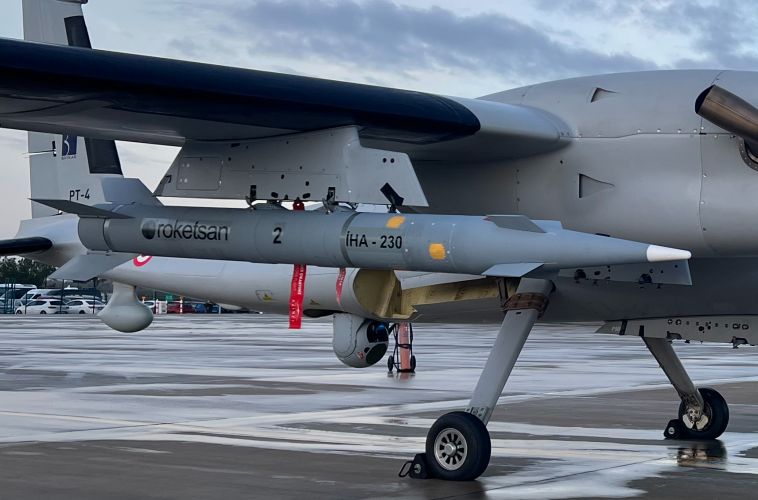
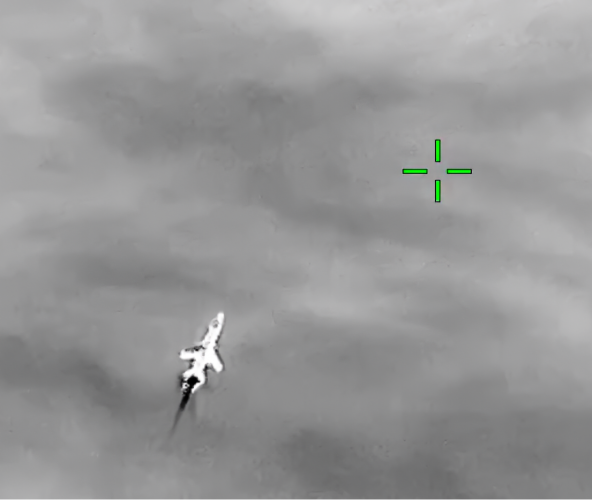
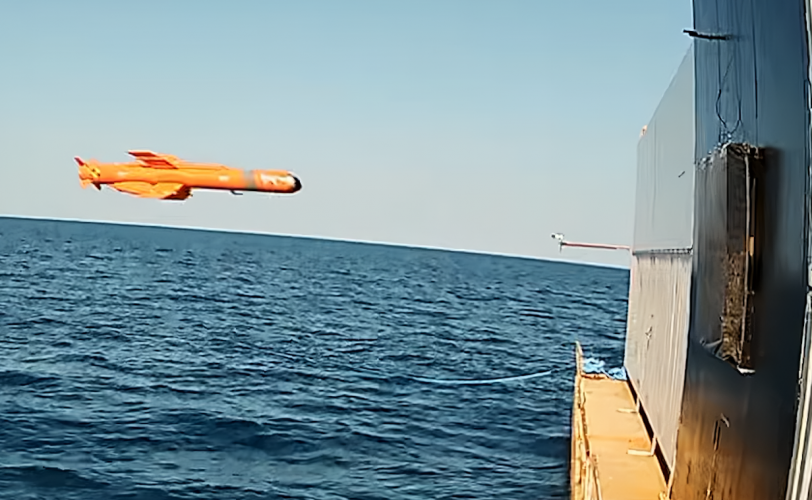
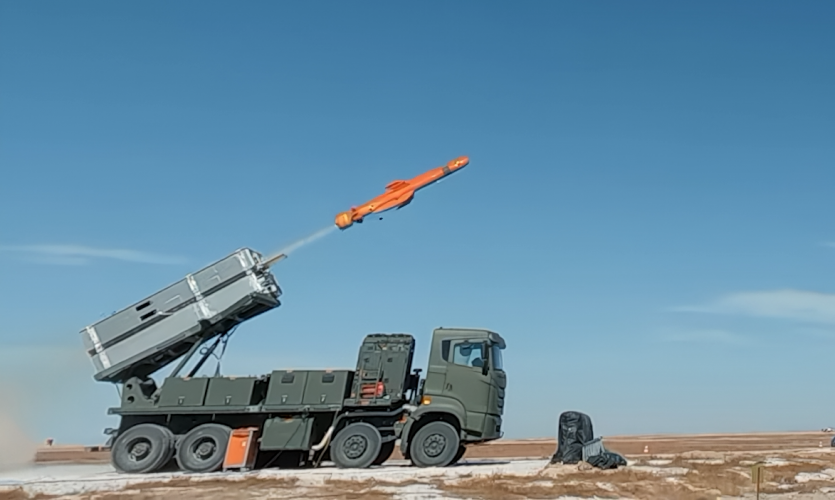
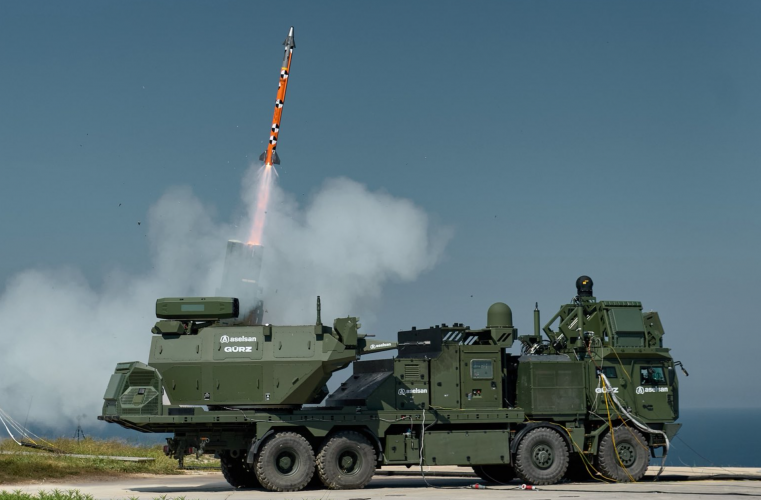
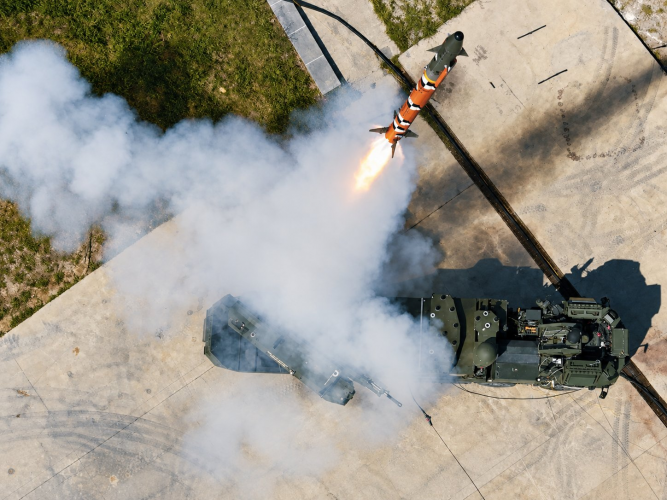
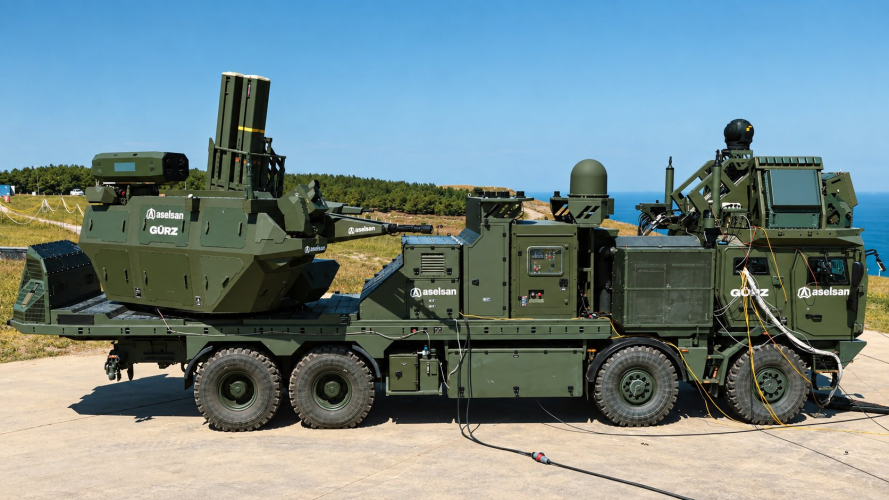
More Hisar-A intercepts in Sudan...

HKXIj8VX0AADkBh
HKYEvQFW4AEklgG


View: https://x.com/mintelworld/status/2064276627643613276?s=20
 
Last edited:

Attachments

  • d.png
    d.png
    937 KB · Views: 34
  • 1781686383766.png
    1781686383766.png
    42.9 KB · Views: 32
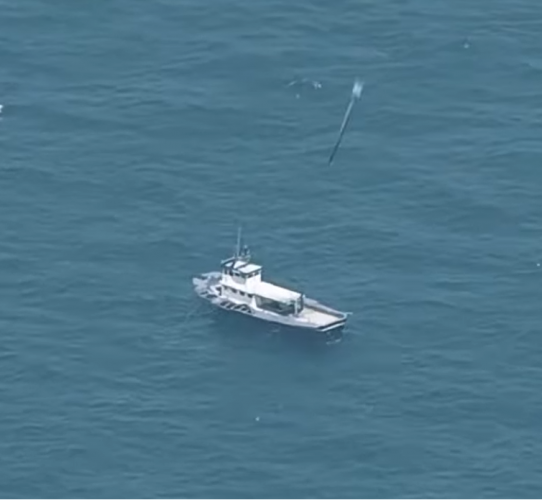
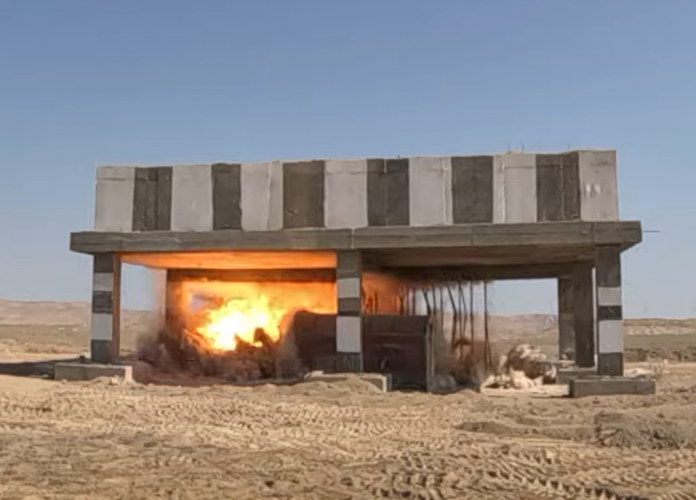
Roketsan tested block-3 Typhoon missile against a surface vessel | essentially it is an anti-ship ballistic missile
View: https://youtu.be/FDOp8zsp3tg?si=OEAJWGlX0KsK7n_1&t=36

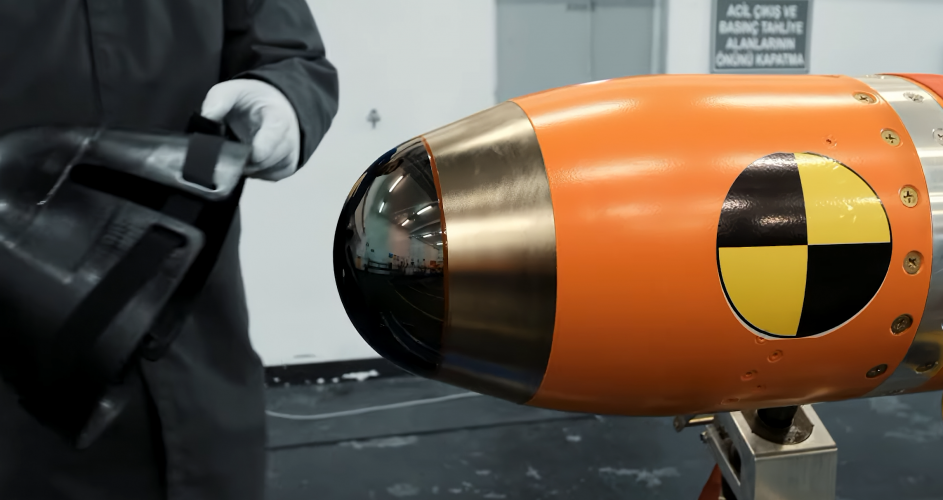
Yep, turns out B3 is indeed an AShBM... In true AShBM fashion, it comes with a seeker:

HMZBeDeWsAEUmUX
HMZBeIrWkAAwmKf

Our Tayfun Block-3 Missile, which struck its long-range moving target with pinpoint accuracy, once again demonstrated the level of engineering capabilities we've achieved through seeker head integration.

View: https://x.com/muratikinci2/status/2073401900788039991?s=20

Remember when Cabatli first broke this back in the PDF days? :D My, how time flies...
 
Last edited:
I think a smart area for cooperation with Pakistan would be missile technology, especially if Turkey truly aims for a ballistic-range above 1,000 km and acquiring MIRV capabilities as a bonus.
Another area would be maybe a satellite program cooperation.

Edit: The Missile Technology Control Regime is focusing on the export of systems and know-how, not on the import - IMO. And Pakistan is not a real member. I'm also not proposing to buy Pakistani (actually Chinese) Systems.
Funny thing is, the Turkish ballistic missile program is based on a Chinese knowledge-transfer back in the 90is (https://en.wikipedia.org/wiki/B-611)
They developed it further, but still... ; )
 
Last edited:
I think a smart area for cooperation with Pakistan would be missile technology, especially if Turkey truly aims for a ballistic-range above 1,000 km and acquiring MIRV capabilities as a bonus.
Another area would be maybe a satellite program cooperation.
Turkey already has the 600+ km range Tayfun Block 2 missiles in service, while the 1500 km range Tayfun Block 4 and 2000 km range Cenk are moving toward production. I fail to see why Turkey would risk international sanctions by violating its commitments under the Missile Technology Control Regime just to acquire lower quality, less accurate Pakistani ballistic missiles that are incompatible with their other NATO systems.
 
I think a smart area for cooperation with Pakistan would be missile technology, especially if Turkey truly aims for a ballistic-range above 1,000 km and acquiring MIRV capabilities as a bonus.
Another area would be maybe a satellite program cooperation.

Edit: The Missile Technology Control Regime is focusing on the export of systems and know-how, not on the import - IMO. And Pakistan is not a real member. I'm also not proposing to buy Pakistani (actually Chinese) Systems.
Funny thing is, the Turkish ballistic missile program is based on a Chinese knowledge-transfer back in the 90is (https://en.wikipedia.org/wiki/B-611)
They developed it further, but still... ; )

There is co-operation much of it is unknown to the public, but what we do know is that Pakistan and Turkey have co-operated on warhead development, guidance and long range loitering munitions.

Turkey already has the 600+ km range Tayfun Block 2 missiles in service, while the 1500 km range Tayfun Block 4 and 2000 km range Cenk are moving toward production. I fail to see why Turkey would risk international sanctions by violating its commitments under the Missile Technology Control Regime just to acquire lower quality, less accurate Pakistani ballistic missiles that are incompatible with their other NATO systems.

I don't know why you assume Pakistan to have lower quality ballistic missiles. Pakistan has functioning MIRV technology, while Turkey doesn't, Cenks MaRV doesn't count. They've developed ASBM well before Turkey did. Your hierarchy is backwards in this case, Turkey can learn a lot from Pakistan.

Also Pakistan is not an MTCR member. The guideline obligations run on Turkey as the exporter, not on Pakistan as a recipient, so if the technology flow here is really Pakistan sharing orrr a transfer from Turkey that doesn't meaningfully advance a already capable recipient draws less real world pushback.
 
I don't know why you assume Pakistan to have lower quality ballistic missiles. Pakistan has functioning MIRV technology, while Turkey doesn't, Cenks MaRV doesn't count. They've developed ASBM well before Turkey did. Your hierarchy is backwards in this case, Turkey can learn a lot from Pakistan.

Also Pakistan is not an MTCR member. The guideline obligations run on Turkey as the exporter, not on Pakistan as a recipient, so if the technology flow here is really Pakistan sharing orrr a transfer from Turkey that doesn't meaningfully advance a already capable recipient draws less real world pushback.
With all due respect, I don't believe your argument makes sense. That's like saying X country's MALE drones are better than Y country's MALE drones simply because country X developed fifth generation fighters first. As of 2026 the Turkish defense industry is focused on longer range, single warhead ballistic missiles rather than MIRV capable ballistic missiles. For an adequate comparison, you should compare non MIRV Pakistani ballistic missiles with their Turkish equivalents. You would then reach the conclusion that equivalent Turkish ballistic missiles are superior to their Pakistani counterparts in terms of accuracy and precision. Being first to develop something doesn't necessarily matter. What matters is developing the better system. It is true that Pakistan developed AShBMs before Turkey. However Turkish AShBMs use a seeker built using Western derived materials science and technology, which is highly likely to be more advanced than technology derived from Chinese materials science.

Also in the 1990s, China transferred M11 ballistic missile technology to Pakistan. The United States treated the transfer as a violation of commitments related to the MTCR and imposed economic and military sanctions on China, despite neither China nor Pakistan being a member of the MTCR. So it is pretty easy to guess the political outcome of a Pakistani ballistic missile tech transfer to Turkey.
 
With all due respect, I don't believe your argument makes sense. That's like saying X country's MALE drones are better than Y country's MALE drones simply because country X developed fifth generation fighters first. As of 2026 the Turkish defense industry is focused on longer range, single warhead ballistic missiles rather than MIRV capable ballistic missiles. For an adequate comparison, you should compare non MIRV Pakistani ballistic missiles with their Turkish equivalents. You would then reach the conclusion that equivalent Turkish ballistic missiles are superior to their Pakistani counterparts in terms of accuracy and precision. Being first to develop something doesn't necessarily matter. What matters is developing the better system. It is true that Pakistan developed AShBMs before Turkey. However Turkish AShBMs use a seeker built using Western derived materials science and technology, which is highly likely to be more advanced than technology derived from Chinese materials science.

Also in the 1990s, China transferred M11 ballistic missile technology to Pakistan. The United States treated the transfer as a violation of commitments related to the MTCR and imposed economic and military sanctions on China, despite neither China nor Pakistan being a member of the MTCR. So it is pretty easy to guess the political outcome of a Pakistani ballistic missile tech transfer to Turkey.

Can't really call something "more accurate" that hasn't flown at its claimed range yet, that's a projection not a data point, and no CEP figures were even offered to back it. Funny you bring up the MALE drone/5th gen analogy actually, because it cuts the other way, a combat-proven jet beats a paper 5th gen that hasn't flown yet, same logic just flipped. And the Western materials framing kind of undercuts itself too, since Tayfun's own lineage traces back to a licensed Chinese design (B-611) from the 90s.

We already know warhead, guidance, and loitering munition cooperation is happening between Turkey and Pakistan right now, no sanctions fallout so far. Kind of hard to argue Turkey "wouldn't risk it" when it's already ongoing at the subsystem level, which is Cat II of the MTCR not Cat I (FULL BLOWN tech transfer). Plus with MJDA now signed between TR-PAK-SAU, that's only going to push all three toward deeper cooperation, not less.
 
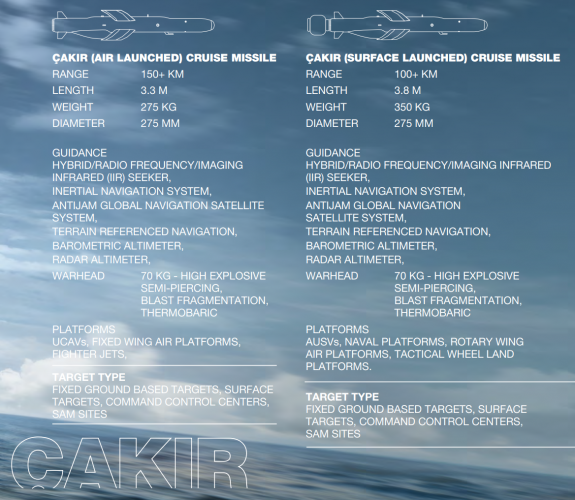
Apart from the silhouettes which are purely representative, it's accurate; GM of Roketsan has said in recent talk he gave that they are developing technologies all the way up to countering hypersonic missiles.

Translation captions available;
View: https://youtu.be/WcxqL_e-gKI?t=2955
turkyie r winning because the technical capability including auxiliary supply chain/workers as well national/cultural iintent are . Being neither tied to the West or the East makes them more dangerous than Ukraine as a weapons developer. As the speaker states national power stems from weapons and associated capability. Most of the West's population still doesnt grasp this.
 
Roketsan tested block-3 Typhoon missile against a surface vessel | essentially it is an anti-ship ballistic missile
View: https://youtu.be/FDOp8zsp3tg?si=OEAJWGlX0KsK7n_1&t=36
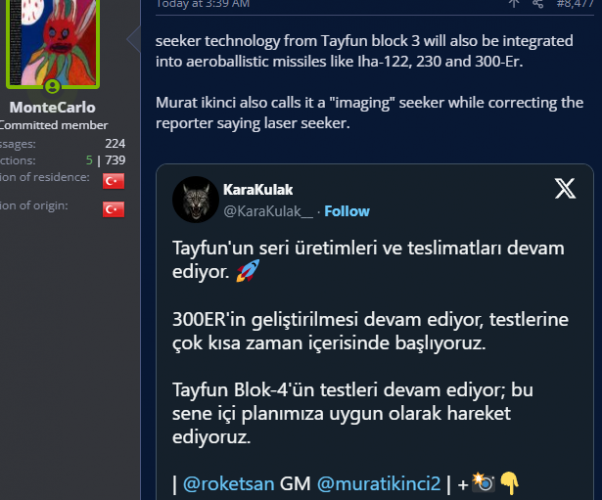
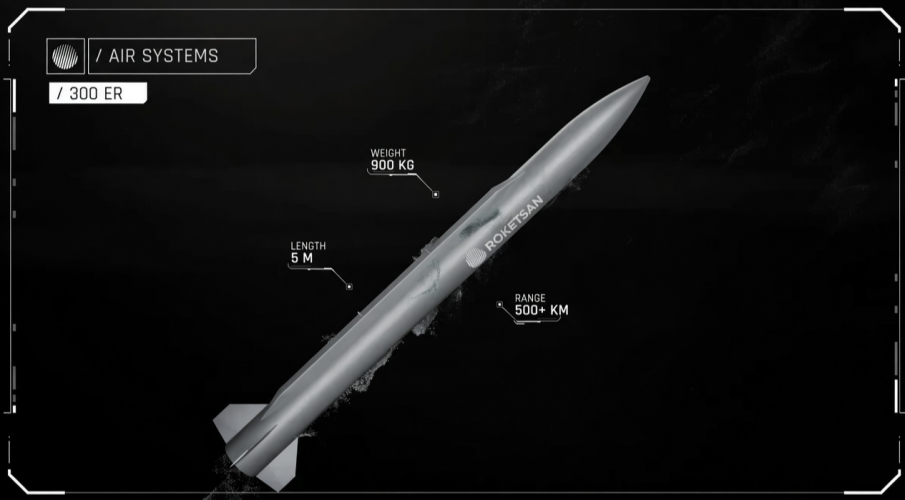
"seeker technology from Tayfun block 3 will also be integrated into aeroballistic missiles like IHA-122, 230 and 300-ER.

Murat ikinci also calls it a "imaging" seeker while correcting the reporter saying laser seeker."
 

Attachments

  • Screenshot 2026-08-21 175836.png
    Screenshot 2026-08-21 175836.png
    95.2 KB · Views: 20

Attachments

  • 1787851716998.png
    1787851716998.png
    1.2 MB · Views: 28
  • 1787851781114.png
    1787851781114.png
    722.3 KB · Views: 26
  • 1787851869485.png
    1787851869485.png
    2.2 MB · Views: 39
Last edited:
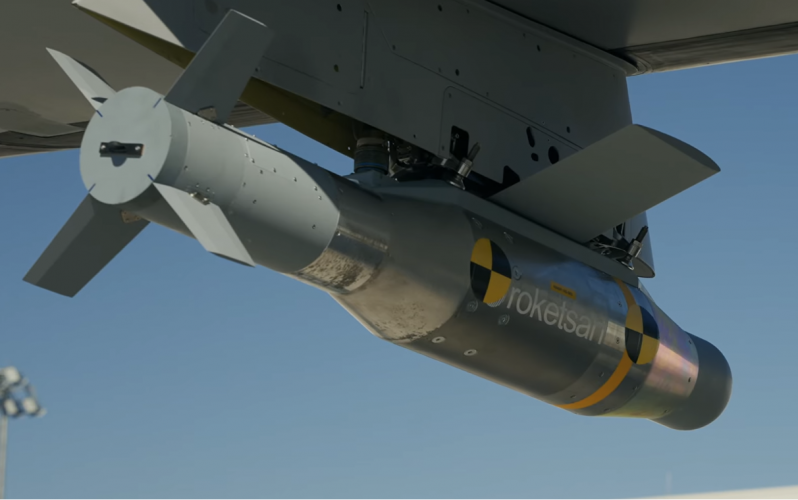
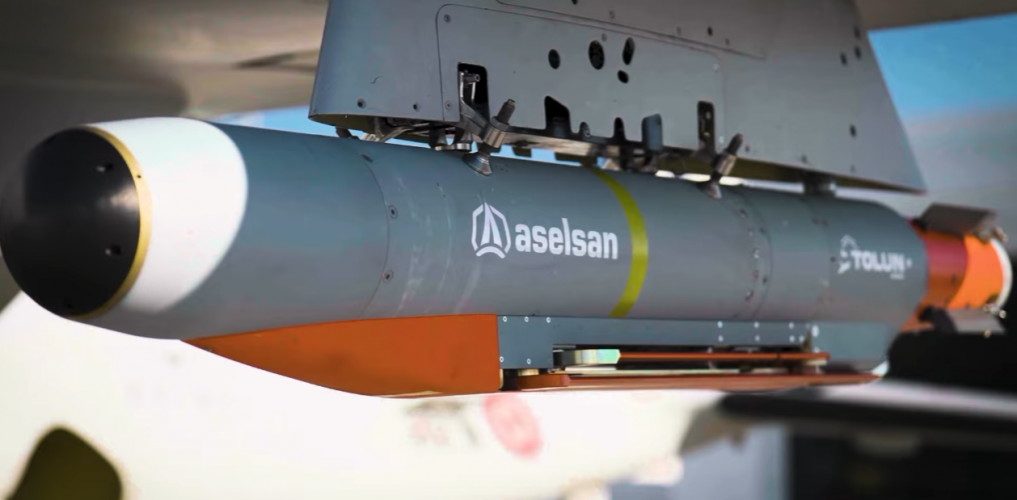
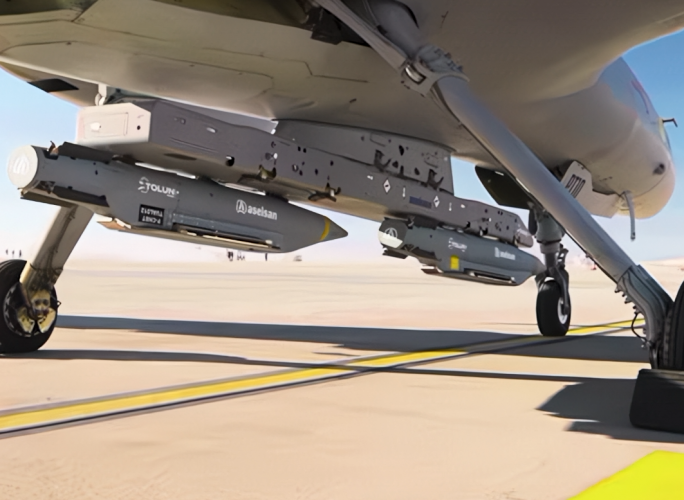
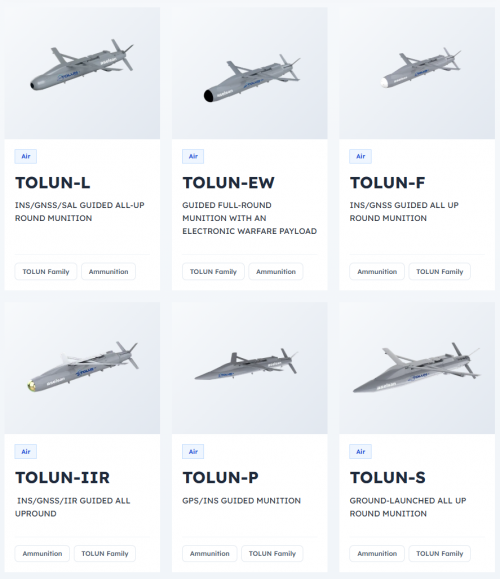
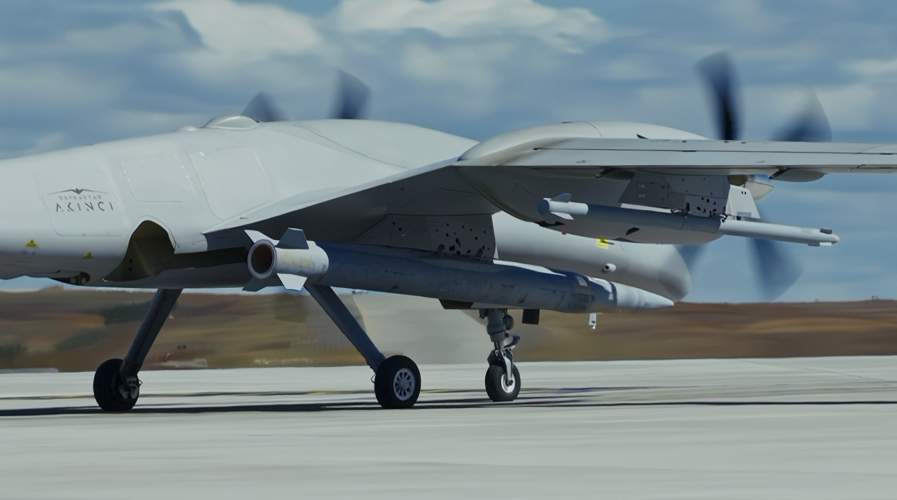
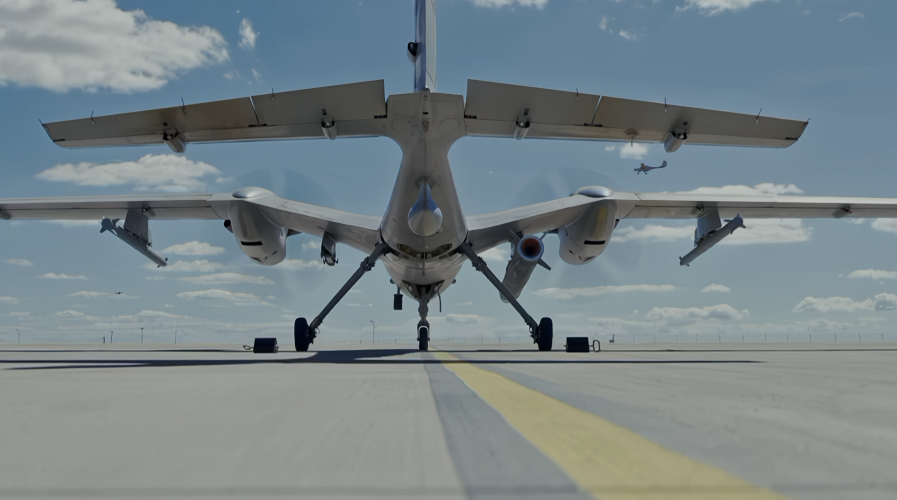
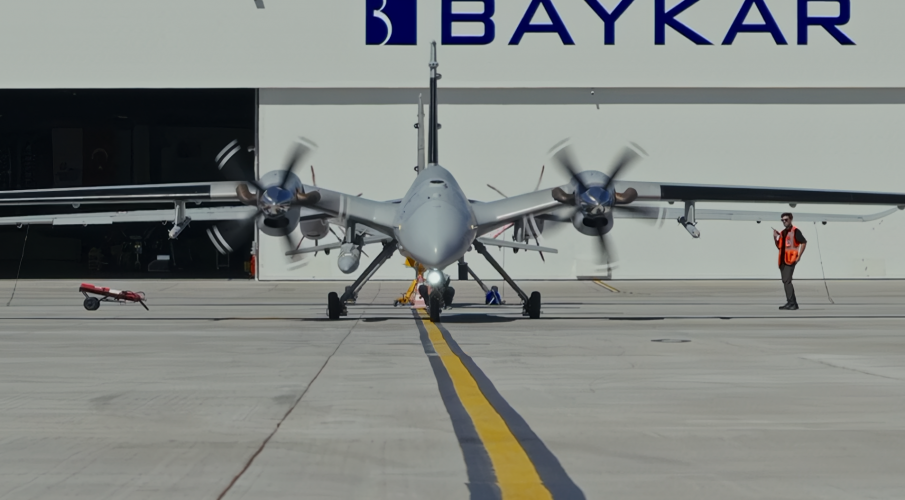
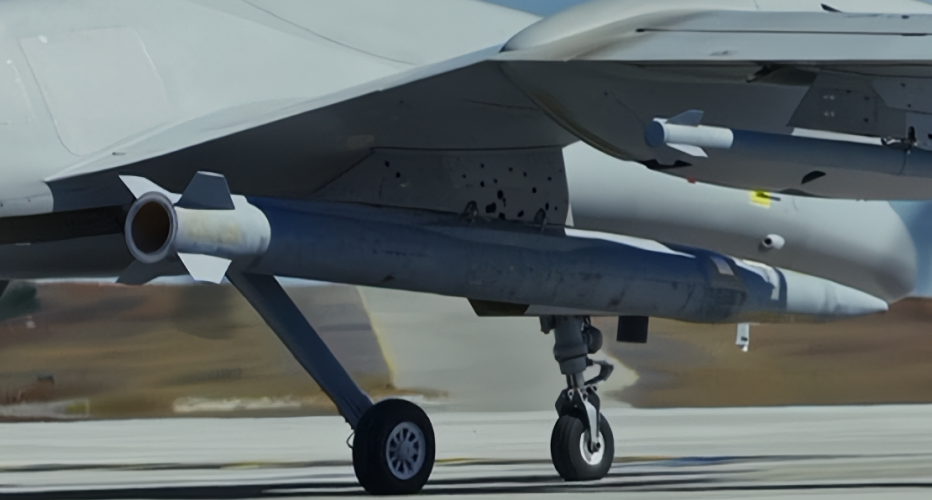
Three versions of TOLUN (Small diameter bomb) tested, dropped from Akinci UCAV.

1️⃣ TOLUN I - Impact Fuse, Fragmentation Warhead
2️⃣ TOLUN F - Proximity Fuse, Fragmentation Warhead
3️⃣ TOLUN P - Programmable Time Fused, Penetrator Warhead

View: https://www.youtube.com/watch?v=Dc81hoBryX0
 

Attachments

  • 1788336365411.png
    1788336365411.png
    603 KB · Views: 20
  • 1788336452044.png
    1788336452044.png
    946.9 KB · Views: 21
  • 1788336603866.png
    1788336603866.png
    254.6 KB · Views: 45

Attachments

  • 1788941406663.png
    1788941406663.png
    1.8 MB · Views: 22
  • 1788941431719.png
    1788941431719.png
    1.8 MB · Views: 14
  • 1788941478441.png
    1788941478441.png
    1.9 MB · Views: 15
  • 1788941504317.png
    1788941504317.png
    716 KB · Views: 21
Last edited:
So basically Turkish Meteor?
Not really. There’s another missile (Gökbora) being developed by another company (Roketsan) that is much closer to being a literal Turkish Meteor analogue, using solid-fuel ramjet propulsion.

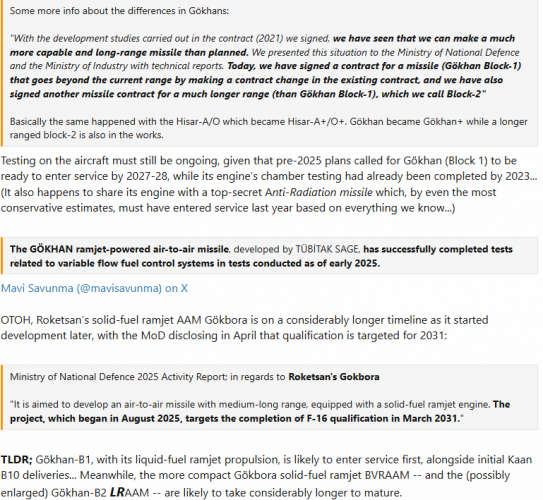
Meanwhile, Gökhan Block 1 and Block 2 use liquid-fuel ramjet propulsion, have longer-range requirements, and are very likely to be larger and more voluminous. Gökhan, developed by TÜBİTAK SAGE, has actually inherited its liquid-fuel ramjet engine from a new, highly classified ARM (Akbaba) that was first seen on 401st Test Squadron F-16s in 2021...

Nevertheless, all three A2A missiles are going to share the same GaN AESA seeker, so there is a commonality at the seeker level despite the differences...

Screenshot 2026-09-11 081011.png


1753197055254-png.778781
1000008547-jpg.754426

This is my take on these missiles, --but honestly,-- PL-15/AIM-260 and AIM-424 Malice are what they should’ve developed instead of developing three separate ramjet missiles...:

I wish that, instead of two different ramjets, we'd at least gotten a dual-pulse equivalent.

The PL-15, for example, has a higher top speed than the Meteor and also a longer maximum range. Apparently, Ramjets also bleed energy much faster once they burn out. The Meteor barely outranges the latest AMRAAMs despite being considerably bigger.

The existence of VLO aircraft means time-to-target and agility at shorter distances are more important.

So, I wish we'd also developed something for this, instead of two different ramjets that do the same job.
Modern missiles gain the increase in range with "lofting", and ramjets are generally inferior in this aspect.
FdDT5M0XkAAv_7m

FdDU1aUXEAEHvKy

Top speed is a desirable quality against capable fighters, especially more so in a VLO vs VLO scenario. Ramjet missiles are limited to Mach 4.

High-speed missiles can be both lighter, cheaper and longer-ranged with rocket engines. It's not possible to achieve high ballistic trajectories with ramjets. The advantage of ramjets is being able to fly at low altitudes for a long time.

Maintaining speed and relative velocity after the engine shut-down are also important. A Mach 3 ramjet missile would be advantageous against an approaching aircraft, while a Mach 5 rocket could be more advantageous against a retreating one. Time to target is critical and ramjets bleed energy much faster once they burn out.

'no escape' in a 90s-10s environment? Sure. But there's a reason why both China and the U.S. seriously considered developing ramjet-powered missiles, but ultimately opted for dual-pulse engines instead.

View attachment 794562
Modern AAMs fly very parabolic BM-like trajectories. A high-speed low-drag rocket is going to achieve a longer range than a ramjet-powered missile in such a trajectory. Ramjet missiles have a lot of energy but they are too limited in speed. They give too much time to the opposing fighter to realise it is getting attacked, fire back and then u-turn. This is especially critical between stealth aircraft because the engagements are expected to happen within a few dozen kilometres.

The Meteor would be a beast if air combat stayed in the 1990s, but China and the U.S. progressed way beyond that.
 
This is my take on these missiles, --but honestly,-- PL-15/AIM-260 and AIM-424 Malice are what they should’ve developed instead of developing three separate ramjet missiles...:
You're treating Turkish defence industry like one company with one centralized RD program. It isn't. Gökbora and Gökhan are competing programs from different enterprises and industrial interests with different ramjet approaches. Overlap doesn't automatically mean waste as competition allows you to choose the best option.

You should also take into account that all three of these missiles likely won’t be adopted for different roles. As I understand it from previous official announcements, Gökbora and Gökhan are basically competing to be adopted as the main long range BVR missile of the TuAF. There is also a separate, even longer range variant of Gökhan, whose development was announced to begin after IDEF 2025. So, if all goes well for both projects, two more missiles will probably be adopted, rather than three.

Feel free to correct me if I am wrong.
 
You're treating Turkish defence industry like one company with one centralized RD program. It isn't. Gökbora and Gökhan are competing programs from different enterprises and industrial interests with different ramjet approaches. Overlap doesn't automatically mean waste as competition allows you to choose the best option.

You should also take into account that all three of these missiles likely won’t be adopted for different roles. As I understand it from previous official announcements, Gökbora and Gökhan are basically competing to be adopted as the main long range BVR missile of the TuAF. There is also a separate, even longer range variant of Gökhan, whose development was announced to begin after IDEF 2025. So, if all goes well for both projects, two more missiles will probably be adopted, rather than three.

Feel free to correct me if I am wrong.
You're treating Turkish defence industry like one company with one centralized RD program. It isn't.
I’m not. But the point is that they’re clearly aware of the urgent need for longer-ranged AAMs, which is precisely why the pre-2025 plan was to have Gökhan (Block-1) ready by 2027. Unless they’ve decided to drop Block-1 altogether after the 2025 change in plans, it’d still have to be inducted alongside Kaan Block 10...

The reason for that is pretty obvious... Gökdoğan, as it stands, is an AMRAAM-C5 equivalent (doesn’t matter if the enhanced version is already underway), and simply doesn’t offer the level of performance you’d really want from a missile intended to be worthy of Kaan, or even to exploit the full capabilities of MURAD-100A-equipped Kızılelma and F-16 Özgür. By the time Gökbora enters service, the Greek and Israeli air forces will also already be fielding F-35s alongside longer-ranged AAMs than the existing Gökdoğan.

So you need something in between to bridge that capability gap until Gökbora becomes available in 2031. There’s really no way around procuring both if the TuAF wants to establish a credible deterrence. And Gökhan Block 2 LRAAM fills a different, much longer-range niche; which ensures that it will eventually be procured as well...
 
I’m not. But the point is that they’re clearly aware of the urgent need for longer-ranged AAMs, which is precisely why the pre-2025 plan was to have Gökhan (Block-1) ready by 2027. Unless they’ve decided to drop Block-1 altogether after the 2025 change in plans, it’d still have to be inducted alongside Kaan Block 10...

The reason for that is pretty obvious... Gökdoğan, as it stands, is an AMRAAM-C5 equivalent (doesn’t matter if the enhanced version is already underway), and simply doesn’t offer the level of performance you’d really want from a missile intended to be worthy of Kaan, or even to exploit the full capabilities of MURAD-100A-equipped Kızılelma and F-16 Özgür. By the time Gökbora enters service, the Greek and Israeli air forces will also already be fielding F-35s alongside longer-ranged AAMs than the existing Gökdoğan.

So you need something in between to bridge that capability gap until Gökbora becomes available in 2031. There’s really no way around procuring both if the TuAF wants to establish a credible deterrence. And Gökhan Block 2 LRAAM fills a different, much longer-range niche; which ensures that it will eventually be procured as well...
You’re overlooking something. Developing smaller number of missile projects doesn’t necessarily speed up the schedule, because the engineers and technicians are working for different companies. If you reduce the number of projects being developed by different companies, you’ll simply end up developing fewer missiles in the same amount of time. And if you force different companies to collaborate, the team becomes too large, the division of responsibilities becomes more complicated, and you still end up developing fewer missiles in the same amount of time. Brooks’s Law applies quite well to defense industry projects.
 

Similar threads

Back
Top Bottom