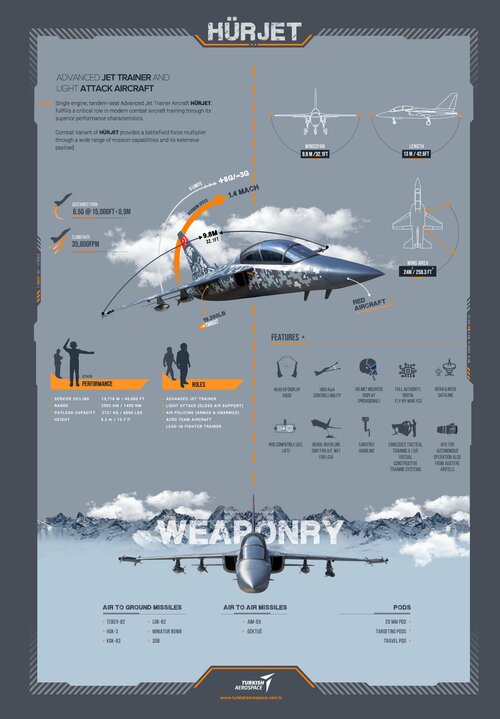
Nice one. But if their intend is to bypass human qualified operators to get to 100% defect free via AI (which at 90% of decision time is the result of an input from a non-qualified programmer checked by an engineer with 0 hand-on tool experience), good luck.
 
Last edited:
^ the plane in that graphic looks definitely more like the F-22 than the TFX mockup
 
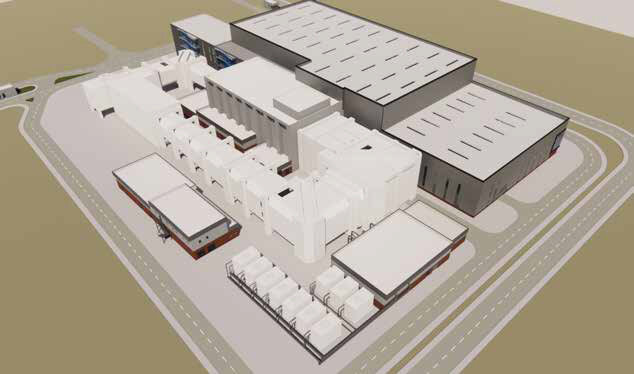
TAI Large Subsonic Acoustic Wind Tunnel to be completed by 2023

Once the wind tunnel is completed, it is expected to serve the Turkish Fighter (MMU) first. The tunnel will then undertake important tasks in the testing stages of all platforms developed by Turkish Aerospace. The tunnel is also planned to execute tests for aircraft, helicopters, unmanned aerial vehicles, armed unmanned aerial vehicles, drones, ammunitions, missile systems, automobiles, race cars, trucks, radar systems, wind turbines, panels, traffic structures, construction structures, and bridges. During all tests, the newest techniques of particle image velocimetry will be used alongside classical methods such as special cameras, oil flow, and tuft tests to visualize the airflow. The Large Subsonic Acoustic Wind Tunnel, which will play an important role in indigenous product development, will increase the design capability of Turkish Aerospace in the development of air platforms. It will also contribute to the development of a domestic industry
118-88.jpg
• Single stage acoustic fan with 14.5 MW power
• A closed test section with a 6.4 m x 4.8 m test section. The maximum air speed in the test section is 126 m/s.
• A closed test section with a test section of 4.9 m x 3.7 m. The maximum air speed in the test section is 181 m/s.
• An open test section with a 6.4 m x 4.8 m test section. The maximum air speed in the test section is 107 m/s.
 
TAI Large Subsonic Acoustic Wind Tunnel to be completed by 2023

Once the wind tunnel is completed, it is expected to serve the Turkish Fighter (MMU) first. The tunnel will then undertake important tasks in the testing stages of all platforms developed by Turkish Aerospace. The tunnel is also planned to execute tests for aircraft, helicopters, unmanned aerial vehicles, armed unmanned aerial vehicles, drones, ammunitions, missile systems, automobiles, race cars, trucks, radar systems, wind turbines, panels, traffic structures, construction structures, and bridges. During all tests, the newest techniques of particle image velocimetry will be used alongside classical methods such as special cameras, oil flow, and tuft tests to visualize the airflow. The Large Subsonic Acoustic Wind Tunnel, which will play an important role in indigenous product development, will increase the design capability of Turkish Aerospace in the development of air platforms. It will also contribute to the development of a domestic industry
View attachment 644044
• Single stage acoustic fan with 14.5 MW power
• A closed test section with a 6.4 m x 4.8 m test section. The maximum air speed in the test section is 126 m/s.
• A closed test section with a test section of 4.9 m x 3.7 m. The maximum air speed in the test section is 181 m/s.
• An open test section with a 6.4 m x 4.8 m test section. The maximum air speed in the test section is 107 m/s.


Intersting but again this fits to all my previous post in which I question the TFX's schedule: If this windtunnel is ready only in 2023 as you mentioned and "is expected to serve the Turkish Fighter (MMU) first", how will they manage to get a prototype ready to "roll out of hangar in 18 March 2023 with and turn on its engines. The first flight is planned for two years later after ground tests have been completed." (as quoted so often!)?
 
This is not a comment on the Turkish program, and it's timings per se, as I am not following it.
But the initial wind tunnel tests could be contracted out to other wind tunnel centres. This is done often enough in the industry.
Through the life of an aircraft, wind tunnel tests would be needed for weapons design, store carriage, separation, aerodynamic modifications etc.. etc... before moving on to actual live tests.
 
Last edited:
is there any reason why they didn't work with the Koreans this time?

Prob differences in objective.

Turkey aimed for something more ambitious than KFX, they want an F-15 class heavy fighter. Thus why new engines.
Actually back then when there were talks about the cooperation between the two, the Turkish involvement in JSF was still somewhat healthy and the Turks were venturing something more like a stealthy FA-50 which the Koreans obviously didn't needed.

You go to the first page of this thread then you'll also find how some of the members were calling it a Turkish MAKO, 9 years ago.

Add to that it was probably not acceptable for the Koreans to have same amount of share in the program like how the Turks were demanding when they never even made a supersonic aircraft and were importing a mere turboprop aircraft from them.

Quite late of a response from my side but better late than never.
 
Last edited:
I actually find it quite amusing how this thing got its size beefed up over the time. First it was meant to be Turkish Mako of some sort or a stealthy Gripen, a FS2020 alike. Then from round 2013 until 2016 or so it was a twin 20,000 Ibs thrust class fighter much like the Eurofighter. Soon after there was a coup and the purge, S400 deal made things spicy and eventually Turkey got kicked out of JSF. Parallel to that they made this thing a twin 25,000 Ibs class fighter much like the earlier F-15s. Then it just grows bigger and bigger and its thrusts just gets out of hand. Soon it's twin 27,000 Ibs class, then a while ago became 30,000 Ibs and now it's 30,000 +.

Dunno what made them so confident in increasing the thrust by more than 10,000 Ibs combined in span of just 2/3 years, especially when they are developing the engine themselves:rolleyes:
 
Last edited:
is there any reason why they didn't work with the Koreans this time?

Prob differences in objective.

Turkey aimed for something more ambitious than KFX, they want an F-15 class heavy fighter. Thus why new engines.
Actually back then when there were talks about the cooperation between the two, the Turkish involvement in JSF was still somewhat healthy and the Turks were venturing something more like a stealthy FA-50 which the Koreans obviously didn't needed.

You go to the first page of this thread then you'll also find how some of the members were calling it a Turkish MAKO, 9 years ago.

Add to that it was probably not acceptable for the Koreans to have same amount of share in the program just like the Turks were demanding when they never even made a supersonic aircraft and were importing a mere turboprop aircraft from them.

Quite late of a response from my side but better late than never.

do you think something like the scale of the KFX would be more practical/achievable by TAI (a Eurofighter/Rafale weight/size aircraft)?

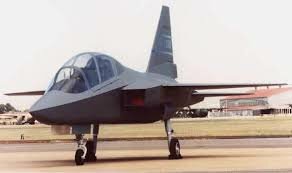
I remember the Mako. really sexy looking thing. the closest something Europe had to a stealthy looking fighter.. except it was a trainer and probably no bay. too bad it never got beyond a concept
1609297518885.jpeg
 
is there any reason why they didn't work with the Koreans this time?

Prob differences in objective.

Turkey aimed for something more ambitious than KFX, they want an F-15 class heavy fighter. Thus why new engines.
Actually back then when there were talks about the cooperation between the two, the Turkish involvement in JSF was still somewhat healthy and the Turks were venturing something more like a stealthy FA-50 which the Koreans obviously didn't needed.

You go to the first page of this thread then you'll also find how some of the members were calling it a Turkish MAKO, 9 years ago.

Add to that it was probably not acceptable for the Koreans to have same amount of share in the program just like the Turks were demanding when they never even made a supersonic aircraft and were importing a mere turboprop aircraft from them.

Quite late of a response from my side but better late than never.

do you think something like the scale of the KFX would be more practical/achievable by TAI (a Eurofighter/Rafale weight/size aircraft)?

I remember the Mako. really sexy looking thing. the closest something Europe had to a stealthy looking fighter.. except it was a trainer and probably no bay. too bad it never got beyond a concept
View attachment 647469
I can't really tell unless I know the exact requirements the turks are demanding for their aircraft. If they are looking for something like supercruise (which seems to be the case) or a high instantaneous turn rate like F-35's 50 deg. AOA or other kinds of demanding maneuvers I might suggest it would be easier to go with a smaller plane. If the maneuverability requirements are staying the same after their plans to make a bigger aircraft then definitely. The thing is, on the flipside having a bigger airframe might be easier for them to accomodate all the avionics and its cooling systems. It's just that bigger airframes are generally more complicated and expensive which might not be ideal for a relatively small economy like that of Turkey.

On top of that, my doubts regarding the size of this aircraft mainly comes from the fact that they are continuously enlarging the airframe while trying to build their own powerplant for it. Once it was a fighter jet to be powered by an engine roughly the same thrust to that of F110-PW-220 and now it's planned to be powered with something that has more thrust than a F110-PW-229, hence they are making that on their own. I would say that the same hurdles exist when building a mid sized fighter like the Eurofighter or Rafale considering the fact that EJ200, F414 and M88 are all engines with relatively high T/W ratio coupled with decent SFC numbers. It would be a tid bit easier but not by a whole lot.

Also, who dare hates MAKO...
 
British ambassador to Turkey Chilcott on TF-X project :

- “The first phase, design phase, continues ahead of the program schedule. It is going very well."
- “The second stage, prototype production. I think it will probably start towards the end of 2022 or early 2023. ”

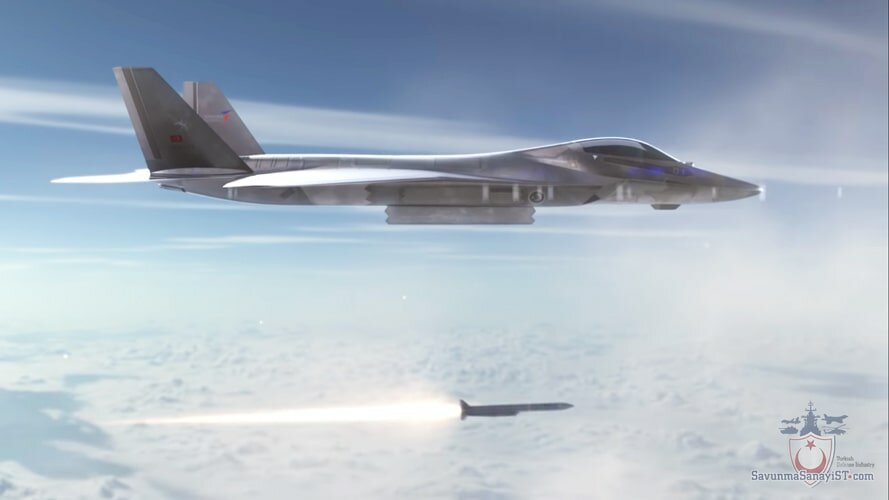
Rendering - Turkey is developing a Meteor type (BVRAAM) ramjet air-to-air missile.
mmu-2-min.jpg
 
Last edited:
British ambassador to Turkey Chilcott on TF-X project :

- “The first phase, design phase, continues ahead of the program schedule. It is going very well."
- “The second stage, prototype production. I think it will probably start towards the end of 2022 or early 2023. ”

Rendering - Turkey is developing a Meteor type (BVRAAM) ramjet air-to-air missile.
View attachment 647545
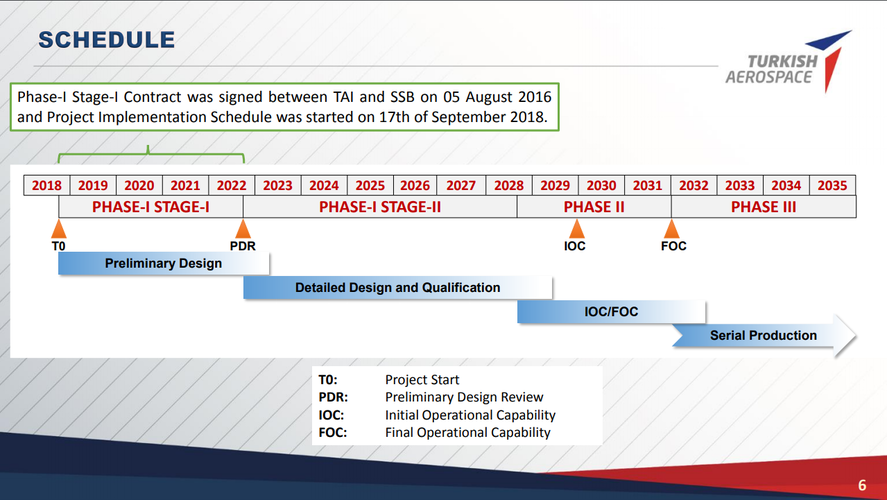
I guess preliminary design is going well. I'm not sure how it's ahead of time tho. It's rather on time concerning the fact that PDR and start of detailed design and qualification phase was already planned to be somewhere in between late 2022 and early 23 ever since 2018, when the project started. The powerpoint by TUSAS argues the same as well.

I am still a bit surprised, by the fact that MMU is still on time when Hurjet is already delayed. Maybe that delay was indeed concerning the engine and it might be the case MMU is not importing but using the existing engines taken from F-16 for the prototype.
 

Attachments

  • tusas mmu schedule.png
    tusas mmu schedule.png
    268.2 KB · Views: 74
Last edited:
British ambassador to Turkey Chilcott on TF-X project :

- “The first phase, design phase, continues ahead of the program schedule. It is going very well."
- “The second stage, prototype production. I think it will probably start towards the end of 2022 or early 2023. ”

Rendering - Turkey is developing a Meteor type (BVRAAM) ramjet air-to-air missile.
View attachment 647545
I guess preliminary design is going well. I'm not sure how it's ahead of time tho. It's rather on time concerning the fact that PDR and start of detailed design and qualification phase was already planned to be somewhere in between late 2022 and early 23 ever since 2018, when the project started. The powerpoint by TUSAS argues the same as well.

I am still a bit surprised, by the fact that MMU is still on time when Hurjet is already delayed. Maybe that delay was indeed concerning the engine and it might be the case MMU is not importing but using the existing engines taken from F-16 for the prototype.
There was an error in the translation, 2021-2022 prototype production to begin

Getting ahead of potential future embargoes on machining tools, a new company was setup MİLTEKSAN AŞ with the joint venture of 11 companies for the 3/4/5 Axis Precision CNC machining machines, company will produce 3 axis in 2022, 4 axis in 2023 and 5 axis in 2024.
 
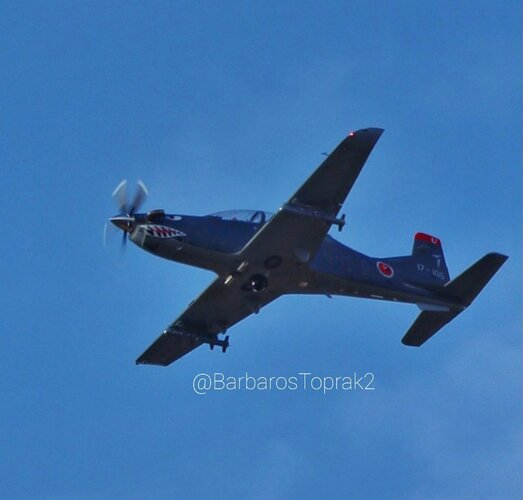
Gonna post this here, in-line with Turkish Aviation - not TFX related. Hürkus-C (COIN configuration) loaded with 4x MAM-L and CATS E/O ball
EqhOcpGXAAwkxA6.jpg
 
British ambassador to Turkey Chilcott on TF-X project :

- “The first phase, design phase, continues ahead of the program schedule. It is going very well."
- “The second stage, prototype production. I think it will probably start towards the end of 2022 or early 2023. ”

Rendering - Turkey is developing a Meteor type (BVRAAM) ramjet air-to-air missile.
View attachment 647545
I guess preliminary design is going well. I'm not sure how it's ahead of time tho. It's rather on time concerning the fact that PDR and start of detailed design and qualification phase was already planned to be somewhere in between late 2022 and early 23 ever since 2018, when the project started. The powerpoint by TUSAS argues the same as well.

I am still a bit surprised, by the fact that MMU is still on time when Hurjet is already delayed. Maybe that delay was indeed concerning the engine and it might be the case MMU is not importing but using the existing engines taken from F-16 for the prototype.
There was an error in the translation, 2021-2022 prototype production to begin

Getting ahead of potential future embargoes on machining tools, a new company was setup MİLTEKSAN AŞ with the joint venture of 11 companies for the 3/4/5 Axis Precision CNC machining machines, company will produce 3 axis in 2022, 4 axis in 2023 and 5 axis in 2024.
Wow that's a whole year saved. Impressing prgress even when taking BAE into account.

Have also heard Hurjet's prototype with F404 to be built this year. Can you confirm on that? IIRC the source was some one from either SSB or Tusas. IIRC Hurjer's CDR was already delayed once due to covid so also interesting if true.

Dunno why EJ200 fell through if using F404 is indeed true. Probably disaproval of German congress? Don't really think that the Brits would have stood against it. Talking about disaproval I'm also curious how F404 went through. F404's perfect for the role of that plane so I would say it's not half bad at all.
 
Last edited:
British ambassador to Turkey Chilcott on TF-X project :

- “The first phase, design phase, continues ahead of the program schedule. It is going very well."
- “The second stage, prototype production. I think it will probably start towards the end of 2022 or early 2023. ”

Rendering - Turkey is developing a Meteor type (BVRAAM) ramjet air-to-air missile.
View attachment 647545
I guess preliminary design is going well. I'm not sure how it's ahead of time tho. It's rather on time concerning the fact that PDR and start of detailed design and qualification phase was already planned to be somewhere in between late 2022 and early 23 ever since 2018, when the project started. The powerpoint by TUSAS argues the same as well.

I am still a bit surprised, by the fact that MMU is still on time when Hurjet is already delayed. Maybe that delay was indeed concerning the engine and it might be the case MMU is not importing but using the existing engines taken from F-16 for the prototype.
There was an error in the translation, 2021-2022 prototype production to begin

Getting ahead of potential future embargoes on machining tools, a new company was setup MİLTEKSAN AŞ with the joint venture of 11 companies for the 3/4/5 Axis Precision CNC machining machines, company will produce 3 axis in 2022, 4 axis in 2023 and 5 axis in 2024.
Wow that's a whole year saved. Impressing prgress even when taking BAE into account.

Have also heard Hurjet's prototype with F404 to be built this year. Can you confirm on that? IIRC the source was some one from either SSB or Tusas. IIRC Hurjer's CDR was already delayed once due to covid so also interesting if true.

Dunno why EJ200 fell through if using F404 is indeed true. Probably disaproval of German congress? Don't really think that the Brits would have stood against it. Talking about disaproval I'm also curious how F404 went through. F404's perfect for the role of that plane so I would say it's not half bad at all.

In this video, Temel Kotil, CEO of TUSAS says that Hurjet airframe will be united with it's engine in 2021 and first flight is expected in 2022. He also says in the video, that in 2021 TFX will be shown-off, he doesn't say exactly what extent, perhaps assembly images of the airframe- but further on he says in 2023 TFX will be rolled out of the hangar under it's own power.
View: https://www.youtube.com/watch?v=wFEJfzJr6DA&t=426s


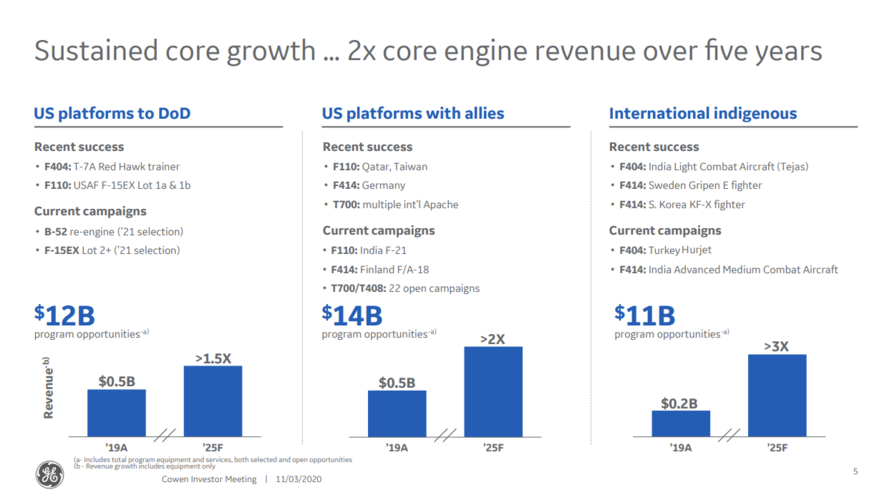
The only official document I was able to find on F404, regarding Hurjet was GE Investor Meeting presentation from November - where it categorises F404 for International Indigenous market opportunity. 1609594885486.png

Regarding my thoughts as to why GE was chosen over Eurojet, I would say that long term relationship Tusas sister company TEI has with GE in component and part production as well as a TEI/GE joint R&D facility.

GE F110 is partially produced and licence assembled at TEI
GE T700-TEI-701D is partially produced and licence assembled at TEI
 
Last edited:
British ambassador to Turkey Chilcott on TF-X project :

- “The first phase, design phase, continues ahead of the program schedule. It is going very well."
- “The second stage, prototype production. I think it will probably start towards the end of 2022 or early 2023. ”

Rendering - Turkey is developing a Meteor type (BVRAAM) ramjet air-to-air missile.
View attachment 647545
I guess preliminary design is going well. I'm not sure how it's ahead of time tho. It's rather on time concerning the fact that PDR and start of detailed design and qualification phase was already planned to be somewhere in between late 2022 and early 23 ever since 2018, when the project started. The powerpoint by TUSAS argues the same as well.

I am still a bit surprised, by the fact that MMU is still on time when Hurjet is already delayed. Maybe that delay was indeed concerning the engine and it might be the case MMU is not importing but using the existing engines taken from F-16 for the prototype.
There was an error in the translation, 2021-2022 prototype production to begin

Getting ahead of potential future embargoes on machining tools, a new company was setup MİLTEKSAN AŞ with the joint venture of 11 companies for the 3/4/5 Axis Precision CNC machining machines, company will produce 3 axis in 2022, 4 axis in 2023 and 5 axis in 2024.
Wow that's a whole year saved. Impressing prgress even when taking BAE into account.

Have also heard Hurjet's prototype with F404 to be built this year. Can you confirm on that? IIRC the source was some one from either SSB or Tusas. IIRC Hurjer's CDR was already delayed once due to covid so also interesting if true.

Dunno why EJ200 fell through if using F404 is indeed true. Probably disaproval of German congress? Don't really think that the Brits would have stood against it. Talking about disaproval I'm also curious how F404 went through. F404's perfect for the role of that plane so I would say it's not half bad at all.

In this video, Temel Kotil, CEO of TUSAS says that Hurjet airframe will be united with it's engine in 2021 and first flight is expected in 2022.
View: https://www.youtube.com/watch?v=wFEJfzJr6DA&t=426s


The only official document I was able to find on F404, regarding Hurjet was GE Investor Meeting presentation from November - where it categorises F404 for International Indigenous market opportunity. View attachment 647734

Regarding my thoughts as to why GE was chosen over Eurojet, I would say that long term relationship Tusas sister company TEI has with GE in component and part production as well as a TEI/GE joint R&D facility.

GE F110 is partially produced and licence assembled at TEI
GE T700-TEI-701D is partially produced and licence assembled at TEI
Yeah... forgot TEI is a Tusas-GE JV. Though I've thought that the recent diplomatic problems would have prevented that. Also I've heard TR Motor's now independent from BMC, ie Quatari capital. Quite a few things seems to be changing indeed.
 
I would actually like to talk more about the plans and avionics involved in this program as we are mostly talking about the engines all the time. Presume that engine's there, it's still not a job done. I feel like I've never seen one giving concrete details concerning those areas.

Like we've seen on #155, TAI's thinking about block approach of development. How's the block going to look like, ie what's the difference between block 1 (airframe that is produced in 2032) and block 2? Is it only the range of weapons integration or are there further changes, for example regarding the sensors?

What's the time frame for the development of block 2 and further blocks?

The current contract with BAE only covers the first development phase, ie. preliminary design only. Will BAE keep helping out as TAC during the detailed design phase and beyond?

If IOC is 2029, what happens until 2032 regarding the production? Is there going to be LRIP?

Hell, I've never even seen concrete numbers for the total budget forecast of the program. What's the planned budget for the whole program and from that how much are they going to spend for the engine development?

I don't think that these figures don't exist but rather no one took notice. Has there not been a single occasion where these questions were asked in the parliament?

Also, why the hell is this plane planned to be designed bigger with a stronger thrust than F-15E but has a severely lower MTOW? Pardon me as I take this info from the Wikipedia because I can't access the TAI homepage but according to the annotations these figures are taken from TAI themselves so I'll believe that in this instance.

What's the empty weight in the first place? How much fuel does it require to carry? Okay the PDR ain't finished yet but those figures should already exist.

Also which flight model and control method is this thing going to use? Maybe something older like phase compensation or is it something newer like dynamic inversion?

How many channels is the FBW to be fitted with?

Guess the avinoics are going to be based on IMA because surely no one's developing a fighter jet with federated architecture these days. But how integrated is it going to be? F-22 (JIAWG) level or F-35 (Pave Pace) level? What's the digital processor of the MC going to be? Are the Turks trying to equip it with something like a SDR or integrated CNI? Are there plans for Turkish data link system other than just Link 16?

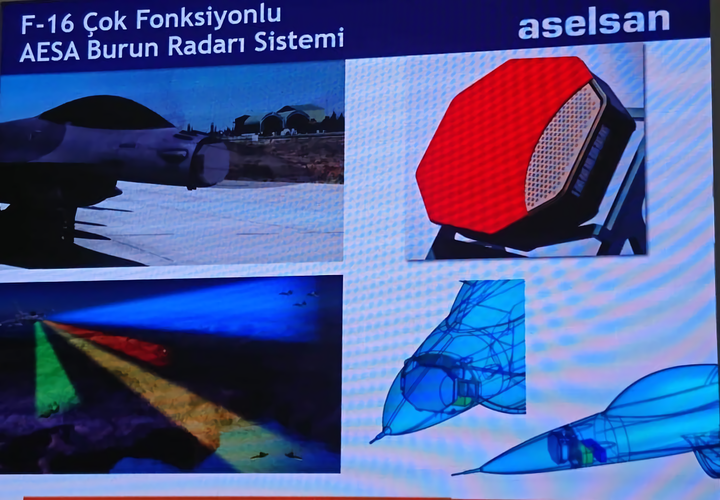
Heard the IRST is going to be based on MCT and radar based on GaN TRMs. What about the resolution of the IRST? How big is the radar array? What's the peak power figures of the TRM? Other details about BÜRFIS and BEOS? I haven't heard this plane's going to be fitted with something like F-35's EO system under the nose, thus have seen models with IRST in front of the cockpit. This probably means that an external TGP will be required for ground strike missions? If this plane is to fill the role of F-35 it should be able to conduct ground strike. Is the EW suite going to be based on Tubitak's EHPOD?

Which parts going into these avionics are to be imported and which are to be developed? Any detailed/concrete information regarding the previous efforts of developing these equipment for an aircraft (eg : Aselsan TEP for the AESA development)?


I don't think all of these could be answered but at least some could be. At least few of those questions are really basic questions I haven't had much success finding answers for. Also there must be some studies or researches regarding these matters uploaded in the online library, unless digital research/scholar libraries don't exist in Turkey; I don't believe this is the case.

There are plenty of other questions that can be asked if we step aside and forget about the engines for the sake of discussion.
 
Last edited:
what do yall think the export markets for the Hurkus is?

it competes more or less directly with the KAI Golden Eagle, which is established. and will soon compete with the Boeing/Saab T-X, which will likely dominate any sales for advance trainers.
The eastern block has the Chinese L-15.

Subsonic trainer wise, the M-346 is doing well, and the Yak-130 too.

it's pretty competitive
 
what do yall think the export markets for the Hurkus is?

it competes more or less directly with the KAI Golden Eagle, which is established. and will soon compete with the Boeing/Saab T-X, which will likely dominate any sales for advance trainers.
The eastern block has the Chinese L-15.

Subsonic trainer wise, the M-346 is doing well, and the Yak-130 too.

it's pretty competitive


You mean the Hurjet? ... the Hurkus is surely not competing with the T-50, L-15, T-7 and so on!?

And as for "it's pretty competitive" it needs to reach hardware-status first. ;)
 
what do yall think the export markets for the Hurkus is?

it competes more or less directly with the KAI Golden Eagle, which is established. and will soon compete with the Boeing/Saab T-X, which will likely dominate any sales for advance trainers.
The eastern block has the Chinese L-15.

Subsonic trainer wise, the M-346 is doing well, and the Yak-130 too.

it's pretty competitive


You mean the Hurjet? ... the Hurkus is surely not competing with the T-50, L-15, T-7 and so on!?

And as for "it's pretty competitive" it needs to reach hardware-status first. ;)
ah yes, with all these names being similar, I can barely rememb-HUR
 
what do yall think the export markets for the Hurkus is?

it competes more or less directly with the KAI Golden Eagle, which is established. and will soon compete with the Boeing/Saab T-X, which will likely dominate any sales for advance trainers.
The eastern block has the Chinese L-15.

Subsonic trainer wise, the M-346 is doing well, and the Yak-130 too.

it's pretty competitive


You mean the Hurjet? ... the Hurkus is surely not competing with the T-50, L-15, T-7 and so on!?

And as for "it's pretty competitive" it needs to reach hardware-status first. ;)
ah yes, with all these names being similar, I can barely rememb-HUR
Oh no god pls...

Jokes aside, we can't say much until the cost is revealed so... The biggest strenght of FA-50 was that it filled the gap left behind the F-5 and potentially few other attack aircrafts like the A-37 after its retirement with better avionics and further upgrade potential. There were no proper competition as the Gripen NG has gotten too expensive.

IIRC the program cost per airframe for the ROKAF was around 40 milion dollars per aircraft and flyaway cost of 25 milion.

There exists an area where L-15 shares the same market but I would say it's not much. Besides, cost of the fighrer-attacker version of the T-7 (will that be F-24 just like how T-38 became F-5?) would play the role. I would argue achieving that feat of offering a lower price than these two would already prove quite hard, especially when equipped with equivalent avionics.

Part of this would depend on how many of the Hurjet and its variants the TAF are willing to procure.
 
Last edited:
Part of this would depend on how many of the Hurjet and its variants the TAF are willing to procure.


Again ... It should be changed to: Part of this would depend on will it ever materialise and be introduced successfully by the TAF. ;)
 
There is some progress with TFX,
- Details about the engines will be revealed some time this year, either deals with existing engine manufacturers or indigenous development
- Laboratory work has started to develop methods of utilising additive manufacturing techniques to produce various components (bulkheads) of the TFX, if positive outcomes are reached TAI will invest heavily into additive manufacturing.
 
There is some progress with TFX,
- Details about the engines will be revealed some time this year, either deals with existing engine manufacturers or indigenous development
- Laboratory work has started to develop methods of utilising additive manufacturing techniques to produce various components (bulkheads) of the TFX, if positive outcomes are reached TAI will invest heavily into additive manufacturing.


Thanks for your efforts, but again ... how will they hold that projected timeline to roll out a prototype by 2023?
 
There is some progress with TFX,
- Details about the engines will be revealed some time this year, either deals with existing engine manufacturers or indigenous development
- Laboratory work has started to develop methods of utilising additive manufacturing techniques to produce various components (bulkheads) of the TFX, if positive outcomes are reached TAI will invest heavily into additive manufacturing.


Thanks for your efforts, but again ... how will they hold that projected timeline to roll out a prototype by 2023?
I don't know why, this whole sounds dubious.
 
There is some progress with TFX,
- Details about the engines will be revealed some time this year, either deals with existing engine manufacturers or indigenous development
- Laboratory work has started to develop methods of utilising additive manufacturing techniques to produce various components (bulkheads) of the TFX, if positive outcomes are reached TAI will invest heavily into additive manufacturing.


Thanks for your efforts, but again ... how will they hold that projected timeline to roll out a prototype by 2023?
I also am interested to find out..
 
Found some interesting information regarding the prototype and the engine.

1. TEI announced "engine is to be developed by TR Motor, but TEI not involved in the R&D process". They will "only manufacture it".
2. TEI claims "TF-X prototypes would be powered by their F-16 engines, produced by TEI" implying that they would use the F110 engines which are produced under license that has been granted for their Peace Onyx program.

The question is :

1. TEI is hands down the most experienced gas turbine manufacturer in Turkey. Now Turkey tries to develop a F110 class turbofan engine but someone with most know-how and expertise isn't involved in its development
2. Of course we don't know the exact clause in the license contract of F110 for Turkey but it is logical to think that using F110 for anything other than F-16 produced under Peace Onyx program, i.e. converting these licensed F110s for usage other than what it is meant to be used for is violation of the contract and also what US is usually very unhappy about.

Also there are other questions concerning the program such as the discrepancy between what TEI demanded for the development of indigenous turbofan engine and what TR Motor currently is claiming to achieve. During the first bid for the development of this Turkish engine, which was around 2 years ago, TEI claimed that they need 14 years to develop this engine. Fast forward 2020 TR Motor aims to first run this engine by 2027, fly it by 2028 and make it production ready by 2029. that is a whopping 4~5 years short of what TEI demanded just a year ago. Once again, TEI is the company that possess the most experience with anything related to gas turbine in Turkey.

Other question is the conflicting development schedule between the development timeline of the Turkish engine and the plane itself. They want to first fly the plane by 2026~2027 and mass produce starting 2029~2030. They plan to build 5 prototypes, of which 2 would be powered by F110 and 3 by their own engine. Then again the engine would only be airworthy by 2028 on earliest. So they've basically got a year to go until the end of the development schedule and before that are left with only 2 prototypes. This makes zero sense.

Last but not least, mass production only after 2 years of test flight seems woefully short and risky, if not impossible to me. Once more, Turkey has never developed, let alone flown a manned supersonic aircraft before.
 
There is some progress with TFX,
- Details about the engines will be revealed some time this year, either deals with existing engine manufacturers or indigenous development
- Laboratory work has started to develop methods of utilising additive manufacturing techniques to produce various components (bulkheads) of the TFX, if positive outcomes are reached TAI will invest heavily into additive manufacturing.


Thanks for your efforts, but again ... how will they hold that projected timeline to roll out a prototype by 2023?
I also am interested to find out..
They won't, it's clearly a ridiculous notion. If they roll anything out it will be a mockup or systems/hardware demonstrator to save face.
They've already claimed that the first prototype they would role out by 2023 would be "block 0", lacking few key avionics. So yes, you are correct.
 
Yes, Russia as an alternate source seems obvious, but if the stumbling block is tech transfer, I doubt they will offer what Turkey is looking for either. Case in point, there are contentious issues regarding the degree of tech transfer and/or licensed production under the S-400 deal too, AFAIK.
 
Why not just go to Russia/China for engines? After the s400 deal, engines shouldnt be an issue.

While the reasons (or "issues") are too many to mention here in any meaningful way, I doubt even Erdoğan in his current position suffers from enough hubris to not hedge his authoritarian bets somewhat. The S-400 deal itself continues to be a whole morass of a debacle and the system's usefulness to Turkey, given the most likely actual conflicts in the area, is dubious at best. While "problematic" is somewhat of an understatement of Turkey's role in NATO at the moment, they still are a member after all.
 
what are the options right now?

M88 - Probably unlikely. France and Turkey are on opposing sides in regards to the Med dispute and France is very pro Greece
F414/404 - Unsure. I thought it was the leading candidate but there's been a rift in regards to the S-400 system. not sure if its enough to stop the export of jet engines
EJ200 - assuming its the UK, Italy and Germany that can control its export. UK seems still friendly to Turkey. Italy is on the same side with Turkey on the Med disputes. Germany may oppose
RD-93 - I think the Russians are willing to export, but do the Turks want this engine?
WS-11 and WS-13 - would this be the first time Turkey imports anything from the PRC?
 
Again, the main problem with this project is simply IMO that no-one wants to wish Turkey bad luck or anything bad, but that most international, reasonable and well respected analysts all have too many open questions and that so far too few of them are answered.

In return any such critical question, remark or doubt is always alone rated an insult and replied in a most aggressive way.
IMO a forum is exactly the place to exchange opinions, even contradicting ones, to ask open questions and to get answers and explanations. If one expects only expects "whao huu ... the best fighter yet to come!" and nothing more, shall leave a discussion.

Son in summary if you look at this program as an outsider we have two side, both as different as they can be:

On the one side - the official one: The TFX/MMU is is a most impressive fighter, a great design and on paper the fighter looks very promising.

On the other side several international analysts and me too have several grave concerns in regard to the overall timeline, budget and especially its engines. This is based on the one side on the "unique social and political situation" in Turkey, which I rate unsecured and even more based on the fact that besides what Turkish sources claim the officially agreed use of F110 engines were so far not announced by either the USA or GE.

This is in strict contrast to any other foreign use of GE engines, be that in India, South Korea and so on and given the latest - to put it mildly - political dispute between the USA and Turkey and the lack of any official US confirmation I am doubtful.


As such my biggest concern are the engines. At least by my understanding (and here I'm open for corrections) it is a fact, that even if a country assembles or manufactures a US engine it cannot simply use it in another product without permission. At least by my understanding, the USA are very strict on this.

So in summary: I would be very much more optimistic if anyone could share not a YouTube-video claiming "it is so" but a credible source telling something about the terms of conditions for GE F110 that Turkey signed. Any bashing down of questions is neither constructive nor helpful.

Even more such nationalistic, stupid claims like "we could even copy it and GE won't even care!" or "if they don't agree, we will go the Russian way!" is not a proof for the agreement to use a TEI built F110. Only the US government - not even GE and surely never TEI - decides on the use of US high end engines. Why alone noting this fact is rated an insult by some is beyond my understanding.

Again, such an agreement is maybe done, but why then does no US source and most of all GE mention this, which is most unusual since GE usually mentioned any use of their engines by a foreign partner?

As such: without any authorisation from the US government, there is NO F110 available for the TFX unless Turkey ignores the US intellectual properties which in return even worse consequences.

Therefore in short: My wish for any discussion on this type would be an honest, open minded and civilised discussion, but without these points of concerns solved (and these are not my concerns alone) all such claims the TFX prototype 01 will be being ready in 2022 and will fly in 2023 is far from assured regardless what some constantly claim.


Anyway, even if the engine issue for the prototypes is solved, there are still mismatches considering the TF-X's development timeline:
(via hhttps://defence.pk/pdf/threads/opinions-on-mmu-huerjet-fighter-trainer-projects.699394/#post-12962208)

1.) First is that of TF-X prototype manufacturing. From Turkish sources I read that 5 prototypes in total are to be manufactured in EMD phase. Of these, 2 are to be powered by F110 (hence the 5 F110 engines Turkey allegedly "already ordered and have been delivered/under deliveries") and the rest of those 3 to be powered by Turkish turbofan engine.

The problem is, the Turks are planning to fly the engine for the first time in 2028. TF-X mass production is planned to be 2029. That means, until just 1 year before mass production, those 3 prototypes with Turkish engines are out there with no engine to fly with. In other words, the Turks should carry out their EMD process with just 2 prototypes which is ridiculous.


2.) Secondly, I've got to remember, that during the first bid for the development of the Turkish engine, where two parties, TEI and TAEC consortium participated, TEI have claimed that they could develop an indigenous engine given 14 years time. IIRC this was during 2019 or something like that. TAEC was chosen in that bid but ultimately the whole bid fell through because RR were done with the Turkish demands for IP rights.

Soon enough TR Motor emerged with TAI's share in it. Considering this and the fact that TEI, a TAI subsidiary, is the only company in Turkey that has sizeable gas turbine engine expertise and know-how, it is reasonable to think that the engineers of TR Motor would probably be TEI engineers.

So when this is the case, how come does TR Motor all the sudden claim that they could develop a turbofan engine for TF-X ready for mass production and application until 2029? That is just 10 years from 2019, 4 years shy of what TEI claimed was the necessary timeline to develop such an engine. Considering the fact that outside parties like GE and RR are still not involved in this program, there seems no factor to exist, that would help Turkey shorten their development timeline for a whopping 4 years.

Apart from all these, the plan to develop a 4.5th generation aircraft, the block 1 aircrafts, by 2029 and further develop a full-blown 5th generation aircraft by 2031, the block 2 aircrafts, is rather questionable. What kind of development plan is it, that a 4.5th generation aircraft becomes a 5th gen aircraft within 2 years time?

Well this at least is just my personal thought unlike the questions above which are based on the information given out by no other than the Turkish officials.


And the same is for the Hürjet ... more questions than answers and a timeline, that is simply unrealistic.

https://www.dailysabah.com/defense/...e-first-flight-in-2022-first-delivery-in-2025

 
Last edited:

Similar threads

Back
Top Bottom