
You are using an out of date browser. It may not display this or other websites correctly.
You should upgrade or use an alternative browser.
You should upgrade or use an alternative browser.
TAI TF-X / Milli Muharip Uçak MMU Kaan
- Thread starter ocay
- Start date
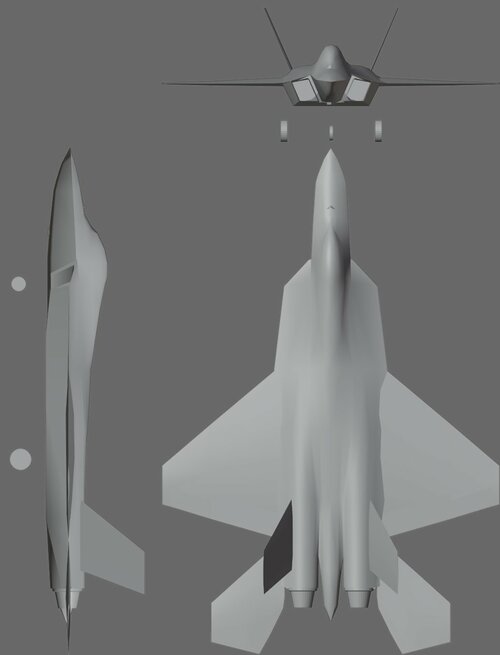
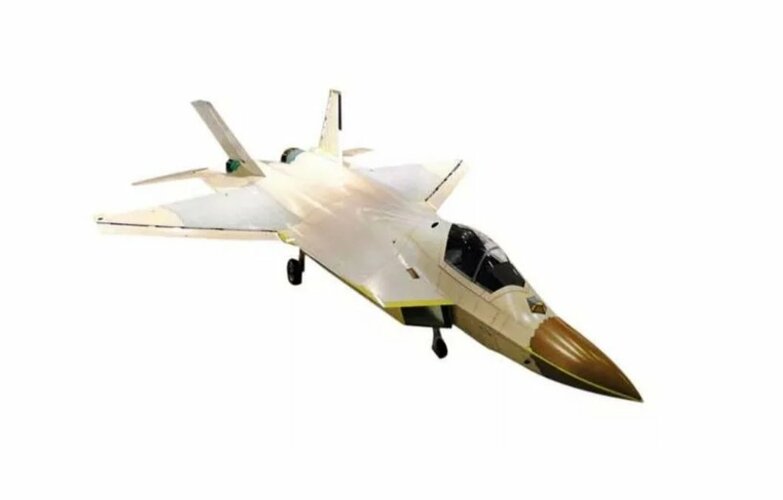
That looks reasonably accurate to me. Perhaps the flying surfaces should have more LE and especially less TE sweep, and the fins roots should be closer to the CL (more atop the engine nacelles). Also the tail booms look more like the old config mock-up, there does not seem to be a parallel section next to the nozzles. But it's not bad!

- Joined
- 15 July 2020
- Messages
- 2,084
- Reaction score
- 7,453
View: https://twitter.com/gdhdefence/status/1612731000424988672?s=20
HQ image previously posted;

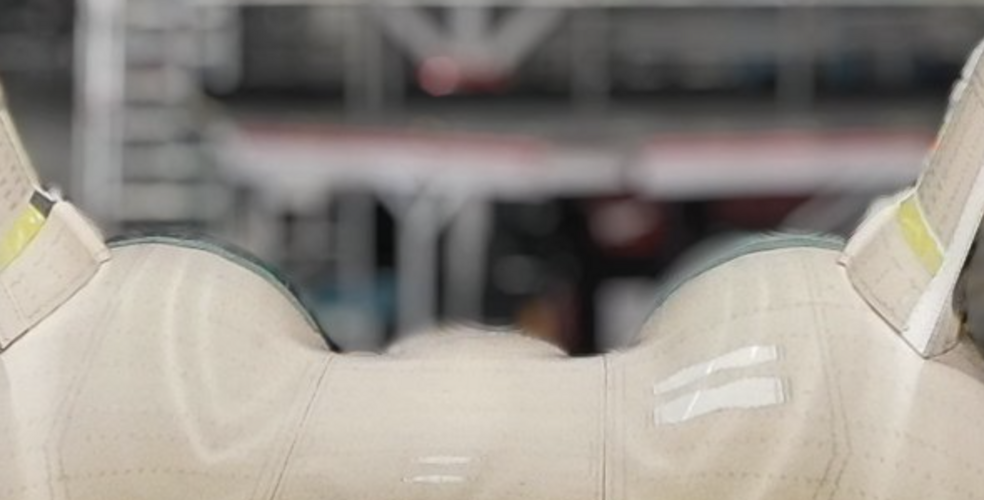
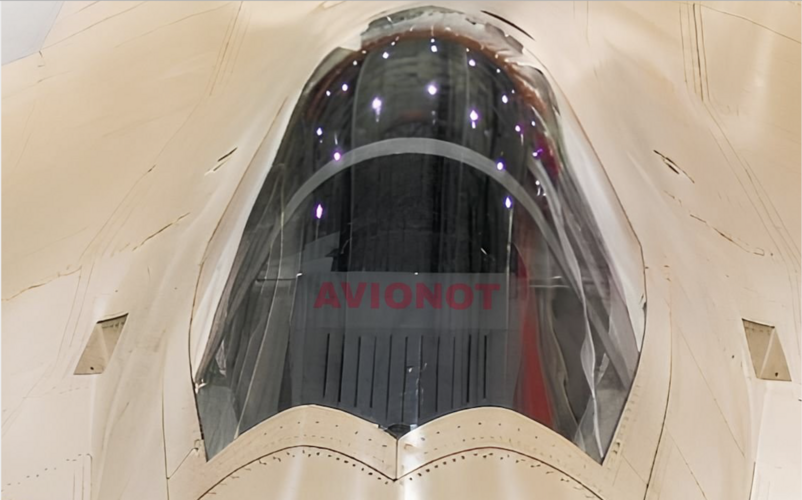
Engines Installed ?

HQ image previously posted;
Engines Installed ?

snne
ACCESS: Top Secret
- Joined
- 3 July 2022
- Messages
- 2,408
- Reaction score
- 8,848
"The stated plan has been to use Pratt & Whitney F110 engines"
this part got me
In my opinion the folks @ the Drive are generally sloppy with their reporting. I often find their articles empty, y'know what I mean? They just copy paste most of the stuff.
Anyway, here's the link for the curious.
https://www.thedrive.com/the-war-zone/unique-sensor-setup-emerges-on-turkeys-stealthy-new-fighter
this part got me
In my opinion the folks @ the Drive are generally sloppy with their reporting. I often find their articles empty, y'know what I mean? They just copy paste most of the stuff.
Anyway, here's the link for the curious.
https://www.thedrive.com/the-war-zone/unique-sensor-setup-emerges-on-turkeys-stealthy-new-fighter
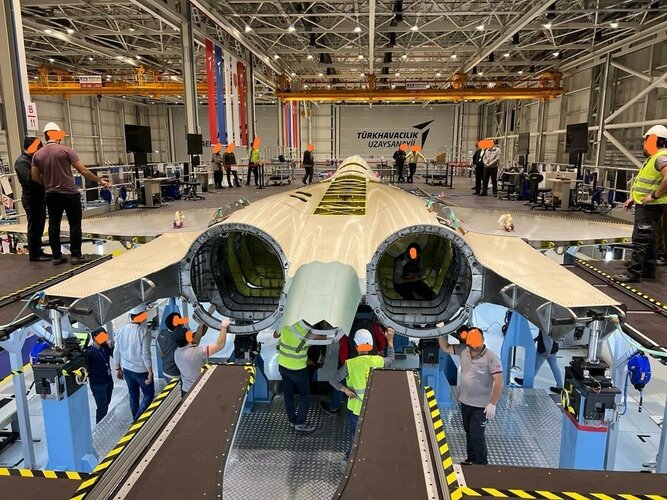
Was gonna quote myself. But it looks you've done it for me insteadTAI TF-X everybody. Hydraulic tests will commence at 17.00 today. Engine integration was done in 2 hours like aforementioned. Fuel system tests were also successful.View attachment 690882
I get his excitement, but Mr. Kotil really needs to chill down a bitBREAKING
TF-X will be able to autonomously return to base in case the pilot faints.
He's talking about Auto GCAS. TAI is, in fact, working on autonomous RTB, but it will probably be implemented in later blocks.BTW, I heard they postponed the roll-out to April to focus on the maiden flight. Is it true?
Seems to be the case. The rollout date was postponed slightly.I get his excitement, but Mr. Kotil really needs to chill down a bitBREAKING
TF-X will be able to autonomously return to base in case the pilot faints.
BTW, I heard they postponed the roll-out to April to focus on the maiden flight. Is it true?
snne
ACCESS: Top Secret
- Joined
- 3 July 2022
- Messages
- 2,408
- Reaction score
- 8,848
Hopefully not a small country. We need our own Indonesia in the programme.A foreign country has requested to join the TF-X program!
Agreements will be signed if all goes well.
We will seeHopefully not a small country. We need our own Indonesia in the programme.A foreign country has requested to join the TF-X program!
Agreements will be signed if all goes well.
snne
ACCESS: Top Secret
- Joined
- 3 July 2022
- Messages
- 2,408
- Reaction score
- 8,848
I think it might be the KSA. A while ago there were rumors that a delegation visited the prototype assembly building. It was the day we got the first leak of the completed prototype.Hopefully not a small country. We need our own Indonesia in the programme.A foreign country has requested to join the TF-X program!
Agreements will be signed if all goes well.
snne
ACCESS: Top Secret
- Joined
- 3 July 2022
- Messages
- 2,408
- Reaction score
- 8,848
In the statement made by Kotil:
“There are demands. They also have engineers working with us. But it's a government-to-government (G2G) deal that needs to be made. There is no agreement announced by the state at this time.”
According to the statement made by Temel Kotil:
The engineers of the country who want to participate in the National Combat Aircraft Program are currently working on TAI projects.
This brings to mind countries such as Pakistan, Malaysia and Indonesia, which have close relations with TAI and have aviation industries.
https://www.savunmasanayist.com/milli-muharip-ucaka-yurt-disindan-ilk-talep-geldi/
“There are demands. They also have engineers working with us. But it's a government-to-government (G2G) deal that needs to be made. There is no agreement announced by the state at this time.”
According to the statement made by Temel Kotil:
The engineers of the country who want to participate in the National Combat Aircraft Program are currently working on TAI projects.
This brings to mind countries such as Pakistan, Malaysia and Indonesia, which have close relations with TAI and have aviation industries.
https://www.savunmasanayist.com/milli-muharip-ucaka-yurt-disindan-ilk-talep-geldi/

red admiral
ACCESS: Top Secret
- Joined
- 16 September 2006
- Messages
- 2,192
- Reaction score
- 3,446
How has CDR not already happened? You need to have the design review before starting to build the partsTF-X's CDR will be completed before the maiden flight.
TAI disagrees with you They do it differently.How has CDR not already happened? You need to have the design review before starting to build the partsTF-X's CDR will be completed before the maiden flight.
snne
ACCESS: Top Secret
- Joined
- 3 July 2022
- Messages
- 2,408
- Reaction score
- 8,848
Aselsan's patent application for RAM radar absorber material
https://www.sumobrain.com/patents/wipo/Radar-absorber/WO2016209181A1.html
https://www.sumobrain.com/patents/wipo/Radar-absorber/WO2016209181A1.html
red admiral
ACCESS: Top Secret
- Joined
- 16 September 2006
- Messages
- 2,192
- Reaction score
- 3,446
Its obviously not a Critical Design Review thenTAI disagrees with you They do it differently.
Design comes before build
TAI started producing parts for the TF-X when major design activities were still ongoingIts obviously not a Critical Design Review thenTAI disagrees with you They do it differently.
Design comes before build
That seems like a bad idea to me, and very likely to cost them time and money down the line.TAI started producing parts for the TF-X when major design activities were still ongoingIts obviously not a Critical Design Review thenTAI disagrees with you They do it differently.
Design comes before build
snne
ACCESS: Top Secret
- Joined
- 3 July 2022
- Messages
- 2,408
- Reaction score
- 8,848
They work in a model which they call as "Cold War development cycle". So from a classical 21st century western aircraft development point of view it may not make sense but since Turkey has put itself in a tight corner, they are trying to accelerate it as much as possible.Its obviously not a Critical Design Review thenTAI disagrees with you They do it differently.
Design comes before build
All the infos that we've received today came from a press visit and I've just watched one of the reporters who visited TAI. According to him, when they were visiting the MMU assembly facility, one senior personnel said to him that there were instances where he worked 72 hours straight without ever leaving the facility. Now imagine how many hours a technician or an engineer must be doing.
I hope that I've answered all of your questions.
Program managers over at TAI are pretty confident with what they've come up with. It's worth mentioning that TAI uses Siemens and Dassault softwares at the same time (just to give an example of their unorthodox techniques).That seems like a bad idea to me, and very likely to cost them time and money down the line.TAI started producing parts for the TF-X when major design activities were still ongoingIts obviously not a Critical Design Review thenTAI disagrees with you They do it differently.
Design comes before build
I'm sure they are confident, they wouldn't be doing it otherwise. But that doesn't mean it's the smart thing to do, at least from my point of view. If you don't finish major design before you start making prototypes you risk making the prototypes unrepresentative of the final product. You might still be able to get some valuable data from these prototypes but it also means you'll need to make entirely new prototypes that are representative of the final product and you'll have to redo tests with these new prototypes.Program managers over at TAI are pretty confident with what they've come up with. It's worth mentioning that TAI uses Siemens and Dassault softwares at the same time (just to give an example of their unorthodox techniques).That seems like a bad idea to me, and very likely to cost them time and money down the line.TAI started producing parts for the TF-X when major design activities were still ongoingIts obviously not a Critical Design Review thenTAI disagrees with you They do it differently.
Design comes before build
There's a reason, for example, the B-21 program has emphasized getting its prototypes as production representative as possible. It reduces risk when shifting to actual production aircraft. And it seems to have really worked for them. I think TAI is really risking having to increase the development period to deal with major design changes made after prototypes were produced, or running into major issues when shifting to production aircraft, or ending up with issues sort of like the concurrency issues the F-35 had but with even greater changes between aircraft.
Last edited:
red admiral
ACCESS: Top Secret
- Joined
- 16 September 2006
- Messages
- 2,192
- Reaction score
- 3,446
That is a normal programme. You can further split things up by having graduated PDRs CDRs etc. For more rapid programmes. But it comes with risk of downstream changes having significant cost/time impacts. Aiming for right first time as per B-21 / Hawk is generally a quicker and cheaper way of getting to the final product.TAI started producing parts for the TF-X when major design activities were still ongoing
Is this actually defining CDR as something like 100% parts sign off? And e.g. there's a few cockpit buttons that haven't been done yet...
Using software from multiple providers is also business as usual
Radonislav
ACCESS: Confidential
- Joined
- 16 November 2022
- Messages
- 195
- Reaction score
- 363
That's a thing to talk, when we are talking about CDR, are we talking about the screw supplier or who buy the buttons from? Or the airframe design.That is a normal programme. You can further split things up by having graduated PDRs CDRs etc. For more rapid programmes. But it comes with risk of downstream changes having significant cost/time impacts. Aiming for right first time as per B-21 / Hawk is generally a quicker and cheaper way of getting to the final product.TAI started producing parts for the TF-X when major design activities were still ongoing
Is this actually defining CDR as something like 100% parts sign off? And e.g. there's a few cockpit buttons that haven't been done yet...
Using software from multiple providers is also business as usual
But airframe itself was in a frozen state when it got into production, so different levels of readiness. But we can expect small changes after flight tests
When we talk about CDR we obviously are talking about the whole system, ie the aircraft, including the airframe. If the airframe itself is in a frozen state as you're saying then that must be that the critical design is complete, which obviously is not the case here when CDR is not completed yet.That's a thing to talk, when we are talking about CDR, are we talking about the screw supplier or who buy the buttons from? Or the airframe design.
But airframe itself was in a frozen state when it got into production, so different levels of readiness. But we can expect small changes after flight tests
Just my thoughts. To me it sounds like they are building separate prototypes from different design stages. Current prototype and the one that's slated to fly this year sounds more like a Rafale A equivalent (I mean the similarities even go as far as how they are both equipped with interim engines) than, say a F-22 EMD prototypes or F-35 SDD prototypes.I'm sure they are confident, they wouldn't be doing it otherwise. But that doesn't mean it's the smart thing to do, at least from my point of view. If you don't finish major design before you start making prototypes you risk making the prototypes unrepresentative of the final product. You might still be able to get some valuable data from these prototypes but it also means you'll need to make entirely new prototypes that are representative of the final product and you'll have to redo tests with these new prototypes.
There's a reason, for example, the B-21 program has emphasized getting its prototypes as production representative as possible. It reduces risk when shifting to actual production aircraft. And it seems to have really worked for them. I think TAI is really risking having to increase the development period to deal with major design changes made after prototypes were produced, or running into major issues when shifting to production aircraft, or ending up with issues sort of like the concurrency issues the F-35 had but with even greater changes between aircraft.
Though, who knows, maybe they want to reflect some learnings from the flight test campaign in their critical design for the aircraft. CDR, from what I remember is planned for 2024. They've got some time to do just that by flying the prototype earlier. It's one of their first supersonic, manned, air breathing, combat aircraft after all. Sounds like some valuable experience for the Turkish engineers if we disregard the possibility of added costs. Then again, this program will be the future backbone of their air force so maybe they ain't holding back in terms of budgets. It's not like their parliament is waiting to scream murder if there's any cost overruns unlike in Western countries.
Last edited:
- Joined
- 15 July 2020
- Messages
- 2,084
- Reaction score
- 7,453
Just my thoughts. To me it sounds like they are building separate prototypes from different design stages.
That's correct, the current one we see pictures of is named GTU, Gelistirme Test Ucak / Development Test Aircraft.
Last edited:
- Joined
- 15 July 2020
- Messages
- 2,084
- Reaction score
- 7,453
Notes from TAI Trip @BRAHMSNNETC1
National Combat Aircraft Information
GTU Prototype Powered by F-110 -GE-129E Turbofan Engines will make its maiden flight at the end of 2023
A big ceremony is planned for April for the Roll-Out of the MMU Development Test Aircraft.
View: https://twitter.com/DefenceTurkey/status/1613144690026504192?s=20
National Combat Aircraft Information
GTU Prototype Powered by F-110 -GE-129E Turbofan Engines will make its maiden flight at the end of 2023
A big ceremony is planned for April for the Roll-Out of the MMU Development Test Aircraft.
View: https://twitter.com/DefenceTurkey/status/1613144690026504192?s=20
Last edited:
snne
ACCESS: Top Secret
- Joined
- 3 July 2022
- Messages
- 2,408
- Reaction score
- 8,848
Acc. to CEO Kotil's latest statements, CDR is going to be completed before the maiden flight.Just my thoughts. To me it sounds like they are building separate prototypes from different design stages. Current prototype and the one that's slated to fly this year sounds more like a Rafale A equivalent (I mean the similarities even go as far as how they are both equipped with interim engines) than, say a F-22 EMD prototypes or F-35 SDD prototypes.I'm sure they are confident, they wouldn't be doing it otherwise. But that doesn't mean it's the smart thing to do, at least from my point of view. If you don't finish major design before you start making prototypes you risk making the prototypes unrepresentative of the final product. You might still be able to get some valuable data from these prototypes but it also means you'll need to make entirely new prototypes that are representative of the final product and you'll have to redo tests with these new prototypes.
There's a reason, for example, the B-21 program has emphasized getting its prototypes as production representative as possible. It reduces risk when shifting to actual production aircraft. And it seems to have really worked for them. I think TAI is really risking having to increase the development period to deal with major design changes made after prototypes were produced, or running into major issues when shifting to production aircraft, or ending up with issues sort of like the concurrency issues the F-35 had but with even greater changes between aircraft.
Though, who knows, maybe they want to reflect some learnings from the flight test campaign in their critical design for the aircraft. CDR, from what I remember is planned for 2024. They've got some time to do just that by flying the prototype earlier. It's one of their first supersonic, manned, air breathing, combat aircraft after all. Sounds like some valuable experience for the Turkish engineers if we disregard the possibility of added costs. Then again, this program will be the future backbone of their air force so maybe they ain't holding back in terms of budgets. It's not like their parliament is waiting to scream murder if there's any cost overruns unlike in Western countries.
That means the CDR will also be done around a year earlier. So all in all it seems that they are around a year ahead of the original plan.
I mean that makes a lot of sense, they need A LOT of data and the only way to get it is to fly the aircraft as soon and as much as possible. You can't do that if you wait a year or two for the readiness of the intended avionics so you might as well do flight tests now as the plane is already ready. They could simulate the masses which is a common practice.

TMA1
ACCESS: Top Secret
- Joined
- 6 February 2021
- Messages
- 593
- Reaction score
- 986
Please go back to the beginning of the thread and start reading instead of coming to the very end and asking. Hell you can even do something as simplistic as googling. It's derailing the thread while we have more important things to discuss.How much funding has the project received so far and how much in the future? Is it known how many foreign engineers have been scalped by Turkey? Also are western "rules based" countries sabotaging the program?
It is impressive. In spite of the downturn in global markets. It is wise to rapidly develop defense industries in these strange times. Over here in America we can look forward to building back better...
Found some info on funding and tangential info implying potential sabotage on the program but if any of you here know more I would like to know.
Radonislav
ACCESS: Confidential
- Joined
- 16 November 2022
- Messages
- 195
- Reaction score
- 363
Airframe design being frozen was the thing i have heard from them
Same thing here.Airframe design being frozen was the thing i have heard from them
Then it's almost guaranteed that there would be some changes, big or small, between the earlier and later prototypes.Acc. to CEO Kotil's latest statements, CDR is going to be completed before the maiden flight.
That means the CDR will also be done around a year earlier. So all in all it seems that they are around a year ahead of the original plan.
I mean that makes a lot of sense, they need A LOT of data and the only way to get it is to fly the aircraft as soon and as much as possible. You can't do that if you wait a year or two for the readiness of the intended avionics so you might as well do flight tests now as the plane is already ready. They could simulate the masses which is a common practice.
I suspect that there would've been some structural changes to the development program in the last few years, since I remember that the original plan was to build 3 flyable development prototype from 2025 after they build some ground test vehicles in 2023, according to the Turkish Air Force presentation from a few years ago.
Now the number is 14 in total from what I remember. Of course it should be noted that some of them are supposedly prototypes with Turkish engines (4 or 6 iirc), but it still means more prototypes planned than it was before a few years ago.
Though most importantly from what I've searched up, the delivery deadline still seems to be around 2028~2029 period and IOC planned for early 2030s. The recent rescheduling rather seems like a rationalization than acceleration of the test campaign period. I had the impression that the older test campaign plan for the TF-X was too short in the first place.
Airframe design being frozen was the thing i have heard from them
Airframe design outline is something that gets completed by PDR. In critical design you refine the inner details of the aircraft according to the actual designs of the equipments that goes into the aircraft, reflect the actual FLCS, avionics design and OFP, prepare the tooling for prototyping and manufacturing, refine individual components, etc.Same thing here.Airframe design being frozen was the thing i have heard from them
In that sense, the "airframe design" would've been completed in the sense that it has reached its final design iteration (for example lockheed codes their design iterations in C###) by the time PDR was complete sometime last year. Though due to the reasons I've mentiomed above, that airframe design isn't necessarily representative of the future aircraft design iterations.
Which is also the reason people here, including me, are saying that it could possibly rssult in added costs/cost overruns and even overall delays to the program. Depending on the scope of changes to the critical design it could mean that you'll need to implement redesign of the manufacturing tooling, aircraft FLCS, redo structural analysis, etc.
Also, when the avionics are still not ready, it is odd to me that they are planning to accelerate the CDR to this year, because critical design would then have to continue until they have their avionics in place regardless of the CDR. In that sense they'll need to go through another review of the final design with all the avionics and components, although they probably wouldn't name it a CDR.
Of course all these concerns aren't a problem if the changes in critical design are minor. I guess those engineers at TAI are very sure that there wouldn't be much design alterations after this year and we'll see how true that outlook will be.
Similar threads
-
-

-
 Turkish Special Mission Aircrafts | Projects, News & Discussion
- Started by Combat-Master
- Replies: 19
-
Turkish Land Forces Projects and Developments
- Started by Combat-Master
- Replies: 30
-