snne
ACCESS: Top Secret
- Joined
- 3 July 2022
- Messages
- 2,431
- Reaction score
- 8,922
It doesn't look the same, although there's always a possibility...That's an old mock-up, that's been lugged around in defense fairs since 2017...
View attachment 775054

It doesn't look the same, although there's always a possibility...That's an old mock-up, that's been lugged around in defense fairs since 2017...
View attachment 775054
reverse image searching does not give a result older than the flightglobal's newspieceThat's an old mock-up, that's been lugged around in defense fairs since 2017...
View attachment 775054


The Ministry of Defense will invest 1.375 billion euros in the Air Force's new advanced trainer and expects the first aircraft in 2028.
It is insisted that this is a joint development with Turkey's TAI, based on the Hürjet but with national design authority.
Here's the report of the Spanish MoD:Here's the Hurjet program explained.
1.3 billion, 28 to 30 aircraft.
The first 8 will be delivered in 2028, and the first 18 will be delivered in 2029.
National participation, etc.


For the first prototype asa a fail safe, though. TAI has also developed another fly-by-wire for the Hürjet, that is flying rigorously.So the FBW system of Hurjet has been developed by Leonardo.
https://www.aerosociety.com/news/aeralis-assembles-industry-dream-team/
View attachment 777031
For the first prototype asa a fail safe, though. TAI has also developed another fly-by-wire for the Hürjet, that is flying rigorously.
You have to have in mind that it was the first fly by wire that TAI had developed back then and they needed a fast solution to get the prototypes in the air ASAP. With this experience, they've designed the fly-by-wire of the Kaan and the flying wing Anka-3.
This is old news (from around 2020-21), really...
We pretty much share every newsworthy thing here, so you should go back a dozen pages or so and start from there.Thanks for the elaborate reply.
Do you have any articles on this which I can read? Or any pdf or slides showing Leonardo's involvement.
I meant any literature which I can refer to.


View: https://x.com/TUSAS_TR/status/1948004795937124789?ref_src=twsrc%5Etfw%7Ctwcamp%5Etweetembed%7Ctwterm%5E1948004795937124789%7Ctwgr%5Ebe2dabcb9f140f7bcaeaf193f0a587a43e55dacd%7Ctwcon%5Es1_c10&ref_url=https%3A%2F%2Fdefencehub.live%2Fthreads%2FhC39Crjet-advanced-jet-trainer-light-attack-aircraft.18802%2Fpage-119We have signed a significant memorandum of understanding with GE Aerospace for the F404 turbofan engines (the heart of our country’s first jet trainer aircraft, HÜRJET).
This agreement will be an important step toward reaching new customers in the HÜRJET program.
We look to the future with confidence and continue to rise by strengthening our national aviation technologies through international partnerships.

Interview with TAI CEO.I feel that it's going to be a logistical nightmare that half the fleet will be delivered in its original configuration with Turkish avionics and systems and the other half will be a hybrid with Spanish components installed. But I guess they are desperate to retire their current fleet of trainers.
Signing of final agreement for export to Spain is expected in end of September or in October.
30+ Hürjets will be exported.
There will be three phases.
First phase is that TAI will build like 15-20 Hürjets without any changes to avionics (turkish avionics).
Second phase will be that the rest will be build with spanish avionics (i think he means too that the planes will be build in spain).
Last phase is that the previously build Hürjets, from the first phase, will get spanish avionics too.

A production line for Hurjet in Spain is not feasible with the numbers of aircraft Spain is planning to buy, says Demiroglu. With the need to begin deliveries in 2028, a first batch of six aircraft will be delivered in a similar configuration as those destined for the Turkish Air Force. That is the “fastest way to advance their (Spanish Air Force) needs,” he says.
A second batch of aircraft will be delivered later once the modifications and adaptations with the Spanish subsystems are certified and ready; this will be done by Airbus in Spain. Eventually, all of the aircraft will be converted with the Spanish subsystems, with the modifications requiring a supplemental type certificate. According to Demiroglu, the new agreement makes it 95% clear who will do what.
“The remaining 5% is where the final negotiations are underway, including on certification … There are different approaches, but there are no showstoppers. We want to make sure the timeline of the project doesn’t get affected negatively and the cost of the project doesn’t increase unnecessarily,” he said, adding, “Each step tells us we are moving forward.”


isn't TULGAR on Hürjet an overkill? what are they projecting onto the helmet? it's too sophisticated(expensive) just for the telemetry data.Some of Aselsan's Avionics developed for Hurjet
View attachment 782070
View: https://x.com/aselsan/status/1957729751327535548

There's plenty of potential use for augmented reality in a trainer, cf Red Six, whose technology means you can do dissimilar air combat manoeuvring without requiring another aircraft.isn't TULGAR on Hürjet an overkill? what are they projecting onto the helmet? it's too sophisticated(expensive) just for the telemetry data.

It's not exactly the same. The Hornets fly with either -400 or -402 versions. The Spanish Hornets have the -400 model. This is different to the -104 model in the Hurjet. It might sound like semantics but the differences do affect ability to support fully.Fun fact: the spanish mechanics will be quite knowledgeable about the Hurjet turbofan... same F404 engine as the Hornets presently flown by the Ejercito del Aire. I've just realized this little factoid.
https://gdh.digital/haber/hurjetin-motorlari-onaylandi-kaanda-reddedilme-yok-3zcx2tz59l7HÜRJET engine approval officially received
In his statement on the matter, Fahrettin Öztürk stated, "We had submitted engine permit requests to the US Congress for both the HÜRJET and the KAAN. We have received our engine permit for the HÜRJET, and it has been completed. As you know, that is the F404 engine," confirming that a significant obstacle has been overcome for the mass production phase of the project.
This development eliminates the uncertainty surrounding the integration and mass production of General Electric's F404 turbofan engines onto the HÜRJET platform.
Process continues for the KAAN project
It was emphasized that the process for the KAAN, a fifth-generation fighter jet project intended to be Türkiye's most strategic asset in the skies, is being closely monitored.
Öztürk stated that the Congressional approval process for the engines to be used in the mass production models of KAAN, which performed its prototype flights with General Electric F110 engines, also used in F-16s, is ongoing, and emphasized that the outlook is not pessimistic.
TEI Chairman Fahrettin Öztürk announced:
https://gdh.digital/haber/hurjetin-motorlari-onaylandi-kaanda-reddedilme-yok-3zcx2tz59l7
Via: begturan/Defencehub


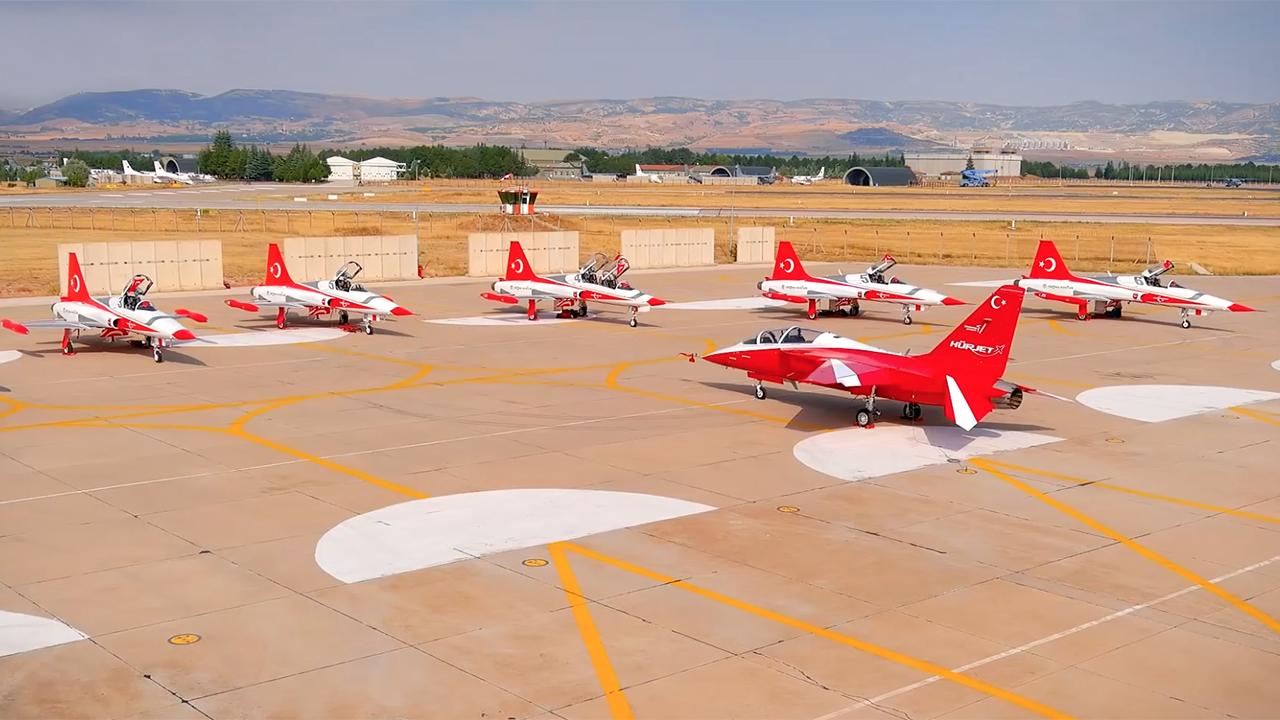
Series production activities continue within the HÜRJET Project. In this context, the process is progressing in line with the Turkish Stars’ delivery schedule planned for 2026.
While assembly activities for the aircraft to be delivered are ongoing, the first flights of the newly produced aircraft are planned to take place in the first quarter of next year.
Yep:Turkish Stars are the TuAF demonstration team like Red Arrows, Thunderbirds, or Blue Angels?
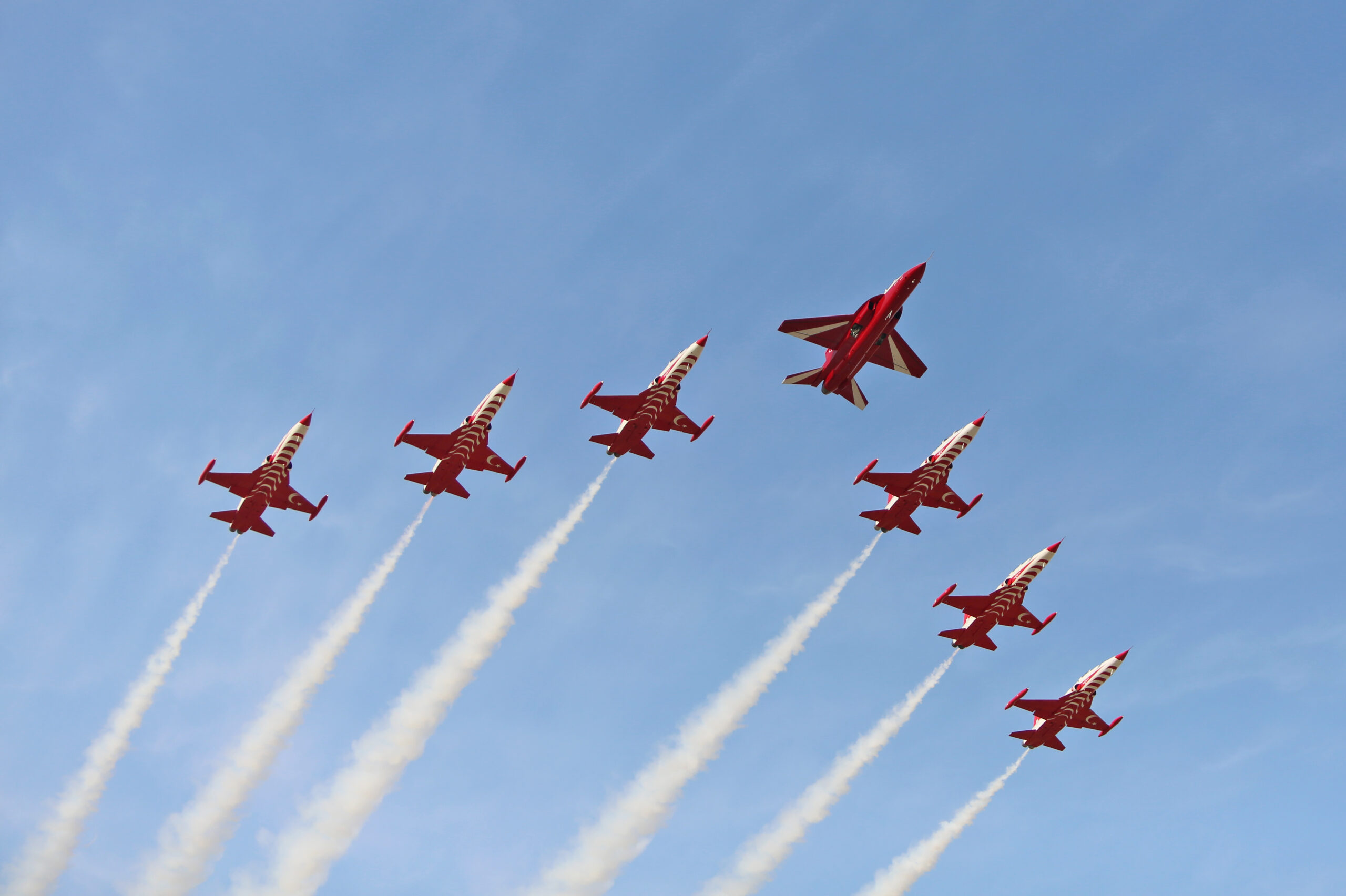
With this initial order, Hürjet is soon set to replace the NF-5s of the Turkish Stars aerobatic team. Follow up orders of close to 80 or likely more aircraft are also expected, and the Naval Aviation branch is also seriously interested in a navalised version of Hurjet. (for more info on Naval Hurjet: https://www.secretprojects.co.uk/threads/turkish-aircraft-carrier-concept.43031/post-662596)
2026 Indeed...The first bold sentence is very peculiar; according to official schedule, TuAF is supposed to induct the first jets in 2027, not 2026 (unless trainers are scheduled for 2027 while the demo jets are sch. for 2026?).
https://www.aa.com.tr/tr/savunma-sanayisi/hurjet-3-koldan-hedefe-ilerliyor/3753205
(AA is the state-run news agency of Turkey)
it's certainly a bit tight, don't know if >300 sorties (~500 by then) is enough to qualify the jet for service entry...
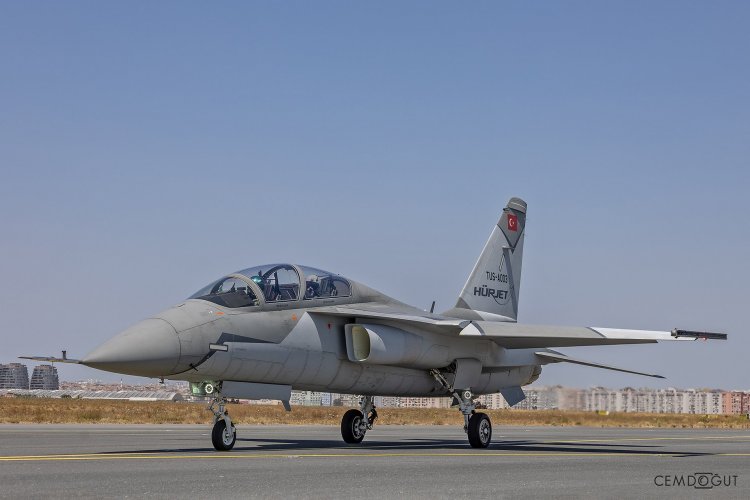
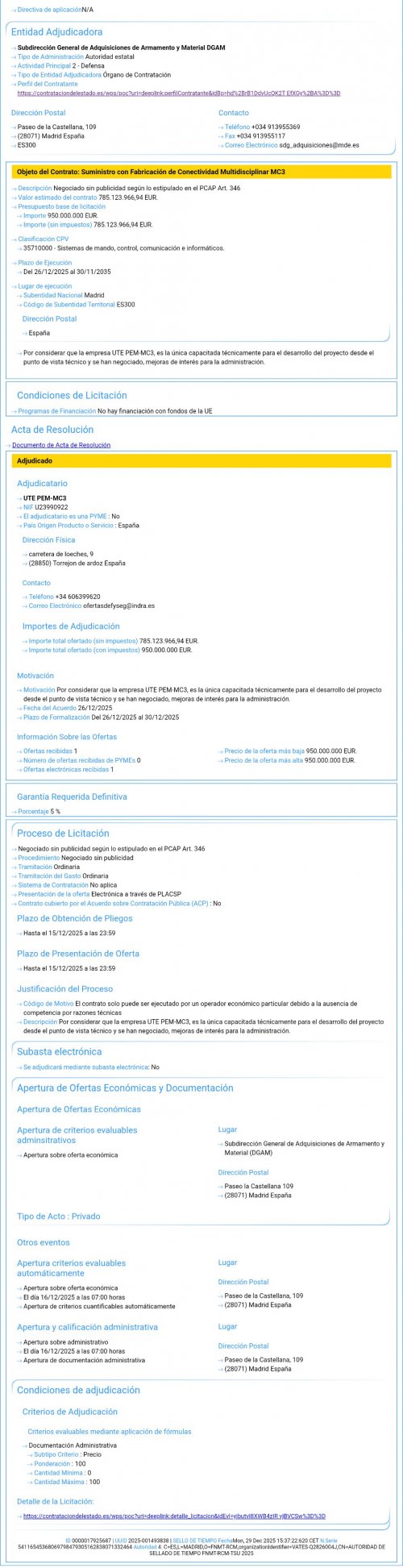
Apparently, the official Spanish Hürjet ("Saeta II") contract for 30 aircraft has finally been signed, with deliveries expected to begin in 2028...
View attachment 796817
View: https://x.com/i/status/2005673142279430163
View: https://x.com/i/status/2005711721600586008
Any Spanish friends here who can elaborate on the details of the contract?
View attachment 796816
Edit: Official confirmation from the TR side, with a pretty flight footage included:
View: https://x.com/i/status/2005717353317961980

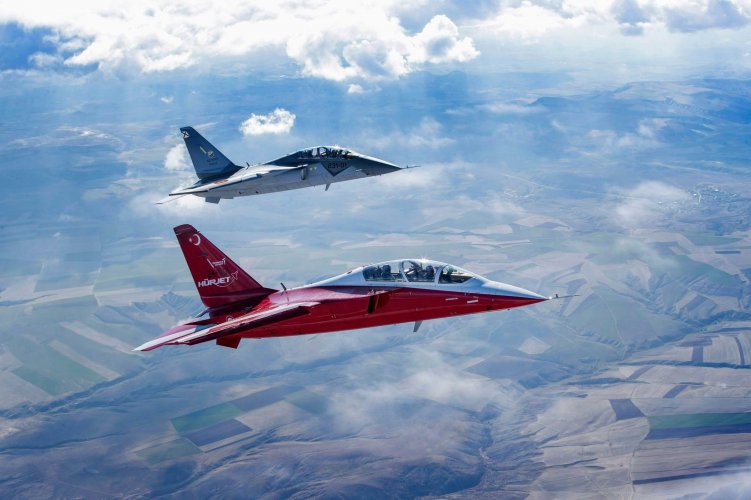
https://www.airbus.com/en/newsroom/...bus-to-lead-spains-new-combat-training-system
The Spanish Ministry of Defence has selected Airbus Defence and Space to lead the development and implementation of the Spanish Air and Space Force’s new combat Integrated Training System (ITS-C).
The contract, led jointly by Airbus, as national coordinator for Spain, and Turkish Aerospace as the manufacturer of the HÜRJET Jet Trainer, has as its primary objective the replacement of the current F-5 aircraft fleet and the coverage of the entire advanced training process for Spanish combat pilots. This encompasses the acquisition of 30 HÜRJET Jet Trainer from Turkish Aerospace, the conversion of the fleet with Spanish content according to the customer's requirements, the creation of an Aircraft Conversion Centre in Spain, the refurbishment of the Training Centre at the Fighter and Attack School at Talavera la Real Air Base, Extremadura, and the provision of an integrated set of operation and maintenance services at this base.
The programme is divided into two stages that will take place simultaneously. The first phase involves the delivery of 30 HÜRJET Jet Trainer in their initial configuration, certification in Spain and delivery to the customer throughout 2028 and 2029.
View attachment 796850
The programme is divided into two stages that will take place simultaneously. The first phase involves the delivery of 30 HÜRJET Jet Trainer in their initial configuration, certification in Spain and delivery to the customer throughout 2028 and 2029.
The second phase will focus on the conversion work of the 30 aircraft with national content and their subsequent delivery to the customer, scheduled for the second half of 2031 through 2035.
The conversion of the first two aircraft will be carried out at the Airbus facilities in Getafe, while the other 28 aircraft will be converted at the programme's Conversion Centre to be established in Spain.