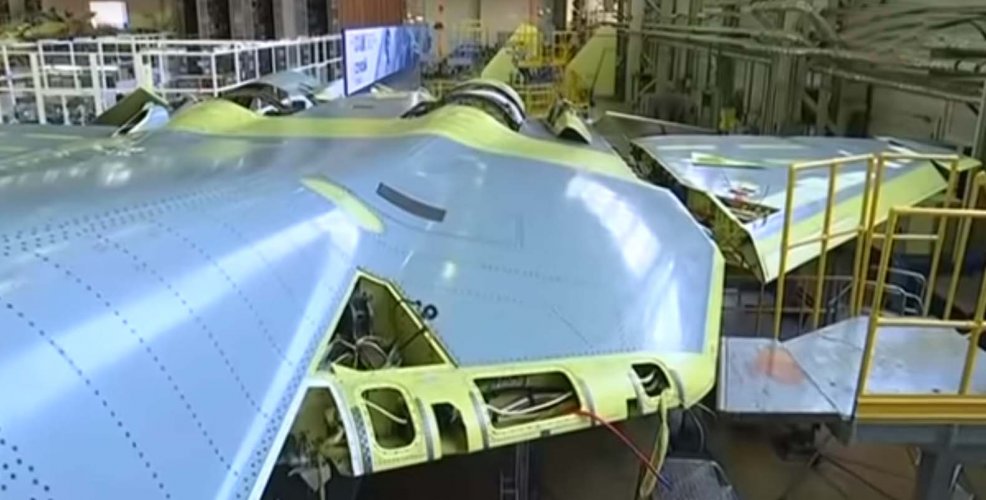
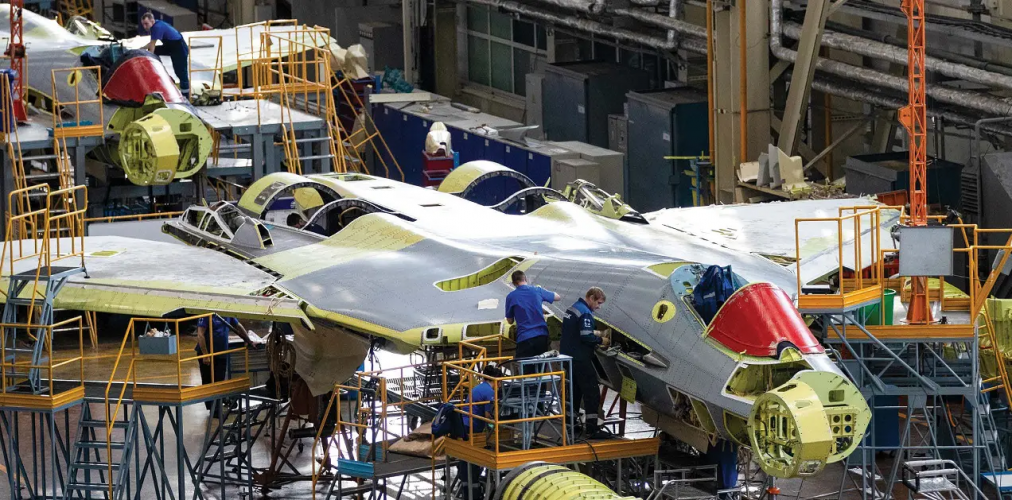
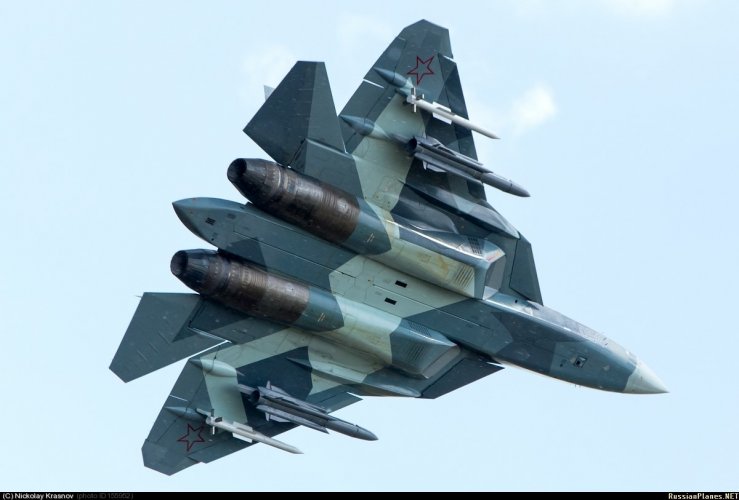
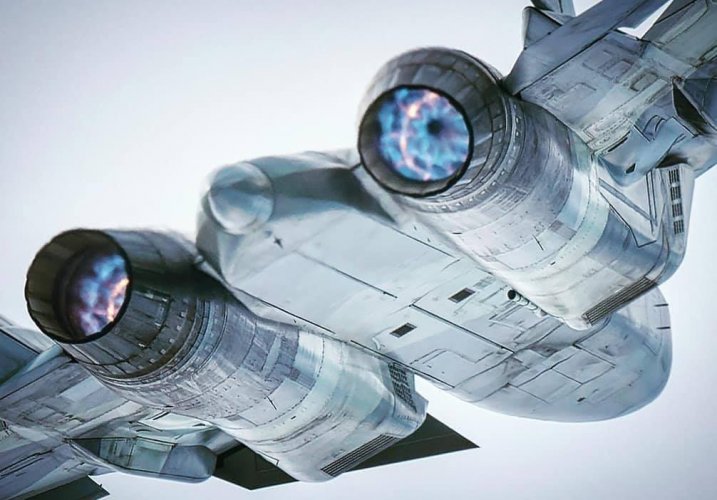
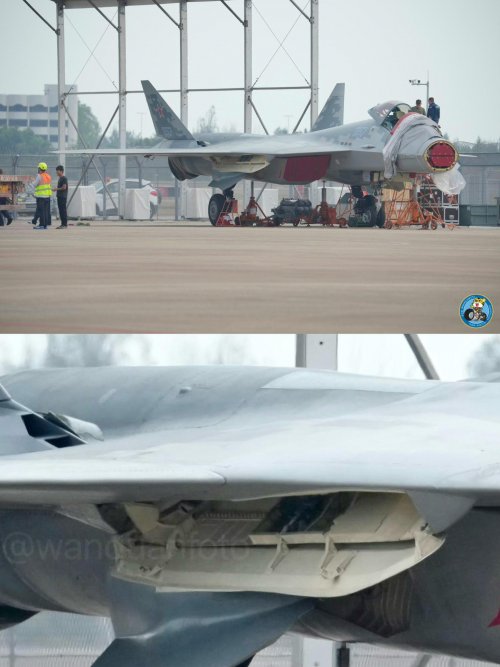
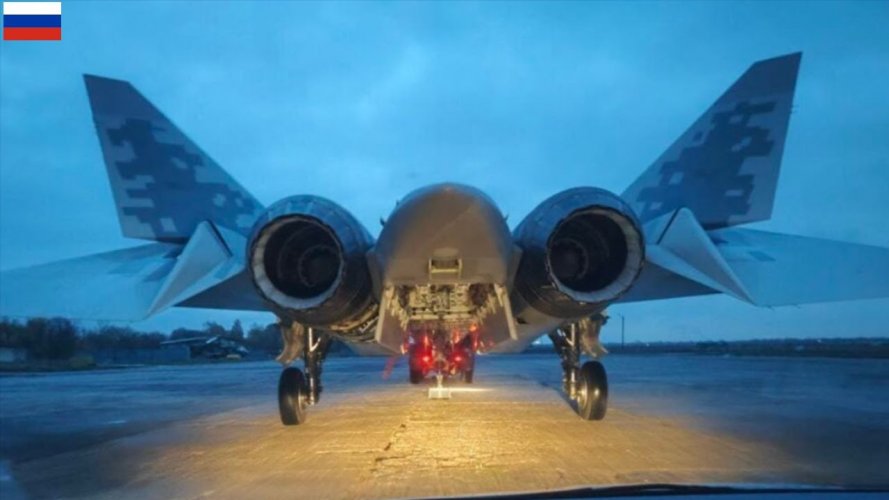
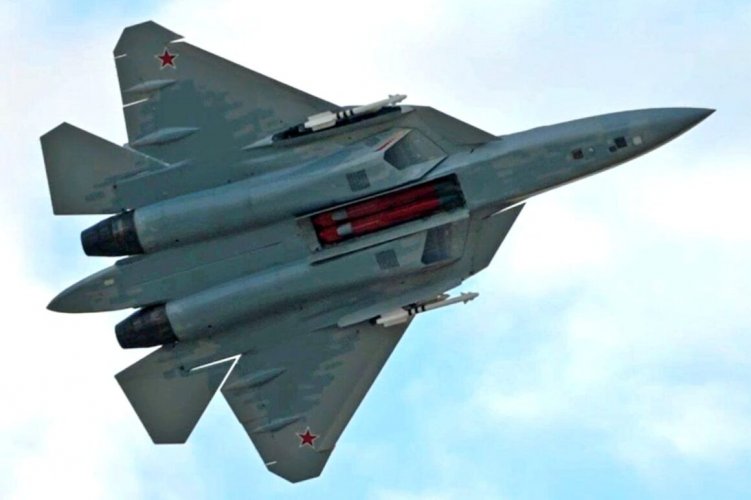
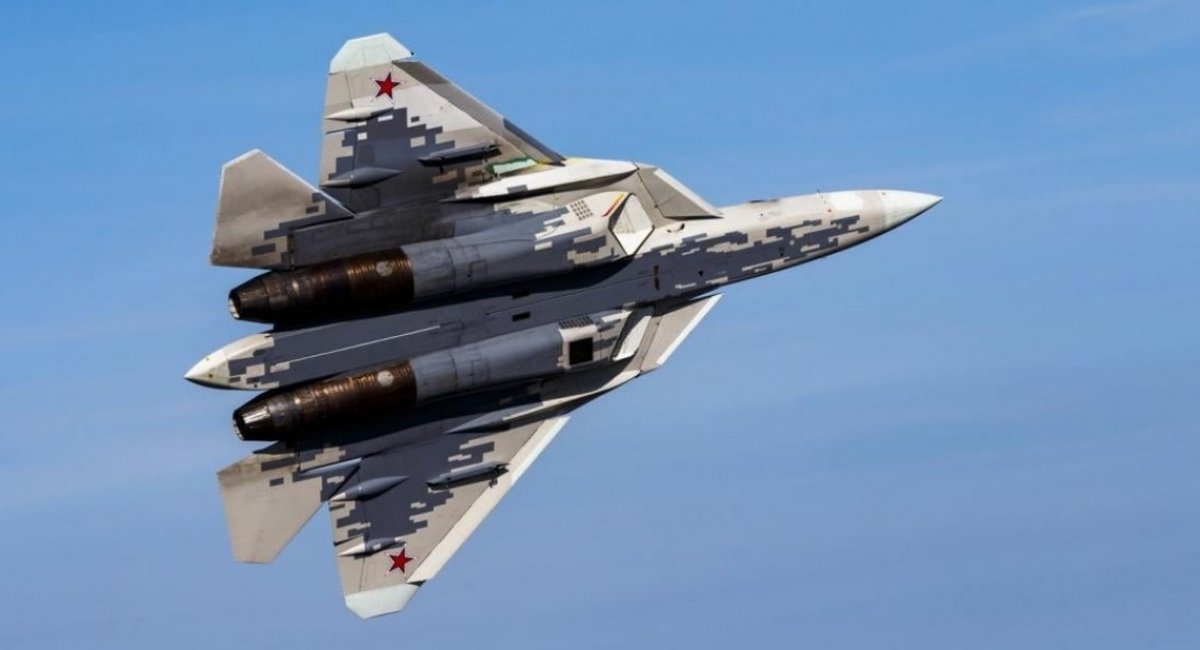
So even armed with AAM 's , suppose inside of all FWC,maybe even under air intakes/wings ? , they managed to fly 2500 km/h- IAS, 2.3 Mach -TAS and withstand over 6G load. Now, let us see what is Su-27S capable of.

So we have G-load (1) and aerodynamic pressure(2) values here,hope it is easy to understand :

1.Максимальная эксплуатационная перегрузка при расчетном полетном весе 21400 кг:
Maximum operational overload at a calculated flight weight of 21400 kg:

Пу макс = 8,0 при М≤0,85

Пу макс = 6,5 при 0,85<М≤1,25

Пу макс = 7,0 при М>1,25

2.Для весов, отличающихся от расчетного полетного веса, перегрузка устанавливается из расчета:
For weights that differ from the estimated flight weight, the overload is determined based on the calculation:


m•Пу макс = const = 171000 кг при М<0,85, но не более Пу = 9,0

m•Пу макс = const = 139000 кг при 0,85<М≤1,25, но не более Пу = 7,0​

m•Пу макс = const = 150000 кг при М>1,25, но не более Пу = 7,5
 
This is the link to the video above, but i can't see it as i don't have Telegram. Anything interesting in it planewise? If anyone finds it or can repost the video somewhere more accessible that would be great.
 
I think I found this picture on this forum.
5f7c9a0a2340df4cc040f9e9a1d21071.jpg


Take note the supersonic speed.

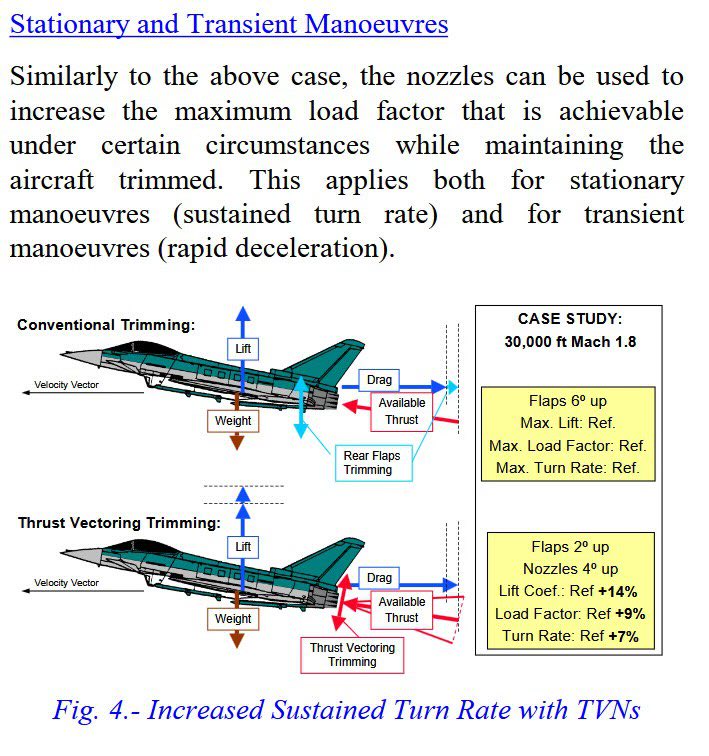
Yes, that is exactly what I was talking about. Small TVC deflections can produce a significant increase in supersonic flight performance.
But unlike the EF2000 flaps or the horizontal tails that reduce lift and increase drag when used for supersonic trimming, LEVCONs produce lift in front of the CG and reduce drag. For that reason, I think that the TVC deflection in this case would be even less pronounced (which is good since you will have more thrust used for pushing the jet forward).

As for the max. speed, chief test pilot Sergey Bogdan recently confirmed manuevering at 2,500 km/h.

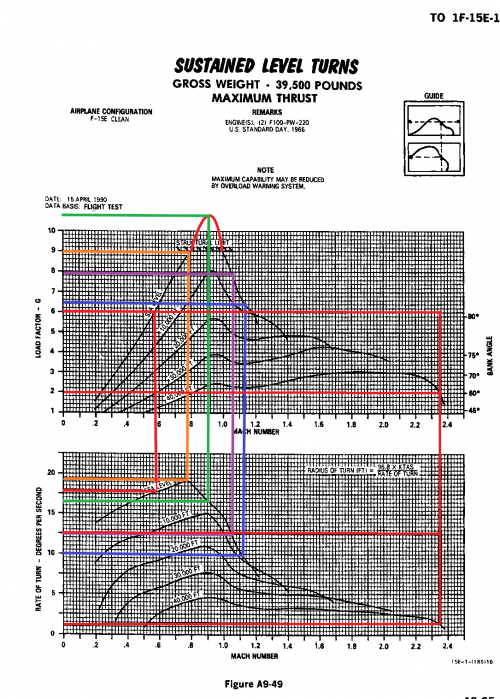
Yes, 2500 km/h with an air-to-air weapons load and over 6 Gs at that speed. He didn't specify if that was instantaneous or sustained turn. My guess is that it's an instantaneous turn since most of the planes that can actually reach that speed (F-15 being one of the rare ones that can do that) can barely sustain 2 Gs when clean.

d02e556a918d4636796d8c850b1c7781c424b902.png

If someone has EM chart for Instantaneous turn rate at that speed, that would be great?!
 
Last edited:
Yes, 14:08. Here's his quote:
"At supersonic speed, it performs no worse than aircraft of previous generations, such as the Su-27, Su-30, and Su-35. In particular, during flight tests, even with air-to-air weapons onboard, we conduct flights at speeds of up to 2,500 km/h. At these speeds, we achieve load factors exceeding six G. At the same time, the angular roll rates reach very high values"

(Russian: На сверхзвуковой скорости он себя ведёт не хуже, чем самолёты прошлых поколений, такие как Су-27, Су30 и Су-35. В частности, мы при испытаниях, даже при наличии оружия класса воздух-воздух выполняем полёты со скоростью 2 500 км/ч. И на этих на этих скоростях мы выходим на перегрузку больше шести единиц же. При этом угловые вращения по крену достигают очень высоких значений.)
 
Yes, 14:08. Here's his quote:
"At supersonic speed, it performs no worse than aircraft of previous generations, such as the Su-27, Su-30, and Su-35. In particular, during flight tests, even with air-to-air weapons onboard, we conduct flights at speeds of up to 2,500 km/h. At these speeds, we achieve load factors exceeding six G. At the same time, the angular roll rates reach very high
So they tested the Su-57 out to 2500 km/h, which comes out to approximately M2.36 on a standard day. This was likely one of the test prototypes without any LO coatings that might be damaged by high temperatures, and it is common practice in the west to relax some limits to exceed the design flight envelope under close supervision of the test engineers monitoring stresses and temperatures to provide structural and control margin for fleet pilots who fly to the published envelope limits.

A test demonstration of M2.36 implies a production Su-57 max Mach in the 2.1-2.2 range, which might be a time limited area of the envelope past M2.0 for airframe temperature management.
 
So they tested the Su-57 out to 2500 km/h, which comes out to approximately M2.36 on a standard day. This was likely one of the test prototypes without any LO coatings that might be damaged by high temperatures, and it is common practice in the west to relax some limits to exceed the design flight envelope under close supervision of the test engineers monitoring stresses and temperatures to provide structural and control margin for fleet pilots who fly to the published envelope limits.

A test demonstration of M2.36 implies a production Su-57 max Mach in the 2.1-2.2 range, which might be a time limited area of the envelope past M2.0 for airframe temperature management.
I vaguely remember that in 2000s there was an interview(?) that speed requirement was relaxed to M=2.
 
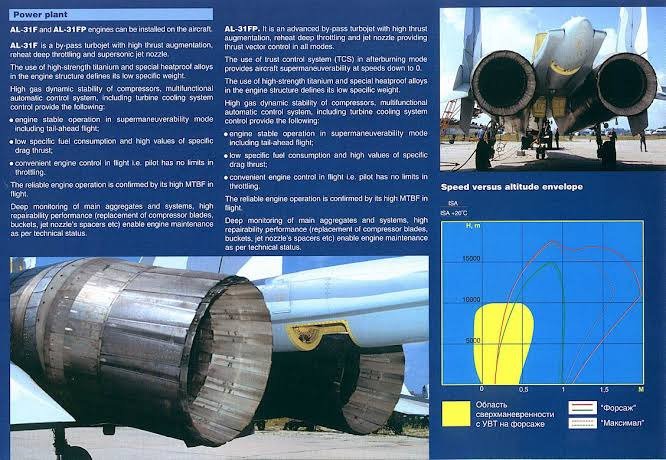
Tvc for su-30 isn’t active above around 0.6 Mach, I don’t see why it would be different for su-57. I doubt it’s gonna be active above 0.6 just cause new engine is newer, the engine is still based off al-31f.

Interesting note the brochure shows that normal su-30 can super cruise lol.
 

Attachments

  • 1767124814348.jpeg
    1767124814348.jpeg
    118 KB · Views: 92
Pardon me, I had about 10 pages to catch up on.


Seeing this feels lewd
Looking into a weapons bay does kinda feel like an upskirt, yeah.


Question is would two such missiles (650 kg per missile) in the rear bays mess with the trim and perhaps cause a lot of trim induced drag?
1300 kg is probaby doable in absolute terms and still have the plane usable. but makes one wonder what is the useful limit for su57, when it comes to total weight carried in the rear weapon bay. Would 2 tons be too much for example?
Possibly, but I suspect that the plane is designed to use the aft fuel tanks early on, then rebalance the fuel once the weapons drop.


Why is it that, despite having such aircraft and missiles in service, Russian planes still can’t perform SEAD missions?
Practice, doctrine, and experience.

The USAF (and USN to a lesser extent) learned SEAD the hard way in Vietnam, and developed the doctrines later on. There hasn't been an equivalent war for the Soviets/Russians. At best, they've seen the US operate under pretty limited ROEs recently. The most open ROEs were back in 1991, 35 years ago.


I'm somewhat ignorant on the topic, but my understanding is that the Su-57 intakes are a close cousin of the Su-27's design - which also wasn't really designed for top speed. From what I remember, the ramps purpose is not only shockwave positioning but also throat area control to avoid overpressure in certain engine conditions by reducing the effective area of the intake. The F-22 has opted to use bleed doors for this purpose so that it can vent the excess air after it has entered the intake. I don't know the respective tradeoffs for these solutions, but there must be advantages and disadvantages for both approaches.
View attachment 796727
As I understand it, a movable inlet is a significant reflector of radar. So the caret inlets don't move, while the vents let the excess air out in a direction that isn't seen by a head-on radar.
 
A test demonstration of M2.36 implies a production Su-57 max Mach in the 2.1-2.2 range, which might be a time limited area of the envelope past M2.0 for airframe temperature management.

Example, Su-27S has time limitation of 5min max when flying 2.15-2.35 Mach. Limiting factor is windshield/cockpit canopy. Btw, max operational speed is 2.35 Mach even in the case when it is armed with four big/heavy AAM's (under the fuselage).Both were made from organic glass and in the case of the Su-57,both were made from silicat glass.As many tests have shown, silicate glass is stronger than organic glass.In comparison with old Su-27, new Su-57 can carry six AAM's inside of its four FWC's so there will be no drag at all ( stealth configuration).

I think that when it comes to ''airframe temp management'' or can we call it '' limitation by the temp'' of the skin structural panels and parts ,there can not be limitation of 2 Mach. As we mentioned earlier ,we have Al-Li Alloys( yellow color which comes from the galvanization process) and mostly composites ( about 70% of the airframe's skin) as the main skin structural materials. Keep on mind that SR-71 has composites in the skin and could fly ( cruise) with 3.2 Mach for a long period of time.


We can see that skin temp was in the range 250°C-320°C :

View: https://www.reddit.com/r/aviation/comments/do28m1/sr71_surface_temperatures_at_cruise_mach_around/#lightbox


It is interesting that they developed special fiber optic menagement system for the composite panels of the airframe's skin .This is one article about that :


Now ,only limiting detail can be those special skin LO coatings/layers as you mentioned .There is very little info about those coatings,layers , except some details told by Andrey Lagarkov about cockpit canopy layers etc.We know that there is special chamber in the KnAAZ for aplying those coatings on the skin surface ,process which lasts about one month. Working temp. limitation for those layers? We simply don't know something like that.
 
Example, Su-27S has time limitation of 5min max when flying 2.15-2.35 Mach. Limiting factor is windshield/cockpit canopy. Btw, max operational speed is 2.35 Mach even in the case when it is armed with four big/heavy AAM's (under the fuselage).Both were made from organic glass and in the case of the Su-57,both were made from silicat glass.As many tests have shown, silicate glass is stronger than organic glass.In comparison with old Su-27, new Su-57 can carry six AAM's inside of its four FWC's so there will be no drag at all ( stealth configuration).

I think that when it comes to ''airframe temp management'' or can we call it '' limitation by the temp'' of the skin structural panels and parts ,there can not be limitation of 2 Mach. As we mentioned earlier ,we have Al-Li Alloys( yellow color which comes from the galvanization process) and mostly composites ( about 70% of the airframe's skin) as the main skin structural materials. Keep on mind that SR-71 has composites in the skin and could fly ( cruise) with 3.2 Mach for a long period of time.


We can see that skin temp was in the range 250°C-320°C :

View: https://www.reddit.com/r/aviation/comments/do28m1/sr71_surface_temperatures_at_cruise_mach_around/#lightbox


It is interesting that they developed special fiber optic menagement system for the composite panels of the airframe's skin .This is one article about that :


Now ,only limiting detail can be those special skin LO coatings/layers as you mentioned .There is very little info about those coatings,layers , except some details told by Andrey Lagarkov about cockpit canopy layers etc.We know that there is special chamber in the KnAAZ for aplying those coatings on the skin surface ,process which lasts about one month. Working temp. limitation for those layers? We simply don't know something like that.
I would be interested if you have any documentation that Al-Li alloys have significantly higher strength at temperature capability vs conventional Al alloys. They have mostly been touted for their lightness.

Yes, the SR-71 had some high temperature composite materials. I don’t believe they were used in any high strength structural applications, but I could be wrong. Most structural composites used currently are probably limited to around 200-250C. I’m not saying more capable materials haven’t been developed for the Su-57.
 
Tvc for su-30 isn’t active above around 0.6 Mach, I don’t see why it would be different for su-57. I doubt it’s gonna be active above 0.6 just cause new engine is newer, the engine is still based off al-31f.

Interesting note the brochure shows that normal su-30 can super cruise lol.

Actually, the AL-41F1 is mostly based on the dimensions of the AL-31F/FP (that was one of the requirements, so that the engine and its derivatives can be used to modernize and boost the performance of the Flanker family jets), but the actual engine is based on the technology used in the Izd.20 engine, and it has 80% of parts that are not homologous with the AL-31F/FP.

Anyway, there is an objective reason why you would not use TVC above Mach 0.5-0.6. Above that speed, the plane can achieve its best instantaneous and sustained turn rate without the use of the TVC; as a matter of fact, you would probably decrease your turn rate in that speed region if you used TVC, because deflecting the nozzle would use one portion of the thrust for pushing the jet forward and fighting drag, while the other portion of the thrust would be used for pitch control. That way, you would have less usable thrust for propelling the plane in a turn. Since modern planes use FBW and have highly relaxed longitudinal stability, there is no need for the TVC in that speed region, as the position of the aerodynamic control surfaces is optimized for the best lift-to-drag ratio, so that the whole portion of the thrust can be used for fighting the drag.

Supersonic region is something different and TVC is actually increasing turn performance.
 
So they tested the Su-57 out to 2500 km/h, which comes out to approximately M2.36 on a standard day. This was likely one of the test prototypes without any LO coatings that might be damaged by high temperatures, and it is common practice in the west to relax some limits to exceed the design flight envelope under close supervision of the test engineers monitoring stresses and temperatures to provide structural and control margin for fleet pilots who fly to the published envelope limits.

A test demonstration of M2.36 implies a production Su-57 max Mach in the 2.1-2.2 range, which might be a time limited area of the envelope past M2.0 for airframe temperature management.

While you might be right, this was not a simple high-speed dash to test the plane's temperature limits. The plane was hauling air-to-air missiles at that speed while performing complex maneuvers (high-G turns and rolls).
What would be the reasoning behind that if you would not use that speed region on operational planes with weapons?
And the question about the supersonic speed in that interview was referred to operational planes (Su-57, not the T-50). And on top of that we have technical specifications that are also confirming that the planes top speed is around 2500 km/h.

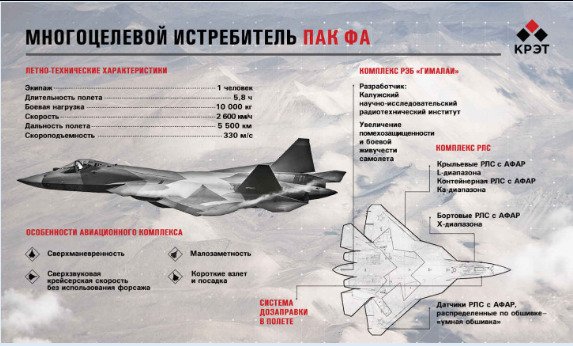
KRET is giving even higher speed figures:

681ea5d83bbaabbdb8567ac79d066ac2b90315fd.jpeg
 
I would be interested if you have any documentation that Al-Li alloys have significantly higher strength at temperature capability vs conventional Al alloys. They have mostly been touted for their lightness.

Yes, the SR-71 had some high temperature composite materials. I don’t believe they were used in any high strength structural applications, but I could be wrong. Most structural composites used currently are probably limited to around 200-250C. I’m not saying more capable materials haven’t been developed for the Su-57.

If we talk about the MiG-29 and Su-27 ( Mach 2.35 capable 4 gen fighters ), there is famous Al-Li Alloy 1420 as the so called 2nd gen Al-Li Alloy besides the main aviation Al Alloy V95:

''Сплав 1420 (Al-Mg-Li) имеет температуру плавления 582-638°C, пониженную плотность, высокую прочность и коррозионную стойкость, а его температурные характеристики в процессе термической обработки включают закалку при ~450°C с последующим старением при 170°C (для максимальной прочности) или 120°C (для пластичности), что делает его идеальным для авиастроения. ''

''Alloy 1420 (Al-Mg-Li) has a melting point of 582-638°C, low density, high strength and corrosion resistance, and its temperature characteristics during heat treatment include quenching at ~450°C followed by aging at 170°C (for maximum strength) or 120°C (for ductility), making it ideal for aircraft construction.''

For comparison ,MiG-25 and MiG-31 as the 3 Mach ( and more) or almost 3M capable interceptors have that D18T/D19T as the high temp. Al Alloys,usable to temp 250°C-300°C .

Besides 2nd gen Al-Li Alloys like 1420 and 1441 ,Russian VIAM invented to new 3rd gen Al-Li Alloys like V-1461 and V-1469 ( T1) with the main goal to reduce given aircraft's structural parts and components by 15%


From the Sukhoi book ( 80 years of Sukhoi Design Bureau) ,we know that in the KnAAZ they had problems with that V-1461 Alloy but if there was used the V-1469 Alloy ,we don't know. Version 'T1' is also heat resistant and is used in space/rocket technology.

 
Last edited:
Practice, doctrine, and experience.

The USAF (and USN to a lesser extent) learned SEAD the hard way in Vietnam, and developed the doctrines later on. There hasn't been an equivalent war for the Soviets/Russians. At best, they've seen the US operate under pretty limited ROEs recently. The most open ROEs were back in 1991, 35 years ago.

Maybe it is not bad to read this article from 'Defence security Asia' :

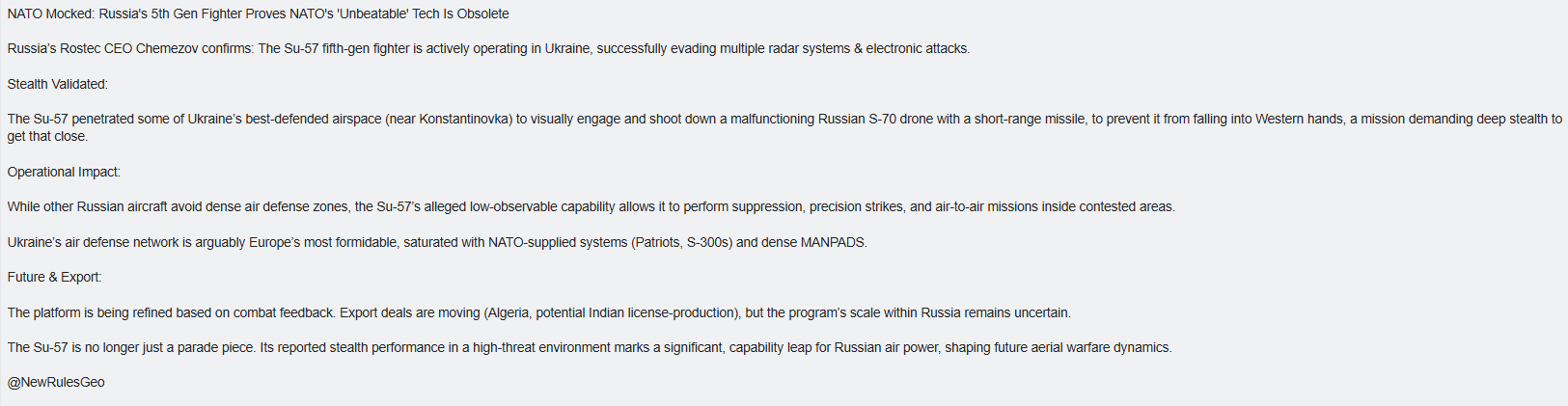
Su-57 Felon Proves Stealth and EW Evasion in Ukraine’s Deadliest Airspace, Says Rostec CEO​


Rostec says Russia’s fifth-generation Su-57 Felon is surviving radar and electronic warfare threats in Ukraine, reshaping modern air combat doctrine.​

Subtitles:

Design Philosophy and the Evolution of Russia’s Fifth-Generation Combat Doctrine


Ukraine as a Live-Fire Validation Environment for Stealth, EW, and Survivability


Source: https://defencesecurityasia.com/en/russia-su-57-felon-evades-radar-electronic-warfare-ukraine/


VKS used Su-57's in the SEAD/DEAD combat missions from the very beginning of the war.It means almost four years of intensive use in the hostile environment with massive use of EW/ELINT assets and of course with great danger from medium/long range SAM's.
 
If we talk about the MiG-29 and Su-27 ( Mach 2.35 capable 4 gen fighters ), there is famous Al-Li Alloy 1420 as the so called 2nd gen Al-Li Alloy besides the main aviation Al Alloy V95:

''Сплав 1420 (Al-Mg-Li) имеет температуру плавления 582-638°C, пониженную плотность, высокую прочность и коррозионную стойкость, а его температурные характеристики в процессе термической обработки включают закалку при ~450°C с последующим старением при 170°C (для максимальной прочности) или 120°C (для пластичности), что делает его идеальным для авиастроения. ''

''Alloy 1420 (Al-Mg-Li) has a melting point of 582-638°C, low density, high strength and corrosion resistance, and its temperature characteristics during heat treatment include quenching at ~450°C followed by aging at 170°C (for maximum strength) or 120°C (for ductility), making it ideal for aircraft construction.''

For comparison ,MiG-25 and MiG-31 as the 3 Mach ( and more) or almost 3M capable interceptors have that D18T/D19T as the high temp. Al Alloys. Letter T from термостойкий or heat resistant.

Besides 2nd gen Al-Li Alloys like 1420 and 1441 ,Russian VIAM invented to new 3rd gen Al-Li Alloys like V-1461 and V-1469 ( T1) with the main goal to reduce given aircraft's structural parts and components by 15%


From the Sukhoi book ( 80 years of Sukhoi Design Bureau) ,we know that in the KnAAZ they had problems with that V-1461 Alloy but if there was used the V-1469 Alloy ,we don't know. Version 'T1' is also heat resistant and is used in space/rocket technology.

Per Google, Al-Li 1420 starts loosing strength above 150C, and start to over-age (and get permanently weaker) at 180C. Stagnation temp is around 200C at M2.4 at altitude, so that would appear to be a time limited condition, depending on how how the heat soaks into the airframe.
 
Per Google, Al-Li 1420 starts loosing strength above 150C, and start to over-age (and get permanently weaker) at 180C. Stagnation temp is around 200C at M2.4 at altitude, so that would appear to be a time limited condition, depending on how how the heat soaks into the airframe.

Yes...

''Термическая обработка сплава 1420: закалка от 450 °С (на воздухе), старение при 170 °С, 8-24 ч - обеспечивает максимальные прочностные свойства, а при 120 °С, 12-48 ч - приводит к получению повышенной пластичности.''

''Heat treatment of alloy 1420: hardening from 450 °C (in air), aging at 170 °C, 8-24 hours - provides maximum strength properties, and at 120 °C, 12-48 hours - leads to increased plasticity.''

Comparison : Al-Li Alloys ''1441'' =max 130°C and 'V-1469' max 250°C


Btw,there is Al Alloys which can withstand 400°C.

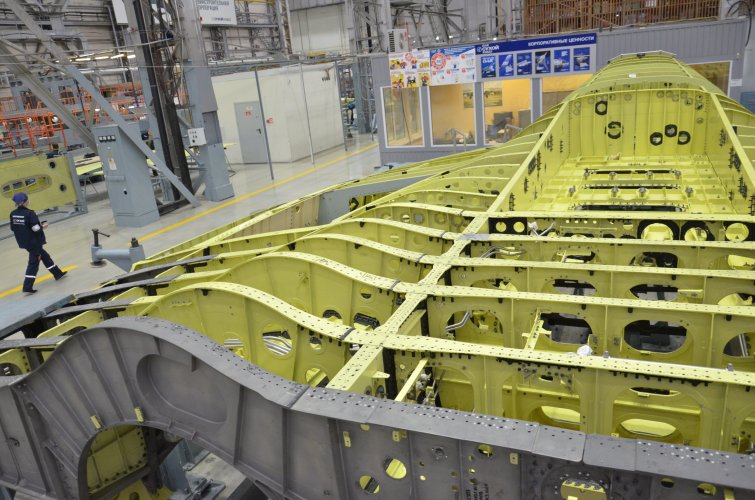
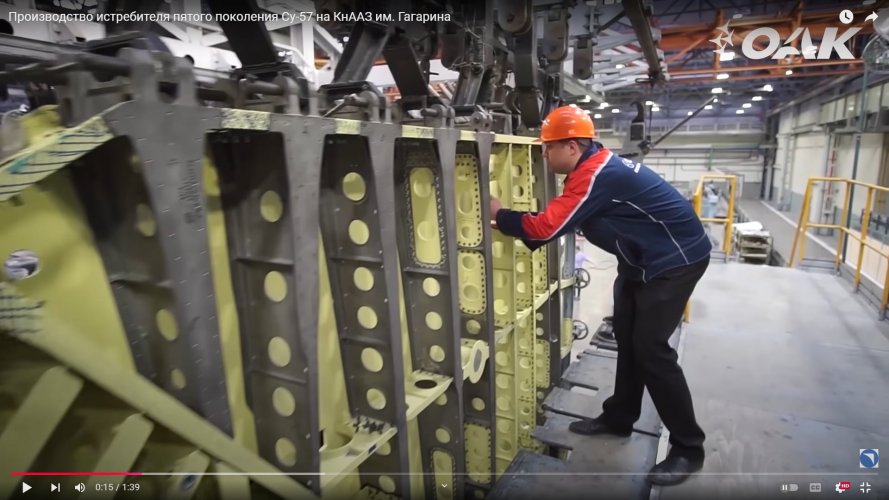
Some sequences from the KnAAZ.

Su-57 Centroplane structure.jpeg

Su-57 construction  materials.jpg

Su-57 construction  materials 2.jpg

Su-57 construction  materials 1.png
 
I know with current level electronics that 100ghz radars have a limited distance. Does anyone know if stealth shape and coatings still matter like at a 50ghz range or higher based on any test results known publicly?
 
Yes, the SR-71 had some high temperature composite materials. I don’t believe they were used in any high strength structural applications, but I could be wrong. Most structural composites used currently are probably limited to around 200-250C. I’m not saying more capable materials haven’t been developed for the Su-57.
IIRC that was all the RAM in the chines. Nothing structural.


Thank you for that!

VKS used Su-57's in the SEAD/DEAD combat missions from the very beginning of the war.It means almost four years of intensive use in the hostile environment with massive use of EW/ELINT assets and of course with great danger from medium/long range SAM's.
Right, but the US has been doing SEAD/DEAD for 50-60 years. Russians have really only started in the last decade or so.
 
Right, but the US has been doing SEAD/DEAD for 50-60 years. Russians have really only started in the last decade or so.

Keep in mind that 40 years ago, Soviet MiG-25BM's were in Iraq to conduct some SEAD/DEAD missions against Iranian AD/SAM sites with ARM type Kh-58U.


Then during 2008 happened this :

''Впервые Су-34 в количестве двух единиц применялся в ходе боёв на территории Южной Осетии в августе 2008 года. Самолёты использовались для прикрытия действий ударной авиации, ведя радиоэлектронную борьбу с элементами грузинской ПВО при помощи станции помех «Хибины». Для подавления РЭС Су-34 ставил помехи из боевых порядков, что не позволяло ЗРК Грузии успешно проводить отстройку от помех, также принимал участие в обеспечении вылета, в котором Су-24М противорадиолокационной ракетой Х-58у уничтожил ключевую РЛС 36Д6-М у села Шавшвеби под Гори.''

''For the first time, two Su-34s were used during battles on the territory of South Ossetia in August 2008. The aircraft were used to provide cover for the actions of strike aircraft, conducting electronic warfare against elements of the Georgian air defense system using the Khibiny jamming station.
To suppress RES, the Su-34 jammed from combat formations, which prevented the Georgian air defense system from successfully countering the jamming. It also took part in supporting a flight in which the Su-24M, using an Kh-58U anti-radar missile, destroyed a key 36D6-M radar near the village of Shavshvebi near Gori.''


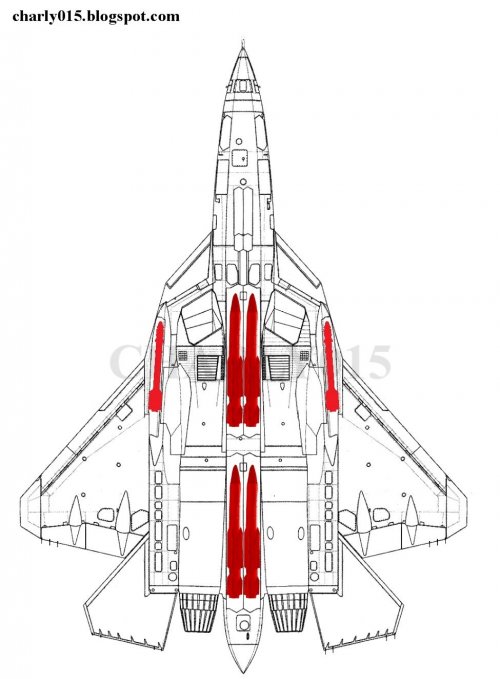
We could see Su-57 with ARM Kh-58UShK(TP) inside of the FWC ( max four) in the stealth conf.

View: https://www.reddit.com/r/WarplanePorn/comments/1oslwjs/clear_view_of_the_su57s_weapons_bay_1280853/


Also there is possibility for carrying max 6 ARM type Kh-31PM's under the wings/air intakes in non-stealth conf.

View: https://www.reddit.com/r/WarplanePorn/comments/ikkfzd/su57_052_test_prototype_carrying_kh31_and_r73/


T-50 with ARM Kh-31PM.jpg
 
Keep in mind that 40 years ago, Soviet MiG-25BM's were in Iraq to conduct some SEAD/DEAD missions against Iranian AD/SAM sites with ARM type Kh-58U.
That's a 250km range missile. And also right about the time they were introduced.


''For the first time, two Su-34s were used during battles on the territory of South Ossetia in August 2008. The aircraft were used to provide cover for the actions of strike aircraft, conducting electronic warfare against elements of the Georgian air defense system using the Khibiny jamming station.
To suppress RES, the Su-34 jammed from combat formations, which prevented the Georgian air defense system from successfully countering the jamming. It also took part in supporting a flight in which the Su-24M, using an Kh-58U anti-radar missile, destroyed a key 36D6-M radar near the village of Shavshvebi near Gori.''
Stand-in jamming with an occasional 250km-range missile shot.


We could see Su-57 with ARM Kh-58UShK(TP) inside of the FWC ( max four) in the stealth conf.
That would be highly effective. Though I'm wondering just how low the RCS of the Su-57 is, relative to say F-35s.

But it's still a stealthy(ish) platform bringing 4x long range ARMs broadly comparable to SiAW/AARGM-ER.


Also there is possibility for carrying max 6 ARM type Kh-31PM's under the wings/air intakes in non-stealth conf.
This one I kinda doubt as an operationally-viable loadout. SEAD is not the time you want to be in Beast Mode.

Might be viable as a heavy-attack option for lots of other Kh31s, but not as a SEAD mission.
 
Again this pic but this time with the question. What was this situation? Left LEVCON was in the downward position and the left nozzle in the main position. Right LEVCON was in the main and the right nozzle in the downward position. Maybe it was high AoA scenario?


T-50-1 AL-41F-1 TVC capabilities.jpg


Of course it was T-50-1 .

 
IMHO it would produce nose-down pitch and anticlockwise roll moments, maybe some residual left yaw due to the braking effect of the left LEVCON, to be compensated by the keels. The little we can see from LE flaps and right tail seem to match that. Common negative deflection of the LEVCONS typically points out to high AoA, very much like LE flaps would do, but this differential deflection works differently, as much as I can infer.
 
There is also some left yaw from the right engine vector with the pivot rotated outboard from vertical. The differential LEVCON deflection would have opposite yaw and pitch reactions depending on AOA - is the right side above the AOA (pitch up, right yaw) or is the left side below AOA (pitch down, left yaw).

Flight control deflections can be somewhat mysterious depending on the flight conditions (Load, AOA) and the desired flight path.

But I am not an expert of flight controls…
 
That would be highly effective. Though I'm wondering just how low the RCS of the Su-57 is, relative to say F-35s.

But it's still a stealthy(ish) platform bringing 4x long range ARMs broadly comparable to SiAW/AARGM-ER.

Now we can go on with this theme here when we talk about Su-57's capability in SEAD/DEAD missions in the stealth mode with the ARMs type Kh-58UShK(TP).

We know that MiG-25BM could fly and launch four Kh-58U from 20+km alt and with speed about 2500km/h.Those Kh-58U were attached under the wings.Here in the Su-57's case, we have new ( much modified) ARM Kh-58UShK/Izd 112UShK with foldable wings and stabilizers and all four can be attached inside of the both FWC's on UVKU-50U.

There is some strange data about the new Kh-58UShK(TP). This source like many other give correct data about dimensions : 4.2mx0.4mx0.4m with body diameter of 0.38m. Launch weight of 650kg is questionable when we know that Kh-58UShK(TP) is about 0.6m shorter than 650kg heavy Kh-58U. Difference of 0.6m is not small and question is, if there is the new smaller warhead maybe for bigger rocket engine chamber etc. If ARM Kh-58UShK(TP) is really heavy 650kg, than I am wondering how much weighs very long range AAM Izd 810.


Is there any photo where we can see this table in front of the Kh-58UShKE-IRR from better angle?


Ten years ago ,B.Obnosov as the head of the KTRV said that Kh-58UShK-TP is almost completely new ARM with new design,new combined passive radar and IR seeker,new rocket engine, etc ( I've once read that engine is almost the same as one in the AAM R-37M, who knows). He also said that new ARM can be attached outside ( under the wings and air intakes) . Also this new ARM maybe got new batteries in comparison with the older Kh-58U ( were limitation factor for much greater launch ranges). All in all,with all four inside of the two FWC's, Su-57 has no drag ,only weight, total 2600kg? .Maybe Su-57 ( now with AL-41F-1) can not achieve max possible launch parameters like one MiG-25BM but they are very close to them.
 
Last edited:
Ten years ago ,B.Obnosov as the head of the KTRV said that Kh-58UShK-TP is almost completely new ARM with new design,new combined passive radar and IR seeker,new rocket engine, etc ( I've once read that engine is almost the same as one in the AAM R-37M, who knows). He also said that new ARM can be attached outside ( under the wings and air intakes) . Also this new ARM maybe got new batteries in comparison with the older Kh-58U ( were limitation factor for much greater launch ranges). All in all,with all four inside of the two FWC's, Su-57 has no drag ,only weight, total 2600kg? .Maybe Su-57 ( now with AL-41F-1) can not achieve max possible launch parameters like one MiG-25BM but they are very close to them.
No surface drag from the missiles hanging in the breeze, but the lift drag caused by the extra weight is still there.
 
No surface drag from the missiles hanging in the breeze, but the lift drag caused by the extra weight is still there.

Of course that's right. I 've meant on the airflow drag.

First was this ...

Su-57E SWC opened.jpeg

Then this..

Rear FWC opened.jpg

...and this .

Su-57E with forward FWC and both SWC opened.jpg

Before all of this, we could see some real launches...


A rather bold statement, I would say.

Ukr.source,nothing special. Chemezov said what he said and there was answer from Indians that they will consider all options and will think about all aspects.

In the connection with the new events surrounding the US attack on Venezuela, if what is stated by the media MWM is correct. We can see what 5th gen stealth fighters can do and what are capable of ,especially in the real preventive SEAD/DEAD combat missions like in earlier US/Israel attack on Iran. We can see that some or most 4th gen fighters are simply no match for them.

To repeat here what Igor Korotchenko commented about combat use of the first operational group of four Su-57's from the start of the SMO in the SEAD/DEAD missions.They were certainly used for neutralizing of the ukr. radar assets.This kind of missions can only be accomplished in the stealth mode with highest possible degree of secrecy and stealthiness.

If we talk about IAF and its fighters, they have no stealth 5th gen fighters at all .What was mentioned earlier ,they have no real capable long range/very long range AAM's at all also. I think for them, this is the last time for them to decide Su-57E or not. Operation 'Sindoor' from May 2025 proved that even smaller and lighter enemy fighters can engage huge Su-30MKI ( frontal RCS is very big when it is armed with AAM's ) and which btw possess very capable long range radar but don't have any capable long range AAM on other side.
 
Last edited:

Similar threads

Back
Top Bottom