
You are using an out of date browser. It may not display this or other websites correctly.
You should upgrade or use an alternative browser.
You should upgrade or use an alternative browser.
Sukhoi Su-57 flight testing and development
- Thread starter overscan (PaulMM)
- Start date
FGFA (79L) never was a two-seater
Hm ,there was info that FGFA in fact should have both single-seat and double-seat version?

snne
ACCESS: Top Secret
- Joined
- 3 July 2022
- Messages
- 2,047
- Reaction score
- 7,557
Informative thread on 101KS-U's potential performance
View: https://x.com/Tas1Bora/status/1992250325739372645?s=20
View: https://x.com/Tas1Bora/status/1992250325739372645?s=20

Null
ACCESS: Secret
- Joined
- 16 December 2024
- Messages
- 221
- Reaction score
- 393
not saying the twitter user could be wrong but I remember hearing infrared and UV detection and not just UV detection for the Su-57's MAWS. Not trying to be funny but the number of radars the Su-57 has all around it might count as tracking non-burning missiles as well.Informative thread on 101KS-U's potential performance
View: https://x.com/Tas1Bora/status/1992250325739372645?s=20
Last edited:

kizvy
Local su-30mkm enjoyer
- Joined
- 14 October 2025
- Messages
- 93
- Reaction score
- 88
I thought the ir maws was just being prototyped on a t-50 and not on serial production su57snot saying the twitter user could be wrong but I remember hearing infrared and UV detection and not just UV detection for the Su-57's MAWS. Not trying to be funny but the number of radars the Su-57 has all around it might count as tracking non-burning missiles as well.
Ainen
I really should change my personal text
- Joined
- 25 August 2011
- Messages
- 2,115
- Reaction score
- 3,599
Informative thread on 101KS-U's potential performance

Tbh, slightly reluctant to read as EAODAS is a system of MWIR sensors (which is precisely because it's both imaging and maws system); LWIR extension is promised on block 4.
Original design relies on UV(and maybe swIR) spherical coverage to trigger everything else.I thought the ir maws was just being prototyped on a t-50 and not on serial production su57s
IR band is covered by 3 imaging IRSTs, which in scanning mode are responsible for just that. Plus, of course, radars - which are great, but have blind cones(270/360 deg coverage, not 720).
There's a chance that Su-57M(and now apparently T-75) will have imaging IR EODAS, based on even larger optical windows we saw, but this is pure speculation on F-35 setting the logical trend.
Last edited:
View attachment 792807
Tbh, slightly reluctant to read as EAODAS is a system of MWIR sensors (which is precisely because it's both imaging and maws system); LWIR extension is promised on block 4.
Original design relies on UV(and maybe swIR) spherical coverage to trigger everything else.
IR band is covered by 3 imaging IRSTs, which in scanning mode are responsible for just that. Plus, of course, radars - which are great, but have blind cones(270/360 deg coverage, not 720).
There's a chance that Su-57M(and now apparently T-75) will have imaging IR EODAS, based on even larger optical windows we saw, but this is pure speculation on F-35 setting the logical trend.
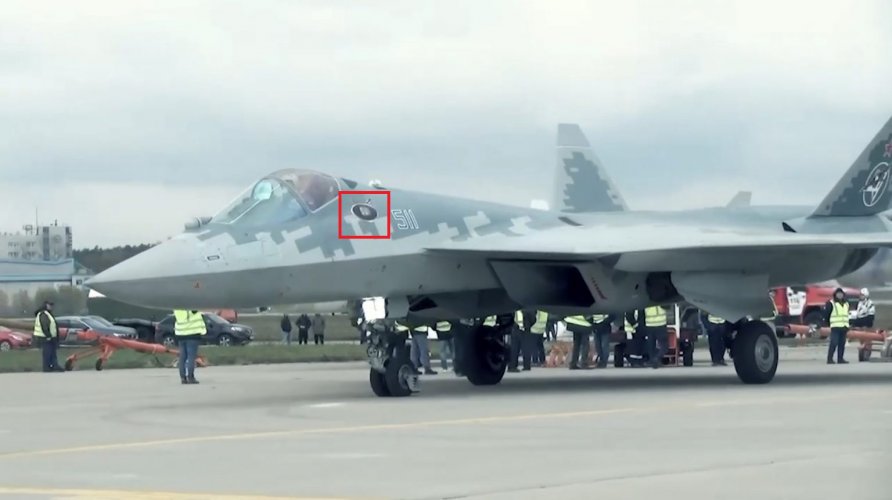
You meant this one ?
Sorry, should’ve clarified for flanker/su-57/su-75 class engines. From what I remember, al-31fp, al-41-f1s and al-31f serie 3 all have emergency mode that’s around 500 kgf (although I think serie 3 is slightly lower)
Example:
''Силовая установка состоит из двух двухконтурныхреактивных двигателей Д-30Ф6 (изделие 48) со степеньюдвухконтурности 0,57. Тяга без форсажа составляет 93,16кН (9500 кгс), а расход топлива - 0,073 кг/Нч (0,72 кг/кгс.ч), с форсажом - 152,0 кН (15500 кгс) расход топлива- 0,194 кг/Нч (1,9 кг/кгс.ч).На чрезвычайном режиме двигатель может развить тягу 186,3 кН (19000 кгс). Массасухого двигателя составляет 2416 кг.''
''The power plant consists of two D-30F6 (article 48) dual-circuit jet engines with a bypass ratio of 0.57. Thrust without afterburner is 93.16 kN (9,500 kgf), and fuel consumption is 0.073 kg/Nh (0.72 kg/kgf.h), with afterburner - 152.0 kN (15,500 kgf) fuel consumption - 0.194 kg/Nh (1.9 kg/kgf.h). In emergency mode, the engine can develop a thrust of 186.3 kN (19,000 kgf). Dry weight of the engine is 2416 kg.''
Of course ,we are talking about max static thrust values on the MP and Full AB mode .
One detail : AL-41F-1 is more than 1000kg lighter than D-30F-6 !

Avimimus
ACCESS: Top Secret
- Joined
- 15 December 2007
- Messages
- 2,600
- Reaction score
- 1,259
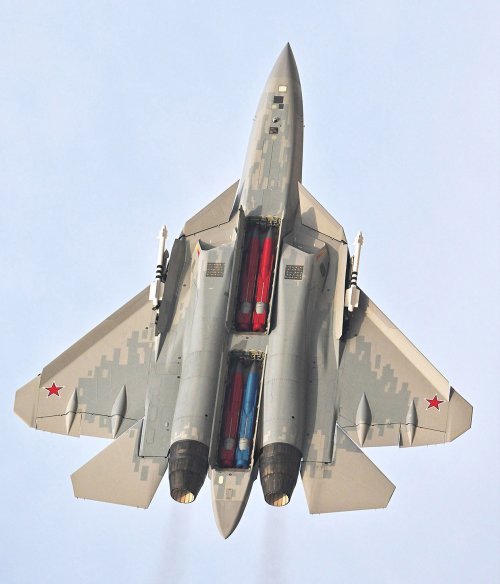
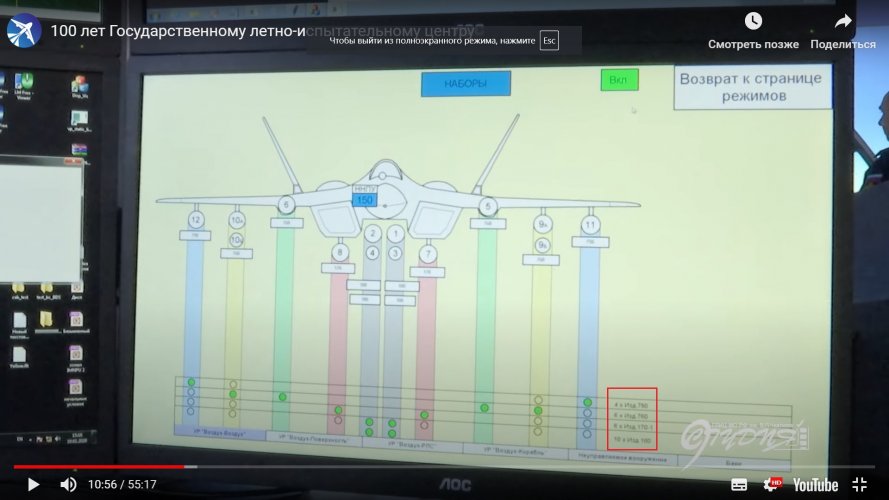
Judging from Su-35 loadouts - a couple of Izdeliye 810 and a couple of Kh-58UShK might be a pretty common operational loadout. I wonder if there is really need for internal carriage of Izdeliye 180 class missiles given that tendency...? More magazine depth has attractions, but it looks like the tendency towards heavier missiles is becoming ingrained.
But then there is the question of the claims made about the Su-75 weapon bays...
But then there is the question of the claims made about the Su-75 weapon bays...
Ten Izd 180's can be carried. Four inside of the two FWC and six under the wings/air intakes.Judging from Su-35 loadouts - a couple of Izdeliye 810 and a couple of Kh-58UShK might be a pretty common operational loadout. I wonder if there is really need for internal carriage of Izdeliye 180 class missiles given that tendency...? More magazine depth has attractions, but it looks like the tendency towards heavier missiles is becoming ingrained.
But then there is the question of the claims made about the Su-75 weapon bays...
From the TWZ....
View: https://www.youtube.com/watch?v=kGcYiZac7b0
Close look at Russia's Su-57 at the Dubai Airshow

Erdosain
ACCESS: Top Secret
- Joined
- 10 March 2020
- Messages
- 621
- Reaction score
- 2,577
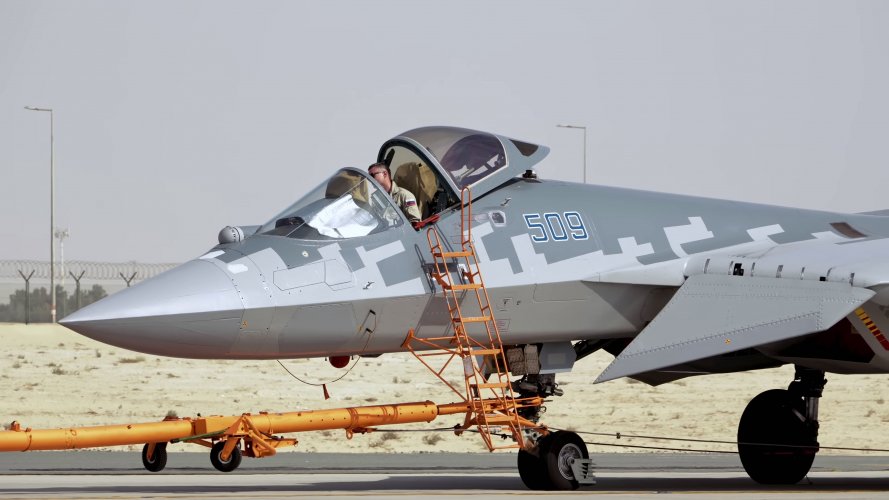
Pilot Sergei Bogdan: The Su-57E's weapons bays amaze specialists with their size
The Russian Su-57 fighter jet is being showcased at international exhibitions for the third time. At the Dubai Airshow 2025, the aircraft was displayed for the first time with open cargo bays for weapons. As usual, Sergei Bogdan, a distinguished test pilot and chief pilot of the Sukhoi Design Bureau of the United Aircraft Corporation Rostec, piloted the fifth-generation aircraft. In an interview with TASS, he discussed the new elements of the program and how it differs from the presentations of foreign competitors.

 tass.ru
The Russian Su-57 fighter jet is being showcased at international exhibitions for the third time. At the Dubai Airshow 2025, the aircraft was displayed for the first time with open cargo bays for weapons. As usual, Sergei Bogdan, a distinguished test pilot and chief pilot of the Sukhoi Design Bureau of the United Aircraft Corporation Rostec, piloted the fifth-generation aircraft. In an interview with TASS, he discussed the new elements of the program and how it differs from the presentations of foreign competitors.
Летчик Сергей Богдан: отсеки вооружения Су-57Э поражают специалистов габаритами
Российский истребитель Су-57 в третий раз показывают посетителям зарубежных выставок. На международной выставке Dubai Airshow — 2025 машина впервые была представлена с открытыми грузовыми отсеками ...
tass.ru
Erdosain
ACCESS: Top Secret
- Joined
- 10 March 2020
- Messages
- 621
- Reaction score
- 2,577

Su-57 jet undergoes continuous upgrade â Sukhoi Design Bureauâs chief pilot
Sergey Bogdan said that test pilots submit detailed reports on any deficiencies, whether minor or major
 tass.com
Su-57E capable of maneuverable combat even with heavy missiles on board â test pilot
Sergey Bogdan specified how the Su-57Eâs demonstration differs from those of its international counterparts
tass.com

No. 6 pieces of R-77M can be placed inside. Su-75 5 pieces. Through an adapter or additional attachment points.Ten Izd 180's can be carried. Four inside of the two FWC and six under the wings/air intakes.
Ten Izd 180's can be carried. Four inside of the two FWC and six under the wings/air intakes.
View attachment 793100
kizvy
Local su-30mkm enjoyer
- Joined
- 14 October 2025
- Messages
- 93
- Reaction score
- 88
Su-75 is slightly different, as it can fit 3 r77ms in main bay and 2 r77ms in its side bays while su-57 is limited to 2 max in each bay, and its side bays don’t support r77msNo. 6 pieces of R-77M can be placed inside. Su-75 5 pieces. Through an adapter or additional attachment points.
gerijofiejskd
ACCESS: Restricted
- Joined
- 13 July 2025
- Messages
- 4
- Reaction score
- 17
Why? Su-75 main bay is bigger than Su-57?No, they can't. Spend some time reading topic before making statements.

- Joined
- 1 April 2006
- Messages
- 12,024
- Reaction score
- 13,950
No. They are unified to cut costs as it was known from the beginning. Again, what we do mean under commonality? Common drive units, bay doors? Because internal structure - frames, ribs, walls etc will be different anyway.
It was said above that T-50 and T-75 apparently have quite different weapons bay area flow conditions to start with.
It was said above that T-50 and T-75 apparently have quite different weapons bay area flow conditions to start with.
Last edited:
Ainen
I really should change my personal text
- Joined
- 25 August 2011
- Messages
- 2,115
- Reaction score
- 3,599
"Thick" VLRAAMs are not really universal - their performance up close and especially low(launch conditions) can be rather marginal. It's explicitly a long range weapon, to be launched from as high up as possible.Judging from Su-35 loadouts - a couple of Izdeliye 810 and a couple of Kh-58UShK might be a pretty common operational loadout. I wonder if there is really need for internal carriage of Izdeliye 180 class missiles given that tendency...? More magazine depth has attractions, but it looks like the tendency towards heavier missiles is becoming ingrained.
But then there is the question of the claims made about the Su-75 weapon bays...
Normal MRAAM covers almost all situations, short of point blank.
PeregrineFalcon
ACCESS: Confidential
- Joined
- 31 January 2023
- Messages
- 66
- Reaction score
- 247
While I agree that the MRAAM would be more efficient on the border between WVR and BVR due to their better maneuverability, I don't agree that the VLRAAM's performance would be marginal under the same conditions. That would be the same as saying that the bigger SAM missile's performance would be marginal at similar ranges and altitudes."Thick" VLRAAMs are not really universal - their performance up close and especially low(launch conditions) can be rather marginal. It's explicitly a long range weapon, to be launched from as high up as possible.
Normal MRAAM covers almost all situations, short of point blank.
We have an example of the MiG-31M in 1994 launching 4 R-37s at the 4 MiG-21s that were maneuvering during the course of an engagement, and all 4 MiGs were destroyed even though the MiG-31M was at about 5 km altitude during the launch sequence. All 4 MiGs were flying at different altitudes, ranges, and azimuthal spacing.
The new R-37M is superior compared to the old R-37 missile, and one thing that sets it apart from the MRAAMs is its huge warhead. It is able to hit maneuvering targets at extremely low altitudes, and somewhat lower maneuverability compared to the MRAAMs is compensated by the big blast radius. This was obvious during the SMO where almost all pilots whose planes were hit by the R-37M were unfortunately killed due to the devastating power of its warhead.
Here is the video of the Ukraine Mig-29 hit at extremely low altitude deep inside the Ukraine territory by the R-37M:
Yes, I was talking in an all internal load for patrol (2xRVV-MD, 2xRVV-BD, 2xKh-58UShKE or maybe if permitted 2xRVV-MD, 3xRVV-BD, 1xKh-58UShKE).
In the stealth configuration for SEAD/DEAD missions ,Su-57 can carry two Izd.760 and e.g. two ARM Kh-59UShK-TP and two Izd.180 or 810.Maybe that weapon combo is also possilbe 'cause both missiles are heavy and can be attached only on UVKU-50U ( up to 750kg of weight).
God that looks horrible, looks not survivable.Here is the video of the Ukraine Mig-29 hit at extremely low altitude deep inside the Ukraine territory by the R-37M:
Last edited by a moderator:
PeregrineFalcon
ACCESS: Confidential
- Joined
- 31 January 2023
- Messages
- 66
- Reaction score
- 247
Yeah, the young pilot from the photo unfortunately diedGod that looks horrible, looks not survivable.

Sorry for the random question, but does anyone know why the Su-57 has its engines angled outwards? As far as I can tell, this is a fairly unique arrangement that hasn't been used on any other aircraft. What's the advantages of that arrangement?
Citation from Twit :
''NIR + UV should be able to do most of these with proper software behind them. In fact for some it has a better potential. But it cannot work for aircraft detection and it cannot detect missiles after they burn out.''
This source tell that it can...
''101КС-У (ультрафиолетовый внешний модуль) - всеракурсная система обзора в ультрафиолетовом спектре, служит для обнаружения и определения координат реактивных двигателей (самолётов и ракет) в УФ-спектре и для выдачи ЦУ 101КС-О.''
''101KS-U (ultraviolet external module) - an all-aspect surveillance system in the ultraviolet spectrum, used to detect and determine the coordinates of jet/rocket engines (aircraft and missiles) in the UV spectrum and to issue the 101KS-O targeting command.''
So data from the 101KS-U will be transfered to 101KS-O which btw possess IRST and maybe work in MWIR band ? With two optical blocks in those two modules they have 360° coverage of upper and lower 'hemisphere' of the Su-57. We had opportunity too see how fast those optical blocks rotate.After data is processed, laser will do the work.
''NIR + UV should be able to do most of these with proper software behind them. In fact for some it has a better potential. But it cannot work for aircraft detection and it cannot detect missiles after they burn out.''
This source tell that it can...
''101КС-У (ультрафиолетовый внешний модуль) - всеракурсная система обзора в ультрафиолетовом спектре, служит для обнаружения и определения координат реактивных двигателей (самолётов и ракет) в УФ-спектре и для выдачи ЦУ 101КС-О.''
''101KS-U (ultraviolet external module) - an all-aspect surveillance system in the ultraviolet spectrum, used to detect and determine the coordinates of jet/rocket engines (aircraft and missiles) in the UV spectrum and to issue the 101KS-O targeting command.''
So data from the 101KS-U will be transfered to 101KS-O which btw possess IRST and maybe work in MWIR band ? With two optical blocks in those two modules they have 360° coverage of upper and lower 'hemisphere' of the Su-57. We had opportunity too see how fast those optical blocks rotate.After data is processed, laser will do the work.
PeregrineFalcon
ACCESS: Confidential
- Joined
- 31 January 2023
- Messages
- 66
- Reaction score
- 247
Sorry for the random question, but does anyone know why the Su-57 has its engines angled outwards? As far as I can tell, this is a fairly unique arrangement that hasn't been used on any other aircraft. What's the advantages of that arrangement?
Since the engines are placed far apart, in the case of one engine failure, the thrust from the other engine would produce strong yaw moments, so the engines are angled a few degrees (two, if memory serves me well), and in that case, the thrust force would be located much closer to the center of gravity.
Null
ACCESS: Secret
- Joined
- 16 December 2024
- Messages
- 221
- Reaction score
- 393
Aircraft also has 360 X-band tracking coverage as wellSo data from the 101KS-U will be transfered to 101KS-O which btw possess IRST and maybe work in MWIR band ? With two optical blocks in those two modules they have 360° coverage of upper and lower 'hemisphere' of the Su-57. We had opportunity too see how fast those optical blocks rotate.After data is processed, laser will do the work.
Last edited by a moderator:
I think the f-14 had them a bit angled tooSince the engines are placed far apart, in the case of one engine failure, the thrust from the other engine would produce strong yaw moments, so the engines are angled a few degrees (two, if memory serves me well), and in that case, the thrust force would be located much closer to the center of gravity.
Aircraft also has 360 X-band tracking coverage as well
Of course,for aircraft /missiles detecting-tracking, Su-57 has four centimetric X-band AESA .Is it exactly 360° or maybe not,maybe very close to it ? Three antennas in the front section have total FoV 270° by azimuth and rear one in the tailboom has 110° azimuthal FoV.
Last edited:
snne
ACCESS: Top Secret
- Joined
- 3 July 2022
- Messages
- 2,047
- Reaction score
- 7,557
What about Bloomberg?How reliable is Jane’s nowadays with Indian matters?
https://www.janes.com/osint-insight...ir-force-chief-unveils-new-modernisation-plan
View: https://x.com/business/status/1995115995594166616?s=20
Imagine a country fielding both Rafales, a Western 4.5th gen jet, and Su-57s, a Russian 5th gen jet... LOL
This just adds to the evidence that, while the Rafale is a very capable jet, its procurement by the IAF is a strategic mistake in the long term...
Last edited:
^
Maybe and finally it is time for the great Su-57E deal. Right now IAF has no alternative especially after what happened to IAF fighters during 'Operation Sindoor' when Pak AF fighters engaged them from about 200km away with Chinese PL-15E. IAF heavy fighters like Su-30MKI which radars btw have max detection distance of 400 kms ,possess only R-27ER1 and R-77-1EL with max launch ranges 100-150km.
First ,they have no 5th gen (stealth) fighters at all and second, they have no real (very) long range AAM.With the Su-57E(D) ,they would get all of that. Only India can make 'Su-57E' as real deal, to buy them in great number with licence or not.
Maybe and finally it is time for the great Su-57E deal. Right now IAF has no alternative especially after what happened to IAF fighters during 'Operation Sindoor' when Pak AF fighters engaged them from about 200km away with Chinese PL-15E. IAF heavy fighters like Su-30MKI which radars btw have max detection distance of 400 kms ,possess only R-27ER1 and R-77-1EL with max launch ranges 100-150km.
First ,they have no 5th gen (stealth) fighters at all and second, they have no real (very) long range AAM.With the Su-57E(D) ,they would get all of that. Only India can make 'Su-57E' as real deal, to buy them in great number with licence or not.
What about Bloomberg?
View: https://x.com/business/status/1995115995594166616?s=20
Imagine a country fielding both Rafales, a Western 4.5th gen jet, and Su-57s, a Russian 5th gen jet... LOL
This just adds to the evidence that, while the Rafale is a very capable jet, its procurement by the IAF is a strategic mistake in the long term...
They aren't on the White House blacklist yet.
So that's probably true.
Ainen
I really should change my personal text
- Joined
- 25 August 2011
- Messages
- 2,115
- Reaction score
- 3,599
By logic, 101KS-U should see in the same band in which it jams. It jams same bands where seekers work. Seekers work in MWIR.So data from the 101KS-U will be transfered to 101KS-O which btw possess IRST and maybe work in MWIR band ? With two optical blocks in those two modules they have 360° coverage of upper and lower 'hemisphere' of the Su-57. We had opportunity too see how fast those optical blocks rotate.After data is processed, laser will do the work.

Fibonacci
ACCESS: Confidential
- Joined
- 15 May 2025
- Messages
- 54
- Reaction score
- 372
Fibonacci
ACCESS: Confidential
- Joined
- 15 May 2025
- Messages
- 54
- Reaction score
- 372
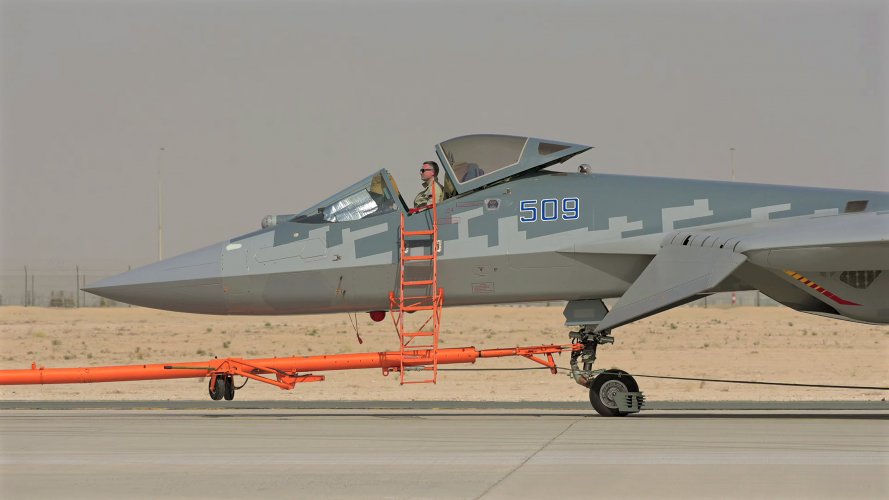
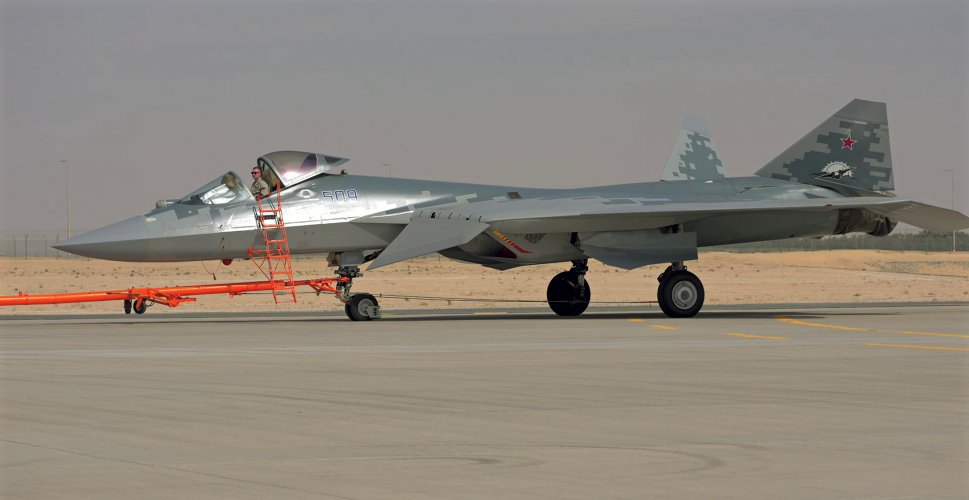
Last edited:
Similar threads
-
 Sukhoi Su-57 / T-50 / PAK FA first flight - pictures, videos and analysis [2010]
- Started by flateric
- Replies: 872
-
 Sukhoi Su-57 / T-50 / PAK FA - flight testing and development Part I [2010-2012]
- Started by Matej
- Replies: 760
-
-
 Sukhoi PAK FA news and speculation (T-50, I-21) Part I [2006-2008]
- Started by overscan (PaulMM)
- Replies: 455
-