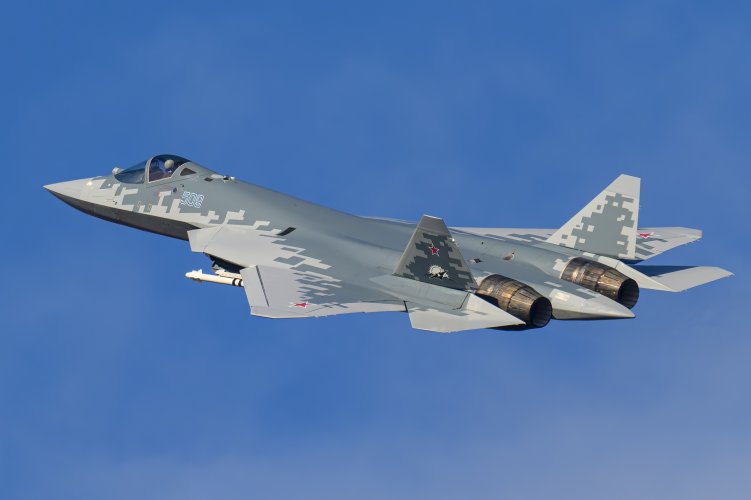
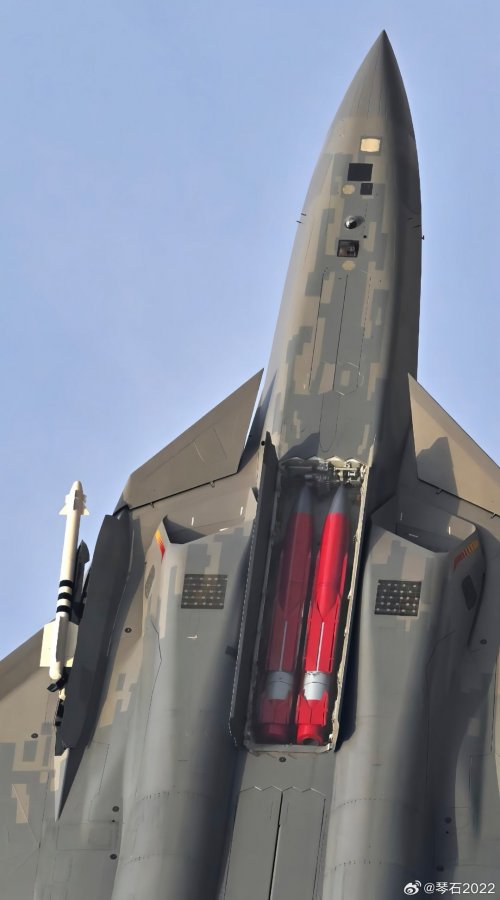
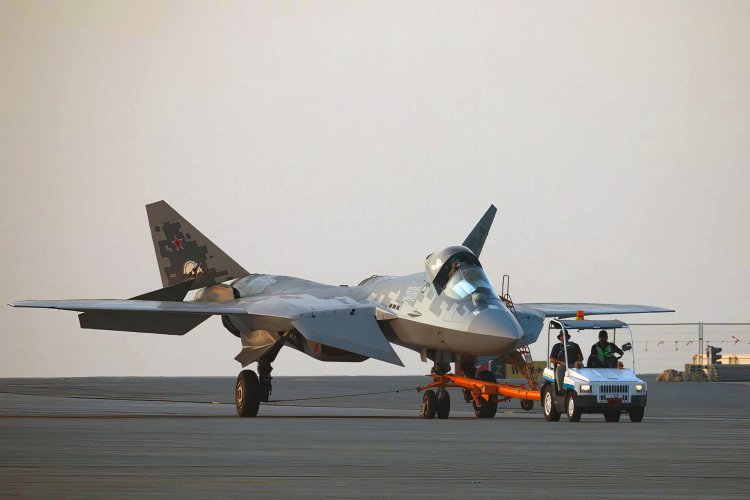
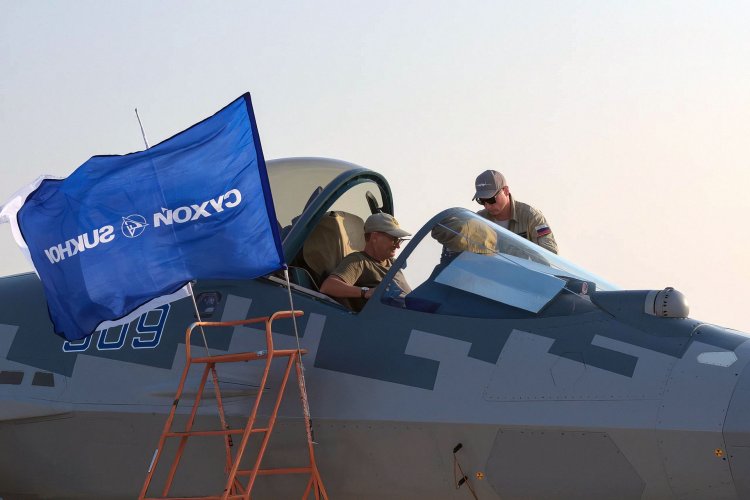
What did he said about super cruise? I don’t think the translator did a good job with that.
Yes, he didn't formulate the question precisely, so Bogdan was talking about the max supersonic speed and performance in general, and not about the supercruise.
But regardless, knowing that the plane can fly at 2,500 km/h with a full air-to-air load and can pull more than 6 Gs at that speed is very impressive. At this point, the MiG-31BM is the only fighter jet that can match that performance regarding speed with an air-to-air weapons load.
 
wait for pair of decades or so
was it a lazy ass request? my bad. I tried gpt, didn't think it would answer but
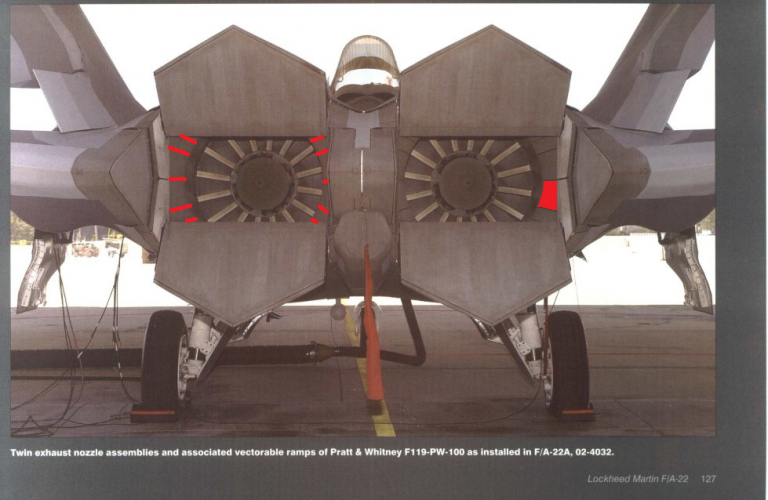
Can you show images of what the f-22 engine does on the rear? I don’t see what you guys are describing?
apparently it's this panelling work here
 

Attachments

  • Gech6YCasAAiUEa - Copia.png
    Gech6YCasAAiUEa - Copia.png
    773 KB · Views: 147
Yes, he didn't formulate the question precisely, so Bogdan was talking about the max supersonic speed and performance in general, and not about the supercruise.
But regardless, knowing that the plane can fly at 2,500 km/h with a full air-to-air load and can pull more than 6 Gs at that speed is very impressive. At this point, the MiG-31BM is the only fighter jet that can match that performance regarding speed with an air-to-air weapons load.
I guess that is where the focus in generating massive amounts of lift from the fuselage comes from, rather than from WVR demands, as it may be assumed. The MiG-31 cannot pull 6G at altitude, not even close. It is like a bullet, very fast but rather predictable in its trajectory. Su-57 on the other hand is intended to have the ability to be extremely agile even on that flight regime, which makes it much more survivable.
 
Can you show images of what the f-22 engine does on the rear? I don’t see what you guys are describing?
Assuming the F-22 flat nozzle has gaps that are bad against stealth? All I know is Galaxy went into a discussion about it with some users here and he got a ban for being a smartass, I guess.
 
It's not clear for me too, if you could point them on this image please
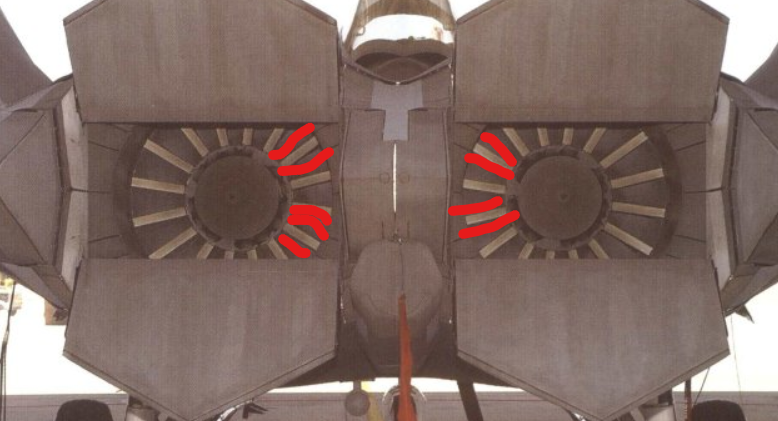
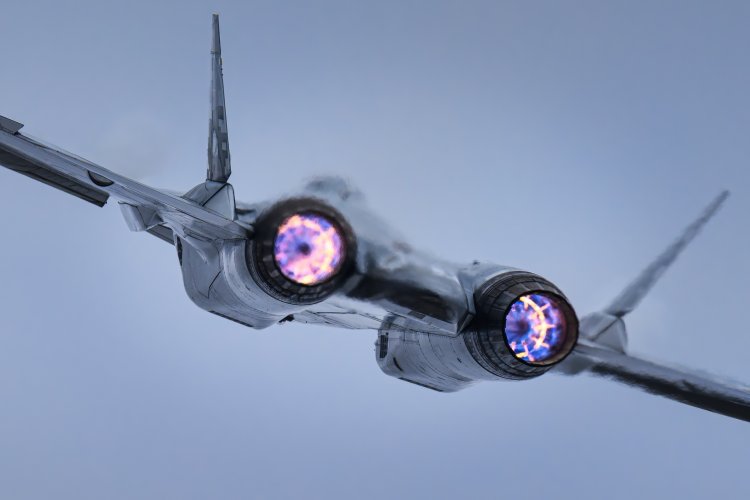
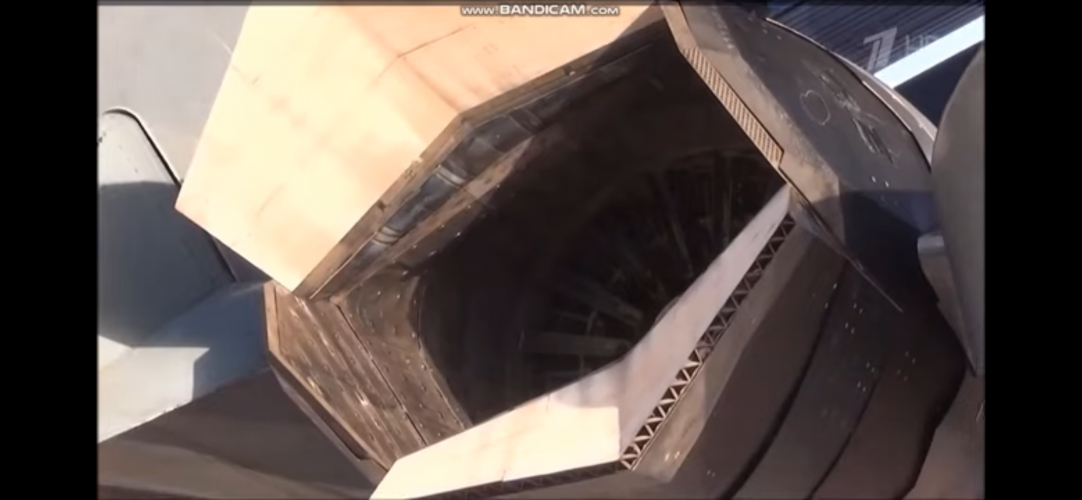
It’s what you don’t see in this photo - turbine blades. The line of sight to the turbine is blocked on the F119 and F135 by the turbine exhaust case, and all of the exposed parts are carefully shaped, cooled, and coated to minimize the signature of the AB cavity.
 
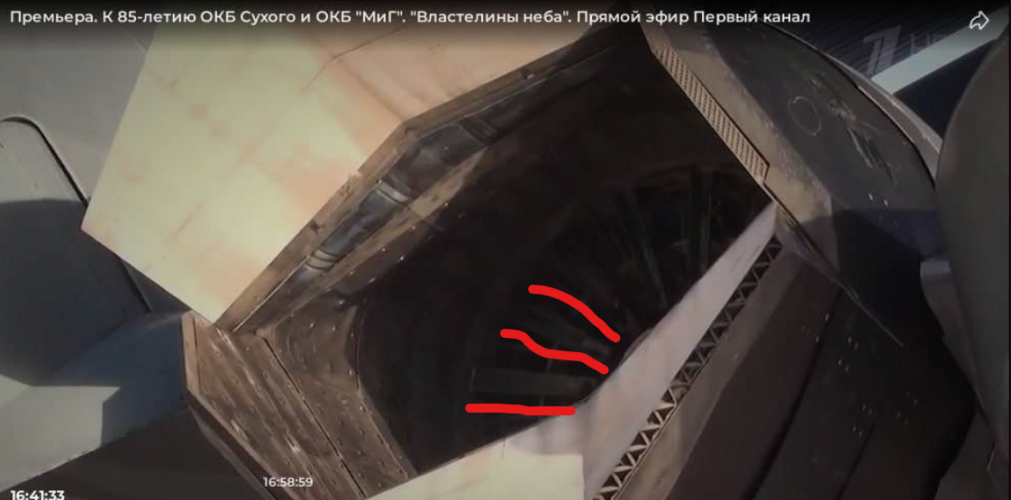
I don't get it, the F-22 and Su-57 appear to have exposed vanes is all I see here.

1763607499152.png
1763607607109.png
I don't see turbine blades for both, maybe highlight them if you see them is what Lepespi is asking you f119doctor. Your able to screenshot images and make marks on the picture with your mouse key right? and maybe even add different colors to tell what is what and give us specific details. Sometimes dumbing shit down helps get your point across to a broader audience than maybe a small group of people only able to understand what you are saying.
 
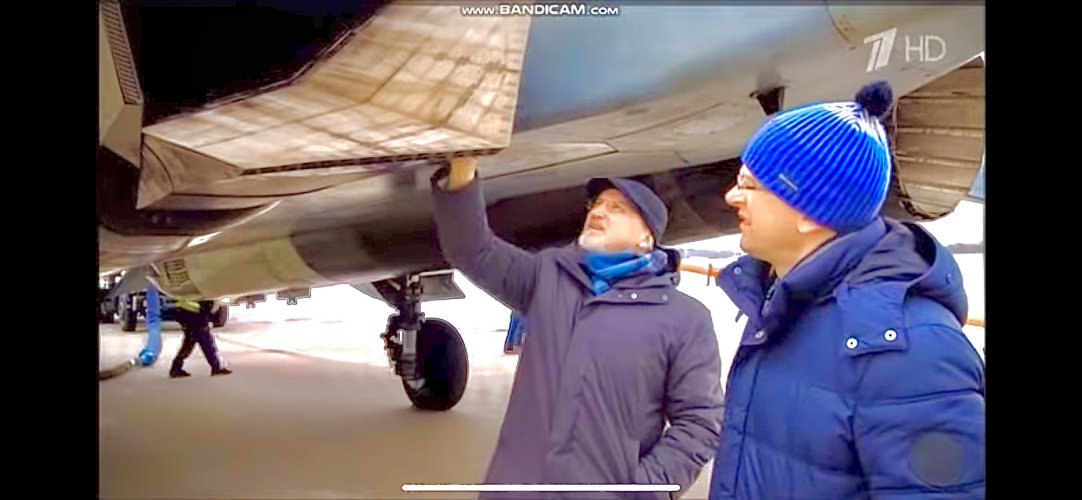
The inside of the engines are almost completely hidden from this angle. Those vents at the tips of the nozzle flaps also look like they add additional cooling, the size and ‘serrated’ channels also look like they put a lot of thought into RCS. This is by far the stealthiest part of the SU-57, coupled with the smooth tail boom/fairing it should give the SU-57 a rear RCS that should be no worse than foreign designs if not better IMO. The lower fuselage is another story….

IMG_2655.jpeg
 
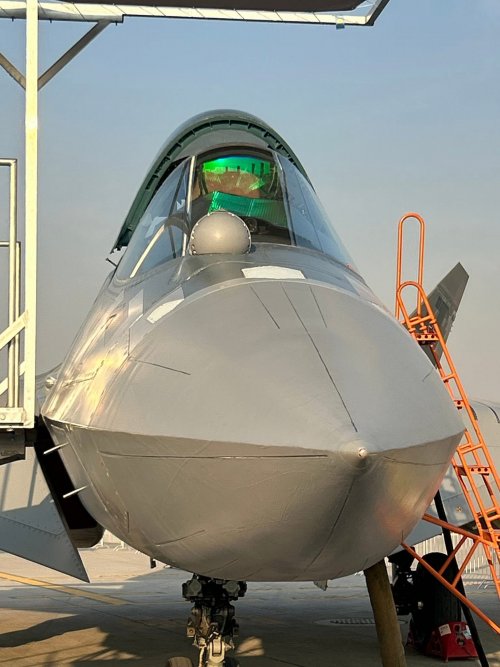
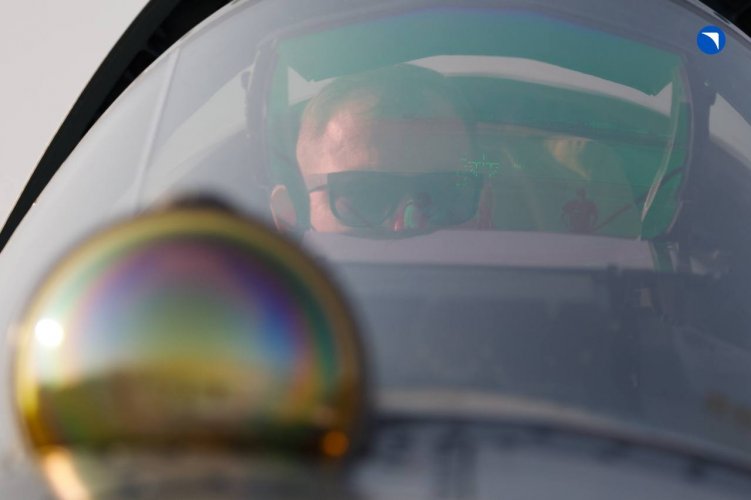
Thanks RavenOne for the photos. The HUD is new or at minimum uses a different coating or perhaps the projector unit is different hence the bright green which has always been dull greyish-blue before. To me projector looks to be off (could be wrong) but it’s still brighter than previous HUDs that we seen before under all lighting conditions.
 

Attachments

  • IMG_2667.jpeg
    IMG_2667.jpeg
    386.8 KB · Views: 135
other photos T-50-9 zcKUTG4AJqypGGu8fZDYBdR5Gfh3XDR5xOhLZljYkbMu-rZtHAuv5IeQWdrPcAJHMt-LYCQRXrDme0Ov3qiUk7NJ.jpg
 

Attachments

  • nj-SPEELTIcj3repkB3Kg6ym0_AyDNjcMRaWummH0NagtbCmKxbE5OC-xAZAMeY2Yo8-GUGaKK4Rc1h4kH3s6E-k.jpg
    nj-SPEELTIcj3repkB3Kg6ym0_AyDNjcMRaWummH0NagtbCmKxbE5OC-xAZAMeY2Yo8-GUGaKK4Rc1h4kH3s6E-k.jpg
    1.4 MB · Views: 123
  • kTx8NDrFE4F-CBNUOETqFDBuYl8wSq_Ore3rEw4MoJctL7SszL0esnwTd4iPSl84vR718huu4SCNow7fIIA3TUnA.jpg
    kTx8NDrFE4F-CBNUOETqFDBuYl8wSq_Ore3rEw4MoJctL7SszL0esnwTd4iPSl84vR718huu4SCNow7fIIA3TUnA.jpg
    1.8 MB · Views: 119
  • fh4VIVj09mRb3gT_IxqaNmTIYnD8iN8ITjcfxHuirkkpl7YGD9QnEIQJAVDG6E57NDe-evT2JTNEyFiyvkSKkw9x.jpg
    fh4VIVj09mRb3gT_IxqaNmTIYnD8iN8ITjcfxHuirkkpl7YGD9QnEIQJAVDG6E57NDe-evT2JTNEyFiyvkSKkw9x.jpg
    1.3 MB · Views: 135
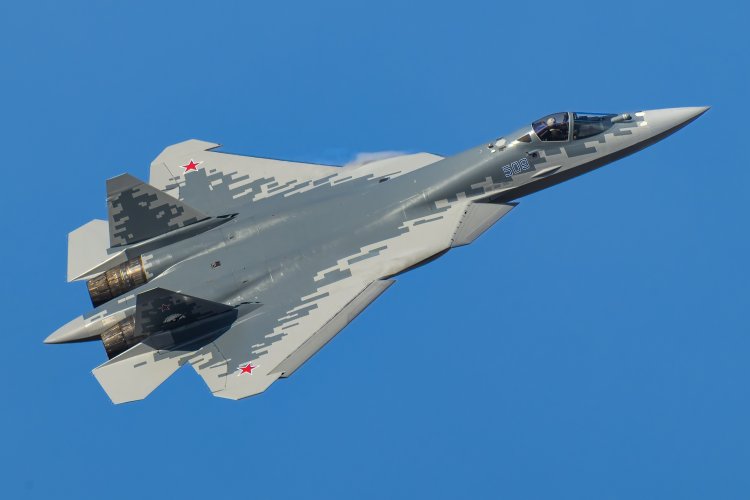
always some smoke with the engines.
At least always more than west counterparts.
It's because the airflow changes suddenly because of manuevering and the engine needs to run fuel rich to avoid overheating.
Afaik sudden temp changes are horrible for every kind of engine, that's why they usually never really throttle up/down.
This happens because 1. the Su-57 does more aggressive manuevering during airshows 2. 5th gen engines have less compressor stages than AL-31 derivatives (which is likely what's in this plane) and are likely to be able to spool down/up faster (I think?), not sure if this matters enough. You can definitely find videos with F-22 engines smoking during manuevers.
 
Jet engine combustors run a richer fuel / air ratio during engine acceleration, but they never run on the fuel rich side of stoichiometric. Depending on the combustor design, it is possible to see more soot smoke during engine acceleration.

The higher the thrust to weight ratio of the aircraft, the more throttle down and back up transients there are. This contributed to the short overhaul life of the early F100 engines, where F-15 pilots had many more throttle transients that they did with the F-4. During airshow demonstrations like this with steep climbs, high G and high AOA, the engines tend to be a high power most of the time, with throttle reductions only avoid going supersonic. This is not representative of actual combat or training missions
 
Comment from the FB

''Что самого интересного случилось на авиашоу в Дубаях по состоянию на сегодня?

Рассказали:

Что Су-57Э приступил к полетам в Алжире, стране покупателя. Будет крышей к Су-34Э, партия которых скоро полетят туда же.
Впервые показали кабину Су-57 и как открываются его внутренние отсеки вооружения. (Правда, вчера один чет не захотел открываться.)

Что Су-75 совершит свой первый полет уже в 2026 году.

Что индусы хотят Су-57Д. И он полетит уже в начале следующего года.

Д — по всей видимости, значит двухместный.
Это правильное решение. Лучше живой штурман, чем нейросети, ИИ и прочая херь.
Ну и двухместный, почти сто процентов означает самолет с двойным управлением, то есть процесс переучивания будет безболезненным. Ибо сейчас учить летчика летать на Су-57 не на чем. Собственно, как и на Су-35С.''

Transl:

''What's the most interesting thing that happened at the Dubai Airshow so far?
They said :

That the Su-57E has begun flying in Algeria, the buyer's country. It will serve as a cover for the Su-34Es, a batch of which will soon be flying there.
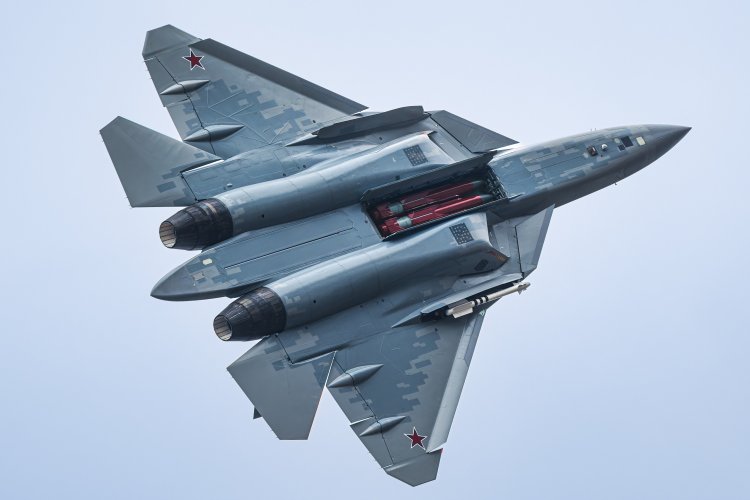
For the first time, they showed the Su-57's cockpit and how its internal weapons bays open. (Although, yesterday, one didn't want to open it.)
That the Su-75 will make its maiden flight as early as 2026. That the Indians want the Su-57D. And it will fly early next year.
D—apparently means two-seater.
This is the right decision. A human navigator is better than neural networks, AI, and other such nonsense.

And a two-seater almost certainly means it's a dual-control aircraft, meaning the retraining process will be painless. Because right now, there's nothing to teach a pilot to fly the Su-57. The same applies to the Su-35S, actually.''


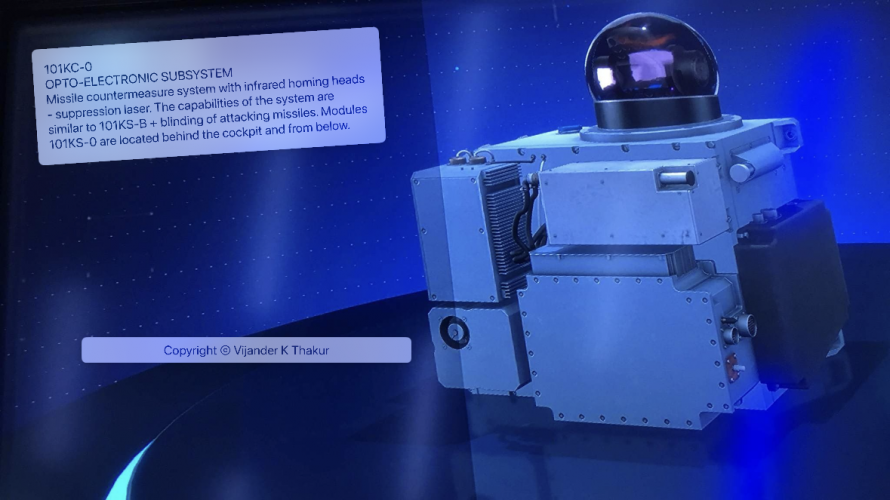
I have a question, where does claim of ldircm acting as irst as a secondary come from?
It comes from this very fast rotation, first observed ~10 years ago during some taxing videos, almost as soon as 101-ks-o were first installed.
It's a very obvious scanning pattern, especially for stage of the flight where missile attack isn't exactly expected.
 
It comes from this very fast rotation, first observed ~10 years ago during some taxing videos, almost as soon as 101-ks-o were first installed.
It's a very obvious scanning pattern, especially for stage of the flight where missile attack isn't exactly expected.
okay yeah product page for it says it functions like an irst + ldircm on top of it, I should’ve just checked it
 

Attachments

  • 1763738285596.png
    1763738285596.png
    1.1 MB · Views: 111
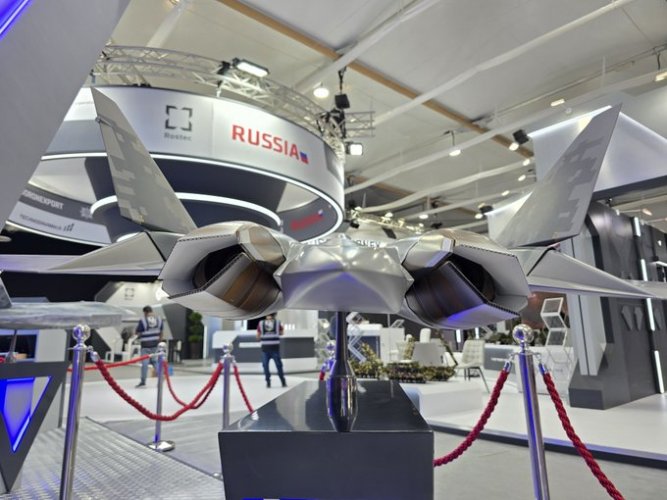
Looks like a full coverage cardboard illustration of non-stealthy flameholder rings around a tailcone with visible turbine blades. They have a long way to go to match the AB cavity low observable features of the F119 and F135.

The large cooling air channels visible along the trailing edges of the divergent flaps are also likely to have a significant radar reflection.
The cooling air channels seem to have some sort of grill like screen like f-117 or rq-170 to help with radar return perhaps
 
The cooling air channels seem to have some sort of grill like screen like f-117 or rq-170 to help with radar return perhaps
Maybe. My experience is that surface features need to be really big (shaping) or really small (smaller than radar wavelengths) or deep enough to swallow the incoming radar signal. With the right internal coating, these air channels might qualify under the 3rd criteria.
 
Maybe. My experience is that surface features need to be really big (shaping) or really small (smaller than radar wavelengths) or deep enough to swallow the incoming radar signal. With the right internal coating, these air channels might qualify under the 3rd criteria.


The vents themselves are a serration type pattern designed to redirect most of the radar signature and they look like they have smaller baffles behind the main serrated baffles that are being discussed. The F-117 used a similar concept but its vents were significantly larger and square in shape but none of use know how the inside of the F-117 vents actually looked or how big or small those vents contributed to RCS.

In X band radar would need a gap of about 0.6 inches or smaller not to leak through while an S band which is what is common in some AWACS would need a gap of about 1.5 inches or smaller. The size of those vents are difficult to know because none of use took a tape measure to see the actual size but it’s evident they are much smaller than 1.5 inches. Likewise none us looked inside the vents to see if there are additional baffles or if or how the vents recede or curve.

In fact the vents can be significantly larger than a wavelength but still not allow the electromagnetic energy to escape similar to how a jet intake is a large cavity but uses a serpentine design to minimize RCS.


It looks like there are smaller baffles deeper behind the larger serrated baffles:

IMG_2674.png


Here is another picture this time enhanced. Again it looks like there are smaller baffles deeper inside the larger baffles. It’s also gives a rough idea of how smaller the vents are in relation to the people standing next to the nozzles.

IMG_2675.jpeg


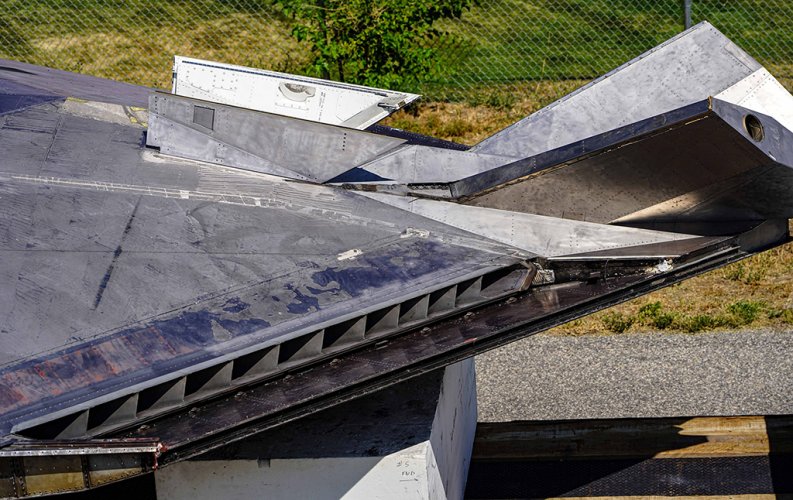
F-117 vents: They are large and square in shape but as was said before it impossible for use to know how the inside of those baffles are designed. For instance, do they tapper off? Are they curved? Are there more smaller baffles?


IMG_2676.jpeg
 
This F-22 vs Su-57 vanity debate of one plane being amazing the other being junk sounds like the 'my dad can beat up your dad' debates primary schoolers have. Who cares what the actual radar cross section of each plane is - especially since we're unlikely to be ever in the possession of legitimate information about this topic. The best we can do is speculate about the particular engineering methods and solutions the designers of each plane elected to use. This is what is interesting to me, not the d*ck measuring contest of which country's jets are superior.
Maybe. My experience is that surface features need to be really big (shaping) or really small (smaller than radar wavelengths) or deep enough to swallow the incoming radar signal. With the right internal coating, these air channels might qualify under the 3rd criteria.
That's correct - features much smaller than the wavelength (10GHz~3cm) appear to the waves as continuities, that is to say a surface with small holes is like a continuous piece.

The interesting part is in the size classes comparable to the wavelength - here's where all sorts of scattering occurs. A hole comparable to the wavelength acts as a dipole antenna - and as the hole size decreases the pattern starts looking heavily biased towards the direction the wave travels, this is called Mie-scattering.

It's also the size domain in which interesting radar-controlling structures can be developed. I strongly suggest, that the triangular patterns seen inside the vents are waveguides - which guide the electromagnetic energy above a certain frequency along the line (and largely reflect it below). They are mainly used in radars and microwave transmitters as the feed line between the power amp and the antenna.
Radar design is a black art, and by controlling the internal geometries you can make them act as lossless lines, broadband lossy lines, reflectors, resonators, etc.
I'm not super knowledgeable about the subject, but I'm sure actual clever folks who work with microwave systems know a lot about them.

And surfaces with small holes on the side work as very good reflectors to larger wavelengths - the example I bring up is that even the crappy stamped sheet metal grilles of microwave ovens (which generate about ~1kW of power), don't allow more than 0.1mW (I suspect much less) of it to escape - not sure what the actual regulations are, but they work in the ~2.4GHz range Wifi (and a lot of other stuff) operates in, so they'd wreak havoc on all wireless communication if they were allowed to transmit even 0.1mW of power - which is the legal limit of most wifi transmitters in most places.
 
Last edited:
Well, hopefully (or not) in view of the Indian's progress on their indigenous 5th gen program, I think they should not rule out tapping in a more developed option from a known, friendly nation.
 
Well, hopefully (or not) in view of the Indian's progress on their indigenous 5th gen program, I think they should not rule out tapping in a more developed option from a known, friendly nation.

In fact,only 'real deal' with the Su-57E/D ( in great numbers) ,Russia can accomplished with India.But everything is in politics/geopolitics and their interests. Keep in mind the pressure to cancel buying Russian oil e.g.
 
In fact,only 'real deal' with the Su-57E/D ( in great numbers) ,Russia can accomplished with India.But everything is in politics/geopolitics and their interests. Keep in mind the pressure to cancel buying Russian oil e.g.
What’s this su-57d you speak of, never heard of it
 

Similar threads

Back
Top Bottom