
You are using an out of date browser. It may not display this or other websites correctly.
You should upgrade or use an alternative browser.
You should upgrade or use an alternative browser.
Skoda-Kauba Aircraft & Projects
- Thread starter hesham
- Start date
I am greatly puzzled by the number of small and apparently lightweight designs presented. Aside from the ramjet fighter and another substantial looking design, it is a mystery as to the function of most of these aircraft. I also find the Czech language very complicated. I can read Russian once the Cyrillic characters are translated to Latin. I would like to remind everyone about the Protectorates, Bohemia and Moravia. Here is a book that covers events there near the end of the war.
A description in English using Google translate:
In past decades, they were published in low-cost or defunct periodicals, or have not yet been published at all. It does not lack the air force of the key protagonists of the air war in our country in the last year of the war: German, American, British and Soviet. Another criterion is the "genre" variety: bombing attacks, deep air raids on airports, "boiler" attacks on railways and, of course, air matches on both the Western and Eastern fronts - day and night. All of this seen primarily through the lens of the pilots themselves, no matter what the markings of their machines were. But not only them. Also those below - German staff officers, occupation authorities and protectorate gendarmes. But also Czech civilians, looking for salvation from the bombs in shelters, from the bullets of boilermakers in the nearest trench, or just observing the battles and events in the sky in amazement. Some other lesser-known aspects and episodes, which co-created the backdrop of the end of the air war on our territory, also found their place here. "If it weren't for Jiří Rajlich, we would know absolutely nothing about the air war over Bohemia and Moravia... he was the first to open the door to this hitherto unexplored topic... he was the first to start serious historical research on air warfare." Years-old statement from the website, dedicated to the air war over Czechoslovakia, still has its validity and due weight.
https://www.press.sk/dejiny-vojen-a...tem-1945-epizody-z-letecke-valky-nad-ceskymi/
Nebe nad protektorátem 1945 - Epizody z letecké války nad českými zeměmi
A description in English using Google translate:
In past decades, they were published in low-cost or defunct periodicals, or have not yet been published at all. It does not lack the air force of the key protagonists of the air war in our country in the last year of the war: German, American, British and Soviet. Another criterion is the "genre" variety: bombing attacks, deep air raids on airports, "boiler" attacks on railways and, of course, air matches on both the Western and Eastern fronts - day and night. All of this seen primarily through the lens of the pilots themselves, no matter what the markings of their machines were. But not only them. Also those below - German staff officers, occupation authorities and protectorate gendarmes. But also Czech civilians, looking for salvation from the bombs in shelters, from the bullets of boilermakers in the nearest trench, or just observing the battles and events in the sky in amazement. Some other lesser-known aspects and episodes, which co-created the backdrop of the end of the air war on our territory, also found their place here. "If it weren't for Jiří Rajlich, we would know absolutely nothing about the air war over Bohemia and Moravia... he was the first to open the door to this hitherto unexplored topic... he was the first to start serious historical research on air warfare." Years-old statement from the website, dedicated to the air war over Czechoslovakia, still has its validity and due weight.
https://www.press.sk/dejiny-vojen-a...tem-1945-epizody-z-letecke-valky-nad-ceskymi/
In February 1942, under auspices of Hermann Göring, the Skoda-Kauba Flugzeugbau research center was founded with the objective to design a pilot-less flying bomb. Under the leadership of Dipl. Ing. Otto Kauba, the Skoda-Kauba Flugzeugbau Entwicklung secret design team was formed at Prague-Cakowitz, with prototype workmanship facilities at Avia-Cakowitz and Avia-Klecany Werke.I am greatly puzzled by the number of small and apparently lightweight designs presented. Aside from the ramjet fighter and another substantial looking design, it is a mystery as to the function of most of these aircraft. I also find the Czech language very complicated. I can read Russian once the Cyrillic characters are translated to Latin. I would like to remind everyone about the Protectorates, Bohemia and Moravia. Here is a book that covers events there near the end of the war.
Nebe nad protektorátem 1945 - Epizody z letecké války nad českými zeměmi
A description in English using Google translate:
In past decades, they were published in low-cost or defunct periodicals, or have not yet been published at all. It does not lack the air force of the key protagonists of the air war in our country in the last year of the war: German, American, British and Soviet. Another criterion is the "genre" variety: bombing attacks, deep air raids on airports, "boiler" attacks on railways and, of course, air matches on both the Western and Eastern fronts - day and night. All of this seen primarily through the lens of the pilots themselves, no matter what the markings of their machines were. But not only them. Also those below - German staff officers, occupation authorities and protectorate gendarmes. But also Czech civilians, looking for salvation from the bombs in shelters, from the bullets of boilermakers in the nearest trench, or just observing the battles and events in the sky in amazement. Some other lesser-known aspects and episodes, which co-created the backdrop of the end of the air war on our territory, also found their place here. "If it weren't for Jiří Rajlich, we would know absolutely nothing about the air war over Bohemia and Moravia... he was the first to open the door to this hitherto unexplored topic... he was the first to start serious historical research on air warfare." Years-old statement from the website, dedicated to the air war over Czechoslovakia, still has its validity and due weight.
https://www.press.sk/dejiny-vojen-a...tem-1945-epizody-z-letecke-valky-nad-ceskymi/
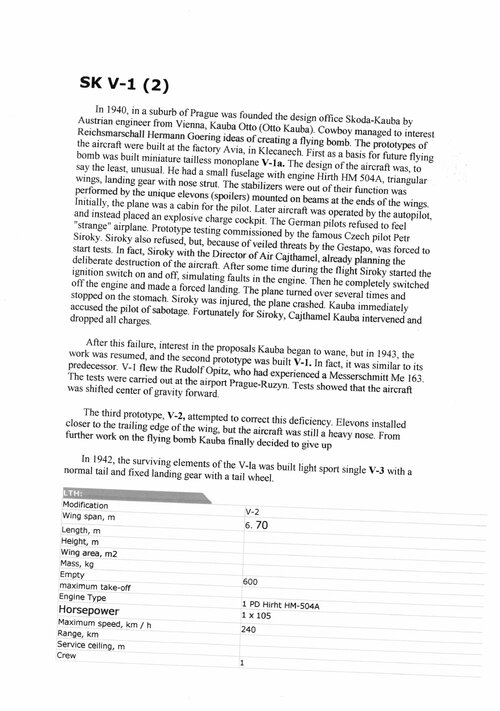
When the flying bomb project was dropped in June 1942 in favor of the Fieseler Fi.103 (V-1) cruise missile, the design team focused in experimenting with unusual configuration airframes.
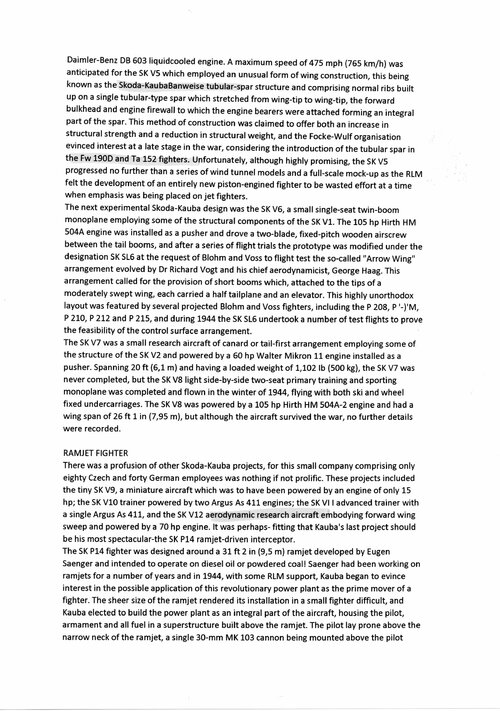
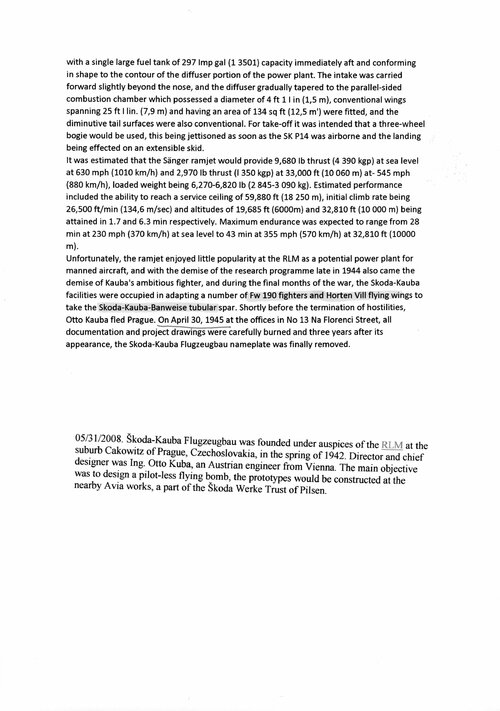
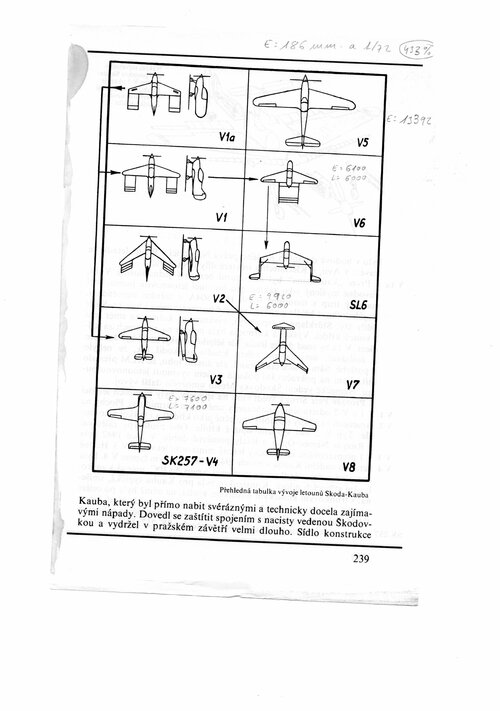
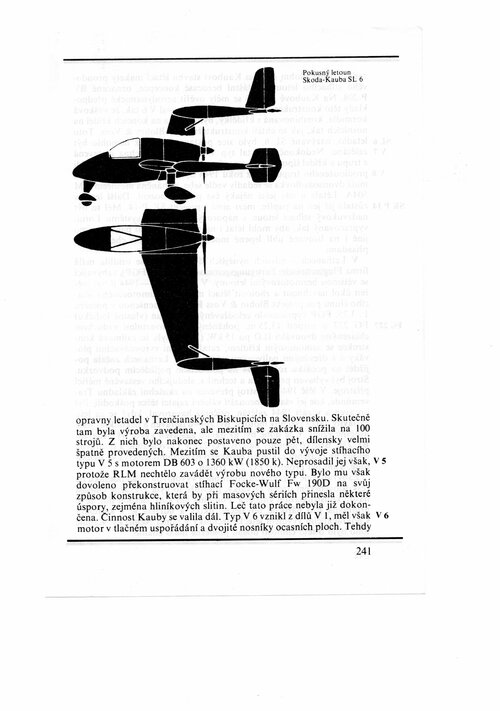
The SK V2 prototype, with rear swept wings, was flight tested in June 1943 at Prague-Ruzyn airfield, the SK SL-6 was a ‘bat-wing’ flying mock-up of the radical Blohm und Voss P.208.02 jet fighter project, the SK V7 was a canard swept wing aerodynamic research prototype, the SK V12 was a light plane project with forward swept wings and the SK P.14 an interceptor project powered by one Flugtechnische Fertigungsgemeinschaft Prag (FGP) ramjet engine.
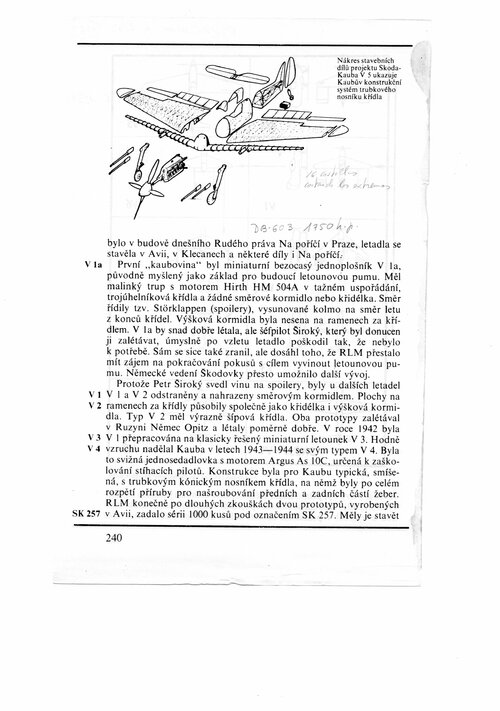
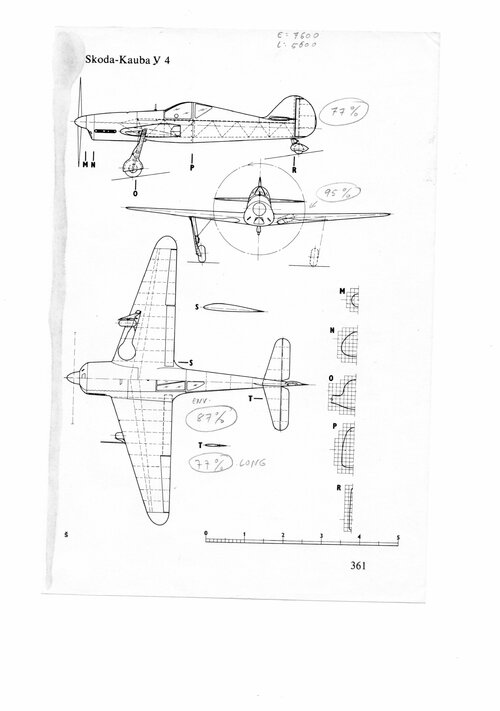
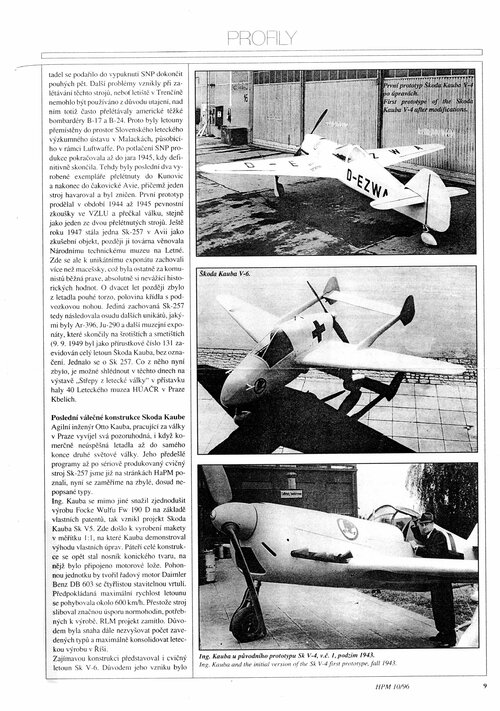
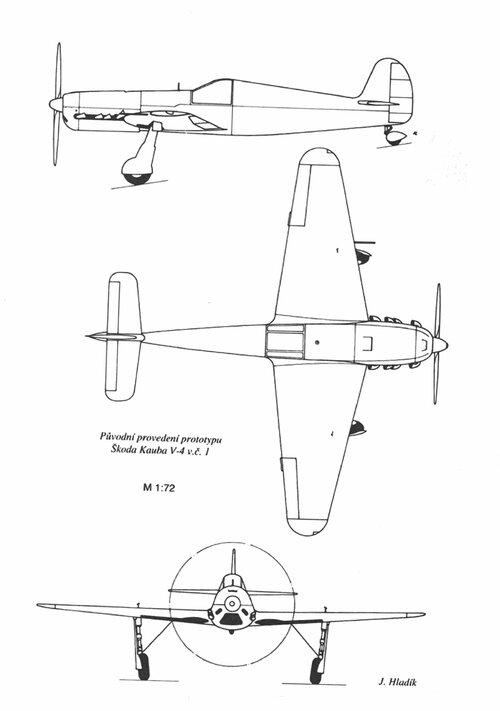
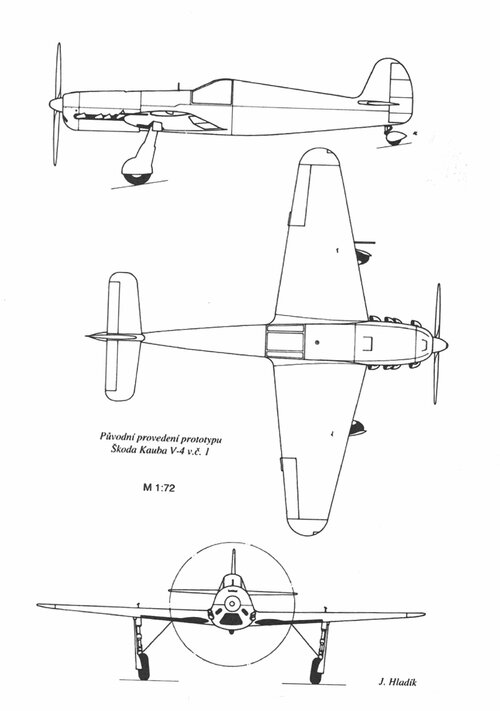
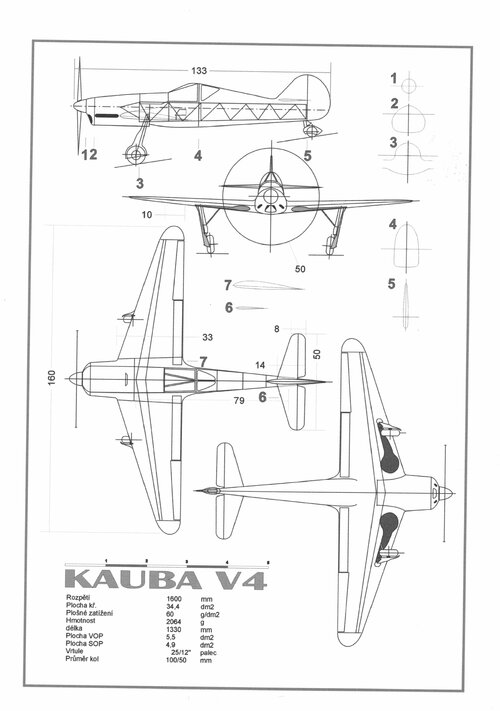
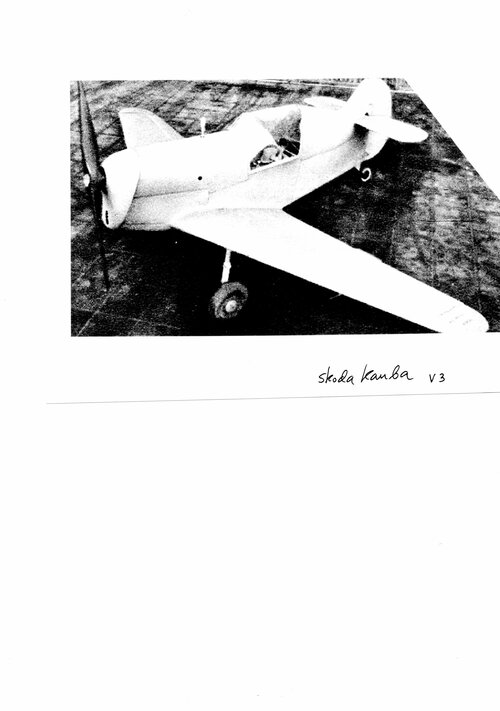
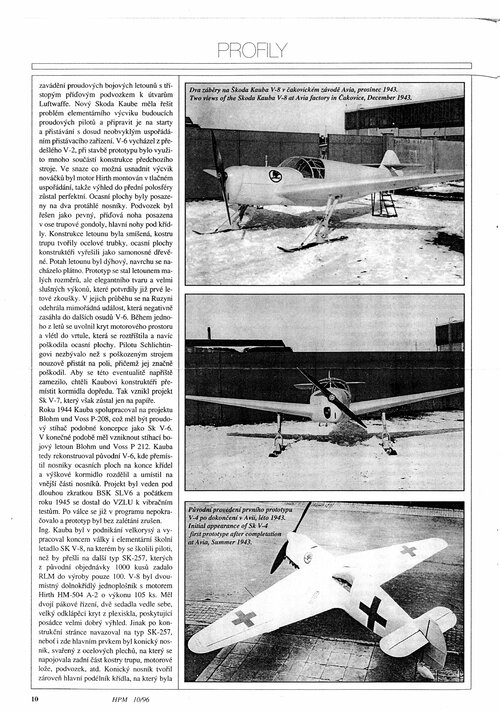
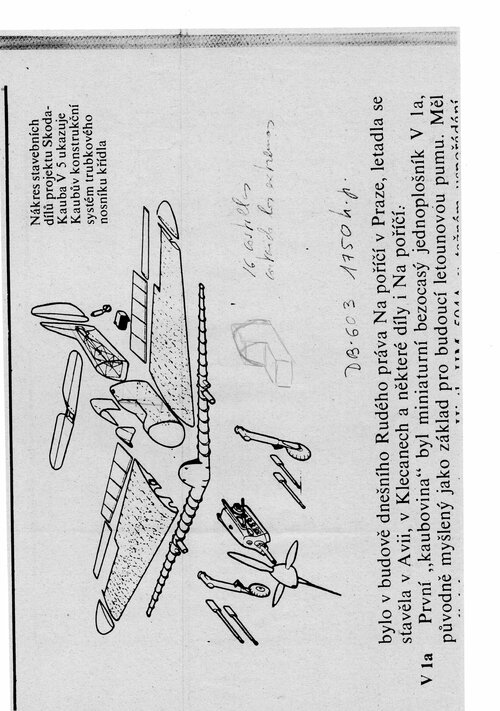
Early 1943 the Kauba team obtained its first practical result with the unusual Banweise wing construction system, of the SK V4 prototype, using a conical steel single spar, made at Podbrezova Werke. So successful were flying trials with the V4 that the RLM awarded a contract for 1,000 units of the SK 257 trainer.
By spring 1944, the Skoda Werke workforce consisted of 120 technical personnel headed by the engineers Eduard Lehmayer, Kurt Haas, and Frantisek Kadlec, three workshops, one aerodynamic test site and flying test facilities at the VZLU administrative center in Prague.
End of 1944 Kauba had obtained contract for the transformation of the Fw 190 D and the Fw Ta 152 fighters with new laminar profile wings.
On April 30, 1945 all prototypes, scale models and documents were destroyed by the SS Special Evacuation Kommando.

Airborne2001
ACCESS: Secret
- Joined
- 19 June 2020
- Messages
- 377
- Reaction score
- 541
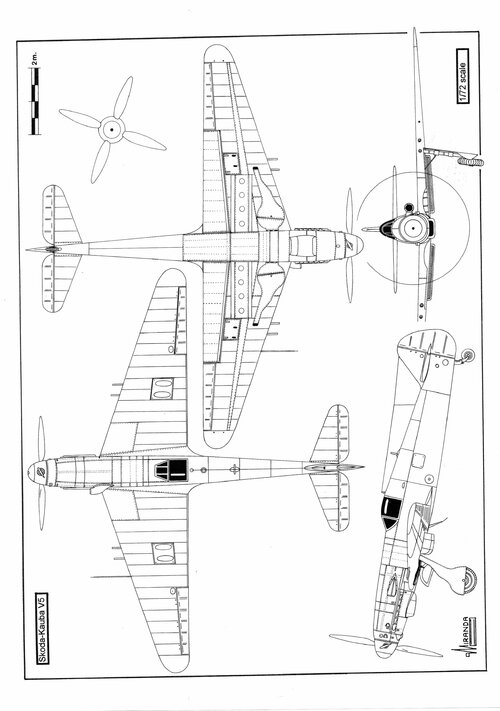
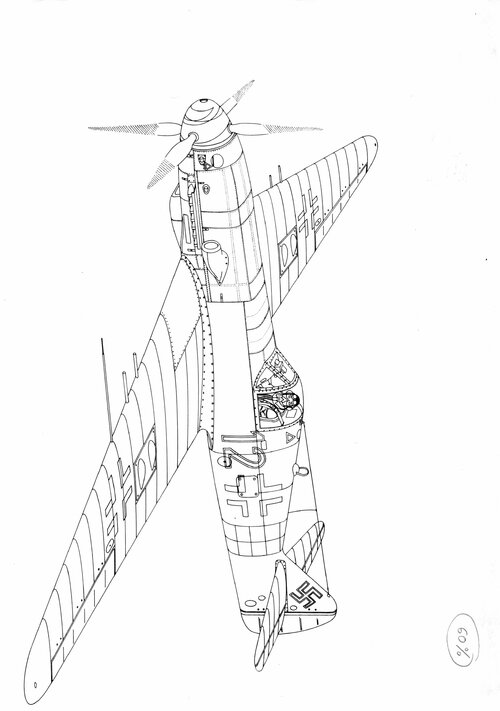
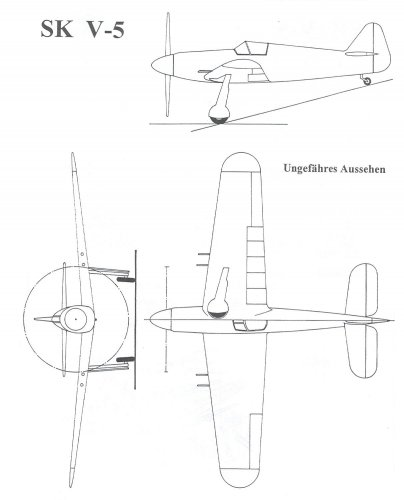
Slightly weird question, but does anyone know what the definitive look of the Skoda Kauba V5 was?
I most commonly see this look:


But the problem I have is that this doesn't seem indicative of the mock-up:


The mock-up indicates a much smaller intake below the engine, a more pointed spinner (all around a less BF-109esque nose), and possibly less "swept" wings? Do we know what the truth is?
I most commonly see this look:

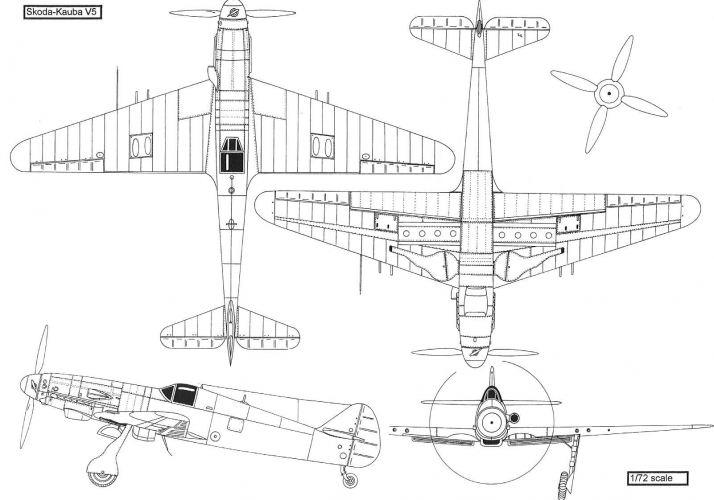
But the problem I have is that this doesn't seem indicative of the mock-up:
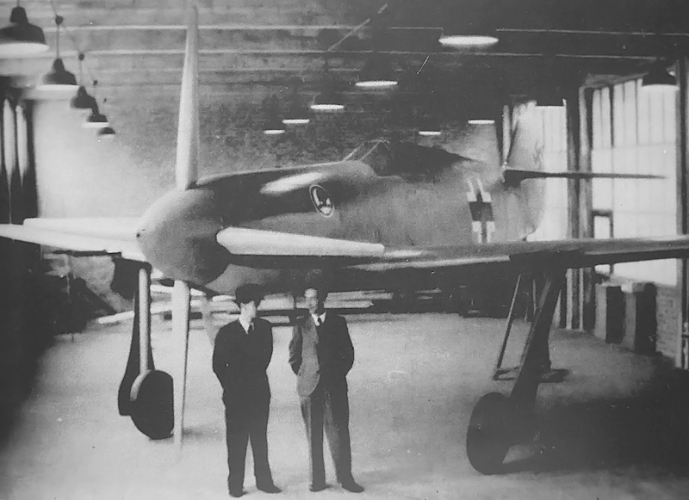
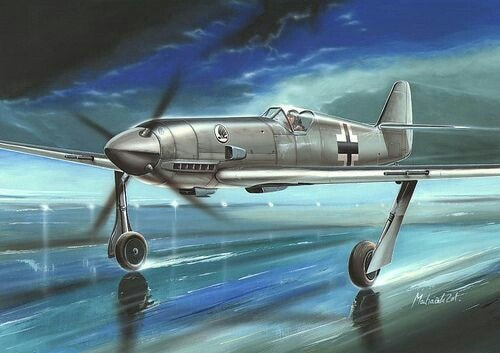
The mock-up indicates a much smaller intake below the engine, a more pointed spinner (all around a less BF-109esque nose), and possibly less "swept" wings? Do we know what the truth is?
Airborne2001
ACCESS: Secret
- Joined
- 19 June 2020
- Messages
- 377
- Reaction score
- 541
I found a website that claims that the "swept" design was rejected in favor of one more like the Fw-190:
https://www.klueser.de/kit.php?index=1679&language=deHowever, the source for that website appears to be dead. So I have hit another lead, but with a dead end due to time...
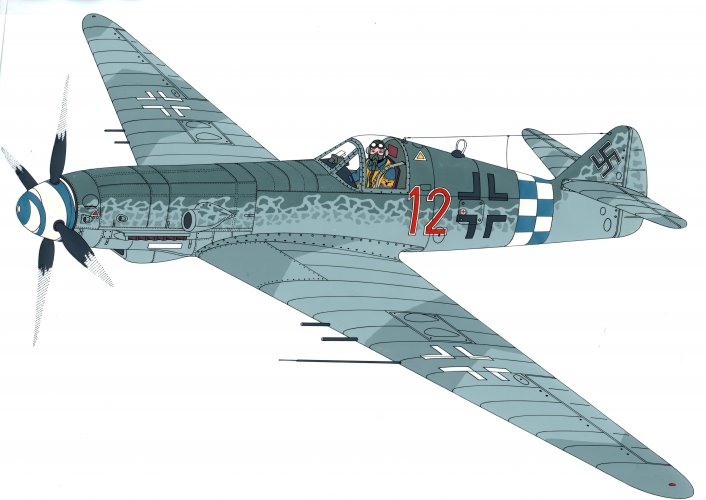
EDIT: I should mention that with this there is more confirmation pointing to a third possible look:

https://www.klueser.de/kit.php?index=1679&language=deHowever, the source for that website appears to be dead. So I have hit another lead, but with a dead end due to time...
EDIT: I should mention that with this there is more confirmation pointing to a third possible look:
The Germans were the first who introduced swept back wings for drag reduction at high subsonic Mach numbers, so I highly doubt this....I agree with you
Last edited:
Airborne2001
ACCESS: Secret
- Joined
- 19 June 2020
- Messages
- 377
- Reaction score
- 541
Okay I think I have found some partial explanations from these two websites:
https://www.technickytydenik.cz/rub...-leteckeho-konstruktera-otto-kauby_11525.htmlhttps://www.flugzeugforum.de/threads/skoda-kauba-sk-v4-sk-257.69601/page-2#post-1717835
Slightly unrelated, but I agree with what "FREDO" said in the forum post that the SK 257 wing change likely had to be for centre of gravity reasons.
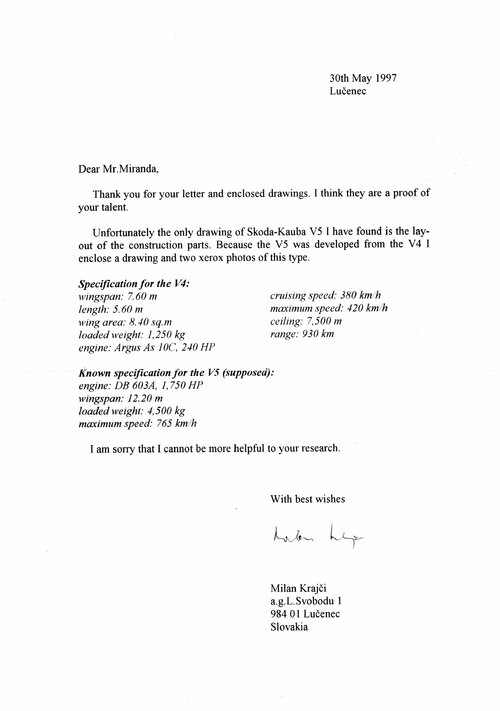
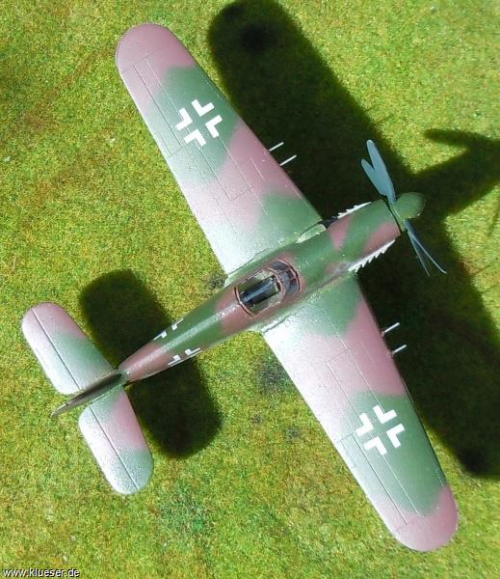
Regarding the Skoda Kauba V5, it would appear that the design originally had a wing that was essentially enlarged from the V4. However, one of the biggest issues with the fighter was the potential need to create a new production line for it. As a result, it appears that the wing design changed to one more like the FW-190 in order to make production look more attractive. This would make sense as the V5 was designed to be a much faster FW-190. I highly doubt that the Skoda-Kauba-Banweise tubular structure would've been abandoned given that was the selling point of the aircraft. I'm not exactly sure about the "BF-109 nose" vs a different nose still, but at least the wing plan appears to have an explanation.
This Klueser model should help to give an idea, especially since it cites the forum I linked above:

https://www.technickytydenik.cz/rub...-leteckeho-konstruktera-otto-kauby_11525.htmlhttps://www.flugzeugforum.de/threads/skoda-kauba-sk-v4-sk-257.69601/page-2#post-1717835
Slightly unrelated, but I agree with what "FREDO" said in the forum post that the SK 257 wing change likely had to be for centre of gravity reasons.
Regarding the Skoda Kauba V5, it would appear that the design originally had a wing that was essentially enlarged from the V4. However, one of the biggest issues with the fighter was the potential need to create a new production line for it. As a result, it appears that the wing design changed to one more like the FW-190 in order to make production look more attractive. This would make sense as the V5 was designed to be a much faster FW-190. I highly doubt that the Skoda-Kauba-Banweise tubular structure would've been abandoned given that was the selling point of the aircraft. I'm not exactly sure about the "BF-109 nose" vs a different nose still, but at least the wing plan appears to have an explanation.
This Klueser model should help to give an idea, especially since it cites the forum I linked above:
Similar threads
-

-
-
St. Louis Aircraft Prototypes and Projects
- Started by hesham
- Replies: 10
-
Robert Retz Light Airplanes and Projects
- Started by hesham
- Replies: 7
-