Reddington777
ACCESS: Top Secret
- Joined
- 23 March 2025
- Messages
- 849
- Reaction score
- 2,812
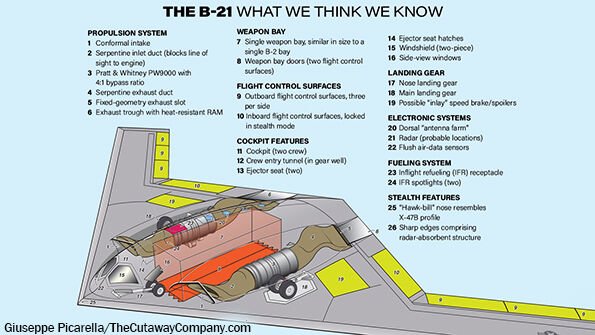
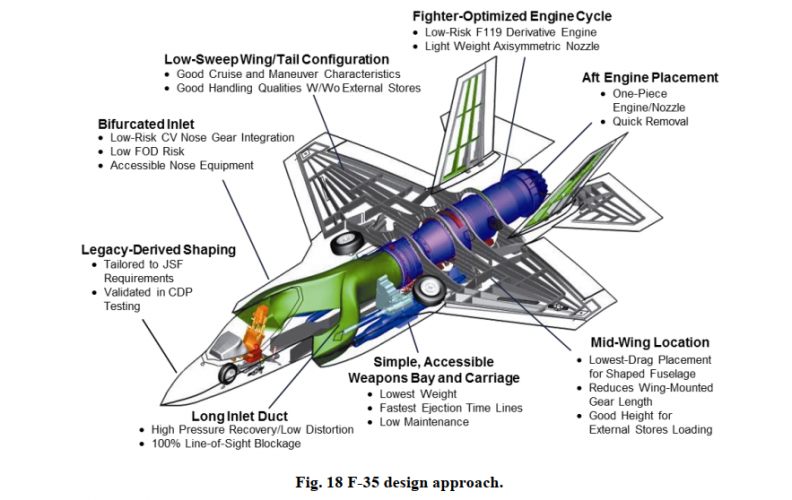
Subsonic S ducting could allow for more curved S ducting. Theres some images of F-35 ducting that you can compare with F-22 ducting. You can also take a look at this diagram of a possible B-21 configuration:
- S-shaped inlet ducts aren't an option due to the short fuselage length, so stealth will require screens inside the ducts which will add weight and impact performance
Or
Like mentioned above, the launch and recovery technique may not be identical to that of a rocket.
- Obtaining maximum thrust & performance for VTOL will likely require auxiliary air intakes to achieve required air flow. This will add complexity and the moving panels will be hard to seal for stealth.
It doesnt have to have 2 vectoring. Split ailerons can also produce yaw effect. This is a drone. Its probably not going to have fighter like agility.
- Yaw control: 2D thrust vectoring will be required, particularly in supersonic flight. This will add complexity and make all aspect stealth difficult (both radar cross section and infrared due to short exhaust ducting)
Do we actually know that? Maybe its time for me to draw up another 3d model ....
- No radar in the nose due to air intake location... how will it detect air targets for its primary mission?
Id be cautious to call this startup vaporware. They've been long time partners of DARPA for autonomy software and in that respect they look quite competitive. They have some heavyweights in autonomy research who have been on their R&D team since the beginning
Last edited: