- Joined
- 11 February 2007
- Messages
- 4,134
- Reaction score
- 8,877
There's not much point in buying an AAW DDG if what you need is an ASW FFG.and now the completely unmodified Type 26, even though the base design can be turned into air warfare destroyer.

There's not much point in buying an AAW DDG if what you need is an ASW FFG.and now the completely unmodified Type 26, even though the base design can be turned into air warfare destroyer.

My own theory is that BAE gave Norway a very firm nod that they were planning to develop Artisan NG/NGRD, which will give T26 the capacity to use CAMM-MR or Aster effectively. Otherwise I suspect it would have lost the competition as the Norwegian press were quite vocal about its inferior air defences to the other options.(As for Norway, I still don't know what they were thinking buying expensive ASW frigates with only CAAM currently integrated and no confirmation of CAMM ER or CAMM MR integration).
Or maybe Nansens can work for a while? They're ok aaw combatants.Artisan NG/NGRD, which will give T26 the capacity to use CAMM-MR or Aster effectively. Otherwise I suspect it would have lost the competition as the Norwegian press were quite vocal about its inferior air defences to the other options.
May potentially be. ASRAAMs (to whom CAMMs belong) are very slender missiles with minimal aerodynamic surfaces.Is the CAMM-ER ceiling really the same as CAMM at around 10.000m ?
It's effectively a Corvette/FAC level set. Modern, sure, but you really can fit it on a warship 10 times smaller without issues.Technically, they could integrate SM-6 in the Mk-41 quite easily. Same with evolved CAMM options, so long as they are integrated with the Mk-41, possibly via ExLS inserts. How good is Artisan in the anti-air role?

I believe 20km maximum altitude was also mentioned for CAMM-MR. So, it's now a 120km+ range, 20km+ altitude AAW missile capable of SRBMD. Essentially, a cheaper, more compact Aster-30 Block 0.You forgot the excess before the 100km

you mean the sensors ?considering the constraints on the Visby design
Except I don’t believe it fits in standalone EXLS launchers or the standard mushroom launchers due to its longer length?But technologically, systematically and in almost every way CAMM-ER is just a longer ranged CAMM.
Yes, the Visby will receive the ExLS.
But no, the CAMM-ER will not enter it, because this missile is about a metre longer. It therefore requires the extended version of the ExLS, which did not yet exist as a ready-to-use product and was therefore discarded.
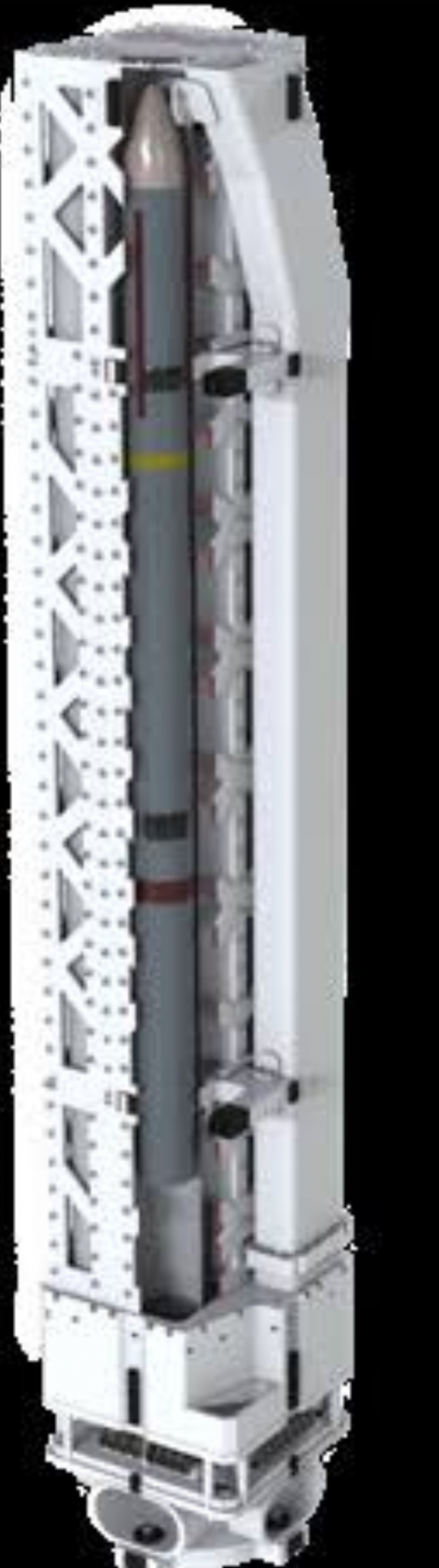
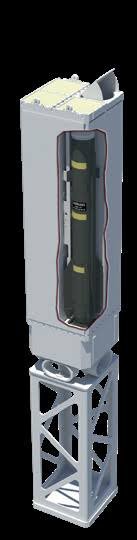
I missed your drawings, i reckon with 24 missiles per launcher it will probably be 6x4 ?Could be, though I accounted for that, and my result was that you could pack as many as 48 CAMMs into the space just slightly bigger than that occupied by the 8 Sylver A50 cells (just the cells and what's between them, I accounted for the module's external structure as well) while using structural supports that are dimensionally similar to those used for the Mk41 quadpack. I've tried to match these sketches below as well as I could to the dimensions of the Sylver module, the Mk41 cell and the CAMM launch canister, and 24 is definitely not the maximum possible number here.
Not really, just the space in the ship for the cells is quite limited in depth.you mean the sensors ?
Yes, though the main difference is probably that one extra meter of space below deck:Except I don’t believe it fits in standalone EXLS launchers or the standard mushroom launchers due to its longer length?
So functionally CAMM ER installation appears to be much harder currently, with quad packing limited to MK41 VLS. The Italians appear to have adopted a new type of mushroom launcher for their Albatros NG exports to Pakistan.
Probably, at least if they're gonna go with individual launch containers. Which is the easiest way to do it I think, and the most sensible.I missed your drawings, i reckon with 24 missiles per launcher it will probably be 6x4 ?
I vaguely reccal it's CAMM, and considering the constraints on the Visby design, that makes sense.
But technologically, systematically and in almost every way CAMM-ER is just a longer ranged CAMM.
Except I don’t believe it fits in standalone EXLS launchers or the standard mushroom launchers due to its longer length?
Is CAMM-ER using GWS.35 though? Looking at the Pakistani ships, their mushrooms are shaped differently from the standard CAMM launchers, which makes me believe it's a new launcher (or GWS-35 derivative) for CAMM-ER.As for the GWS.35 installation you can fit either CAMM or CAMM-ER inside. There is no hard length restriction to the launcher outside of the space in the hull. The Pakistani Navy is getting CAMM-ER in the GWS.35 installed on their ships.
1.5-1.7 is Aster-15 though. Aster-30 ~twice that number.Yes its CAMM going in the Visby. That might also mean the Lulea Class have a few CAMM onboard alongside CAMM-ER and Aster as a real close in missile (CAMM-ER min engagement range is 1km, Aster 30 1.5km...CAMM is 200m)
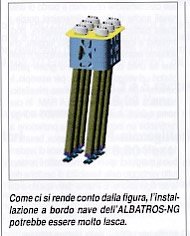
Are there any photos or renders of how the mushroom farm modules (I have no idea what the official name of that VLS is, I've seen GWS.35 mentioned sometimes, but not always, and almost never in relation to the 6 cell modules) look on the inside? Like the one I posted here for the Albatross NG system VLS. Because I'd expect these modules to look more less the same, just a meter shorter, but I'm not sure as I've never seen them.Is CAMM-ER using GWS.35 though? Looking at the Pakistani ships, their mushrooms are shaped differently from the standard CAMM launchers, which makes me believe it's a new launcher (or GWS-35 derivative) for CAMM-ER.
It will fit into the Host ExLS though, as the CAMM-ER will be integrated with it for the Wicher-class frigates.Doesn't fit in ExLS (Standalone or liner) until LM decide to extend its length. That shouldn't represent any great engineering effort though...its just some additional steel.
Not sure about the internals, but a recap of the various external arrangements might be helpful.Are there any photos or renders of how the mushroom farm modules look on the inside?
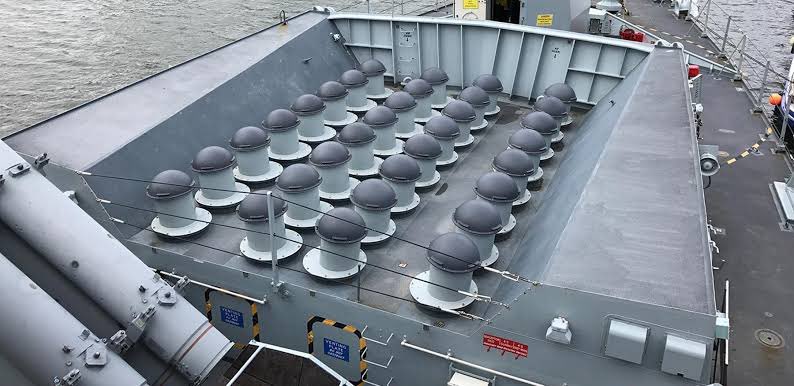

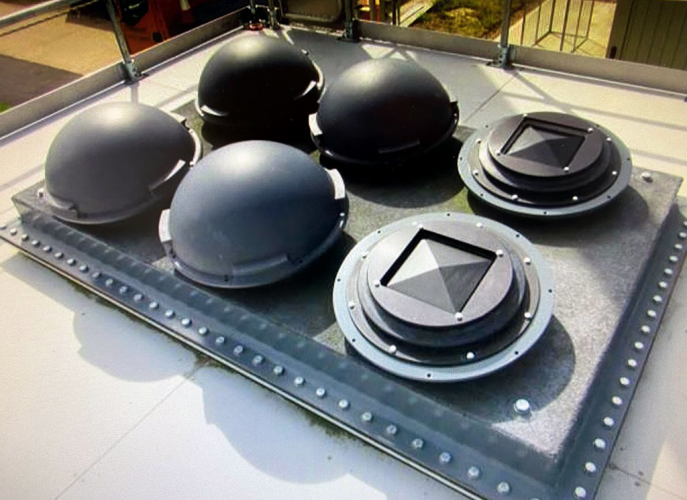
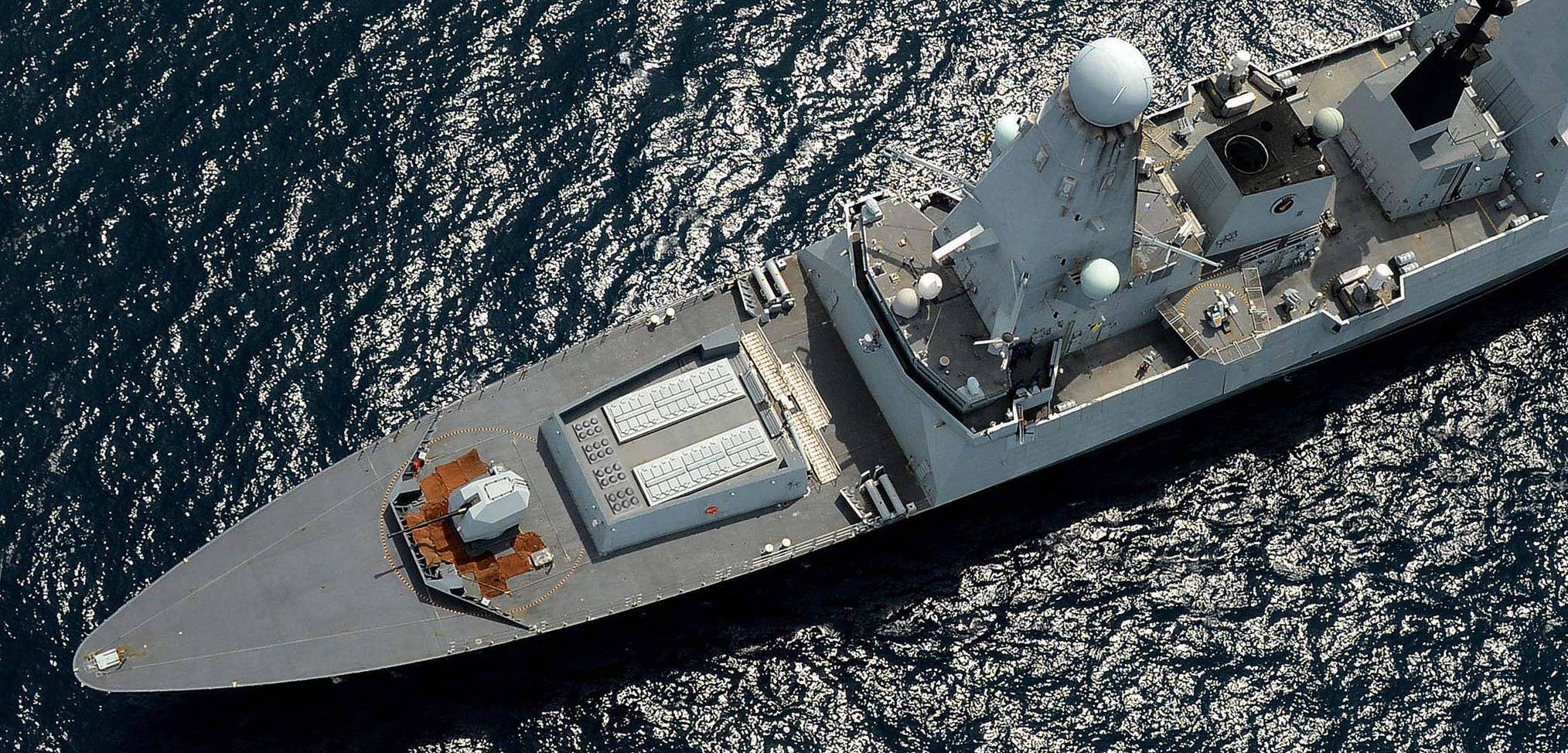


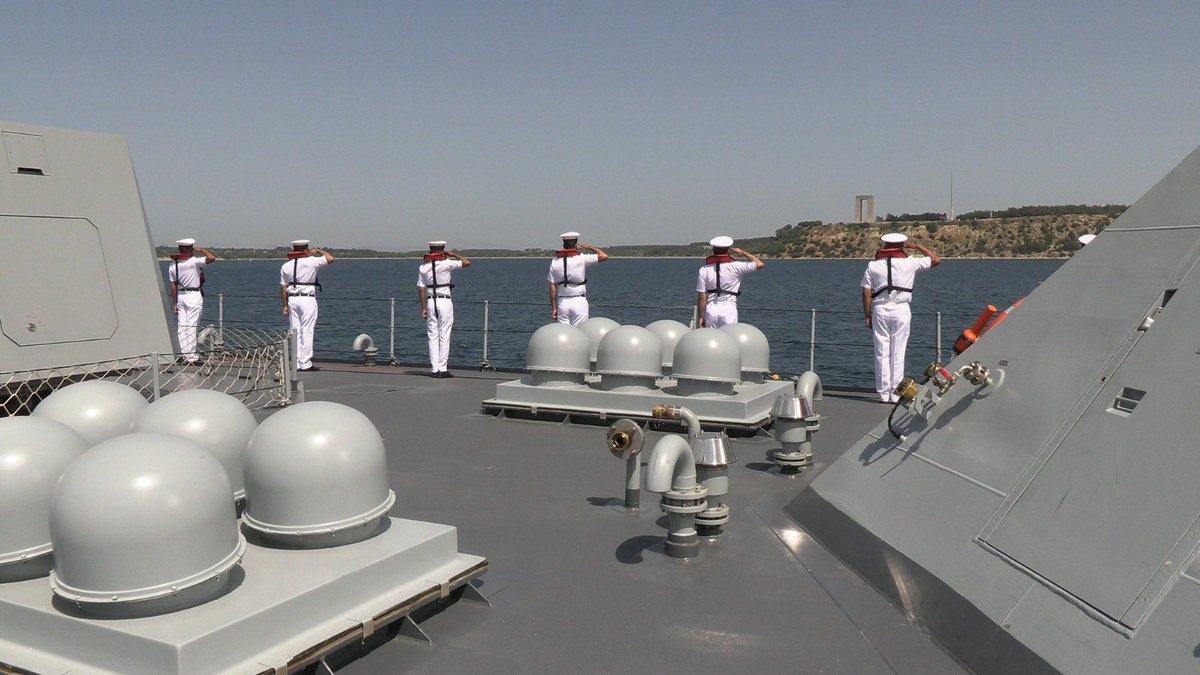
I've seen all these, what I wonder is the internal structure, specifically whether the canisters are loaded into some kind of a tube like in the Sea Wolf retrofit or are they just held by the end part of the launch canisters like in that Albatross NG launcher render that I posted above.a recap of the various external arrangements might be helpful.
Not mentioned in the actual treaty wording, suspiciously, but very good news if it is going ahead.https://www.gov.uk/government/news/...-relationship-with-europe-to-keep-nation-safe
Finally confirmation of CAMM-MR going forward.
Doesn't say whether this includes navalisation though so could be just land-based CAMM-MR. More info needed...Finally confirmation of CAMM-MR going forward.
Isn't the MR meant to be navalized from the very beginning, like the basic CAMM? I'm pretty sure the main customer from the British side will be the Royal Navy.Doesn't say whether this includes navalisation though so could be just land-based CAMM-MR. More info needed...
Until the DIP is published and funding secured CAMM MR is just a paper product... big plans and lots of hope but nothing committed.Isn't the MR meant to be navalized from the very beginning, like the basic CAMM? I'm pretty sure the main customer from the British side will be the Royal Navy
I've seen all these, what I wonder is the internal structure, specifically whether the canisters are loaded into some kind of a tube like in the Sea Wolf retrofit or are they just held by the end part of the launch canisters like in that Albatross NG launcher render that I posted above.
I dont think ExLS has a deluge system or eflux management, its built specifically for CAMM. Advantage of ExLS is compactness and no manually removed weather caps, and lighter than the Mk-41 with inserts.If you want you could spend north of 15m ( 20m with fitting and integration) USD for a 8 M deep 8 cell MK 41 launcher designed for hot launch with efflux management and drench system to fit a 2.5m long cold launch missile in. Or… Don’t spend it and use the cash elsewhere.
Exls would be a bit cheaper but again you are putting a launcher in a launcher with a flip top door and deluge system because… You can…can

I dont think ExLS has a deluge system or eflux management, its built specifically for CAMM. Advantage of ExLS is compactness and no manually removed weather caps, and lighter than the Mk-41 with inserts.
I wonder what the minimum engagement is, compared to 200m for baseline CAMM.Not just for CAMM. But it does seem to be true that there is no built-in exhaust management in 3-cell ExLS. Some of the Host inserts, however, would have their own exhaust management. For instance, you can see a separate duct here on the notional RAM Block 2 ExLS insert.
I dont think ExLS has a deluge system or eflux management, its built specifically for CAMM. Advantage of ExLS is compactness and no manually removed weather caps, and lighter than the Mk-41 with inserts.
He was specifically talking around Mk.41 initially, but as TomS points out there were a number of payloads originally proposed for ExLS that were hot launch, including RAM Blk II, JAGM and Nulka
Yes, it's possible. Not sure if that's the case here, but atmosphere density also plays a role in missile's engagement ceiling, specifically for missiles with conventional control surfaces. To put it simply, if the air is too thin, the missile just won't react to control inputs. And CAMM's control surfaces aren't that big, so that might be a reason for the same stated ceiling.BTW, I noticed CAMM-ER is an inch wider and has twice the range but same 10km ceiling, is that realistic?
God, our military journalists speaking in riddles again…
Why?CAMM having 200m minimum engagement makes it potentially more useful than RAM.
So that the engagement envelope is bigger, potentially giving you more chances to intercept the enemy missiles.Why?
Your gun CIWS should be engaging at 1000m, with shoot-down by 500m.