From old site on Net,
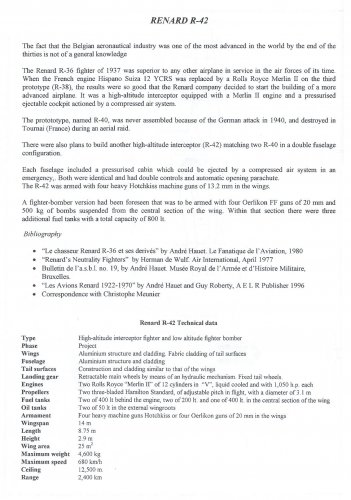
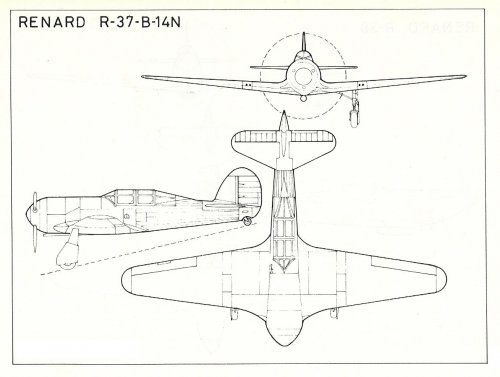
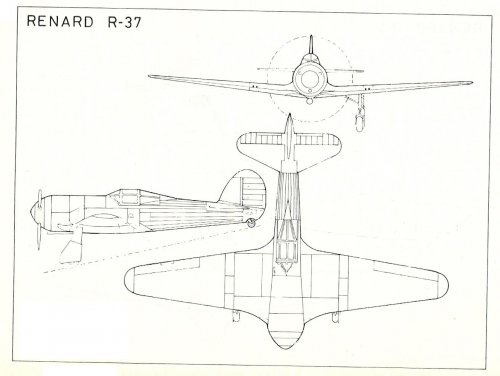
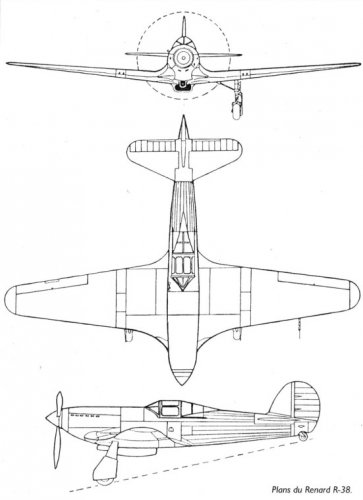
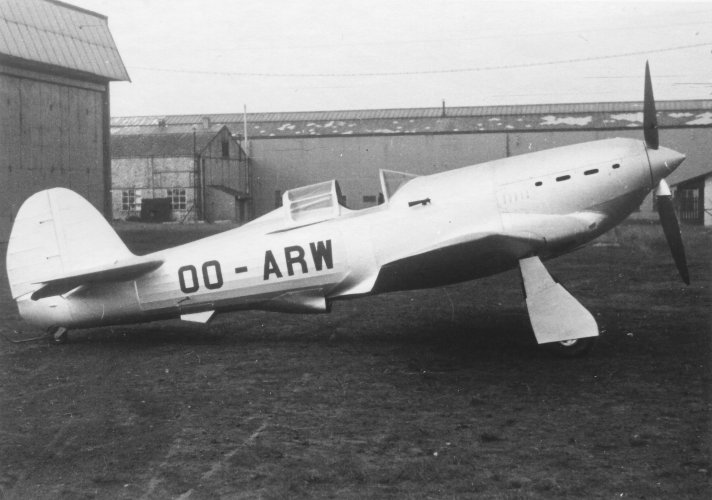
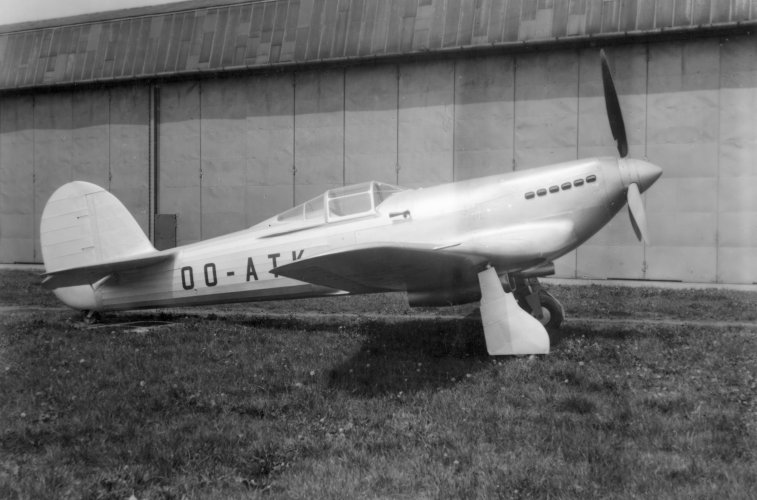
The new aircraft—designated R-38 —did not differ significantly from the R-36. It was a low-wing, cantilever monoplane of metal construction, with an enclosed cockpit and retractable landing gear with a tailwheel. The installation of the new engine also modified its cooling system, moving the radiator under the front of the fuselage (in the R-36, the radiator was located under the rear of the fuselage). Armament was limited to four 7.7 or 13.2 mm machine guns in the wings, with the 20 mm cannon omitted (the "Merlin" engine prevented its installation between the cylinder blocks, as was the case with the Hispano-Suiza engine used in the R-36).
The R-38 prototype, designated with the civilian registration OO-ATK, was presented to representatives of the Belgian Air Force on 18 July 1939, and shortly thereafter - on 4 August - SABCA factory pilot Burniat flew it. The aircraft demonstrated very good flight characteristics and had good performance - for example, with a maximum speed of 545 km/h, it was on par with other top European fighters of the period.
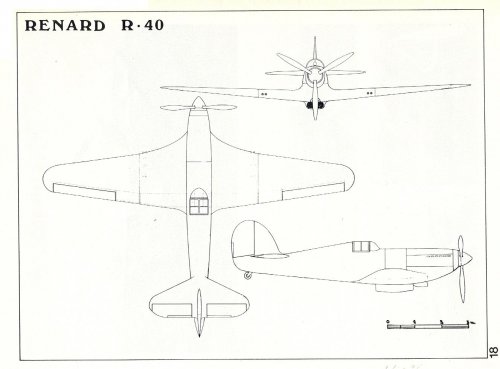
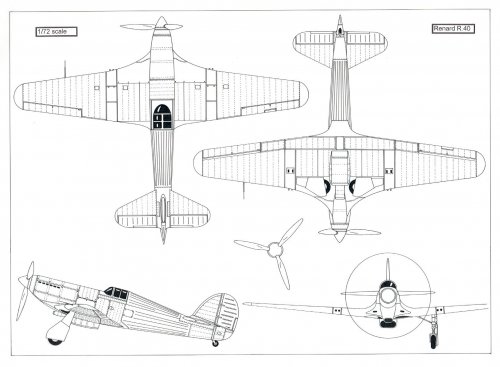
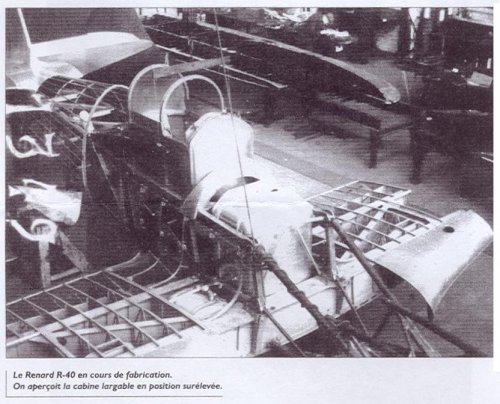
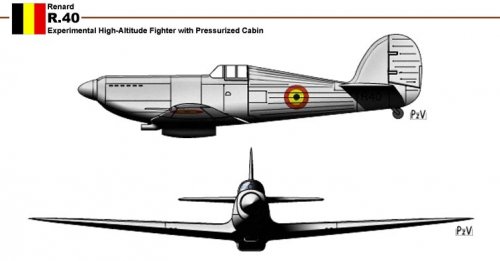
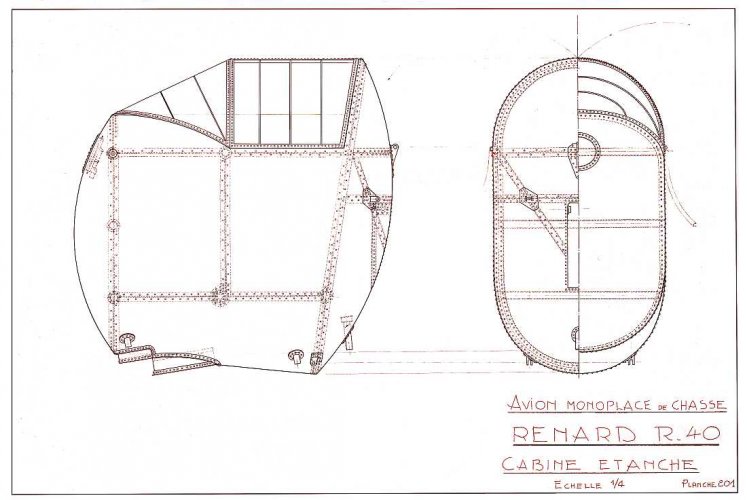
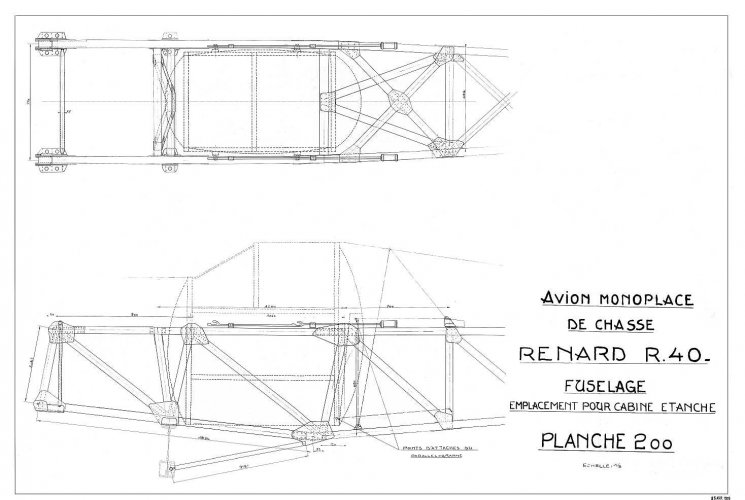
By the time of the German invasion of Belgium in May 1940, the R-38 prototype had completed almost its full flight test cycle. To protect it from capture by the Germans, the aircraft was flown to the French airport in Bordeaux, from where it was then scheduled to continue on to Morocco. However, in France, the R-38's story ended. Undoubtedly the best pre-war Belgian fighter fell into German hands and was most likely destroyed, as was the unfinished prototype of the high-altitude R-40, which was also evacuated to France—this time by road.