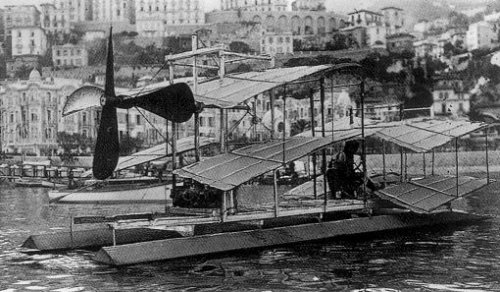
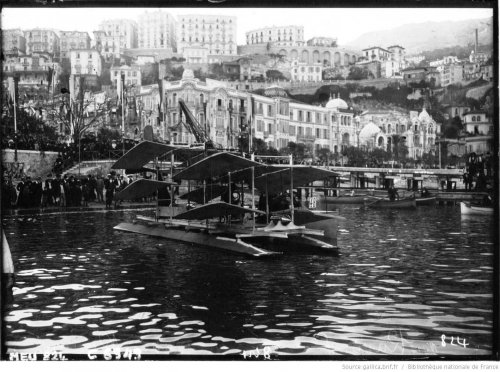
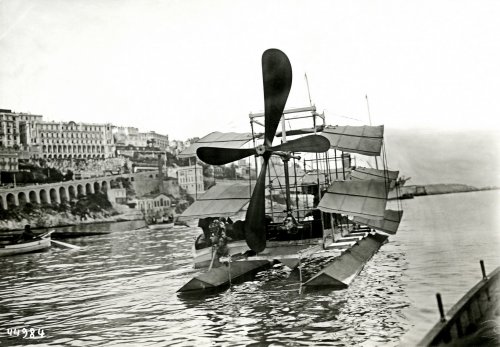
For what it's worth, Roger Ravaud's aéroscaphe was completed no later than late March 1909 in the Paris region workshops of Lucien Chauvière. This machine was to be one of the competitors in the first Concours d'aéroplanes held in Monaco in early April 1909. This, if nothing else would seem to show that Ravaud believed his invention could fly.
If one is to believe a contemporary description, the aéroscaphe had three sets of five parallel lifting surfaces. The two floats, in turn, had (underwater?) lifting surfaces of their own, to facilitate take off. The Gnome rotary engine, mounted flat behind the pilot, activated a pair of coaxial counterrotating propellers through gears and shafts.
Sadly, the aéroscaphe suffered some sort of accident in Monaco (
https://gallica.bnf.fr/ark:/12148/bpt6k42217669/f263.item - hoping the link works). Ravaud was therefore unable to show what he hoped his invention was capable of. The accident in question may or may have been related to a brief foray in the harbor of Monaco during which the aéroscaphe almost sank.
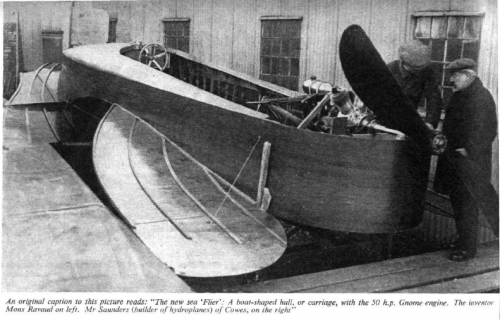
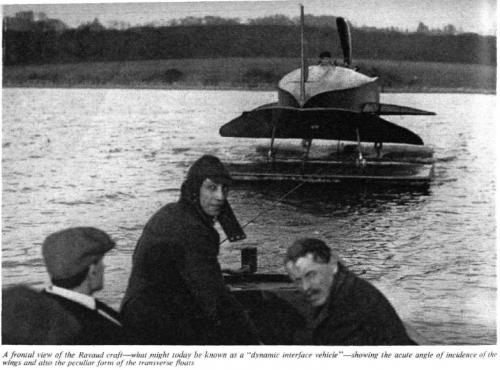
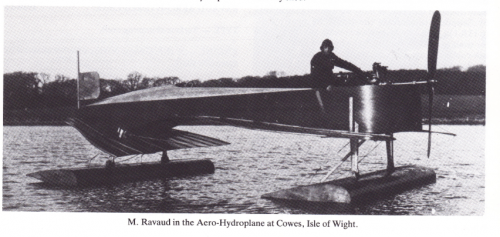
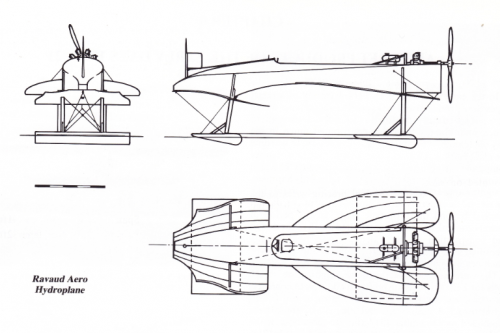
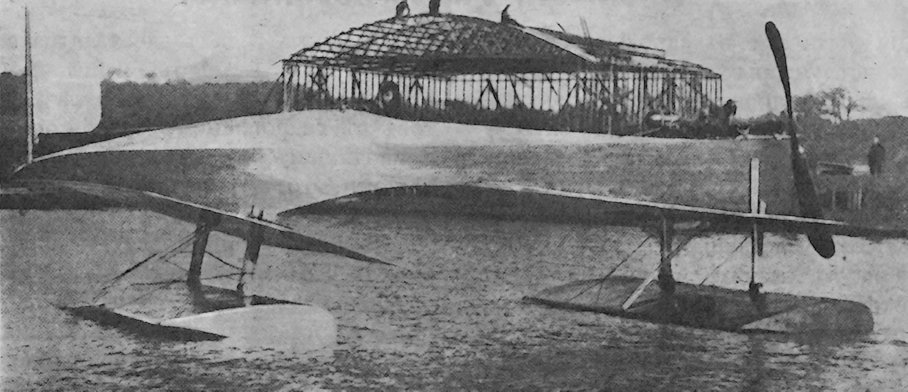
By early 1911, Ravaud had supervised the construction of a completely different hydro-aéroplane, the one mentioned at the top of this page, by S.E. Saunders Ltd., in England. This machine was apparently scheduled to take part in the 8th motor boat Meeting de Monaco, in April 1911. If Ravaud and his machine were there at all, they accomplished nothing.