Technically speaking, it's possible to give a Gearing a very limited SM-2ER fit.

Okay, USS Gyatt (DD-712, later DDG-1) was a one-off Terrier conversion and she only got seven missiles per rail, and the ultimate conclusion was that Terrier (even an early model) was too much missile for such a small ship, but if you really, REALLY wanted to do it, you could.
Erm, not that simple. The Gyatt's Mk-8 GMLS was compatible only with early version of RIM-2 Terrier (not that later ones) and its FCS was only equipped for beam-riding guidance. It could not support semi-active homing missiles.
 
Erm, not that simple. The Gyatt's Mk-8 GMLS was compatible only with early version of RIM-2 Terrier (not that later ones) and its FCS was only equipped for beam-riding guidance. It could not support semi-active homing missiles.
That and Gyatt only carried 14 missiles. Even if you assume this could somehow be doubled with Standard, it leaves the ship with a very small loadout of missiles for a single launcher. The same holds true for the FCS which likely would be very channel limited when fully updated. This means overall the ship has a low engagement rate and only a small number of missiles to engage with. This might be fine in a low threat environment, but it would be marginal anywhere else.
 
The same holds true for the FCS which likely would be very channel limited when fully updated.
IRRC, the Gyatt fire control system was only minimally modified to support the missiles. Her Mark 25 gunfire control radar (on top of optical director) was re-wired so its conical scan rotating beam would transmit positional data for missile. Even this setup caused serious overload in her electric systems, so any kind of illumination radar was out of question.
 
IRRC, the Gyatt fire control system was only minimally modified to support the missiles. Her Mark 25 gunfire control radar (on top of optical director) was re-wired so its conical scan rotating beam would transmit positional data for missile. Even this setup caused serious overload in her electric systems, so any kind of illumination radar was out of question.
That clearly could have been improved upon. Even the Mk 25 could be used for semi-active homing as this was done with the earlier Lark missile in early testing. The big problem is with only one channel of fire control, one target can be engaged at a time. If you are talking early Terrier that means you'd be lucky to engage two targets before they were on your ship and firing back.

With later Standard and digital fire controls, this could obviously be greatly improved upon. I'd think with a more modern system you could get 2, maybe as many as 4, channels going on the ship where you have one salvo of two arriving on target and a second salvo on the way with a third being readied for launch. Even so, you are updating an otherwise largely obsolescent ship that will have lots of maintenance issues.

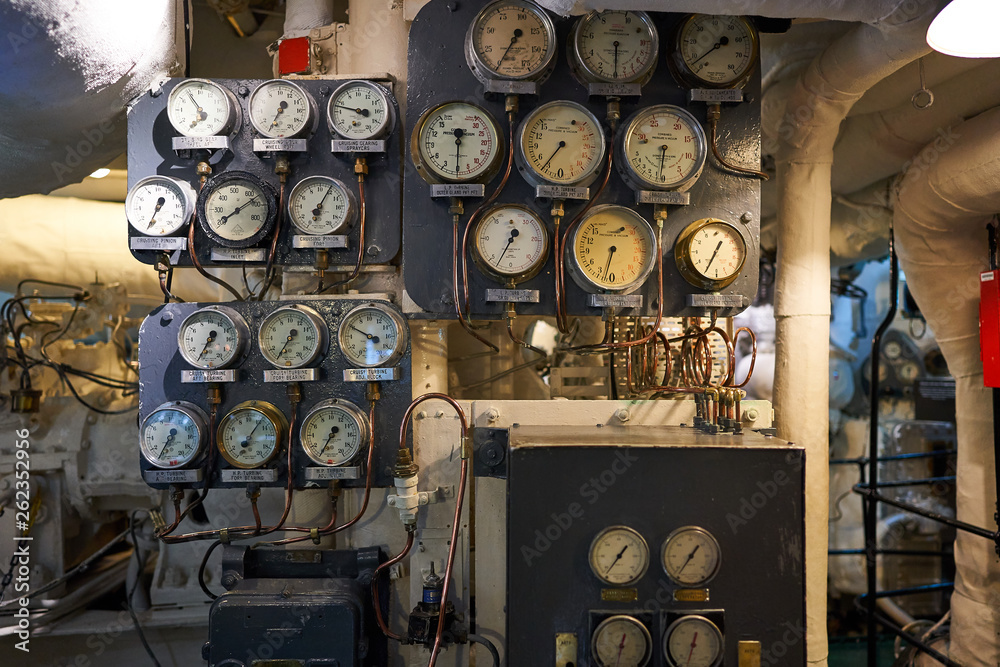
Imagine that the engine rooms and most machinery and controls are still right out of the 1950's at best. This means things like Yarway boiler controls, analog gages, and everything is manual.

1000_F_262352956_kZyYfTGla9lsm7CPgT9kRMA8ZXSi3zYe.jpg


You might still have mag amps and other early, bulky, electronic controls for most systems aboard. These take up more weight and space aboard and often require more crew to operate.
 
Even the Mk 25 could be used for semi-active homing as this was done with the earlier Lark missile in early testing
Erm, no. The Mk-25 was a pulse radar; it could work only with pulse-based seekers. The Tartar-style semi-active seeker (which was fit on homing versions of Terrier) required continuous-wave illumination. Essentially a complete redesign of the whole radar to add CW illumination capability would be required.
 
Erm, not that simple. The Gyatt's Mk-8 GMLS was compatible only with early version of RIM-2 Terrier (not that later ones) and its FCS was only equipped for beam-riding guidance. It could not support semi-active homing missiles.
I'm fully aware of that.

I'm not saying you could drop SM-2s directly into DDG-1 and fire them. I'm saying that the ship had just enough space and weight for a very small Terrier fit-out, and if you absolutely wanted to do a modern version of it, which includes fitting a compatible radar, you could.

Yes, it would involve a hell of a lot of work to do as anything more than an experimental proposition (which is all that Terrier Gyatt really was), and you'd have to start with a Gearing that had seen very little service and was in good shape, but it's not impossible. Advisable? No.
 
I'm not saying you could drop SM-2s directly into DDG-1 and fire them. I'm saying that the ship had just enough space and weight for a very small Terrier fit-out, and if you absolutely wanted to do a modern version of it, which includes fitting a compatible radar, you could.
Well, it's possible - technically - but on practice, it would likely require complete removal of all old armament (including both bow 5-inch turrets) and very serious refurbushing of basically all systems. And it would be much simpler and efficient o install RIM-24 Tartar (any version) and/or SM-1MR.
 
Well, it's possible - technically - but on practice, it would likely require complete removal of all old armament (including both bow 5-inch turrets) and very serious refurbushing of basically all systems. And it would be much simpler and efficient o install RIM-24 Tartar (any version) and/or SM-1MR.
I almost posted "how about Tartar" ? as the lightest of the 3-T bumblebees. Checking Wikipedia, a Gearing is very comparable in tonnage to a french T47 destroyer, four of them had a Tartar update in the 1960's.

GEARING CLASS
General characteristics as originally built
TypeDestroyer
Displacement
  • 2,616 long tons (2,658 t) standard
  • 3,460 long tons (3,520 t) full load
Length390.5 ft (119.0 m)
Beam40.9 ft (12.5 m)
Draft14.3 ft (4.4 m)

T47 DESTROYER
General characteristics
TypeDestroyer
Displacement
  • 2,750 long tons (2,794 t) standard
  • 3,740 long tons (3,800 t) full load
Length128.6 m (421 ft 11 in)
Beam12.7 m (41 ft 8 in)
Draught5.4 m (17 ft 9 in)
 
I almost posted "how about Tartar" ? as the lightest of the 3-T bumblebees. Checking Wikipedia, a Gearing is very comparable in tonnage to a french T47 destroyer, four of them had a Tartar update in the 1960's.
Tartar presumably could be fit without much problems. The Mk-22 GMLS and associated Mk-74 FCS likely won't even require removal of more than one mount & torpedo tubes.
 
Depends on which Tarter launcher as well.

By the time the Missile Frams be built you had both the MK11 and MK13 launchers, which are roughly the same as weight and space as a dual 5 incher with ammo load. Remember reading somewhere that the OG idea of those launchers was for the Fram DDs but congress ask with WHAT MONEY and that was that.

Still a DD with a Tarter launcher, ASROC pepper box and a twin 5 incher is a solid work horse ADA ship for 1960s to late 70s, that can help with ASW work*. Which isn't to shabby for a 1940s design and built ship.

And by the time of that the navy was pulling the heavy trainable 21inch launchers off for the early programable pattern running torpedoes that had over 90 degrees of off boring firing. Or going with the lightweight triple MK32 mounts that we still use today.


As is any missile refit of the Gearings or Fletchers, hell even the IRL FRAMing, saw basically a complete redo of their electrical system and a whole lot of upper works redone. Which was a solid 80 percent of the cost, so adding a MK11/13 and need system will not be that much more comparably.


*which is what the Gearing design for in WW2, ADA/ASUW work foremost ASW as a secondary almost tertiary role with the DEs being the main workers of that.
 
Erm, no. The Mk-25 was a pulse radar; it could work only with pulse-based seekers. The Tartar-style semi-active seeker (which was fit on homing versions of Terrier) required continuous-wave illumination. Essentially a complete redesign of the whole radar to add CW illumination capability would be required.
Mk 25 Mod 7 was used in testing and as a secondary guidance channel with both Terrier and Tartar.
 
Hm. I know that it was used for Terrier - IRRC, Boston carried them as main missile control radars - but never head about its use for Tartars. Could you elaborate, please?
For example, it was used on the Brooke class FFG's as a second channel of fire control. The SPG 53 that replaced Mk 25, is essentially the same radar with updated electronics and uses monopulse versus a nutated pulse signal. Both have spiral CW and conical scan modes.

The big drawback to them is they only have about 15 nm of instrumented range so they're really kind of limited for use with SAMs for that reason.
 
For example, it was used on the Brooke class FFG's as a second channel of fire control. The SPG 53 that replaced Mk 25, is essentially the same radar with updated electronics and uses monopulse versus a nutated pulse signal. Both have spiral CW and conical scan modes.
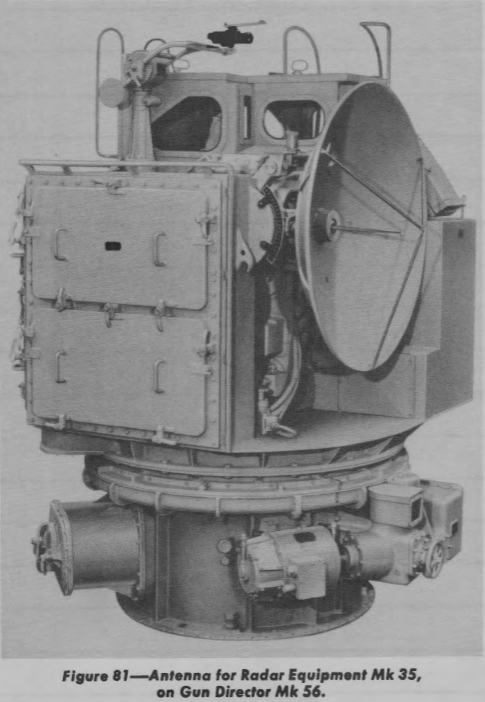
Erm. Brooke-class did not have Mk-25 radar. It have a Mk-56 GFCS system, with Mk-35 radar.

1770238323702.png

And Mk-35 radar is not CW-capable. There are no mentions of any such mode in 1954s "Characteristics of the fire control radars". Both the spiral scan and conical scan are pulse-based; just the mechanics for rotating feed is different.

With all respect, but it seems that you are mistaken there. Neither Mk-25 nor Mk-35 radars are CW-capable.
 
Erm. Brooke-class did not have Mk-25 radar. It have a Mk-56 GFCS system, with Mk-35 radar.

View attachment 800979

And Mk-35 radar is not CW-capable. There are no mentions of any such mode in 1954s "Characteristics of the fire control radars". Both the spiral scan and conical scan are pulse-based; just the mechanics for rotating feed is different.

With all respect, but it seems that you are mistaken there. Neither Mk-25 nor Mk-35 radars are CW-capable.
But I know for a fact you can use it as a second channel to control missiles aboard that class of ship. I did enough work on them to learn that.
 
But I know for a fact you can use it as a second channel to control missiles aboard that class of ship. I did enough work on them to learn that.
With all respect, but it contradict the physical capabilities of radar. Either there was some kind of special modification for Brooke-class ships (of which I can't find any data), or there is some mistake there.
 
The gun mount radar was secondary. It could be used in a pinch. You are correct for the normal fire control. The Brooke class was really a very limited ship in terms of combat power. They were also in iffy material condition a lot of the time.
I don't see how it could be possible. Without the CW illuminator, there would be no Doppler shift for seeker to filter the water surface & stuff.
 
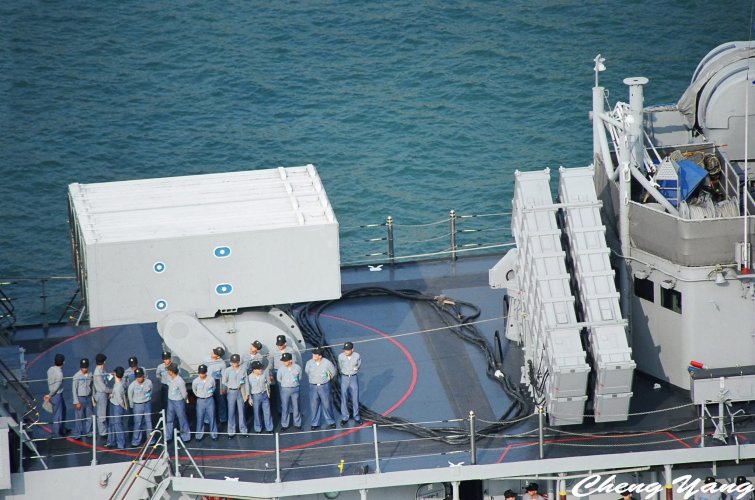
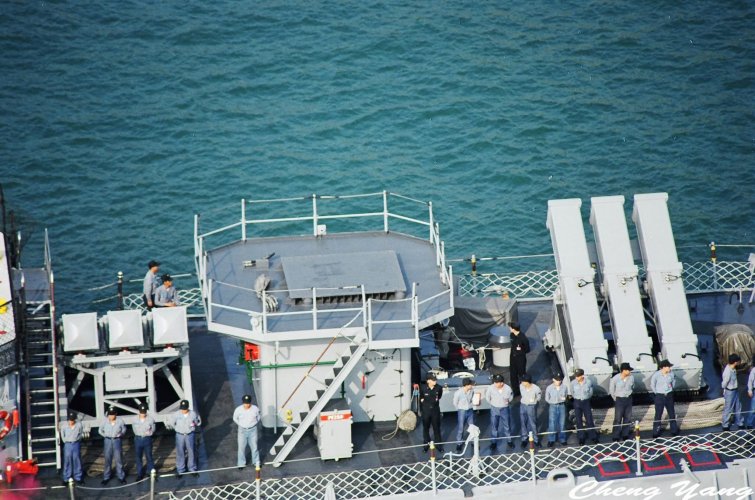
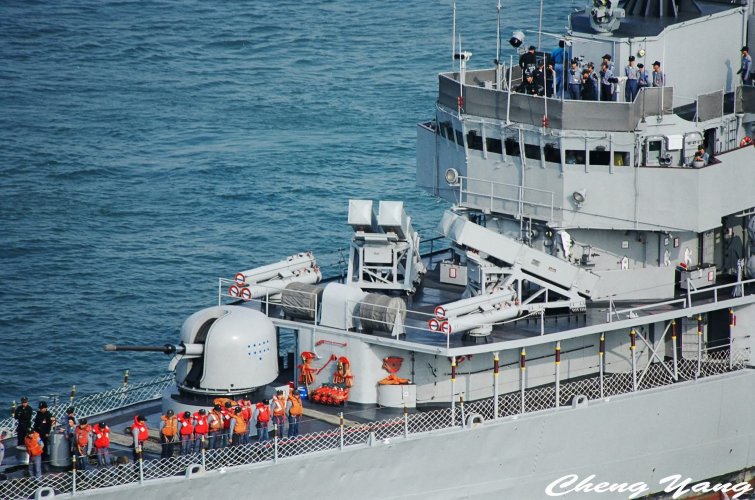
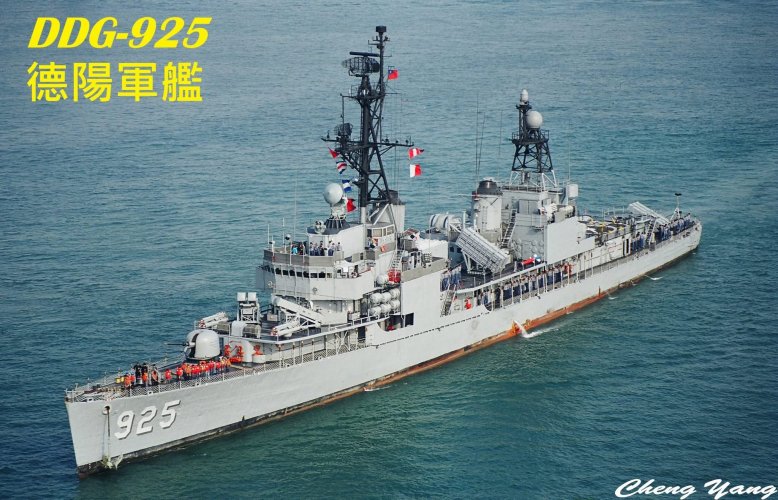
Still don't understand, why they preferred fixed box launchers for Standard missiles, instead of installing another "matchbox" Mk-112 launcher on stern. The ASROC launch cells were compatible with Standard missiles; after all, they were used to fire anti-surface RGM-66 missiles on Knox-class frigates. Taiwanese Navy have access to ASROC Mk-116 launchers. So why don't just use them, instead of fixed boxes?
 
Still don't understand, why they preferred fixed box launchers for Standard missiles, instead of installing another "matchbox" Mk-112 launcher on stern. The ASROC launch cells were compatible with Standard missiles; after all, they were used to fire anti-surface RGM-66 missiles on Knox-class frigates. Taiwanese Navy have access to ASROC Mk-116 launchers. So why don't just use them, instead of fixed boxes?

Wasn't this explained up-thread? At the time they came up with this modification, they could not get ASROC box launchers from the US. So they did something else instead.
 
I gotta say that I love/admire the frankenship nature of this modification--they could not buy new ships and they needed to improve the capabilities of their existing destroyers, so they did the best they could. It's ugly, but we can admire its ugliness.
 
Still don't understand, why they preferred fixed box launchers for Standard missiles, instead of installing another "matchbox" Mk-112 launcher on stern. The ASROC launch cells were compatible with Standard missiles; after all, they were used to fire anti-surface RGM-66 missiles on Knox-class frigates. Taiwanese Navy have access to ASROC Mk-116 launchers. So why don't just use them, instead of fixed boxes?
My guess is that it has to do with weight, volume, and stability issues. You're talking a Gearing hull that is very much an originally weight limited design. Modern ships are volume designs. That is, the Gearing hull is on the small side and was designed with a specific weight of equipment installed in it. That equipment was compact and heavy for the most part.

Today, systems are volume critical. That is, they aren't all that heavy by comparison, but they take up a lot of space. For example, a missile is very light but big compared to a gun's shell which is small and very heavy for its size.

So, it's likely the volume wasn't there to handle that launcher or the launcher being where it was was too much weight too high in the ship for stability.

 
My guess is that it has to do with weight, volume, and stability issues. You're talking a Gearing hull that is very much an originally weight limited design. Modern ships are volume designs. That is, the Gearing hull is on the small side and was designed with a specific weight of equipment installed in it. That equipment was compact and heavy for the most part.

Today, systems are volume critical. That is, they aren't all that heavy by comparison, but they take up a lot of space. For example, a missile is very light but big compared to a gun's shell which is small and very heavy for its size.

So, it's likely the volume wasn't there to handle that launcher or the launcher being where it was was too much weight too high in the ship for stability.
I did some back of the napkin a bit back and an Oto 76 or two, Mk.29 and ASROC more or less fit on weight vs the 5" mounts.
 
I did some back of the napkin a bit back and an Oto 76 or two, Mk.29 and ASROC more or less fit on weight vs the 5" mounts.
There's also the volume issue. Fire controls for these systems likely take up more space and require more power than the original systems did. That's a common issue on converting ships designed pre-electronics age (eg., during WW 2 or shortly afterwards) to modern weapons systems. Notice how they added more superstructure behind the bridge and the large deck house aft. You also have two much larger masts on the ship putting a lot more weight high up in it.
 
I don't see how it could be possible. Without the CW illuminator, there would be no Doppler shift for seeker to filter the water surface & stuff.

It's not all that hard to imagine. The SPG-53 fire control radar in the Mk 68 gun fire control system had some versions that piggy-backed a CW illuminator in the main antenna. I can't find any evidence that this happened for the earlier Mk 35/SPG-35 on the Brookes as part of their Mk 57 GFCS, but the Navy held a back a lot of details on ships of this era. It's possible there was a CW channel there.
 
It's not all that hard to imagine. The SPG-53 fire control radar in the Mk 68 gun fire control system had some versions that piggy-backed a CW illuminator in the main antenna. I can't find any evidence that this happened for the earlier Mk 35/SPG-35 on the Brookes as part of their Mk 57 GFCS, but the Navy held a back a lot of details on ships of this era. It's possible there was a CW channel there.
Didn't know that, thank you for clarification!
 

Similar threads

Back
Top Bottom