fredymac

ACCESS: Top Secret
Joined
14 December 2009
Messages
2,155
Reaction score
924
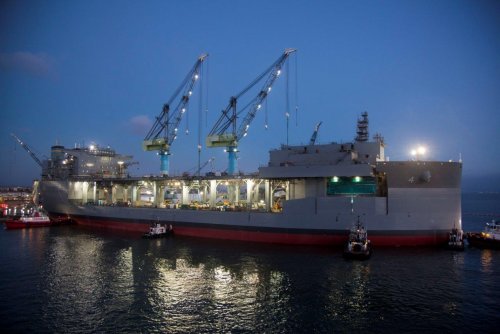
This thing looks like a modern re-interpretation of the WWII Mulberry Harbor.
http://en.wikipedia.org/wiki/Mulberry_harbour

In this case, the harbor can go wherever you go and doesn't tie you to a politically undesirable piece of land or force you to defend your supplies (from hungry mobs). It will make a tempting target for any adversary with near peer capabilities but I suppose any contested landing would follow establishment of air/sea/underwater superiority. I wonder what the trade studies showed for alternatives such as an upgraded LST? I can't imagine something as big as a T-AKE or RO-RO ship ever beaching itself and disgorging it's cargo. It will be interesting to watch the first actual deployment.

https://www.youtube.com/watch?v=mDt7VwKNmYo
 
Interesting concept. This is a prototype? One or two ships? Perhaps a trimaran configuration with a total of six hovercraft docks would be excellent for disaster relief missions.
 
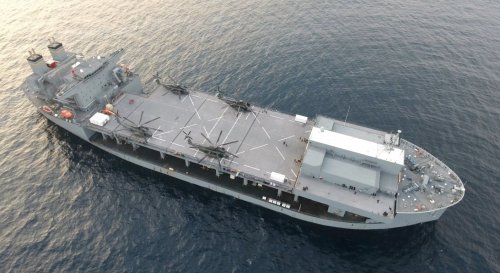
Four ordered so far, two in a modified configuration with helicopter platforms above the LCAC deck.
 
Ongoing developments with this class.

2nd Transfer Dock ship (USNS John Glenn)
https://www.youtube.com/watch?v=LxcdFbhdwts

First Sea Base variant deployment (USNS Puller)
https://www.youtube.com/watch?v=lgDuQ00FqE4

V-22 Ops testing on Puller
https://www.youtube.com/watch?v=TVJWEKZoowE
 
2nd Sea Base delivered and a nice video showing Transfer Dock Puller in operation.

https://www.youtube.com/watch?v=7TpLxkuxBX4
 

Attachments

  • USNS Hershel Williams.jpg
    USNS Hershel Williams.jpg
    140.3 KB · Views: 116
  • USNS Puller And 4 CH53s.jpg
    USNS Puller And 4 CH53s.jpg
    233 KB · Views: 116
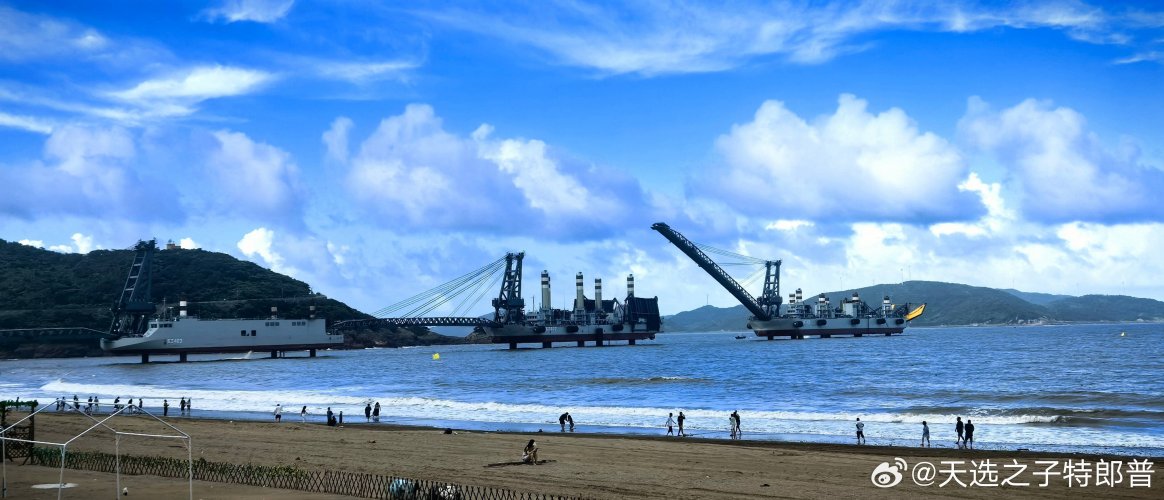
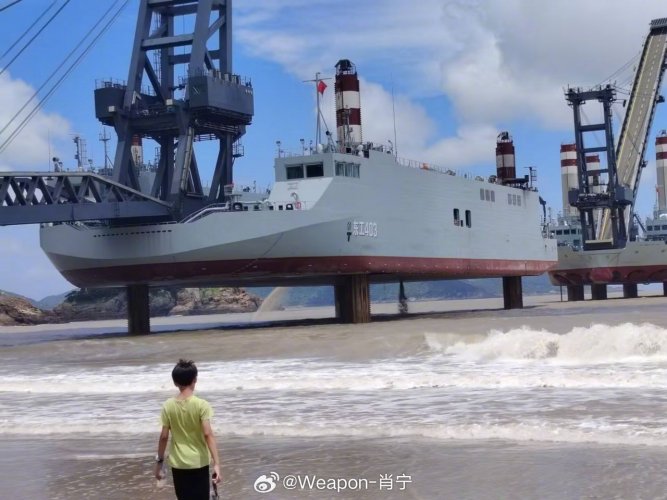
On a somewhat similar note:
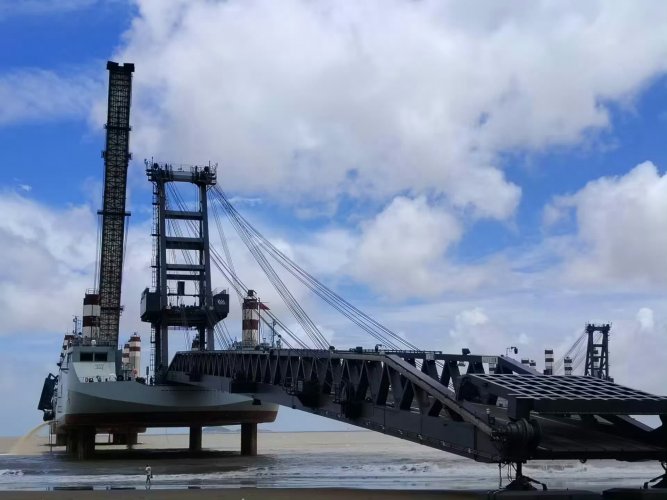
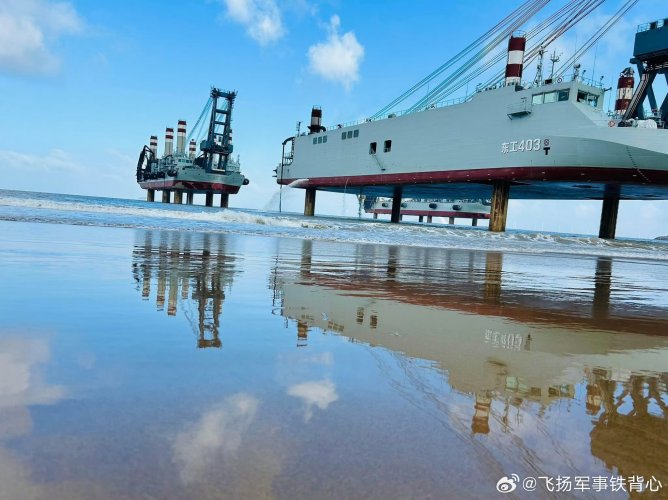
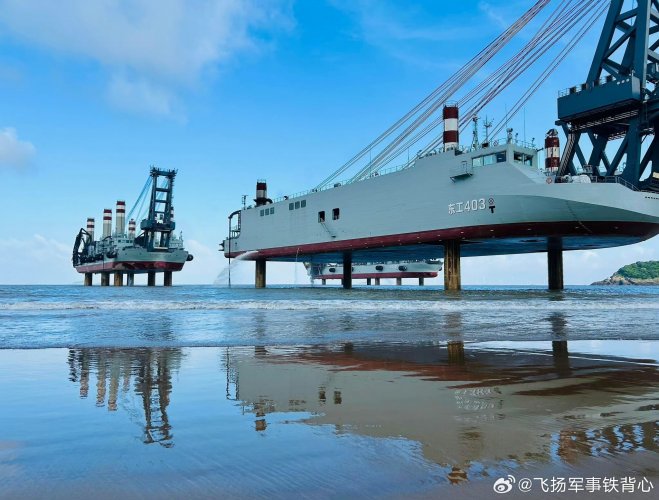
Mark F. Cancian, of the Centre for Strategic and International Studies, said China would have to establish “air superiority and maritime dominance” before deploying the barges because they would be destroyed by missiles and artillery.

He added that China was “replicating” the D-Day Mulberry Harbours, which transported thousands of tons of vehicles and supplies to the shore every day.

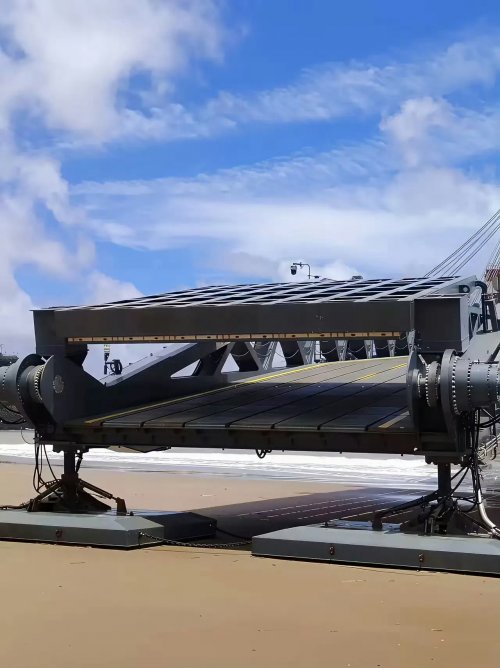
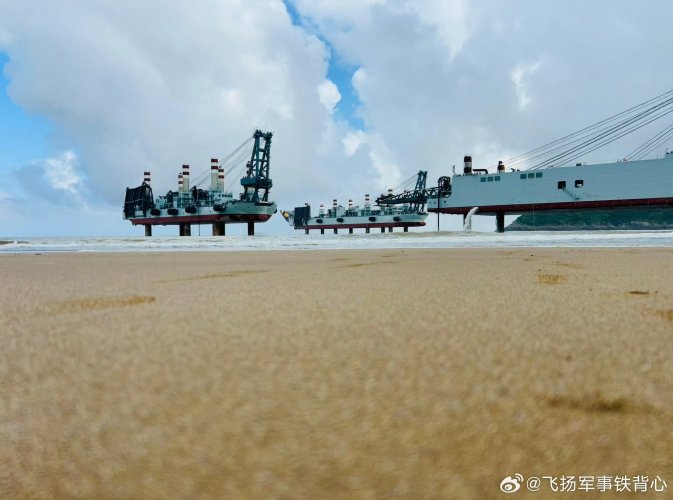
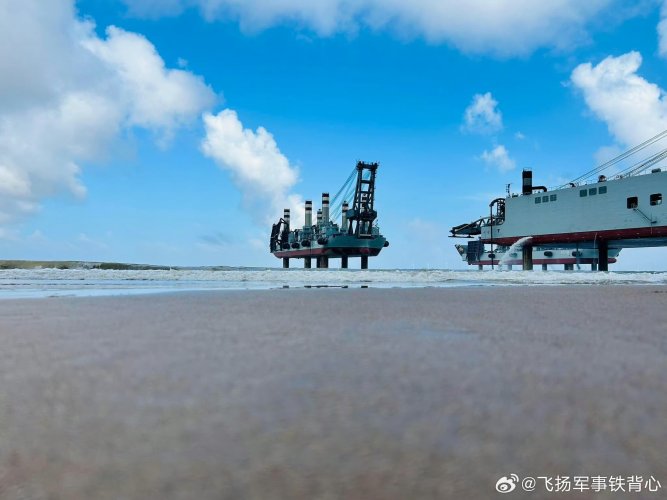
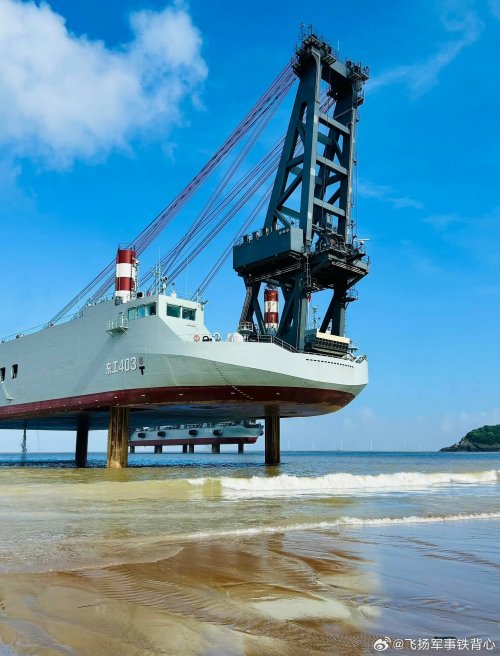
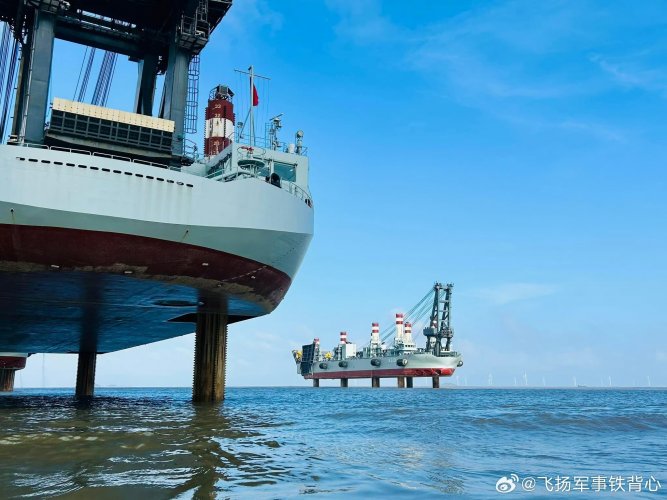
Each of the Chinese barges reportedly features a 120-metre bridge that would allow tanks and other vehicles to reach a coastal road or hard surface beyond the beach.

Some are said to use pillars which can be lowered to provide a stable platform during poor weather, along with open platforms for other ships to dock and unload.

Prof Lyle Goldstein, of Brown University’s Watson Institute, said there was “clear evidence” that China had “studied Mulberries and other facets of Normandy with considerable care”.

He estimated that China would likely need at least two dozen barges “to reliably bring significant quantities of armour and supplies ashore” because many would be destroyed by a Taiwanese counterattack.

“Such numbers are well within Chinese capabilities given their huge shipbuilding capacity,” Prof Goldstein noted.

What was old is new again.
 
Last edited:
In this case, the harbor can go wherever you go and doesn't tie you to a politically undesirable piece of land or force you to defend your supplies (from hungry mobs). It will make a tempting target for any adversary with near peer capabilities but I suppose any contested landing would follow establishment of air/sea/underwater superiority. I wonder what the trade studies showed for alternatives such as an upgraded LST? I can't imagine something as big as a T-AKE or RO-RO ship ever beaching itself and disgorging it's cargo. It will be interesting to watch the first actual deployment.
This is one of those concepts that emerged during the mid-2000s MPF(F) program.
During Desert Shield, there was significant concern that Saudi ports would be targetted by Iraqi SCUDs, thus preventing the arrival of Coalition armor. As the Marines and DoD leaned more and more into Operational Manouver From the Sea to quell regional conflicts, there became the need to put large amounts of solid cargo ashore without access to port facilities. This is called "seabasing."
That's where MPF(F) came into play. T-AKRs would offload directly onto LCACs and aviation assets, which would then ferry equipment ashore without requiring a port. The ESBs would serve as a holding platform to ferry, load, and unload the "shore connectors," which turned out to be LCAC. The advantage of this method over a traditional ARG is the shear amount of material it can put ashore. The LSMRs have some 390000 square feet of cargo space, compared to an LPD-17s 54,000 square feet. Interestingly the Spearhead-class EPFs also have connection to MPF(F), as the "intra-theater connector."
Obviously such a system does not work with neer-peer adversaries.
 

Similar threads

Back
Top Bottom