Mikoyan Gurevich MiG OKB Designations

Steve Pace

Aviation History Writer
Joined
6 January 2013
Messages
2,266
Reaction score
262
I've noticed that some of you still write Mig when it should be MiG. Just saying... -SP

 
Steve Pace said:
I've noticed that some of you still write Mig when it should be MiG. Just saying... -SP

Very true, this... though I do wonder why they keep calling them this since they dropped Gurevich from the company's name quite a while ago... ::)
 
Skyblazer said:
Very true, this... though I do wonder why they keep calling them this since they dropped Gurevich from the company's name quite a while ago... ::)
No they not. You can check migavia.ru site. I think some ones just too lazy to press Shift one more time ::)
 
XaHyMaH said:
Skyblazer said:
Very true, this... though I do wonder why they keep calling them this since they dropped Gurevich from the company's name quite a while ago... ::)
No they not. You can check migavia.ru site. I think some ones just too lazy to press Shift one more time ::)

You did not get my point here. I KNOW it's MiG and I know they still use it and spell it right!!!

What I said was: I wonder why Mikoyan continues to call their aircraft "MiG" considering Gurevich is no longer part of their company's name.

I guess TomS made a valid point about it though.
 
Skyblazer said:
XaHyMaH said:
Skyblazer said:
Very true, this... though I do wonder why they keep calling them this since they dropped Gurevich from the company's name quite a while ago... ::)
No they not. You can check migavia.ru site. I think some ones just too lazy to press Shift one more time ::)

You did not get my point here. I KNOW it's MiG and I know they still use it and spell it right!!!

What I said was: I wonder why Mikoyan continues to call their aircraft "MiG" considering Gurevich is no longer part of their company's name.

I guess TomS made a valid point about it though.

It's a shame Boeing didn't so something similar as "McDonnell Douglas" has a hell of a lot more name recognition/better reputation when it comes to fighters than "Boeing".
 
PaulMM (Overscan) said:
MiG is definitely a brandname. Sukhoi, not so much.

"MiG" is practically synonymous with "Russian Fighter"
 
Hi,

Mikoyan was the successor to the Soviet Mikoyan and Gurevich Design Bureau (OKB-155 design office prefix MiG) founded in 1939 by aircraft designers Artem Mikoyan and Mikhail Gurevich.

I intend to talk about its aircraft list.
 
Last edited:
Hi,

Mikoyan was the successor to the Soviet Mikoyan and Gurevich Design Bureau (OKB-155 design office
prefix MiG) founded in 1939 by aircraft designers Artem Mikoyan and Mikhail Gurevich.

I intend to talk about its aircraft list.
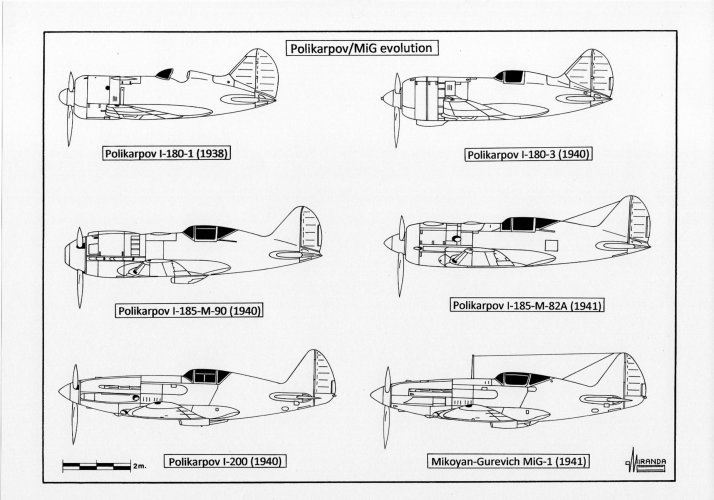
The I-200 high-altitude Soviet interceptor was designed in 1939 by the Polikarpov Design Bureau, inheriting all the deficiencies of its lineage and thus proving the correctness of the Latin sentence Errare humanum est, sed perseverare, diabolicum. (To err is human, but to persist is diabolical).

The extremely short fuselage had originally been designed for the I-185 fighter (powered by one radial engine) and was totally inadequate to compensate for the long and heavy AM-35A V-12 engine, with 1,350 hp.

During the flight tests performed on August 29, 1940, the prototype showed longitudinal instability, heavy control, and a dangerous tendency to flat spin.

It was difficult to fly and deadly in combat for an inexperienced pilot. Its instability at high speeds could make aerial gunnery difficult and requiring constant pilot intervention to remain on target.

A feature common to all Polikarpov fighters was the ‘snaking effect’ that affected weapon accuracy during combat maneuvers.

The triangular wing planform, with leading and trailing edge sweep and larger roots that tapered to the tips, were the cheapest compromise between performance, strength and drag. It was strong at the root, light at the tips and easy to build, and could be lethal, because the strongly tapered wings had a dangerous tendency to low-speed stall.

In combat, the I-200 was prone to spinning out of a steep banking turn. Despite the seriousness of the shortcomings displayed by the prototype, it was ordered into immediate mass production, as OKO MiG-1, in September 1940.

Some aircraft from GAZ-1 were delivered to the VVS-RKKA (Soviet Air Force) and PVO (Soviet Air Defense Force) in April 1941, but little is known of their performance in combat because more than half of all Soviet fighters were destroyed on the ground or in the air within 48 hours of the Luftwaffe assault.

OKO MiG-1 technical data

Wingspan: 33.5 ft. (10.20 m), length: 26.8 ft. (8.16 m), height: 10.8 ft. (3.30 m), wing surface: 193 sq. ft. (17.44 sq. m), take-off weight: 6,841 lb. (3,099 Kg), maximum speed: 390 mph (628 km/h), design ceiling: 39,360 ft. (12,000 m, armament: two nose mounted ShKAS and one USB heavy machine gun of 12.7 mm.

Meanwhile the Mikoyan-Gurevich Design Bureau (OKO-Kiev) worked feverishly to correct the MiG-1 deficiencies.

The MiG-3 was ordered into production in December 1940, but the improvements added nearly 500 lb. to the take-off weight and exacerbated its instability at high speeds. Its poor climb performance was caused by the excessive weight (1,830 lb.) of the AM-35A engine (Soviet version of Fiat A.20 V.12 with single-stage gear-driven supercharger) and the steel wing spar.

The aircraft was originally designed as a high-altitude interceptor with 37,700 ft. (11,500 m) service ceiling, but in practice few MiG-3 managed to reach that altitude due to the poor design of the fuel and oil pumps and the M-100's supercharger malfunction, as the impeller alloy AK-1 was prone to material fatigue.

In real combat conditions some planes entered irrecoverable spins flying at 30,000 ft. (9,150 m).

The MiG-3 had a take-off weight of 7,395 lb. (3,350 kg) at a time when the Yak-1 weighed 6,309 lb. (2,858 kg) and the Messerschmitt Bf 109 F-1 4,943 lb. (2,239 kg).

Designers were forced to reduce the armament to just three machine guns so as not to further degrade its climb performance.

On the Eastern Front most air-to-air combats were at altitudes below 16,400 ft. (5,000 m). The Yak-1 and LaGG-3 fighters powered by M-105 P (Hispano-Suiza 12 Y) engines attacked the German Henschel Hs 126 reconnaissance planes and the Junkers Ju 87 dive bombers as they tried to escape the Messerschmitt Bf 109 F fighters.

Attempts to use the MiG-3 as ground attack airplane and frontal low altitude fighter were a bloody failure.

The aircrafts used by the PVO in Moscow's defense failed to reach the high-flying Ju 86 P-2s during the day and, at night, their inaccurate PAK-1 gunsights, the low optical quality of the Plexiglas windscreen and the poor firepower, proved inadequate to destroy the Heinkel He-111 H bombers fitted with 270 kg armor.

Production of the MiG-3 was stopped in December 1941 and six fighter regiments in charge of the defense of Moscow were equipped with Lend-Lease Hawker Hurricanes Mk.II A and Mk.IIB.

MiG-3 technical data

Wingspan: 33.5 ft. (10.20 m), length: 27 ft. (8.25 m), height: 10.8 ft. (3.30 m), wing surface: 193 sq. ft. (17.44 sq. m), take-off weight: 7,395 lb. (3,350 Kg).
 

Attachments

  • Migs.jpg
    Migs.jpg
    367.7 KB · Views: 170
Thank you my dear Justo,but I intend to not talk about all details,I'll speak about
aircraft in brief,without their variants.
 
Excuse me my dears and my friends,in accident I lost the Infos on my USB Hard,it
equals 80 %,but I will start soon.
 
Hi,

I will start,but before that,I will not mention all variants,only
the version who has a major differences.

MiG-1 was a single seat low-cantilever-wing monoplane fighter,
powered by one 1350 hp AM-35 engine
MiG-2 was a single seat low-cantilever-wing monoplane light bomber,
powered by two 1400 hp AM-37 engines, aversion of DIS-200
MiG-3 was an improved version of MiG-1,consider a production variant,
with minor changes,powered by one 1332 hp AM-35A engine
MiG-3SPB (Fast Dive Bomber) was proposed parasite fighter variant for the Zveno project to be carried by a Petlyakov Pe-8 mother ship
MiG-4 was a single seat attack aircraft,had a low cantilever inverted gull
wing,powered by one 1600 hp AM-38 engine,renamed from PBSh-1
MiG-5 was the DIS-200 as a long range escort heavy fighter,powered
by two 1400 hp AM-37 engines
MiG-5 DIS-IT was a heavier and improved version of above,but powered
by two 1700 hp M-82F engines
MiG-6 was a biplane version of MiG-4,had additional forward swept wing
above the main one,also powered by one1600 hp AM-38 engine,it was
called PBSh-2 at first
MiG-7 was a high altitude fighter version,developed from MiG-3,powered
by one 1500 AM-39 engine
MiG-8 Utka was a three seat canard tailless liaison aircraft,powered by
one 110 hp M-11FM pusher engine
MiG-9 First Use was a single seat low-wing fighter,as I-210,which
itself was MiG-3 with M-82 engine
MiG-9 was a single seat mid-wing jet fighter aircraft,powered by two
RD-20 turbojet engines
MiG-9 Single Engine was a version of MiG-9,but powered by one TR-1
turbojet engine,also called I-305
MiG-10 ? unknown,but it was mentioned in old source as a high speed transport aircraft project,need confirm of course
MiG-11 First Use was a single seat low-cantilever-wing high altitude
fighter monoplane,powered by one 1700 hp AM-38F,also called I-220
MiG-11 Second Use was a tandem two-seat jet trainer aircraft,based
on MiG-9 as UTI,also called FT-2
MiG-13 was a single seat low-cantilever-wing monoplane fighter,
had a mixed-power solution with the VRDK (Vozdushno-Reaktivny Dvigatel Kompressornyi – air reaction compressor jet) motorjet powered by the Klimov VK-107 V12 engine
MiG-15 was a single seat swept-mid-wing jet fighter monoplane,powered
by one RD-45F tubpjet engine
MiG-17 First Use was the same as MiG-15bis, powered by Klimov VK-1
and had with enlarged air brakes,and minor improvements
MiG-17 was a single seat jet fighter,based on MiG-15,with major changes,
that included more powerful engine and had a new thinner and more highly swept wing and tailplane for speeds approaching Mach 1,powered by
one Klimov VK-1 turbojet engine
MiG-17SN was a MiG-17,with two side air intakes,and fitted with
rotating cannons in the nose
MiG-18-50 was a low-cantilever-wing business jet aircraft project,powered
by two Lotarev D-36 turbogan engines,basically was Eurasia 18-50
MiG-19 was a single seat jet fighter,powered by two Tumansky RD-9B
turbojet engine with afterburner
MiG-19 Naval was a ship-board fighter project of 1953
MiG-21 was a single seat delta wing jet supersonic fighter,powered by
one Tumansky R-25-300
MiG-21 (Ye-8) was a version,had a two ventral intakes and canard
at first,it considered an advanced interceptor,1961
MiG-211(21-11) was a version of MiG-21,with pure delta wing
MiG-21PD was an experimental version,with STOL capacityby add
lift engines in the fuselage,prototype
MiG-21M was also a STOL version project,had a lift engines
MiG-21LSh was an attack version,project of 1969
MiG-23 First Use was a single seat swept-wing aircraft,as the same
as Ye.2A
MiG-23U Second Use was a the same as Ye.50A
MiG-23 Third Use was the same as Ye.8
MiG-23 Fourth Use was single seat mid delta wing jet fighter interceptor,
powered by one Tumansky R-25F-300 engine, called 23-01
MiG-23 STOL of Fourth Use was same as above,but fitted with addition
two lift engine in the fuselage
MiG-23 Last Use was a single seat variable geometry wing jet fighter
and interceptor,also powered by one Tumansky R-25F-300 engine
MiG-23K was a naval project version,with extended span wing and retractable refueling probe,but powered by Two RD-33 engines
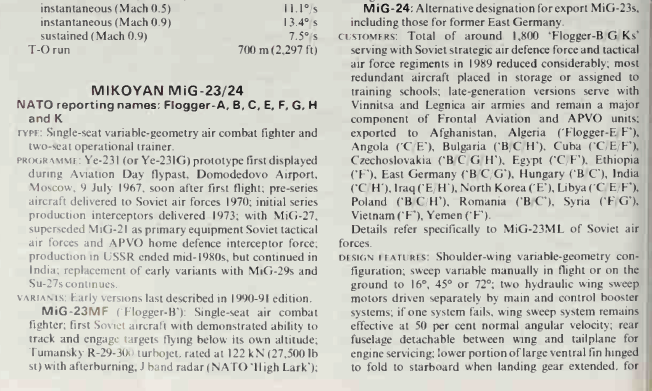
MiG-24 First Use was an export version of MiG-23
MiG-24 Transport was a transport aircraft project,may it was the same
as SVB,a twin turboprop engined high wing
MiG-25 was a single seat shoulder-wing all weather high altitude jet interceptor,capable to each 3 Mach,powered by two Tumansky R-15B-300
engines
MiG-27Sh was a single seat fighter-bomber project,based on MiG-21,
and appeared in 1968
MiG-27 (27-11) was a single seat fighter-bomber project,developed
from MiG-21I,1969
MiG-27 was a single seat fighter-bomber aircraft, which was aversion
of the MiG-23
MiG-29 Early was single seat front fighter project,had side intakes looks
like MiG-25,powered by two R-67 engines
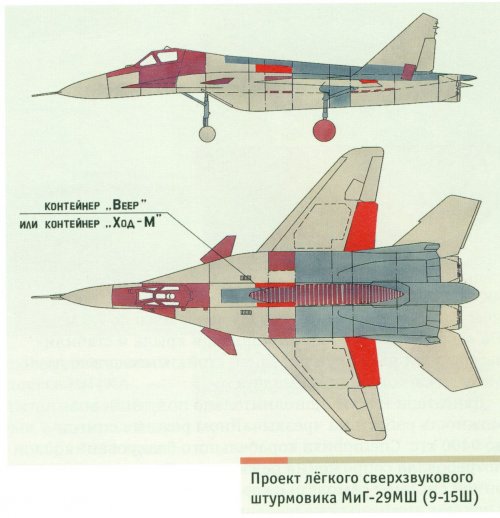
MiG-29 was a single seat front fighter,powered by two RD-33 engines
MiG-29 Vector Thrust was a verion of MiG-29,had a controlled vector thrust system,project of 1986
MiG-30 was developed from MiG-29,as attack aircraft for India at
early of 1990s,with addition canard
MiG-31 was a two-seat fighter,developed from MiG-25,but powered by
two D-30F engines
MiG-33 First Use was a single seat lightweight fighter project,with
high wing,powered by one RD-93 engine,early 1980s
MiG-33 was a developed of MiG-29M3,with canard and powered by
two RD-43 engines
MiG-35 was an air superiority and multi-role fighter, based on the MiG-29,
powered by two Klimov RD-33MK turbofan engines
MiG-37 ? was unknown design,but may it was related to MFI of 1986,
need confirm ?
MiG-39 ? was unknown,but may it was related to 1.42 aircraft,of course
need confirm
MiG-41 First Use was a single seat light front line fighter project of 1981,
it had a side intakes and powered by one RD-33 turbofan engine
MiG-41 Second Use was developed from above,but had a duck shape;
delta wing with canard,also powered by one RD-33 turbofan engine
MiG-41 Third Use ? was a single seat canard variable geometry wing
stealth fighter project,need confirm
MiG-41 it's a fighter from 6th generation stealth fighter project,no one
knows its shape,but may it has a side intakes,similar a little to MiG-31
MiG-55 was an experimental high speed double delta wing aircraft
project
MiG-101 was a low-wing twin boom light transport project,powered
by two tubroprop engines
MiG-105 was a part of the Spiral program, was a crewed test vehicle to explore low-speed handling and landing, as aerospace aircraft
MiG-110 was a high-wing twin boom light transport project,powered
by two 2500 hp Klimov TV7-117 turboprop engine
MiG-111 was a light transport project,it was an unconventional aircraft,
having unswept tandem wings with vertical stagger and a T-tail with
swept fin,the rear wings carried 960 hp Glushenkov TVD-10B1 turboprops
engines,driven four-blade pusher propellers
MiG-115 was a unequal span staggered wing biplane project,as a light
transport aircraft,powered by one turboprop engine,mounted at the nose
MiG-121 ? was a 19 passenger transport project,it was mentioned in
old magazine,may Aeroplane monthly or Fly Past
MiG-125 was a business jet aircraft project,powered by two Williams Rolls FJ44-2 turbofan engines
MiG-125 SST was supersonic business jet transport aircraft project,it
was based on MiG-25 airframe
MiG-201 was a twin boom light utility transport aircraft powered by
two turboprop engine
MiG-210 was a supersonic executive transport aircraft project,with a
double detla wing
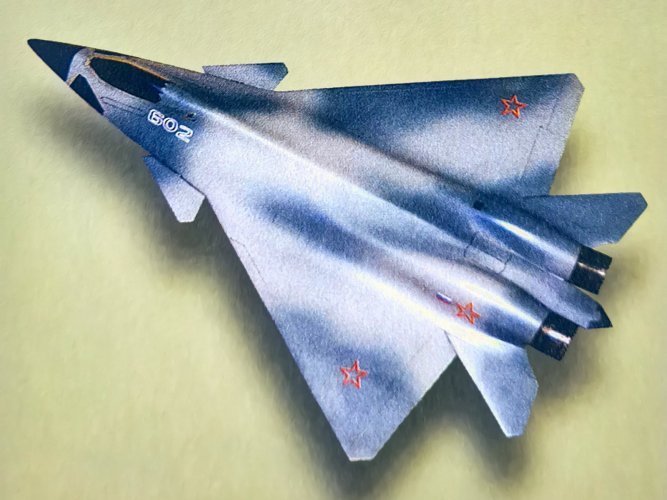
MiG-602 was a single seat delta wing canard stealth fighter project
MiG-701 was a single seat long range fighter interceptor project,and
powered by two AL-41F engines
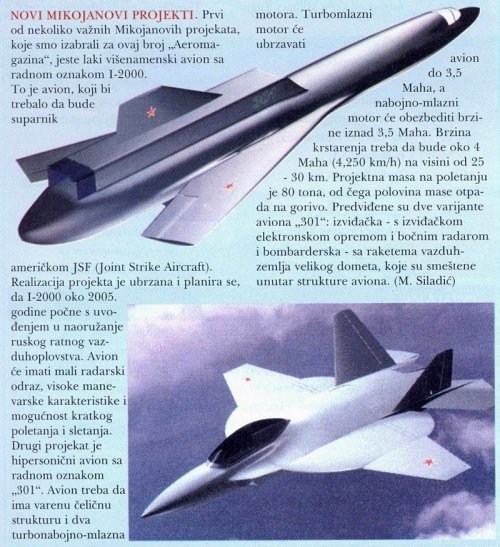
MiG-2000 was a liquid ramjet single-stage-to-orbit spaceplane, explored in the 1990s
MiG-3000 was the same as Promavia ATTA-3000,as a two-seat jet trainer
MiG-


- To be continued
 
Last edited:
Remove the MiG-24 and add the MiG-30, it's a MiG-29-based attack aircraft for India. Early nineties

OK my dear Paralay,but MiG-24 was mentioned in JAWA 1991-1992.
 

Attachments

  • 6.png
    6.png
    193.9 KB · Views: 101
Last edited:
Hello folks,
according to a member in the German forum Flugzeugforum.de, the MiG-23BN in service with the East German Air Force had the designation 'MiG-24(BN)', based on the company designation 'Product 32' or 'Product 24BN'.
This designation could be all just misinformation during the cold war, so I will double check it over the following days.
MiG-23BN = изделие 32 oder auch изделие 24BN (Woraus dann mitunter die Bezeichnung MiG-24(BN) abgeleitet wurde.)
usw.
Source (German, and from 2006):
 
The type designation, or rather the term ‘MiG-24’, was circulated in the LSK/LV units at the beginning of my military service (autumn 1983). In my opinion, someone within the armed forces, out of ignorance of the Mikoyan designation system, or out of sheer stupidity, or perhaps just to show off, believed that the type designation 'MiG-24' could be derived from the factory codes ‘24’/'32'/‘32-24’.
With their introduction into troop service (equivalent to series production), all MiG combat aircraft were given the type designation MiG and an odd number after the hyphen (MiG-9/15/17/19/21/23/25/27/29/31, to name only the most important ones), so where did the -24 suddenly come from? As long as no one can show me original documents from the MiG archives, the ‘MiG-24’ remains for me just another example of the hunt for gap fillers.
The Jane's editions are an important reference work for me, but the 1991/92 edition comes from a time of upheaval when people were rushing to get their hands on any information that emerged from behind the falling Iron Curtain. If you look at the subsequent 1992/93 edition, this ominous ‘MiG-24’ is no longer listed – full stop.
 
Thank you my dear Boxkite,

and any another additions or corrections are welcome.
 
From "I" series,

I-1,2,3,5,7,42,44,74,75,90,200,210,211,220,221,222,224,225,230,231,
240,250,260,270,280 ?,290,300,301,302,305,307,308,310,312,317,
320, 320 II,330,340,350,360,370,380,390 ?,400 ?,410,420,500 & 2000
 
Last edited:
MiG-111 was a light transport project,it was an unconventional aircraft,
having unswept tandem wings with vertical stagger and a T-tail with
swept fin,the rear wings carried 960 hp Glushenkov TVD-10B1 turboprops
engines,driven four-blade pusher propellers

Also I add MiG-111.
 
From "I" series,

I-1,2,3,5,7,42,44,74,75,90,200,210,211,220,221,222,224,225,230,231,
240,250,260,270,280 ?,290,300,301,302,305,307,308,310,312,317,
320, 320 II,330,340,350,360,370,380,390 ?,400 ?,410,420,500 & 2000

I will begin,

I-1 was a single seat fighter aircraft,based on MiG-17 and MiG-19,
powered by one VK-7 turbojet engine,also called I-370
I-2 was developed from I-1,but fitted with new wing and
sweep angle 57 degree,also called I-370
I-3 was a single seat fighter aircraft,powered by one Klimov
VK-3 turbofan engine,also called I-380
I-5 was a single seat fighter interceptor,developed from I-410,
powered by one Klimov VK-3 turbofan engine,called I-420
I-7U was a single seat fighter interceptor,with swept wing and
powered by one AL-7F turbojet engine
I-7K was a developed project version of I-7U,but fitted with
an improved radar,also powered by the same engine
I-42 was a single seat modern fighter with delta wing canard shape,
as 5th concept,powered by two AL-41F turbojet engine,project only
I-42 Trainer was a two-seat project version
I-44 was a single seat modern fighter prototype,powered by two
D-30 turbofan engines
I-61 & I-63 were two designations alloacted to MiG-1,not clear if that was only internal system to the company or not ?
I-74 was a fighter aircraft ?,no more details,may it was the same
as Tip 74
I-75F was a conversion of I-7U,powered by one AL-7F-1 turbojet engine
I-90 was the same as MFI I-44
I-200 was a single seat interceptor prototype,powered by one AM-37
engine,led to develop MiG-1
I-210 was a single fighter,a version of MiG-3 with M-82 engine
I-211 was a single seat fighter,a version I-210,but powered by one
M-82A or M-82F engine
I-220 was a single seat high-altitude intereceptor and reconnaissance
aircraft,powered by one AM-38F engine,also called MiG-11
I-221 was a single seat fighter,consider an advanced high-altitude
interceptor,powered by one AM-39A engine,also called MiG-7
I-222 was a version of I-221,but powered by one AM-39B-1 engine
I-223 ? was unknwon and probably not used,but may a project
version of I-222
I-224 was a also version of I-222,with also AM-39B engine
I-225 was a version of I-220,with AM-42B engine
I-230 was a single seat high altitude fighter,powered by one AM-35A
engine
I-231 was a version of I-230,powered by one AM-39A engine
I-240 was a single seat high altitde fighter project,powered by one
AM-43 engine
I-250 was a single seat mixed powered exterimental fighter,powered
by one VK-107A engine plus VRDK ramjet engine
I-260 was a single seat mid-wing fighter project,powered by two
BMW-003 tubrojet engines,mounted under the wing
I-270 was a single seat experimental intereceptor aircraft,powered
by one RD-2M-3V rocket engine
I-280 ? was unknown,but may it was a MiG-3 with a horizontal sails,
project only,need confirm
I-290 was a single seat fighter project,based on I-260,powered by
two BMW-003 or Jumo 004 turbojet engines
I-300 was a single seat mid-wing jet fighter,powered by two RD-20
turbojet engine,also called MiG-9
I-301 was a production version of MiG-9,fitted with one N-37 cannon
plus two NS-23K guns
I-301T was a trainer version of I-301,only one prototype was built
I-302 was an experimental version of I-301,with N-37 cannon,mounted
on the left side above the air defense system
I-305 was a single engined version of I-301,but powered by one TR-1A
turbojet engine
I-307 was an experimental variant,had reinforced cockpit armor,and
powered by two BMW-003 turbojet engines
I-308 was a variant of I-301,as MiG-9M,with pressurized cabin and eject
seat,also powered by two TR-1A turbojet engines
I-310 was a single seat fighter,with mid swept wing,called MiG-15,and
powered by one RD-45 turbojet engine
I-311 was an experimental version of MiG-15,but powered by one Klimov
VK-1 turbojet engine
I-312 was a two-seat trainer version,as MiG-15UTI,powered by one RD-45FA
turbojet engine
I-317 was also an experimental version of MiG-15,powered by one Klimov
VK-1 turbojet engine
I-320 First Use was a project version of MiG-9,but powered by one Rolls Royce Nene turbojet engine,never completed
I-320 was a single seat all-weather heavy fighter-interceptor prototype,
for 1949 competition,powered by two RD-45F or VK-1 turbojet engines
I-330 was a single seat swept wing fighter,based on MiG-15,powered
by one Klimov VK-1 turbojet engine,later became MiG-17
I-340 was an experimental single seat fighter,developed from MiG-17,
but powered by one AM-5 turbojet engine
I-340/II was a high-altitude version to intercept the Lockheed U-2, equipped with a self-contained liquid-fuel booster rocket pack; appears to have been abandoned because of inability to control the aircraft at very high altitudes and the aircraft's tendency to enter supersonic spin
I-350 was a single seat supersonic fighter,powered by one TR-3A
turbojet engine
I-360 was a version of I-340/II,with U-19D booster
I-370 was the same as I-1
I-380 was the same as I-3
I-390 ? was unknown,but may it was single seat swept wing experimental
frontline fighter,powered by one AM-9B turbojet engine,as the Ye.2,need
confirm
I-400 ? was unknown,but may it was a single seat delta wing experimental
frontline fighter,powered by one AM-9I turbojet engine,as the Ye.4,need
confirm
I-410 was the same as I-5
I-420 was a single seat fighter project,powered by one Klimov VK-3
turbojet engine,called I-3P,with interception system,never completed
I-430 ? was unknown,but may it was single seat interceptor project,
with straight wing,looks like Lockheed F-104 Starfighter,powered by
one turbojet engine,and its airtake is in nose,need confirm
I-440 to I-490 ------?
I-500 was a single seat delta wing fighter,led to develop MiG-21,
powered by one AM-11 turbojet engine
I-


- To be continued
 
Last edited:
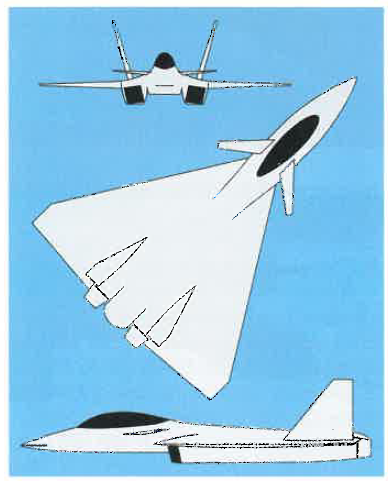
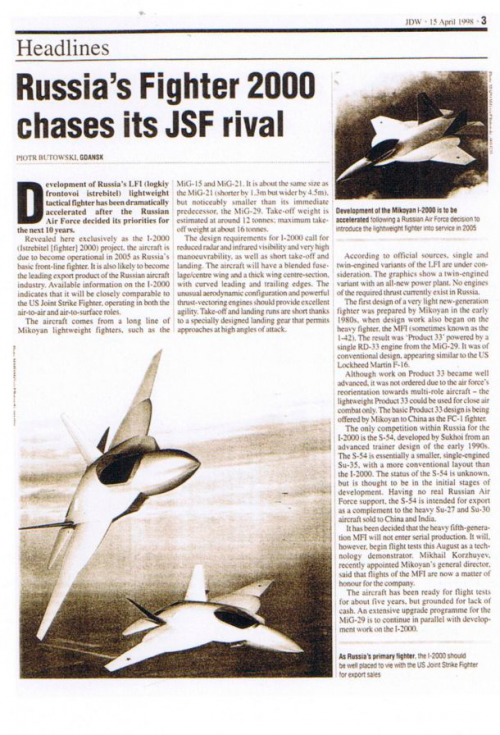
It's Moukhamedov Integral-2010. Designation I-2000 and attribution to OKB MiG were wrong in this case.
 

Attachments

  • 1767899147965.png
    1767899147965.png
    970.5 KB · Views: 44
Last edited:

Similar threads

Back
Top Bottom