MiG-29 Avionics

Ziggy
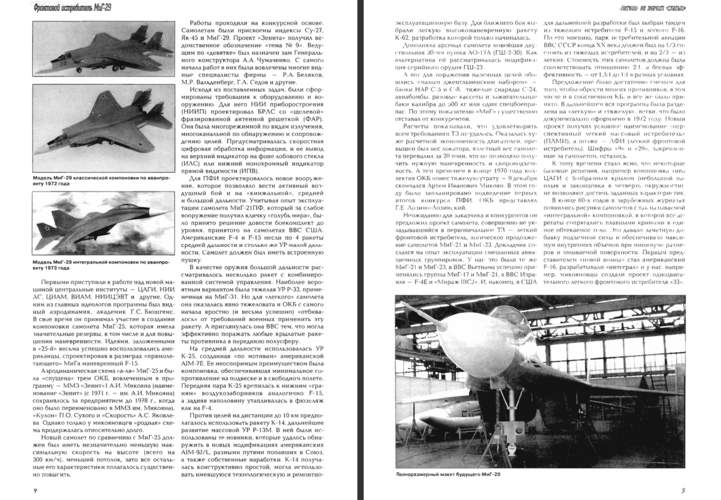
Around 1964/65, the air superiority studies that later led to the FX began. In the end, there were three competing companies - North American, Fairchild Hiller, McDonnell Douglas. In December 1969, the McDonnell Douglas Model 199B was selected as the winner. The name F-15 was chosen for all candidates because the FX program's main competitor was the naval F-14 Tomcat. So the Air Force chose a number greater than 14. F-14+1. According to sources familiar to me, the Soviets knew very well what was going on in the FX program, and the FX program had a direct impact on the new generation of their aircraft.

The designation YF-15 was not used, the first aircraft was already an F-15.

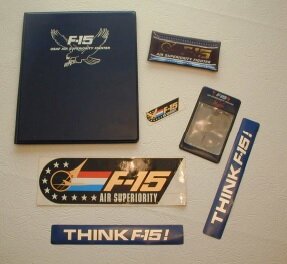
The photo shows items and folders from McAir for their F-15. From North American F-15, their graphic logos are here in the thread.
 

Attachments

  • Bez názvu.jpg
    Bez názvu.jpg
    27.8 KB · Views: 61
Last edited:
There's a lot of opinion in that account, which is 100% "TsAGI invented everything and I love Mikoyan cos they listen to me", like most of GS Bushgens writings.

Its untrue that the USSR knew nothing about the Eagle's capabilities until 1973. Even before contract award in 1969, there were articles on the F-15. Broad parameters like Mach 2.5 top speed and a requirement for better agility were public. Various magazines posted artist's impressions and articles before and after contract award. That's leaving to one side any potential espionage.

According to Sukhoi's account, which is supported by the timeline, in 1971 or so, TsAGI were indeed looking at trapezoidal wings with leading edge flaps and flaps. They were not looking at LERX, or an integral layout.

After the 1971 design conference, when Bushgens said the integral design was not recommended, TsAGI went away and started testing their existing variable camber wing with root extensions, and also wind tunnel testing the integral layout.

By late 1972/1973, working with Mikoyan, TsAGI had validated the LERX and integral layout as the best solution, but paired with the trapezoidal variable camber wing instead of the ogival wing of the T-10. Mikoyan adopted TsAGI's recommended configuration.

The MiG-29 prototype configuration was indeed very trouble free, nobody can deny that.

If you read the Bedretdinov book, with the repeated changes in chief designer and other uncertainties, the T-10 configuration was still being debated and refined when the T-10 prototype construction started, and it was certainly an immature design with some major flaws. Sukhoi had looked at the trapezoidal wing as an option. Not all Sukhoi engineers think the T-10 was irredeemable, but it suited the newly installed Mikhail Simonov to "sweep clean" with his redesign.

That is to say, this article is the TsAGI/Mikoyan position. The Su-27 book by Sukhoi designers presents the Sukhoi position. Generally, the Sukhoi book has the better sources listed. Mikoyan and TsAGI like to start the story in 1973, and gloss over the earlier stage.
I never said the Soviet Union did not know anything about the F-15's existence. It is likely they knew the moment Mcdonnell Douglas was awarded contract.

However, you stated that the VVS specifically wanted an "anti- F-15" in 1970 before the jet had ever been produced and flown for the first time.
 
Last edited:
I never said the Soviet Union did not know anything about the F-15'S existence. It is likely they knew the moment Mcdonnell Douglas was awarded contract.

However, you stated that the VVS specifically wanted an "anti- F-15" in 1970 before the jet had ever been produced and flown for the first time. Why S? ? makes zero se
The Soviets knew about the FX competition and probably knew all three proposals in detail
 
Last edited:
I never said the Soviet Union did not know anything about the F-15'S existence. It is likely they knew the moment Mcdonnell Douglas was awarded contract.

However, you stated that the VVS specifically wanted an "anti- F-15" in 1970 before the jet had ever been produced and flown for the first time. Why S? ? makes zero se
I literally don't understand what your problem is with the term 'anti-F-15'. It only means ' a counter to the F-15'. The USSR knew the USA was designing a new fighter that would completely outclass all their existing fighters and knew that it was designated F-15 in 1969.Therefore, they initiated a program to build a fighter that would match or beat the F-15 as soon as a contract was awarded. Why would they wait until it flew before starting their program? They were already several years behind on development.
 
The Soviets knew about the FX competition and probably knew all three proposals in detail
It is likely the GRU did and this might have informed the requirement, however Sukhoi rarely got anything from them, so relied on its own department compiling information from public sources like Aviation Week, AIAA journals etc for research purposes.
 
I literally don't understand what your problem is with the term 'anti-F-15'. It only means ' a counter to the F-15'.
Because it is a total disregard to the history of Soviet Aviation by taking the personal word of the very few bitter individuals as objective, historic fact.

1. That was not the purpose of the PFI program. "Kill F-15" was not the primary program directive.

2. Su-27 did not enter service with any Frontline unit & when it did its primary role was defense of the Soviet Union from its greatest aviation threat. Strategic nuclear delivering bombers. The Rockwell B-1 Lancer and countless B-52 Stratofortresses that encircled the Soviet Union 24/7, 365 days a year from 1961 to 1968. There was a slightly bigger threat out there posed by the American's on the mind of the Russians & whole of the Soviet Union if you can imagine....

Additionally, just zoom out & look at the broader picture and you will understand the Su-27 simply lost the entirety of the PFI program. Which was to replace MiG-21, MiG-23, Su-9, Su-11 and Su-15 fighters in the Air Force and Air Defense.

You said Su-15, not me. It is because I wanted to walk you into the fact the SU-27 had no place in the PFI, it was the losing competitor. But needed somewhere it would have any utility. The PVO and Su-15's role.

The MiG-29 fulfilled all program directives of the PFI while the SU-27 continued to fail even after the program was split for a total of 7-8 years.

Even the radar, NIIP Tikhomirov resorted to copying NIIP Phazotron's N019 Rubin of the MiG-29 for the N001 & that radar did not even enter service at the same time as the Su-27 because it continued to fail & meet reliability specification.

Then some enthusiasts wonder why NIIP Tikhomirov is no longer producing radars? Actually, most general "Flanker" fans have no idea NIIP Tikhomirov even existed.

PFI BASELINE REQUIREMENT FOR NEW GENERATION SINGLE REPLACEMENT OF ENTIRE TACTICAL FIGHTER ELEMENT
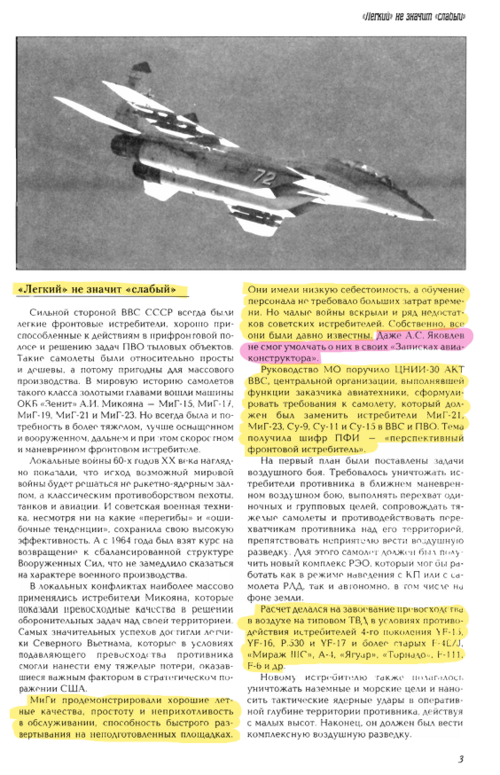
The Ministry of Defense leadership instructed the Central Research Institute-30 AKT VVS, the central organization that performed the functions of the customer of aircraft, to formulate requirements for the aircraft that was to replace the MiG-21, MiG-23, Su-9, Su-11 and Su-15 fighters in the Air Force and Air Defense. The topic received the code PFI front-line fighter.

The tasks of air combat were put in the foreground. It was necessary to destroy enemy fighters in close maneuverable air combat, intercept single and group targets, escort heavy aircraft and counter enemy interceptors over its territory, and prevent the enemy from conducting aerial reconnaissance. For this, the aircraft had to receive a new electronic warfare system that could operate both in the mode of guidance from the command post or from the aircraft radar, and autonomously, including against the background of the earth.

The calculation was made to gain air superiority on a typical TV,D in conditions of counteraction by 4th generation fighters YF-15, YF-16, P.530 and YF-17 and more old F-4C/J. "Mirage IIIC", A-4, "Jaguar", "Tornado", F-111, F-6 and others.

The new fighter was also supposed to destroy ground and sea targets and deliver tactical nuclear strikes in the operational depth of enemy territory, operating from low altitudes. Finally, it was supposed to conduct comprehensive aerial reconnaissance.

What in God's green earth makes anyone believe that the Su-27 was magically better than the MiG-29 in any single task besides weapon load, fuel capacity & open system architecture (bigger nose for bigger radars)? The SU-15 and the role it entered service was ONLY place for the Su-27 to have any meaning.

Interceptor and large fighter bomber is the area Sukhoi had any expertise. They had no successful tactical fighter designs. Mikoyan dominated that domain with the Mig-17, Mig-21 & MiG-29 etc.

Mikoyan saved the Su-27 by suggesting the program be split in two.

Your two book's historical portions are merely just a one-sided book of crying complaints because the aircraft failed to meet specification. News flash everyone. The MiG-29 is the dominant fighter. It satisfied ALL performance capabilities against the F-15 and F-16. It was the dread of NATO pilots that made a call for the next generation HERE in the US even possible. The F-22 raptor does not have insane pitch capabilities because of anything a lumbering Su-27 can do when its flown clean with less than 40% fuel. The Su-27 does not have the insane kinetic performance of the MUCH smaller MiG-29 whose design was to fly into combat with that performance, run the engines as hard as a pilot wants and just get them swapped out on the deck or refuel & rearm in a dirt field somewhere. The aircraft can be made in a war time economy. produced in ridiculous number of units as if in peacetime. That is the strength of the Soviet Union that is deeply rooted in a communist ideology & combat doctrine. Not petty competition.

No one cared about a bigger, more expensive aircraft with the same crap radar. Honestly, what makes anyone whose studied combat aviation of the Soviet Union think that the Su-27 would fare any better in a frontline unit as a point defense fighter than the smaller, faster, more agile & easier replaced MiG-29 in ground war with Western Europe?

This is absolute delusion to think that there was some agreement that made allowed Sukhoi to even stay in the PFI program on their own merit. the VVS (VKS) always loved the MiG-29. The Russian MoD still continues to place orders for the SMT 9-19R which is not even the aircrafts maximum potential. Mikoyan had to be completely funded by its own export sales at the collapse of the Union in which they also funded the development of the very missiles the Su-27 is equipped with today.

Mikoyan made sure that MiG-29 would redeem the OKBs prestige over the utter failure of the MiG-23. The fighter absolutely dominated the PFI program and Sukhoi was just bitter about it. Another program had to be created just so the Flanker could exist. The author literally drones off with the personal complaints that are still not even corroborated.

History paints a different story. The MiG-29 smashed the Su-27 in the PFI program & production units reflect that. The jet was in full production until the day the CCCP collapsed with the MiG-29S. Even Yak notes how dominant the MiG-29 was in the PFI. But Sukhoi just cries. Like nonstop in those two insanely overpriced books which are awesome from a technical perspective, but not much else. That is why Yefim Gordon is so regarded while yes, personal accounts are regarded, historic fact must prevail, be made simply and coherently, easily available & not cost 300 bucks either.

 

Attachments

  • 1742095377541.png
    1742095377541.png
    749.2 KB · Views: 46
  • 1742095617134.png
    1742095617134.png
    495.6 KB · Views: 51
Last edited:
Ziggy
Around 1964/65, the air superiority studies that later led to the FX began. In the end, there were three competing companies - North American, Fairchild Hiller, McDonnell Douglas. In December 1969, the McDonnell Douglas Model 199B was selected as the winner. The name F-15 was chosen for all candidates because the FX program's main competitor was the naval F-14 Tomcat.
Incorrect.

The F-14 Tomcat was not in the FX program. It was developed under an entirely exclusive program called VFX ran by the NAVY developed for the NAVY. It was developed and produced first and was also deployed to Saigon during the end of the Vietnam war. The F-15 did not even enter service yet neither did the F-16.
The VFX program was a request for proposals (RFP) issued by the Naval Air Systems Command (NAVAIR) in July 1968 It called for a tandem two-seat, twin-engined air-to-air fighter with a maximum speed of Mach 2.2, a built-in 20 mm M61 Vulcan cannon, and a secondary close air support role. The Navy needed a high-performance interceptor to protect the fleet from attacks by air-launched anti-ship missiles, which led to the creation of the F-14 Tomcat, a heavy deck interceptor fighter with a variable geometry wing.

Weird how the losing aircraft of the FX, is the first one produced and deployed, huh? No. you simply have the American histories slightly mixed up & the reasons for breakaway programs that not only affected aircraft design but weapon systems development, avionics etc.
 
Last edited:
Incorrect.

The F-14 Tomcat was not in the FX program. It was developed under an entirely exclusive program called VFX ran by the NAVY developed for the NAVY. It was developed and produced first and was also deployed to Saigon during the end of the Vietnam war. The F-15 did not even enter service yet neither did the F-16.


Weird how the losing aircraft of the FX, is the first one produced and deployed, huh? No. you simply have the American histories slightly mixed up & the reasons for breakaway programs that not only affected aircraft design but weapon systems development, avionics etc.
You don't know the context and you're trolling. The F-14 was for a time a direct competitor and a major threat to the FX program. The USAF ultimately had to build its FX to be as different as possible from the F-14 - one crew member, fixed wing, lighter weight - or the FX would not have been approved by Congress. Even the Navy itself tried to kill the FX program with the common F-100/401 engine, and thanks to the FX program people's relationship with Pratt Whitney, the opposite happened - the F-14 lost its engine. Via Frederick T. Rall and also Donn S. Byrnes.
 
Z
Because it is a total disregard to the history of Soviet Aviation by taking the personal word of the very few bitter individuals as objective, historic fact.

1. That was not the purpose of the PFI program. "Kill F-15" was not the primary program directive.

2. Su-27 did not enter service with any Frontline unit & when it did its primary role was defense of the Soviet Union from its greatest aviation threat. Strategic nuclear delivering bombers. The Rockwell B-1 Lancer and countless B-52 Stratofortresses that encircled the Soviet Union 24/7, 365 days a year from 1961 to 1968. There was a slightly bigger threat out there posed by the American's on the mind of the Russians & whole of the Soviet Union if you can imagine....

Additionally, just zoom out & look at the broader picture and you will understand the Su-27 simply lost the entirety of the PFI program. Which was to replace MiG-21, MiG-23, Su-9, Su-11 and Su-15 fighters in the Air Force and Air Defense.

You said Su-15, not me. It is because I wanted to walk you into the fact the SU-27 had no place in the PFI, it was the losing competitor. But needed somewhere it would have any utility. The PVO and Su-15's role.

The MiG-29 fulfilled all program directives of the PFI while the SU-27 continued to fail even after the program was split for a total of 7-8 years.

Even the radar, NIIP Tikhomirov resorted to copying NIIP Phazotron's N019 Rubin of the MiG-29 for the N001 & that radar did not even enter service at the same time as the Su-27 because it continued to fail & meet reliability specification.

Then some enthusiasts wonder why NIIP Tikhomirov is no longer producing radars? Actually, most general "Flanker" fans have no idea NIIP Tikhomirov even existed.

PFI BASELINE REQUIREMENT FOR NEW GENERATION SINGLE REPLACEMENT OF ENTIRE TACTICAL FIGHTER ELEMENT


What in God's green earth makes anyone believe that the Su-27 was magically better than the MiG-29 in any single task besides weapon load, fuel capacity & open system architecture (bigger nose for bigger radars)? The SU-15 and the role it entered service was ONLY place for the Su-27 to have any meaning.

Interceptor and large fighter bomber is the area Sukhoi had any expertise. They had no successful tactical fighter designs. Mikoyan dominated that domain with the Mig-17, Mig-21 & MiG-29 etc.

Mikoyan saved the Su-27 by suggesting the program be split in two.

Your two book's historical portions are merely just a one-sided book of crying complaints because the aircraft failed to meet specification. News flash everyone. The MiG-29 is the dominant fighter. It satisfied ALL performance capabilities against the F-15 and F-16. It was the dread of NATO pilots that made a call for the next generation HERE in the US even possible. The F-22 raptor does not have insane pitch capabilities because of anything a lumbering Su-27 can do when its flown clean with less than 40% fuel. The Su-27 does not have the insane kinetic performance of the MUCH smaller MiG-29 whose design was to fly into combat with that performance, run the engines as hard as a pilot wants and just get them swapped out on the deck or refuel & rearm in a dirt field somewhere. The aircraft can be made in a war time economy. produced in ridiculous number of units as if in peacetime. That is the strength of the Soviet Union that is deeply rooted in a communist ideology & combat doctrine. Not petty competition.

No one cared about a bigger, more expensive aircraft with the same crap radar. Honestly, what makes anyone whose studied combat aviation of the Soviet Union think that the Su-27 would fare any better in a frontline unit as a point defense fighter than the smaller, faster, more agile & easier replaced MiG-29 in ground war with Western Europe?

This is absolute delusion to think that there was some agreement that made allowed Sukhoi to even stay in the PFI program on their own merit. the VVS (VKS) always loved the MiG-29. The Russian MoD still continues to place orders for the SMT 9-19R which is not even the aircrafts maximum potential. Mikoyan had to be completely funded by its own export sales at the collapse of the Union in which they also funded the development of the very missiles the Su-27 is equipped with today.

Mikoyan made sure that MiG-29 would redeem the OKBs prestige over the utter failure of the MiG-23. The fighter absolutely dominated the PFI program and Sukhoi was just bitter about it. Another program had to be created just so the Flanker could exist. The author literally drones off with the personal complaints that are still not even corroborated.

History paints a different story. The MiG-29 smashed the Su-27 in the PFI program & production units reflect that. The jet was in full production until the day the CCCP collapsed with the MiG-29S. Even Yak notes how dominant the MiG-29 was in the PFI. But Sukhoi just cries. Like nonstop in those two insanely overpriced books which are awesome from a technical perspective, but not much else. That is why Yefim Gordon is so regarded while yes, personal accounts are regarded, historic fact must prevail, be made simply and coherently, easily available & not cost 300 bucks either.

@ZIGGY-2014 not sure why you have such a weird obsession with the MiG-29 and hatred of the Su-27.

So, the VVS units where the Su-27 replaced the MiG-21 and MiG-23 don't exist in your reality?

It is clear to me you can't be reasoned with. This is the end of this discussion in this topic. I'll open a 'PFI Requirement" topic soon, once I finish my article on it.
 
Last edited:
Even the radar, NIIP Tikhomirov resorted to copying NIIP Phazotron's N019 Rubin of the MiG-29 for the N001 & that radar did not even enter service at the same time as the Su-27 because it continued to fail & meet reliability specification.

Then some enthusiasts wonder why NIIP Tikhomirov is no longer producing radars? Actually, most general "Flanker" fans have no idea NIIP Tikhomirov even existed.
When these radars were designed, Phazotron comprised both NIIP and NIIR, but the teams still worked mostly separately. The two organisations later split. NIIP designed the N011M Bars, the Irbis-E and the N036 Byelka radar of the Su-57. NIIR Phazotron is largely cut out.
 
Last edited:
Not to mention it goes back to the thread topic, is the Su-27 kinematically a better fighter then MiG-29 in every way? No. But it has much superior avionics. Radar/IRST with 30-40% more range, IRST with 2x the FOV and equal to the radar. A datalink system that is both the same as the MiG-29 and able to share and send 10 targets to 3 flights or 3 planes, and compatible with A-50 and MiG-31.

As we discussed earlier, additionally R-27ER/ET compatibility from the get go as long as the radar had been ironed out.

I also don’t believe the MiG-23 to be a failure at all, and to mostly be a western assumption based little public data and being used to bolster the ego of NATO forces using the lackluster reputation of its export models the US had access to or fought such as MiG-23MS and the often B/BN models shot down in other wars.

But I realize that is a very separate topic, however I do believe it is somewhat relevant to state that avionics wise, very little actually changed from MiG-23 to MiG-29 and what that says. Very many identical components even.

While avionics are one of the biggest “issues” of the MiG-29 when we look at it from a post 80s or western point of view, I think it is easy to see how the smaller “iterative” improvements of MiG-23 avionics for the 29 was seen as a triumph in terms of getting the most value out of the least using their experience. And also shows the MiG-23 was rather successful in its own way, that the MiG-29 in many ways was “revolutionizing the airframe” but “iterative upgrade of avionics.”

Not to mention, every pilot from that time I’ve talked to from the Soviet forces or heard talk speaks very highly of how easy they were to operate and how easy the transition form 23 to 29 was.

I apologize for the slight tangent, but as I learned more about both MiG-23 and MiG-29, I was very surprised how similar the avionics were, or many cases of “if not the same components, were of equivalent function but different form.” Even some things 23 could do better, such as couple the autopilot to datalink, or the greater IRST range, and faster supersonic acceleration.

Even some cases such as flight control, where MiG-23/25 moved away from ARU, instead using non linear connection of stick to elevator and variable force. Where back for MiG-29 Mikoyan brought ARU back (last used by MiG-21 I believe?) but with also the non linear connection and variable force of MiG-23 system. I also don’t believe the MiG-23 scheduled the elevator depending on AOA (but I guess one could say this is essentially replacing the elevator trim/wing sweep scheduling in terms of complexity). In essence MiG was combining all their previous experience in ways they hadn’t before, such as the differential stabilizer deflection of MiG-25.

Anyways, I just think it’s interesting that with all the similarities between MiG-23 and MiG-29, I don’t know by which metric MiG-23 could be a failure. I wouldn’t be surprised if they shared many more similar or identical components than I am aware of.
 
I've long viewed MiG-29 as a pretty successful attempt to build an F-16/F-18 equivalent using largely Phantom-era technology.

MiG-23 is viewed as a failure mostly due to

1) the VG wing
2) the radar

The VG wing resulted in hard to predict handling characteristics, and also a lot of structural issues and accidents early on. It restricted max G and AOA which resulted in poorer agility. Its benefits of efficient loiter and shorter takeoff were largely irrelevant to its mission.

The early versions of the radar were heavy, unreliable and low performing.

The eventual MiG-23MLD ameliorated all the deficiencies and produced a fairly decent aircraft.

Its interesting to speculate on whether a tailed delta MiG-23 with simplified avionics would have been more of a success story. An improved Sapfir-21 without pulse doppler, coupled to an IRST, leading to a later version in the early 1980s with pulse-doppler radar.
 
Imo, would have been better to use a repackaged Taifun/Smerch radar (like done on Su-15TM) on the early MiG-23s, up to ML at least, S-23ML et seq. were fairly decent no? With a Taifun-23 detection range would have been something like 70-80km, don't know about Taifun weight but can't be worse than S-23D's weight.

Wing wise, a fixed wing, delta or otherwise would have brought a great reduction in weight, at least a ton and likely more, in turn putting less stress on the engine that doesn't need that much power, so more reliability etc.

As to legacy MiG-29 variants, again imo it's main flaw was the short range, in part due to the space eating louvres. Without those and just engine grilles like on Su-27 it could have carried another 900 litres of fuel with whatever range increase than brings (about 200-300km?).
 
Last edited:
I've long viewed MiG-29 as a pretty successful attempt to build an F-16/F-18 equivalent using largely Phantom-era technology.

MiG-23 is viewed as a failure mostly due to

1) the VG wing
2) the radar

The VG wing resulted in hard to predict handling characteristics, and also a lot of structural issues and accidents early on. It restricted max G and AOA which resulted in poorer agility. Its benefits of efficient loiter and shorter takeoff were largely irrelevant to its mission.

The early versions of the radar were heavy, unreliable and low performing.

The eventual MiG-23MLD ameliorated all the deficiencies and produced a fairly decent aircraft.

Its interesting to speculate on whether a tailed delta MiG-23 with simplified avionics would have been more of a success story. An improved Sapfir-21 without pulse doppler, coupled to an IRST, leading to a later version in the early 1980s with pulse-doppler radar.
Sounds a lot like the J-8B and then H/F which I understand did pretty good in BVR training against Flankers when used right. I understand the Mig-23P could also get the better of the Flanker in BVR training and they were fairly equal.
 
Imo, would have been better to use a repackaged Taifun/Smerch radar (like done on Su-15TM) on the early MiG-23s, up to ML at least, S-23ML et seq. were fairly decent no? With a Taifun-23 detection range would have been something like 70-80km, don't know about Taifun weight but can't be worse than S-23D's weight.

Wing wise, a fixed wing, delta or otherwise would have brought a great reduction in weight, at least a ton and likely more, in turn putting less stress on the engine that doesn't need that much power, so more reliability etc.

As to legacy MiG-29 variants, again imo it's main flaw was the short range, in part due to the space eating louvres. Without those and just engine grilles like on Su-27 it could have carried another 900 litres of fuel with whatever range increase than brings (about 200-300km?).
Are you so sure? Looking in MiG-25 manuals, I do see some values of range of the older Smerch radar and the RP-25M. At high altitude, the detection and lock range is nearly identical!

The MiG-23MLA still had a radar with enough range for its missiles to be launched beyond max range, and I think experience of combat and development in the 70s and early 80s been steadily eroding the idea that the majority of air combat would happen at high altitudes.

I also believe Lazur helped reduce the disadvantage of radar range, but of course there wouldn’t always be Lazur support.

I am more optimistic of the VG wing decision, as its G/AOA limits only applied during transition, and it was intended to only stay in one position during WVR combat. With wings back it could accelerate supersonic faster then MiG-29, even achieved Mach 2.6 in testing where drag finally matches total engine thrust. And the wing in 16 degree mode could give it nearly the turning rate of a MiG-15 as long as you didn’t overspeed it. But I realize this is slightly outside of avionics.

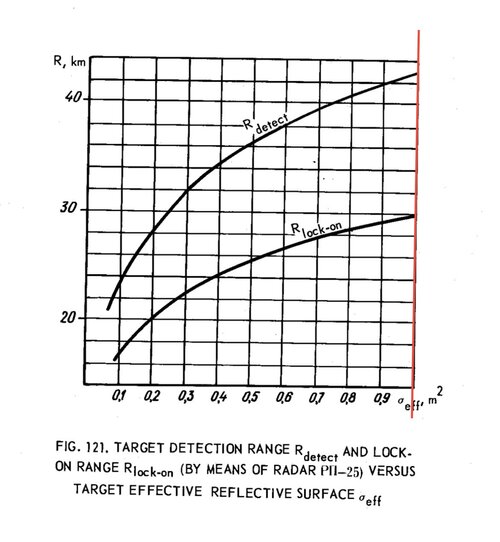
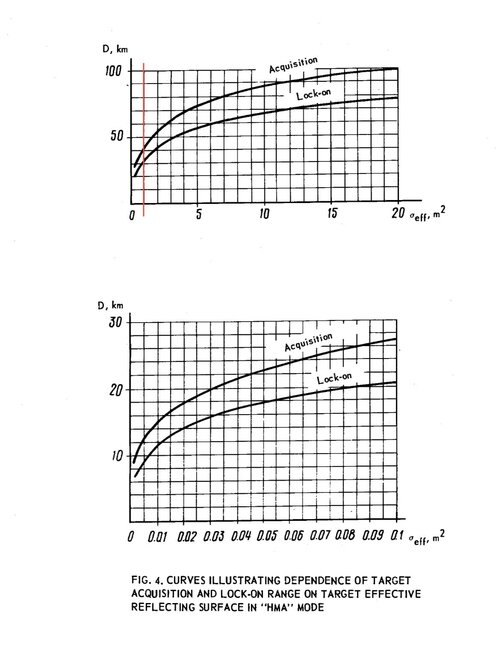
Here are two charts of the MiG-25 detection and lock vs RCS and MiG-25PD/PDS detection and lock vs RCS. The one with one graph is 25P and the two graph one is 25PD/PDS. As they don’t cover the same RCS ranges, the only similar metric is 1 m RCS at the right end of the 25P graph and the left side of the top graph for the PD/PDS.

The P is at 43 km detection and 30 km lock, while the PD/PDS is at a little over 40 km detection and a little over 30 km lock. I placed a red line at the spot where we can see the 1m squared RCS point.

I do find it interesting that the Pulse Doppler radar of 29 has such a small improvement in range over the MLA, but since the R-27R has a similar “average range” of the R-24R, it seems reasonable to me.

As was Soviet tradition at the time, as long as the radar could lock an average sized target at maximum missile range, it was optimal.
 

Attachments

  • IMG_2218.jpeg
    IMG_2218.jpeg
    173.9 KB · Views: 39
  • IMG_2219.jpeg
    IMG_2219.jpeg
    229.4 KB · Views: 40
Are you so sure? Looking in MiG-25 manuals, I do see some values of range of the older Smerch radar and the RP-25M. At high altitude, the detection and lock range is nearly identical!

The MiG-23MLA still had a radar with enough range for its missiles to be launched beyond max range, and I think experience of combat and development in the 70s and early 80s been steadily eroding the idea that the majority of air combat would happen at high altitudes.

I also believe Lazur helped reduce the disadvantage of radar range, but of course there wouldn’t always be Lazur support.

I am more optimistic of the VG wing decision, as its G/AOA limits only applied during transition, and it was intended to only stay in one position during WVR combat. With wings back it could accelerate supersonic faster then MiG-29, even achieved Mach 2.6 in testing where drag finally matches total engine thrust. And the wing in 16 degree mode could give it nearly the turning rate of a MiG-15 as long as you didn’t overspeed it. But I realize this is slightly outside of avionics.

Here are two charts of the MiG-25 detection and lock vs RCS and MiG-25PD/PDS detection and lock vs RCS. The one with one graph is 25P and the two graph one is 25PD/PDS. As they don’t cover the same RCS ranges, the only similar metric is 1 m RCS at the right end of the 25P graph and the left side of the top graph for the PD/PDS.

The P is at 43 km detection and 30 km lock, while the PD/PDS is at a little over 40 km detection and a little over 30 km lock. I placed a red line at the spot where we can see the 1m squared RCS point.

I do find it interesting that the Pulse Doppler radar of 29 has such a small improvement in range over the MLA, but since the R-27R has a similar “average range” of the R-24R, it seems reasonable to me.

As was Soviet tradition at the time, as long as the radar could lock an average sized target at maximum missile range, it was optimal.
I think the export fulcrum was originally planned to have late flogger avionics, so it’s kinda happy they are comparable.
 
Imo, would have been better to use a repackaged Taifun/Smerch radar (like done on Su-15TM) on the early MiG-23s, up to ML at least, S-23ML et seq. were fairly decent no? With a Taifun-23 detection range would have been something like 70-80km, don't know about Taifun weight but can't be worse than S-23D's weight.
Taifun = repackaged Smerch-A derivative for Su-15.
Sapfir-21 = repackaged Smerch-A derivative for MiG-21.

Would Taifun fit? Possibly.

In air defense, the question of replacing the radar on the Su-15 from the RP-15 to the Sapfir-23 was raised, it turns out, almost since 1966, there was a letter from Batitsky to the MAP on this topic. It was motivated, of course, from the point of view that the RP-15, like all other monopulse radars, could not work on targets against the background of the earth. But the MAP quickly got their bearings, and answered in the vein that they say the timing of the creation of the Sapfir-23 radar station is beyond the timing of the serial production of the Su-15. And at the same time, they wanted to completely curtail the Su-15 series by 1972.
according to which at the end of the 60s the task of re-equipping the Su-15TM with the K-25 missile (a copy of Sparrow) was announced, for this it was proposed either to upgrade the Taifun-M radar according to the Taifun-25 variant
https://www.secretprojects.co.uk/threads/sukhoi-su-15-projects.556/#post-538254
Taifun-25 with K-25 missiles is quite appealing.
 
When these radars were designed, Phazotron comprised both NIIP and NIIR, but the teams still worked mostly separately. The two organisations later split. NIIP designed the N011M Bars, the Irbis-E and the N036 Byelka radar of the Su-57. NIIR Phazotron is largely cut out.
I apologize if this is a stupid question, but purely from a technological standpoint, is it possible for them to create a PESA radar for The MiG-29 that mirrors the approach/performance, or thereabouts, of The Irbis-E, or is there simply not enough space for a second twt &/or would this arrangement ultimately weigh too much to be installed in The Fulcrum?
 
Z


@ZIGGY-2014 not sure why you have such a weird obsession with the MiG-29 and hatred of the Su-27.

So, the VVS units where the Su-27 replaced the MiG-21 and MiG-23 don't exist in your reality?
Well, remember there is the Mig-31, which too entered service with the PVO before the VKS & together with the Su-27 did not need tactical fighter support anymore.

The MiG-29 stayed a frontal aviation asset. If the PFI program remained unchanged and Sukhoi did not win any contract. Yeah, it would just be MiG-29s everywhere and Mig-31s. Mikoyan definitely would have finished the MiG 1.44 & Soviet/Russian aviation would look quite different.

As for hating the Su-27, it's like my all-time favorite aircraft. I just do not think we should shy away from the negative aspects of these designs & any aircraft or any for that matter. I think it's critical to understanding & appreciating the aircrafts true capabilities etc. Especially since soviet aviation history seems to be solely driven by pop culture rather that history these days.

It is clear to me you can't be reasoned with. This is the end of this discussion in this topic. I'll open a 'PFI Requirement" topic soon, once I finish my article on it.
I just do not see the F-15 posing a great enough threat to the Soviet Union. I am open to idea.

The Mig-25 was developed for a strategic purpose, the Su-27 too. It still carries out those same responsibilities today. Even in the pacific for the CCP. The Flanker was borne for long range intercept and combat air patrol.

The Mig-29 was ultimate threat to the F-15... it was nuclear capable too. I don't see how Sukhoi would keep designing an aircraft to beat the F-15 when the Mig-29 had game completely sewed up. Perhaps this is the part when Sukhoi began optimizing the Su-27 for its primary role? Strategic nuclear bombers? bomb carrying capabilities etc.?
I guess the next step would be to pull up the program directives for the heavy fighter portion that Sukhoi

Ok for sure. I wanted to go to the cobra maneuver topic to see if anyone's positions have changed since 2007.
 
Last edited:
Taifun = repackaged Smerch-A derivative for Su-15.
Sapfir-21 = repackaged Smerch-A derivative for MiG-21.

Would Taifun fit? Possibly.


https://www.secretprojects.co.uk/threads/sukhoi-su-15-projects.556/#post-538254
Taifun-25 with K-25 missiles is quite appealing.
Well, probably bringing another missile type into the mix of already too many soviet AAM models would not have been a good idea imo. A Taifun compatible R-23R should have been doable, perhaps with the R-98MR seeker or derivative of.
 
Last edited:
Are you so sure? Looking in MiG-25 manuals, I do see some values of range of the older Smerch radar and the RP-25M. At high altitude, the detection and lock range is nearly identical!

The MiG-23MLA still had a radar with enough range for its missiles to be launched beyond max range, and I think experience of combat and development in the 70s and early 80s been steadily eroding the idea that the majority of air combat would happen at high altitudes.

I also believe Lazur helped reduce the disadvantage of radar range, but of course there wouldn’t always be Lazur support.

I am more optimistic of the VG wing decision, as its G/AOA limits only applied during transition, and it was intended to only stay in one position during WVR combat. With wings back it could accelerate supersonic faster then MiG-29, even achieved Mach 2.6 in testing where drag finally matches total engine thrust. And the wing in 16 degree mode could give it nearly the turning rate of a MiG-15 as long as you didn’t overspeed it. But I realize this is slightly outside of avionics.

Here are two charts of the MiG-25 detection and lock vs RCS and MiG-25PD/PDS detection and lock vs RCS. The one with one graph is 25P and the two graph one is 25PD/PDS. As they don’t cover the same RCS ranges, the only similar metric is 1 m RCS at the right end of the 25P graph and the left side of the top graph for the PD/PDS.

The P is at 43 km detection and 30 km lock, while the PD/PDS is at a little over 40 km detection and a little over 30 km lock. I placed a red line at the spot where we can see the 1m squared RCS point.

I do find it interesting that the Pulse Doppler radar of 29 has such a small improvement in range over the MLA, but since the R-27R has a similar “average range” of the R-24R, it seems reasonable to me.

As was Soviet tradition at the time, as long as the radar could lock an average sized target at maximum missile range, it was optimal.
Thanks for the very interesting info and RP-25 charts. In my post i was strictly referring to potentially replacing the underwhelming S-23D with Taifun, the S-23ML was decent as it was and indeed quite comparable in range with Taifun, plus having the LD/SD capability.

To expand a bit, the S-23D is listed with a mediocre 55km range compared to Taifun's 70-80 km and Smerch's 100km. The only thing the S-23D has for it is the LD/SD capability, but my understanding is that it was limited and hard to use, so in real life operations of a theoretical Taifun equipped MiG-23 the lack of a LD/SD capability wouldn't have been such a big handicap in exchange for the roughly 50% more range of the Taifun compared to S-23D. Besides, my understanding is that later Smerch-A4 variant did have a limited LD/SD capability, this could perhaps be walked into a parallel Taifun evolution.

So to summarize this idea:
Early MiG-23 fighter variants up to and including MiG-23MF, Taifun derived radar.
Later variants starting from MiG-23ML onwards, S-23ML radar and it's evolutions, just like historical.
 
Smerch-A4 variant did have a limited LD/SD capability
Just a spatial selection mode i.e. range gate set to altitude of the fighter e.g. at altitude, you can detect planes flying below you so long as then are less than your current altitude away. If you are flying at 1000 m that's not terribly useful.
 
Last edited:
I apologize if this is a stupid question, but purely from a technological standpoint, is it possible for them to create a PESA radar for The MiG-29 that mirrors the approach/performance, or thereabouts, of The Irbis-E, or is there simply not enough space for a second twt &/or would this arrangement ultimately weigh too much to be installed in The Fulcrum?

There was Bars-29. but eventually you are constrained by available aperture. Like, MiG-29 radar antenna is limited to 624 mm in diameter vs 900 mm for Irbis. Irbis have about 36 dB antenna gain, vs 33 dB for hypothetical "MiniIrbis" for MiG-29. Which counting for gain alone and same power, the radar will still be 30% shorter in range wise. To compensate for that needs some heroic attempt. the easiest is to increase the power 3 times but that will balloon the cost of your radar by roughly the same factor.
 
There was Bars-29. but eventually you are constrained by available aperture. Like, MiG-29 radar antenna is limited to 624 mm in diameter vs 900 mm for Irbis. Irbis have about 36 dB antenna gain, vs 33 dB for hypothetical "MiniIrbis" for MiG-29. Which counting for gain alone and same power, the radar will still be 30% shorter in range wise. To compensate for that needs some heroic attempt. the easiest is to increase the power 3 times but that will balloon the cost of your radar by roughly the same factor.
This is starting to sound like an Apollo 13 problem in terms of finding a way to squeeze out every last possible amp. I mean, you might as well just use one of the side-looking AESAs from The Su-57, but even those would probably be much more expensive than a standard Irbis-E, right?
 
I apologize if this is a stupid question, but purely from a technological standpoint, is it possible for them to create a PESA radar for The MiG-29 that mirrors the approach/performance, or thereabouts, of The Irbis-E, or is there simply not enough space for a second twt &/or would this arrangement ultimately weigh too much to be installed in The Fulcrum?
Why even bother when Zhuk-A AESA with > 1k TRM exists?
 
Information on software update that early MiG-29 must’ve had, as export Bosnian manuals from 1991 indicate these figures and features, interesting this seems to include compatibility with R-27ER..

“FEATURES OF USING SUV WITH BZPP-4 AND BZPP-4A BLOCKS Or

BZPP-4D

1. The MIG-29 aircraft, which has a control system with the BZPP-4 permanent memory storage units in the RLPK and BZPP-4A in the OEPRNK, has the following main differences from the MIG-29 aircraft, which has a control system with the BZPP-ZD units in the V RLPK and BZPP-4 in the OEPRNK:

a) BY RLPK:

- ensures the operation of the radar under conditions of exposure to the following types of active interference:

- noise, when using coordinate support for range and speed from the control unit and when guiding by voice:

- response active interference (speed-distorting, Doppler noise and false Doppler frequencies):

- the kinematic method of determining the range (KMOD) mode to the noise jamming target has been introduced: - the lower limit of the speeds of low-speed targets such as a helicopter, at which the radar-control system ensures their stable detection and capture in the PPS from ranges of less than 23 ZPS from ranges of less than 17, has been reduced from 210 to 180 km/h

tracking of the target is ensured when passing 4/4 angles in mode D at the start of the target maneuver at a range of less than 15 km. In mode B, tracking of the target is ensured through 4/4 angles against the background of free space, and against the background of the earth when the interceptor is flying at altitudes of more than 2.5 km at ranges of less than 10 km; - the minimum range of detection and target acquisition when the radar is operating in mode B in the PPS has been reduced from 10 to 5 km.

- the minimum approach speed for target detection and acquisition in D mode at ranges less than 15 km and in B. BOY mode at ranges less than 10 km has been reduced from 150 to 50 km/h, and target tracking in D mode is also ensured at speeds close to those equalized when the interceptor is lowered to carry targets,

ranges: in TP (STROBE) mode with the interaction enabled, radar range measurement, the D" maxt" mark and the D" min. min mark equal to zero are displayed.

When the laser range appears, the Dimakst, Dimaks and Dimin marks are displayed. The MIG-29 aircraft, which has a SUV with a BZPP-4D block in the radar, has the following differences from the MIG-29 aircraft,

having a control system with a BZPP-4 block in the RLPK: - when the AP-OTKL switch of the APK is set to the OFF position, the interference protection circuit is not disabled.

When exposed to interference, its SEI indication is absent, only the AP index is displayed, which is necessary for the AP-OFF-APK switch to be a signal for detecting the jammer. To perform switch set to AP or APK position - additionally provides generation of target designation parameters and one-time commands for R-27ER missiles (ET, EP)

- accelerated adjustment of R-27R (ER) missiles to the radar illumination letter by the pilot on the ground in the air is possible in a time of no more than 70 s

- the zones of permitted launches for R-27R missiles have been clarified.

- when automatically tracking a target in the PPS in the B mode, the target maneuvers when approaching the 4/4 angle of the radar automatically switches to D mode. The transition from D mode to B mode does not occur during the target maneuver - the 4/4 angle is passed at distances of less than 10-20 km (depending on the radar operating mode: B, D or AVT.) when working over a steppe surface. When working over a surface such as a mountain, river floodplain, large above a surface such as a mountain, a river floodplain, an industrial city (district), target tracking drops are possible when passing a 4/4 angle at these ranges: when the COMP switch is turned on, or when the AP-OFF switch is set to the APK ON position the AP index lights up, signaling the inclusion of these modes: - when using interaction in the BB, SHLEM or OPT modes. support for the RLPK is provided in mode 6) According to OEPONK: BB Boy (instead of D mode)

when working on air targets:

ensures that the NOP command is issued to the NVU from the radar control system when using R-60M missiles;

the scale of the range scale on the SEI in the interaction mode with quasi-survey has been changed to 25 km:

the TP symbol was introduced on the SEI in the TP-B.BOY mode;

the KMOD mode was introduced based on information from the COLS;

Automatic control of the FCP was introduced;

in the "Navigation" mode, the DF indication ring is expanded to 90°. 2) When working on ground targets:

calculation of the minimum range of use of weapons is ensured depending on their type, aircraft movement parameters and the target’s elevation above sea level;

ensures the use of modifications of unguided missiles S-5KO, S-5KPB, S-5MO, C-5-0, C-8A, C-8M, 0-VAS, S-8B;

the bomb burst line ("sword") has been removed from the SEI in the bombing and shooting modes with "preliminary"
notch after pressing the MRK ZAHV.PZ button.

c) According to SEI:

In the autotracking mode, the C (own) mark has been moved to the location of the course scale, which is displayed in flashing mode from the moment of switching to automatic tracking;

- the size of the target range mark from the "Biryuza" control system has been increased;

the position mark of the radar antenna has been replaced from the point to the ROMB in the auto-tracking mode, including when work together with the OEPRN;

a KD symbol has been introduced to the left of the range scale, appearing when a noise jamming target is captured

or when switching from target tracking to interference tracking. The KD symbol is necessary and sufficient information to perform a maneuver to obtain the current range to the target using the KMOD method; a range scale with a range from 0 to 150 km with a division value and digitization every 30 km is introduced in mode B, in in D mode the range scale is 50 km;

-symbols 27ER and 73U were introduced (the presence of R-27ER missiles and R-73U training missiles);

the central dot has been removed from the aiming mark;

the "OTV" command was executed in a flashing mode with a frequency of 1 Hz;

an additional AP (active interference) symbol has been introduced when the OEPRNK is operating in the auto-tracking mode with the interaction mode enabled;

the index of expected transition of the radar control system to automatic tracking has been introduced in the SNP mode;

An indication of an unacceptable aiming error (UAE) has been introduced on the NVU in the form of antiphase flashing crosshairs and rings”
 
Last edited:
Information on software update that early MiG-29 must’ve had, as export Bosnian manuals from 1991 indicate these figures and features, interesting this seems to include compatibility with R-27ER..

“FEATURES OF USING SUV WITH BZPP-4 AND BZPP-4A BLOCKS Or

BZPP-4D

1. The MIG-29 aircraft, which has a control system with the BZPP-4 permanent memory storage units in the RLPK and BZPP-4A in the OEPRNK, has the following main differences from the MIG-29 aircraft, which has a control system with the BZPP-ZD units in the V RLPK and BZPP-4 in the OEPRNK:

a) BY RLPK:

- ensures the operation of the radar under conditions of exposure to the following types of active interference:

- noise, when using coordinate support for range and speed from the control unit and when guiding by voice:

- response active interference (speed-distorting, Doppler noise and false Doppler frequencies):

- the kinematic method of determining the range (KMOD) mode to the noise jamming target has been introduced: - the lower limit of the speeds of low-speed targets such as a helicopter, at which the radar-control system ensures their stable detection and capture in the PPS from ranges of less than 23 ZPS from ranges of less than 17, has been reduced from 210 to 180 km/h

tracking of the target is ensured when passing 4/4 angles in mode D at the start of the target maneuver at a range of less than 15 km. In mode B, tracking of the target is ensured through 4/4 angles against the background of free space, and against the background of the earth when the interceptor is flying at altitudes of more than 2.5 km at ranges of less than 10 km; - the minimum range of detection and target acquisition when the radar is operating in mode B in the PPS has been reduced from 10 to 5 km.

- the minimum approach speed for target detection and acquisition in D mode at ranges less than 15 km and in B. BOY mode at ranges less than 10 km has been reduced from 150 to 50 km/h, and target tracking in D mode is also ensured at speeds close to those equalized when the interceptor is lowered to carry targets,

ranges: in TP (STROBE) mode with the interaction enabled, radar range measurement, the D" maxt" mark and the D" min. min mark equal to zero are displayed.

When the laser range appears, the Dimakst, Dimaks and Dimin marks are displayed. The MIG-29 aircraft, which has a SUV with a BZPP-4D block in the radar, has the following differences from the MIG-29 aircraft,

having a control system with a BZPP-4 block in the RLPK: - when the AP-OTKL switch of the APK is set to the OFF position, the interference protection circuit is not disabled.

When exposed to interference, its SEI indication is absent, only the AP index is displayed, which is necessary for the AP-OFF-APK switch to be a signal for detecting the jammer. To perform switch set to AP or APK position - additionally provides generation of target designation parameters and one-time commands for R-27ER missiles (ET, EP)

- accelerated adjustment of R-27R (ER) missiles to the radar illumination letter by the pilot on the ground in the air is possible in a time of no more than 70 s

- the zones of permitted launches for R-27R missiles have been clarified.

- when automatically tracking a target in the PPS in the B mode, the target maneuvers when approaching the 4/4 angle of the radar automatically switches to D mode. The transition from D mode to B mode does not occur during the target maneuver - the 4/4 angle is passed at distances of less than 10-20 km (depending on the radar operating mode: B, D or AVT.) when working over a steppe surface. When working over a surface such as a mountain, river floodplain, large above a surface such as a mountain, a river floodplain, an industrial city (district), target tracking drops are possible when passing a 4/4 angle at these ranges: when the COMP switch is turned on, or when the AP-OFF switch is set to the APK ON position the AP index lights up, signaling the inclusion of these modes: - when using interaction in the BB, SHLEM or OPT modes. support for the RLPK is provided in mode 6) According to OEPONK: BB Boy (instead of D mode)

when working on air targets:

ensures that the NOP command is issued to the NVU from the radar control system when using R-60M missiles;

the scale of the range scale on the SEI in the interaction mode with quasi-survey has been changed to 25 km:

the TP symbol was introduced on the SEI in the TP-B.BOY mode;

the KMOD mode was introduced based on information from the COLS;

Automatic control of the FCP was introduced;

in the "Navigation" mode, the DF indication ring is expanded to 90°. 2) When working on ground targets:

calculation of the minimum range of use of weapons is ensured depending on their type, aircraft movement parameters and the target’s elevation above sea level;

ensures the use of modifications of unguided missiles S-5KO, S-5KPB, S-5MO, C-5-0, C-8A, C-8M, 0-VAS, S-8B;

the bomb burst line ("sword") has been removed from the SEI in the bombing and shooting modes with "preliminary"
notch after pressing the MRK ZAHV.PZ button.

c) According to SEI:

In the autotracking mode, the C (own) mark has been moved to the location of the course scale, which is displayed in flashing mode from the moment of switching to automatic tracking;

- the size of the target range mark from the "Biryuza" control system has been increased;

the position mark of the radar antenna has been replaced from the point to the ROMB in the auto-tracking mode, including when work together with the OEPRN;

a KD symbol has been introduced to the left of the range scale, appearing when a noise jamming target is captured

or when switching from target tracking to interference tracking. The KD symbol is necessary and sufficient information to perform a maneuver to obtain the current range to the target using the KMOD method; a range scale with a range from 0 to 150 km with a division value and digitization every 30 km is introduced in mode B, in in D mode the range scale is 50 km;

-symbols 27ER and 73U were introduced (the presence of R-27ER missiles and R-73U training missiles);

the central dot has been removed from the aiming mark;

the "OTV" command was executed in a flashing mode with a frequency of 1 Hz;

an additional AP (active interference) symbol has been introduced when the OEPRNK is operating in the auto-tracking mode with the interaction mode enabled;

the index of expected transition of the radar control system to automatic tracking has been introduced in the SNP mode;

An indication of an unacceptable aiming error (UAE) has been introduced on the NVU in the form of antiphase flashing crosshairs and rings”

Sorry but Bosnian ??? ( I'm from Bosnia or B&H ... ). Maybe you thought Yugoslavian ? Manual for the ex-Yu AF MiG-29B/9.12B ( local military designation was/is L-18 ) .
 
Well, I find the information of the software update mostly conclusive. I understand if it’s not the same for you, and we can agree to disagree :)
 
Well, I find the information of the software update mostly conclusive. I understand if it’s not the same for you, and we can agree to disagree :)
Oh regarding the Mig-29G/T. When these MiGs were being upgraded to NATO standard MiG MAPO (at time) handled the migration etc. They offered the Luftwaffe the Topaz upgrade (N019ME Topaz) which included training module and store information to equip the ER. The Luftwaffe for reasons not stated did not immediately pass on the offer, but the acquisition did not go through as it did the case w/Serbian SM & Slovakian SA.

They never had the capability for ER integration without topaz, but since the offer during NATO integration, the training module/pylon store information for ER but was left & why many in the West assume the ER is a plug & play backwards compatibility to all pre-production of the MiG-29 even though they are all CIA compromised radars.

I just read it in the countless MiG-29 books I have while looking for an exact year the VVS implemented 26 degree aoa. I will find it for you and post asap.
 
Last edited:
Regarding AoA limitation of the SOS-3 if anyone knows please share thoughts and if can, what source.

The Mig-29 9-12 & 9-13 always had Alpha limited to 26 degrees from production but can be limited by customer. Of course, All MiG-29 SOS-3 can be overridden with 37lbs of stick pressure. Only the M did not & had a digital switch off feature.
Originally, an asymmetric roll condition was determined in 9-12 (initial production with ventral fins) which occurred at high AoA & had killed a few pilots and a test pilot. The VVS ordered that the 9-12 angle of attack limiter SOS-3 be limited to 22 degrees, increased to 24 post ventral fins. I am stuck at the period between 9-12 & 9-12A. The 9-12A has SOS-3M limiter of 26 degrees and I want to trace which production model had 26 degrees implemented first.

To conclude, 24-degree permissible angle of attack was increased operationally by the VVS during the end of the 9-12 production or it was at beginning of the production of 9-12A.

I personally believe that 26-degree AoA was implemented in the end of the initial production 9-12 and came standard in the SOS-3M of the early production 9-12A which was standard 26 degrees.

This is also reflected in every manual Russian 9-12A & 9-13, German 9-12G & GT, Warsaw 9-12B etc. All state 26-degree alpha.
 
Last edited:
Just skimmed this one looking at aoa stuff.

A reminder, that R-27ET & ER is not a Mig-29 missile, it is not compatible with any Mig-29 prior to S.

S is primarily defined by its radar more than any other upgrade. The RLPK-29M aiming complex and N019M Topaz which is a ECM hardened early slotted array antenna akin to the Zhuk. As Soviet aviation history also notes. They are entirely two different radars for reasons internationally known with books and movies about it. The N019M Topaz is a series related to the zhuk, not a building upon the Rubin's compromised, jury rigged Sapfir-23ML a design which was only to carry the aircraft through preproduction anyway & it did.

The N019 Rubin was entirely phased out by the Soviet Union (for obvious reasons) & 9-13S was the last production MiG-29 they ever made until collapse. MiG-MAPO, later RSK never offered R-27ER upgrades via cassettes & A-track tape to the entirely analog N019 transmitter and receiver. The radar is severely limited in what can be "upgraded". As is the case the N001 Mech of the Su-27 that use the same Cassegrain radar configuration but larger radar of another OKB.

The aircraft needs to be upgraded to the S standard or beyond, such as the SMT for example. It will always come down a new radar or try your own costly modification so extensive you might as well buy it legit.

1749061713479.jpeg 1749061618237.png 1749061664189.png
 
Last edited:
Just skimmed this one looking at aoa stuff.

A reminder, that R-27ET & ER is not a Mig-29 missile, it is not compatible with any Mig-29 prior to S.

S is primarily defined by its radar more than any other upgrade. The RLPK-29M aiming complex and N019M Topaz which is a ECM hardened early slotted array antenna akin to the Zhuk. As Soviet aviation history also notes. They are entirely two different radars for reasons internationally known with books and movies about it. The N019M Topaz is a series related to the zhuk, not a building upon the Rubin's compromised, jury rigged Sapfir-23ML a design which was only to carry the aircraft through preproduction anyway & it did.

The N019 Rubin was entirely phased out by the Soviet Union (for obvious reasons) & 9-13S was the last production MiG-29 they ever made until collapse. MiG-MAPO, later RSK never offered R-27ER upgrades via cassettes & A-track tape to the entirely analog N019 transmitter and receiver. The radar is severely limited in what can be "upgraded". As is the case the N001 Mech of the Su-27 that use the same Cassegrain radar configuration but larger radar of another OKB.

The aircraft needs to be upgraded to the S standard or beyond, such as the SMT for example. It will always come down a new radar or try your own costly modification so extensive you might as well buy it legit.

View attachment 772384View attachment 772381View attachment 772383
Is that your book source you were referring to earlier for when R-27ER compatibility was added?

And what’s your source for N-019M being a slotted array. I had only heard of them adding Ts101.
 

Similar threads

Back
Top Bottom