Would that be the standard IPV display or something else? I might be wrong but to me it seems to be a bit bigger, and it kinda reminds me of the Yak-41 display.This is the video made at the Le Bourget 1995 with MiG-29SM/9.13SM. We can see TV-guided Kh-29T and the sequencies on the IPV-1 CRT made by the 'Tubus-2' TV homing head.
View: https://www.youtube.com/watch?v=o8UfVIZEwxU
This was the first 9.13SM from the middle of the 90's and has nothing to do with the newer 9.12SM/9.13SM with N019M1, MFI-54 LCD/MFD instead of the old CRT IPV-1 and with the SPO-32 L150-29 Pastel RWR instead of the old SPO-15LM Beryoza.

You are using an out of date browser. It may not display this or other websites correctly.
You should upgrade or use an alternative browser.
You should upgrade or use an alternative browser.
MiG-29 Avionics
- Thread starter overscan (PaulMM)
- Start date

ZIGGY-2014
ACCESS: Confidential
- Joined
- 4 September 2024
- Messages
- 60
- Reaction score
- 22
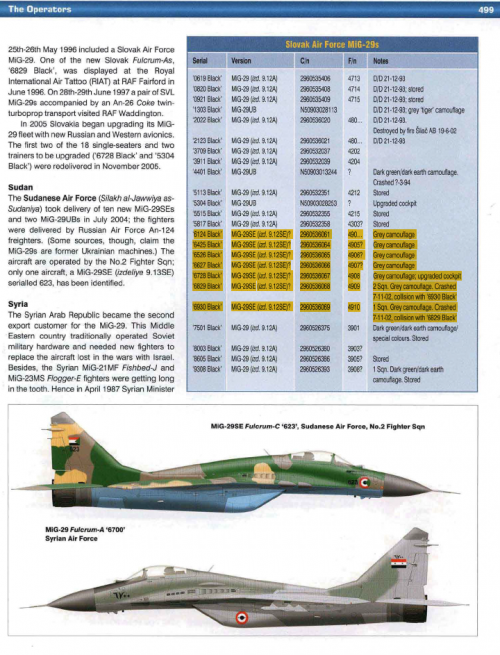
Follow up regarding the MiG-29AS.As the Ukrainians have correctly reported, the MiG-29s that were handed over by the Russian Federation to clean up debt coming out of the total economic collapse of the Soviet Union. This means the that the MiG-29S were not originally produced as specific export but to the Soviet/Russian Federation standard that was pulled from Russian Air Force inventory. Therefore, S will not represent the country of Slovakia.
The Russian Federation had promised MiG-29S which were the 9-12S & 9-13S. They were the most advanced MiG-29 at the time (just as the Ukrainians correctly point out) & last fighters ever produced by the Soviet Union.
However, Russian Federation Export law will not allow the transfer of the N019M Topaz with full domestic capabilities. The Mig-29 in batch 2 that were approved for Slovakian transfer, which were 9-12S base models would be handed over without the Topaz and instead Rubin until the export approved N019ME can be serial produced and provided.
This is why they were initially referred/reported as Mig-29A by the Slovaks (Topaz is the principal upgrade). However, they were not truly 9-12A either, since they still had all the hallmarks & lesser upgrades of 9-12S such as the additional drop tank capability, as this Polish open-source reports, a dedicated site to cataloguing historical paint schemes of the MiG-29 of both domestic & export use.
"Second batch of MiGs are from Russian air force inventory as debts payment. It's not version 9-12A!"
Colours of the MiG-29. Mikoyan & Gurevich MiG-29 camouflage and painting schemes. European countries, Russia, Asia. MiG-29, MiG-29UB, MiG-29SMT, MiG-29K/KUB, MiG-35
I agree, those are modifications that belong to product index 9-12S. That also means that these special "9-12A" had come with the SOS-3M-3 limiter giving it an increase from 26° degrees of instantaneous angle of attack to 28° degrees, like that which was also implemented in the 9-13S, as well as the SD, SM, SMT, SMT-2 etc.

Note how they also report the MiG-29A in question had come from Russian Air Force inventory as well not from MiG-MAPO.
When the Russian Federation (MiG-RSK) did carry out the upgrade to the Topaz in the early 2000s alongside the Letecké Opravovne Trenčín A.S (Translated: Trenčín Aircraft Repair A.S) the S was added to the designation to signify upgrade completion & reflect the capability to the S standard provided by the renamed MiG RSK of the Russian Federation.
The second batch MiG-29 9-12 had the upgrade for wing mounted drop tanks. Which Polish sources correctly point out is not a standard of the MiG-29 9-12A.
added Additional source corroborating the second batch of Mig-29 that Slovakia received for debt payment were actually Mig-29S pulled from Russian service, but without the Topaz.
Since the radar is not authorized for export, the N019 Rubin was provided until the export version (N019ME) become available & why in the attached source list those MiG-29 as 9-12SE followed by a question mark. (?).
MiG-RSK & Trenčín Aircraft Repair carried out the upgrade to N019ME Topaz standard in the early 2004-200
giving it R-27ER capability & rest is history. It is why the AS is spotted as recently as in Ukraine with the missile etc.
ZIGGY-2014
ACCESS: Confidential
- Joined
- 4 September 2024
- Messages
- 60
- Reaction score
- 22
Correct, but if we are referring this this version its not a 9-12SM anymore, its a Serbian Mig-29SM+.In fact, MiG-29SM has N019M1 ( hardware from the N019M Topaz ,software from the N010 Zhuk).
Correct, but if we are referring this this version its not a 9-12SM anymore, its a Serbian Mig-29SM+.
Of course ,I wrote some details about that earlier on the 'MiG-29 and its modifications' topic.
https://www.secretprojects.co.uk/threads/mig-29-and-its-modifications.32682/page-5
Follow up regarding the MiG-29AS.
The second batch MiG-29 9-12 had the upgrade for wing mounted drop tanks. Which Polish sources correctly point out is not a standard of the MiG-29 9-12A.
added Additional source corroborating the second batch of Mig-29 that Slovakia received for debt payment were actually Mig-29S pulled from Russian service, but without the Topaz.
Since the radar is not authorized for export, the N019 Rubin was provided until the export version (N019ME) become available & why in the attached source list those MiG-29 as 9-12SE followed by a question mark. (?).
MiG-RSK & Trenčín Aircraft Repair carried out the upgrade to N019ME Topaz standard in the early 2004-200
giving it R-27ER capability & rest is history. It is why the AS is spotted as recently as in Ukraine with the missile etc.
View attachment 773326
There is/ was no real MiG-29S ( 9.13S ) in the Slovak AF ,only MiG-29A ( 9.12A ) and MiG-29 (9.12). MiG-29S or 9.13S has that hump behind the cockpit like all MiG-29 9.13.

Aeria Gloria
ACCESS: Secret
- Joined
- 8 February 2024
- Messages
- 416
- Reaction score
- 480
Atleast it could be pulled throughAlthough it achieved much more in tests with an experienced pilot. In operational units, 28 degrees was still less than in the F-15. But on the Soviet side, it was the same progress as in the West with their 4th generation.
ZIGGY-2014
ACCESS: Confidential
- Joined
- 4 September 2024
- Messages
- 60
- Reaction score
- 22
Oops did I say 13S? I type 13S out of habit I meant 12S.I thought they had one 9-13 but I think that might have been another country.There is/ was no real MiG-29S ( 9.13S ) in the Slovak AF ,only MiG-29A ( 9.12A ) and MiG-29 (9.12). MiG-29S or 9.13S has that hump behind the cockpit like all MiG-29 9.13.
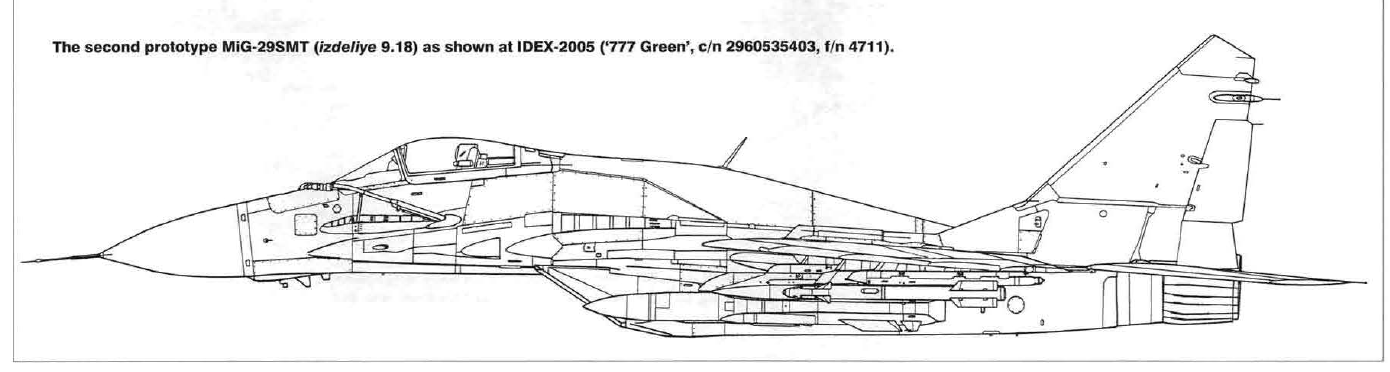
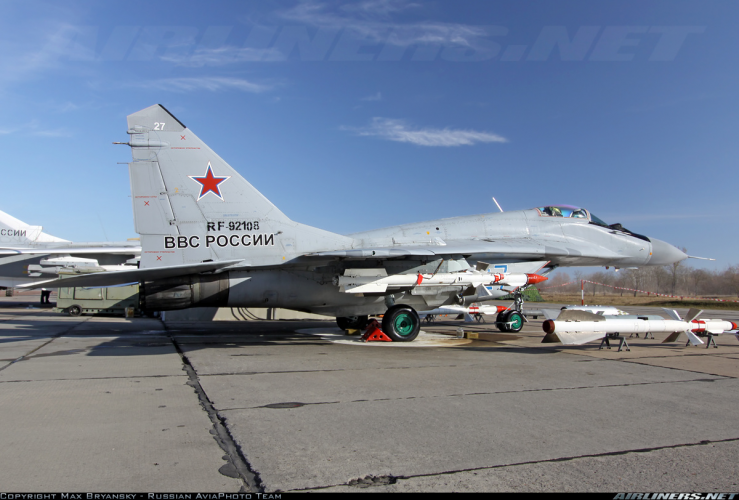
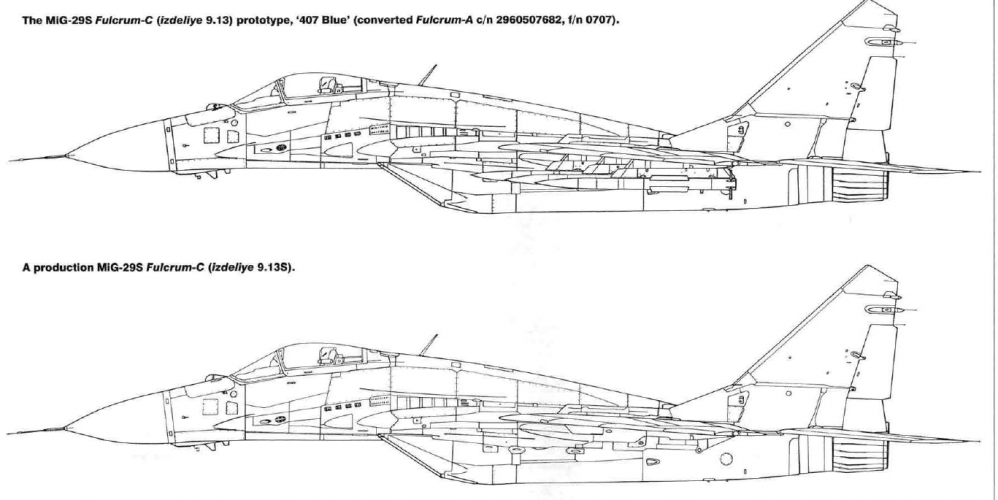
Remember guys, since its important not to get the variants mixed. The SMT had the "humpback" the 9-13 is enlarged still for the most part streamline.
RF 9-19
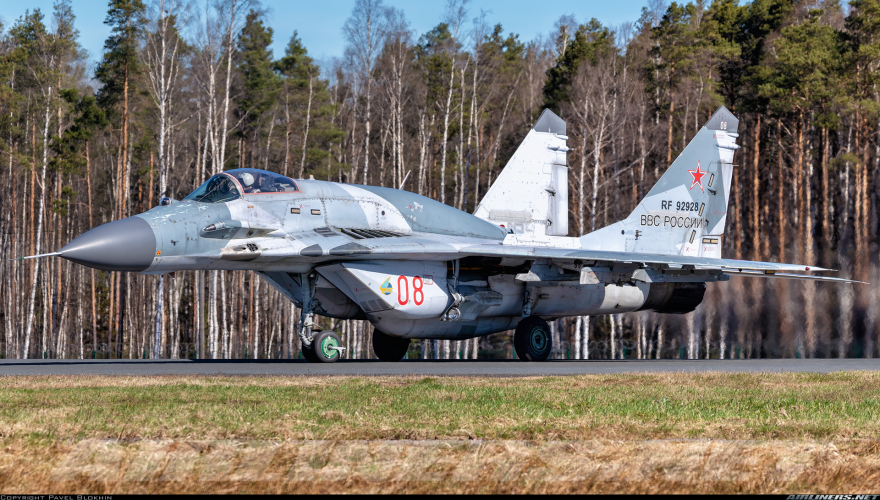
9-18
RF 9-13S
9-13 &
Last edited:
Aeria Gloria
ACCESS: Secret
- Joined
- 8 February 2024
- Messages
- 416
- Reaction score
- 480
You mean, except for 9.18 SMT. And in varying amounts of humpback depending on 9.17 and 9.19 SMT.
Remember guys, since its important not to get the variants mixed. The SMT had the "humpback" the 9-13 is enlarged still for the most part streamline.
RF 9-19
View attachment 773453
RF 9-13S
View attachment 773455
Oops did I say 13S? I type 13S out of habit I meant 12S.I thought they had one 9-13 but I think that might have been another country.
Remember guys, since its important not to get the variants mixed. The SMT had the "humpback" the 9-13 is enlarged still for the most part streamline.
RF 9-19
View attachment 773453
9-18
View attachment 773490
RF 9-13S
View attachment 773455
9-13 &
View attachment 773491
One MiG-29 9.13 was in the Romanian AF.
http://mig.mariwoj.pl/mig-29-ro.htm
P.S.
Maybe some of details here are for the 'MiG-29 and its modifications' thread ?
Mikoyan offered to split the project in two phases & left Sukhoi to do what it only knew how to do best develop interceptors and magically won the second phase of the program for heavy fighter the PVO.
Do You mean that Sukhoi won "magically" the heavy fighter for PVO, or Mikoyan? Sorry, my English is weak in that kind phrasing...
The better fighter for the VVS was the Mig-29 it & always was the better fighter of the program that satisfied all cost to produce serial units in a war time economy & had insane dogfight performance. the MiG-29 is so aerodynamically perfected, extremely departure resistant & supermaneuverable without thrust vectoring & without digital flight controls. There is no other aircraft like it in the entire world.
I have always admired MiG-29 and Su-27, but Su-27 has always been close to my heart in its cockpit design and the technological features when compared to western ones. Especially when it comes to a another thread about the Su-27 prototyping. And I find it in my own personal competitiveness a sad thing that Su-27 didn't get all it could have, to show to West that Soviet Union can as well build a highly technological fighters.
Don't take me wrong, please. As I am not well aware of other countries/industries developments, but like French do surprise often in the technological features like the color HUD and some radar systems in small forms etc (but I do personally consider French cars 50/50 manner to be horrible by the designs, but same time marvelous in the designs, nothing between).
The MiG-29 to me is always been a odd tiny project that surviced for some odd reason for F-16 fanboys annoyance. As I have only thought the MiG-29 same manner with the Su-27 as it has been multiple times told for westerners, a challenger duo to F-16 and F-15. Nothing else, just a ideology to build a 5-15% better opponent to USA made fighters.
And I have always had this odd conflict in the manner that as Soviet Union and USA only share the border in the far east (as thought by westernized old continent people) Bering Sea and the Bering Strait. And only other frontier to me has been the strategic bomber threat over the Arctic Ocean.
For me AFAIK the Soviet Union has always been heavily defensive by its military nature. Was it the nuclear programs to common civil and military developments. Why as you said about the B-1 fleet scaring Soviets has been to me the main threat all the time. As to me Soviets philosophy has never changed for the ground warfare, just have heavy artillery (the God of War) that can control the enemy on the land, but in the air the threat is a more complex as one aircraft can carry devastating destruction quickly and stealthy manner (nuclear bomb).
As the another warfare is the missile defense forces and all that, the aviation has not forgotten this nuclear threat via common manner. Now there is just smaller aircraft that can do it more dangerously, like F-35. And you don't need the large and slow bomber. Or even high speed & high altitude bomber.
But back to the MiG-29...
You opened my eyes to some of the ways how MiG-29 was designed. Even when I do consider it now more than ever as "inferior" to Su-27 (and dragging Sukhoi make more compromises with Su-27 because politics).
I am not well enough aware of the MiG-29 development and all the prototyping etc. As I really just see it as a "Cheap, Simple Fighter for short range combat". I even see it somewhat inferior to MiG-23 (another aircraft I really admire) and a thing that I think was better suited for Mikoyan. But I am sure that I let my personal feelings blind me for that, as I don't understand F-16 so much either. As to me it is strange that F-16 was designed and built as day-time fighter, cheap, tiny, simple to fly and do just one thing. And designed purposely not to be upgraded and changed to be what it is exaclty today, a multi-role fighter heavily changed to be a ground pounder, sacrificing its original design and capabilities.
And that is what causes conflict on me about the MiG-29, as I see it same way just a B-class fighter, that was forgotten and even abandoned in some manner by its upgrade paths.
Like here many has listed these radar systems capabilities (and differences to Su-27), like the HUD showing only altitude with 100 meter stepping, or speed at 10 km/h stepping. And radar that has not been designed self-search in mind but be used with GCI like MiG-23 etc.
And when the radar was upgraded with the new computer that offered it a ground mapping and 15 meter resolution for targeting etc in the early 90's or late 90's....
My point is, that to me the MiG-29 admiration as something unique and special in the world (at the time or today) is just something I don't get. Sorry, I just try to understand the reasoning why MiG-29 is so awesome, other than 9G capable dog fighter that has some look and so on.
I really admire how people has all these insightful information about the cockpit and system designs, the details of functionality etc. And it is great to learn more about the philosophies the designers had and were required to please in their work.
I can now watch a MiG-35M demonstration videos etc, and I can understand why it is a relevant fighter in cockpit wise. Althought I can't see it having future by lack of stealth etc. It is something but just 20 years too late. And to me it sounds same thing as with MiG-29 originally had when it was first time released. Something but 15-20 years too late. -78 vs -83 is just 5 years between F-16 and MiG-29 in first service year. But to me it is like 20 years how I see the technology in both.
F-16 didn't have a medium-range missiles, no night mission capabilities etc. And compared to that the original MiG-29 was superior IMHO.
All the time I just question the MiG-29's whole ideology, like why to even include the HDD in the cockpit when it was just a repeater? Not like the Soviets didn't know how to make a HUD that functions and works in every condition and requires backup in case that HUD malfunctions. Not like they didn't know how important the RWR was for the pilot, and put it in lowest and most challenging location in the cockpit instead straight next to HUD or why not have its information in the HUD?
This all is partially something that says that MiG-29 was always just a "Ivan, make something! Just stick it in the cockpit and get it done!". What causes conflict in me about greatness in MiG-29.
IMHO these are pretty self-forward that the circles are, but many HUD elements are unknown to me (but likely being more modern one) like the large square box.
Attachments
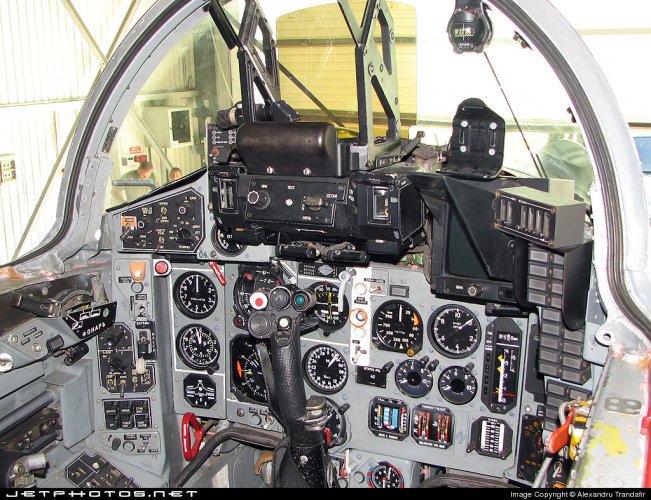
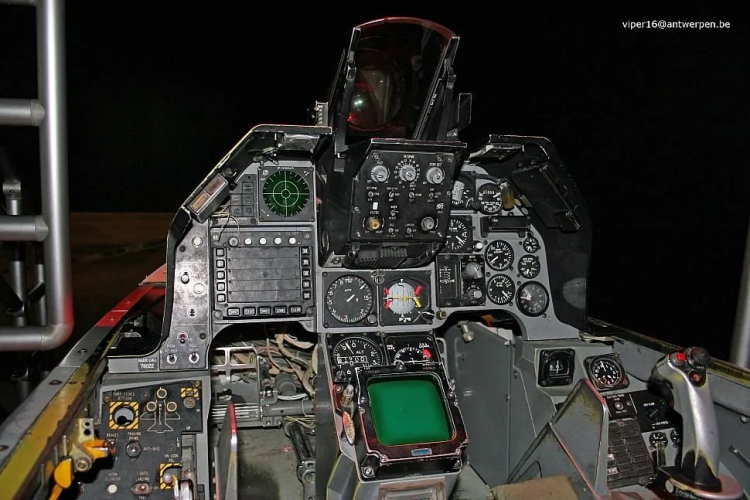
Last edited:
@Mk.82
''All the time I just question the MiG-29's whole ideology, like why to even include the HDD in the cockpit when it was just a repeater?''
It was not.HDD as CRT or IPV-1 ( ИПВ-1=индикатор прямой видимости ) was something like ''direct visibility indicator''. HUD or ILS-31 (ИЛС-31= индикатор лобового стекла ) as ''windshield indicator''.
E.g. after AAM launch ( R-27R etc) ,pilot could track only its engaged target on the HUD but could track other aircraft and monitor the tactical situation in the radar's search zone on the HDD.
''All the time I just question the MiG-29's whole ideology, like why to even include the HDD in the cockpit when it was just a repeater?''
It was not.HDD as CRT or IPV-1 ( ИПВ-1=индикатор прямой видимости ) was something like ''direct visibility indicator''. HUD or ILS-31 (ИЛС-31= индикатор лобового стекла ) as ''windshield indicator''.
E.g. after AAM launch ( R-27R etc) ,pilot could track only its engaged target on the HUD but could track other aircraft and monitor the tactical situation in the radar's search zone on the HDD.
Last edited:

F-2
ACCESS: Top Secret
- Joined
- 22 May 2020
- Messages
- 1,189
- Reaction score
- 2,573
https://www.litres.ru/book/matvey-z...tat-onlayn/?page=8&ysclid=m40n1ly4ic397826767
Some interesting stuff on the 9.15 cockpit design.
Some interesting stuff on the 9.15 cockpit design.
Electron beam tubes and devices for indicators of 3rd generation information display systems
As you know, in the indicators on the windshield, which are part of the IPP-2-53, SEI-31 and Narcissus, the projection CRT "Kunitsa" is used. It is also known that this PELT has a number of disadvantages, the main of which are: "screen effect" - the presence of residual glow of the screen at night and the formation of haloes around the image elements when forcing the brightness, which worsens the contrast. The reasons for the occurrence of these shortcomings of the PELT "Kunitsa" and ways to reduce their influence in some way were mentioned above. Therefore, during the development of KAI-1, the issue of creating a new, perfect PELT, having higher brightness and resolution and devoid of these shortcomings, became acute. A similar PELT began to be developed by the Platan Research Institute in the early 80s. This PELT, called "Latex", was a tube with a ceramic flask, in which a leukosa-pfir is used as a screen, which has a higher thermal conductivity compared to glass. Having an anode voltage of 18 kV, mixed (magnetic and electrostatic) focusing, the PELT "Latex", according to the developers, was supposed to provide high brightness, high resolution and significantly longer durability compared to the existing PELT. Given that the declared characteristics of the "Latex" PELT are much higher than the characteristics of the "Kunitsa" PELT, a new tube was installed in the design of the KAI-1. However, during the KAI-1 testing process, the declared characteristics of the PELT "Latex" were not confirmed. The reason for this was the miscalculation of the developers of PELT in assessing the possibility of the phosphor and the reliability of the technology of gluing a ceramic flask with leucosapphire. The bottom line is that as the brightness was forced, there was a saturation of the phosphor and there was no expected proportional increase in brightness, but there was a critical heating of the screen due to the local concentration of radiant energy. It was the latter that caused the use of leukosapphire. In addition, during bench and flight tests, including factory tests of the MIG-29M aircraft, there were frequent failures of the PELT "Latex" due to a violation of its tightness, which led to the complete failure of the KAI. Almost all PELT "Latex" manufactured by the Research Institute "Platan" failed in a relatively short time. Only some replenishable reserve of these tubes and a well-organized NIO-2 repair service allowed the aircraft to continue flight tests for some time. Another significant disadvantage of the "Latex" PELT is the hard X-ray radiation it creates, especially in the direction of the tube axis. The tube screen made of leucosapphire, unlike glass in conventional CRTs, does not prevent radiation, the level of which exceeds the permissible norm several times. Since the pre-configuration of the PELT control unit is carried out without an attached optical head, when it was turned on, the adjusters could be subjected to strong exposure to irradiation. These objective facts were established by specialists of the Institute named after V. G. Claps, who carried out appropriate measurements at workplaces in the Association. On the recommendation of the Institute, the necessary measures were taken to protect against radiation at these workplaces. In conclusion, regarding the PELT "Latex", it should be pointed out the exceptionally high cost of these PELT: in 1986 prices it was 2500 rubles per sample.
In 1987, on the initiative of M. Z. Lvovsky and V. A. Sysoeva, supported by the General Director of the Association K. K. Filippov, according to the Terms of Reference approved by him, the plant (MELZ) began the development of an alternative PELT based on the Moscow bulb by the electric lamp PELT "Kunitsa" and named "Coma". The development of the new PELT was supported by the leadership of the Ministry of Defense, which instructed the relevant services to constantly monitor the progress of development. In the development of the PELT "Coma", the latest achievements in the field of electronic optics were used and a modern technology based on the use of laser processing of the elements of the focusing part of the electronic optics of the PELT was laid. The use of an improved luminophor, combined with a successful solution of the optical part, allowed to achieve very high characteristics at an anode voltage of 15kv and a voltage on a focusing electrode of 2kV. The brightness of the PELT "Coma" (in compressed raster) is 2 times higher than the brightness of the PELT "Kunitsa" and is 12,000-14,000 k.d/m2, and the resolution is increased by 30 (line thickness 0.08-0.1 mm). Almost, the "screen effect" and the formation of a halo when forcing the brightness have been completely eliminated. The working diameter of the tube is 55 mm, the diameter of the neck is 22 mm, the angle of the bulb socket is 55, the length of the tube is 220-230mm.
The cost of PELT "Coma" was 200 rubles in the prices of 1987-1988, that is, 12.5 times lower than the cost of PELT "Latex", with the same characteristics. The creation of the "Coma" PELT made it possible to eliminate the crisis caused by the failure with the "Latex" tube in a timely manner. In a short time, the design of KAI-1 was developed on the basis of the "Coma" PELT (Lead designer F. D. Zharzhavsky) and all previously manufactured indicators have been refined. In 1988, the State Tests of the PELT "Koma" were completed and it received a certificate for its use in military equipment.
Monochromatic CRT for electron beam indicators ELI.
In the process of developing the concept of building 3rd generation information display systems, which include CROCUS and EDELWEISS, the Association studied the state of developments in the field of direct vision electron beam tubes and the prospects for their further development. The results of the research showed a serious lag of the electronics industry of the USSR in this area from the world level. This was especially true for colored (mask) CRTs suitable for operation on board fighters with cannon weapons. Moreover, there was no reason to expect changes in this area in the coming years, which was further confounded. Taking into account these and other circumstances, it was decided to design ELI on the basis of monochromatic CRT. In world practice, such a decision was no exception. An example of a similar approach is the F-18 fighter aircraft information display system, recognized as meeting the requirements for integrated display systems for aircraft of this type. Monochromatic CRTs in direct vision indicators, such as ELI, have a square shape, with a working screen size of 127 mm x 127 mm. The developers of this system proceeded from the fact that the high brightness of the CRT should guarantee a confident perception of all elements of the graphic image due to the brightness contrast, provided that they differ in shape and location, based on the main provisions of engineering psychology.
At the enlarged meeting of the Council of Chief Designers in the MMZ named after Mikoyan, where representatives of the research institutes of the MAP were present, the point of view of the Association on the principles of building the information display system CROCUS, on behalf of the General Director of the Association K. K. Filippov, presented by the author, Deputy Head of NIO-2. Despite the convincing arguments given in the justification of the Association's proposals, representatives of the leading institutes of MAP (LII, NIIAS) categorically opposed the concept of the Association, insisting on the use of penetrons in the ELI. And this despite the fact that already at that time there was obvious hopelessness of this type of CRT, which even its creators in France refused. Toshiba and Intel have revolutionized this area by creating a high-bright color liquid crystal panel with internal lighting, with an integrated control system. In a short time, electronic indication systems were created on their basis, which were installed on serial aircraft Boeing-757 and Boeing-767. Unfortunately, the domestic electronics industry did not have such opportunities. Therefore, the developers of CROCUS did not have another alternative to how to use a monochromatic tube by analogy with the F-18.
Deputy Chief Designer of MMZ named after Yu. Mikoyan A. Yanyshev soon recognized the position of the Association as the only real one. Thanks to him, the Ministry of Electronic Industry agreed on all technical, organizational issues related to the development of a new monochromatic CRT for ELI, which has high brightness and high resolution, as well as the issue of choosing a developer. It became the Research Institute "Platan", with which the Terms of Reference for the development of CRT and the development program were agreed. For the first time in the Ministry of Electronic Industry, the Research Institute "Platan" has implemented an integrated approach to the development of CRT, taking into account the real operating conditions at the facility and the factors that ensure the achievement of the best characteristics of CRT. The electron beam device created by the institute, called "Lithuania", includes the actual CRT, the focusing and deflection system (FOS) and an electromagnetic screen with the elements of the device attachment in the indicator. ELP "Lithuania" is made using modern technology, has flexible leads, including high-voltage ones. The space between the CRT bulb and the electromagnetic shield is filled with a special compound, thanks to which the rigidity of the ELP structure is ensured.
ELP "Lithuania" is equipped with an anti-reflective light filter with a reflective coating on the first surface. The absorption coefficient of the filter is 90%. To protect the coating from damage, the ELP comes with a special soft plug. The good quality of the light filter provides the ability to observe not only symbolic information generated in a functional way, but also a raster, multi-gradation image with a number of gradations of 67 with a maximum external illumination of 100,000 lux. The angle of the ELP bulb is less than 50, which allowed to reduce power consumption by 40 compared to the CRT "Baby". Main characteristics of ELP "Lithuania": working screen size 130mm x 130mm, dimensions 145mm x 145mm x 350mm, anode voltage - 16kv, line thickness 0.20.22mm, service life 1000 hours. ELP "Lithuania" has successfully passed state tests for compliance with the requirements for elements of military aviation equipment.
Acceptance of MMZ named after Mikoyan's concept of building the CROCUS information display system for the MiG-29M aircraft, proposed by the Association, and real assistance in the organization of work related to the creation of new electronic elements, in particular the ELP "Lithuania", allowed the Association to start developing and manufacturing prototypes of the CROCUS system. Here it is necessary to note the positive role in the creation of the ELP "Lithuania" of the leading constructor CROCUS F. D. Zharzhavsky. His rational suggestions on the outer outlines of the tube and the method of its fastening were taken into account during its development.
The development of the Crocus system was carried out in accordance with the Technical Specification agreed with the MMZ named after Mikoyan and the Air Force. At the end of 1988, prototypes of the Crocus system were manufactured. After laboratory debugging, two samples of this system were sent to the Institute of Space and Aviation Medicine for research on a simulator created on the basis of the real cockpit of the MIG-29M aircraft and to the complex department of the Association for bench testing as part of the NPC. The third sample of the CROCUS system was subjected to bench tests for compliance with the requirements of the Terms of Reference. As a result of the tests, it was found that the prototype of the KROKUS information display system in terms of its accuracy, optical and light characteristics fully meets the requirements of the technical specifications and exceeds all previously developed systems of similar purpose. In 1987-1988, an intermediate version of the information display system consisting of indicators of KAI-1, ELI and SEI-31 blocks was created to ensure flight tests of the MIG-29M: TSVM20-6, GS-31, BP. Appropriate software has been developed for this system. It was during the factory tests that defects of the CRT "Latex" were revealed, which were mentioned above.
About new opportunities related to the use of information display systems CROCUS and EDELWEISS
It is known that certain difficulties have arisen when using the television indicator, which is part of the television system of viewing and guidance. In this indicator, the crosshair image, formed by television, had a low brightness contrast. It did not stand out well against the background of a bright television image of the area (snow-covered area, illuminated sea surface), which made it extremely difficult to aim the system at the target. To eliminate this disadvantage, two mutually perpendicular risks filled with black paint had to be applied to the glass of the CRT screen of the indicator, in the center. At the same time, the pilot periodically, manually, using two corrective pens, combined an electronic crosshair with a mechanical one.
As mentioned above, the electron beam indicator ELI, thanks to the use of a universal method of beam control, is able to reproduce the television image and the image of the symbols superimposed on it, formed in a functional way. This universal indicator feature avoids problems that arise when using television monitors, such as IT-23. The solution to these problems is based on two theoretical and technical developments (Authors: M. Z. Lvovsky, P. A. Efimov, K. M. Weinstein, R. V. Tsyvkin) and (Authors: M. Z. Lvovsky, Yu. G. Galibin, P. P. Paramonov). They provide for the playback of the ELI indicator on the screen instead of the television crosshair, its high-brightness image, formed in a functional way. The latter is continuously automatically combined with a point on the television raster corresponding to the center of the optical crosshair that coincides with the guidance axis. This solution is implemented in the CROCUS system with the help of new software and the introduction of a high-speed scanning device in the newly developed thermal imaging system. Verification of the specified functionality of the CROCUS system during its bench tests showed the following results: the mismatch of the crosses formed by television and functional methods did not exceed 1-2 lines with a 625-line sweep, which corresponds to a field of view of 3 - less than 0.3 arc minutes; at the same time, a high contrast (K 0.6) of the crosshair image against the background of the brightest raster image was achieved.
KU-31M control button
The KU-31M control button is installed on the control handle of the fighter aircraft and is controlled by the thumb of the right hand. The button through the converter is included in the central CVM of the NPC. The button is used to control the sight mark or the corresponding mark when using radar or thermal imaging systems. Unlike KU-31, which provides the so-called "positional control", in which the deviation of the handle causes proportional movement of the mark or mark within the information field of the indicator, the KU-31M provides another method of control - "speed control". In this method, the angles of deviation of the handle from the neutral position correspond to the angular or linear speeds of moving the mark or mark along the vertical and horizontal axes.
Although the positional method does not cause any serious complaints from pilots, nevertheless, as a result of comparative tests, with the involvement of the flight crew of two methods of control carried out in the Instinct of Space and Aviation Medicine, the second method was recognized as more effective - "speed control". Therefore, the KU-31M control button was created for the NPC of the MIG-29M aircraft, which provides this method of control (Authors: M. Z. Lvovsky, V. A. Zheleznov). This button, unlike the previous one - KU-31, is equipped with a device to return the handle to the neutral position after removing the forces from it. Just like the KU-31, the KU-31M button is installed in the control handle of the aircraft in such a way that its handle is under the thumb of the right hand. The dimensions of the buttons are the same. The buttons are reliable, and their functional and operational characteristics are positively evaluated by the flight crew.
Significant creative contribution to the creation of the CROCUS and EDELWEISS systems, in addition to Yu. G. Galibina, A. I. Efros and K. M. Weinstein, P. A. Blagov was also made by F. D. Zharzhavsky, V. A. Sysoev, R. P. Provalsky, L. P. Gorokhov, E. P. Smirnov, L. V. Belov, V. K. Feofanov, B. M. Shenderovich, B. A. Vinogradov, A. E. Sesin, L. I. Lesman.
On Chapter Eight, the following conclusion can be made:
1. The development of the CROCUS information display system was evidence of the ability of NIO-2 to implement the most complex projects, which include this system. When developing the CROCUS system, not only the most advanced technologies available to domestic science and industry were used, but also their own unique developments and inventions. It is enough to point out that the development of the most important components of electronics and optics for the system was carried out with the direct participation of the leading employees of the department. This testifies to their high level of professionalism and the exceptionally creative atmosphere that existed in the department.
2. The developed and manufactured samples of Crocus equipment fully met the customer's requirements during the tests. Moreover, the additions to the software introduced on the initiative of NIO-2 made it possible to significantly expand the tactical capabilities of both the equipment itself and the aircraft. These innovations were highly appreciated by the customer. In terms of its information characteristics, CROCUS had no equal and fully met the engineering, psychological and ergonomic criteria. All these advantages of Crocus were noted by the flight crew as a result of flight tests. The CROCUS system in the 90s was demonstrated at one of the first MAC exhibitions in the city of Zhukovsky and made a good impression on foreign specialists.
3. Unfortunately, the completion time of the work on the creation of the CROCUS system, the technical documentation of which was ready for serial production at the established serial plants, coincided with the beginning of a deep crisis in the country, including in the aviation industry. Therefore, the CROCUS and EDELWEISS systems could not fulfill their historical mission. Nevertheless, the development of these systems undoubtedly remained an extremely important and worthy milestone in the activities of LNPO "Electroavtomatika".
Actually this is single page from book, memory of Матвей Зельманович Львовскийhttps://www.litres.ru/book/matvey-z...tat-onlayn/?page=8&ysclid=m40n1ly4ic397826767
Some interesting stuff on the 9.15 cockpit design.
It is worth to mention that pages 6 and 7 are about SEI for Mig-29 and Su-27 (base variants), page 5 is about the first vector HUD used on Mig-27K
Generally pages 1.. 9 describes his work on different systems since 1948 in Elektroavtomatika.
Last edited:
As we now, 3 color display: red yellow green (penetron) was not used in Mig-29 and Su-27 that time..
Now we know the reasons behind that...
BTW... such approach was used on French fighters (Mirage-2000?). And in soviet union in displays of various radar systems (SAM?), but in such cases - there is no problem with external luminescence...
Now we know the reasons behind that...
During the development of the IPV, at the first stage, in accordance with the technical specifications, an indicator was designed based on a multi-color CRT 16LK8Ts, developed by the Platan Research Institute (Fryazino). This CRT belongs to the class of tubes known as "penetron". It has two types of phosphor: green and red. With a step change in the anode voltage of 9 kV, 12 kV and 15 kV, the symbols painted on the screen acquire red, yellow and green colors, respectively. Therefore, the symbol painting cycle, which is 20 ms at a regeneration frequency of 50 Hz, is divided into three time periods. During each of these time periods, one of the specified voltages is applied to the CRT anode. In this case, a certain group of symbols acquires the corresponding color. It should be noted that, unlike the penetron, which allows for the reproduction of a fixed number of colors without intermediate gradations of brightness and shades, color mask CRTs allow for the display of any colors of the visible spectrum and any multi-contrast color images.
The color coding of the symbolic information displayed on the screen on the direct vision indicators (displays) gives a certain positive effect in visual reading. However, this is true if it provides a pronounced color contrast and sufficient brightness. In fact, flight tests have shown that penetrons are not suitable for use on fighters, in the cockpits of which the illumination reaches more than 80,000 lux. The situation was especially unsatisfactory with red light, the brightness of which was 8-10 times lower than green. In practice, with high illumination in the cockpit, it was impossible to read all the information from the screen. In addition, for the operation of the penetron, unlike color and monochromatic CRTs, at least five high-voltage units are required, and in this case - high-voltage sources of 12 kV, +3 kV, -3 kV and two controlled high-voltage keys that provide the formation of three anode voltages: 9 kV, 12 kV and 15 kV. As a result, this led to a sharp complication of the circuit and design of the indicator, a decrease in reliability and high cost. For a combination of these reasons, in agreement with the General Customer - the Air Force, the penetron was replaced with a monochromatic CRT 16LK7I, which has high brightness characteristics and high resolution. Thus, all the comments of the flight crew were removed and in the future, during the operation of the IPV there were no new comments addressed to it. The digital computer TsVM-20-6, which is part of the SEI-31, is one of the modifications of the universal computer TsVM-20, developed by the Electroavtomatika Association and mass-produced by the Ufa Instrument-Making Plant. TsVM-20-6 differs from other modifications in the composition of the unified blocks and software.
BTW... such approach was used on French fighters (Mirage-2000?). And in soviet union in displays of various radar systems (SAM?), but in such cases - there is no problem with external luminescence...
Something but 15-20 years too late. -78 vs -83 is just 5 years between F-16 and MiG-29 in first service year. But to me it is like 20 years how I see the technology in both.
F-16 didn't have a medium-range missiles, no night mission capabilities etc. And compared to that the original MiG-29 was superior IMHO.
You cannot imagine the level of the automatization in the MiG-29 which was operational from 1983.Just like MiG-25, it is highly automated flying machine.
Did you know that in full automatic mode, one MiG-29 can accomplish combat mission just like UCAV w/o almost any of pilot's action except the pulling trigger during AAM launch. Stories that Soviet/Russian electronics is inferior to western were only the 'stories' because Soviet methodics of using some part of avionics was in many ways completely different than those in the west.So MiG-29 pilot can accomplish his interception combat mission almost without doing anything and even its fighter could turn to the base in auto-mode where pilot should take control stick 50m above runway during approch phase. All of that was possible thanks to the famous 'Lazur' ground to air data link channel where auto-pilot system was joined by more 'avionics' systems like SN-29 ( as the nav system with its subsystems) ,SUO-29 ( WCS with its subsystems ), etc etc.
Is it necessary to repeat that MiG-29 as light fighter won almost every sim. dogfight vs NATO 4th gen first line fighters like F-15C,F-16C, F/A-18C and also Mirage-2000 during 1990's and after 2000. MiG-29 was 'born' as a real dogfighter after the captured USAF F-5E vs MiG-21/-23 dogfight simulations from 1976 in the Akhtubinsk air base where US light fighter won every time.Surprisingly or not,only one fighter was better in the simulated dogfights against MiG-29. It was much bigger and heavier Su-27! It happened at the end of 1980's in the Lipetsk air base when Su-27 won in every sim. dogfight scenario like former OKB MiG chief test pilot Valery Menitsky described in his book 'My heavens life'.
Last edited:

- Joined
- 27 December 2005
- Messages
- 19,230
- Reaction score
- 35,692
The electronics were inferior. Soviet Union was consistently lagging in this area. Some Soviet avionics were able to achieve decent performance at the expense of greater weight, others made clever shortcuts or interesting algorithms to get around lack of better core technology.Stories that Soviet/Russian electronics is inferior to western were only the 'stories' because Soviet methodics of using some part of avionics was in many ways completely different than those in the west.
Simulation is not reality.Is it necessary to repeat that MiG-29 as light fighter won almost every sim. dogfight vs NATO 4th gen first line fighters like F-15C,F-16C, F/A-18C and also Mirage-2000 during 1990's and after 2000.
The electronics were inferior. Soviet Union was consistently lagging in this area. Some Soviet avionics were able to achieve decent performance at the expense of greater weight, others made clever shortcuts or interesting algorithms to get around lack of better core technology.
Simulation is not reality.
Yes and what about N007 Zaslon( first PESA on fighter-interceptor) , so called 'sensor fusion' ( MiG-23,25,29,31 and FFF) ,data-link systems /channels (first operational on Tu-128/28S-4 interceptor and Tu-126 AWACS from 1960's) ,etc etc ...Yes,Soviet radars, comps,avionics at all ,were always heavier than their counterparts in the West but we must keep in mind that tactical-technical demands/standards were different in comparison with those in the NATO.
About simulations , they are in fact simulations of the possible real combat/tactical situations and scenarios.
Last edited:
- Joined
- 27 December 2005
- Messages
- 19,230
- Reaction score
- 35,692
US had the technology to make a Zaslon equivalent, and tested fighter-sized radar phased array antennas in the mid/late 1960s but didn't put it into production. At least one of the F-15 radar submissions was phased-array, but not the two selected for flyoff. We can only speculate why, but most likely the weight, cost and level of maturity were part of the consideration. For the MiG-31, there was a different decision made.Yes and what about N007 Zaslon( first PESA on fighter-interceptor)
- Joined
- 27 December 2005
- Messages
- 19,230
- Reaction score
- 35,692
The reason for additional weight comparing item to item was largely the technical lag in semiconductor process technology, not 'tactical/technical demands'. As well as weight, this could lead to cooling and reliability issues when trying to achieve the same results with older process components..Yes,Soviet radars, comps,avionics at all ,were always heavier than their counterparts in the West but we must keep in mind that tactical-technical demands/standards were different in comparison with those in the NATO.
- Joined
- 27 December 2005
- Messages
- 19,230
- Reaction score
- 35,692
https://en.wikipedia.org/wiki/Penetron doesn't mention any different in brightness between colours, so I wonder if was this a limitation of the 16LK8Ts specifically.As we now, 3 color display: red yellow green (penetron) was not used in Mig-29 and Su-27 that time..
Now we know the reasons behind that...
BTW... such approach was used on French fighters (Mirage-2000?). And in soviet union in displays of various radar systems (SAM?), but in such cases - there is no problem with external luminescence...
https://en.wikipedia.org/wiki/Penetron doesn't mention any different in brightness between colours, so I wonder if was this a limitation of the 16LK8Ts specifically.
Wikipedia probably not mentions about thousands technical details. well, we do not know.
I read the whole part, that treats about technical development (pages 1..9) BTW worth to read.
And on page 8 - there is the whole part dedicated to that topic. Author of this memories, seems to not like idea of pentron, and serious discussion (argument) was there between the author and others.
1. In 1970, the President of France Georges Pompidou arrived in Moscow on an official visit. During a meeting between Mr. Georges Pompidou and the General Secretary of the Central Committee of the CPSU Leonid Ilyich Brezhnev, a document was signed entitled: "Principles of Cooperation between the USSR and France."
2. At the very beginning of the seventies, at the invitation of the French company Thomson-CSF, several experienced crews from Pan American World Airways, one of the largest airlines in the history of the United States, whose authority was then exceptionally high, arrived in Toulouse.
The result of the first event was the beginning of business cooperation between the USSR Ministry of Aviation Industry represented by LNPO and Thomson-CSF. It lasted until the early 80s of the 20th century. As for the second event, the American crews in Toulouse were presented with a simulator representing a Boeing-707 cockpit equipped with an electronic indication system. On the instrument panel opposite each pilot there were two monitors built on the basis of PENETRONS. General information about penetrons and their characteristics is given in Chapter Seven. American pilots completed a large number of training sessions on the simulator, and then simulated flights along specified routes. After a comprehensive familiarization with the French indication system built on the basis of penetrons, the American crews made the following conclusion: the proposed indication system does not satisfy them in its current form and until all the comments given in the report are eliminated, they will not recommend it for use on American aircraft. In fact, this meant a death sentence for the system, because it was impossible to eliminate the Americans' comments. At that time, I learned this information from the latest bulletin published by one of the MAP institutes, which I constantly read, without missing a single one. At that time, I already knew everything about penetrons. Where are the penetrons now and who remembers them?
If then a competent and honest adviser to the Minister or someone else who followed the development of aviation technology had drawn the Minister's attention to this message, everything would have been different and the USSR would not have paid the French company huge amounts of money for a defective product. The Thomson-CSF company was extremely satisfied with the cooperation, since it managed to almost or completely compensate for the losses due to the failed project. But then there was "Raduga", but more about it later. All this happened against the background of huge successes abroad in the field of development of color mask CRTs suitable for use on board an aircraft, and the developments of Toshiba and Intel in the field of liquid crystal panels (LCD) with internal backlighting were already approaching. In the second half of the seventies, Boeing-757, Boeing-756, A-300 and A-310 with indicator systems on color tubes were already flying. It should be recalled that the A series aircraft were designed and built by the European united company AIRBUS, where France played a leading role.
Also, pentron based displays were not in US planes (like F-16, -18 -15), They used monochromatic (green) displays, or full RGB. For exmple in F-15E, pilot seat - two upper - are monochromatic, lower is full RGB (color mask CRT?). So maybe there is something behind that penetron did not provide enough brightness for daylight operations (?)
For sure I am not familiar with such old displays, but logical explanations seems to be sensible: the same as in the case of 16LK8T, generally in penetrons each color is driven by putting different voltage between electron gun and screen. This way electron gun can reach different layers of screen. For red color, this voltage is the lowest. Consequently, possible energy of electrons for red color is the lowest so, finally brightness is the lowest.
- Joined
- 27 December 2005
- Messages
- 19,230
- Reaction score
- 35,692
We might want to shift this discussion to a new topic.
THE DEVELOPMENT AND EVALUATION OF COLOR SYSTEMS FOR AIRBORNE APPLICATIONS: FUNDAMENTAL VISUAL, PERCEPTUAL, AND DISPLAY SYSTEMS CONSIDERATION (1986)
https://apps.dtic.mil/sti/tr/pdf/ADA168563.pdf
Penetron tube color displays were under development for airborne applications during the 1970's. The penetron makes use of a special two-color phosphor to produce a limited range of colors (red through green). In one implementation, the phosphor particles consist of a minute core of a green phosphor material (less than 10- m diameter) individually coated with a different phosphor, which gives a red fluorescence. To excite different color responses, the anode potential of the tube has to be varied over approximately a 2:1 range, say from 9 to 18 kV. Thus, at 9 kV the electron beam excites the outer layer of the phosphor, giving a red response, but no electrons penetrate to the green core. As the anode voltage is increased, the probability of electrons penetrating to the green core increases and the apparent color changes from red through orange and yellow and eventually to green at maximum anode voltage. The red color is reasonably pure, but the green is not pure because some excitation of the red outer layer of the phosphor particles is inevitable at high anode potentials. The derivation of the name "penetron" should now be clear. This is an example of a dichromatic display. Once the manufacture of the phosphor has been mastered, the penetron tube itself is relatively simple to construct; however, the circuitry to drive the tube is by no means simple. When the anode voltage is varied to achieve different colors, the deflection sensitivity of the tube will vary inversely to the anode voltage. Therefore, it is necessary to switch the gain of the deflection amplifier simultaneously with the switching of the anode voltage. Some changes in tube operating conditions, focus, and beam current are also likely to occur, which will require further simultaneous switching circuitry (Laycock & Corps, 1979). The problems of producing a TV raster type of picture in the color range available are severe because switching of the anode voltage at video rates is practically impossible. Multicolor raster generation on penetron tubes requires sequential fields of red and green to utilize the available color range. This, in effect, doubles the writing speed and bandwidth requirements of the display system. Because these problems are inherent to penetron tube systems, development of this type of system has virtually ceased at display manufacturing facilities surveyed during this study.
THE DEVELOPMENT AND EVALUATION OF COLOR SYSTEMS FOR AIRBORNE APPLICATIONS: FUNDAMENTAL VISUAL, PERCEPTUAL, AND DISPLAY SYSTEMS CONSIDERATION (1986)
https://apps.dtic.mil/sti/tr/pdf/ADA168563.pdf
F-2
ACCESS: Top Secret
- Joined
- 22 May 2020
- Messages
- 1,189
- Reaction score
- 2,573
So I didn’t get much but this does have some good pics of the radar back end and avionics stuff.
This is in final response to your 12 August 2023, Freedom of Information Act (FOIA) request
in which you sought a “review any documentation sold with the aircraft as well
as the results of exploration of these aircraft by NASIC. Also included in the sale were 507
air-to-air missiles, including 344 R-60 AA-8 Aphids, 112 R-73 AA-II Archers and 51 R-27
AA-10 Alamos. Can an of the results of any exploration by NASIC be reviewed for release.”
In response to your request, the Air Force Test and Evaluation Office (AF/TE) conducted a
thorough and proper search for records related to your request. During their search, 9 reports and
8 other documents were located and deemed responsive to your request, totaling 963 pages. After
careful review, it was determined the information located is partially released. Specifically,
• The Nine (9) reports consisting of 105 pages, only ten (10) pages (pictures) are releasable
and are provided to you in full. Additionally, several public articles found in the files,
totaling twenty (20) pages are releasable and provided to you in full.
• The 8 responsive documents (totaling 858 pages) are denied in full.
Information within the withheld records is withheld under FOIA Exemption (b)(1). 5 U.S.C.
§552 (b)(l), protects from disclosure national security information concerning the national
defense or foreign policy, provided that it has been properly classified in accordance with
Executive Order 13526. In this instance, Sections l.4(a), and 1 .4(g) of the executive order apply.
Section 1.4(a) relates to information concerning “military plans, weapons systems, or
operations.” Section 1.4(g) relates to information concerning “vulnerabilities or capabilities of
systems, installations, infrastructures, projects, plans, or protection services relating to the
national security, which includes defense against transnational terrorism.”2
Additionally, information was located which is protectable under FOIA Exemption (b)(3).
Exemption (b)(3) incorporates into FOIA certain nondisclosure provisions that are contained in
other federal statutes. Specifically, 10 U.S.C. 130, which allows for the withholding of certain
“technical data with military or space application.” Finally, some information is exemptible
under FOIA Exemption (b)(4) which protects "trade secrets and commercial or financial
information obtained from a person [that is] privileged or confidential. Please note, our review
included consideration of the "Foreseeable Harm Standard."
Should you decide to appeal this decision, you must write to the Secretary of the Air Force,
through: SAF/AAII (FOIA), 1000 Air Force Pentagon, Washington, DC 20330-1000, within 90
calendar days from the date of this letter. Include in the appeal your reasons for reconsideration
and attach a copy of this letter.
If you are dissatisfied with the servicing of this request or this final response from this office,
you may contact the Air Force FOIA Public Liaison Officer, Mr. Robert Bivins, concerning this
response at AF FOIA Public Liaison Office (SAF/CIO A6XA), 1800 Air Force Pentagon,
Washington, DC 20330-1800, [email protected] or (703) 614-
8500. Additionally, you may contact the Office of Government Information Services (OGIS) at
the National Archives and Records Administration to inquire about the FOIA mediation services
they offer. The contact information for OGIS is as follows: Office of Government Information
Services, National Archives and Records Administration, 8601 Adelphi Road-OGIS, College
Park, Maryland 20740-6001, e-mail at [email protected]; telephone at 202-741-5770; toll free at 1-
877-684-6448; or facsimile at 202-741-5769.
Please contact this office at the address above, via email at
[email protected], or at the undersigned at (703) 692-9979, should you
have any questions. In doing so, please refer to FOIA request #2023-05606-F.
Attachments
Is this two-views functionality been the case since the first MiG-29 (9-12?)?@Mk.82
''All the time I just question the MiG-29's whole ideology, like why to even include the HDD in the cockpit when it was just a repeater?''
It was not.HDD as CRT or IPV-1 ( ИПВ-1=индикатор прямой видимости ) was something like ''direct visibility indicator''. HUD or ILS-31 (ИЛС-31= индикатор лобового стекла ) as ''windshield indicator''.
As I often find out people just saying it was a duplication of the HUD for various (BS) reasons, like: "If the HUD fails/can't see the HUD/otherBS, pilot still can fly and land with HDD" or "The Soviets didn't have technology to make it anything other".
As it is disgusting how the west downright spreads disinformation based to their hate towards Russians/Soviets (how they mix those two as same thing, is a own can of worms...) and so on claiming that they couldn't even build a functional HUD or have no knowledge or intelligence to do any advanced math and other science without spying and stealing it from USA (the same traits that can be seen even today, like how China stole from the USA all the advanced weaponry demonstrated in 80th anniversary parade. Or how Russia stole the hypersonic missile technology from USA, and USA has more advanced missiles than Russia's demonstrated ones).
And MiG-29 is very heavily under that coping, as it is so direct competitor to F-16 and F/A-18 etc.
E.g. after AAM launch ( R-27R etc) ,pilot could track only its engaged target on the HUD but could track other aircraft and monitor the tactical situation in the radar's search zone on the HDD.
And how does the system continue scanning situational awareness with the SARH missile? Is that part of the TWS feature?
So as far I know, after locking the target, the HUD will transfer to the navigation mode toward the target tracked. So two circles to fly to with the crosshair as plane heading, guiding to get the intercept/alignment to the target?
So the HDD is not suppose to replicate that, but provide a overall picture by radar scan, even while guiding a R-27R?
Is this two-views functionality been the case since the first MiG-29 (9-12?)?
As I often find out people just saying it was a duplication of the HUD for various (BS) reasons, like: "If the HUD fails/can't see the HUD/otherBS, pilot still can fly and land with HDD" or "The Soviets didn't have technology to make it anything other".
As it is disgusting how the west downright spreads disinformation based to their hate towards Russians/Soviets (how they mix those two as same thing, is a own can of worms...) and so on claiming that they couldn't even build a functional HUD or have no knowledge or intelligence to do any advanced math and other science without spying and stealing it from USA (the same traits that can be seen even today, like how China stole from the USA all the advanced weaponry demonstrated in 80th anniversary parade. Or how Russia stole the hypersonic missile technology from USA, and USA has more advanced missiles than Russia's demonstrated ones).
And MiG-29 is very heavily under that coping, as it is so direct competitor to F-16 and F/A-18 etc.
And how does the system continue scanning situational awareness with the SARH missile? Is that part of the TWS feature?
So as far I know, after locking the target, the HUD will transfer to the navigation mode toward the target tracked. So two circles to fly to with the crosshair as plane heading, guiding to get the intercept/alignment to the target?
So the HDD is not suppose to replicate that, but provide a overall picture by radar scan, even while guiding a R-27R?
It is in fact DNP combat mode ( lasts 60 sec 'cause that is the max time for the illuminating of the engaged target).As wrote, on the HUD pilot has only engaged target and nav-mode ( mode called Marshrut) ,yes, with that two circles. On the HDD he has situational awareness of the given scanning zone. DNP mode is some kind of SNP ( TWS) mode,yes.
Citation :
''Today,Harry simulates the launch of one R-27R,calling ''Range Two'' as he does so.Having already calculated the range and missile flight time he simultaneously punches the stopwatch button on the cockpit clock.This is vital and will keep him aware of the missile's flight time left to run.He then turns hard away from the target,so that he is flying down one edge of his radar cone while the semi-active missile flies down the other edge.This complicates the enemie's task in returning the shot.''
Source:
MiG-29 - Jane's - How To Fly and Fight in The Mikoyan Mig-29 Fulcrum
Page : 39https://www.scribd.com/document/214...o-Fly-and-Fight-in-the-Mikoyan-Mig-29-Fulcrum
Modes : SNP ( TWS) =scanning given sector/zone with tracking aircraft ,max 10 of them , RNP( STT or lock-on )= w/o scanning, tracking only given target, DNP=tracking/illuminating engaged target with scanning given zone (tracking possible aircraft in that zone).
Last edited:
There are no evidences for that.On the HDD he has situational awareness of the given scanning zone. DNP mode is some kind of SNP ( TWS) mode,yes.
in post
https://www.secretprojects.co.uk/threads/mig-29-avionics.102/post-434468
there was suggestion that in DNP mode, there is preserved tracking targets those were previously tracked in SNP ("TWS"), before going to single target track. There is mentioned algorithm is called: `PROGNOZ DOROSHKA` - what can be translated to : TRACK FORECAST. So there is no "active tracking" only extrapolation of existing tracks based on past data without update,.
And possible aim of that is to keep tracks, in case that lock fails. This will return radar to observation mode and restore SNP tracking based on previous data
I found no evidences, anywhere, that in that time, on HDD there is displaying anything different than let say slightly enhanced copy of tracking circles similar to those in HUD. It is clearly provided in available manuals/documents what is displayed on HDD
For example from book that describes Mig-29B avionics (also in this thread):
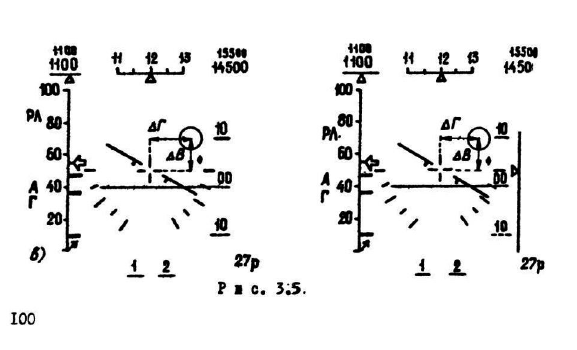
the left is HUD right is HDD...
And similar figures are in MIg-29B manual...
But there is nothing in any documents that supports claim : presenting or maintaining other tracks/targets during RNP/DNP on HDD
HDD was recorded while tracking -see movies in this post
https://www.secretprojects.co.uk/threads/mig-29-avionics.102/post-436308 (this might be HUD recorded..)
But for sure Mig 777, at the bottom of this post - this is from test Mig-29S ?)
I found no proof - showing that during STT track (RNP or DNP) , HDD shows something other than slightly modified copy of HUD.
Of course a lack proof of existence is not a proof of non-existence ..
We still can speculate that:
- on some early soviet planes there were switch DUBL - TAKT, the same as in Su-27 , and maybe this switches on other mode of displaying. And this is for sure not behind technical limitation of what was available in Soviet Union....
But it was mentioned that this switch does not work (mainly due to lack of implementation appropriate data link on Mig) , and later was removed.
Apart from this, information systems on Su-27 and Mig-29 were very similar but not identical.
https://www.secretprojects.co.uk/threads/mig-29-avionics.102/post-825407
The difference lays in bigger amount of memory of Orbita-20 computer on Su. This make sense - to present more complex tactical situation, there is need morememory, than to just provide somehow fixed setup - as is on Mig-29.
Система индикации Нарцисс для самолёта СУ-27
Система индикации Нарцисс является модификацией СЕИ-31 и отличается от неё типом цифровой вычислительной машины и монтажной рамы, на которую устанавливаются электронные блоки. В качестве ЦВМ в комплект системы Нарцисс вместо ЦВМ-20–6 введена ЦВМ-20–51М, обладающая большим объёмом памяти и другой программой. Это обусловлено различными функциями самолётов, другим составом навигационно-прицельного комплекса и большим объёмом решаемых задач. Для обучения летчиков на самолетах-истребителях была разработана модификация СЕИ-31 – СЕИ-31С и модификация Нарцисс-М – Роза, отличающиеся наличием второго индикатора ИПВ, размещенного в кабине инструктора. Инструктор может дублировать на втором ИПВ информацию с ИЛС-31 или ИПВ летчика. Разработчиками модификаций Нарцисс и сопутствующей аппаратуры являются В. И. Кощеев и В. Я. Яцевич. Что касается программного обеспечения для ЦВМ-20–6 и ЦВМ-20–51М, входящих в различные системы отображения информации, то её разработкой в НИО-2 занималась специальная лаборатория, которой руководил в течение ряда лет талантливый специа-лист, прекрасный организатор, рано ушедший из жизни, Сергей Васильевич Макатров.
Narcissus display system for the Su-27 aircraft
The Narciss display system is a modification of the SEI-31 and differs from it in the type of digital computer and mounting frame on which the electronic units are installed. The TsVM-20-51M, which has a larger memory capacity and a different program, was introduced as the digital computer in the Narciss system instead of the TsVM-20-6. This is due to the different aircraft functions, the different composition of the navigation and targeting system, and the larger volume of tasks to be solved. For training pilots on fighter aircraft, a modification of the SEI-31 – the SEI-31S – and a modification of the Narciss-M – the Roza – were developed. These modifications feature a second IPV indicator located in the instructor's cockpit. The instructor can duplicate information from the HUD-31 or the pilot's IPV on the second IPV. The developers of the Narciss modifications and associated equipment were V. I. Koshcheyev and V. Ya. As for the software for the TsVM-20-6 and TsVM-20-51M, which are part of various information display systems, its development at NIO-2 was carried out by a special laboratory, which was headed for a number of years by a talented specialist and excellent organizer, Sergei Vasilyevich Makatrov, who passed away early.
All in all, I think it was technically feasible that time, but there is no proof for displaying some "extrapolated data" on HDD, let alone actively track other targets targets in STT (RNP/DNP) modes
Edit:
And according to :
He then turns hard away from the target,so that he is flying down one edge of his radar cone while the semi-active missile flies down the other edge.This complicates the enemie's task in returning the shot.'
This presents typical tactical scenario, when after launch, Mig's pilot turns right or left to the limits of possible tracking limits of its radar, its "radar cone" . So he flies in let say 60 deg left (or similar ... I will not start the discussion
once again), but still preserving target within its "radar cone"
Last edited:
There are no evidences for that.
in post
https://www.secretprojects.co.uk/threads/mig-29-avionics.102/post-434468
there was suggestion that in DNP mode, there is preserved tracking targets those were previously tracked in SNP ("TWS"), before going to single target track. There is mentioned algorithm is called: `PROGNOZ DOROSHKA` - what can be translated to : TRACK FORECAST. So there is no "active tracking" only extrapolation of existing tracks based on past data without update,.
And possible aim of that is to keep tracks, in case that lock fails. This will return radar to observation mode and restore SNP tracking based on previous data
I found no evidences, anywhere, that in that time, on HDD there is displaying anything different than let say slightly enhanced copy of tracking circles similar to those in HUD. It is clearly provided in available manuals/documents what is displayed on HDD
For example from book that describes Mig-29B avionics (also in this thread):
View attachment 787201
the left is HUD right is HDD...
And similar figures are in MIg-29B manual...
But there is nothing in any documents that supports claim : presenting or maintaining other tracks/targets during RNP/DNP on HDD
HDD was recorded while tracking -see movies in this post
https://www.secretprojects.co.uk/threads/mig-29-avionics.102/post-436308 (this might be HUD recorded..)
But for sure Mig 777, at the bottom of this post - this is from test Mig-29S ?)
I found no proof - showing that during STT track (RNP or DNP) , HDD shows something other than slightly modified copy of HUD.
Of course a lack proof of existence is not a proof of non-existence ..
We still can speculate that:
- on some early soviet planes there were switch DUBL - TAKT, the same as in Su-27 , and maybe this switches on other mode of displaying. And this is for sure not behind technical limitation of what was available in Soviet Union....
But it was mentioned that this switch does not work (mainly due to lack of implementation appropriate data link on Mig) , and later was removed.
Apart from this, information systems on Su-27 and Mig-29 were very similar but not identical.
https://www.secretprojects.co.uk/threads/mig-29-avionics.102/post-825407
The difference lays in bigger amount of memory of Orbita-20 computer on Su. This make sense - to present more complex tactical situation, there is need morememory, than to just provide somehow fixed setup - as is on Mig-29.
All in all, I think it was technically feasible that time, but there is no proof for displaying some "extrapolated data" on HDD, let alone actively track other targets targets in STT (RNP/DNP) modes
Edit:
And according to :
This presents typical tactical scenario, when after launch, Mig's pilot turns right or left to the limits of possible tracking limits of its radar, its "radar cone" . So he flies in let say 60 deg left (or similar ... I will not start the discussion
Watched with my own eyes in the MiG-29 simulator in the Batajnica air base.
''in post
https://www.secretprojects.co.uk/threads/mig-29-avionics.102/post-434468
there was suggestion that in DNP mode, there is preserved tracking targets those were previously tracked in SNP ("TWS"), before going to single target track. There is mentioned algorithm is called: `PROGNOZ DOROSHKA` - what can be translated to : TRACK FORECAST. So there is no "active tracking" only extrapolation of existing tracks based on past data without update,.''
Not in DNP but in RNP mode.
Yes ,I've read those comments from that radar technician and I know for the program called 'Prognoz Doroshka' but it only happened during RNP combat mode not during DNP . RNP or STT is in fact lock-on mode. DNP is not STT mode,that is the catch.
Again:
''Modes : SNP ( TWS) =scanning given sector/zone with tracking aircraft ,max 10 of them , RNP( STT or lock-on )= w/o scanning, tracking only given target, DNP=tracking/illuminating engaged target with scanning given zone (tracking possible aircraft in that zone).''
By the way ,R-27R ( R1) is the AAM with inertial+SARH ( guidance) ,so there is no need for the constant radar beam guidance from the launch moment until impact and that is the reason why there is so called 'radar cone' or 'radar envelope' after R-27R(R1) launch .Simple,radar scans given sector of the air space. In the RNP/ lock-on mode,there is no scanning.
Last edited:
well, well ,well..
So you claim that you actually saw, how this works on simulator..
I have some questions to you:
1. what version of Mig-29 was simulated during your experience?
As you wrote here https://www.secretprojects.co.uk/threads/mig-29-and-its-modifications.32682/post-791045
Yugoslawian/Serbian AF has versions 9-12B (Export version), then later 9-12A (?), also 9-13 and finally some of them were modernized to version SM+
in article you have mentioned https://tangosix.rs/2017/29/09/vitez-naseg-neba-30-godina-mig-29-u-naoruzanju-rv-pvo/ there is said about existence of simulator and even is picture of that:
https://media.tangosix.rs/2017/09/simulator.jpg
From that image simulator seems to show a modernized version SM (see cockpit displays on monitor and cabin itself)
Was the cockpit/simulator you have used, was the same as in the picture?
2. How exactly (according to your memories) look procedure of searching/tracking/launching missiles?
I assume first scanning SNP; then lock RNP : was during "lock" overall tactical situation preserved on HDD? ; then launch to target etc...
by the way ... I read once again, carefully, all posts starting from
https://www.secretprojects.co.uk/threads/mig-29-avionics.102/post-339184
and later replies from Overscan, expecially:
https://www.secretprojects.co.uk/threads/mig-29-avionics.102/post-434470
that shows more or less similar approach as you said. This post refers to N019EA (War-Pac version) And all this seems to somehow mysterious then and now, but maybe as there are two different sources, maybe there is something in it...
Still I find valid all claims /questions said that time, especially:
And from myself, it was said then that, in DNP mode ... no new targets are found..., only there is track for existing one... Why to not detect a new contacts, if there is maintained scan order as was on SNP? Such behavior would more corresponds that radar periodically revisited places where target should be, including the "main" engaged target. maybe not in scan order but with some shorter path
How target illumination by radar would look like? It is of course impossible to move the main beam from main target to other in time-frame of milliseconds...(maybe using some sidelobes, or other method...)
Of course lightning of target might be done periodically, but this is not sufficient in terminal phase of guidance...
All this looks strange and mysterious, but anyway is very interesting.
So you claim that you actually saw, how this works on simulator..
I have some questions to you:
1. what version of Mig-29 was simulated during your experience?
As you wrote here https://www.secretprojects.co.uk/threads/mig-29-and-its-modifications.32682/post-791045
Yugoslawian/Serbian AF has versions 9-12B (Export version), then later 9-12A (?), also 9-13 and finally some of them were modernized to version SM+
in article you have mentioned https://tangosix.rs/2017/29/09/vitez-naseg-neba-30-godina-mig-29-u-naoruzanju-rv-pvo/ there is said about existence of simulator and even is picture of that:
https://media.tangosix.rs/2017/09/simulator.jpg
From that image simulator seems to show a modernized version SM (see cockpit displays on monitor and cabin itself)
Was the cockpit/simulator you have used, was the same as in the picture?
2. How exactly (according to your memories) look procedure of searching/tracking/launching missiles?
I assume first scanning SNP; then lock RNP : was during "lock" overall tactical situation preserved on HDD? ; then launch to target etc...
by the way ... I read once again, carefully, all posts starting from
https://www.secretprojects.co.uk/threads/mig-29-avionics.102/post-339184
and later replies from Overscan, expecially:
https://www.secretprojects.co.uk/threads/mig-29-avionics.102/post-434470
that shows more or less similar approach as you said. This post refers to N019EA (War-Pac version) And all this seems to somehow mysterious then and now, but maybe as there are two different sources, maybe there is something in it...
Still I find valid all claims /questions said that time, especially:
"Question here is that if the SNP mode pulse-doppler track method doesn't give precise enough location for the R-27R launch parameters - how is the same tracking method for the primary target in DNP useful for mid-course correction?"
And from myself, it was said then that, in DNP mode ... no new targets are found..., only there is track for existing one... Why to not detect a new contacts, if there is maintained scan order as was on SNP? Such behavior would more corresponds that radar periodically revisited places where target should be, including the "main" engaged target. maybe not in scan order but with some shorter path
How target illumination by radar would look like? It is of course impossible to move the main beam from main target to other in time-frame of milliseconds...(maybe using some sidelobes, or other method...)
Of course lightning of target might be done periodically, but this is not sufficient in terminal phase of guidance...
All this looks strange and mysterious, but anyway is very interesting.
Last edited:
well, well ,well..
So you claim that you actually saw, how this works on simulator..
I have some questions to you:
1. what version of Mig-29 was simulated during your experience?
As you wrote here https://www.secretprojects.co.uk/threads/mig-29-and-its-modifications.32682/post-791045
Yugoslawian/Serbian AF has versions 9-12B (Export version), then later 9-12A (?), also 9-13 and finally some of them were modernized to version SM+
in article you have mentioned https://tangosix.rs/2017/29/09/vitez-naseg-neba-30-godina-mig-29-u-naoruzanju-rv-pvo/ there is said about existence of simulator and even is picture of that:
https://media.tangosix.rs/2017/09/simulator.jpg
From that image simulator seems to show a modernized version SM (see cockpit displays on monitor and cabin itself)
Was the cockpit/simulator you have used, was the same as in the picture?
2. How exactly (according to your memories) look procedure of searching/tracking/launching missiles?
I assume first scanning SNP; then lock RNP : was during "lock" overall tactical situation preserved on HDD? ; then launch to target etc...
by the way ... I read once again, carefully, all posts starting from
https://www.secretprojects.co.uk/threads/mig-29-avionics.102/post-339184
and later replies from Overscan, expecially:
https://www.secretprojects.co.uk/threads/mig-29-avionics.102/post-434470
that shows more or less similar approach as you said. This post refers to N019EA (War-Pac version) And all this seems to somehow mysterious then and now, but maybe as there are two different sources, maybe there is something in it...
Still I find valid all claims /questions said that time, especially:
And from myself, it was said then that, in DNP mode ... no new targets are found..., only there is track for existing one... Why to not detect a new contacts, if there is maintained scan order as was on SNP? Such behavior would more corresponds that radar periodically revisited places where target should be, including the "main" engaged target. maybe not in scan order but with some shorter path
How target illumination by radar would look like? It is of course impossible to move the main beam from main target to other in time-frame of milliseconds...(maybe using some sidelobes, or other method...)
Of course lightning of target might be done periodically, but this is not sufficient in terminal phase of guidance...
All this looks strange and mysterious, but anyway is very interesting.
Hi friend !
Yes ,it was MiG-29SM simulator actually.MiG-29SM has N019M1 Topaz radar but combat modes and functions are the same as of the old N019E Rubin.In the cockpit (sim) of the MiG-29SM there is ILS-31M as HUD with PUS-29M /LCD and LCD MFI-54 as HDD.
Now if you don't mind I will present how combat modes are used and what pilot must do to move from one mode to another.Pilot turns on his radar with working mode known as 'EKV' or equivalent, or stand by/warm up mode where radar signals are not send to the open space.After that,he allowed illumination with switch IZL ( Izluchenie).Search mode can be V , D or AVT where V and D goes with submode SNP (TWS).In that modes radar can track max 10 aircraft in the scanning zone.In the AVT mode there is possibility to track only one aircraft which flies as incoming or receding .As we know,radar can work in manual or auto mode. Now ,to designate its target, pilot must move button known as 'KU-31' ( Knopka Upravleniya or STROB) on his control stick.
From the moment when he push button 'MRK.ZAHV.PZ' on the throttle ,radar goes from normal search mode ( V/D-SNP,AVT) to the lock-on mode ,known as RNP. There is one interesting detail.When radar works in the RNP mode ,it scans one little box ( 8°x 4°) and keep in mind that N019 radar beam has width 3.5°,so there is place for two targets in fact in that box ( azimuth) . It takes only few sec to lock on given target ( if two appears) or if something other happens ( e.g. due to jamming ,target's disappeared) ,procedure must be repeat.
Now ,to mention one another detail.As we know radar N019M Topaz in MiG-29S ( operational from 1992) could engage two differ targets and that radar could lock on e.g. both targets in that box 8° x 4°,of course lock-on could not happen in the same time.
Next question is important. What triggers radar to move from RNP to DNP mode? In the moment when pilot pulls the trigger for the launching of the AAM ,radar goes from RNP to DNP mode which lasts exactly 60 sec. As it was described in the book 'How to fly and fight in the MiG-29' ,pilot must calculate AAM's flight time on his stopwatch ( positioned in the bottom of the front vertical instrumental panel).
For 60 sec radar must track and illuminate engaged target but where and how ? In the scanning zone where engaged target is ,because if target disappear from that zone ( radar cone ),pilot must repeat complete lock on procedure. After 60 sec radar automatically move from DNP to SNP as regular search mode. So the difference between DNP and SNP is ,DNP is the search mode but only in the zone where engaged target is. SNP can be search mode anywhere in the radar envelope/cone. There is switch 'ZONA' to determine search zone/sector.
If I remember well,in the DNP mode radar works in the 'time sequencies' and for the searching/scanning of the given zone ,it takes 10.24ms ,another 10.24ms for the tracking of the engaged target and 30.72ms for the illumination of it.
@LukaszK
This is the right topic for the N019 Rubin so I will answer here friend .
''Why do you think N019 was on par with western radars that time?
It was technically inferior: compare mass for example for AN/APG-65... 155kg vs 385 for N019. ...2.5 more...Compare emitter, antenna.. We know much about its signal processing in details (see topic about radar APG-63 PSP, and APG-65 is somehow scalled version of APG-63..) We know details how this is done in N019.. and I see ... well, a huge difference. Compare modes for both. I will not mention, about lack any A/G modes in N019... So why do you think they were the same level?''
When we talk about A2A modes,N019 Rubin was absolutely comparable with mentioned US radars.If you think that one radar with twisted Cassegrain antenna is inferior in comparison with radar which has flat planar antenna array ,believe me that is not right. Mirage 2000C had also Cassegrain antenna and Panavia Tornado ADV too. During Red Flag excercises in the beginning of the 1990's ,RAF Tornado ADV with its AI.24 and Skyflash often won against USAF F-15C with AN/APG-63/70 and AIM-7M in the sim. BVR combat.
Main energetic capabilities and characteristics are on the N019's side like average power of the TWT and max output signal power,in both HPRF or MPRF mode.
If you ever read some citations where Luftwaffe MiG-29A pilots told some details about N019E(EA) Rubin-E,you could see that they were writing about that radar as being inferior to American radars like the AN/APG-65 or 68. But the truth is much different. The difference between the N019 Rubin in the VVS MiG-29 9.12 and 9.13 and the N019E( EA/EB) in the exported MiG-29A/B was/is as the difference between the sky and the earth.
For comparison, N019 has almost 20 Bulletins for the middle and general overhaul,possible upgrades and modifications etc. N019E has no more than 8. N019 has more so called liter/carrier or working frequencies in both SNP or DNP modes than N019E. It is much more jamming resistant etc. First series of the N019 had one more combat mode ...Don't forget combat mode 'Cooperation' where radar N019/E can work together with the IRST/KOLS ( Izd. 13Sh) slaved with the HMS 'Schel-3UM' / NVU-2M, something that did not exist in the US/NATO fighters for decades.
N019/E can automatically track max 10 aircraft in the given scanning zone,same as AN/APG-68(V)9 e.g. It provides engaging only one given target ,yes but modified N019M Topaz can provide engaging two differ targets in the very short period of time. In the PPS mode ,N019 can detect/track MiG-21 from 60-70km, N019M from 90-100km.
Also keep in mind that radar N019 like N001 has the same max detection range in the HPRF working mode( SNP/TWS) as AN/APG-63/70 and AN/APG-68 =150km vs 80nmi.
P.S.
This is one interesting article about N019 from 2012 and it is on Ukrainian language.
https://studfile.net/preview/5383872/
This is the right topic for the N019 Rubin so I will answer here friend .
''Why do you think N019 was on par with western radars that time?
It was technically inferior: compare mass for example for AN/APG-65... 155kg vs 385 for N019. ...2.5 more...Compare emitter, antenna.. We know much about its signal processing in details (see topic about radar APG-63 PSP, and APG-65 is somehow scalled version of APG-63..) We know details how this is done in N019.. and I see ... well, a huge difference. Compare modes for both. I will not mention, about lack any A/G modes in N019... So why do you think they were the same level?''
When we talk about A2A modes,N019 Rubin was absolutely comparable with mentioned US radars.If you think that one radar with twisted Cassegrain antenna is inferior in comparison with radar which has flat planar antenna array ,believe me that is not right. Mirage 2000C had also Cassegrain antenna and Panavia Tornado ADV too. During Red Flag excercises in the beginning of the 1990's ,RAF Tornado ADV with its AI.24 and Skyflash often won against USAF F-15C with AN/APG-63/70 and AIM-7M in the sim. BVR combat.
Main energetic capabilities and characteristics are on the N019's side like average power of the TWT and max output signal power,in both HPRF or MPRF mode.
If you ever read some citations where Luftwaffe MiG-29A pilots told some details about N019E(EA) Rubin-E,you could see that they were writing about that radar as being inferior to American radars like the AN/APG-65 or 68. But the truth is much different. The difference between the N019 Rubin in the VVS MiG-29 9.12 and 9.13 and the N019E( EA/EB) in the exported MiG-29A/B was/is as the difference between the sky and the earth.
For comparison, N019 has almost 20 Bulletins for the middle and general overhaul,possible upgrades and modifications etc. N019E has no more than 8. N019 has more so called liter/carrier or working frequencies in both SNP or DNP modes than N019E. It is much more jamming resistant etc. First series of the N019 had one more combat mode ...Don't forget combat mode 'Cooperation' where radar N019/E can work together with the IRST/KOLS ( Izd. 13Sh) slaved with the HMS 'Schel-3UM' / NVU-2M, something that did not exist in the US/NATO fighters for decades.
N019/E can automatically track max 10 aircraft in the given scanning zone,same as AN/APG-68(V)9 e.g. It provides engaging only one given target ,yes but modified N019M Topaz can provide engaging two differ targets in the very short period of time. In the PPS mode ,N019 can detect/track MiG-21 from 60-70km, N019M from 90-100km.
Also keep in mind that radar N019 like N001 has the same max detection range in the HPRF working mode( SNP/TWS) as AN/APG-63/70 and AN/APG-68 =150km vs 80nmi.
P.S.
This is one interesting article about N019 from 2012 and it is on Ukrainian language.
https://studfile.net/preview/5383872/
Last edited:
It was already known. Three is also book just about Mig-29 avionics. See in this topic. I have OCR version for easier translation.P.S.
This is one interesting article about N019 from 2012 and it is on Ukrainian language.
https://studfile.net/preview/5383872/[/URL
When we talk about A2A modes,N019 Rubin was absolutely comparable with mentioned US radars.If you think that one radar with twisted Cassegrain antenna is inferior in comparison with radar which has flat planar antenna array ,believe me that is not right. Mirage 2000C had also Cassegrain antenna and Panavia Tornado ADV too. During Red Flag excercises in the beginning of the 1990's ,RAF Tornado ADV with its AI.24 and Skyflash often won against USAF F-15C with AN/APG-63/70 and AIM-7M in the sim. BVR combat.
Well, for sure Cassegrain is much better comparing to parabolic mirror, for sure. And soviets were mastered this approach over years.
But, but ... for some reasons everybody changed from inverse Cassegrain to slot array... right? Sweden, France, England and finally Soviets .. why?
(And you know what? Europeans were also inferior and much behind US designs. Just like Soviets)
First argument - slot array is lighter, thus more agile; Second... having slot array it is possible to tune gain of arrays. This is - important to accompliesh "tapper" function. See windowing topic in signal processing , or tappering. This allows to obtain much lower level of side lobes than in other design.
(see for example this
https://en.wikipedia.org/wiki/Window_function
And this is important, especially in Doppler radars, especially in MPRF.
This is not appropriate thread but yes ,Soviets used their first flat planar arrays/slot design from 1980's with N010 'Zhuk' in the MiG-29M/K and N011 'Bars' in the Su-27M. In the meantime ,don't forget that Soviets also developed and integrate first in the world phased array-PESA for one fighter/interceptor during 1970's ( was operational from 1980).
Western sources often give info like this :
''Phazotron was the first Russian manufacturer to offer an X-Band AESA with the Zhuk AE for the MiG-35 Fulcrum fighter in 2007, soon followed by the competing Tikhomirov NIIP with a larger AESA for the SU-27/30 Flanker fighter, and the low observable Sukhoi T-50 PAK-FA.''
https://www.microwavejournal.com/articles/17992-evolution-of-aesa-radar-technology
We know now that Soviets had AESA even in 1991,almost 35 years ago and was presented in 2001 ,6 years before the presentation of the N010AE 'Zhuk-AE' as export vesrion of the N010A Zhuk-A for the MiG-35 ( Indian MRCA competition from 2007).
From the Cassegrain 'mirrors', via flat planar array/slot to the AESA antenna designs ,MiG-29/35 changed so many types of radar as prototypes and operational ones.
PS
This is something interesting for me ....
''Originally intended to have a planar array antenna and digital signal processing, and a range of at least 100km against a fighter target, it soon became clear that this would not be achievable, at least not in a radar that would fit in the MiG-29’s nose.''
Source: http://toad-design.com/migalley/index.php/jet-aircraft/mig29/mig29-n019-radar/
We know that they achieved exactly the same result with the N019M 'Topaz' 35 years ago which of course has the twist Cassegrain antenna.
''Для испытаний новой системы управления вооружением на ММЗ им. А.И.Микояна в 1988-1989 гг. переоборудовали два серийных истребителя типа «9-13». Первый из них, получивший №405 (бортовой №05), поднялся в воздух 20 января 1989 г., второй - МиГ-29 №404 (бортовой №04) - 30 июня 1989 г. На этих самолетах отрабатывались функционирование модернизированного РЛПК-29М и СУВ-29С в целом, применение ракет РВВ-АЕ. В частности на 405-м впервые произвели успешный пуск двух ракет по двум воздушным целям одновременно. Было доказано, что новая СУВ обеспечивает одновременный или последовательный пуск ракет по целям, разнесенным по азимуту на угол более 8° или находящимся на одном азимуте на расстоянии более 10 км.''
''To test the new weapons control system, two serial "9-13" fighters were converted at the Mikoyan Machine Building Plant in 1988-1989. The first of these, designated No. 405 (tail number 05), took to the air on January 20, 1989, and the second, MiG-29 No. 404 (tail number 04), took to the air on June 30, 1989. These aircraft were used to test the operation of the modernized RLPK-29M and SUV-29S systems as a whole, as well as the use of RVV-AE missiles.In particular, the 405th successfully launched two missiles simultaneously at two aerial targets for the first time. It was proven that the new missile control system enables the simultaneous or sequential launch of missiles at targets separated in azimuth by more than 8° or located on the same azimuth at a distance of more than 10 km.''
Source: https://www.airwar.ru/enc/fighter/mig29s.html
Not more than 8 degrees but exactly inside the previously mentioned so-called ''lock-on box'' limited by 8°x4°.

Western sources often give info like this :
''Phazotron was the first Russian manufacturer to offer an X-Band AESA with the Zhuk AE for the MiG-35 Fulcrum fighter in 2007, soon followed by the competing Tikhomirov NIIP with a larger AESA for the SU-27/30 Flanker fighter, and the low observable Sukhoi T-50 PAK-FA.''
https://www.microwavejournal.com/articles/17992-evolution-of-aesa-radar-technology
We know now that Soviets had AESA even in 1991,almost 35 years ago and was presented in 2001 ,6 years before the presentation of the N010AE 'Zhuk-AE' as export vesrion of the N010A Zhuk-A for the MiG-35 ( Indian MRCA competition from 2007).
From the Cassegrain 'mirrors', via flat planar array/slot to the AESA antenna designs ,MiG-29/35 changed so many types of radar as prototypes and operational ones.
PS
This is something interesting for me ....
''Originally intended to have a planar array antenna and digital signal processing, and a range of at least 100km against a fighter target, it soon became clear that this would not be achievable, at least not in a radar that would fit in the MiG-29’s nose.''
Source: http://toad-design.com/migalley/index.php/jet-aircraft/mig29/mig29-n019-radar/
We know that they achieved exactly the same result with the N019M 'Topaz' 35 years ago which of course has the twist Cassegrain antenna.
''Для испытаний новой системы управления вооружением на ММЗ им. А.И.Микояна в 1988-1989 гг. переоборудовали два серийных истребителя типа «9-13». Первый из них, получивший №405 (бортовой №05), поднялся в воздух 20 января 1989 г., второй - МиГ-29 №404 (бортовой №04) - 30 июня 1989 г. На этих самолетах отрабатывались функционирование модернизированного РЛПК-29М и СУВ-29С в целом, применение ракет РВВ-АЕ. В частности на 405-м впервые произвели успешный пуск двух ракет по двум воздушным целям одновременно. Было доказано, что новая СУВ обеспечивает одновременный или последовательный пуск ракет по целям, разнесенным по азимуту на угол более 8° или находящимся на одном азимуте на расстоянии более 10 км.''
''To test the new weapons control system, two serial "9-13" fighters were converted at the Mikoyan Machine Building Plant in 1988-1989. The first of these, designated No. 405 (tail number 05), took to the air on January 20, 1989, and the second, MiG-29 No. 404 (tail number 04), took to the air on June 30, 1989. These aircraft were used to test the operation of the modernized RLPK-29M and SUV-29S systems as a whole, as well as the use of RVV-AE missiles.In particular, the 405th successfully launched two missiles simultaneously at two aerial targets for the first time. It was proven that the new missile control system enables the simultaneous or sequential launch of missiles at targets separated in azimuth by more than 8° or located on the same azimuth at a distance of more than 10 km.''
Source: https://www.airwar.ru/enc/fighter/mig29s.html
Not more than 8 degrees but exactly inside the previously mentioned so-called ''lock-on box'' limited by 8°x4°.
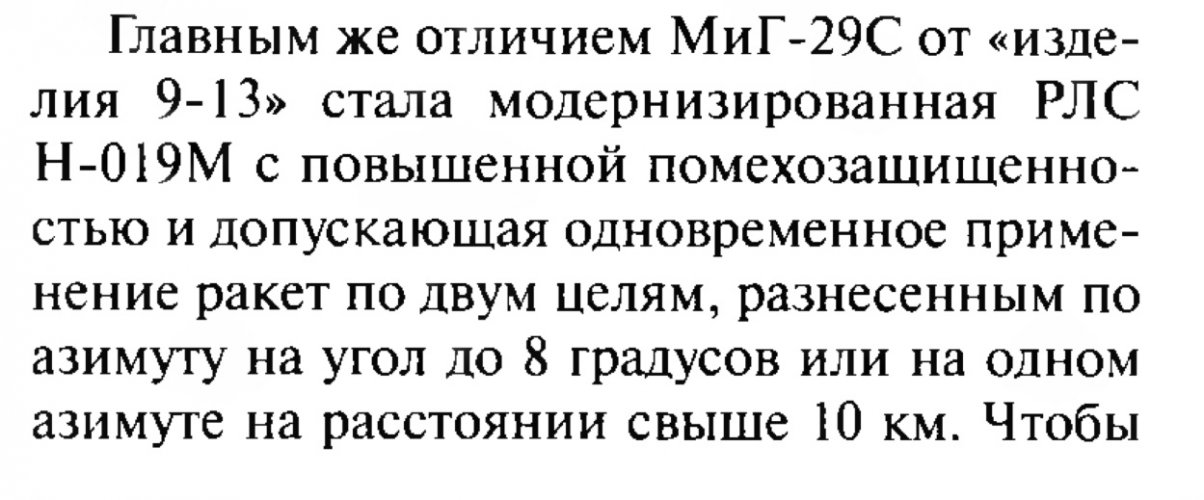
Last edited:
Aeria Gloria
ACCESS: Secret
- Joined
- 8 February 2024
- Messages
- 416
- Reaction score
- 480
Mk.82, to answer your question fully, there is only one function in production 9.12/9.13 MiG-29 that is provided by the HDD. Take a look at the picture attached by Lukas above. Left is HUD screen and right is HDD. The difference? The HDD includes a right border. In radar scan mode, this right border also includes a carat showing radar antenna elevation vs the horizon, and the number of the bar the radar is scanning (4 In normal search and 6 in Lazur GCI.)Is this two-views functionality been the case since the first MiG-29 (9-12?)?
As I often find out people just saying it was a duplication of the HUD for various (BS) reasons, like: "If the HUD fails/can't see the HUD/otherBS, pilot still can fly and land with HDD" or "The Soviets didn't have technology to make it anything other".
As it is disgusting how the west downright spreads disinformation based to their hate towards Russians/Soviets (how they mix those two as same thing, is a own can of worms...) and so on claiming that they couldn't even build a functional HUD or have no knowledge or intelligence to do any advanced math and other science without spying and stealing it from USA (the same traits that can be seen even today, like how China stole from the USA all the advanced weaponry demonstrated in 80th anniversary parade. Or how Russia stole the hypersonic missile technology from USA, and USA has more advanced missiles than Russia's demonstrated ones).
And MiG-29 is very heavily under that coping, as it is so direct competitor to F-16 and F/A-18 etc.
And how does the system continue scanning situational awareness with the SARH missile? Is that part of the TWS feature?
So as far I know, after locking the target, the HUD will transfer to the navigation mode toward the target tracked. So two circles to fly to with the crosshair as plane heading, guiding to get the intercept/alignment to the target?
So the HDD is not suppose to replicate that, but provide an overall picture by radar scan, even while guiding a R-27R?
That is literally the only function that is provided by HDD in Soviet models and not the HUD.
This is not appropriate thread but yes ,Soviets used their first flat planar arrays/slot design from 1980's with N010 'Zhuk' in the MiG-29M/K and N011 'Bars' in the Su-27M. In the meantime ,don't forget that Soviets also developed and integrate first in the world phased array-PESA for one fighter/interceptor during 1970's ( was operational from 1980).
Western sources often give info like this :
''Phazotron was the first Russian manufacturer to offer an X-Band AESA with the Zhuk AE for the MiG-35 Fulcrum fighter in 2007, soon followed by the competing Tikhomirov NIIP with a larger AESA for the SU-27/30 Flanker fighter, and the low observable Sukhoi T-50 PAK-FA.''
https://www.microwavejournal.com/articles/17992-evolution-of-aesa-radar-technology
We know now that Soviets had AESA even in 1991,almost 35 years ago and was presented in 2001 ,6 years before the presentation of the N010AE 'Zhuk-AE' as export vesrion of the N010A Zhuk-A for the MiG-35 ( Indian MRCA competition from 2007).
From the Cassegrain 'mirrors', via flat planar array/slot to the AESA antenna designs ,MiG-29/35 changed so many types of radar as prototypes and operational ones.
PS
This is something interesting for me ....
''Originally intended to have a planar array antenna and digital signal processing, and a range of at least 100km against a fighter target, it soon became clear that this would not be achievable, at least not in a radar that would fit in the MiG-29’s nose.''
Source: http://toad-design.com/migalley/index.php/jet-aircraft/mig29/mig29-n019-radar/
We know that they achieved exactly the same result with the N019M 'Topaz' 35 years ago which of course has the twist Cassegrain antenna.
''Для испытаний новой системы управления вооружением на ММЗ им. А.И.Микояна в 1988-1989 гг. переоборудовали два серийных истребителя типа «9-13». Первый из них, получивший №405 (бортовой №05), поднялся в воздух 20 января 1989 г., второй - МиГ-29 №404 (бортовой №04) - 30 июня 1989 г. На этих самолетах отрабатывались функционирование модернизированного РЛПК-29М и СУВ-29С в целом, применение ракет РВВ-АЕ. В частности на 405-м впервые произвели успешный пуск двух ракет по двум воздушным целям одновременно. Было доказано, что новая СУВ обеспечивает одновременный или последовательный пуск ракет по целям, разнесенным по азимуту на угол более 8° или находящимся на одном азимуте на расстоянии более 10 км.''
''To test the new weapons control system, two serial "9-13" fighters were converted at the Mikoyan Machine Building Plant in 1988-1989. The first of these, designated No. 405 (tail number 05), took to the air on January 20, 1989, and the second, MiG-29 No. 404 (tail number 04), took to the air on June 30, 1989. These aircraft were used to test the operation of the modernized RLPK-29M and SUV-29S systems as a whole, as well as the use of RVV-AE missiles.In particular, the 405th successfully launched two missiles simultaneously at two aerial targets for the first time. It was proven that the new missile control system enables the simultaneous or sequential launch of missiles at targets separated in azimuth by more than 8° or located on the same azimuth at a distance of more than 10 km.''
Source: https://www.airwar.ru/enc/fighter/mig29s.html
Not more than 8 degrees but exactly inside the previously mentioned so-called ''lock-on box'' limited by 8°x4°.
View attachment 790019
As you can read in the power point that overscan translated, the lock on box is a temporary scan y til the target is locked. Once locked, the 8x4 degree scan is stopped and tracking continues using only monopulse. There was no ability to track two targets within this, in fact the TWS scan patter was 40 degrees azimuth by 8 degrees elevation
I would be very interested if anyone has an explanation at to why possibly the MPRF/Pursuit mode has a 1100 kmh head on speed limit regardless of township speed?
Last edited:
As you can read in the power point that overscan translated, the lock on box is a temporary scan y til the target is locked. Once locked, the 8x4 degree scan is stopped and tracking continues using only monopulse. There was no ability to track two targets within this, in fact the TWS scan patter was 40 degrees azimuth by 8 degrees elevation
I would be very interested if anyone has an explanation at to why possibly the MPRF/Pursuit mode has a 1100 kmh head on speed limit regardless of township speed?
Exactly and the scan lasts only 0.8sec in that 'box' . Where is the difference between N019 Rubin and the N019M Topaz ? N019M can lock-on both targets from that 'box' ( if they apeared) ,of course ,one after another.
Aeria Gloria
ACCESS: Secret
- Joined
- 8 February 2024
- Messages
- 416
- Reaction score
- 480
The difference is you’re confusing N-019/N-019M switching to a 8x4 degree scan zone upon pressing lock button during radar search and N-019M doing a 40x8 degree scan in TWF and locking two targets in itExactly and the scan lasts only 0.8sec in that 'box' . Where is the difference between N019 Rubin and the N019M Topaz ? N019M can lock-on both targets from that 'box' ( if they apeared) ,of course ,one after another.
One is 8 degrees azimuth (the width of the TDC) by 4 degrees elevation the other is 40 degrees azimuth (only 10 degrees smaller then normal scan azimuth) by 8 degrees elevation (only a little smaller then normal scan elevation)
N-019M is not locking two targets during one lock sweep of 8x4 degrees, that’s ridiculously narrow. Once it automatically gates onto the most dangerous target (highest speed/range) if that additional target is within the 40x8 degree scan zone around the selected most dangerous target it will then lock the additional target.
You have to remember the point of TWF/TWS was originally to be a semi auto mode that would replace Lazur when not available. It does not require any action on the part of the pilot other then aiming radar and pressing “launch missile” trigger, and can perform its full duties without the pilot pressing “lock.” If the pilot needed to press lock, it wouldn’t be TWS. In addition TWS has a 4-6 km range inaccuracy, and when you press lock in TWS it is only scanning a 9-10 km section of that 8x4 degree window you have designated with TDC (TDC is 5 km long in normal search and 9-10 km in TWF/TWS). So does TWS not only now require lock button to be pressed in N-019M but can only lock two targets separated by 4-6 km within a 10 km space?
The article you quote even mentions this “It was proven that the new missile control system enables the simultaneous or sequential launch of missiles at targets separated in azimuth by more than 8° or located on the same azimuth at a distance of more than 10 km.'' It is saying that since the gate size is 8 degrees in azimuth and 10 km long, it needs the two targets to be separated by this much.
“
Track-while-flyby mode allows the simultaneous tracking of up to 10 targets, measuring their angular position, range and rate of closure. The target with the highest rate of closure/range ratio is designated the most dangerous, and automatically marked on the display. The pilot can override the automatic selection if he decides on another target. After switching to track-while-flyby
mode volume scanning is stopped, and only the (up to 10) tracked targets are followed. Track-while-flyby mode will automatically follow the target marked most dangerous (auto or by pilot override) in elevation without pilot intervention. The TSVM computer calculates missile launch parameters for the
most dangerous target. As the range to target approaches the calculated maximum missile launch range, the radar will stop scanning for targets and transition to an 8º by 40º box pattern scan in the direction of the designated target.”
So which makes the most sense? A curious TWS mode that requires lock button to be pressed to lock two targets flying within 8 degrees and 6-10 km of each other in opposition to what the article you quoted says, or locking a secondary target within a 40x8 degree zone around the designated most dangerous target separated by atleast 8 degrees azimuth and 10 km range?
Last edited:
The difference is you’re confusing N-019/N-019M switching to a 8x4 degree scan zone upon pressing lock button during radar search and N-019M doing a 40x8 degree scan in TWF and locking two targets in it
One is 8 degrees azimuth (the width of the TDC) by 4 degrees elevation the other is 40 degrees azimuth (only 10 degrees smaller then normal scan azimuth) by 8 degrees elevation (only a little smaller then normal scan elevation)
N-019M is not locking two targets during one lock sweep of 8x4 degrees, that’s ridiculously narrow. Once it automatically gates onto the most dangerous target (highest speed/range) if that additional target is within the 40x8 degree scan zone around the selected most dangerous target it will then lock the additional target.
You have to remember the point of TWF/TWS was originally to be a semi auto mode that would replace Lazur when not available. It does not require any action on the part of the pilot other then aiming radar and pressing “launch missile” trigger, and can perform its full duties without the pilot pressing “lock.” If the pilot needed to press lock, it wouldn’t be TWS. In addition TWS has a 4-6 km range inaccuracy, and when you press lock in TWS it is only scanning a 9-10 km section of that 8x4 degree window you have designated with TDC (TDC is 5 km long in normal search and 9-10 km in TWF/TWS). So does TWS not only now require lock button to be pressed in N-019M but can only lock two targets separated by 4-6 km within a 10 km space?
The article you quote even mentions this “It was proven that the new missile control system enables the simultaneous or sequential launch of missiles at targets separated in azimuth by more than 8° or located on the same azimuth at a distance of more than 10 km.'' It is saying that since the gate size is 8 degrees in azimuth and 10 km long, it needs the two targets to be separated by this much.
“
Track-while-flyby mode allows the simultaneous tracking of up to 10 targets, measuring their angular position, range and rate of closure. The target with the highest rate of closure/range ratio is designated the most dangerous, and automatically marked on the display. The pilot can override the automatic selection if he decides on another target. After switching to track-while-flyby
mode volume scanning is stopped, and only the (up to 10) tracked targets are followed. Track-while-flyby mode will automatically follow the target marked most dangerous (auto or by pilot override) in elevation without pilot intervention. The TSVM computer calculates missile launch parameters for the
most dangerous target. As the range to target approaches the calculated maximum missile launch range, the radar will stop scanning for targets and transition to an 8º by 40º box pattern scan in the direction of the designated target.”
So which makes the most sense? A curious TWS mode that requires lock button to be pressed to lock two targets flying within 8 degrees and 6-10 km of each other in opposition to what the article you quoted says, or locking a secondary target within a 40x8 degree zone around the designated most dangerous target separated by atleast 8 degrees azimuth and 10 km range?
Sorry but you misunderstand almost everything. There is no 8°x40°/ 40x8 so called box pattern during lock-on mode ,only 8°x4°.
I already posted and commented this citation:
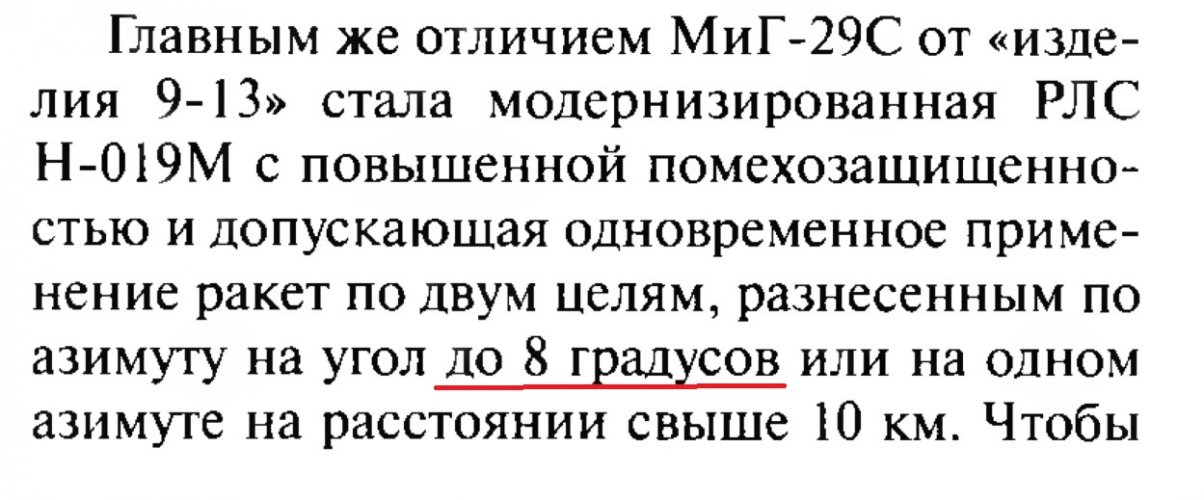
''Not more than 8 degrees but exactly inside the previously mentioned so-called ''lock-on box'' limited by 8°x4°. ''
Again, N019/M radar beam has width of 3.5° and after first target is locked on in that ''box'' ( 8x4 degrees) second one ( if it apeared as I wrote) , can be locked-on after first one( I previousle wrote ''one after another'') ... Note: with that width of the radar beam ( on Russian DNA -diagrama napravlenosty anteny), there is enough place for two targets by azimuth in that box pattern.
In TWS/TWF ( whatever) ,you can have different scan boxes and it depends on manual or auto mode of searching/scanning.
where did you take this cite from?Sorry but you misunderstand almost everything. There is no 8°x40°/ 40x8 so called box pattern during lock-on mode ,only 8°x4°.
I already posted and commented this citation:
View attachment 791222
For example in https://airwar.ru/enc/fighter/mig29s.html
There is:
"Было доказано, что новая СУВ обеспечивает одновременный или последовательный пуск ракет по целям, разнесенным по азимуту на угол более 8° или находящимся на одном азимуте на расстоянии более 10 км. "
"It was demonstrated that the new missile launch control system enabled the simultaneous or sequential launch of missiles at targets separated in azimuth by more than 8° or located on the same azimuth at a distance of more than 10 km."
By the way - this "small box" is only temporary state -to precisely find designated target - before lock-on. Once target is found, it is tracked with mono-pulse angular position determination. No more scanning.
where did you take this cite from?
For example in https://airwar.ru/enc/fighter/mig29s.html
There is:
"Было доказано, что новая СУВ обеспечивает одновременный или последовательный пуск ракет по целям, разнесенным по азимуту на угол более 8° или находящимся на одном азимуте на расстоянии более 10 км. "
"It was demonstrated that the new missile launch control system enabled the simultaneous or sequential launch of missiles at targets separated in azimuth by more than 8° or located on the same azimuth at a distance of more than 10 km."
By the way - this "small box" is only temporary state -to precisely find designated target - before lock-on. Once target is found, it is tracked with mono-pulse angular position determination. No more scanning.
That was wrong data and I corrected that already friend. Not more than 8 degrees but exactly 8 degrees by azimuth and 4 degrees by the elevation.
Pls ,take a look on the citation with the red line in my previous post,tnx.
I already commented the bolded,yes , it is right. Now after the lock-on and AAM launch ,N019 Rubin immediately goes to DNP mode ,I described how it works .Now, N019M Topaz can do something new. With the N019M it is possible to lock-on another target in the box pattern 8x4 degrees ( even the same one as the second , if it was there before the first lock-on).
Word '' одновременное'' in that citation means not exactly in the same time ( both targets locked-on in the same period of time ) but one after another.
Similar threads
-
-
 Phazotron Sapfir-23 and Sapfir-25 radar
- Started by overscan (PaulMM)
- Replies: 198
-
-
McDonnell-Douglas F-15 Avionics, AN/APG-63/70 radar
- Started by overscan (PaulMM)
- Replies: 113
-
 MiG-21LanceR A , B and C Avionics ...systems etc
- Started by AFlyer216
- Replies: 2