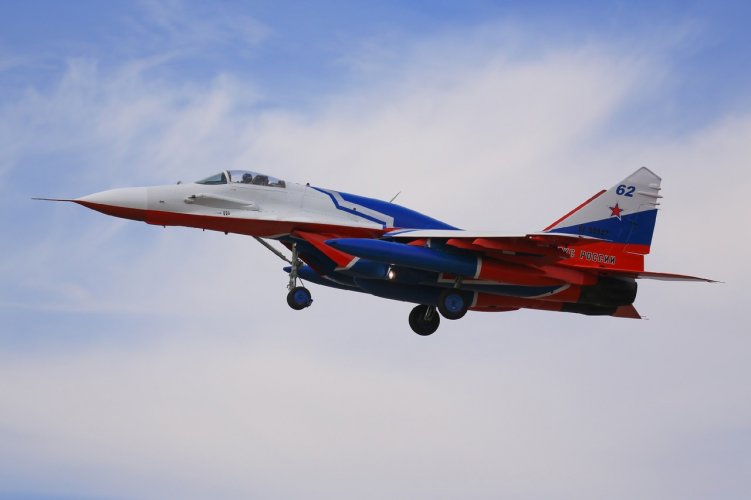
Serbian AF MiG-29SM ( SM+) are one of the most capable MiG-29's right now in the World when we talk about old 9.12/9.13 subversions. Serbian AF inherited 5 MiG-29B/UB ( 4 9.12B + 1 9.51B) from the former Yugoslav AF ( FR of Yugoslavia) in 2006. After the 1999 war against the NATO ( 11 MiG-29's were lost ,5 were shot down in the air and 6 were destroyed on the ground) , YuAF had only 5 from the original 16 MiG-29's which belonged to the 127th fighter aviation sqn ,from 1993 known as 'Knights' ( 14 single-seat 'B' and 2 double-seat 'UB' ) which were acquired in several groups, Sept. 1987, Dec. 1987 and March 1988. Btw, YuAF was the first in the Europe and fourth in the World to acquire MiG-29 ( so export subversion 9.12B/9.51B).
https://tangosix.rs/2017/29/09/vitez-naseg-neba-30-godina-mig-29-u-naoruzanju-rv-pvo/
Unfortunately,on July 2009 one MiG-29B was lost in the accident on the Batajnica air base,near the city of Belgrade together with its pilot ( also one soldier was killed on the ground).
After some time,Serbian AF acquired 6 second-hand MiG-29's as donated from Russia in Oct 2017 ( one 9.12A, three 9.13 and two 9.51). After that ,Serbian AF had 10 MiG-29's.
https://tangosix.rs/2021/10/06/odrz...na-mig-29-koje-je-belorusija-donirala-srbiji/
All of the donated single-seat MiG-29's ( except one) were overhauled in Serbia from 2017 ( overhaul/repair plant in the Batajnica air base) ,also they were modernised to SM/SM+ level from 2020.
MiG-29SM+ are capable to carry wide variety of AAM's ,from the old medium-range R-27R1 to the long-range R-27ER1 and of course highly maneuverable and agile medium-range R-77E. Short-range R-60MK and R-73E/EL are also in arsenal. From A2G weapons besides unguided rockets and bombs ,they have TV-guided Kh-29TYe, ARM type Kh-31P ( thanks to L-150-29 'Pastel' ESM/RWR ).There is also KAB-500Kr-U for the training for use TV-guided bombs.
Serbian AF MiG-29SM+ have N019M1 'Topaz' radar ( hardware from N019M Topaz and software from N010 Zhuk) ,newer IRST/LR KOLS Product '13SM', L-150-29 / SPO-32 'Pastel' RWR. It is interesting to note that MiG-29SM+ got new French IFF system known as TSB2515. They also got new RD-33 ser. 2 engines. Only 9.13 based SM+ can carry PTB-1150 underwing fuel tanks.
Photo of the cockpit of the overhauled and modernised MiG-29B ( after 2008) as very similar to the cockpit of the Slovakian AF MiG-29AS with the new HUD ILS-31M and PUS-29 ( below it) and new LCD/MFD known as MFI-54.We can clearly see old SPO-15LM 'Beryoza' RWR indicator from the right side.
An experiment in integration interceptor drone to the fighter MiG-29SMT Russian Aerospace Forces.
Project «Archangel» declares, that the communication problem was solved «dramatically» – the drone operator was allegedly trained to pilot the aircraft.
At the same time, the drone itself is carelessly secured with plastic ties directly to the sensor of the radar radiation warning system. How this should be launched in reality, and then also controlled (or aimed at the target) – is absolutely unclear.
However, the idea of using cheaper means to intercept kamikaze drones compared to conventional «air-to-air» missiles is a step in the right direction.
An Iraqi pilot engaged eight aircraft and shot down two (Panavia Tornado). What is his fate now?
Memoirs of Captain Pilot Jamil Sayhood Ismail about air battles.
During the 1991 airstrike against our beloved country, in which more than thirty countries participated, led by the United States of America, at 2:00 AM on January 17, 1991, I participated in two missions at Al-Qadisiyah Air Base.
The first mission:
Immediate takeoff at 9:00 PM on the second night of the war, i.e., 21:00 on January 17, 1991. What happened during that mission:
The nitrogen accumulator on the right rudder failed, causing the plane to fly in a pitching motion, i.e., a skid. In this case, the mission must be abort and the plane landed, according to emergency regulations. However, I decided to complete the mission despite the difficulty of flying the plane at high combat speeds and sharp maneuvers. This required great physical effort, continuously, and without a speed of 700 km/h, which is much less than the required combat speed. However, I managed to confuse the enemy aircraft, which led to me being pursued by F-15s. Therefore, I descended and flew at a high altitude. Very low and worked maneuvers to the right and left and returned to Al-Qadisiyah Air Base. However, the most difficult challenge was landing in the shortest possible time, i.e., by using a long final approach at high speed, without overshooting because the aircraft were behind me, and any mistake would be to their advantage. So, I approached without wheels and at a speed of 600 km/h until the final stages. Then, I returned the throttle to the idle position and opened the air break to reduce the speed to 500 km/h to lower the wheels and then the flaps. I then applied a little fuel to maintain the landing speed. The aircraft landed with a smooth touch to the runway, despite the aircraft's position and its gliding flight. This was a wonderful achievement that I will always be proud of. I remember it when enemy aircraft were pursuing me and were unable to shoot down my aircraft, despite the unenviable situation I was in. Then, I landed safely, thank God. Second participation:
On January 19, 1991, I took off from Al-Qadisiyah Air Base in a formation consisting of two MiG-29s, codenamed Ali. I was the commander of the formation. After takeoff, number 2 lost visual contact with my aircraft, and then separated from the formation and was ordered to remain above the airport circle at an altitude of 3,000 meters. I was directed by Major Khaled Al-Qaisi within the Haditha Radar Guidance Center of the First Sector, where I was directed alone towards four targets at an altitude of 9,000 meters. I was later informed that there were four other targets, so I was ordered to fly at an altitude of 1,000 meters and head towards them, turn on the radar, and climb to an altitude of 9,000 meters. Upon reaching the aforementioned altitude, I was informed that the targets had descended to a low altitude. I turned the aircraft around and saw the targets visually from a distance, to my right, in two formations that could not be distinguished due to their distance. I quickly descended to an altitude of 2,000 meters, locked onto one of them using the thermal close-quarters combat system, and fired an R-60MK missile. thermal homing and achieve a direct hit then lock and launch on the other plane and quickly disengage due to a low fuel warning, so I turned off the afterburner and pulled up to perform a roll of the top maneuver and return towards the 160 km area, which was a distance of 30 km to land at the emergency landing strip. I exited the maneuver at an altitude of 6000 m and a speed of 700 km/h, so I was pursued by a formation consisting of two F-15 aircraft and a Sidewinder thermal missile was also fired from behind and under my aircraft. There was a direct hit in the tail area and the aircraft ended up in a cloud of smoke and shrapnel and a spin to the left and a descent and loss of control over it. Then I left the aircraft using the ejection seat. After exiting the aircraft, the parachute was not open at an altitude of 6000 m. Then I saw a formation consisting of two F-15 aircraft and I was facing the sun disc in relation to them, so they did not see me, so they thought I was inside the aircraft. They circled the plane until it reached the ground. They thought I was inside it, then they returned to the previous air engagement area. What happened to me after the ejection was as follows:
1. During the launch of the chair, the parachute's shoulder straps slipped and reached my elbows due to the high acceleration of the ejection and the length of the shoulder straps relative to my body.
2. When the chair left the plane, the seat's stabilizing device operated on both sides. This device eliminated the chair's spiral rotation after ejection. It was designed in the form of multiple cylinders extending from one another until they reached approximately 2.5 meters, with a small parachute at the end of each. When this device was launched, it penetrated the parachute's shoulder straps.
3. When the chair separated from the pilot, it did not separate, remaining attached by the stabilizing device, which penetrated the parachute's shoulder straps.
4. The parachute opened at an altitude of 4,000 meters as planned, and I attempted to free myself from the chair by pushing the cylinders to refill them one by one toward the chair, but I failed.
5- The weight of the chair is 150 kg, which added additional weight to the parachute, leading to an increased rate of descent towards the ground. Note that the normal descent speed for a pilot using a parachute is 7 m/s. When you add the weight of the chair, which is 150 kg, imagine the speed of the parachute's descent rate, in addition to the unbalance of the parachute. Therefore, upon reaching the ground, there was a huge shock that the human body cannot bear.
Memoirs of Iraqi MIG-29 pilot Jamil Sayhud during the 1991 Gulf WarGet ready for an exciting journey into the world of pilots' diaries! In this exclusive video, Captain Jamil Sayhoud reveals unique details about his experience on the MIG-29 during the Second Gulf War in 1991. You will see never-before-told scenes and an in-depth analysis of what he did on this warplane. Memoirs of Captain Pilot Jamil Sayhud Ismail about air battles. During the year 1991, our beloved Qatar was subjected to an air attack in which more than thirty countries participated, led by the United States of America, at two o’clock after midnight on the 17th January 1991
October 4. "Fighter aircraft of the Russian Aerospace Forces shot down a MiG-29 aircraft of the Ukrainian Air Force near the village of Soldatskoye in the Dnepropetrovsk region."
06/05/2022 Su-27 831st Brigade Colonel Fisher (listed missing) Orekhov, Zaporizhia region
06/16/2022 Mi-8MT 18th Airborne Brigade Captain Shemeta (KV) / Senior Lieutenant Mekheda (LSh) / ? (BT) v. Adamovka, Donetsk region **
06/26/2022 Su-24M 7th Airborne Brigade Matyushenko Colonel / Krasilnikov field, Zmeiny Island area, Black Sea waters at 00:58
07/02/2022 helicopter Captain Bordyugov / Senior Lieutenant Kachay, Zelenodolsk, Dnipropetrovsk region
07/13/2022 Mi-8 16th Airborne Brigade Kopotun field (KV) / Senior Lieutenant Kril (LSh) / Captain Lozovoy (BT) v. Prechistovka, Donetsk region
07/26/2022 Su-25 299 BrTA Mr. Kukurba village. Andronovka, Mezhevsky district, Dnepropetrovsk region. at 07:25
08.08.2022 MiG-29 204 BrTA p-k Pogorely (no data)
08.08.2022 MiG-29 204 BrTA plant Listopad (no data)
08.08.2022 Mi-8 456 BrTrA Mr. Mirgorodsky (KV) / Senior Lieutenant Lukov (LS) ***
08/21/2022 Su-27 39 BrTA p/p-k
Babich (no data)
09/07/2022 Su-25 299 BrTA Mr. Blagovestny, Nikolaev region. dogfight 09/25/2022 MiG-29 204 BrTA Mr. Redkin s. Vladimirovka, Nikolaev region. ok 04:00 modified for AGM-88
10.10.2022 Su-27 39 BrTA settlement Shupik settlement Shishaki, Poltava region. 10/12/2022 MiG-29 114 BrTA Mr. Voroshilov between the village of Novaya Priluka and the town. Turbov, Vinnytsia region. dogfight approx 21:00
10/12/2022 Su-24MR 7 BrTA Mr. Bortnik / navigator alive between the village. Mikhaylyki and v. Zhorzhevka, Poltava region at 13:20
11.11.2022 Mi-8 456th Brigade of Tactical Aviation Colonel Khomik (KV) / ? (LS) / Lt. Col. Penkovy (BT-I) / Senior Corps-Team Golda (medic) v. Berestovoe, Donetsk region at 12:14
11.12.2022 Mi-8 12th Separate Airborne Brigade Colonel Fedorov (KV) / Lieutenant Levchuk (LS) / Senior Lieutenant Markevich (BT) city of Konstantinovka, Donetsk region
19.12.2022 Mi-8 Mr. Gulov (KV) / ? (LS) / Lt. Col. Zubach (BT) v. Tonenkoe, Donetsk region
07.01.2023 MiG-29 Ostrovskoe settlement, Pokrovsky district, Donetsk region, modified for AGM-88
18.01.2023 EC225 Super Puma GSChS Vasilenko / Kovalenko / Kasyanov, Brovary city, Kyiv region
27.01.2023 Su-25 299th BrTA Captain Murashko, Shebelkovka village, Kramatorsk district, Donetsk region, aerial combat
31.01.2022 Mi-2 18th Separate AA Brigade Captain Butenko (KV) / Senior Lieutenant Stankevich (ShT) Poltava region utp
10.02.2023 MiG-29 114th BrTA Captain Shkarevsky Zhitomir around 04:00
01.03.2022 Su-24M 7th BrTA Colonel Volynets / Senior Lieutenant Solomennikov Artemovsk Donetsk region aerial combat
28.03.2023 Su-27 831st BrTA Kirilyuk village Tolkachevka Priluki district Chernihiv region at 00:45
02.06.2023 MiG-29 114th BrTA Captain Savelyev Pokrovsk Donetsk region
* - pilot ejection site. The pilot crashed near Sosnovka village
** - the place where the helicopter was shot down. Crashed near Dolgenkoe village Kharkiv region. (KV and BT are alive)
*** - probably captain Kravets (KV Mi-2) also died on board
02/28/2022 Su-27 831 BrTA Mr. Chobanu, Kropyvnytskyi, Kirovograd region. dogfight
Already described earlier. Maj. Stepan Chobanu in his Su-27 was mistakenly shot down by the AAM type R-27R launched from the UkrAF MiG-29 piloted by Capt. Andrey Gerus. Maj. S.Chobanu was KIA. It was the only 'air victory' for the UkrAF so far.
02/28/2022 Su-27 831 BrTA Mr. Chobanu, Kropyvnytskyi, Kirovograd region. dogfight
Already described earlier. Maj. Stepan Chobanu in his Su-27 was mistakenly shot down by the AAM type R-27R launched from the UkrAF MiG-29 piloted by Capt. Andrey Gerus. Maj. S.Chobanu was KIA. It was the only 'air victory' for the UkrAF so far.
verifying aircraft victories is very hard to be honest most are claims, yes there are sometimes evidence, but it is hard to tell, to be 100% the claims are true, they probably are but still evidence of proof is lacking.
see this
It is i think an Iranian F-4 shot down during the Iran_Iraq_War, when Iran occupied the Iraqi city of Al-Faw on February 11, 1986.
But the video source does not say anything, it does not say Iranian F-4 shot down.
They show no wreckage
In this video they claim the Iraqi MiG-25 downed an F-15, in the gulf war there is evidence an F-15 was downed because its pilot was paraded on Iraqi TV, but it is know it was downed by a SAM.
Samarra Air Ambush: When Saddam Destroyed the Prestige of American Fighters in the Gulf War
Following the Second Gulf War, which ended with the withdrawal of the Iraqi army from Kuwait, the US-led international coalition imposed a no-fly zone over Iraq to weaken it and undermine its military capabilities. Following the UN's adoption of the no-fly zone in 1991, US fighter jets in the Arabian Gulf region began conducting air patrols over Iraq, fearing that the latter would use ballistic missiles to threaten coalition military bases.
These patrols consisted of a squadron of American fighter jets patrolling the Iraqi border. Once the patrol ended and the base reported its return, another squadron would prepare to take off and cover the route of the previous patrol.
These patrols angered Baghdad, which crippled its air force. Baghdad was determined to launch a retaliatory strike against its adversary, primarily to gain face and to secure a narrow area of air freedom that would allow Iraq to reposition its aircraft within operational airfields that had not been damaged by the airstrikes that had focused on military bases and airfields during the Second Gulf War.
Planning the Operation
Based on the aforementioned reasons, the late Iraqi President Saddam Hussein ordered the then-commander of the Iraqi Air Force, Major General Muzahim Hassan al-Tikriti, to develop a plan to counter the air patrols. This prompted Major General Muzahim to meet secretly with the commanders of air units and formations at the Air Force Reserve Building, located within the Air Force Command, to discuss and study the plan in a manner that would not allow for errors or failure.
''This was an attempt of Romania to modernize their small fleet of Fulcrums, received from USSR/Russia and Moldova. Most of machines were Fulcrum A modification (“Изделие 9.12А”), in 1997 one of them (Serial Number 2960532367, Reg. Number 67) was eventually chosen for “Sniper” modernization program, before the start of the program this aircraft underwent a general overhaul at the Aerostar plant. Main goals of the project were to ensure compatibility with NATO systems, to expand combat capabilities and the range of under-mounted armament and to extend the inter-repair resource. Modernization was provided by Romanian Aerostar, German DASA and Israeli Elbit. DASA was responsible for program management, technical support and the test flight program (together with Elbit), Elbit was responsible for developing the avionics package, while Aerostar implemented the upgrades on the aircraft. Most of systems were brought from another already successful modernization of Romanian MiG-21s - LanceR. Demonstration prototype took off to the skies for the first time on May 5, 2000 with a DESA test pilot Wolfgang Schirdewann in the cockpit. This machine made its public debut on May 26 of the same year at the Berlin Airshow. Since it had only 15 test flights at that time, visitors to the said airshow could only view it statically. Originally it was planned that all fleet of 18 MiG-29s (including 3 MiG-29UB) would be upgraded, but it didn’t happen. Romanian Air Force sticked to MiG-21 LanceR modernization program and in 2003 the entire fleet of Romanian MiG-29s was withdrawn from service. There was an attempt to further upgrade Sniper (with previously planned new radar and weapons) to suggest it for export market, but it led to conflict with Russian MiG company itself as Sniper modernization program was not authorized by the MiG-29 manufacturer. In the end Sniper remained a single prototype-demonstrator, which currently is located at the Aviation Museum in Bucharest.''
When we talk about so called Aggressor sqn's ,let us remind on one specific unit of the former USSR AF or VVS-FA ( frontal aviation).
Soviet MiG-29 of the 1521st Center for Combat Employment, an aggressor unit stationed at the Maryy-1 airbase in the Turkmen SSR, some Fulcrums were painted to resemble the F-15 Eagle, the unit were later taken over by the independent Turkmenistan in 1992 and is most likely disbanded.
@paralay
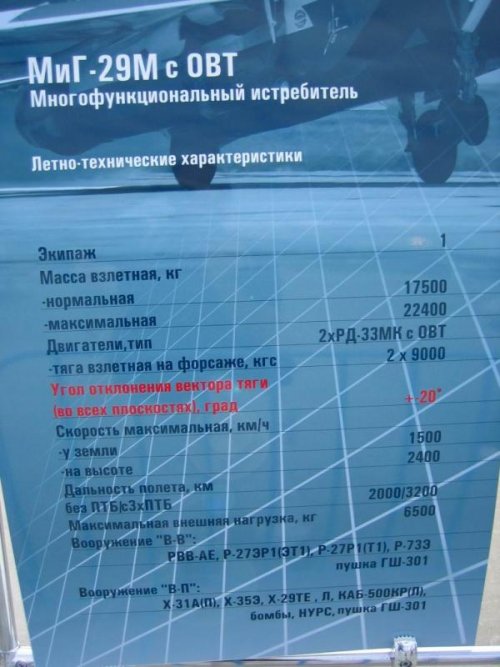
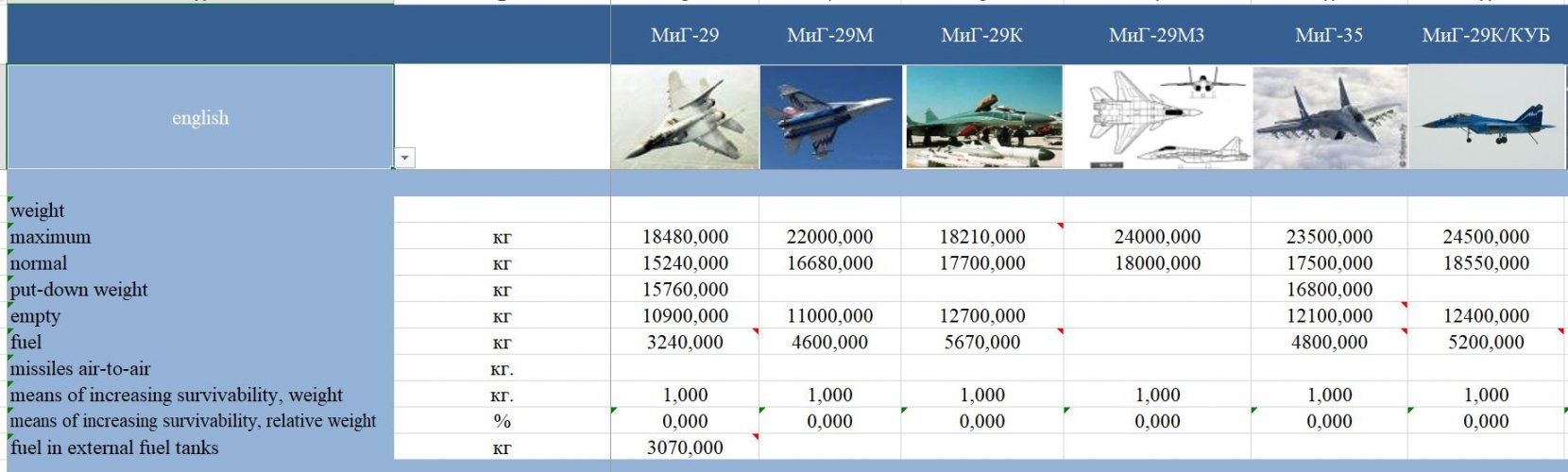
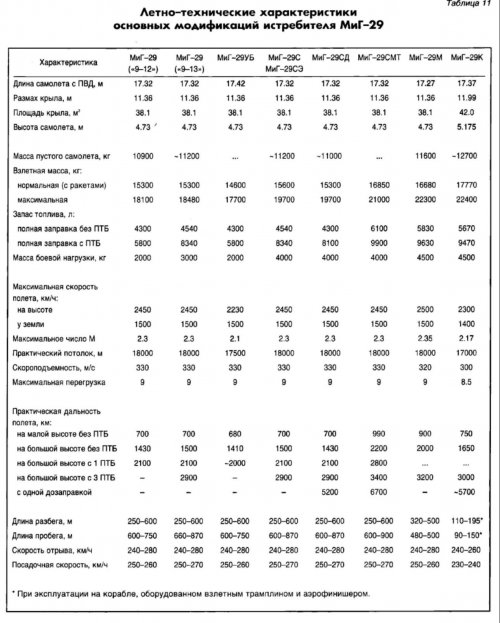
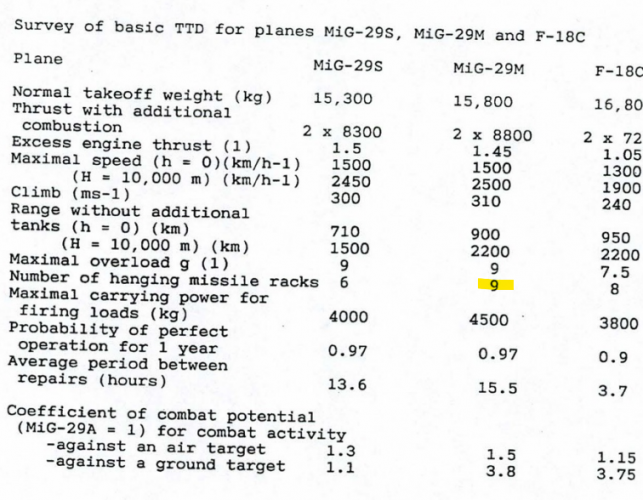
Where is this image from? Most sources give a 600 kg increase for the mig-29m over the standard mig 29, unless you’re talking about the 2005 one? But the image on there is an make of 156 29m 9.15
I believe that the Yemeni MiG-29SMT (9-12) are among the most advanced Fulcrums, with Kh-31, R-77, air-to-air refueling capability.
Far in front of the MiG-29MU1/2.
It must be remembered that HARM's capacity is extremely austere and limited.
Supposedly a demo of the Yemeni SMT. I was curious if their was a major weight difference but the demo doesn’t look too different from a regular 9.12 demo.
Supposedly a demo of the Yemeni SMT. I was curious if their was a major weight difference but the demo doesn’t look too different from a regular 9.12 demo.
Yemeni SMT does not have the big spine so the weight difference is probably negligible compared to the base 9.12 version.
PS: I'm not quite sure that video is recent, despite what the poster says.
Yemeni SMT does not have the big spine so the weight difference is probably negligible compared to the base 9.12 version.
PS: I'm not quite sure that video is recent, despite what the poster says.
The MiG-29M has only a fuel tank between the engines.
On the MiG-29M, they tried to install pylons for the P-73 at the ends of the wing, but this did not go further.
This site uses cookies to help personalise content, tailor your experience and to keep you logged in if you register.
By continuing to use this site, you are consenting to our use of cookies.