Messerschmitt S and M Series Designations (Prior to RLM 8-Series)
Harth-Messerschmitt S (Segelflugzeuge) Designations
Friedrich Harth (1880-1936) Designs
S 1 -- (Harth only) 1909 experimental biplane canard glider, prone pilot, x 1
S 2 -- (??) hypothetical designation
Friedrich Harth-Willy Messerschmitt Joint Designs
S 3 -- 1914 high-winged, wing-warping open-frame, 1-seat glider, 1 built
-- aka Harth-Messerschmitt S-03, aka S.3
S 4 -- 1914 high-winged, wing-warping open-frame, 1-seat glider, 1 built
-- aka Harth-Messerschmitt S-04, aka S.4
S 5 -- 1917 high-winged, wing-warping open-frame, 1-seat glider, 1 built
-- aka Harth-Messerschmitt S-05, aka S.5
S 6 -- 1916 high-winged (upper cabane), wing-warping open-frame glider, x 1
-- aka Harth-Messerschmitt S-06, aka S.6
S 7 -- 1918 high-winged, wing-warping open-frame, 1-seat glider, 1 built
-- aka Harth-Messerschmitt S-07, aka S.7
S 8 -- 1921 high-winged, wing-warping open-frame, 1-seat glider, 1 built
-- aka Harth-Messerschmitt S-08, aka S.8, Eindecker S VIII
S 9 -- 1921 high-winged, wing-warping open-frame, 1-seat glider, ? built
-- aka Harth-Messerschmitt S-09, aka S.9
Segelflugzeugbau Harth-Messerschmitt Designs - 1922-25
S 10 - 1922 high-winged, wing-warping open-frame, 1-seat training glider
-- aka Harth-Messerschmitt S-10, aka S.10, span 14.00 m
S 11 - 1922 high-winged, wing-warping open-frame, 1-seat training glider
-- aka Harth-Messerschmitt S-11, aka S.11, span 14.00 m
S 12 - 1922 experimental parasol-monoplane glider, span 14.00 m, x 1
-- S 12 wing basically cantilever (tiny struts), led to S 14 and S 15
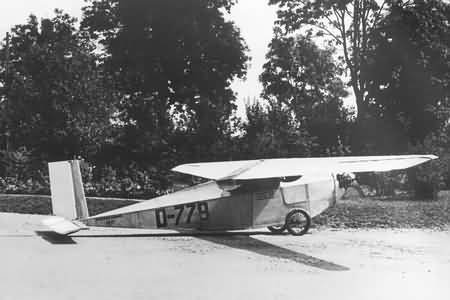
S 13 - 1923 high-winged, enclosed-fuselage 1-seat sailplane, 1 built
-- aka Harth-Messerschmitt S-13, aka S.13, span 14.00 m
S 14 - 1923 S 13 development with canilever wing, 14m span, 2 built
-- aka Harth-Messerschmitt S-14, aka S.14, span 14.00 m
S 15 - 1923 motor glider, 1 x 10 hp Victoria (repl. by 14 hp Douglas)
-- considered a powered development of the S 14, wheels repl. skids
S 16 - Bubi, 1924 2-seat (tandem) light aircraft, 1 x 24 hp Douglas Sprite
- S 16b: second a/c. Sim. to S 15 but with higher pedestal for wing
-- first design entirely by Messerschmitt, Harth leaves firm in 1923
Messerschmitt Flugzeugbau - Messerschmitt Flugzeugbau GmbH - 1925-27
M 17 - Ello, 1925 2-seat (tandem) light aircraft, 1 x 32 hp Bristol Cherub III
-- reduced-scale S 16, options: 24 hp Douglas Sprite or ABC Scorpion, x 8
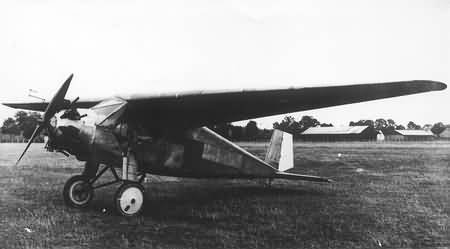
M 18 - 1926 monoplane (high, cantilever) cabin airliner, 26 built
- M 18: prototype, wooden const., 80 hp Siemens Sh 11 7-cyl radial
-- Prototype remained unregistered, 1 pilot (open cockpit) + 3 pax
- M 18a: series, metal const. (fabric wing cover), 80 hp Sh 11, x 2
- M 18b: series, as M 18a except 110 hp Siemens Sh 12, 12 built
-- NB: later aircraft could carry 4 pax but retained 'b designation
- M 18c: photographic aircraft, 220 hp A-S Lynx radial, 3 built
- M 18d: enclosed cockpit, 8 pax 1 x 150 hp Walter Mars or 225 hp Lynx
- M 18d floatplane: Got no special designation, 325 hp Wright Whirlwind
-- NB: M 18d had either M 18b-style short u/c or M 18c-style long u/c legs
Merged with State-owned Bayerische Flugzeugwerke (BFW) - 1927
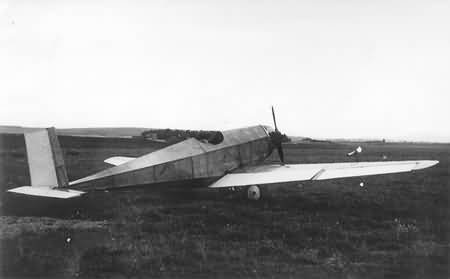
M 19 - 1927 ultralight low-wing 1-seat monoplane, 24 hp ABC Scorpion, 2 built
M 20 - 1928 monoplane cabin airliner, 1 pilot + 10 pax, 15 built, aka BFW M 20
-- Essentially a BMW VI V12-powered development of the M 18d
- M 20: prototype 1 x 500 hp BMW VI crashed on maiden take-off, 26 Feb 1928
- M 20a: series, 1 x 500 hp BMW VIa or BMW VI Zu, 2 built
-- 10 M 20a ordered by Deutsche Lufthansa, canc. after crash of prototype
- M 20b: series, revised M 20a with aerodynamic & structural improvements
- M 20b2: 10 x M20b re-engined with 640 hp BMW VIu, aka M 20b-2
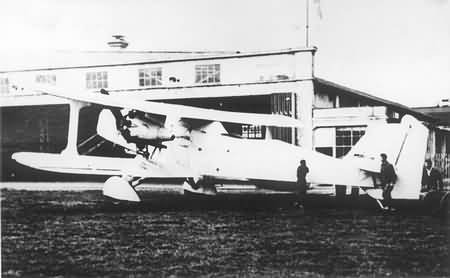
M 21 - 1928 2-seat training biplane (to replace Udet U-12 Flamingos), 2 built
- M 21a: first prototype, 1 x 80 hp Siemens Sh 11
- M 21b: second prototype, 1 x 100 hp Siemens Sh 12
-- M 21 trials were successful but no series production
M 22 - 1930 biplane, 3-seat recce bomber, 2 x 500 hp Siemens Jupiters, 1 built
-- aka BFW M 22 or Bf 22, originally conceived as a multiplace night fighter
M 23 - 1928 2-seat low-winged monoplane sport aircraft, M 19 deriv., 100+ built
- M 23a: 38 hp ABC Scorpion 2-cyl or 45 hp Salmson 9Adb 9-cyl radial, (?) built
- M 23b: around 53 built (+ 14 in Rumania) with a wide range of engine choices
-- 50 hp BMW X, 82 hp Sh 13, 86 hp A-S Genet, 95 hp ADC Cirrus III,
-- 115 hp ADC Cirrus Hermes, or 115 hp Siemens Sh 14 radial
- M 23b floatplane: Sh 13, taller tailplane, no special designation assigned
- M 23c: refined lines, cockpit enclosed with perspex canopy, about 11 built
-- M23c engine choices: 110 hp Argus As 8 4-cyl or 150 hp Sh 14a radial
- ICAR Universal: 1934 Rumanian 1-seat M 23b derivative, record a/c, 1 built
- ICAR Universal Acrobatic: 1934 RO 1-seat M 23b deriv., 12.90 m span, x 3
-- Universal & Universal Acrobatic powered by 150 hp Siemens-Halske Sh 14a
- ICAR Universal Biloc: 1935 RO 2-seat M 23b derivative, 12.90 m span, x 10
-- Universal Biloc trainers; 1 x 130 hp IAR 4GI (licenced DH Gipsy Major 4-cyl.)
M 24 - 1928 high-wing cabin airliner (scaled-down M 20), 8 pax, 5(?) x built
- M 24a: 280 hp Junkers L5 (D-1767) or 320 hp BMW Va (D-1853), 2 x built
- M 24b: 525 hp BMW Hornet (floatplane version not given specific designation)
-- M 24b variant with 500 hp Siemens Jupiter may not have been completed
M 25 - (Project) light monoplane (designed for Ernst Udet)
M 26 - 1930 high-wing cabin monoplane, 2-3 pax, 1 x 100 hp Siemens Sh 11, x 1
-- Scaled-down M 18, unbuilt metal derivative designated M 30
M 27 - 1930 low-wing sports monoplane, open-cockpit 2-seater, M 23c deriv.
- M 27a: 110 hp Siemens Sh 12 radial, short rounded vertical tail, 1 x built
- M.27b: 120 hp Argus As 8 4-cyl inline, taller rounded tail, 1 x built
M 28 - 1930 low-wing metal mailplane, 1 x 525 hp BMW Hornet, 2 x built
-- For Reichsluftfahrtministerium, to Lufthansa 1932-35, returned to RLM
M 29 - 1932 low-wing monoplane racer (Circuit of Europe); enclosed 2-seater
- M 29a: 150 hp Siemens Sh 14a radial, 2 x built
- M 29b: 150 hp Argus As 8R 4-cyl inline, 3 x built
-- M 29 failed due to all-moving tail, 2 fatal crashes, replaced by He 64
M 30 - (Project) 1931 all metal version of M 26 3-seat cabin monoplane,
- M30 : (Intended powerplant) 1 x 175 hp Wright Whirlwind radial
M 31 - 1932 light low-wing sports monoplane, open 2-seater, 60 hp BMW Xa
- M 31: Competitive light a/c, reduced-scale devel. of M 19, M 23, M 27 line
M 32 - (Project) 1932 2-seat biplane military primary trainer, devised for RVM
-- 5 part-completed airframes, taken over as He 72 (see Richard B, below)
M 33 - (Project) ultra-light parasol-wing single-seat monoplane; 15 hp DKW
-- 'Volksflugzeug', underslung fuselage pod with engine, mockup only
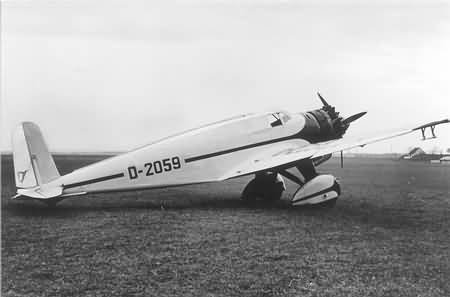
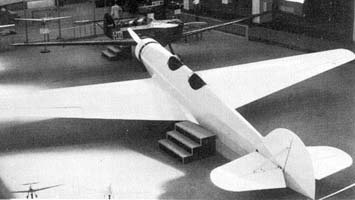
M 34 - (Project) 1934 record aircraft (Antipodenflugzeug), 20,000 km range
M 35 - 1933 low-wing sport monoplane, 1- or 2-seater devel. of M 31
- M 35a: 1 x 150 hp Siemens Sh 14a 7-cyl radial, 2 built
- M 35b: 1 x 135 hp Argus As 8b 4-cyl inline, 12 built
- M 35c: 1 x 225 hp Argus As 17a 6-cyl inline, Wk.Nr. 622 (completed?)
-- aka BFW 35, aka BFMW M 35
M 36 - single engined 2 + 6 passenger high wing light transport, 1 built
- M 36: planned with 380 hp Gnome-Rhône Jupiter 9Aa 9-cyl, not built
- ICAR 36: M 36 built by Întreprinderea de construcții aeronautice românești
-- As built: 1 x 380 hp Armstrong Siddeley Serval 10-cylinder 2-row radial
-- aka BFW M.36, ICAR 36, ICAR M 36, ICAR M 36, or IAR 36
M 37 - high performance monoplane for 1934 Challenge de Tourism Internationale
-- Redesignated 8-108 by RLM; built and marketed as the Bf 108 series
____________________________________



 roject only " antipode plane "


