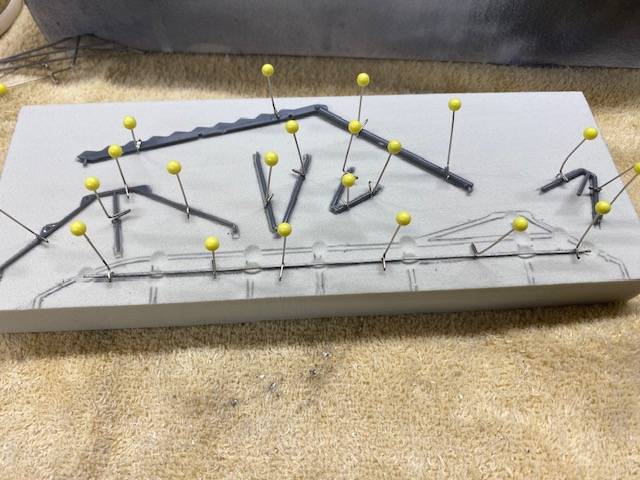
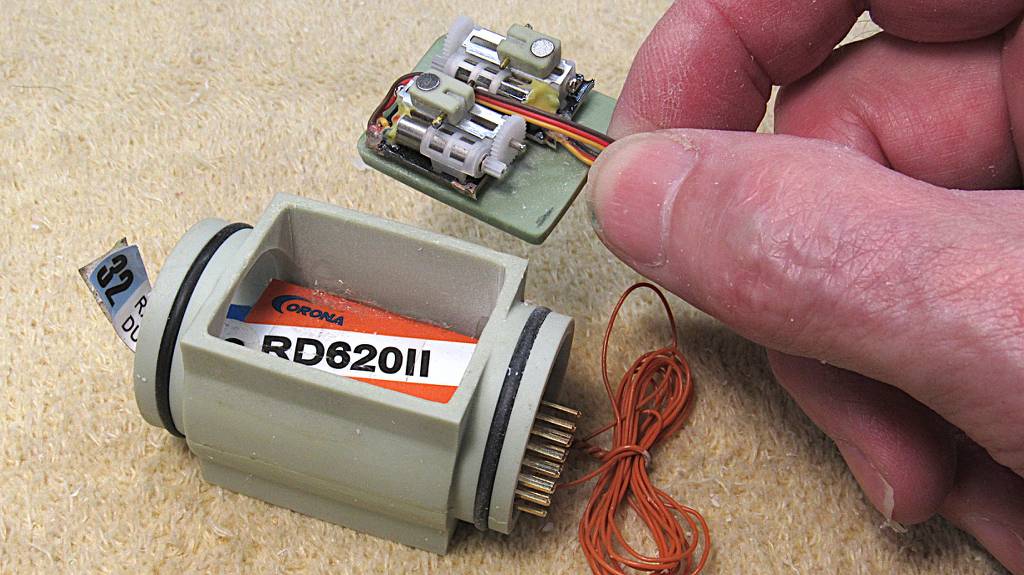
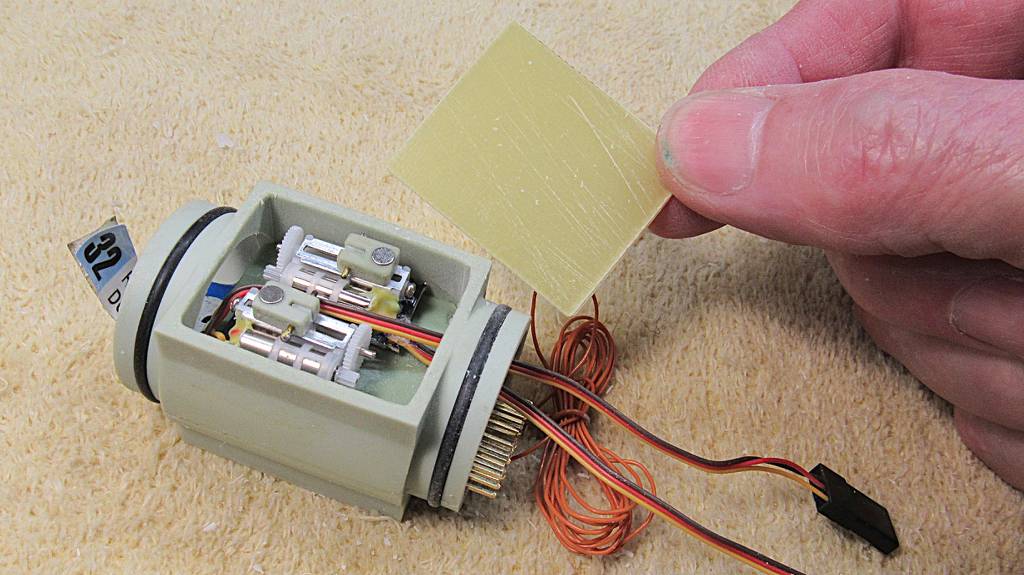
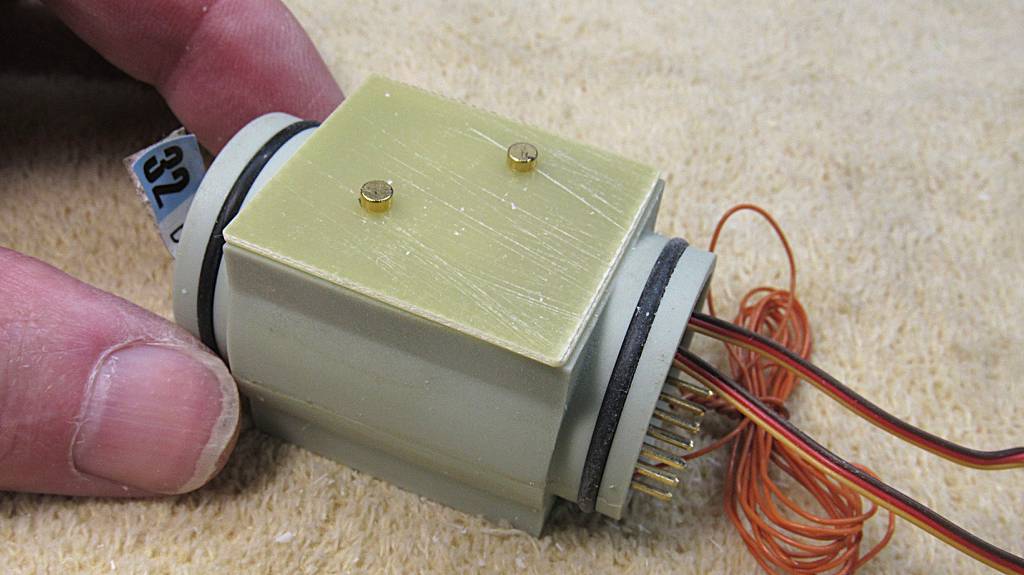
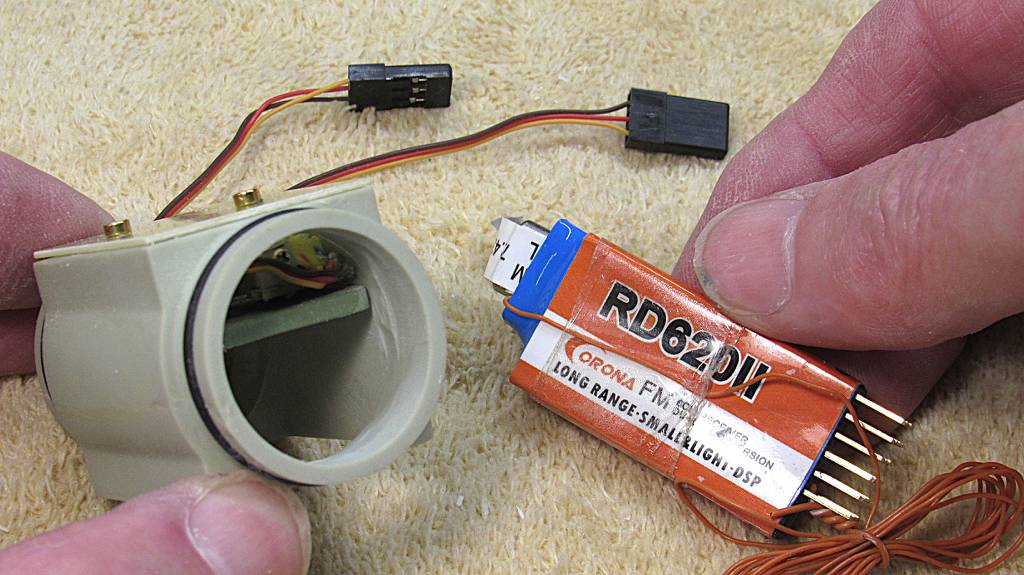
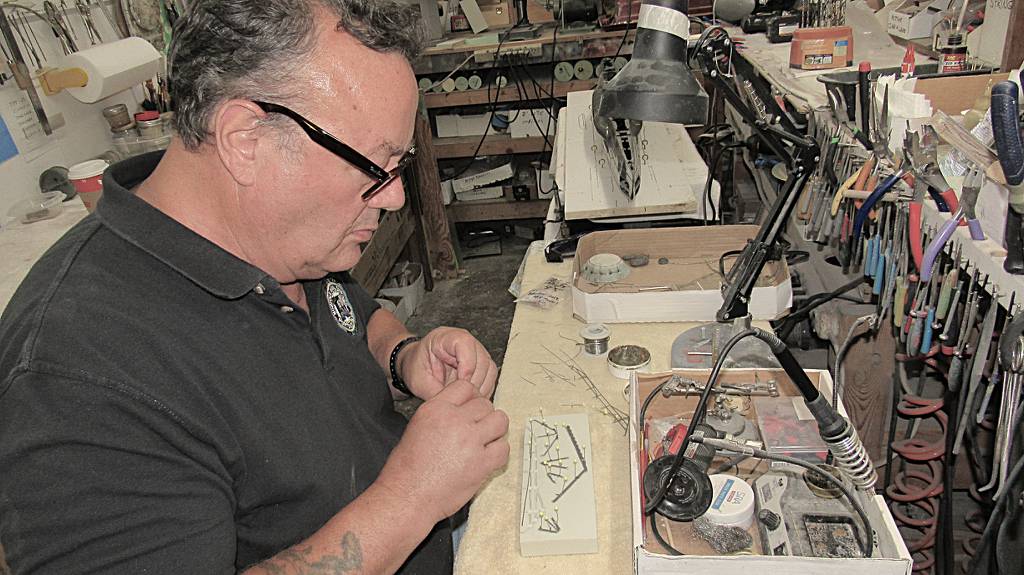
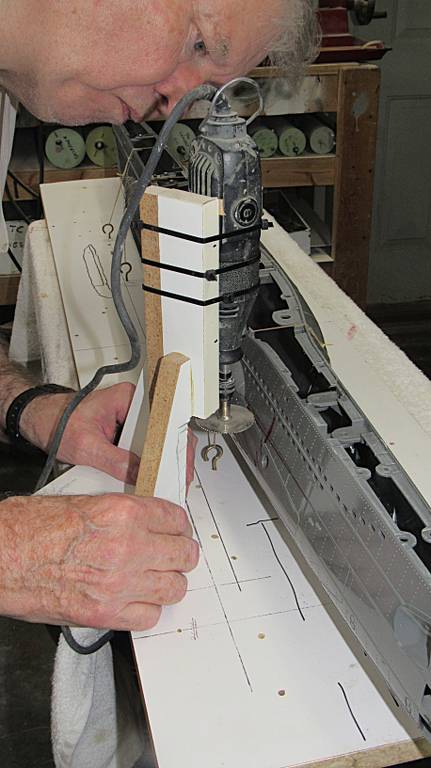
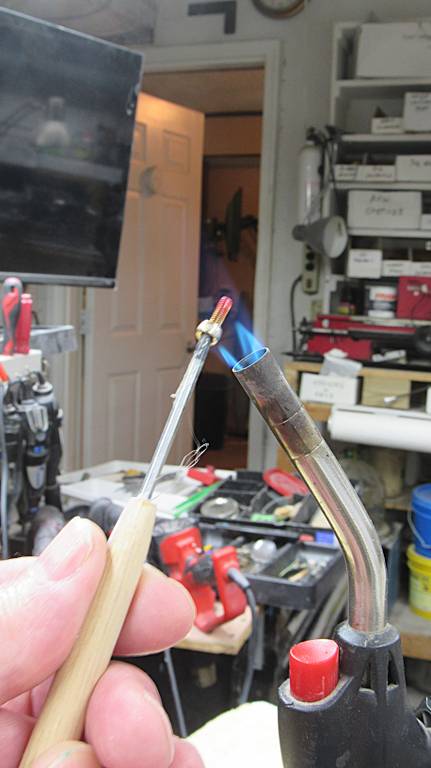
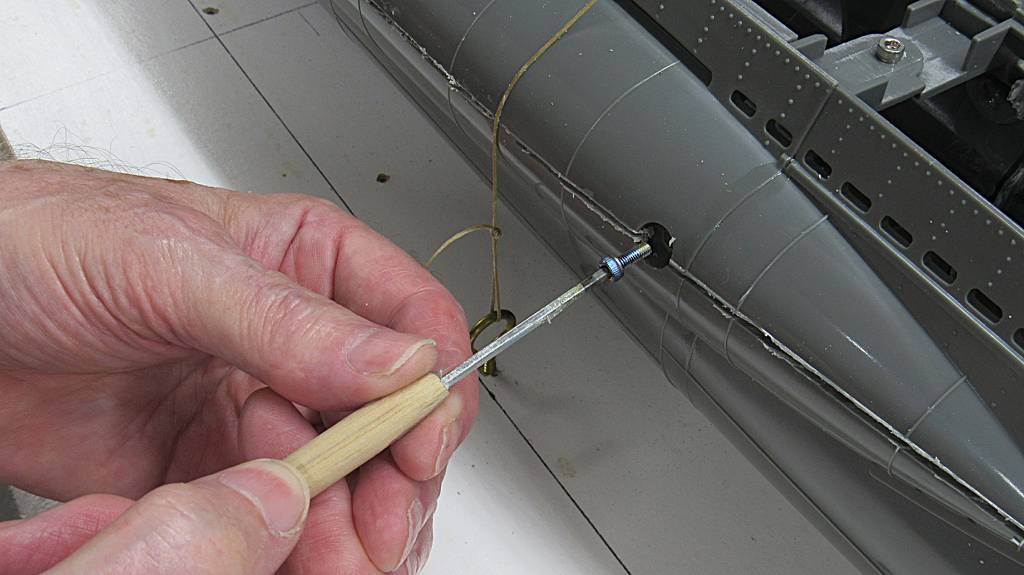
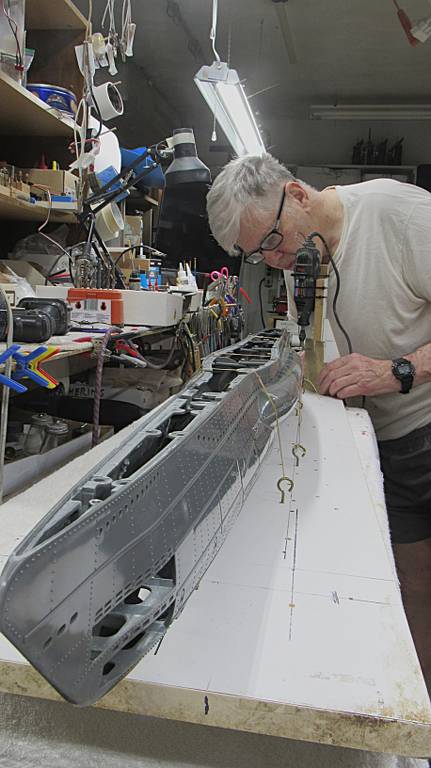
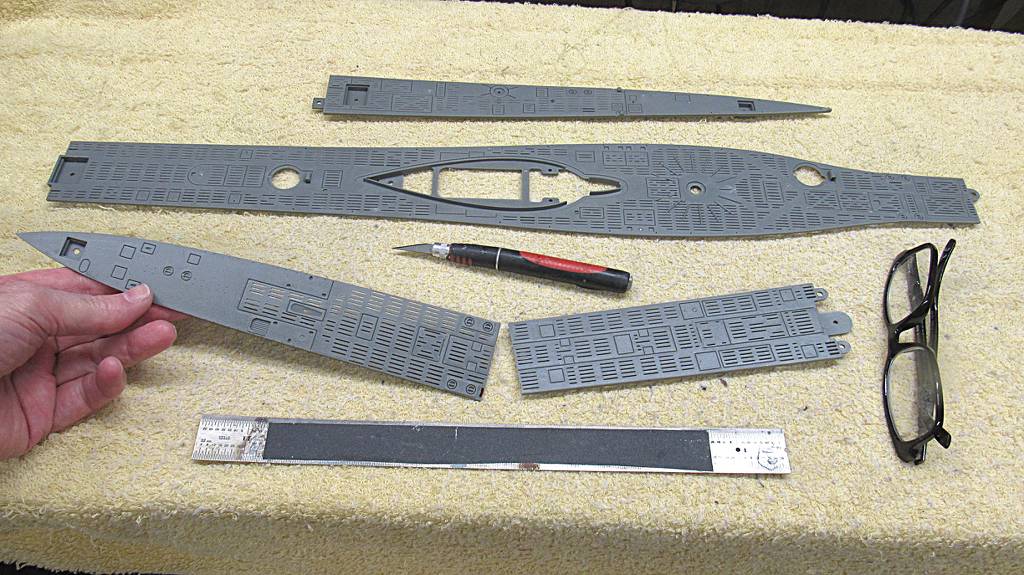
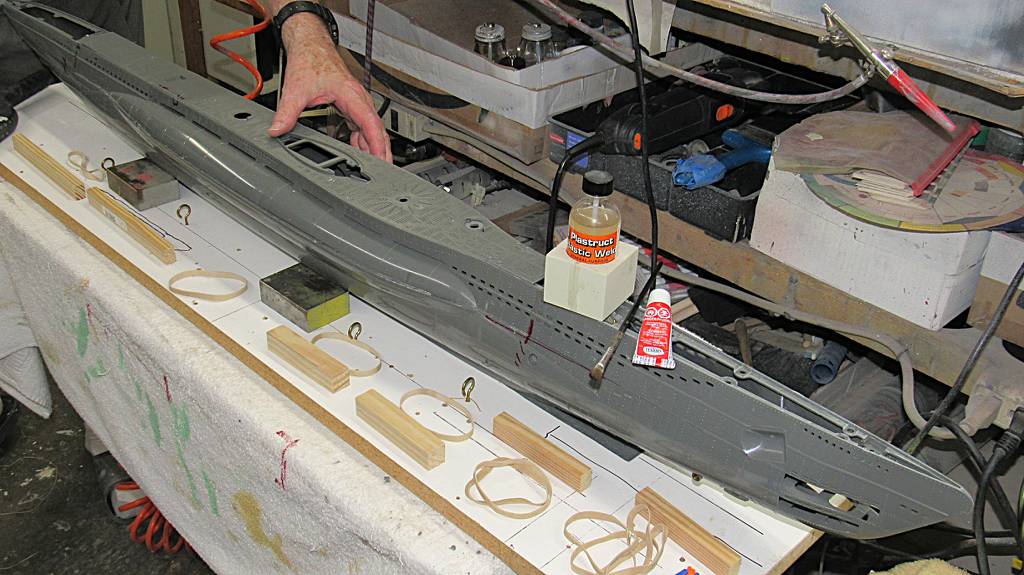
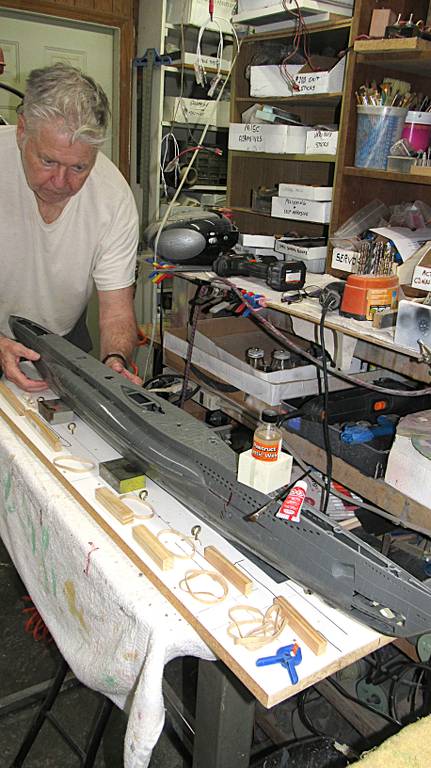
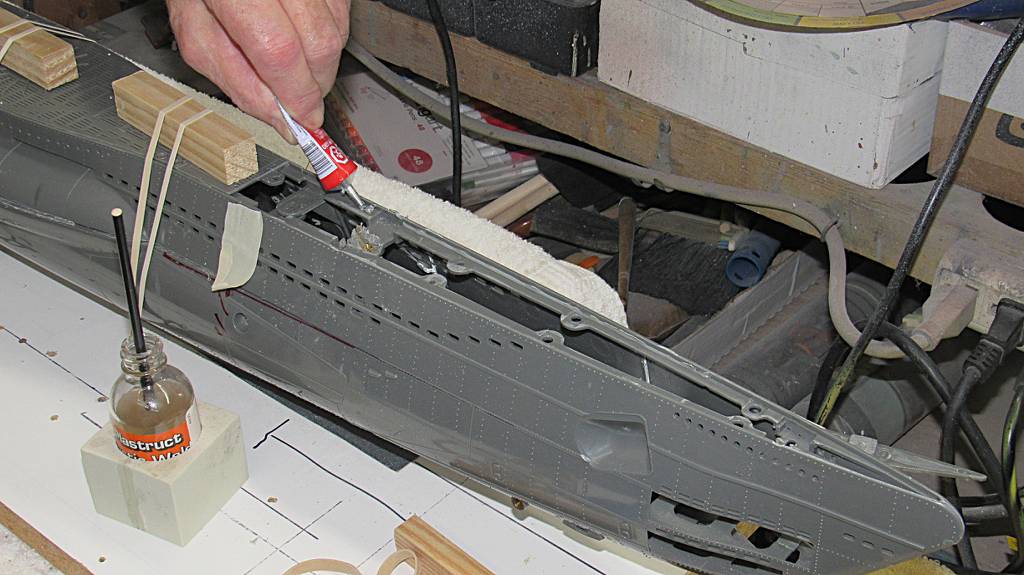
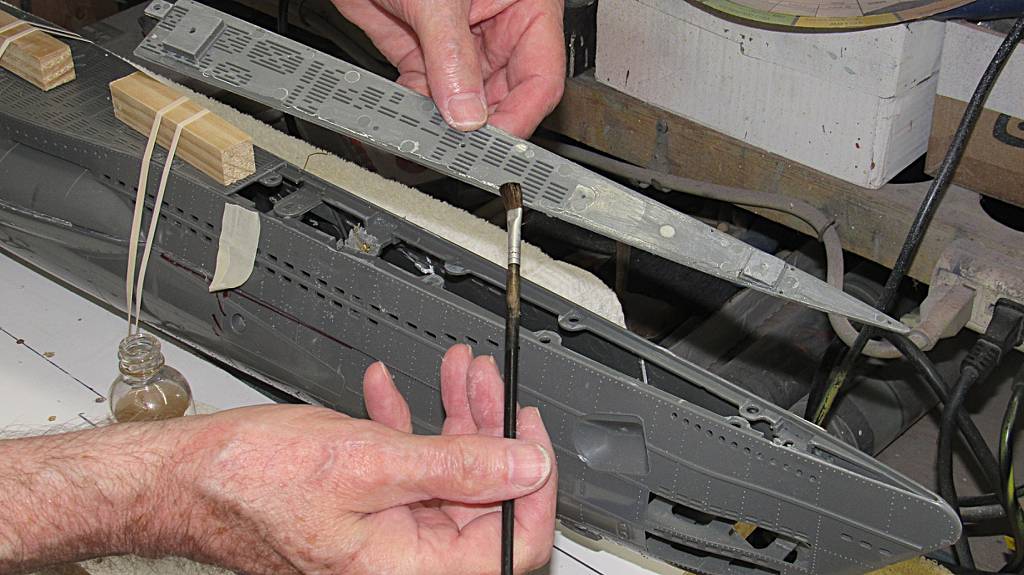
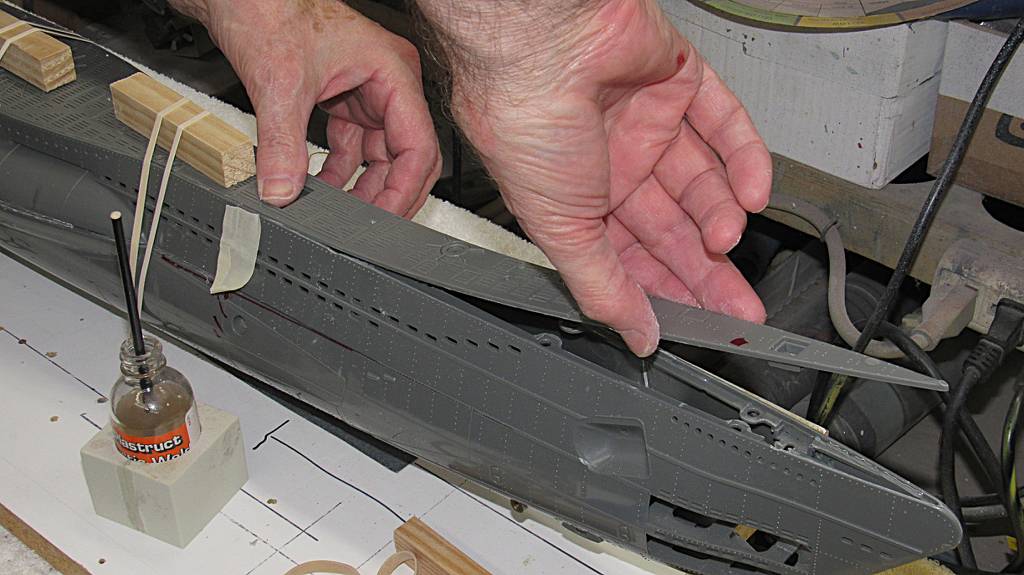
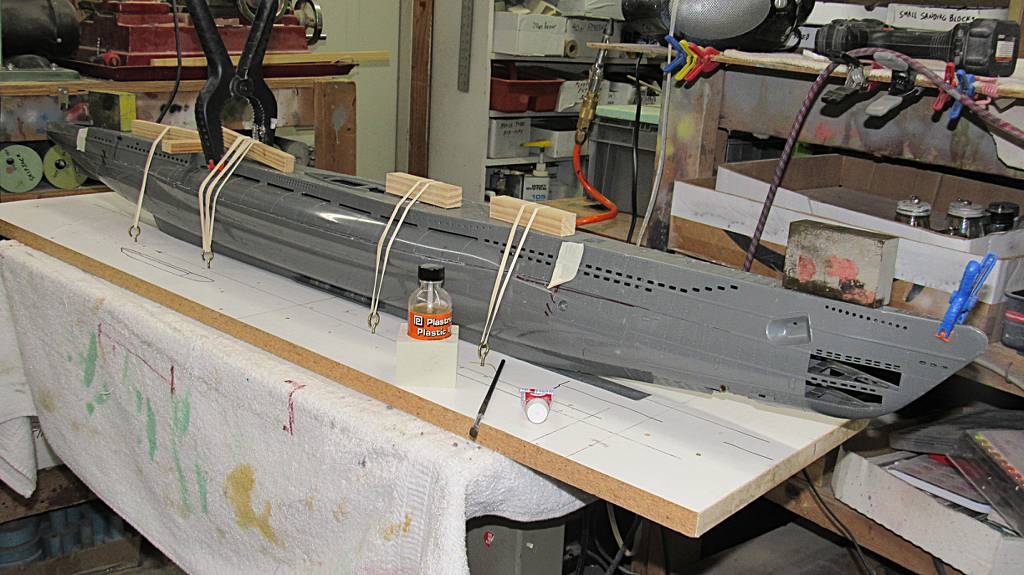
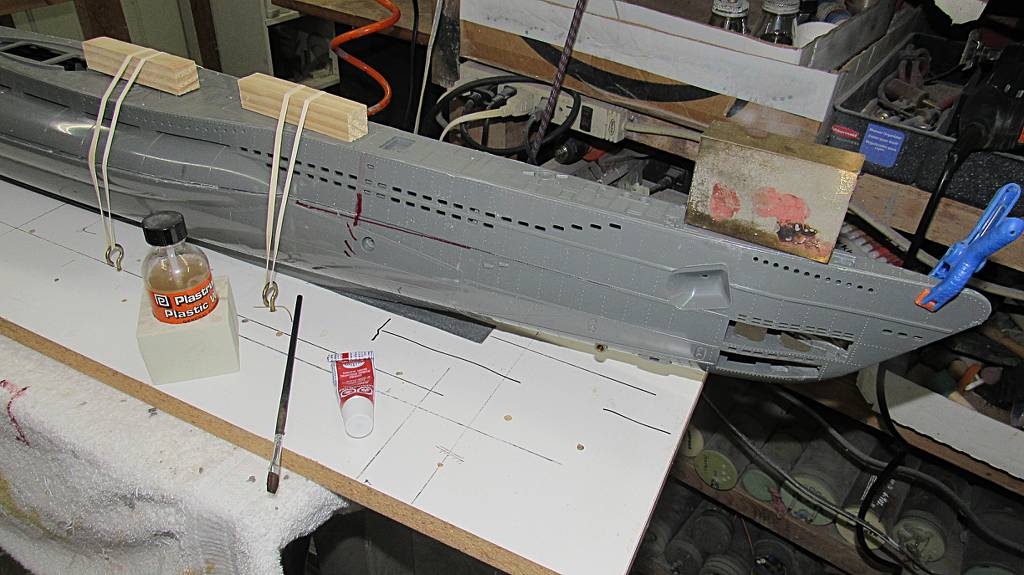
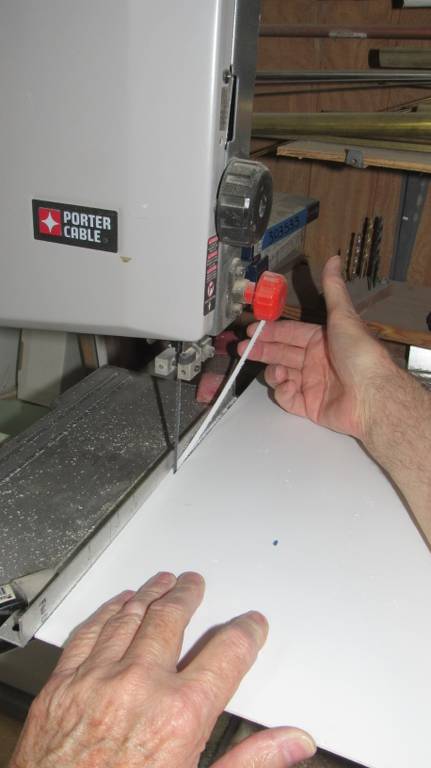
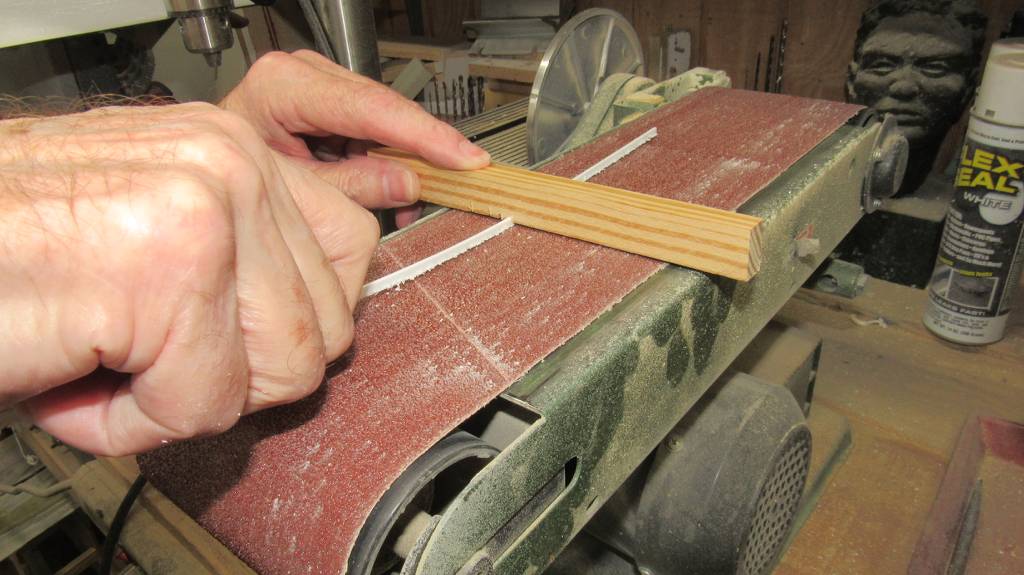
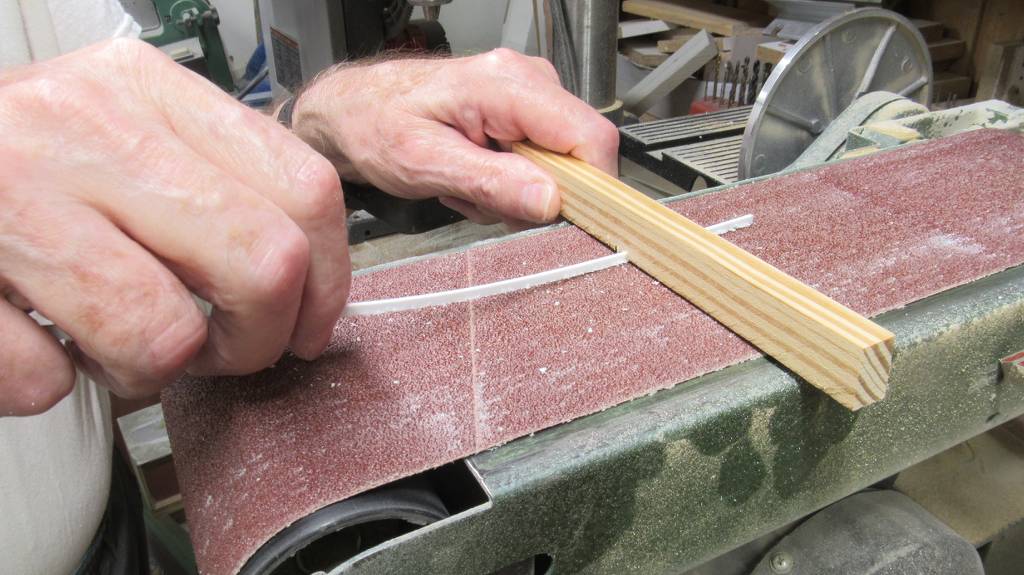
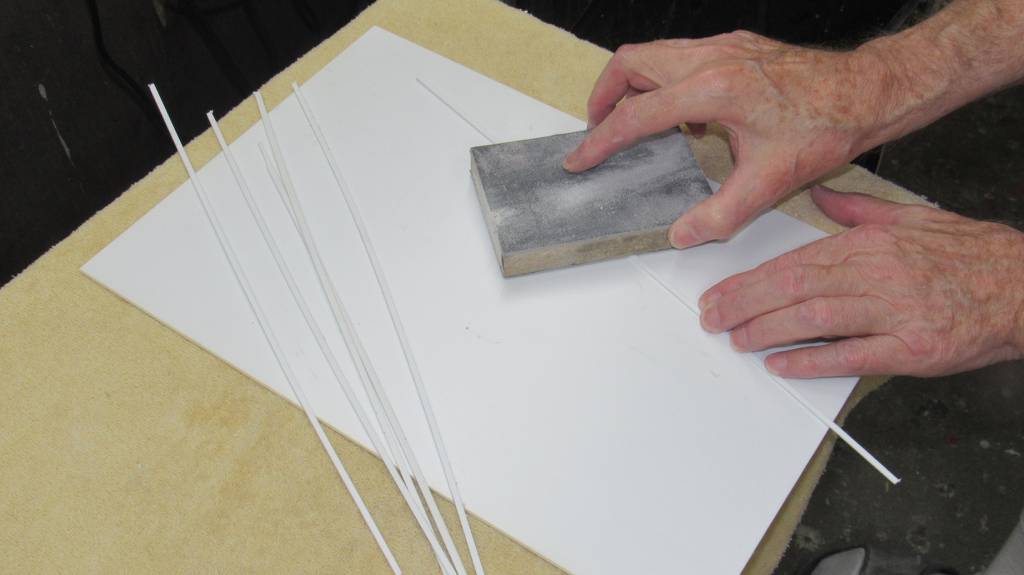
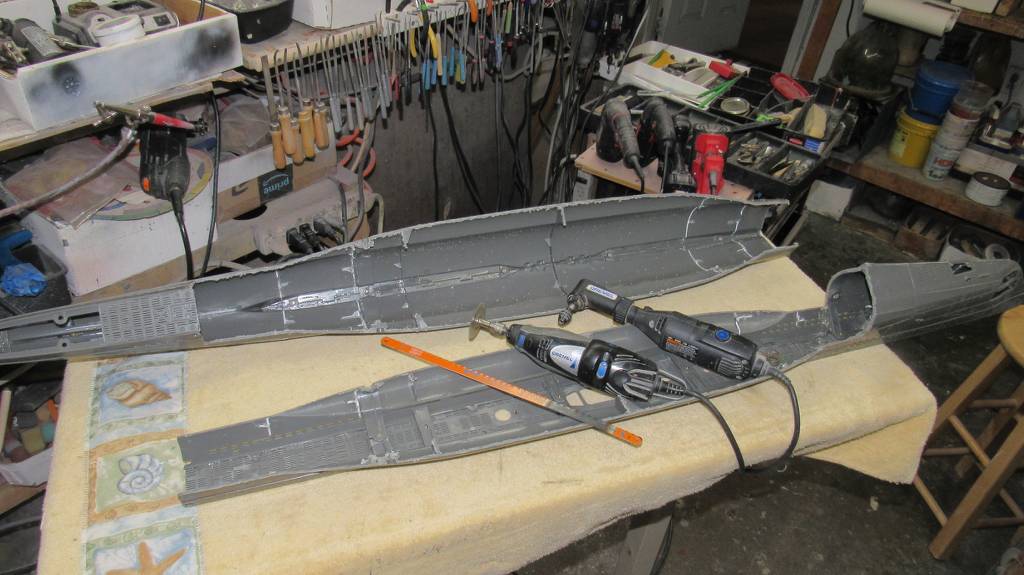
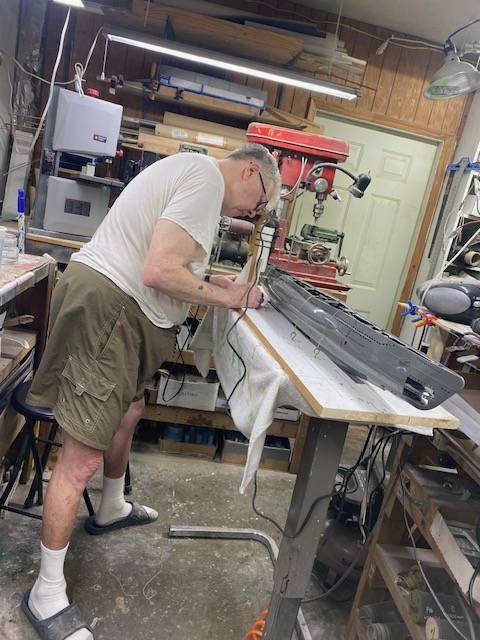
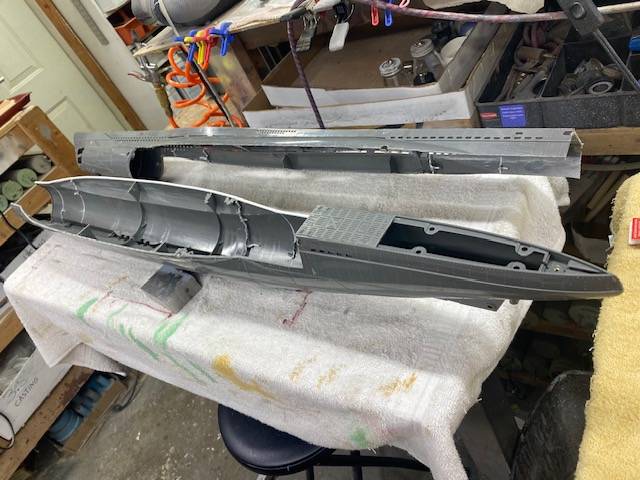
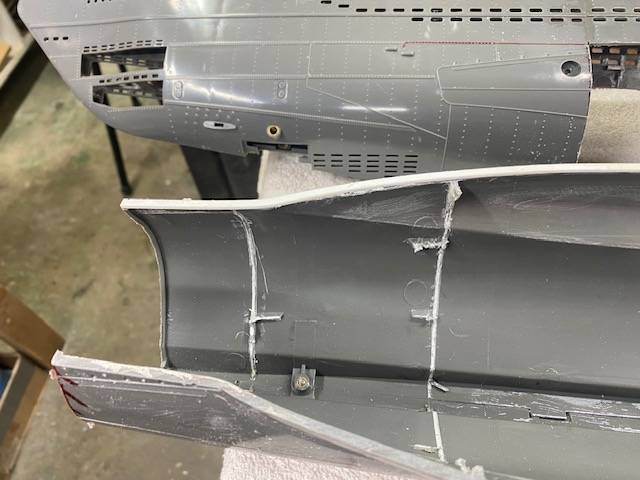
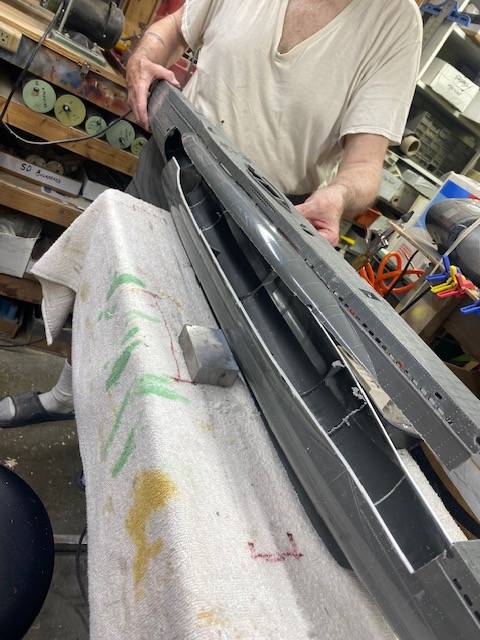
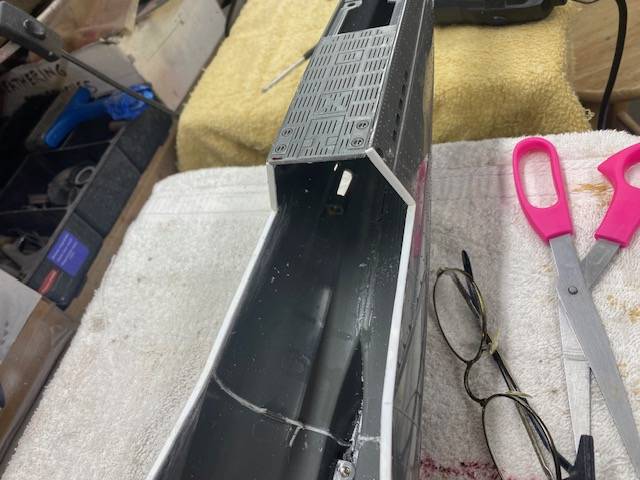
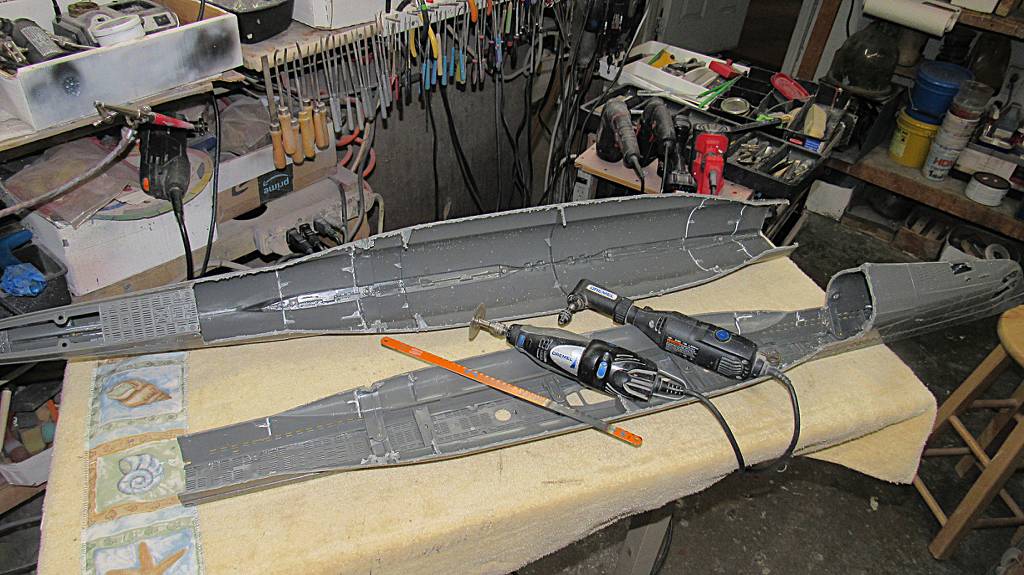
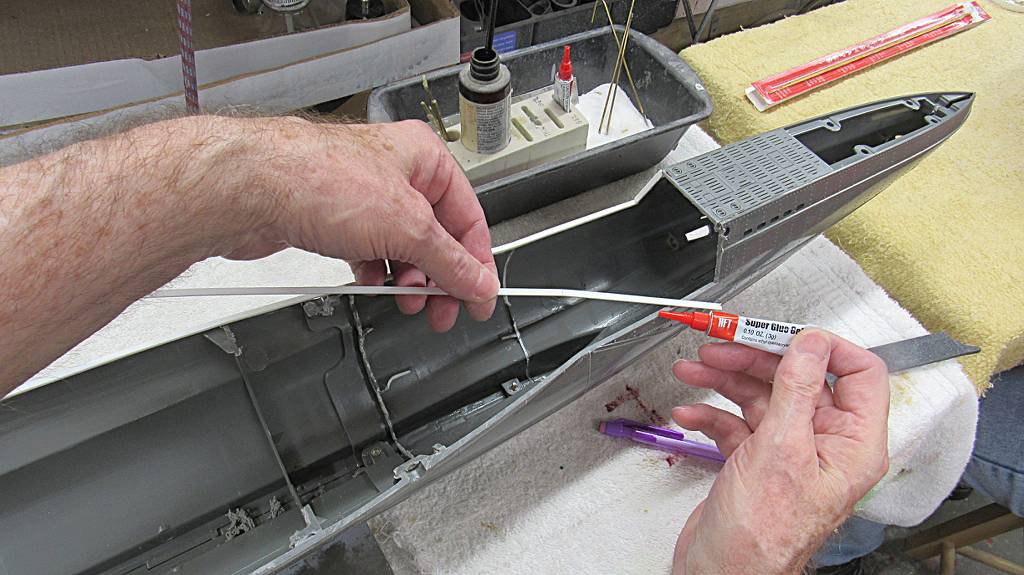
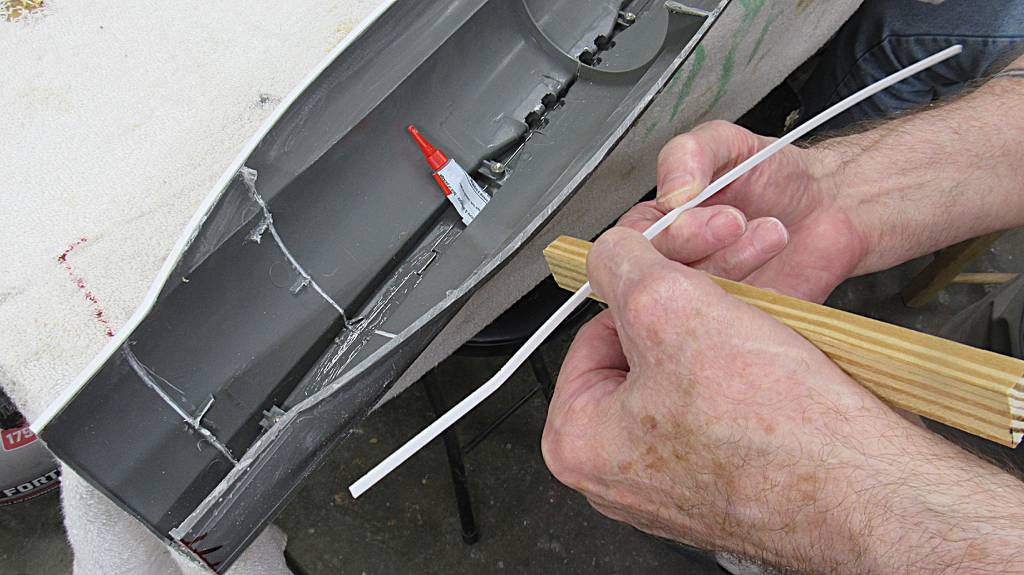
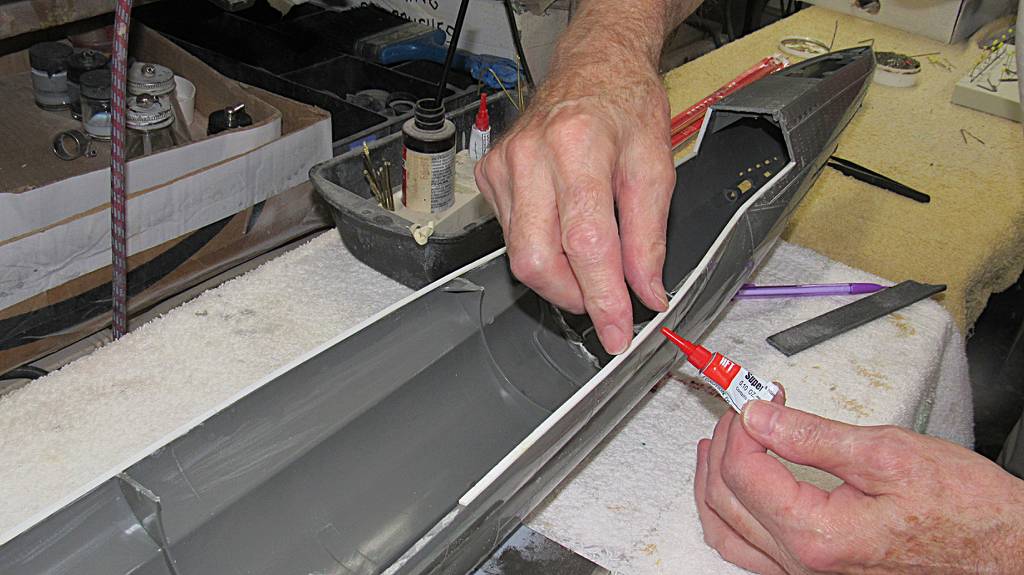
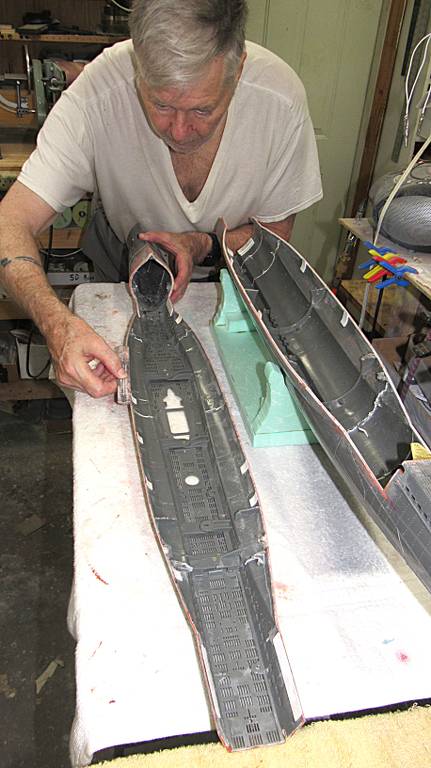
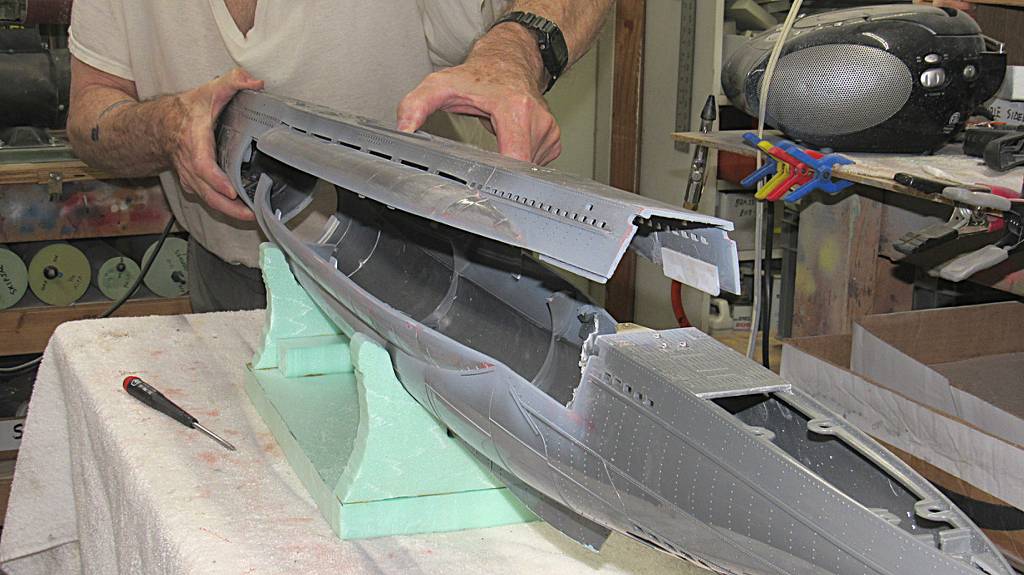
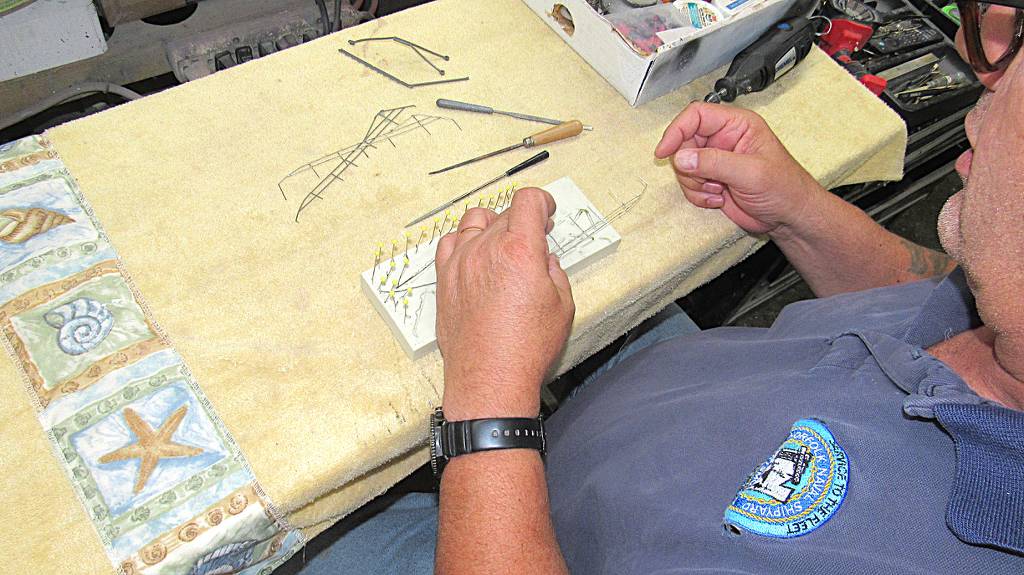
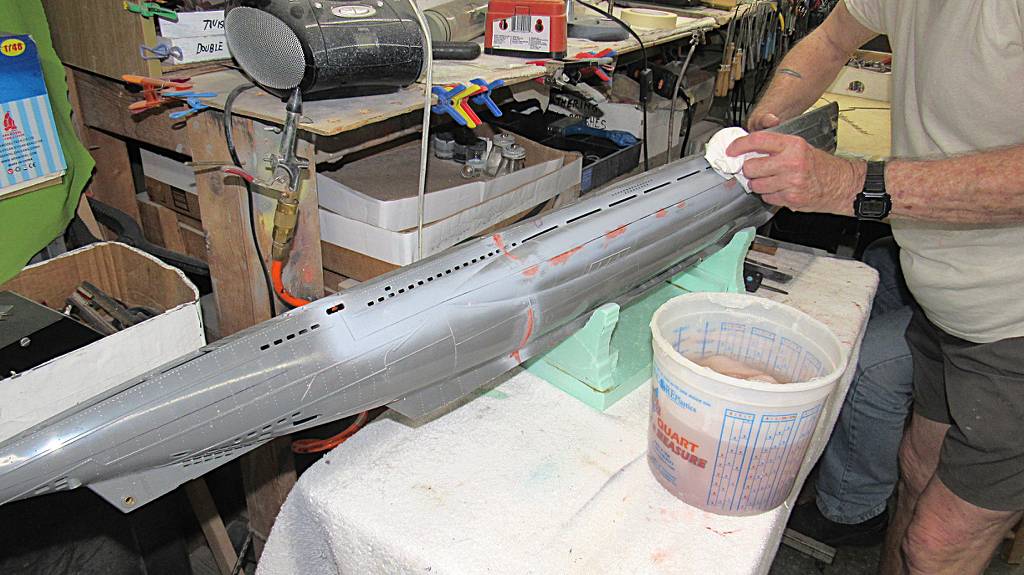
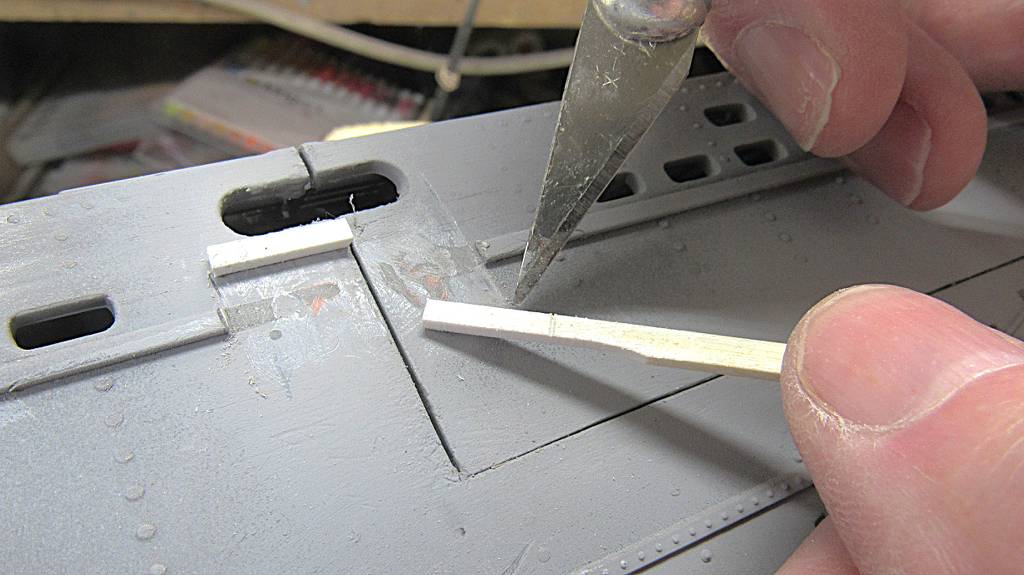
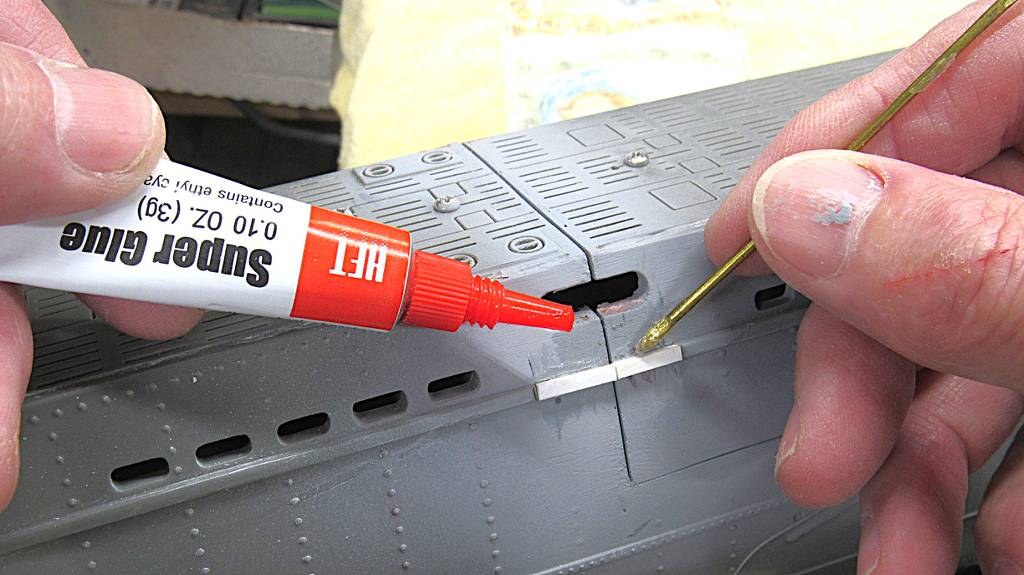
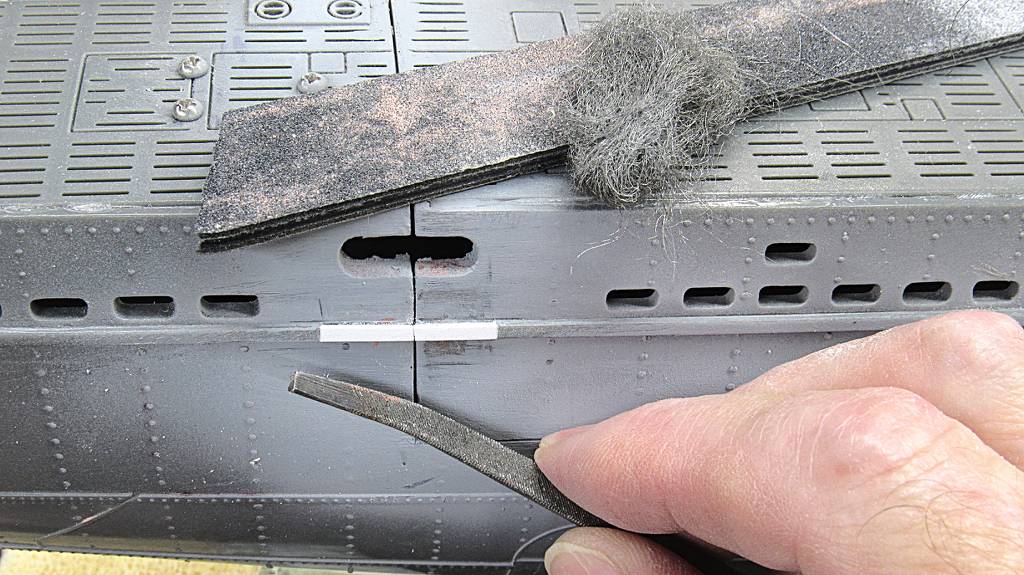
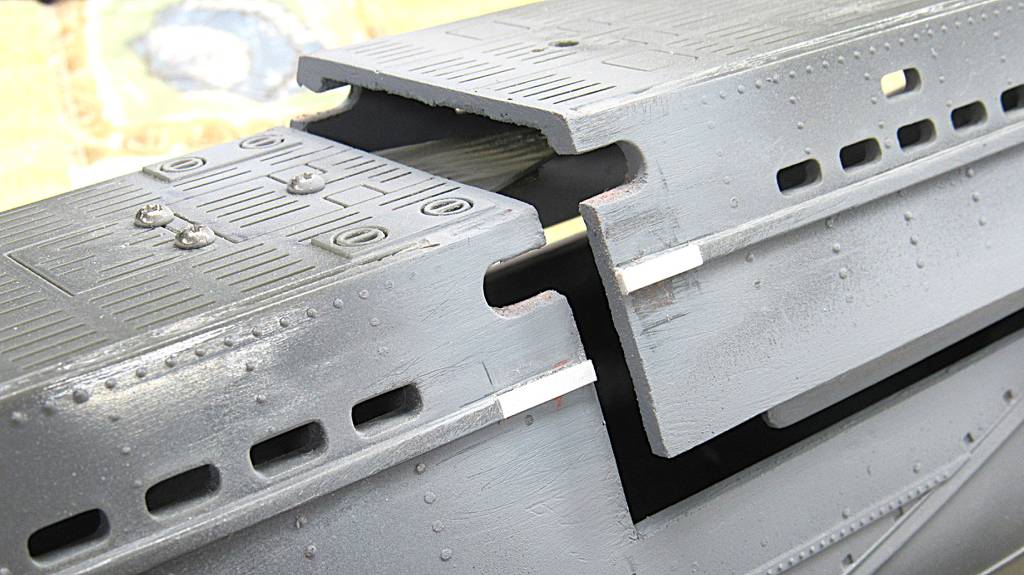
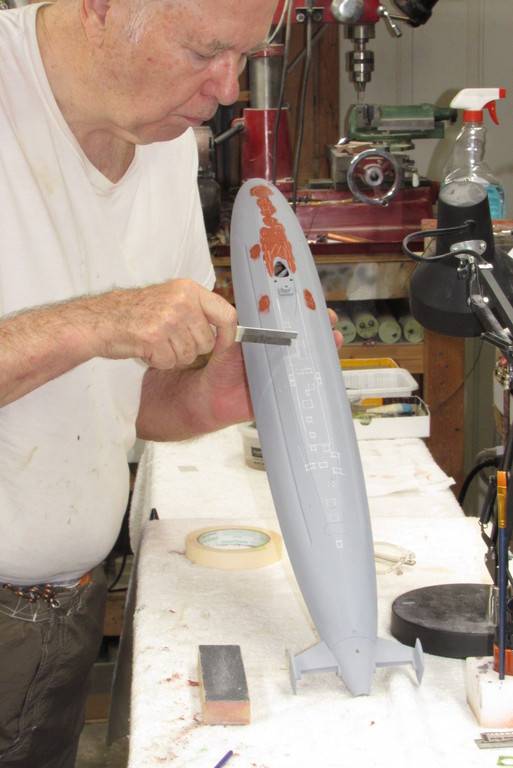
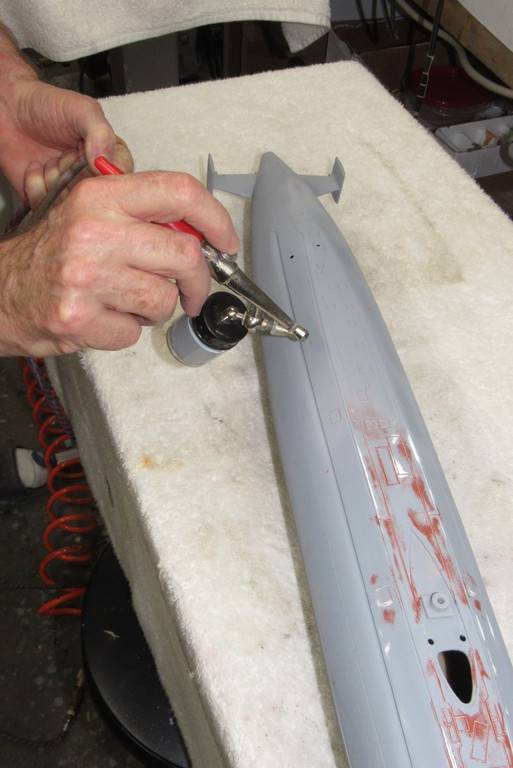
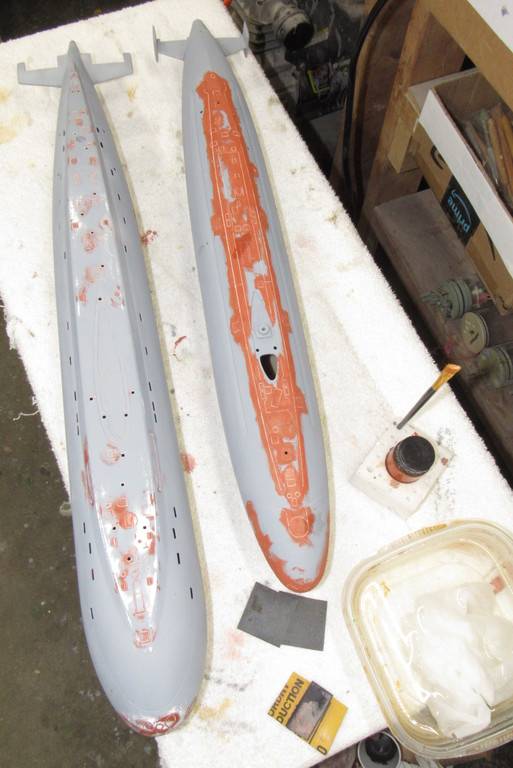
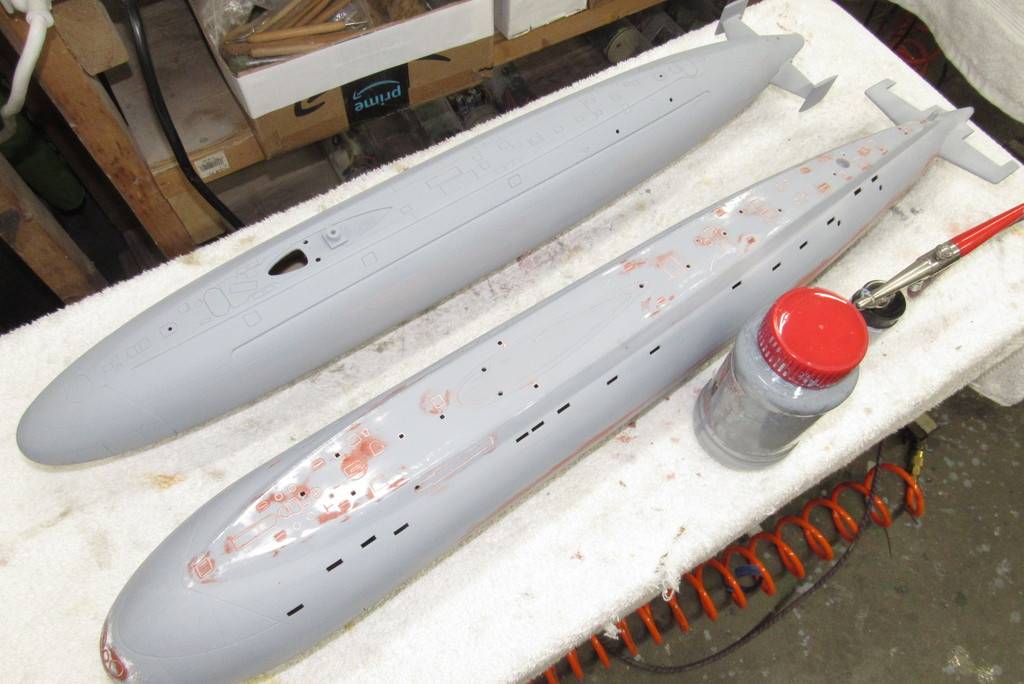
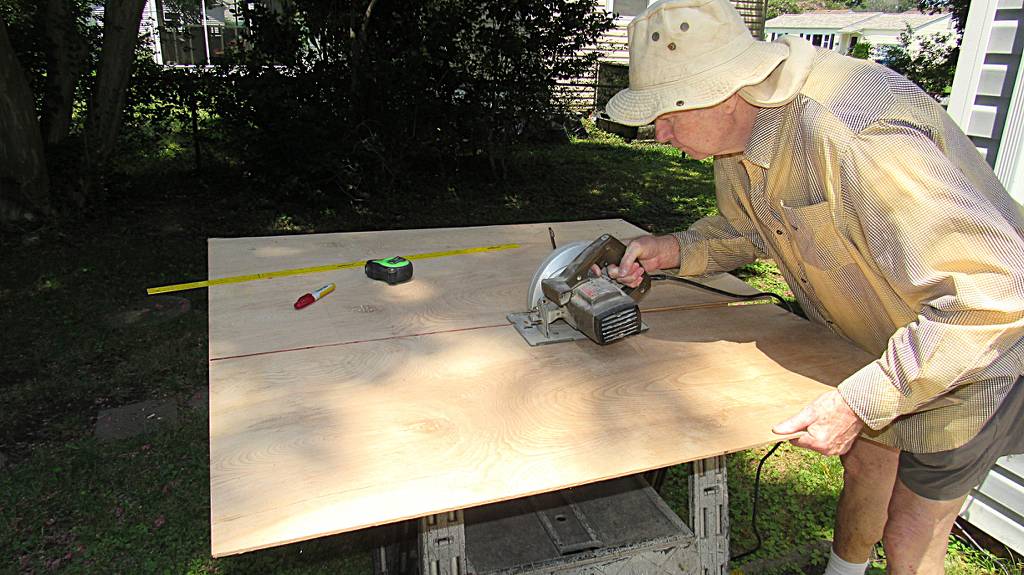
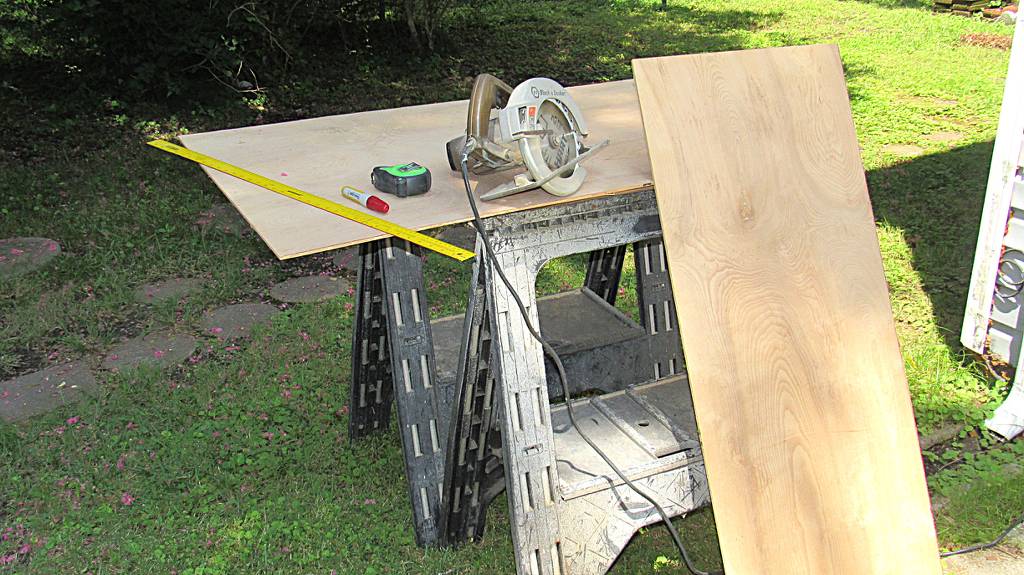
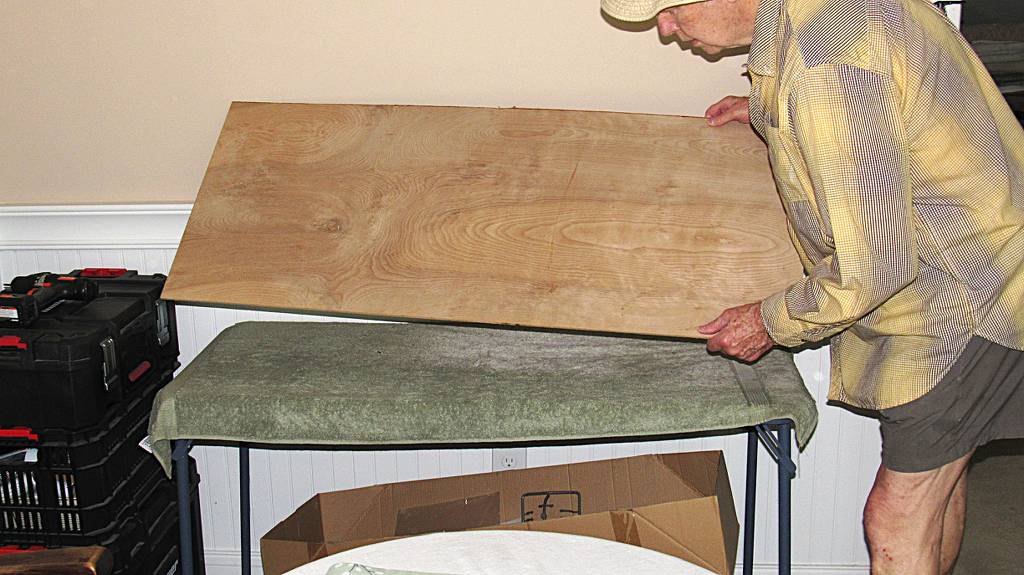
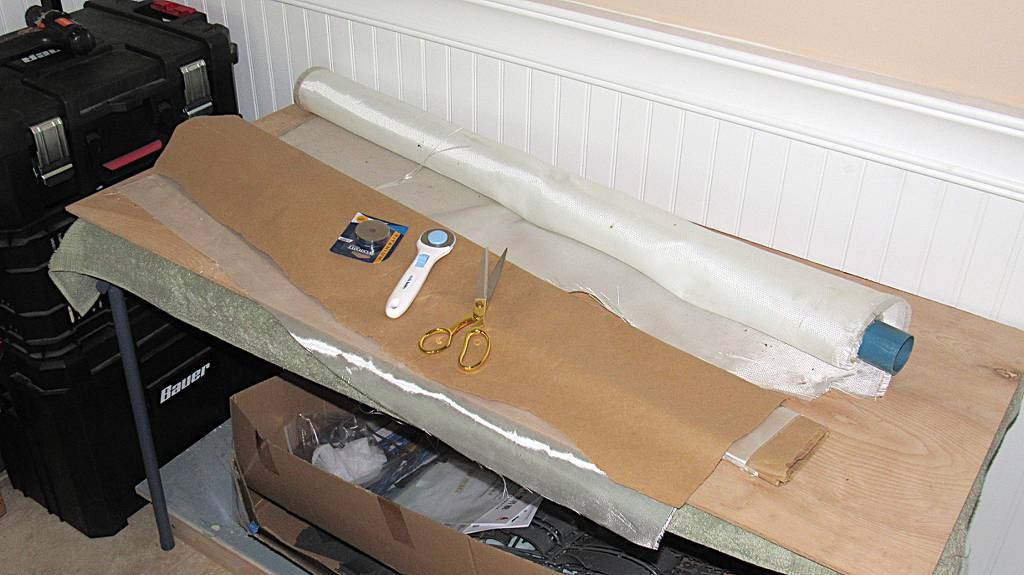
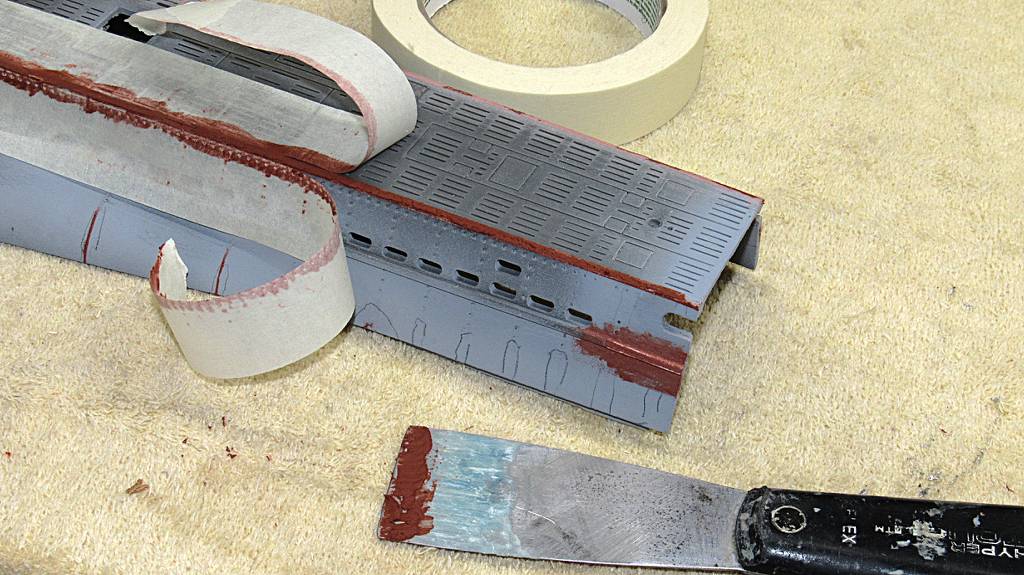
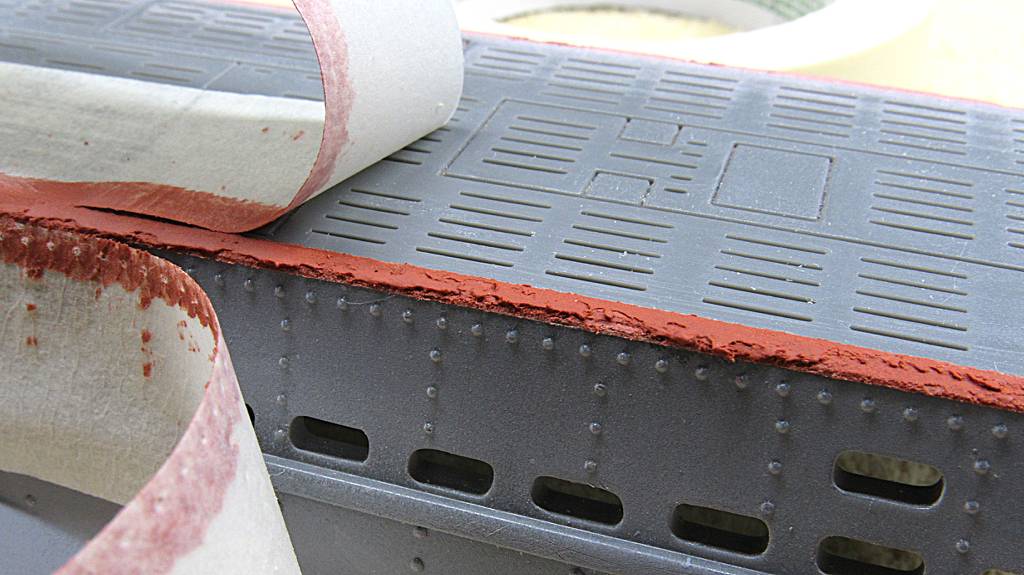
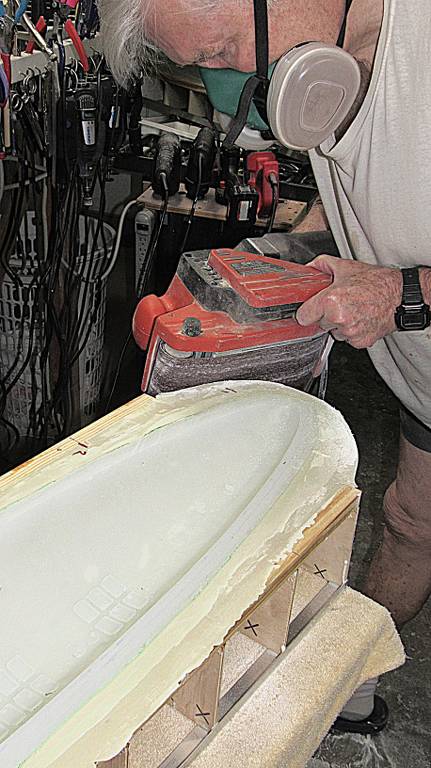
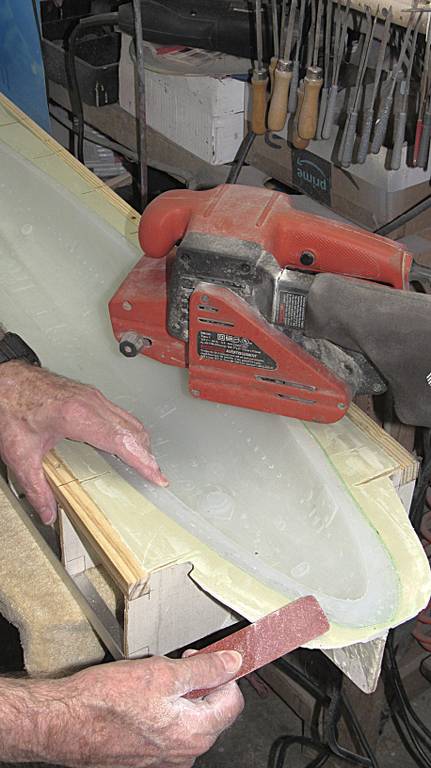
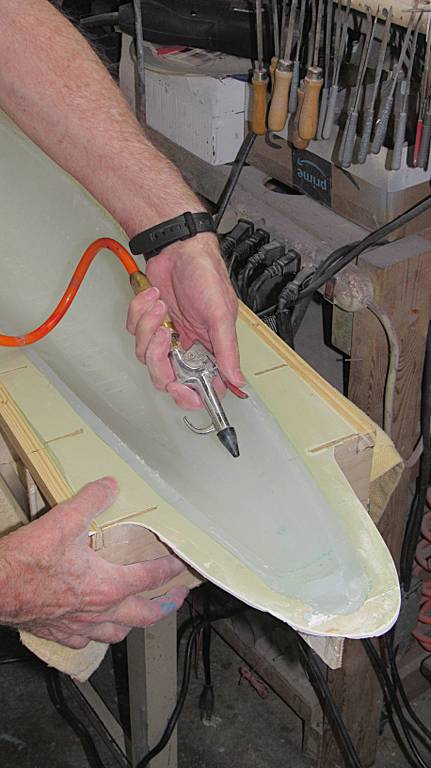
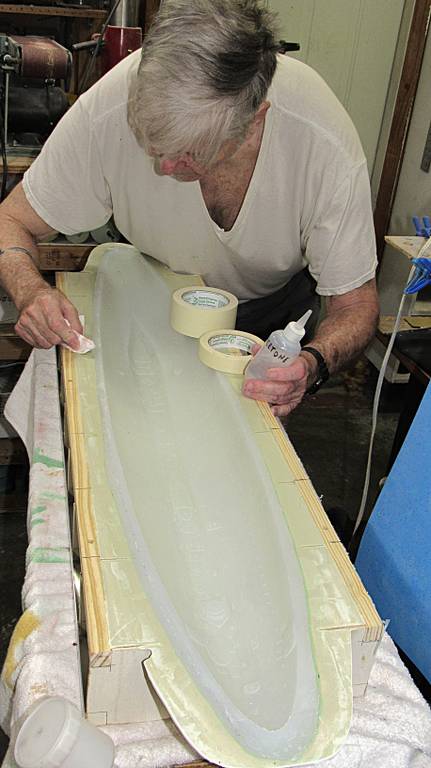
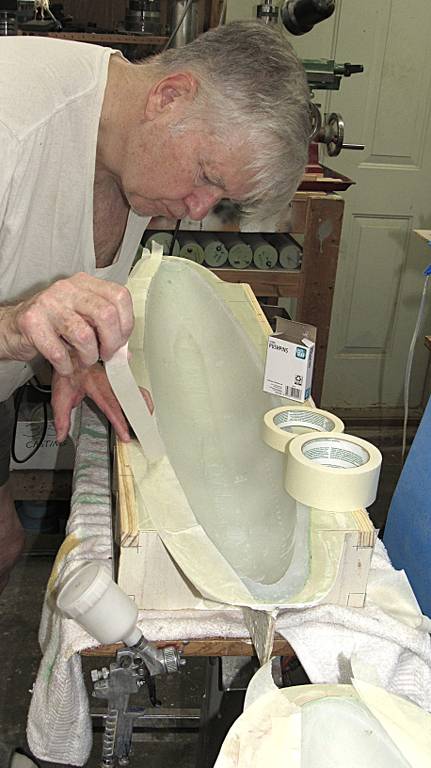
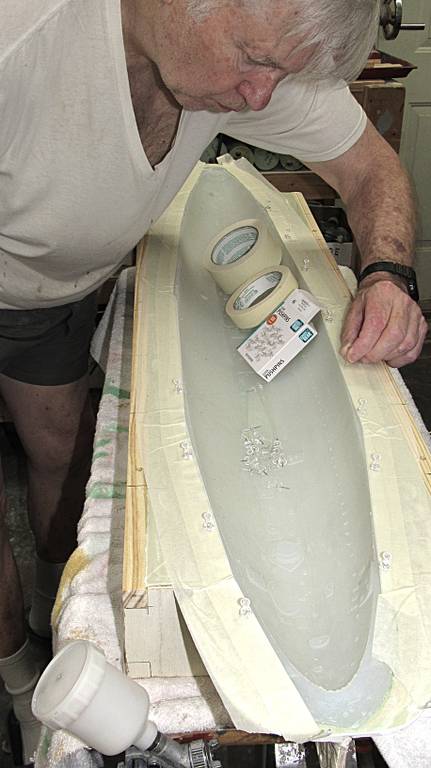
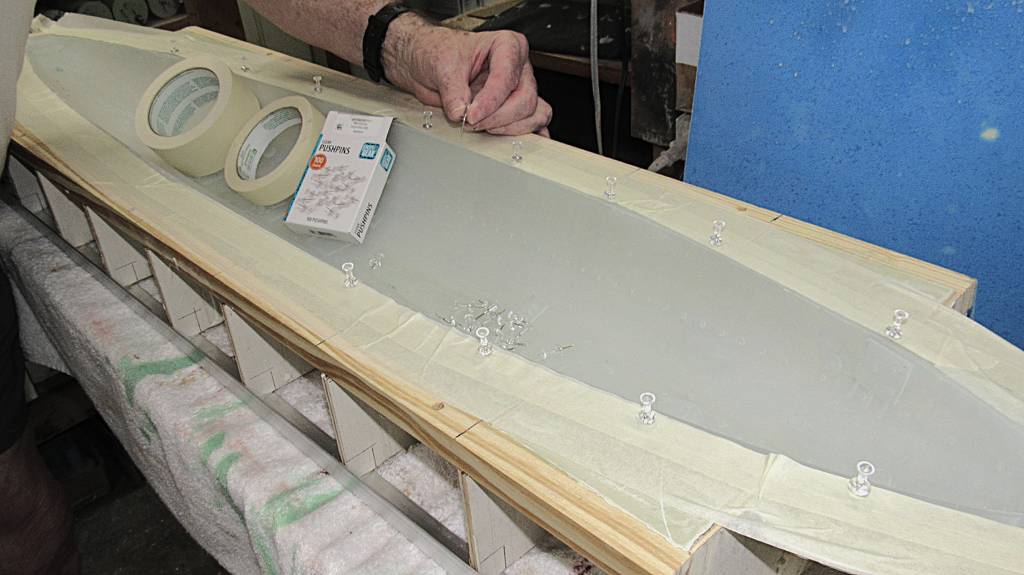
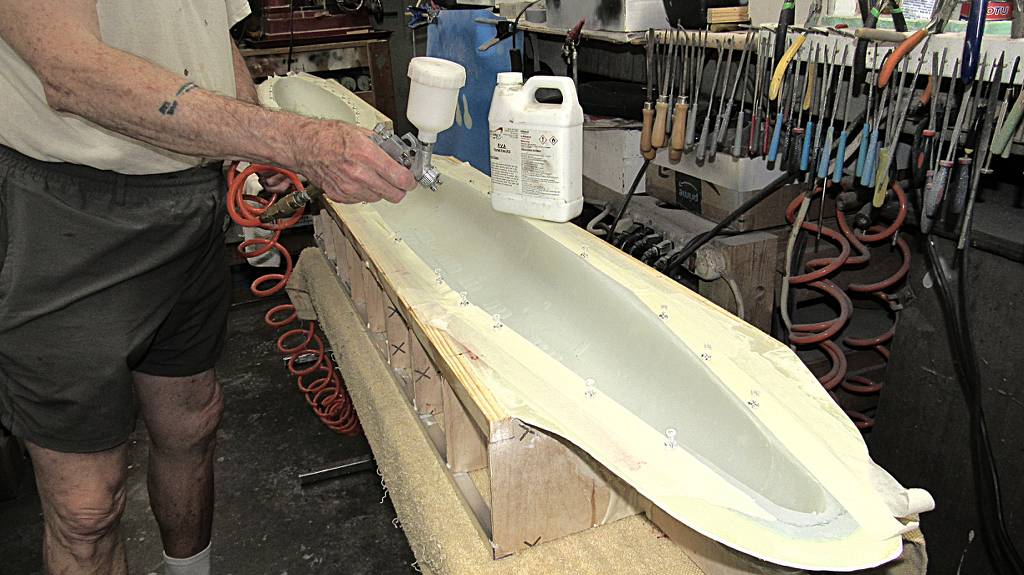
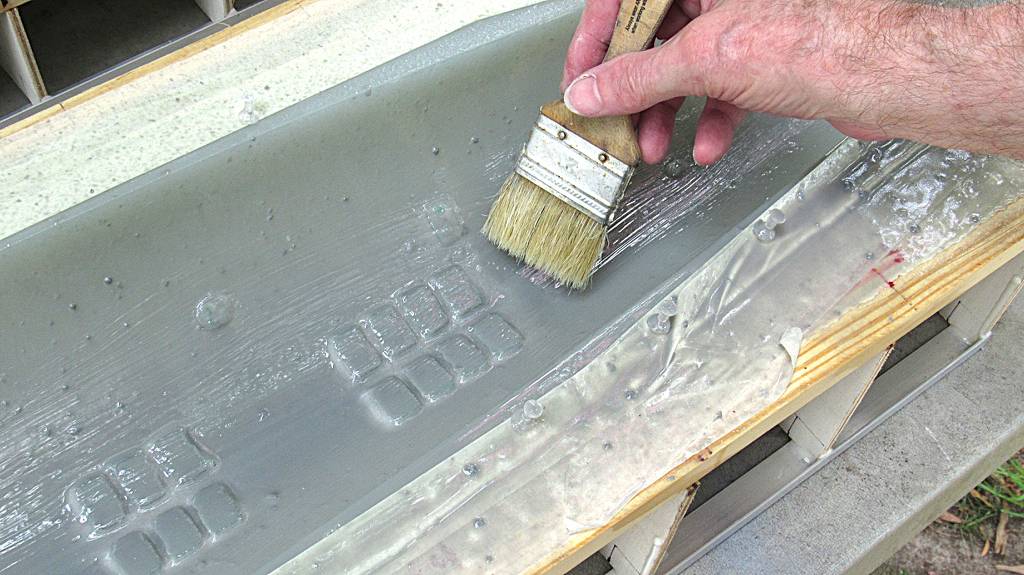
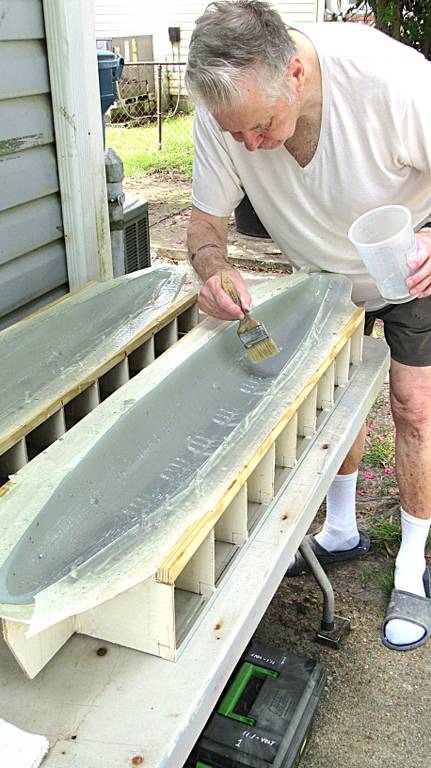
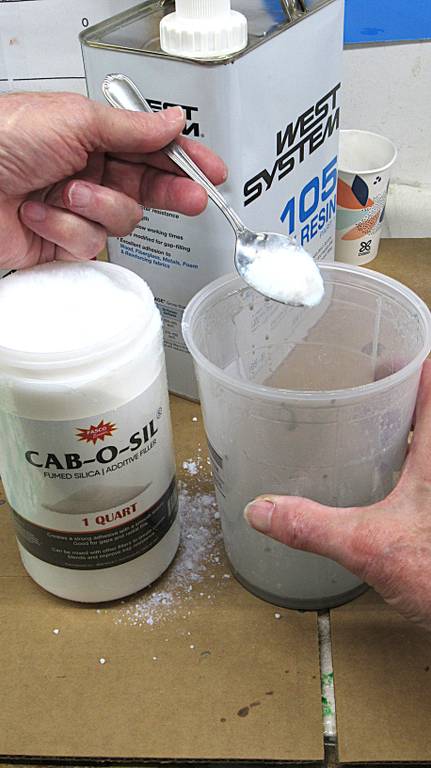
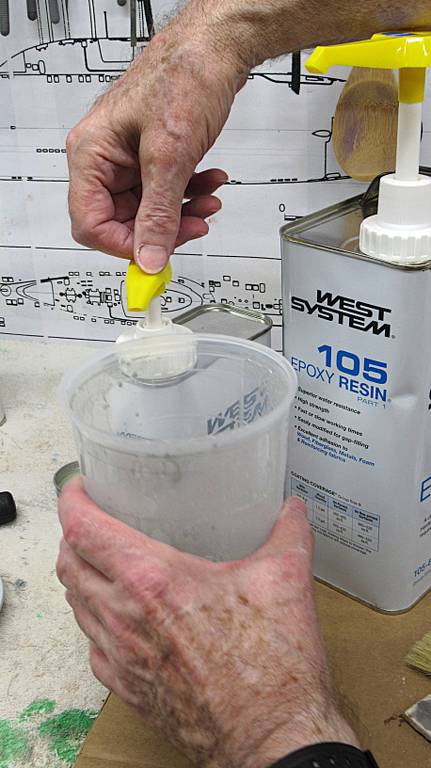
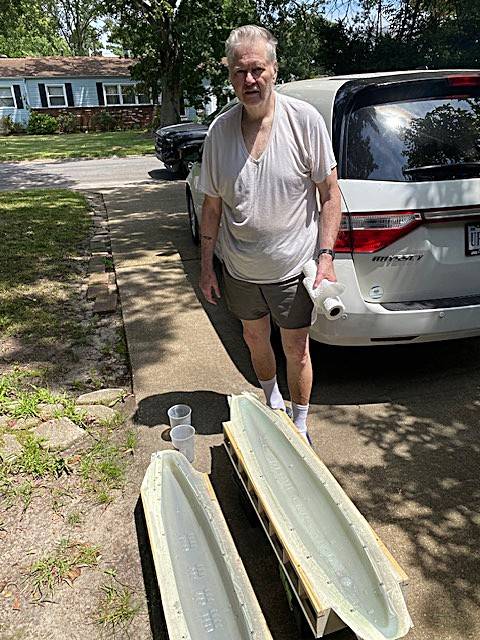
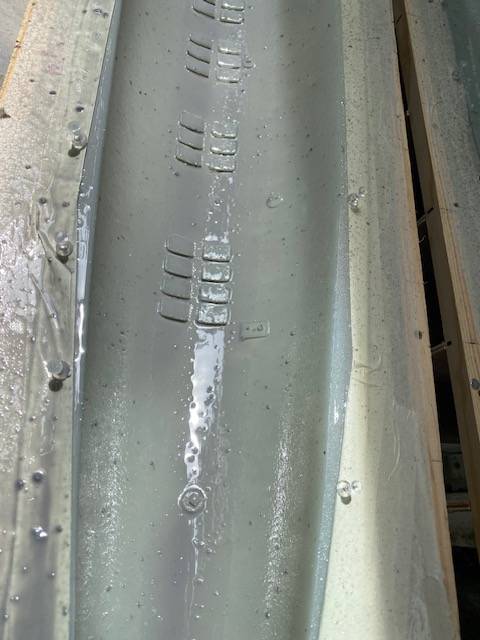
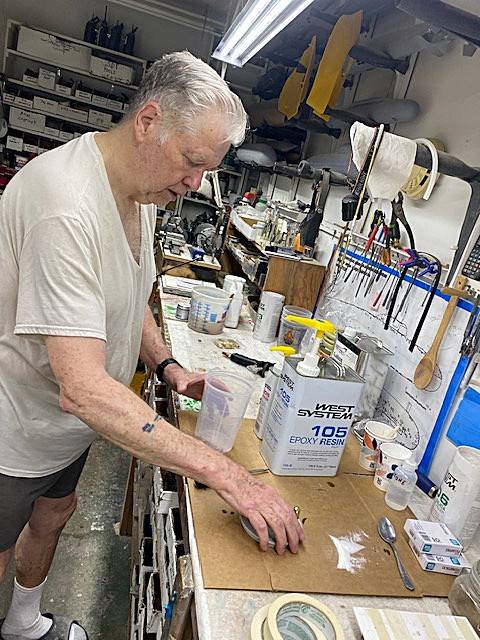
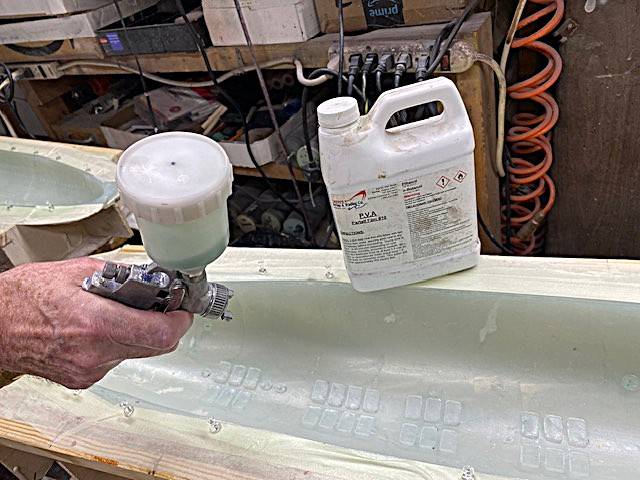
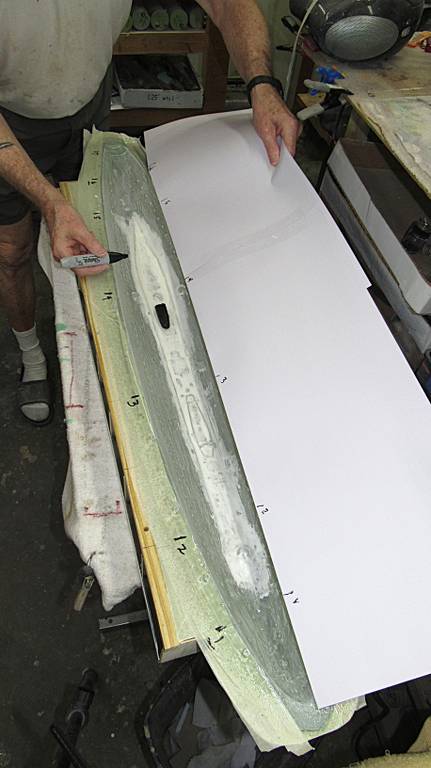
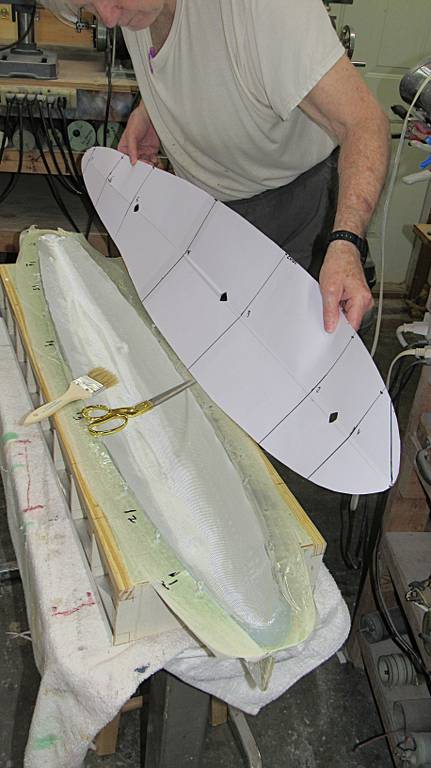
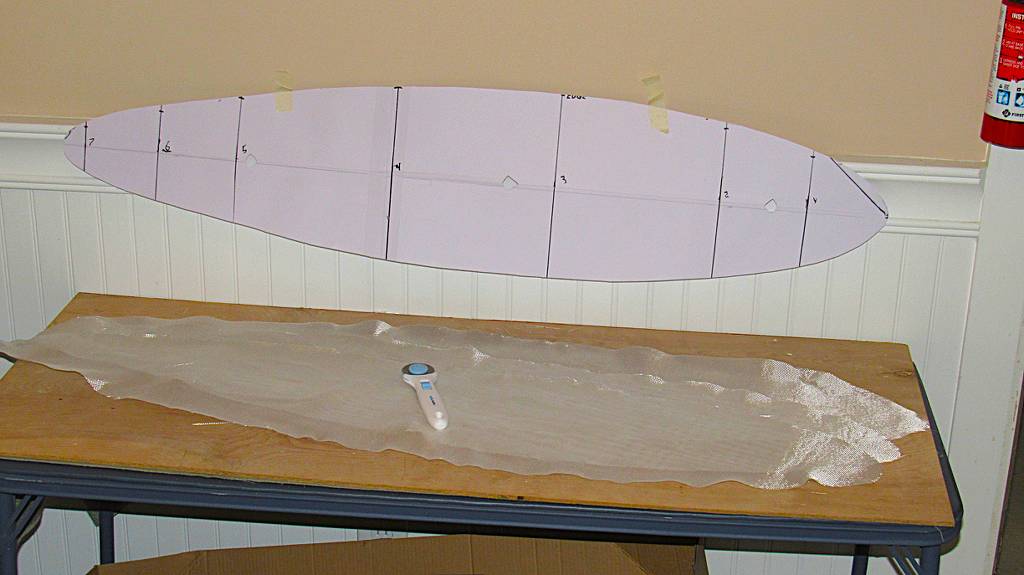
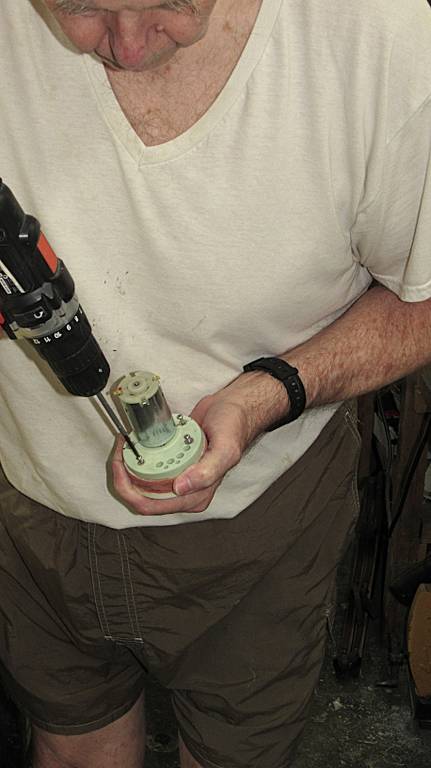
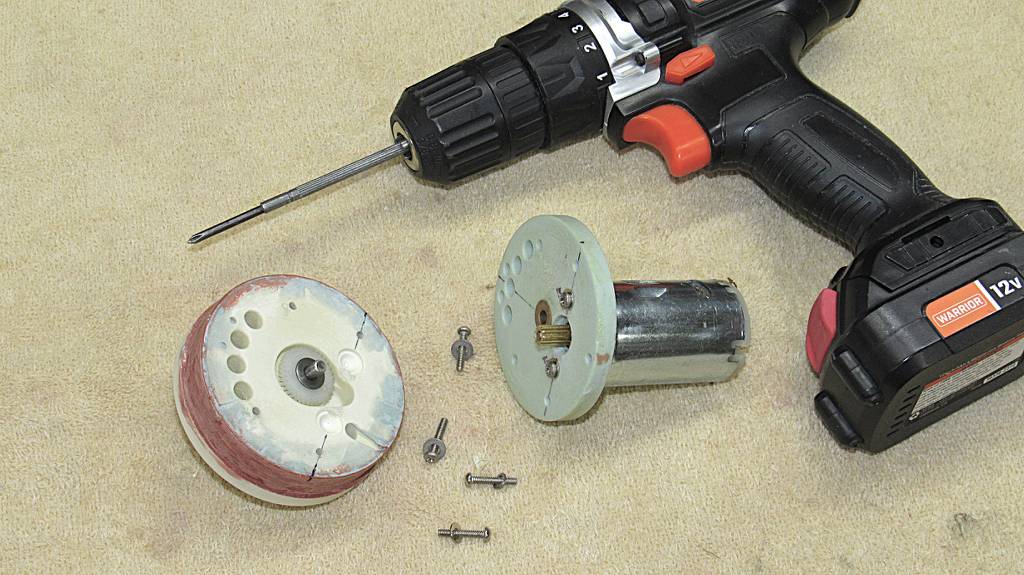
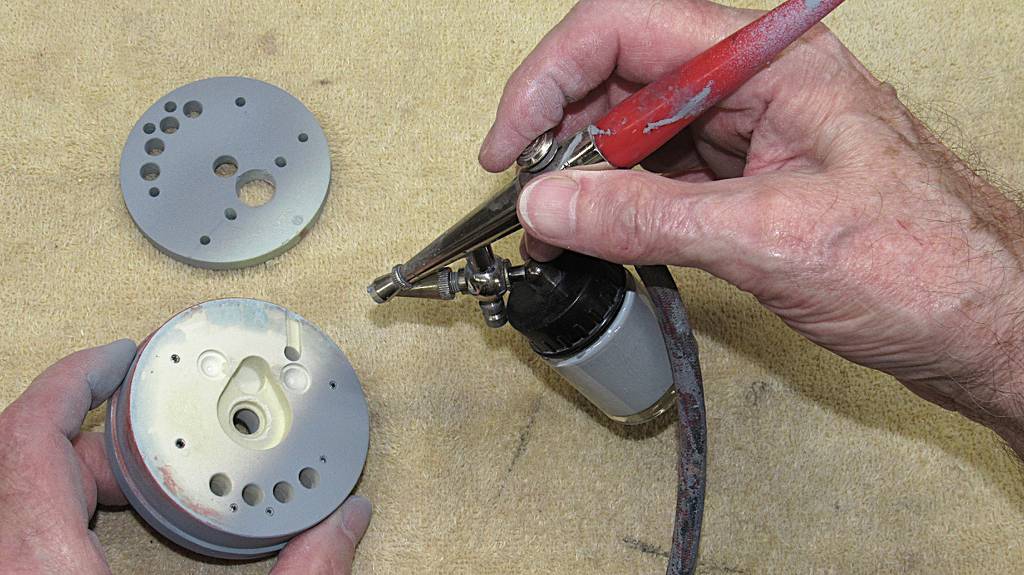
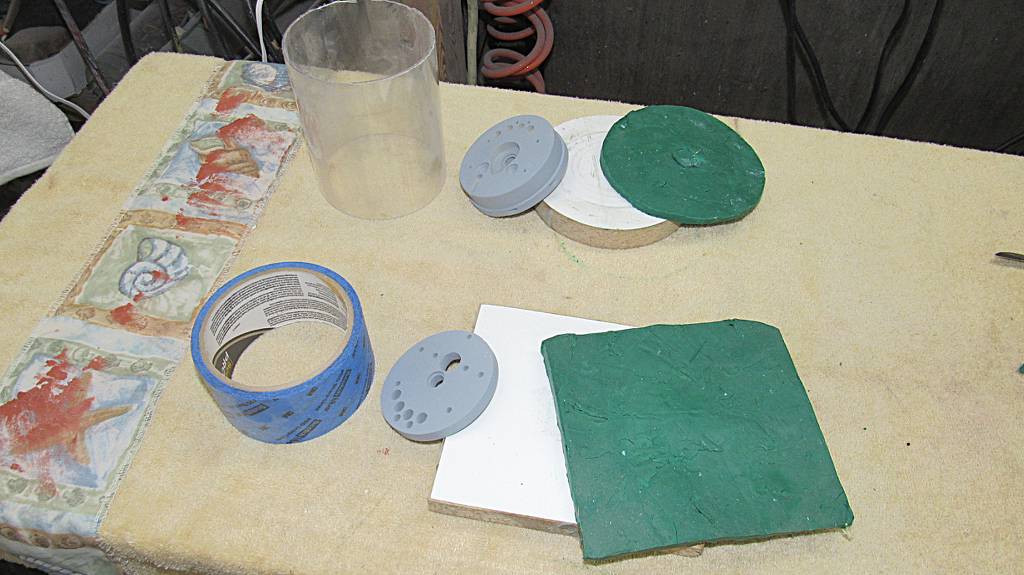
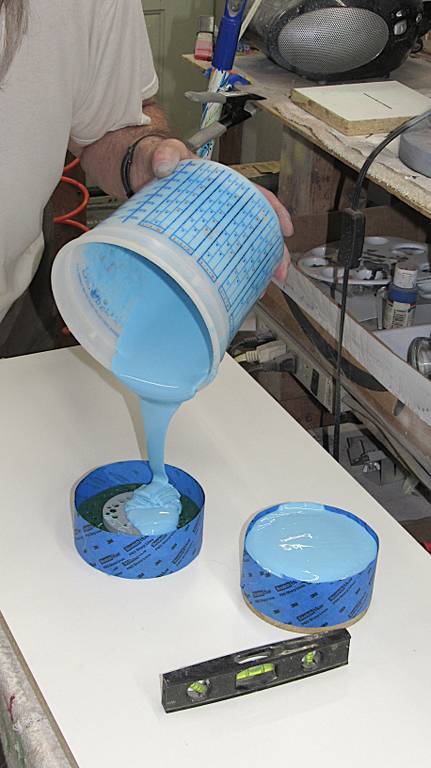
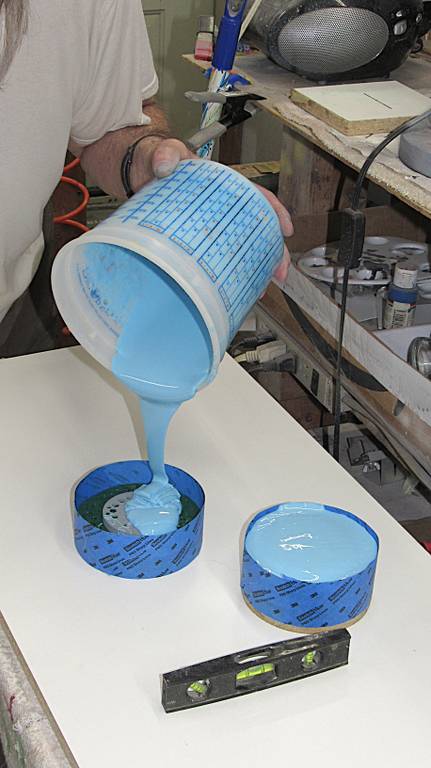
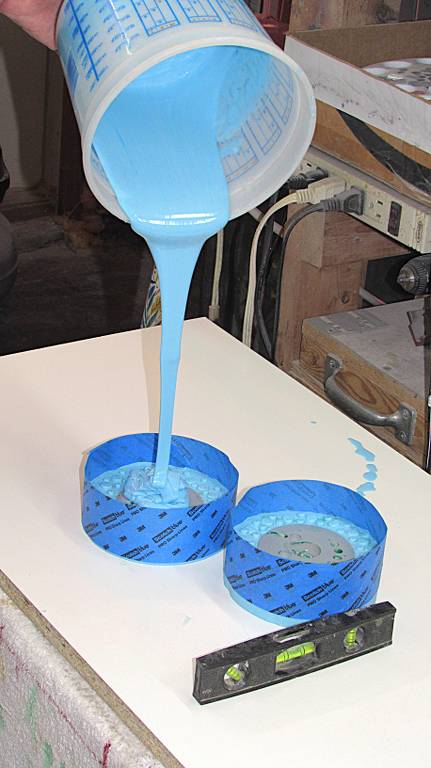
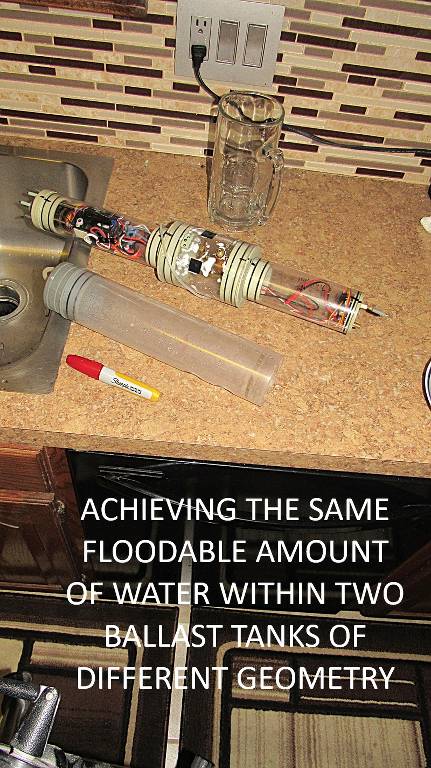
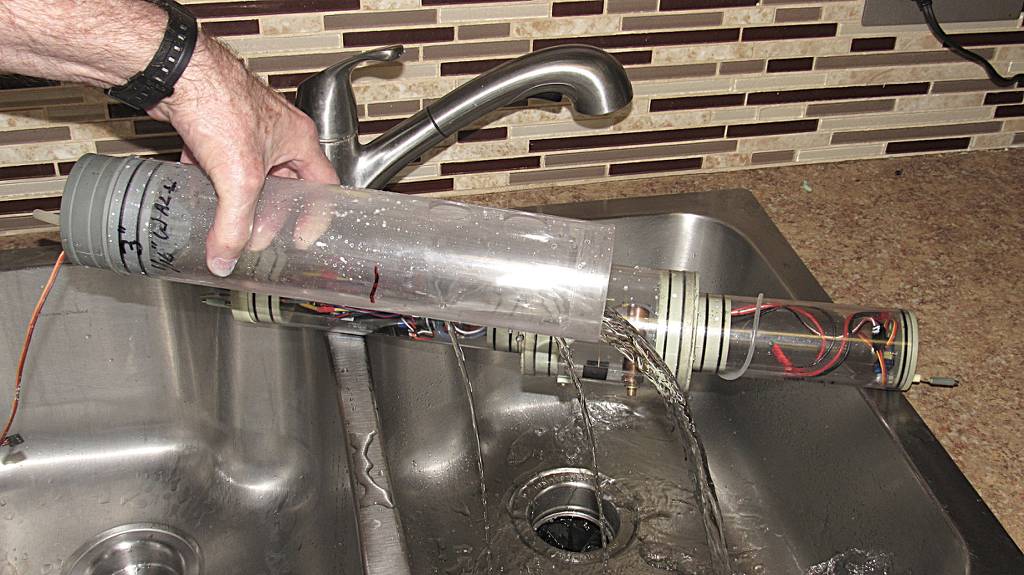
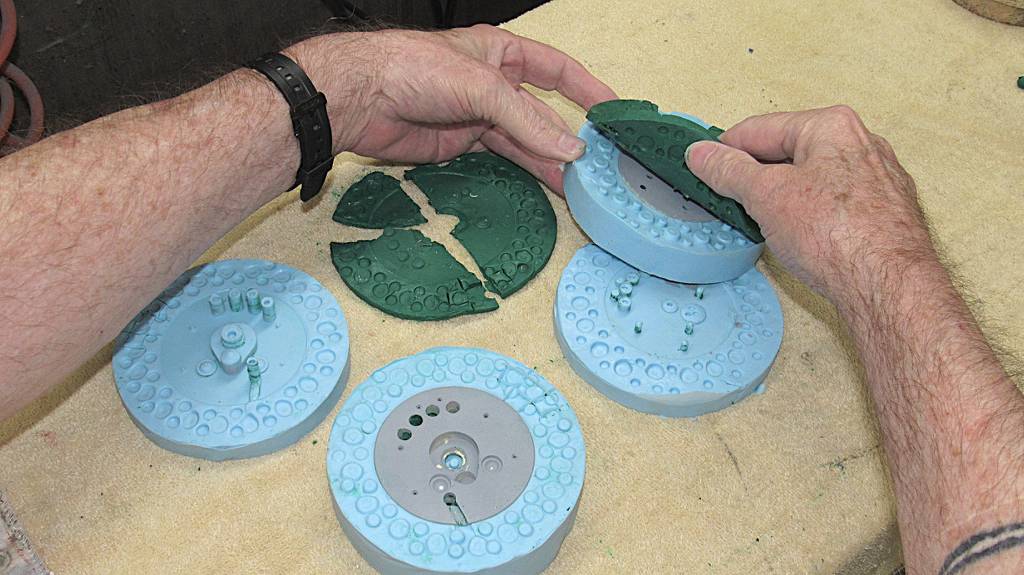
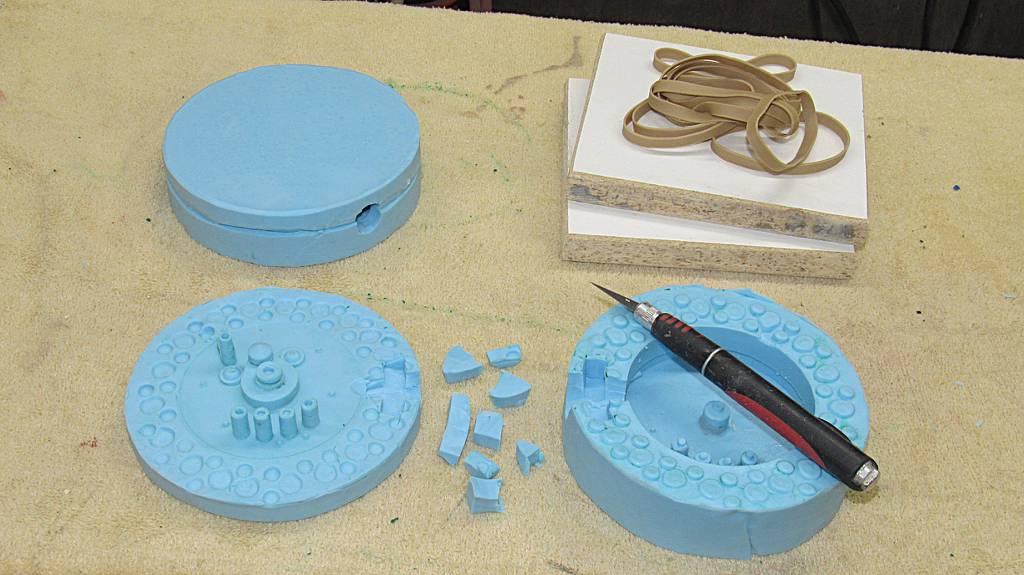
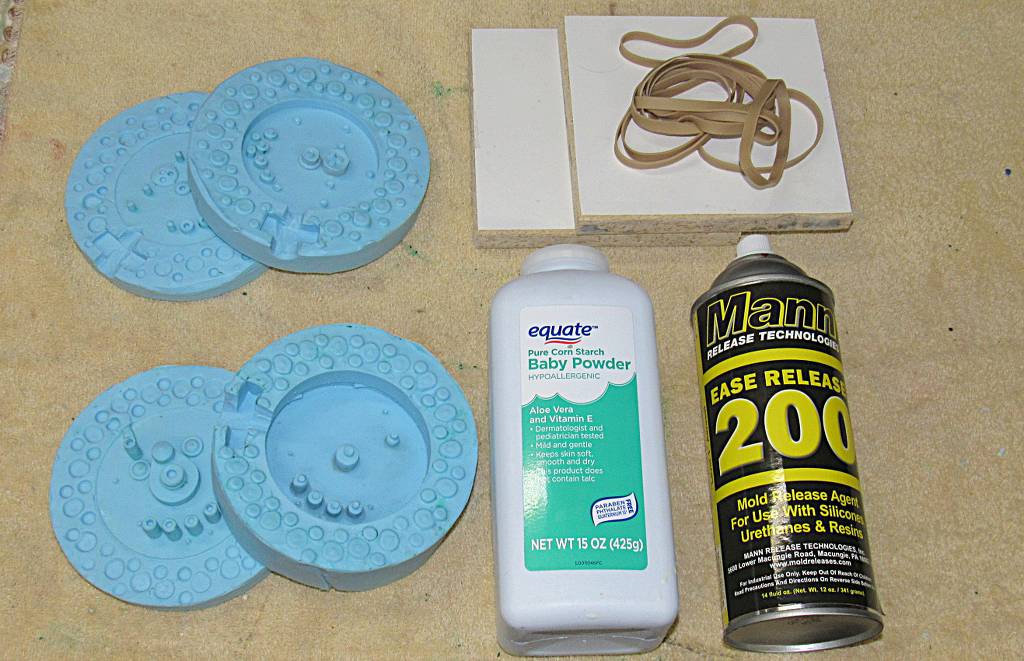
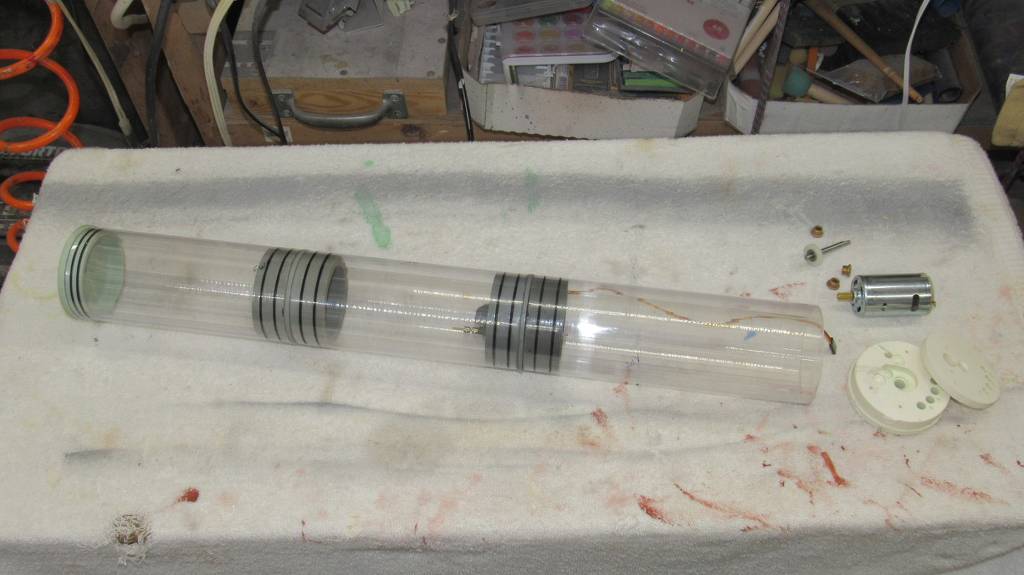
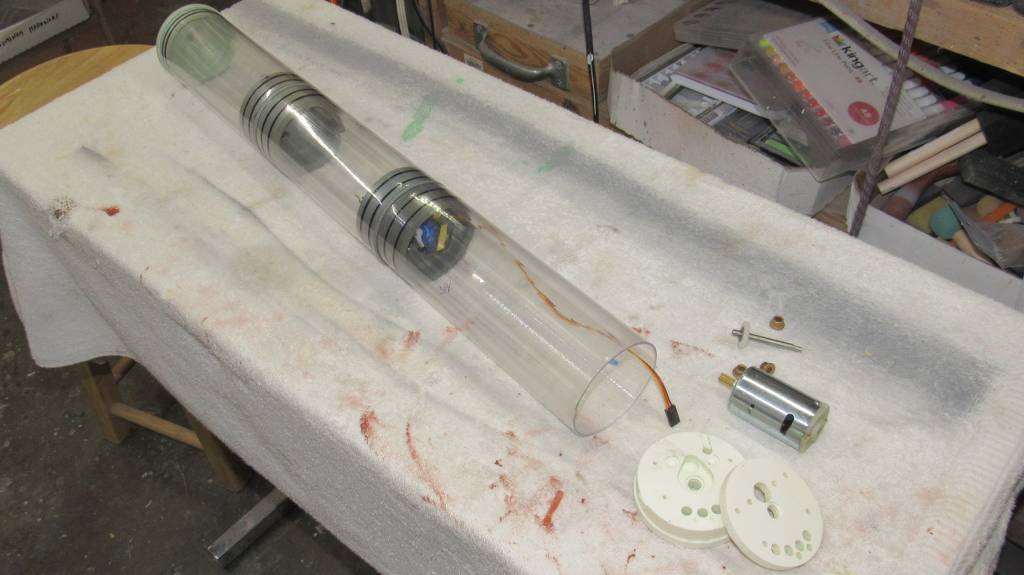
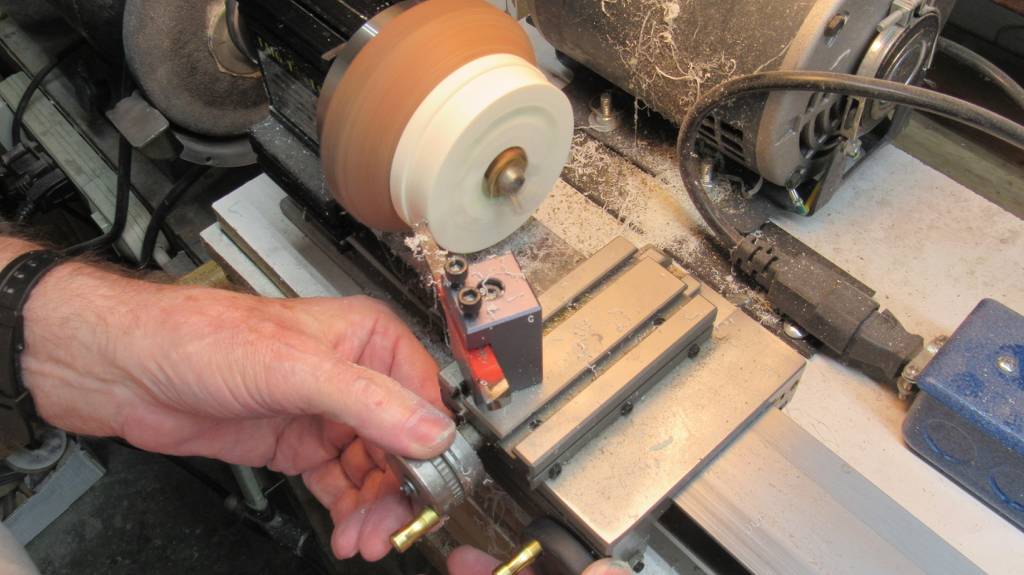
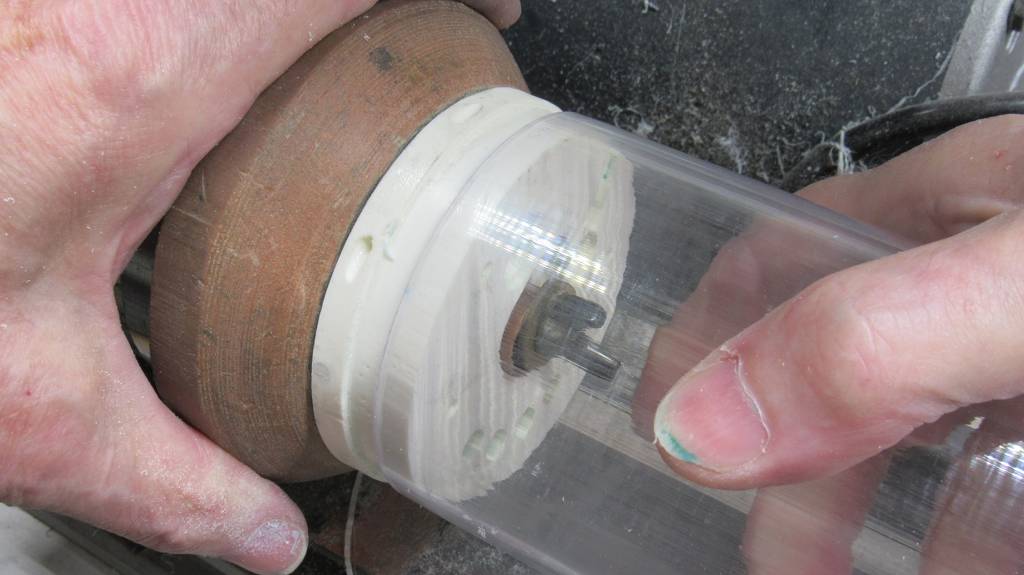
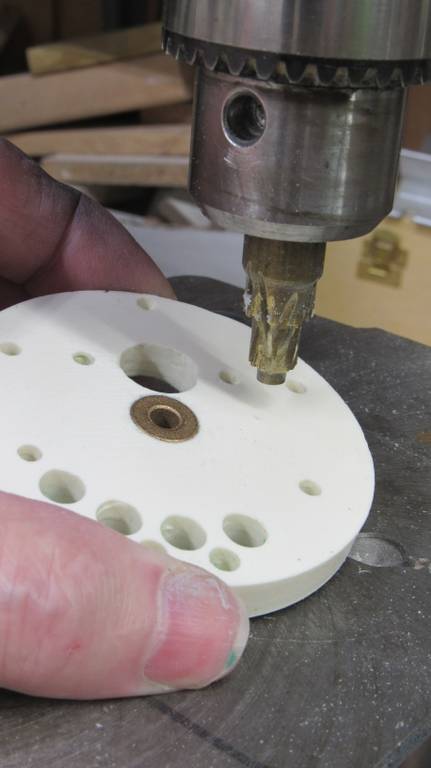
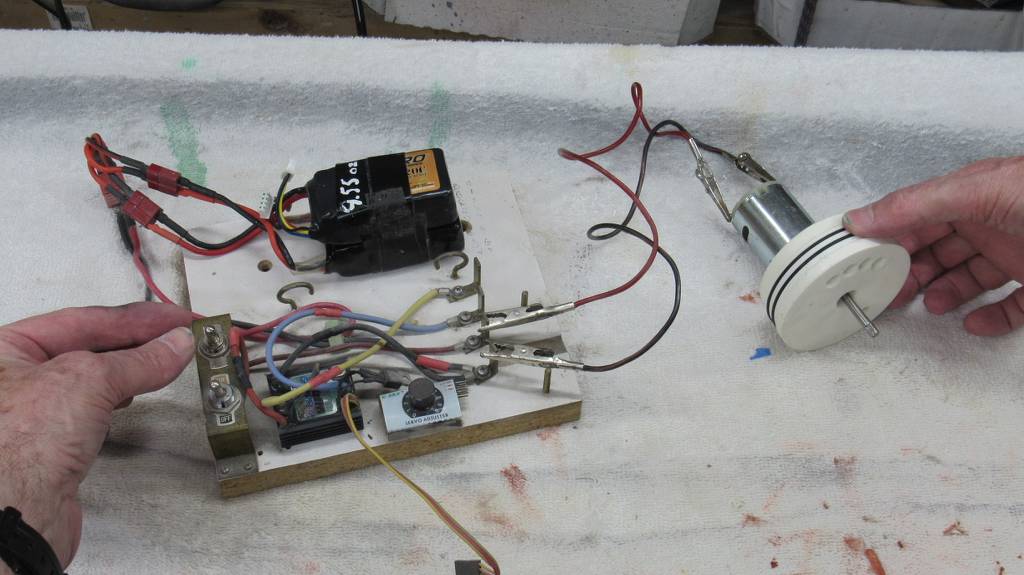
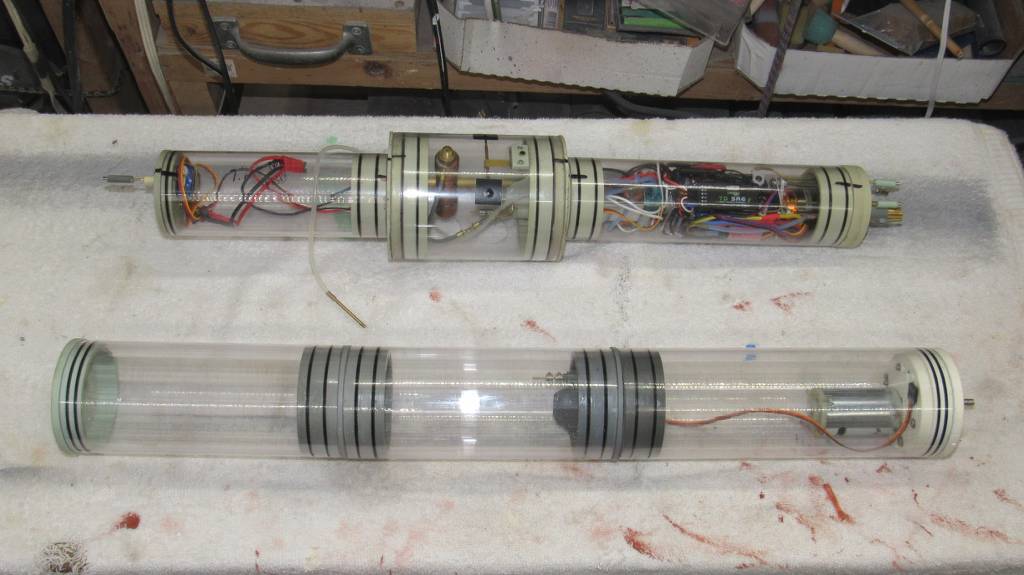
Yes. It's the fantastic ArkModel 1/48 Type-7. I've already r/c'ed one of these; this is my second (for Jake), and by the end of the year I'll start working up another kit for my fleet.
Sir, as always much appreciate the pictures from the master at work employing learned skills passed down. I've been able to learn so much from them to further the passing down and help me with the current project. In trying to do honor/respectful restoration by the original builder of a USS Blueback, I am able to produce a good-looking boat all in part of the coaching from your pictures and a couple of mutual buddies (Jake and Bob). I've used products I've never used before; all have worked great except drying/curing time for oil paint that I used on the seagull poop on the upper rudder. It's been about a week and still not cured. I did use brown cardboard to help wick out the linseed oil and even paper towel overnight. I just don't want to do anything to ruin how it turned out so far and set me behind as I prep for an event in September. Very Respectfully, you know who.
Don't be coy with me, 'Lockleer1'! I know who you are -- and, damnit, I'm going to blow your cover right here... Louis!
For those looking for an Internet fist-fight between the two of us, you're going to be disappointed; Lois and I have been unaware of each others existence till only a couple of years ago, when he and his pals began making the Submarine Regatta events. He shows up with an F'n WOODEN r/c submarine. That works!
As we all came to learn, Louis comes to the table -- new to the r/c submarine game, but no newbie to machining and Cabinet quality wood working -- with established skills. Now passionate about the hobby of r/c model submarining Louis has been on the lookout for anyone accomplished in the field (idiots like me and Jake) for advice; and has done his best to suck our brains dry of anything that will improve his craft in this department.
When I'm not busy strutting my magnificence in front of God and anybody else within ear-shot, I so enjoy taking useful lumps of clay, like Louis, and helping them with guidance to improve their Craft. Louis' is so mailable: he takes constructive criticism in like it was a tasty milk-shake; he can't get enough good input about the Craft; and he's a fearless model-maker. In pursuit of his goals, he's unstoppable!
Don't be coy with me, 'Lockleer1'! I know who you are -- and, damnit, I'm going to blow your cover right here... Louis!
For those looking for an Internet fist-fight between the two of us, you're going to be disappointed; Lois and I have been unaware of each others existence till only a couple of years ago, when he and his pals began making the Submarine Regatta events. He shows up with an F'n WOODEN r/c submarine. That works!
As we all came to learn, Louis comes to the table -- new to the r/c submarine game, but no newbie to machining and Cabinet quality wood working -- with established skills. Now passionate about the hobby of r/c model submarining Louis has been on the lookout for anyone accomplished in the field (idiots like me and Jake) for advice; and has done his best to suck our brains dry of anything that will improve his craft in this department.
When I'm not busy strutting my magnificence in front of God and anybody else within ear-shot, I so enjoy taking useful lumps of clay, like Louis, and helping them with guidance to improve their Craft. Louis' is so mailable: he takes constructive criticism in like it was a tasty milk-shake; he can't get enough good input about the Craft; and he's a fearless model-maker. In pursuit of his goals, he's unstoppable!
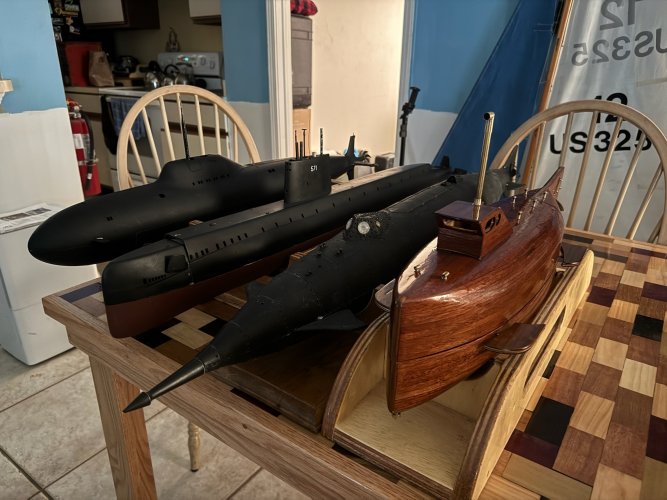
You're too kind my friend, a wonderful teacher and mentor you and Jake are for sure, truly a blessing. Time coming up short till our event, I hope to have this wonderful little boat ready for a shakedown on both drivers weekend after next. About 2 months from our event and looking forward to bringing Blueback to have fun with the rest of the pack! Also, will have "Luck" and, God willing, the Verne Nautilus. I've been working on a detail paint job with my newly acquired skills, though haven't started in on paint.
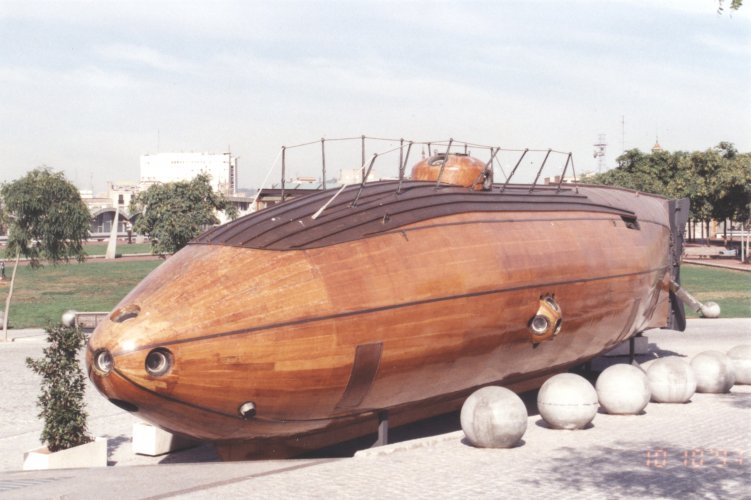
Hey, if real wooden submarines can work just fine, some 19th century non-engineer dude in Barcelona built 2 of them, then surely wooden RC submarines can too!
A Steam Powered Submarine: The Ictíneo
Narcís Monturiol successfully resolved the two basic obstacles presented to submarine inventors: air supply and mechanical power.
August 24, 2008 Written by Kris De Decker Translation fr
Few Victorian inventions have the grace and charm of the Ictíneo, the series of two wooden submarines built by Narcís Monturiol i Estarrol in the second half of the nineteenth century.
Unlike some of the better known early submarines from his contemporaries in Germany, France and the United States, the Catalan inventor managed to build submarines that operated flawlessly.
The Ictíneo II was the first combustion engine driven submarine ever, pioneering concepts that were only rivalled in the 1940s. Sadly, both submarines were eventually scrapped and Monturiol died penniless and forgotten.
Fish
Monturiol’s Ictíneo (derived from the Greek words for fish and for ship) was launched in 1859 in Barcelona harbour to instant success. Monturiol, who possessed no scientific education, became a local hero. The submarine, made of olive wood supported with oak rings and sheathed in two-millimetre thick copper, measured only 23 feet (7 meters) in length and offered hardly enough space for the captain and the four man crew who powered the ship by cranking.
...
When the Ictíneo I was crushed by a freighter while docked in the port of Barcelona, Monturiol decided to design a larger submarine that was driven by steam. The Ictíneo II, more than twice the length of the Ictíneo I, was launched between 1864 (with human power) and 1867 (with steam power). It became the first combustion engine driven submarine in the world.
The thinking at the time was that it was almost impossible to run a steam engine underwater because it would use up all the oxygen and convert the inside of the ship into an oven. To overcome this, Monturiol invented a chemical furnace based on a reaction between potassium chlorate, zinc and manganese dioxide - a process that produced enough heat to boil water to run the steam engine. To complement this ingenuity, the reaction gave off oxygen as a by-product.
Snorkel
Monturiol had successfully resolved the two basic obstacles presented to submarine inventors: air supply and mechanical power. In fact, he devised an early form of anaerobic (air-independent) propulsion only to be repeated in the 1940s with the Walter turbine in Germany, and finally with the first atomic submarine, the USS Nautilus.
When I first established this page, I had only a small collection of designs to feature. Since then, the list has grown and grown, as has the popularity of the page. Examination of the many designs reveals relationships between them. Cross-pollination has occurred when designers who viewed the page produced new boats incorporating features they saw here. What began as a passive collection has become an active inspiration. (Ken Anslow records some interesting thoughts about creative cross-pollination and differing visions evoked by a writer's words. Read them on his blog.)
Originally, the catalog was limited to versions of the Nautilus that I considered compatible or consistent at least in part with Jules Verne's description. As the collection has grown I've expanded the criteria for inclusion. Sometimes a Nautilus is here because it has a prominent feature similar to a design already included, sometimes because it is true to Verne's spirit if not his words, sometimes because it purports to be Verne's Nautilus,and sometimes simply because I find it cool. The result is a much more diverse collection. Although interesting in their own way, the versions from the original League of Extraordinary Gentlemen graphic novel and the movie's very different "Sword of the Sea" design, are still excluded because these are not the Nautilus of 20,000 Leagues under the Sea,or even Mysterious Island, but a new generation. I have included a representation of the first generation Nautilus from Alan Moore's Extraordinary Gentlemen sequel, The Black Dossier. I’ve organized the designs in roughly but not strict chronological order to provide something of an historical perspective. Most illustrations are more or less the same scale for comparison.
Some of the designers identify their creations as the Nautilus,some as other submarines inspired by the Nautilus or from the same era,and at least one as not related to the Nautilus at all. I invite you to look for the relationships among them all.
Here's a better picture of the Verne Nautilus. It sails ok, has a SWM driver, but the screw is not cool, so I'm making a new one, also the windows and such are in sore need of replacement. I've ripped the stern section apart and started re-work, but then a more important project came up in form of the Blueback. I'll try my damndest to get this one ready too though as it's alot of fun to play with too.
Hey, if real wooden submarines can work just fine, some 19th century non-engineer dude in Barcelona built 2 of them, then surely wooden RC submarines can too!
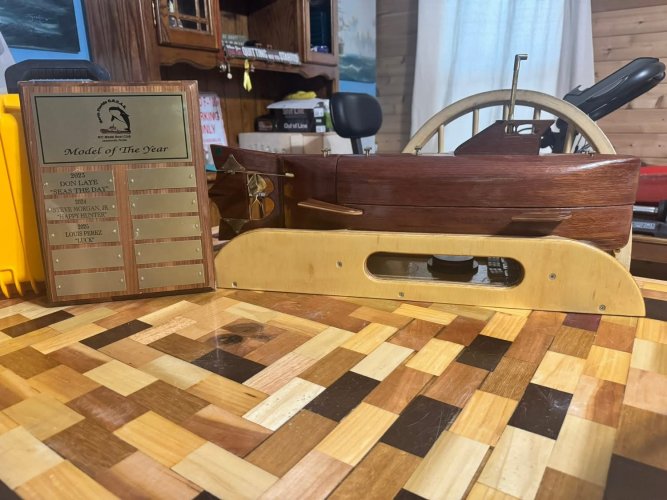
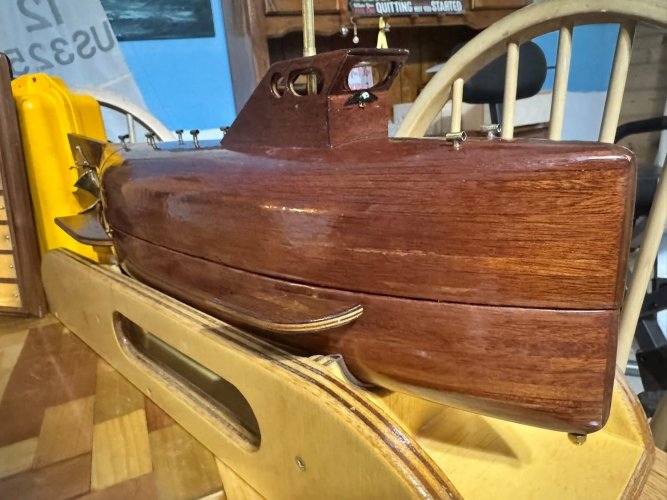
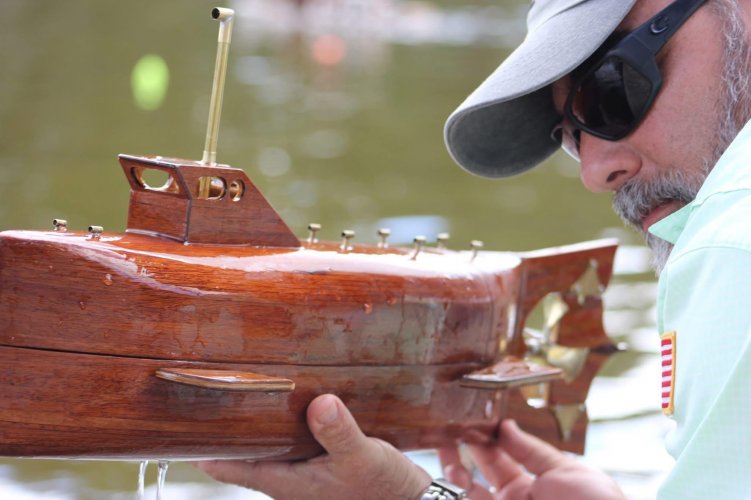
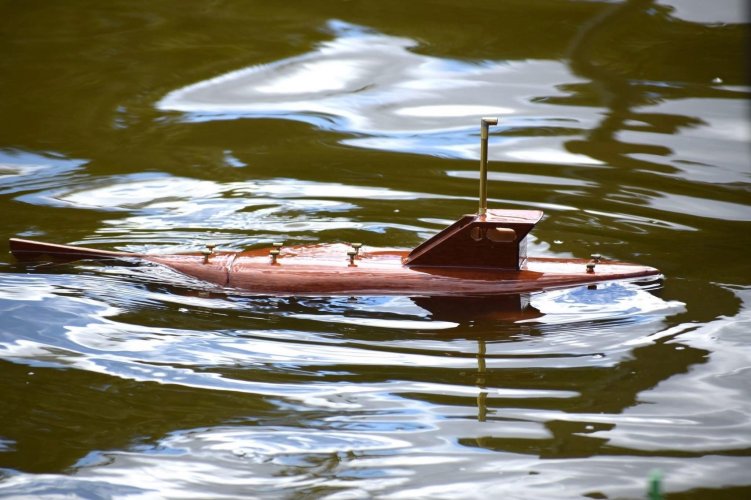
Here are 4 pictures of my little submersible tug "Luck". He was voted in as boat of the year by our club (surprised me), earned his eagle for multiple rescues at the ponds and a picture of me holding him during his maiden run, took him out just to make sure all was ok, then back in the water he went for about 4 hours.
The design I recognize from an illustration from a large format book, 'The Big Book of Submarines' I think. Later worked up as a model by a guy formerly associated with the model-shop at the David Taylor Model Ship Basin. Good choice!
Here are 4 pictures of my little submersible tug "Luck". He was voted in as boat of the year by our club (surprised me), earned his eagle for multiple rescues at the ponds
The design I recognize from an illustration from a large format book, 'The Big Book of Submarines' I think. Later worked up as a model by a guy formerly associated with the model-shop at the David Taylor Model Ship Basin. Good choice!
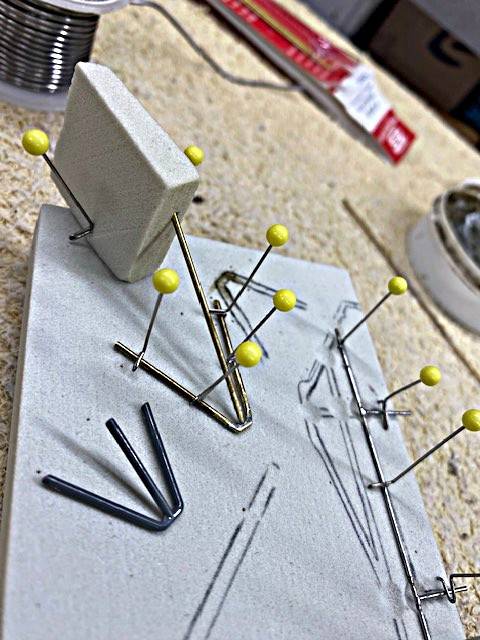
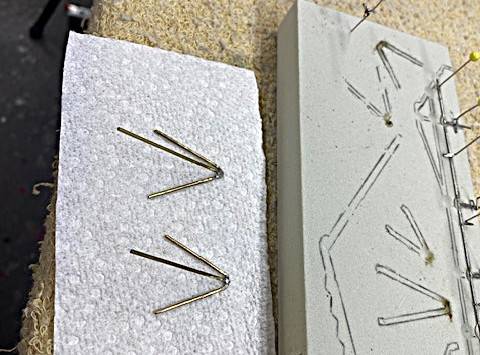
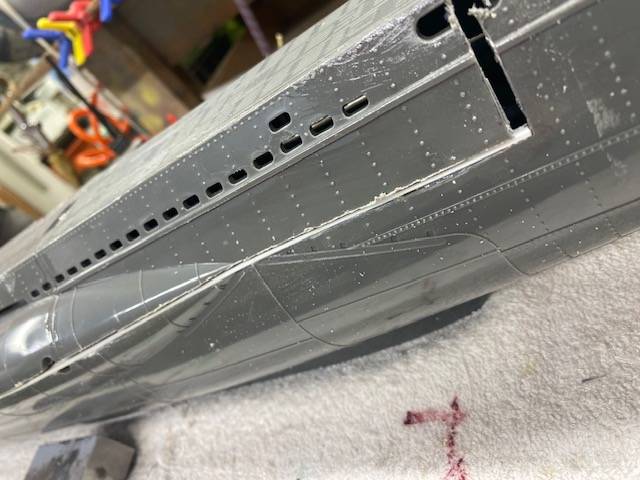
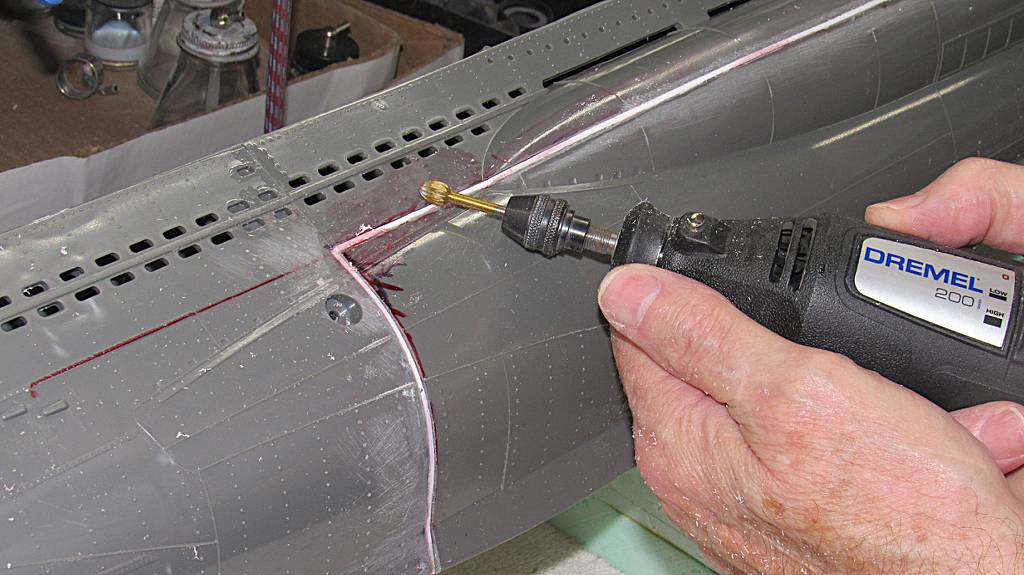
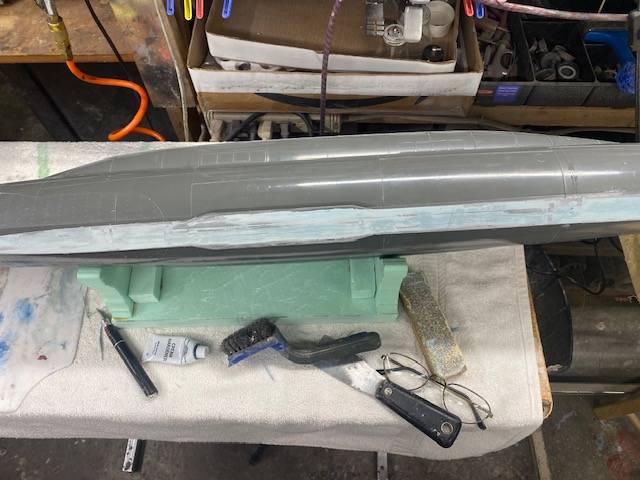
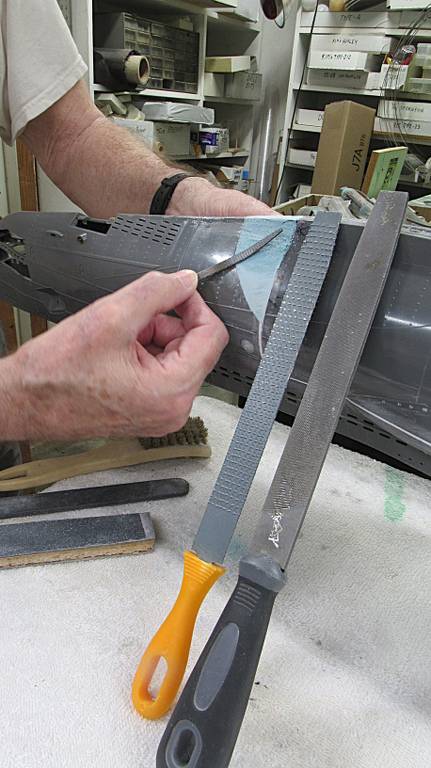
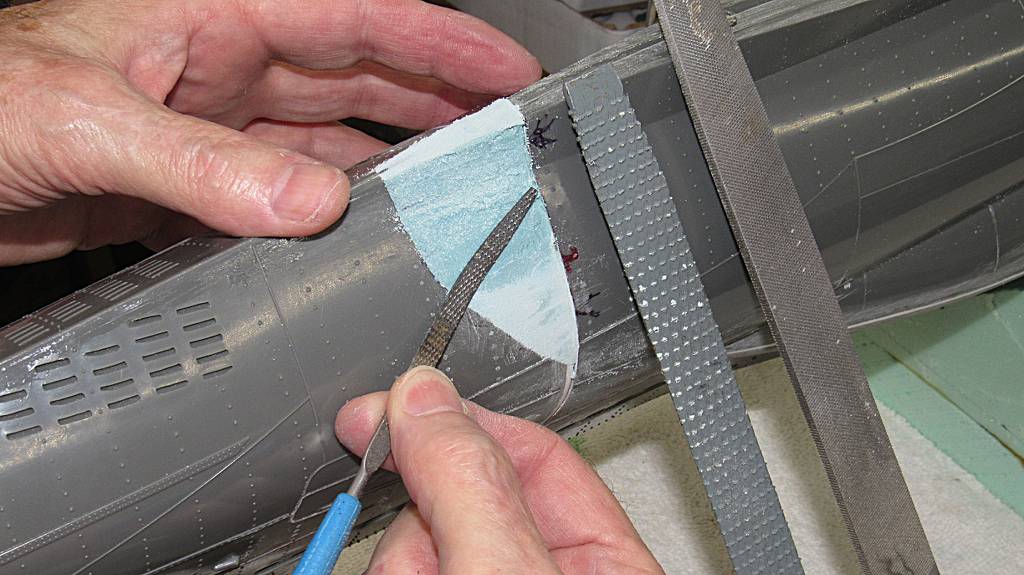
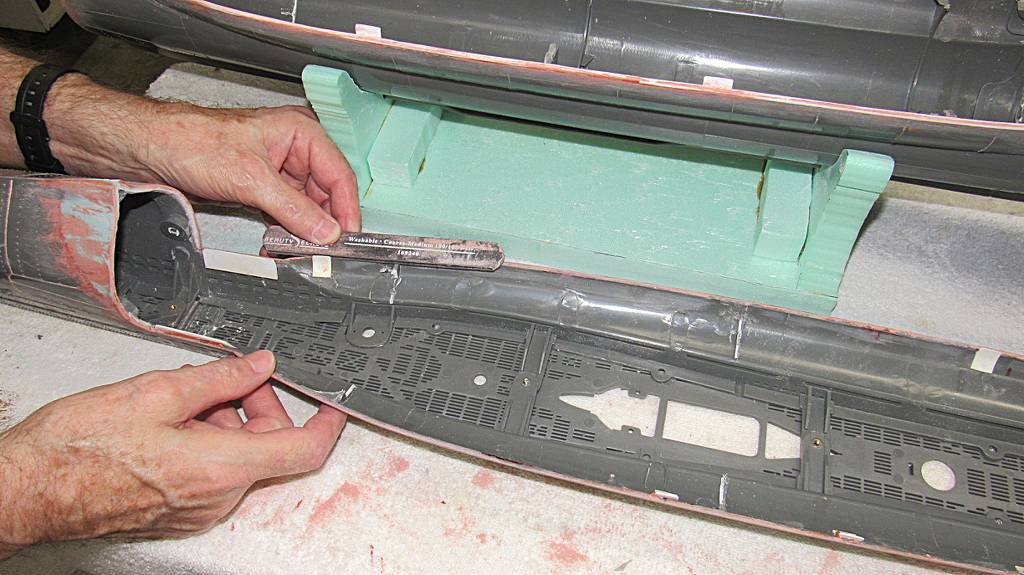
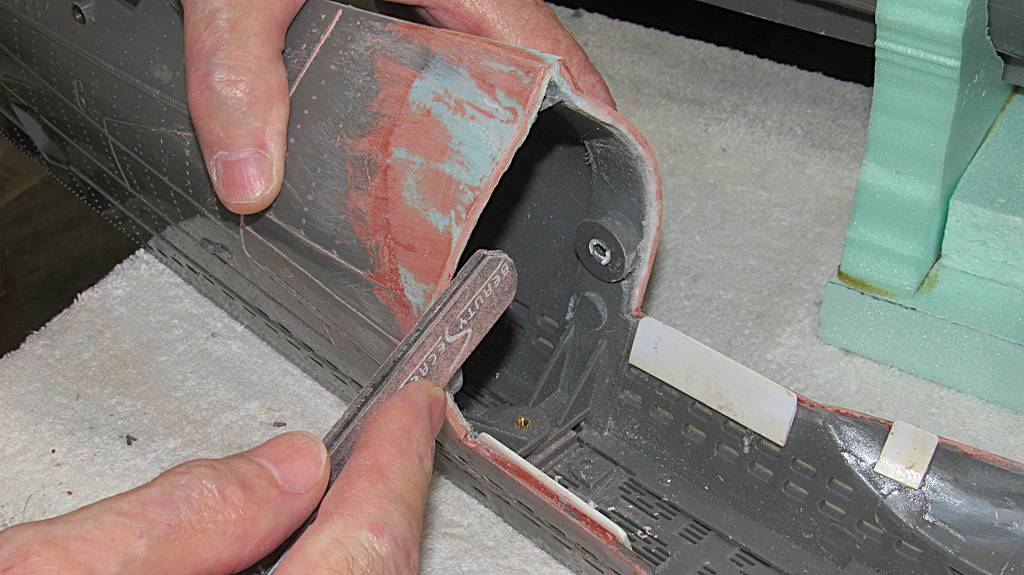
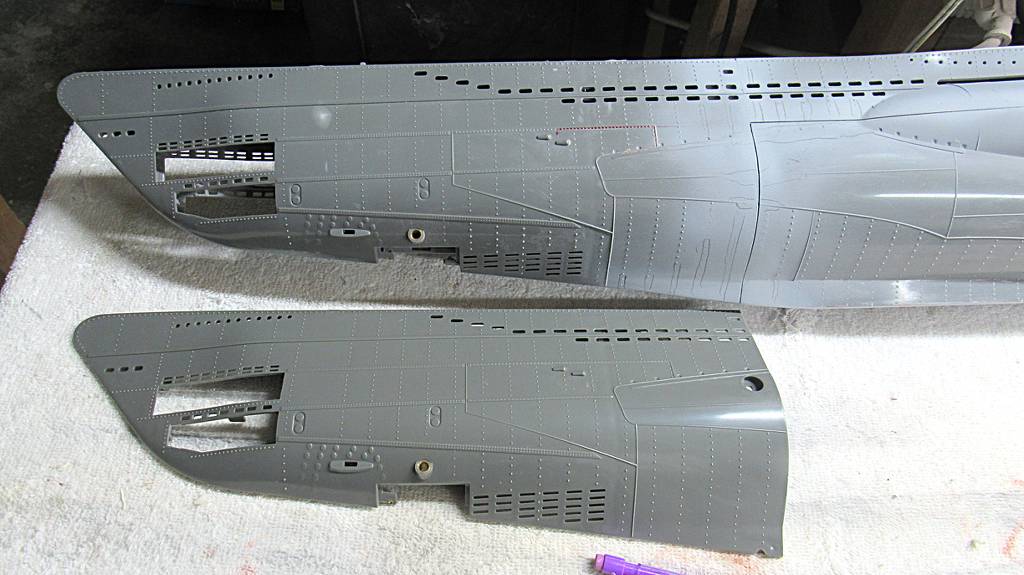
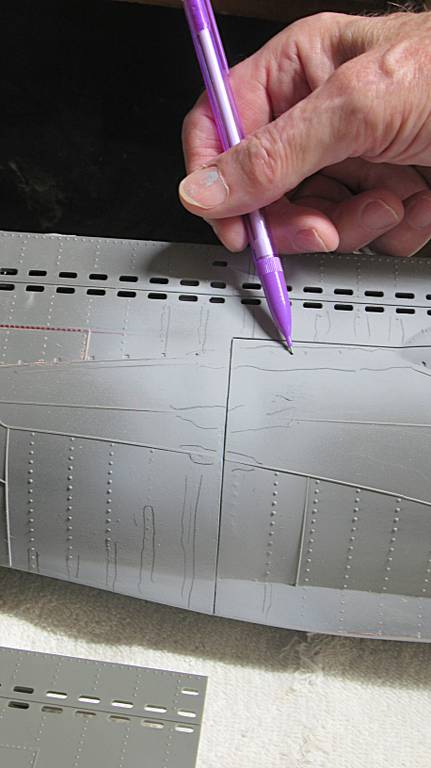
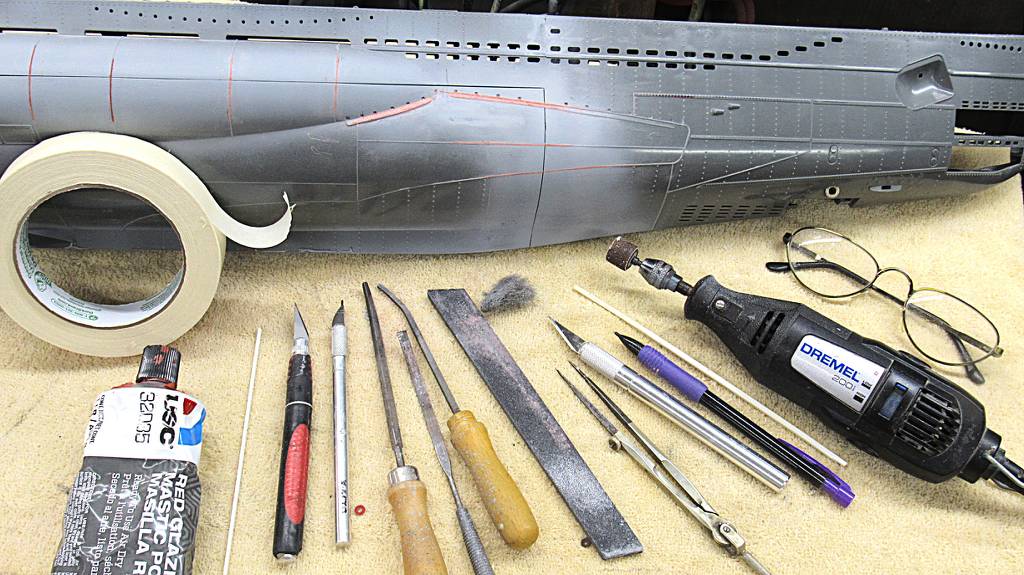
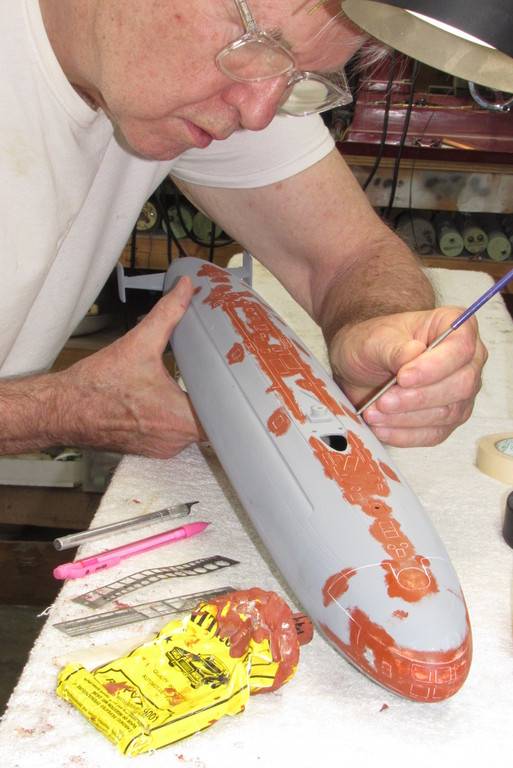
Cleaning up the over-strikes and poor quality engravings, I can assure everyone, is at least as mind-numbing a task as it is to read about it. But it's a task that's gotta be done if a quality product is to be the result!
So, strap yourself in and make what you will of the following procedural.
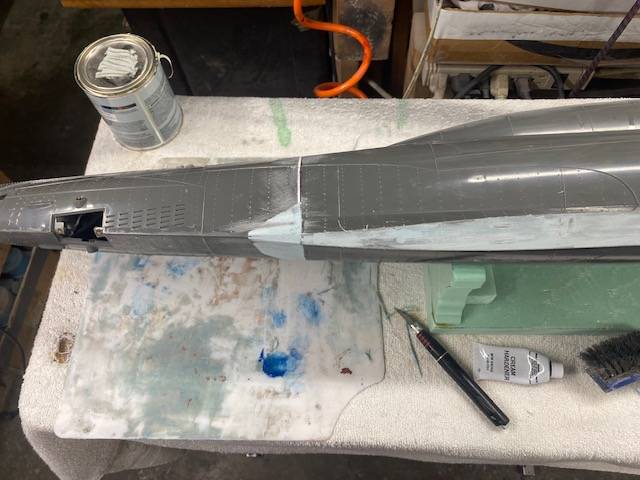
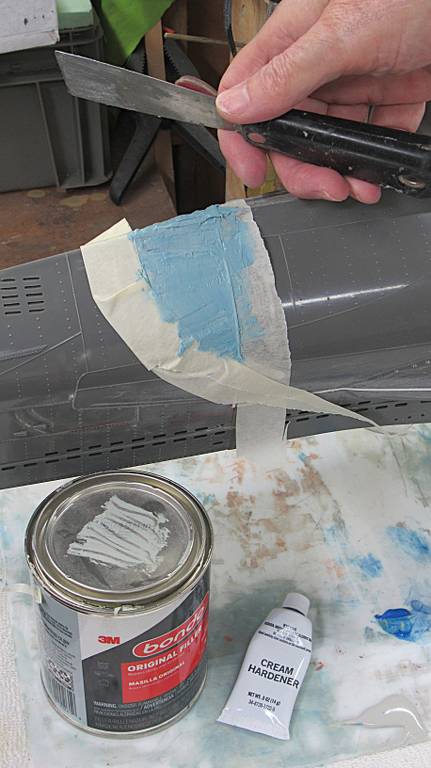
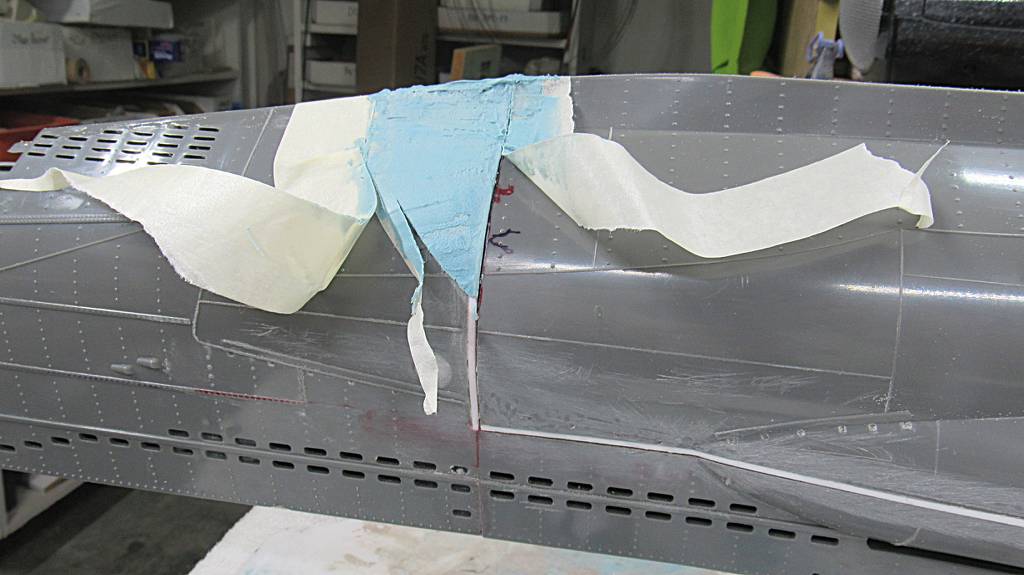
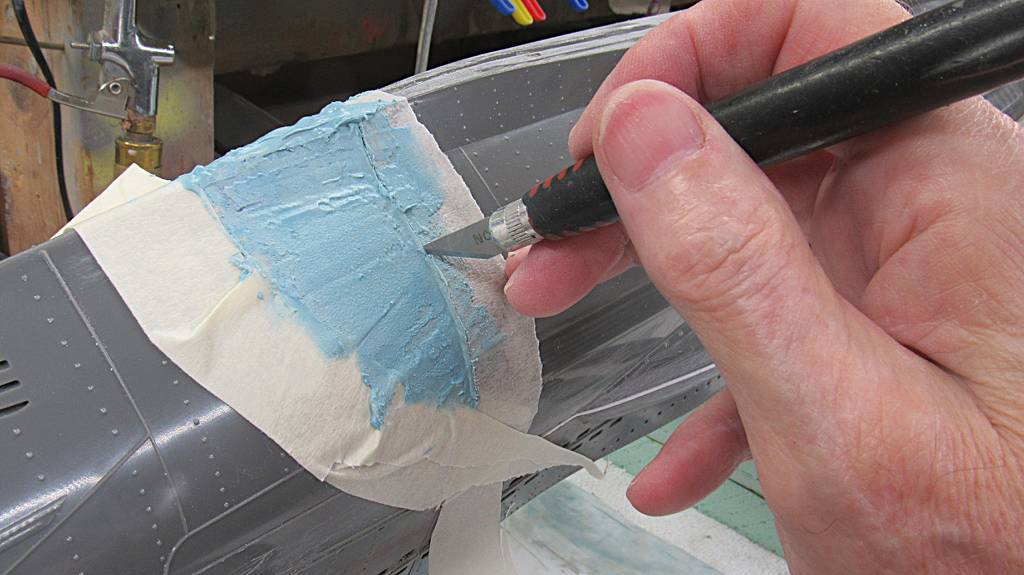
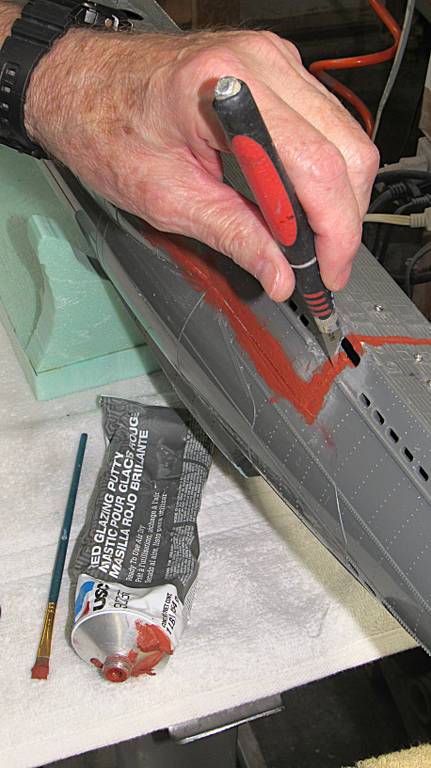
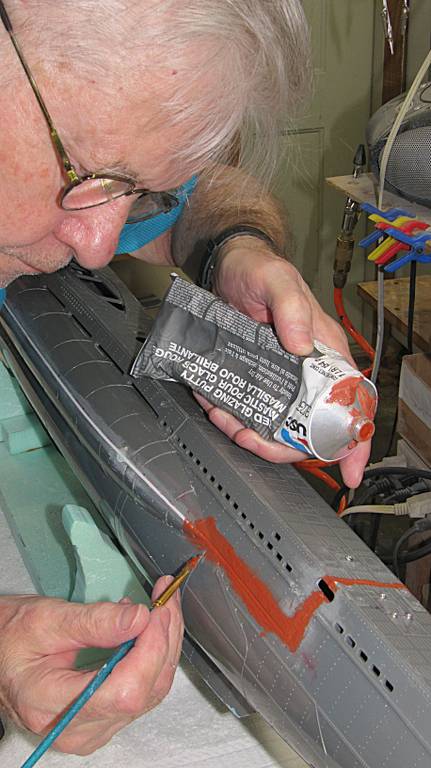
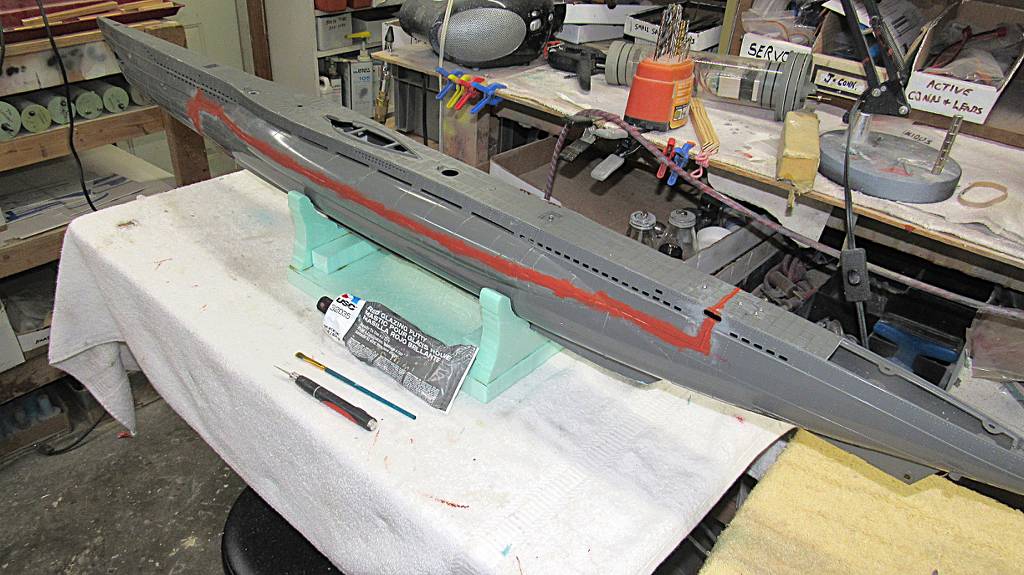
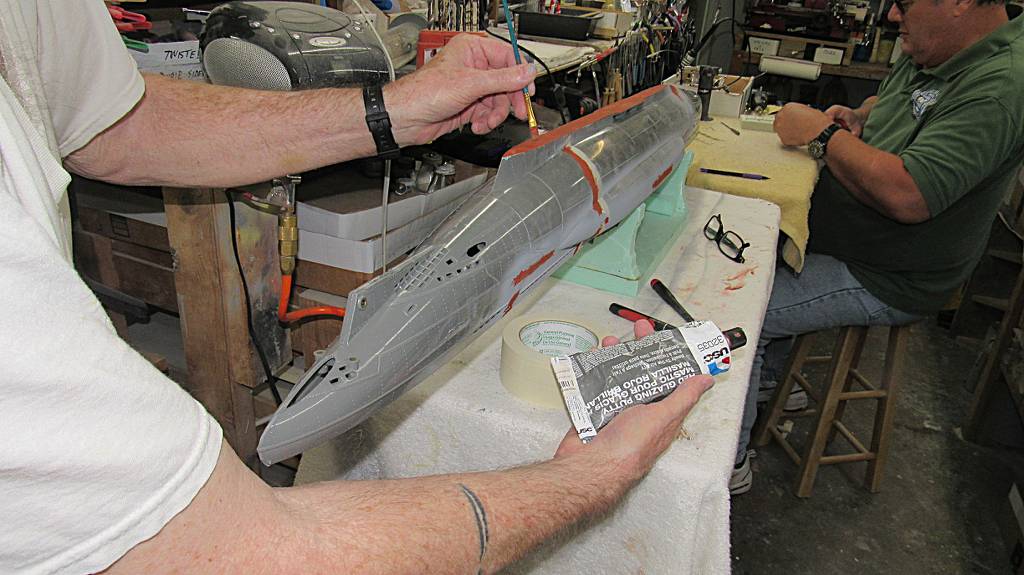
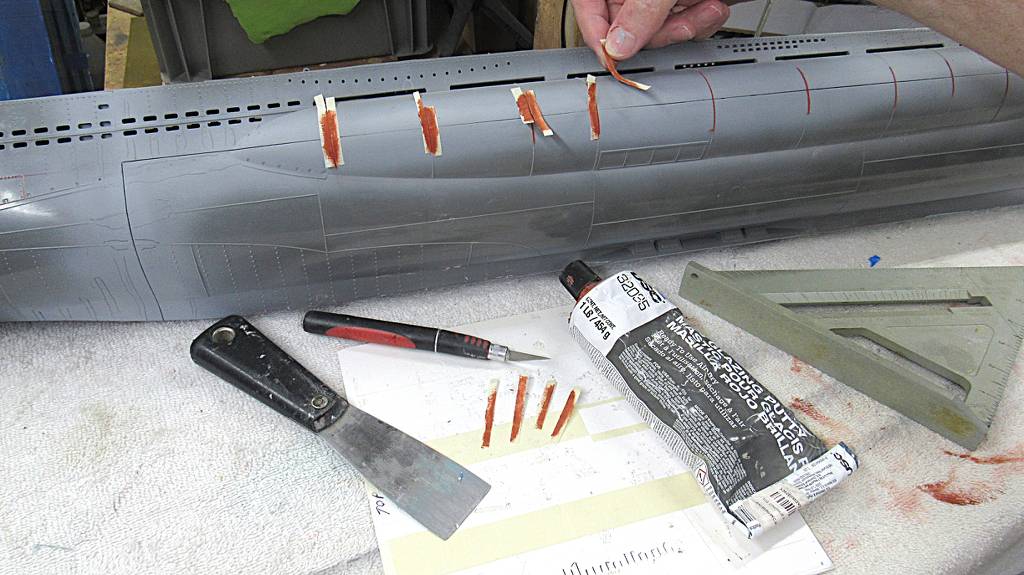
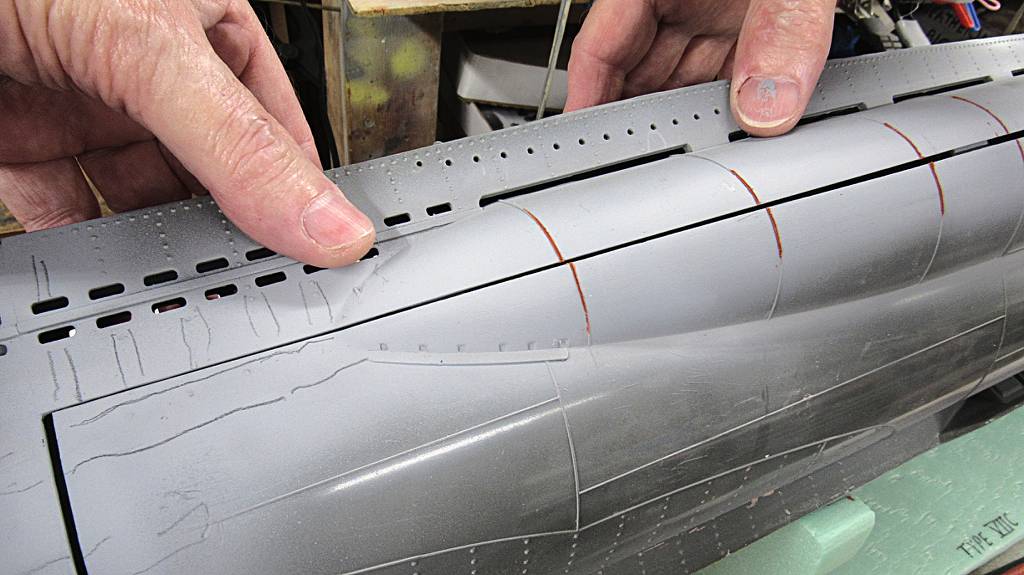
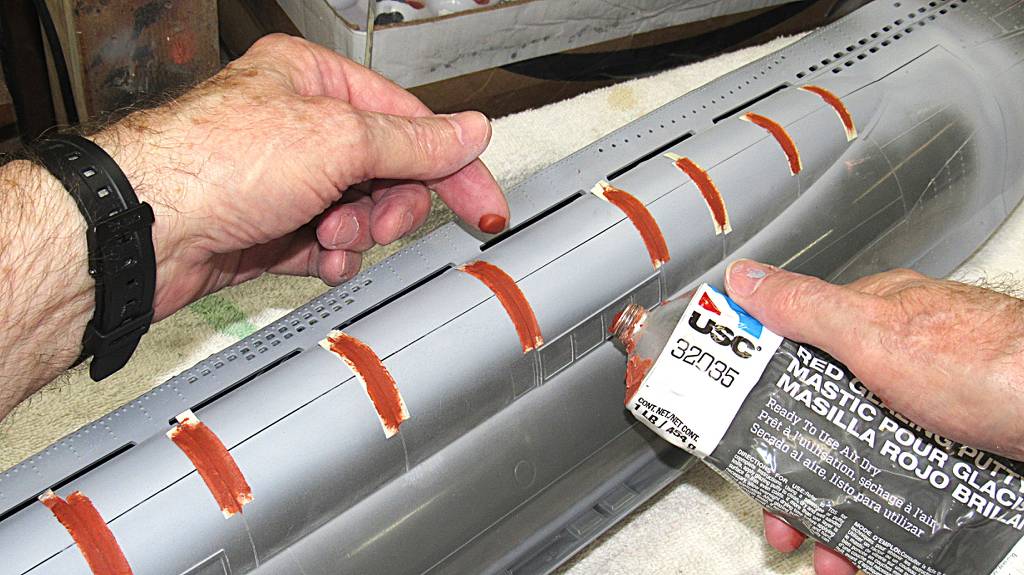
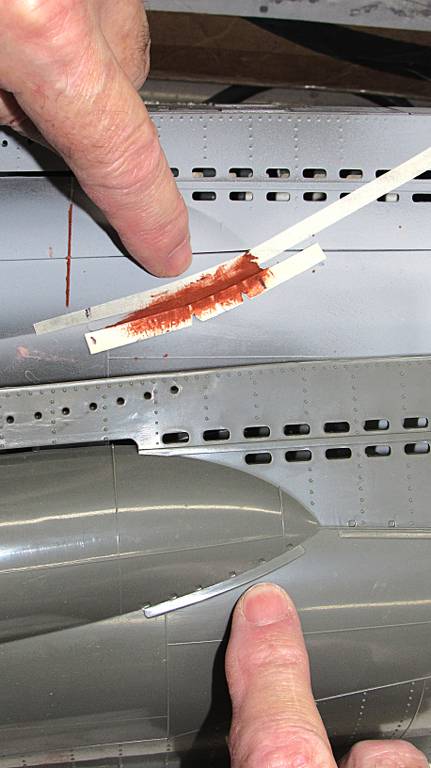
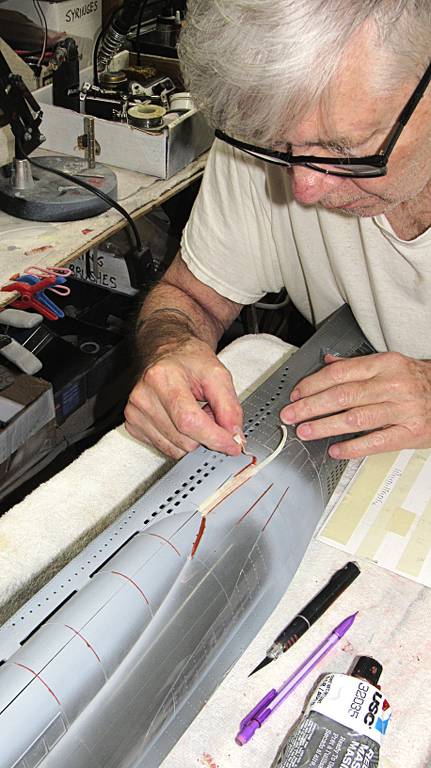
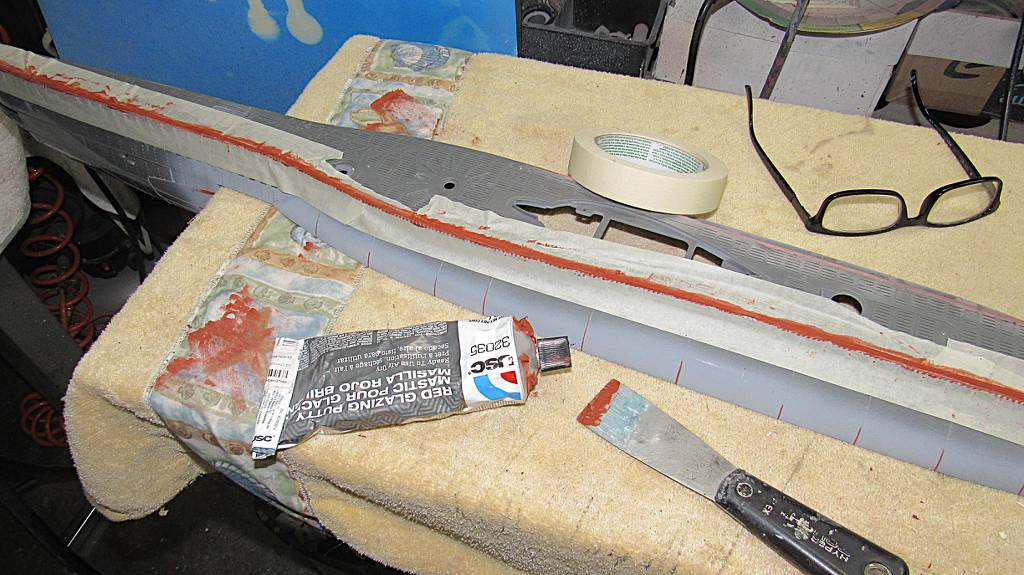
The initial scribing done forward I've applied some putty.
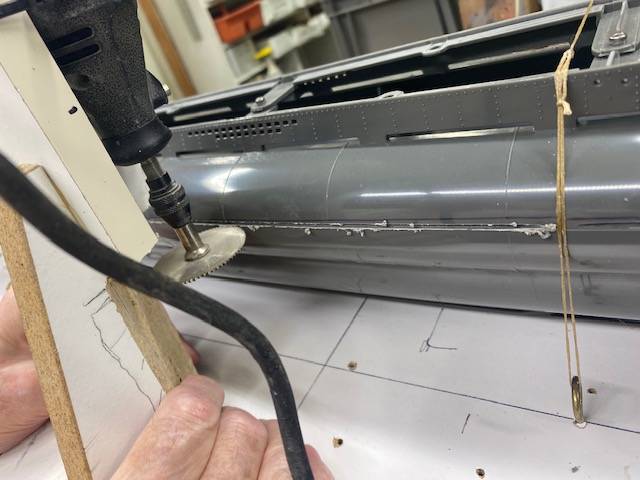
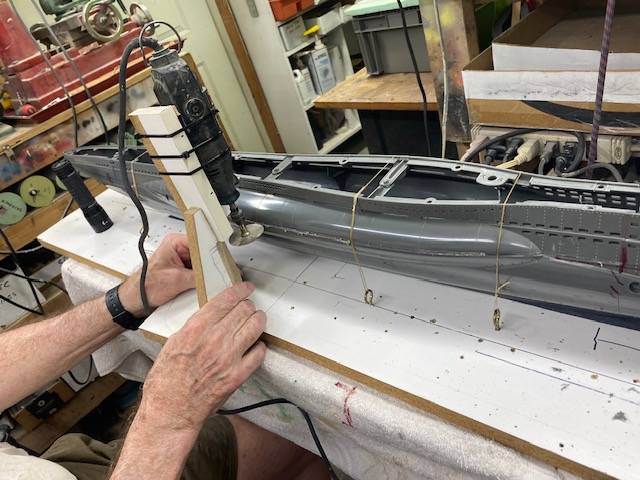
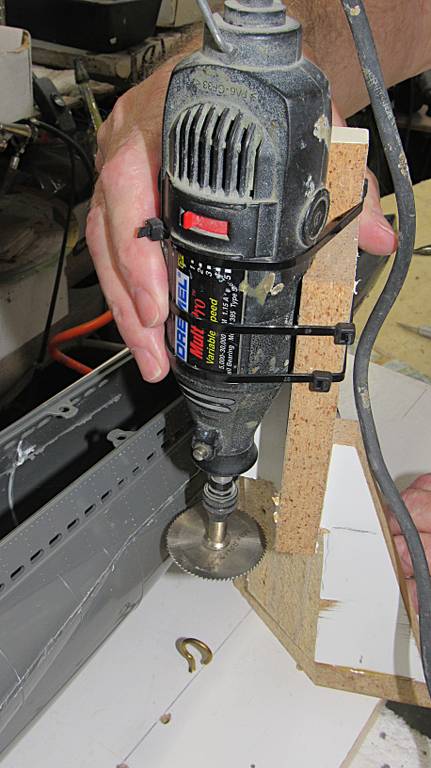
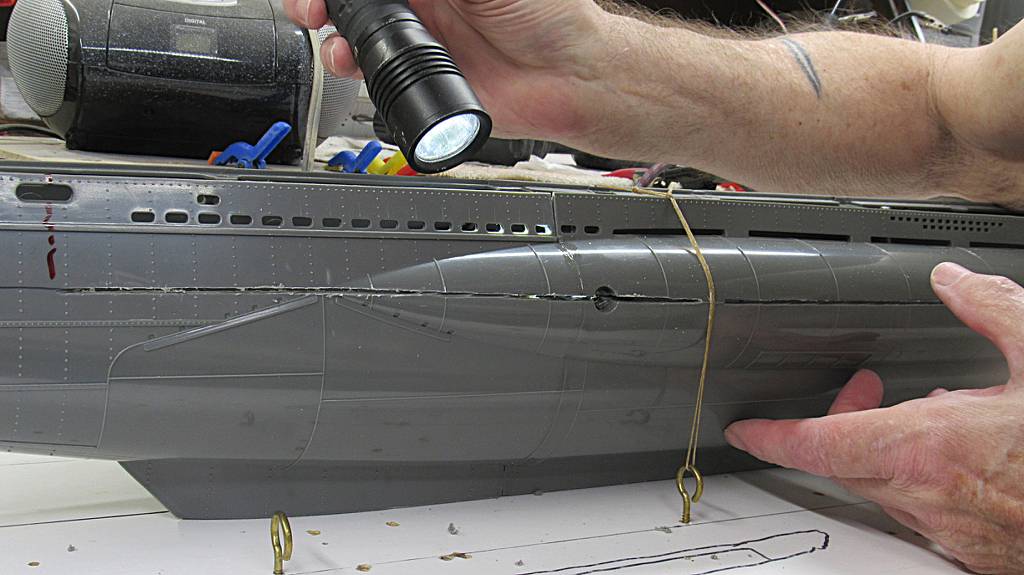
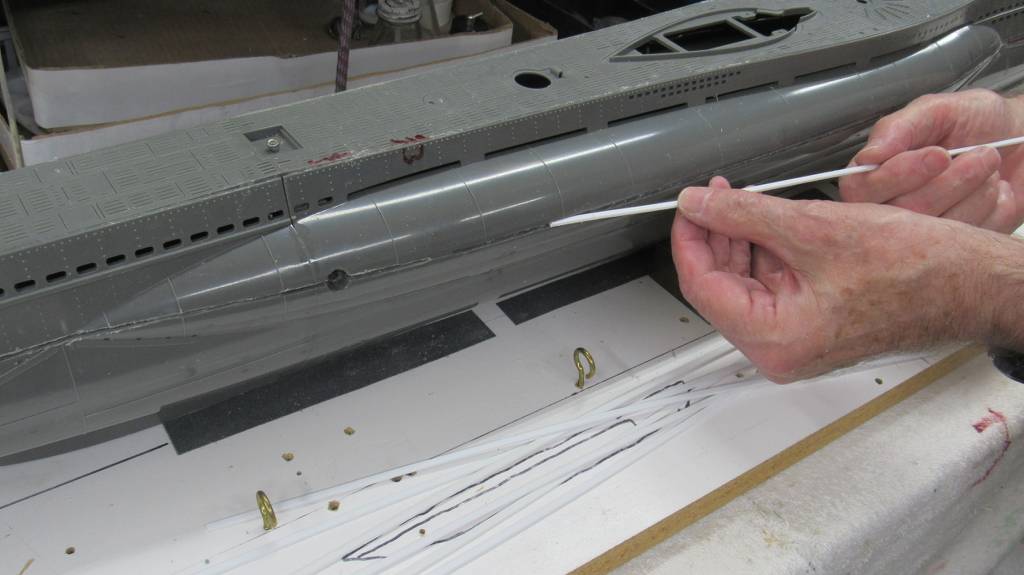
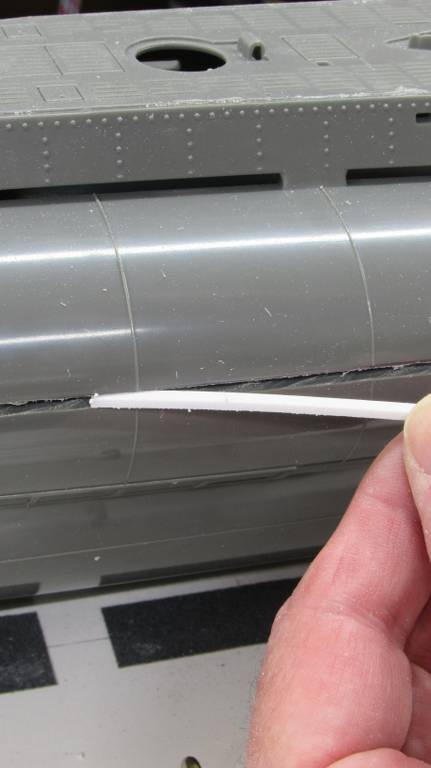
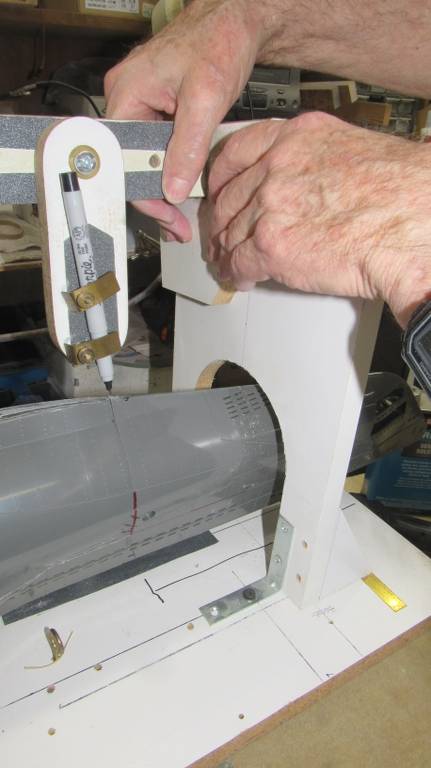
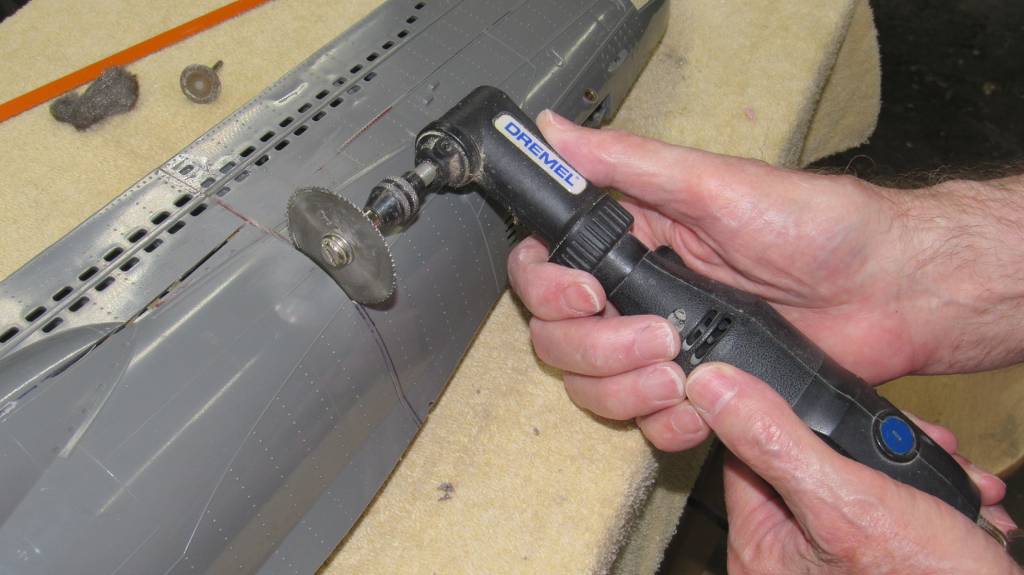
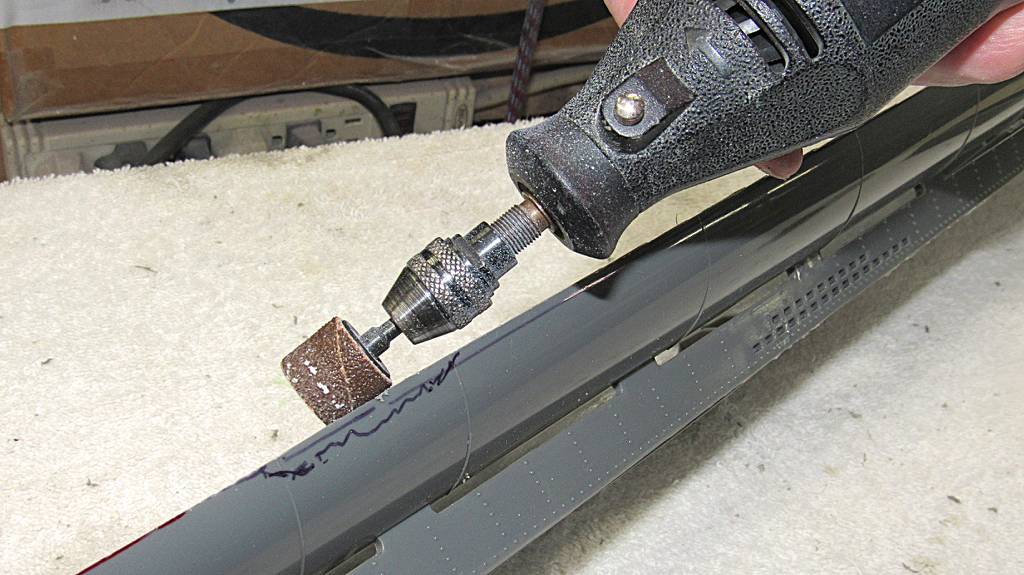
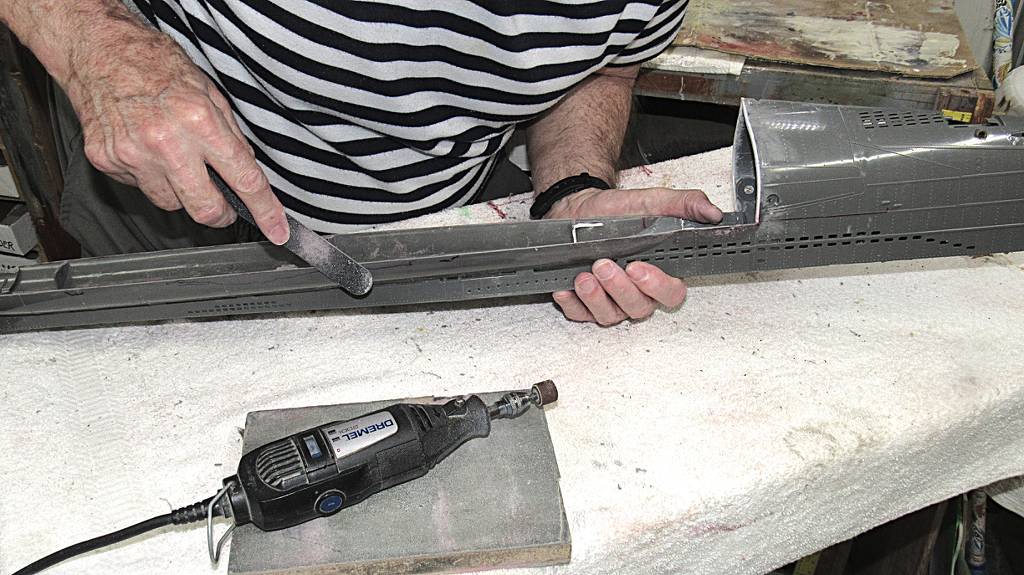
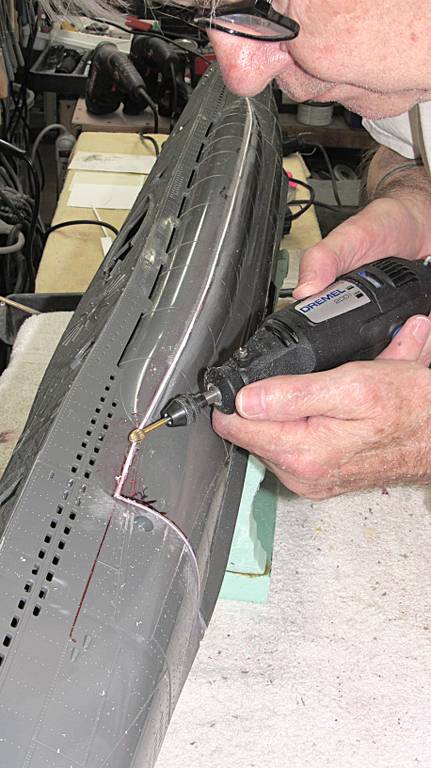
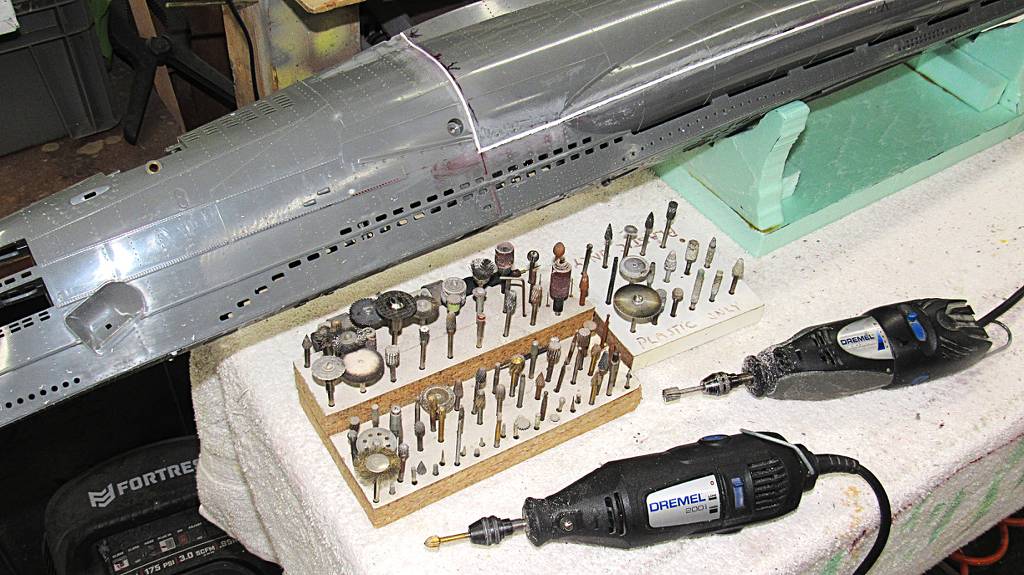
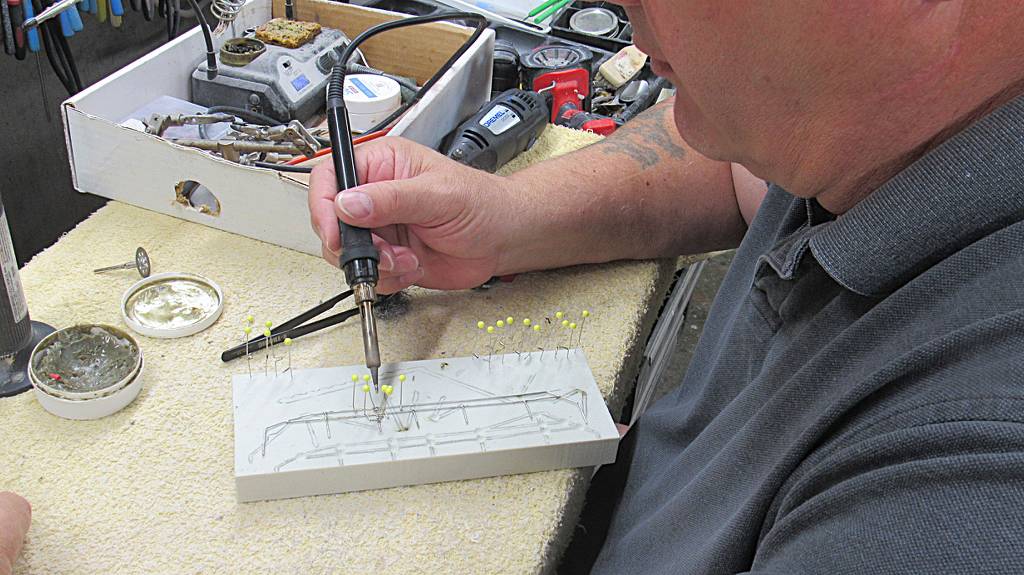
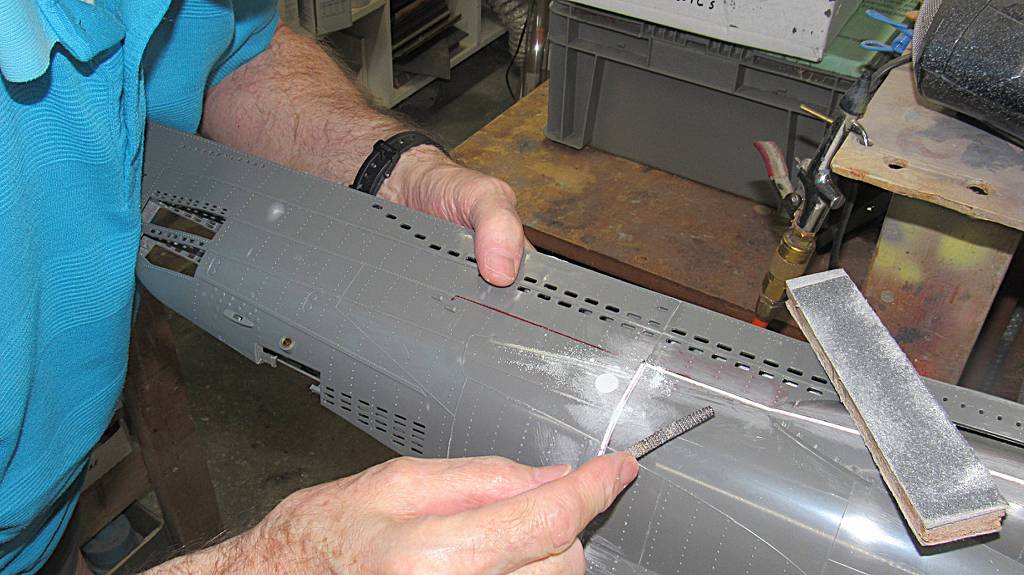
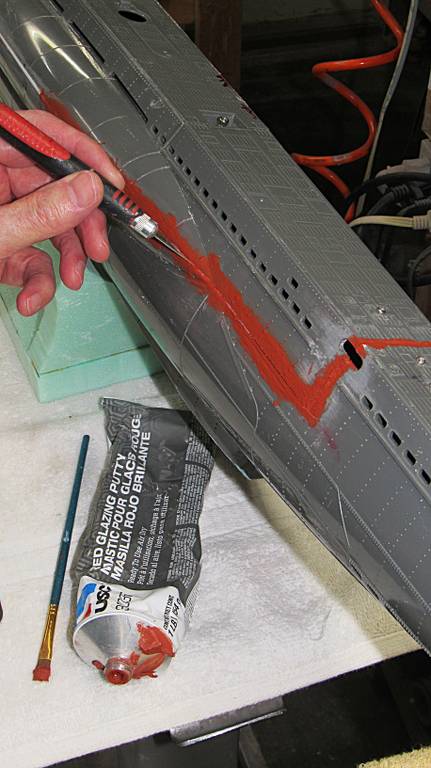
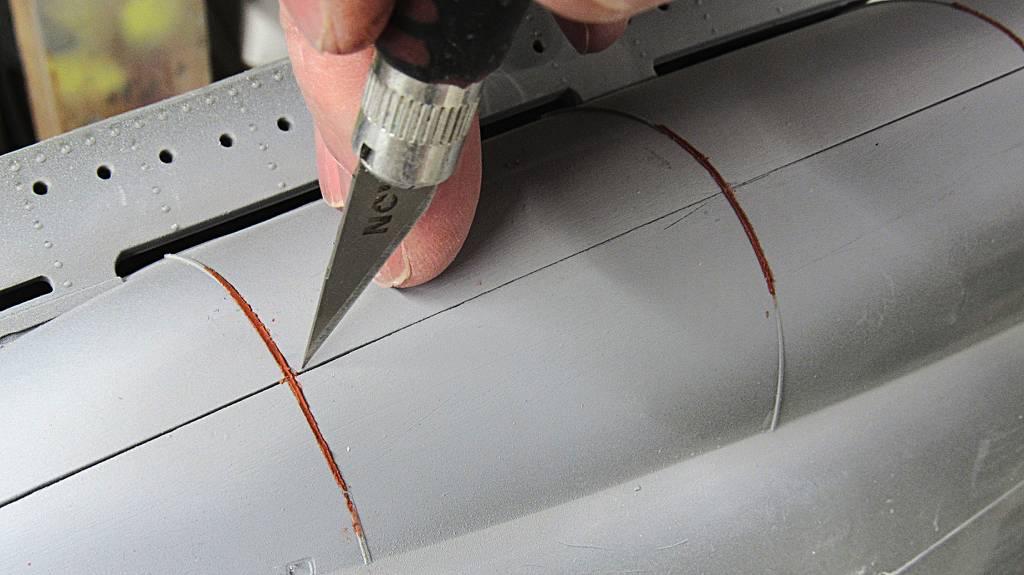
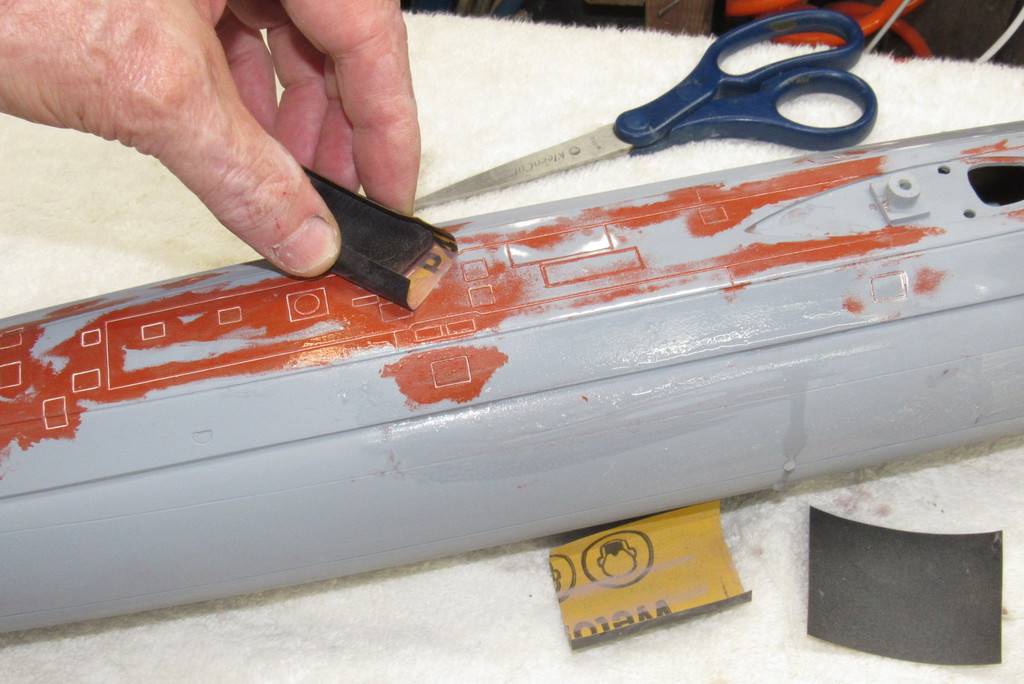
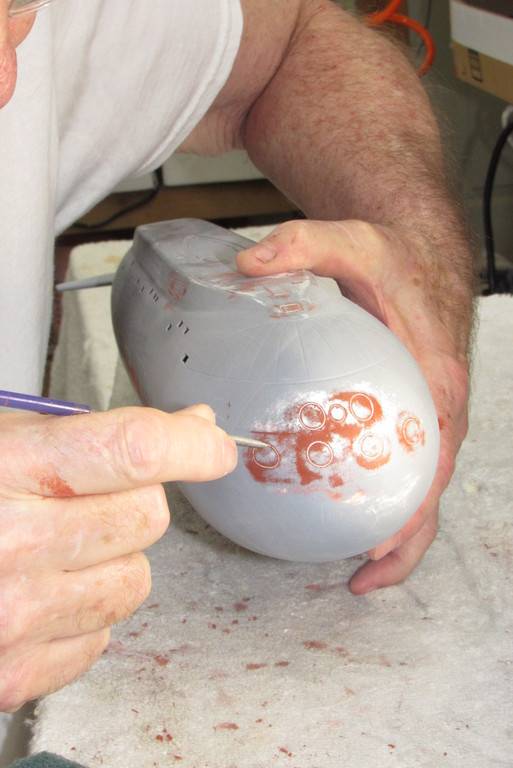
Here I'm deepening the straight running engravings with the modified razor-saw. While continuing aft along the model deck with scribing tool and saw, the putty, up forward, has plenty of time to dry.
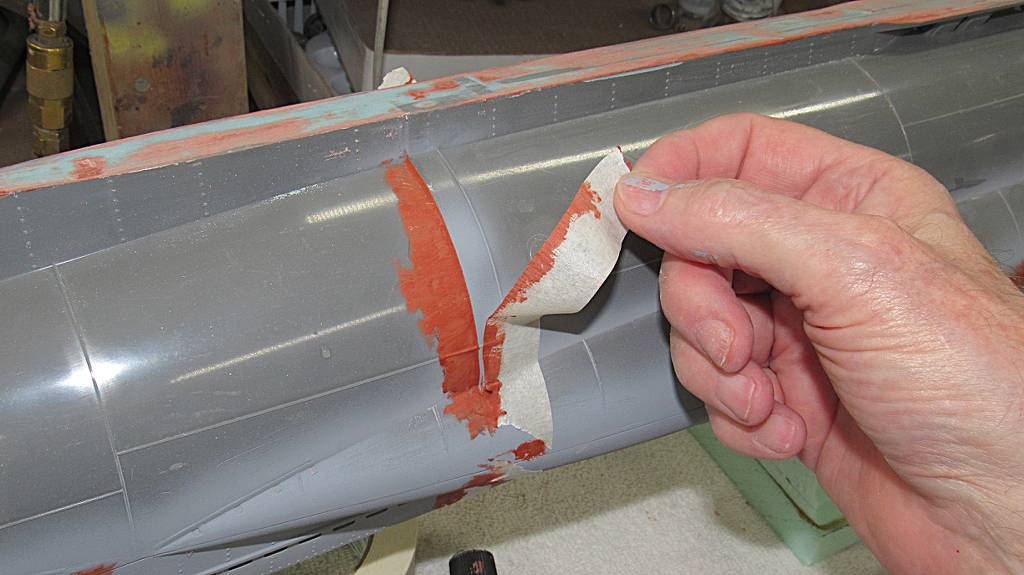
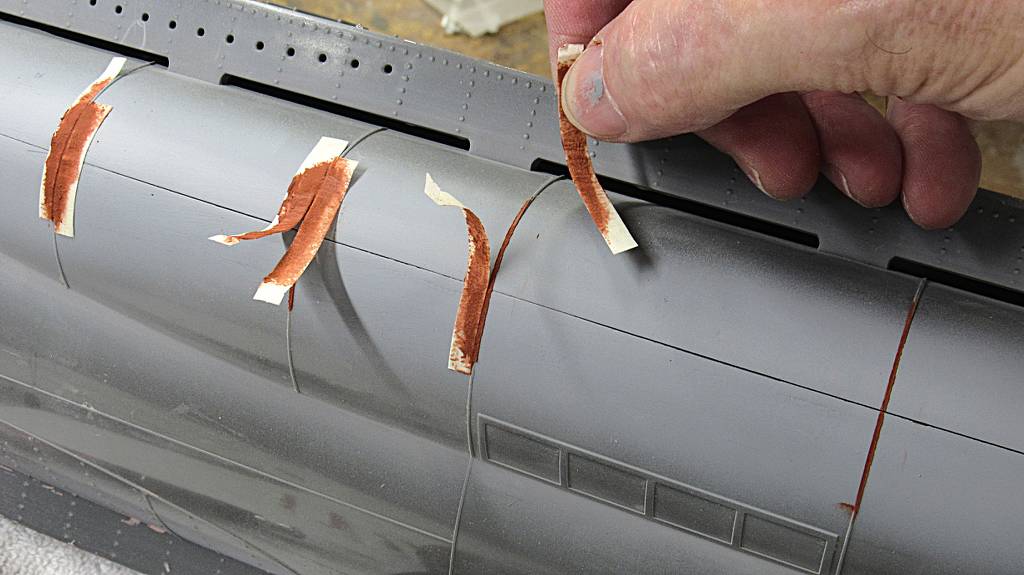
As soon as an engraving task was completed, I brushed on air-dry Nitro-Stan touch-up putty over that work, promptly chasing out any putty that gets into the engravings.
Air dry putty is never applied thick, its only to address shallow scratches and gaps. Since this putty polymerizes (changes state from liquid/paste to solid) through evaporation of its solvent – if put on too thick it takes forever for the buried solvents within the mass to be liberated to the air. The top surface will skin hard, but underneath that the putty is still soft. A killer later!
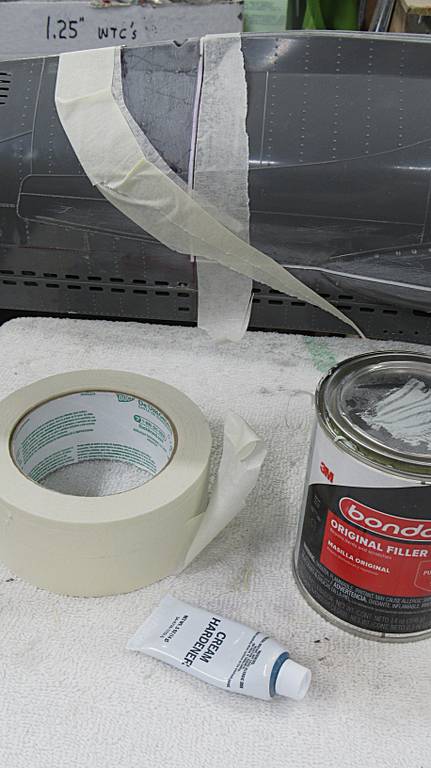
(Two-part fillers, on the other hand, change state quickly if put down thick as the polymerization process – how the filler changes state from liquid/paste to solid – is through an exothermic reaction between the resin base and catalyst. So, with a two-part filler, the denser the mass the greater the heat generated, the quicker the cure of the filler.)
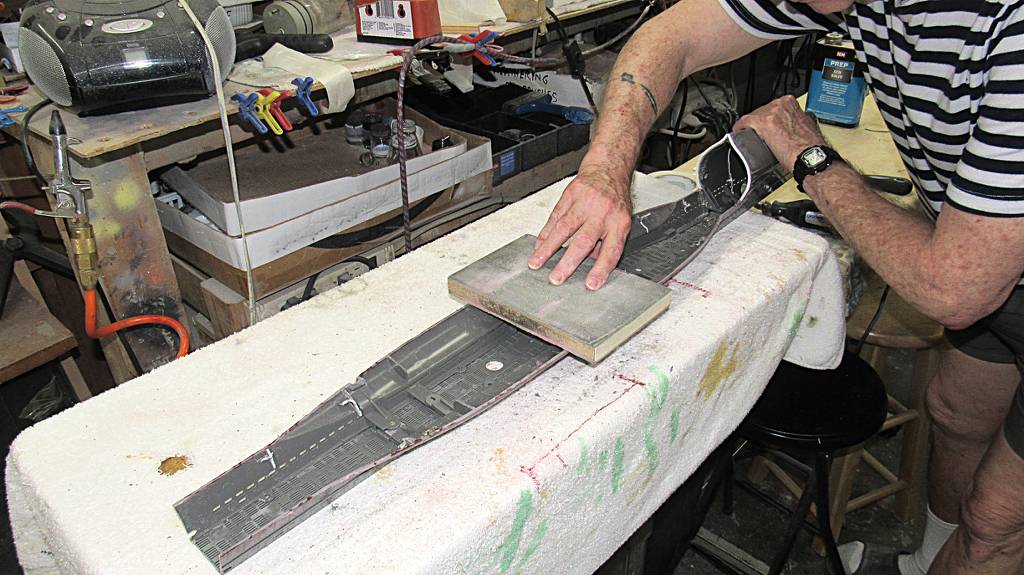
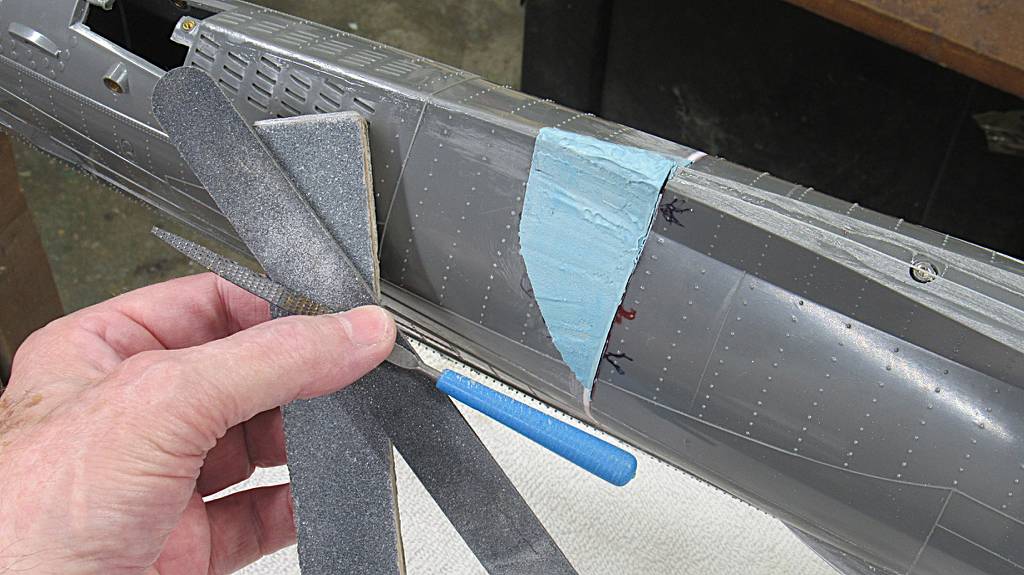
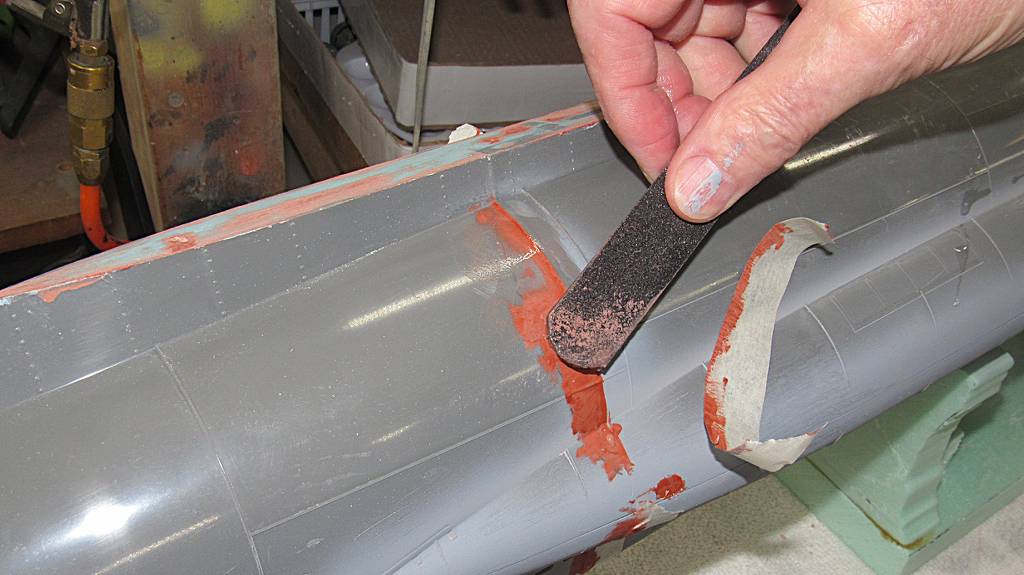
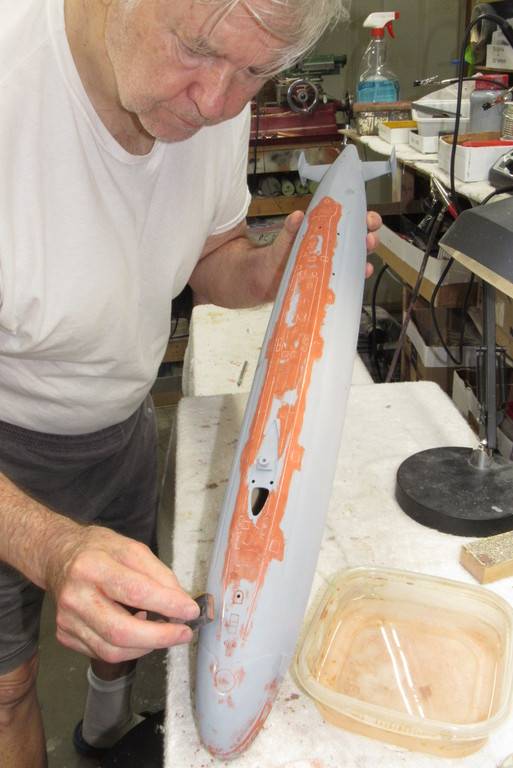
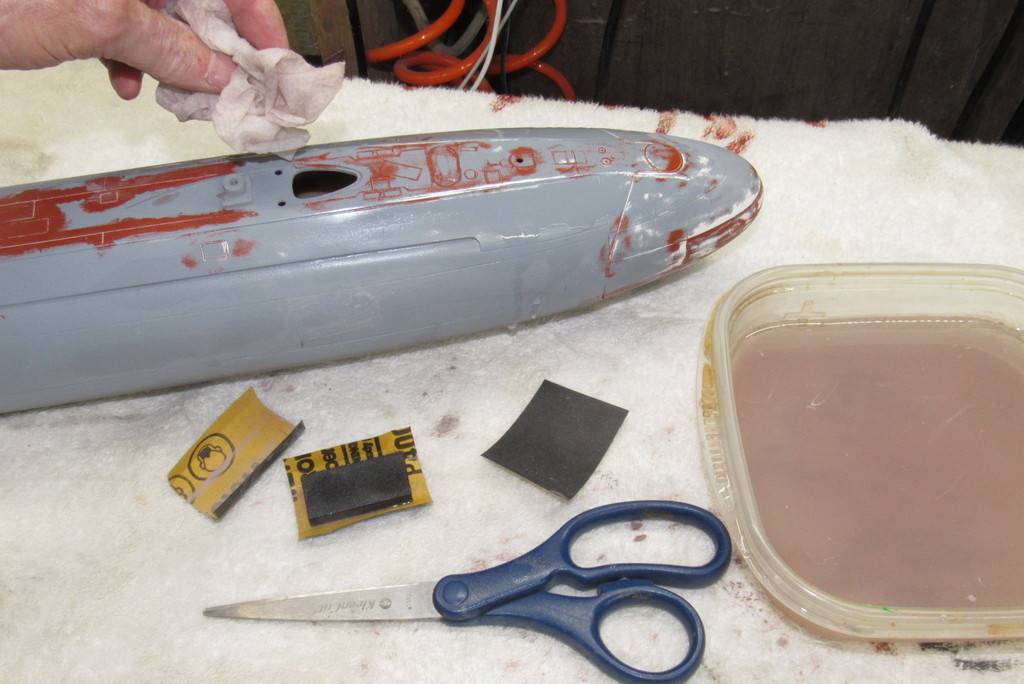
The dried putty is wet-sanded with a small hard-rubber sanding-block backing up a piece of #400 grit sandpaper. Copious amounts of water are the order of the day.
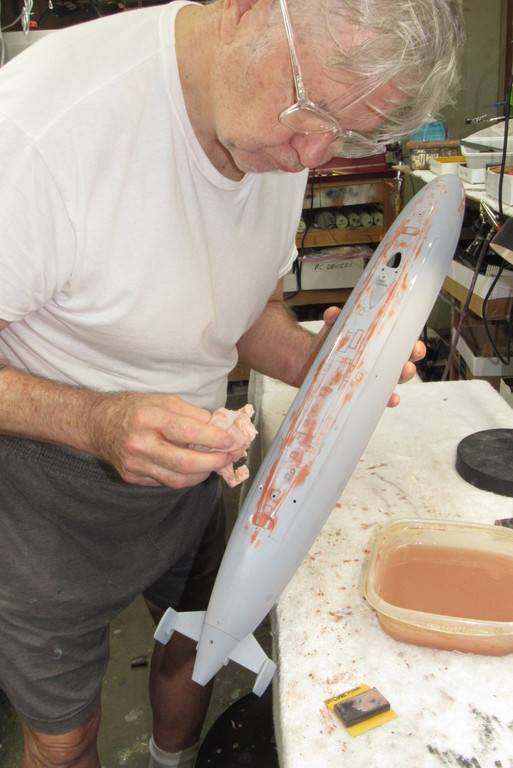
The sanding done; a wet paper towel is used to remove the water suspended sanding dust.
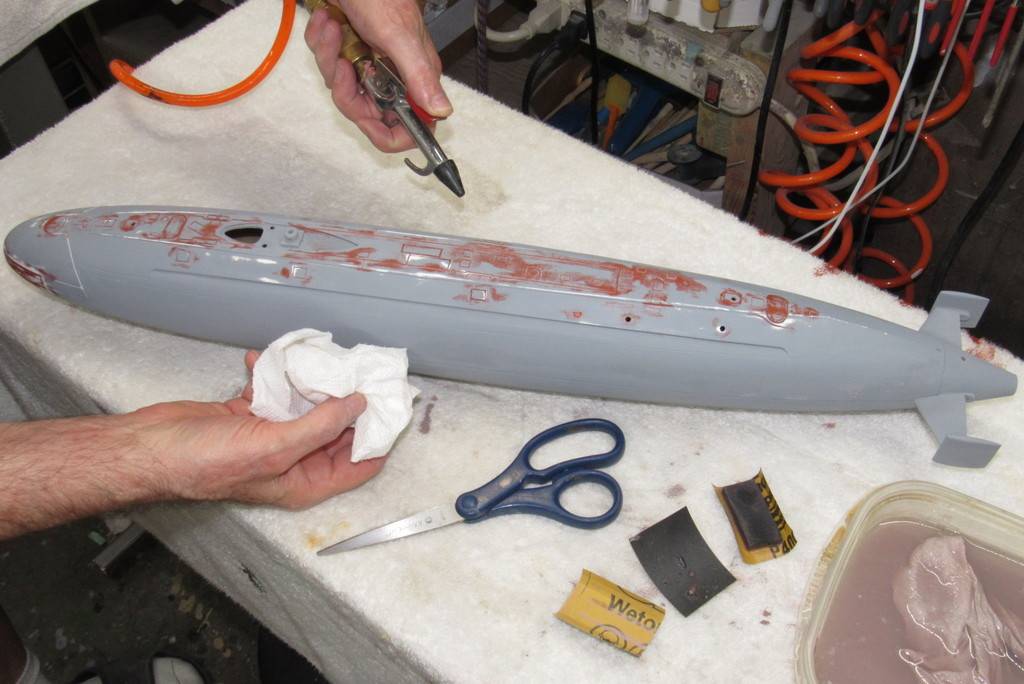
Followed by a blow-down with low pressure air to chase out any water still hiding in the engravings.
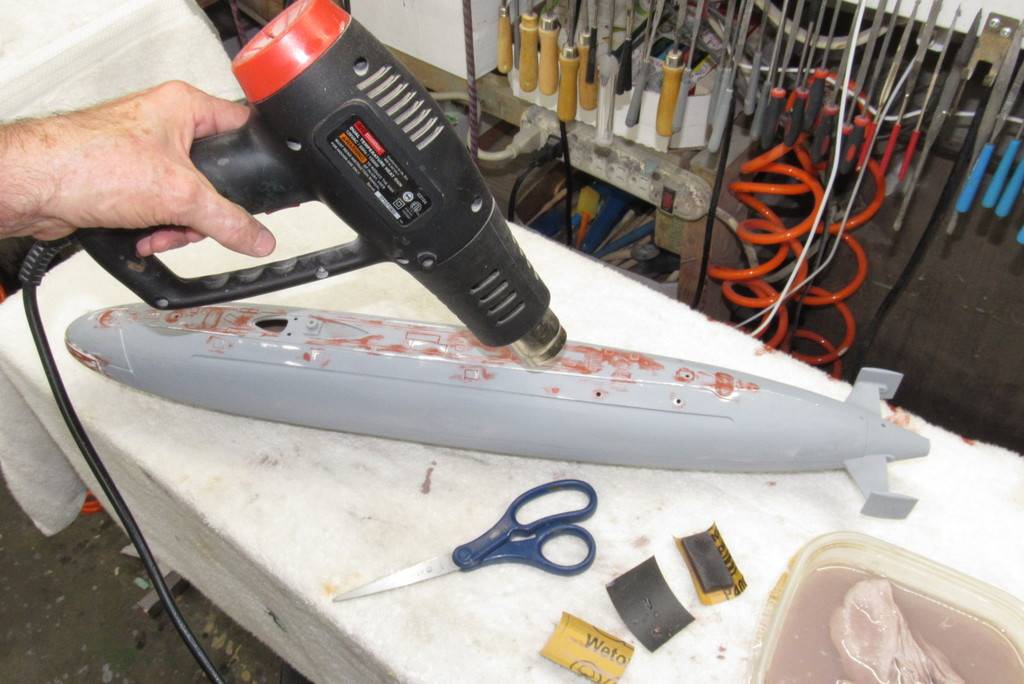
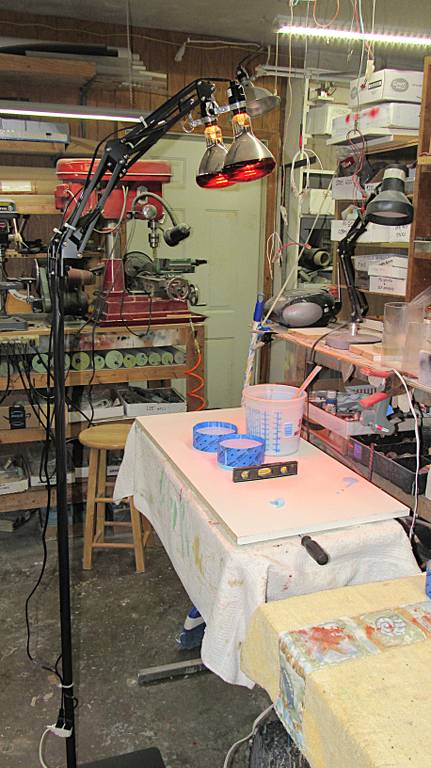
And... just to be sure... some hot air to evaporate the last traces of water.
At this stage I'm chasing out sanding dust from the THIRD scribe-putty-sand cycle!
God!... will it never end????
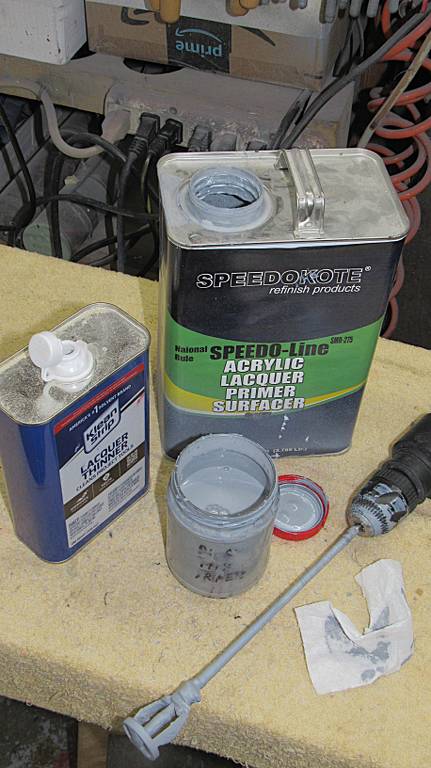
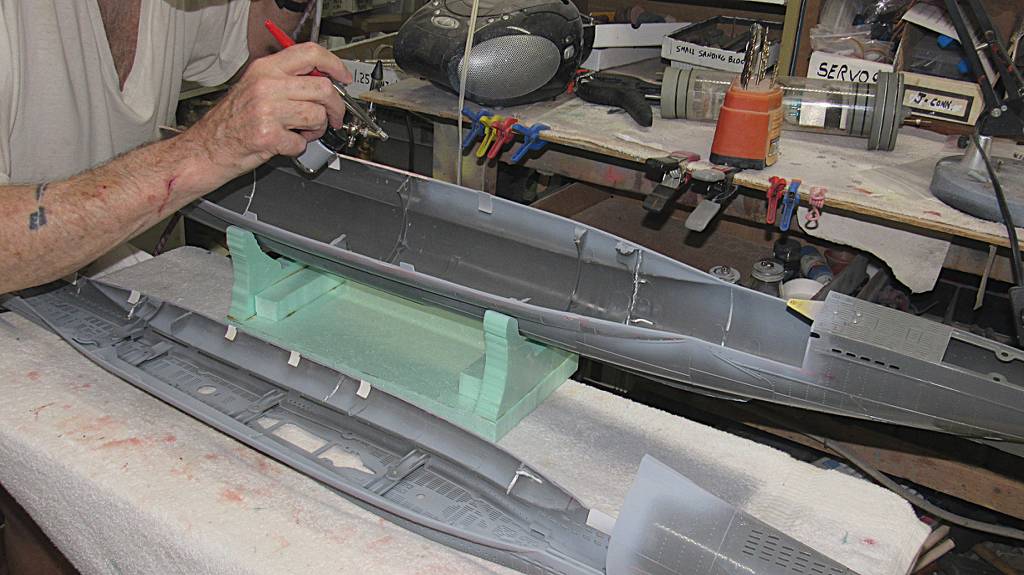
Now that the engraved lines are deep enough to guide the tool there's no need for stencils or straight-edge, just push the tip of the tool into the work and gently guide it along. This pushes any stubborn dust clear of the work. Making things ready for another coat of gray primer which further fills scratches and at the same time renders an easier to examine models surface.
To check for any missed over-strikes, misshapen engravings or other flaws, a coat of primer to fill and identify the problem children.
… and the process repeated until perfection (who am I kidding?!...) is achieved.
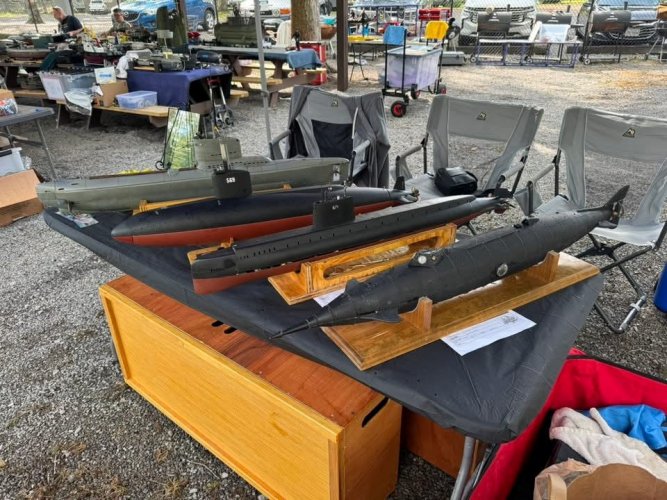
I may have to get that Kilo kit I got from Bob going soon (I think it's SWM too, not sure). They do look pretty cool together, and I can get the paint right.
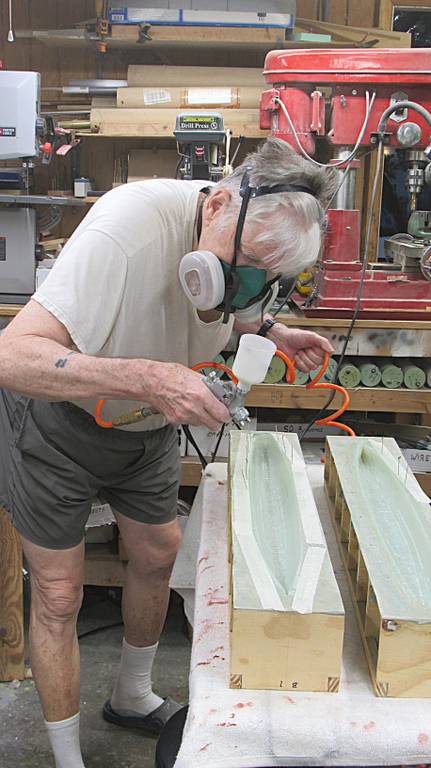
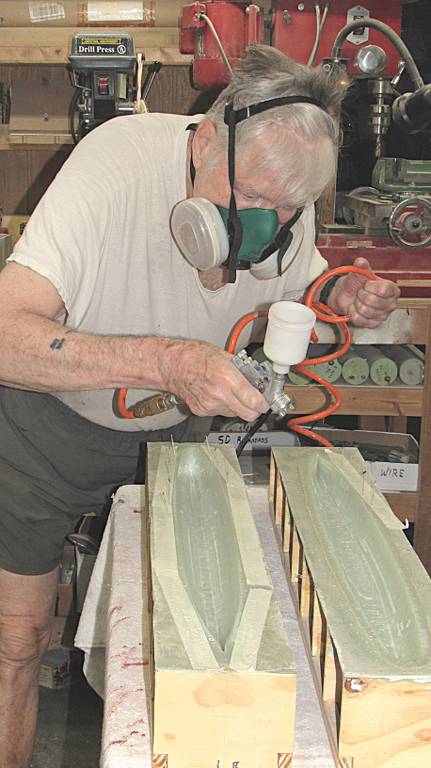
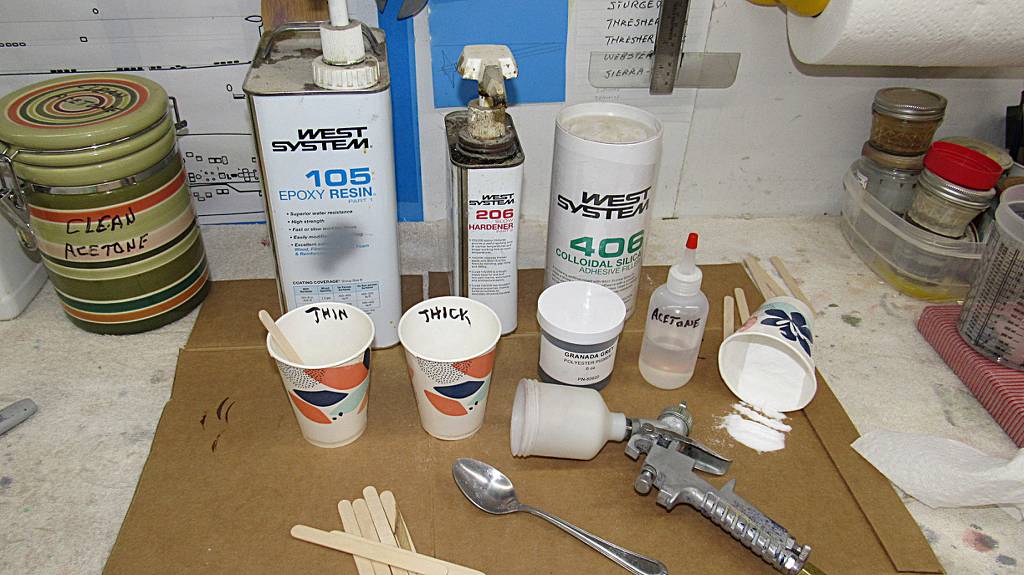
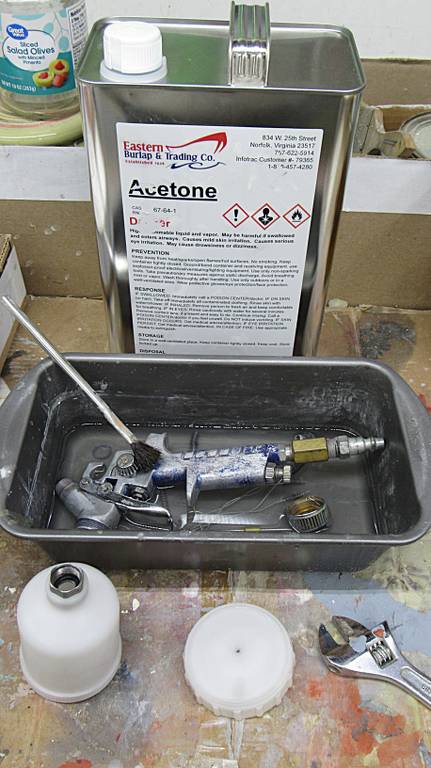
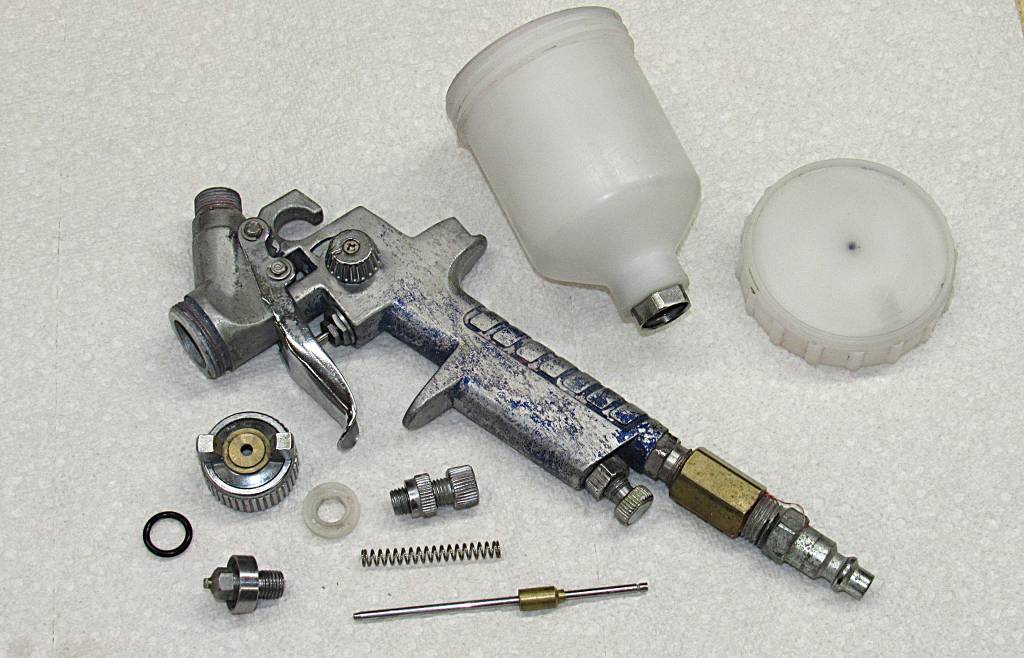
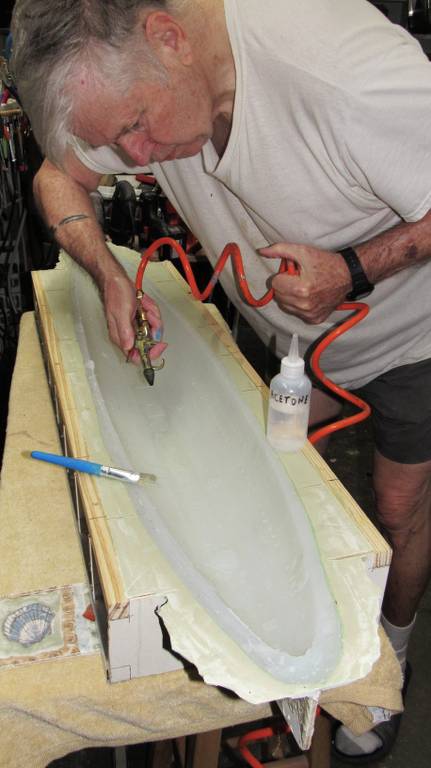
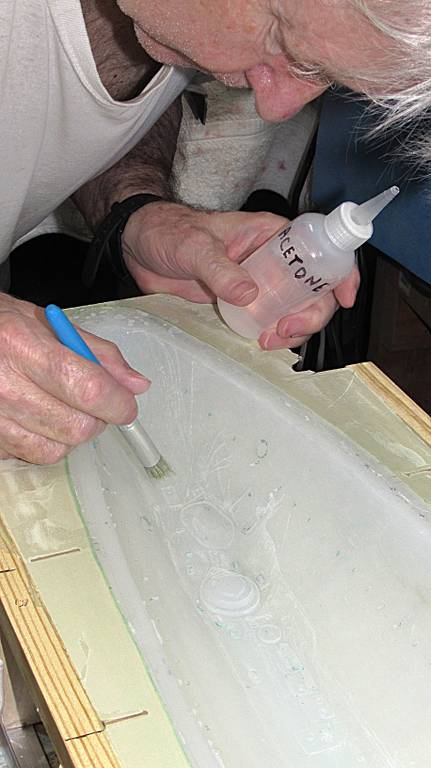
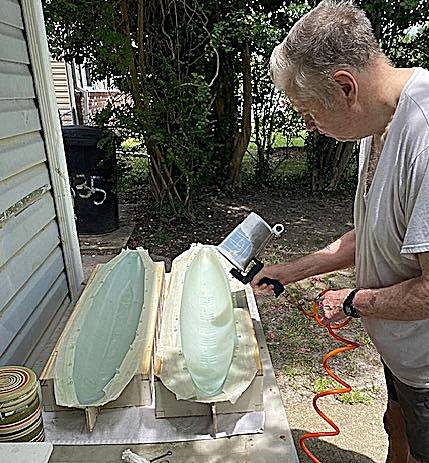
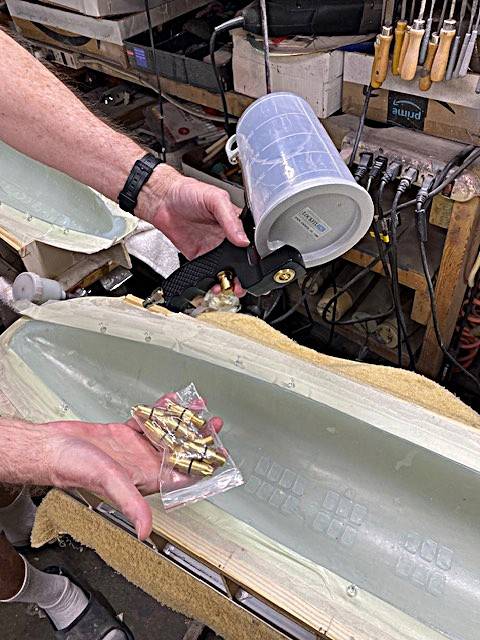
Screw that sprayer... I'll use any damned solvent I want, and it will just have to lump what it does to the rubber parts! (though your point, Scott, is well taken).
Screw that sprayer... I'll use any damned solvent I want, and it will just have to lump what it does to the rubber parts! (though your point, Scott, is well taken).
Spraying 2-part epoxies was always a "clean up with MEK" thing for me when I was working planes. Even after the state really cracked down on MEK usage, the painters were still allowed to use it for cleaning. The rest of us got stuck with Methy Propyl Ketone, which was not as good at cleaning up what we needed it to so we used about twice as much.
Plus, MEK gave me a contact allergy to latex. And I was lucky, we had one dude in the other hangar develop full blown anaphylaxis to latex.
This site uses cookies to help personalise content, tailor your experience and to keep you logged in if you register.
By continuing to use this site, you are consenting to our use of cookies.