
kaiserd
I really should change my personal text
- Joined
- 25 October 2013
- Messages
- 1,656
- Reaction score
- 1,796
A bit late for the F-16, isn’t it?

A bit late for the F-16, isn’t it?


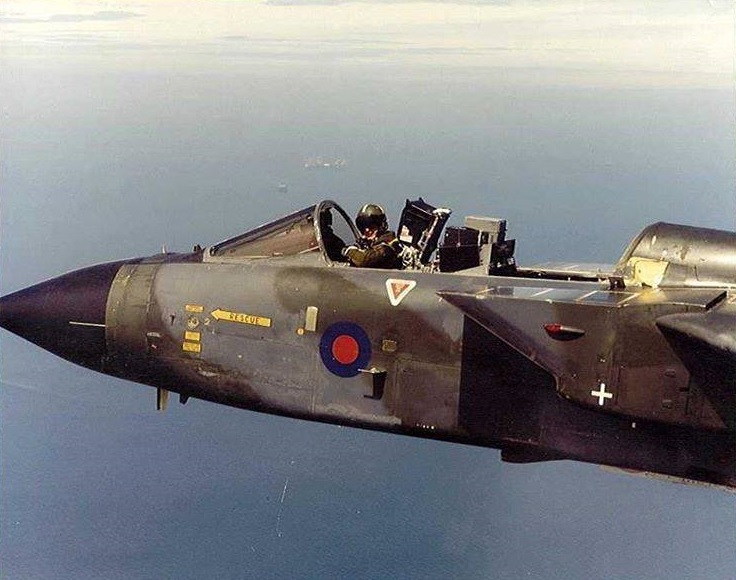
BAe Test Pilot Keith Hartley undertaking not everyday’s test flight in 1988. This “cockpit habitability test” purpose was to evaluate if the Tornado pilot could operate efficiently after the departure of the canopy at speeds up to 500 knots.
He made it look so damn cool and easy.



https://www.cnbc.com/amp/2020/09/29...16-of-downing-warplane-ankara-denies-it-.htmlAn Armenian defence ministry spokeswoman said the Armenian Sukhoi Su-25 warplane had been on a military assignment when it was downed by an F-16 fighter jet owned by the Turkish air force.
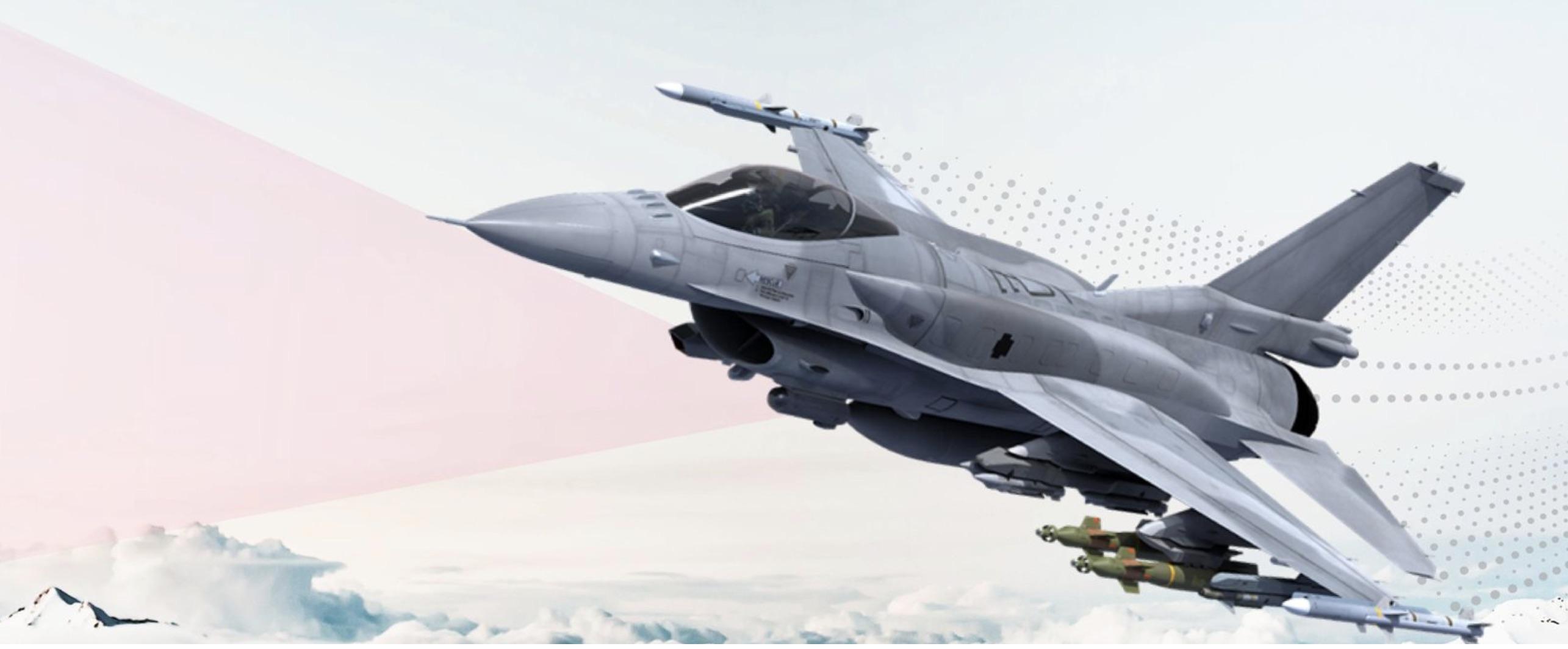
The Air Force’s F-16 System Program Office within the Fighters and Advanced Aircraft Directorate has awarded a $900 million F-16 Continental United States (CONUS) Depot contract to Lockheed Martin Aeronautics.
Lockheed Martin Aeronautics, with twelve dock spaces in their Lockheed Martin Greenville Operations facility located in Greenville, S.C., will provide depot level maintenance and modernization support, establishing the first ever U.S. based F-16 industry depot to support the government-owned depot facilities. There are currently two overseas F-16 contract depots, one in Europe and the other in the Pacific.
...
A 40-year-old idea to improve strafing accuracy by transferring flight control of a manned fighter to the autopilot to aim the gun is being revived as the U.S. Air Force looks internally for innovations ...

Update from Janes:Canadian aggressor company Top ACE gets approval for suspected Israeli F-16A fleet:
https://www.skiesmag.com/news/top-aces-f16-adversary-air-fleet/
https://www.airforcetimes.com/news/...2.04.20&utm_term=Editorial - Early Bird Brief
This is an abbreviated version of the Aviation Week & Space Technology article “USAF Death Claw Shows New Way To Speed Development”, which describes the full details of issues faced with the F-16’s capabilities, how Death Claw aims to address these issues, and industry insights into the system.
A 40-year-old idea to improve strafing accuracy by transferring flight control of a manned fighter to the autopilot to aim the gun is being revived as the U.S. Air Force looks internally for innovations that can be demonstrated and delivered quickly. An operational version of the Digitally Enhanced Aiming Through Control Law (Death Claw) system is in development less than two years after the U.S. Air Force Test Pilot School conceived and performed an eight-month demonstration.
In effect, Death Claw has two functions. As a new automated flight mode, it solves a practical problem for pilots of F-16s and potentially other fly-by-wire fighters. The system also highlights a path to introducing aircraft upgrades faster by involving the test community up front. Adding an “auto-gunnery mode” to the flight control law, and allow the autopilot control to point the aircraft when the gun is engaged. Bill Gray, chief test pilot of the test pilot school, launched a demonstration program in late 2017 to prove it could work.
The test pilot school owns the F-16 Variable stability Inflight Simulator Test Aircraft (VISTA), an aircraft specially modified to allow inflight changes to the flying qualities. “I realized it would be a relatively simple modification to adjust the control of that airplane to actually test this to do the concept exploration,” he says.
As much as the Air Force pushes to accelerate development, the question still remains how much schedule compression is possible during the test-and-evaluation phase.
In the case of Death Claw, the test pilot school used a live demonstration to prove a basic autopilot capability. Lockheed Martin’s Skunk Works is now working on an improved operational version of the new autopilot gunnery mode, but the Air Force collected the data it needed to make a decision with a rudimentary system created within four months in 2017. The test community also now has experience with the technology, which could help focus the follow-on test schedule.
https://aviationweek.com/defense-space/z/death-claw-new-way-speed-development
https://www.scramble.nl/military-news/norway-might-sell-f-16sThe Norwegian Defence Material Agency (NDMA) has contracted Kongsberg Aviation Maintenance Services (KAMS) to maintain a number of Luftforsvaret (RNoAF, Royal Norwegian Air Force) F-16 Fighting Falcons that have been taken out of active service and make them ready for commercial re-sale.
The contract initially applies for two F-16s, with an option to overhaul up to three additional aircraft. The work on the F-16s will take place at KAMS’ facilities at Kjeller, near Oslo, and if the option is exercised the last three aircraft are expected to be ready by the end of 2021. The fighters will be returned to operating status and then maintained so that they are ready for service again. KAMS has 40 years of experience in maintaining, repairing and upgrading Norway’s F-16 fleet.
https://theaviationist.com/2021/04/28/rdaf-f-16s-have-glass/The RDAF F-16 jets are, to our knowledge, the first international Vipers to sport the Have Glass V color scheme.

[USAF] on Monday announced a contract for the production of 128 Block 70/72 jets, the latest and most advanced version of the venerable fourth-generation fighter, on behalf of Bahrain, Slovakia, Bulgaria, Taiwan and Morocco.
[...]
The service will simultaneously work to upgrade more than 400 aging F-16s for four partner nations to the new "F-16V" configuration, which includes the APG-83 Active Electronically Scanned Array, or AESA, radars.


