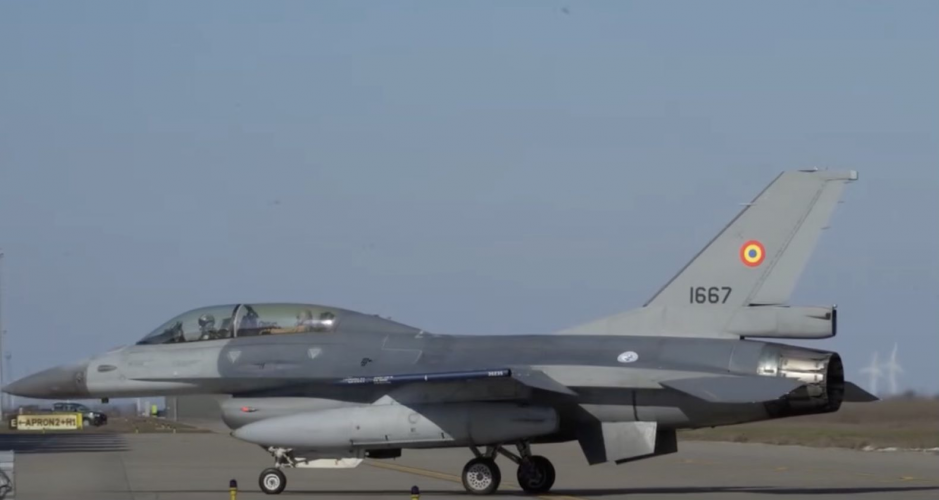
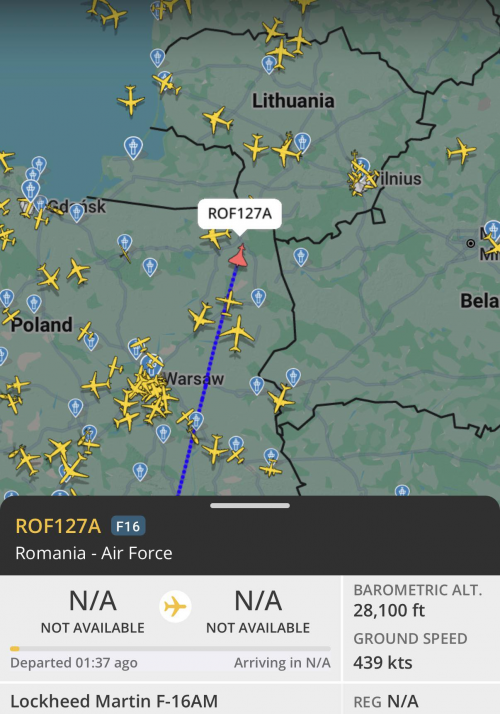
Maintenance for the ukrainian F-16 will be performed in Belgia, the ukrainian f-16 pilot training in Romania.
https://www.airforce-technology.com/news/us-task-belgian-supplier-to-maintain-ukraines-f-16s/
https://www.romania-insider.com/romania-lockheed-martin-f16-pilots-training-deal-dec-2025
"That contract includes a requirement to maintain the training capacity of the EFTC, particularly for pilot training slots allocated to Ukraine starting in 2026. The continued operation of the training centre is also described as essential for the operationalisation of Romania’s own F-16 squadrons.

The ministry said the proposed agreement with Lockheed Martin would ensure continuity of training activities at the EFTC and support both national defence objectives and allied commitments."
 
https://www.twz.com/sponsored-content/a-new-generation-of-f-16-operations-in-europe
"The F-16 course in Romania lasts roughly six months and is broadly based on the USAF Basic Course (B-Course). As is commonplace with modern fighter pilot training, this begins with academic classes, and includes judicious use of the EFTC’s two full motion dome simulators, two fixed cockpit simulators, and live flying of 10-12 sorties that teach the new aviators how to actually fly the F-16 safely. A student is expected to solo on their fifth flight.

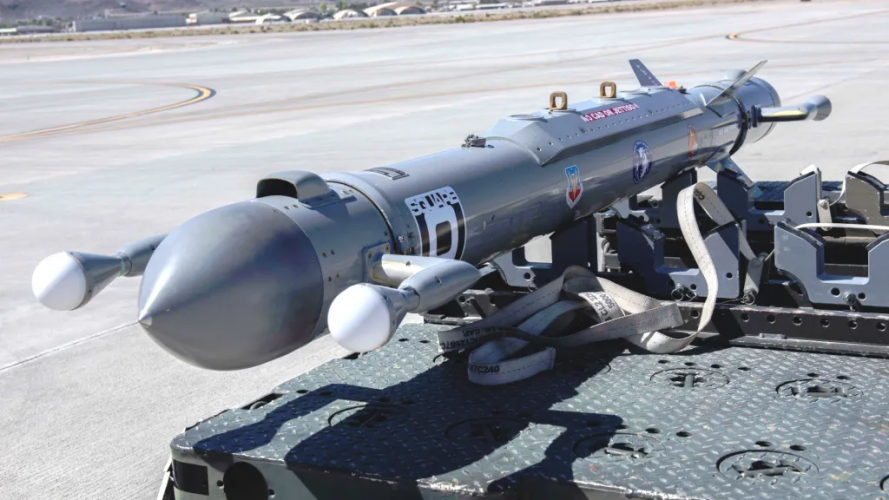
Unlike a typical B-Course, a tailored mission qualification training (MQT) phase follows, which covers fighter maneuvering, air-to-air and surface attack tactics, and weapons employment. Elements such as flying with the Joint Helmet-Mounted Cueing System (JHMCS), night vision goggles (NVGs), using the Sniper targeting pod, threat reaction techniques, ‘slow mover’ intercepts, and lots of flying on instruments in bad weather are also included. This mission qualification phase is being updated regularly to include new weapons and new tactics."

"When Ukraine first received F-16s from Denmark and the Netherlands, it had to move quickly to train an initial core of pilots. These were all experienced MiG and Sukhoi aviators, and they learned how to operate the Viper on hastily-arranged crossover courses in the U.S. and in Denmark. Ukraine is now expanding its F-16 pilot cadre through brand new students that are coming through a diverse training pipeline.

These new flyers are typically trained in Grob Tutors, Alpha Jets, and L-39s, before coming to the EFTC. To date, two classes of Ukrainian F-16 pilots have graduated from the EFTC, and there continue to be Ukrainian pilots in various phases of training, plus, new Ukrainian F-16 pilots are also being trained by the Air National Guard in Arizona."

EFTC-2604-copy.jpg
 
The first international volunteer fighter squadron in Ukraina is starting operation.
https://www.intelligenceonline.com/...rce-s-f-16s-in-skies-above-kyiv,110628200-art
https://www.pravda.com.ua/eng/news/2026/02/16/8021322/
"The unit was created "in recent weeks" by the Ukrainian Air Force for immediate deployment. The international squadron is currently playing a central role in the air defence of Kyiv Oblast, which Russia is attacking with drones and missiles, Intelligence Online says.

The unit includes American pilots who "have carried out numerous combat missions in Afghanistan" and a western veteran who performed missions in the Middle East before joining the mission in Ukraine. Among the Dutch pilots are graduates of "leading European air combat schools known for their advanced training in interception and modern aerial warfare"."
 
Sandboxx has uploaded a short video concerning recent claims that US and Dutch F-16 pilots have been flying F-16s in Ukraine:


Could American and Dutch F-16 pilots be flying combat missions over Ukraine? It isn't clear if it's true, but it would be a good idea.

Whether or not this is a good idea assuming the claims are true (I wouldn't be in the least bit surprised if there are such volunteers in Ukraine, I mean you've already had western volunteers serving in Ukrainian infantry units since early 2022), there is historical precedent for this going right back to the Korean War when Soviet pilots flew MiG-15s for the North Koreans and the Chinese. Then of course you had similar volunteers in North Vietnam flying North Vietnamese MiG-17s, MiG-19s and MiG-21s along with Russian army units operating SA-2 Guideline and SA-3 Goa SAM batteries.​
 
We seem to obtain multiple confirmations, from both sides.

https://nltimes.nl/2026/02/18/dutch-pilots-reportedly-flying-f-16-fighter-jets-kyiv
"The Ministry of Defense could not confirm nor deny the reports to NOS. A spokesperson did say that the Dutch military no longer has any operational F-16 pilots in the air force."

"In recent years, the Netherlands has donated 24 F-16s to Ukraine and another 18 of the fighter jets to a training center in Romania, where Ukrainian pilots are trained to fly and maintain them."

"According to NOS, Dutch soldiers are allowed to serve in other militaries."


https://english.almayadeen.net/news...ch-f-16-pilots-in-ukraine--legitimate-militar
"“Volunteers” from the Netherlands operating F-16 fighter jets in Ukraine would be considered "legitimate military targets and criminals" by Russia, the Russian Embassy in the Netherlands said on Wednesday."

"The Kingdom's course toward militarization and active support for Ukraine has long been evident. Dutch pilots represent yet another chapter in the Russophobic multi-volume series," the embassy stated, accusing The Hague of deepening its involvement in the conflict."
 
Sandboxx has uploaded a short video concerning recent claims that US and Dutch F-16 pilots have been flying F-16s in Ukraine:


Whether or not this is a good idea assuming the claims are true (I wouldn't be in the least bit surprised if there are such volunteers in Ukraine, I mean you've already had western volunteers serving in Ukrainian infantry units since early 2022), there is historical precedent for this going right back to the Korean War when Soviet pilots flew MiG-15s for the North Koreans and the Chinese. Then of course you had similar volunteers in North Vietnam flying North Vietnamese MiG-17s, MiG-19s and MiG-21s along with Russian army units operating SA-2 Guideline and SA-3 Goa SAM batteries.​
Goes back even further to Chennault's Flying Tigers in WW2.
 
The AGM-188 does not appear to particularly have stealth shaping applied, which is a big downside.

I mean pure shaping, not applying any RAM unless absolutely required (maybe in the inlet).
 
This comparison is strange. F-16 have a good fighting chance against the Su-35, who are the best Russia can offer in significant number to face them. Ukraine just need training in air operation with more than half a dozen of isolated pairs and focus on massive formation package. The M2K and F-16 have very good navigation instrumentation that allow for precise and coordinate deep strikes. Russia is not a nation you defeat on the FLOT with reciprocal attrition.

You're seriously comparing ancient F-16A MLUs, which don't even get the newest AIM-120s available, with a Su-35S that flies around with R-77-1s, R-77Ms and R-37Ms????

Yikes.

The UAF lost F-16s to Geraniums, I think that's enough said.

"Deep strikes" are a death sentence to the F-16 and Mirage. They can't do such a thing, which is also why they hang around in the rear (and still fall out of the sky regardless).
F-16 and the Flanker are both of same vintage, they are a product of the seventies. First flight in 1974 and 1977. Sukhoi packed better engines, new avionics and a PESA radar in the Flanker airframe and called it, for marketing reasons, Su-35. For the rest of the world it is a Flanker version E.

In the previous years there were a lot of developments in the radar and the electronic warfare systems for the F-16.
https://www.af.mil/News/Article-Dis...unches-f-16-into-next-generation-of-airpower/
https://news.northropgrumman.com/iv...gen-electronic-warfare-and-radar-technologies
A F-16 updated with an AESA Radar and the latest electronic warfare system is at least on par with any aircraft of its generation. Most posible opponents have in the best case only PESA radars, less effective electronic countermeassures and a bigger airframe and radar signature.

The thing is that the nations who operated until now the F-16 have the will and the necessary money to switch to the next generation of fighters, the F-35, and are already in the process of doing it. So no incentive to update their F-16 fleet. But the capacity is there for the F-16 A/B/C/D fleets since many years. Some aricrafts already received this new radar, others will be modernised in the incoming years.
View: https://www.youtube.com/watch?v=JZnrtB9rRT8

https://www.twz.com/sponsored-content/a-new-generation-of-f-16-operations-in-europe
"
another key feature of the F-16 evolution in Europe is modernization through both upgrades and the supply of new aircraft. Lockheed Martin’s F-16V upgrade for existing F-16s of any block brings them bang up to date and to a broadly similar standard as the Block 70/72 current production model.

The F-16V upgrade adds critical new systems to existing F-16s that are in-line with new build Block 70/72s, including the addition of the potent Northrop Grumman AN/APG-83 Scalable Agile Beam Radar (SABR) that features an active electronically scanned array (AESA), a Raytheon Modular Mission Computer, a remodeled cockpit with a large Center Pedestal Display (CPD), and Link 16 data link. Improved interoperability with the F-35 was also an important factor in the development of the F-16V configuration.

The SABR radar is a standard F-16V feature, and it offers significant benefits compared to the mechanically-scanned AN/APG-66/68 predecessors. This includes being able to scan far faster, acquiring more targets and at longer ranges, as well as the ability to produce more precise and higher fidelity tracks, even when it comes to smaller and stealthier objects. The radar is also far more reliable than its predecessor and more resistant to electronic countermeasures. AESAs, in general, have secondary electronic warfare and communications potential, as well. "


"Greece’s F-16V modernization includes 84 Block 52+ jets, with work being undertaken locally by Hellenic Aerospace Industry (HAI). Speaking at Exercise Ramstein Flag in April 2025, Hellenic Air Force F-16V pilot “RAF” commented: “The AESA radar, APG-83, is what makes it stand out in the new field of battle. It gives us a high capability of tracking multiple targets at very long-ranges. We can do air-to-air and air-to-ground, it just gives us overall [situational awareness] much higher [than] we are used to.”"
 
Last edited:
When it starts out with calling Su-35S 'Flanker-E' although it's 'Flanker-M' I know exactly what kind of "research" has been done :)

The Rest is just trying to peddle a medium weight single engine fighter with substantially less capable missile armaments and comparatively small radar as something it isn't.
 
Flanker designations and accurate information are a confusing mess, and the Russians only make it more difficult to keep track of, often releasing different figures for the same aircraft. You have the late '90s Su-27M aka Su-35 but IIRC they only built a dozen or so of those. I wonder if they're still in use or just sitting in a depot somewhere. Interestingly enough they had canards which can help distinguish them. That was the particular model given the "Flanker-E" name, but then there is the "new" Su-35 aka the Su-35S which is still in production and the one talked about today. This was originally also considered a "Flanker-E" but at some point that was changed so it's a "Flanker-M".

Of course the Su-35S has all of the benefits that its much greater size allows for, but a Block 70/72 F-16 would be a very real threat to it in many circumstances. Air combat rarely allows the luxury of firing your missiles at their max effective range and scoring many kills that way.
 
When it starts out with calling Su-35S 'Flanker-E' although it's 'Flanker-M' I know exactly what kind of "research" has been done :)

The Rest is just trying to peddle a medium weight single engine fighter with substantially less capable missile armaments and comparatively small radar as something it isn't.
If you think an AIM-120D-3 is less capable than an R-77-1 / R-77M then I have a bridge to sell you
 
The AESA AN/APG-83 SABR radar beeing integrated at the moment on the F-16 is a 5th fighter generation technology, it inherits advanced operating modes and hardware technology from the F-22 (AN/APG-77) and F-35 (AN/APG-81) radar systems from which it derives. It offers quite substantial advantages compared to older radar systems.

https://www.armyrecognition.com/new...-f-16-fighters-to-map-and-track-while-jamming
"On October 28, 2025, Northrop Grumman announced that its AN/ALQ-257 Integrated Viper Electronic Warfare Suite now operates in concert with the company’s AN/APG-83 SABR active electronically scanned array on F-16s, a configuration the firm says prevents mutual interference and preserves tracking quality even while jamming."

https://www.zona-militar.com/en/202...hters-a-key-factor-in-hunting-iranian-drones/
 
F-16 and the Flanker are both of same vintage, they are a product of the seventies. First flight in 1974 and 1977. Sukhoi packed better engines, new avionics and a PESA radar in the Flanker airframe and called it, for marketing reasons, Su-35. For the rest of the world it is a Flanker version E.

In the previous years there were a lot of developments in the radar and the electronic warfare systems for the F-16.
https://www.af.mil/News/Article-Dis...unches-f-16-into-next-generation-of-airpower/
https://news.northropgrumman.com/iv...gen-electronic-warfare-and-radar-technologies
A F-16 updated with an AESA Radar and the latest electronic warfare system is at least on par with any aircraft of its generation. Most posible opponents have in the best case only PESA radars, less effective electronic countermeassures and a bigger airframe and radar signature.

The thing is that the nations who operated until now the F-16 have the will and the necessary money to switch to the next generation of fighters, the F-35, and are already in the process of doing it. So no incentive to update their F-16 fleet. But the capacity is there for the F-16 A/B/C/D fleets since many years. Some aricrafts already received this new radar, others will be modernised in the incoming years.
View: https://www.youtube.com/watch?v=JZnrtB9rRT8

https://www.twz.com/sponsored-content/a-new-generation-of-f-16-operations-in-europe
"
another key feature of the F-16 evolution in Europe is modernization through both upgrades and the supply of new aircraft. Lockheed Martin’s F-16V upgrade for existing F-16s of any block brings them bang up to date and to a broadly similar standard as the Block 70/72 current production model.

The F-16V upgrade adds critical new systems to existing F-16s that are in-line with new build Block 70/72s, including the addition of the potent Northrop Grumman AN/APG-83 Scalable Agile Beam Radar (SABR) that features an active electronically scanned array (AESA), a Raytheon Modular Mission Computer, a remodeled cockpit with a large Center Pedestal Display (CPD), and Link 16 data link. Improved interoperability with the F-35 was also an important factor in the development of the F-16V configuration.

The SABR radar is a standard F-16V feature, and it offers significant benefits compared to the mechanically-scanned AN/APG-66/68 predecessors. This includes being able to scan far faster, acquiring more targets and at longer ranges, as well as the ability to produce more precise and higher fidelity tracks, even when it comes to smaller and stealthier objects. The radar is also far more reliable than its predecessor and more resistant to electronic countermeasures. AESAs, in general, have secondary electronic warfare and communications potential, as well. "


"Greece’s F-16V modernization includes 84 Block 52+ jets, with work being undertaken locally by Hellenic Aerospace Industry (HAI). Speaking at Exercise Ramstein Flag in April 2025, Hellenic Air Force F-16V pilot “RAF” commented: “The AESA radar, APG-83, is what makes it stand out in the new field of battle. It gives us a high capability of tracking multiple targets at very long-ranges. We can do air-to-air and air-to-ground, it just gives us overall [situational awareness] much higher [than] we are used to.”"

The discussion was about UkrAF operated F-16AM, which lack all the latest and greatest stuff that you have listed. In this respect you missed the point and yes the new Block 70/72 are different beasts and certainly much more capable. The 40+ years old F-16AM are more on the losing end though and the armament supplied to Ukraine isn't top tier either,only AIM-9L and not X. AIM-120C7 at the very best, possibly not even that.
 
There is some indetermination with the deal traced to local politics. 2 head of offices have resigned (including MoD) and the leading candidate fot the next election (sorry if I misunderstood correctly), acting interim president, is pushing to put the deal on hold.
 
Last edited:
,only AIM-9L

Ukraine does also have the AIM-9M and I won't be surprised if it does get in the future a small stock of AIM-9Xs), then of course it has also been supplied with early block AIM-132 ASRAAMs.
 
Ukraine does also have the AIM-9M and I won't be surprised if it does get in the future a small stock of AIM-9Xs), then of course it has also been supplied with early block AIM-132 ASRAAMs.

What they may get or not is another question, thus far UkrAF F-16AM are definitely not carrying the X. ASRAAM isn't integrated on any F-16. IRIS-T is though, but only surface launched versions have been delivered.
 
The discussion was about UkrAF operated F-16AM, which lack all the latest and greatest stuff that you have listed. In this respect you missed the point and yes the new Block 70/72 are different beasts and certainly much more capable. The 40+ years old F-16AM are more on the losing end though and the armament supplied to Ukraine isn't top tier either,only AIM-9L and not X. AIM-120C7 at the very best, possibly not even that.
These ukrainian F-16 don`t need to be the best in the world. Other aircrafts supply them target datas.
View: https://www.youtube.com/watch?v=fP_3yR2j7xU
 
Last edited:

Air Force lays out plan to buy 206 IVEWS units for F-16s through 2031​

https://insidedefense.com/daily-news/air-force-lays-out-plan-buy-206-ivews-units-f-16s-through-2031
A modernized F-16 Fighting Falcon electronic warfare package is slated to get $438 million in fiscal year 2027 to upgrade 48 aircraft, according to Air Force budget documents , kickstarting the program’s long-awaited procurement. The Integrated Viper Electronic Warfare Suite consists of improved digital radar warning receiver performance and an active jamming capability, plus future growth upgrades, in an internal suite for the decades-old F-16.
 
You read that out and decided it was worth posting? I don't think these twitter accounts know what Squawk 7700 indicates.
 

Similar threads

Back
Top Bottom