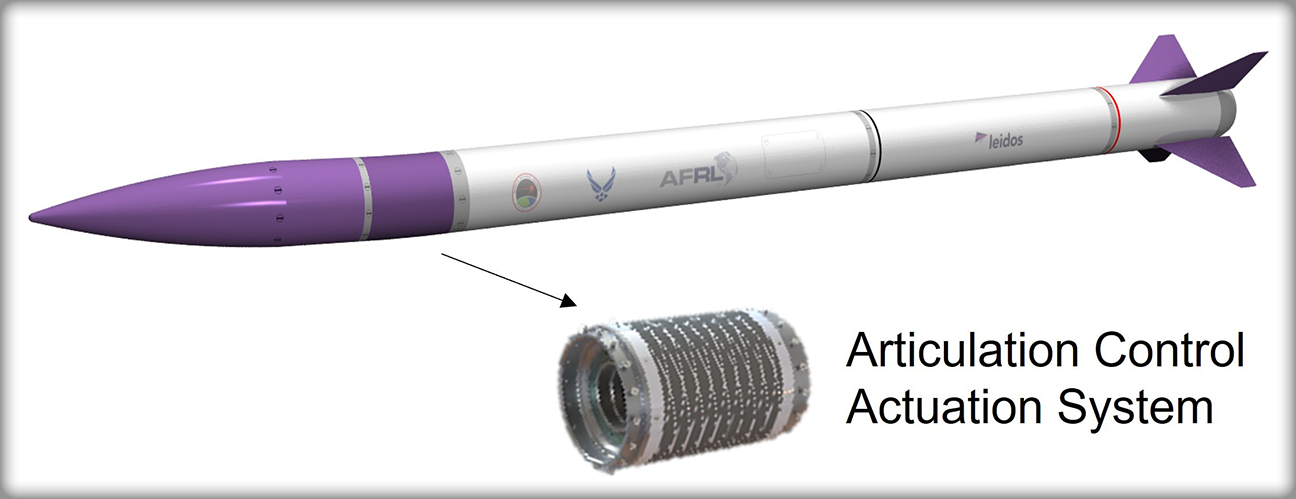
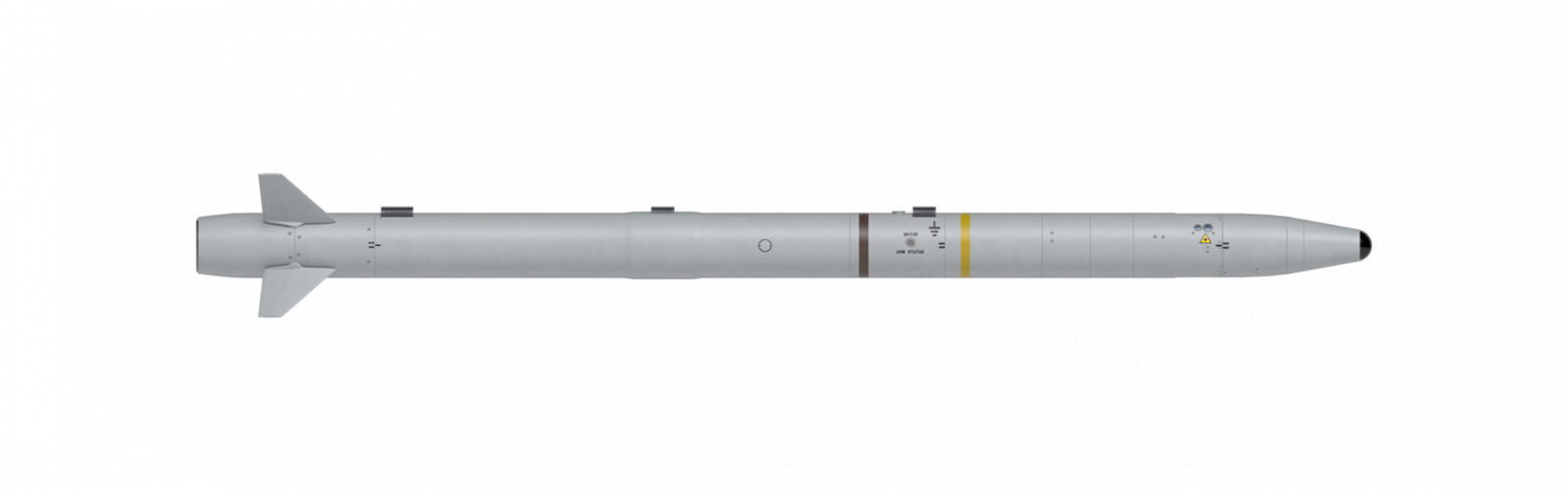
The winglets could be used to generate lift increasing maneuverability to make up for the lack of mid body control section and maybe increase range? As seen with glide bombs and the aim152
 
If the second stage only has a single control surface, does that mean that the second stage is like a rolling airframe missile and rapidly spinning when in flight?

There is no second stage..
This missile can infer which seat in an aircraft holds a party member or officer and target that location in endgame maneuver based on social media posts.
 
The length of the Alm-260JATM can be estimated based on the F-22 and F-35 combat bays.
 
Yes mig-31 can go to insane altitude.
Though I’m still conflicting on whether AIM-260 can reach R-37M range since R-37M is significantly bigger.
In principle, sure. Range is a function of thrust and drag. The assumption is that AIM-260 has low drag airframe, more compact modern guidance, possibly a smaller warhead, and a lot of space for the rocket fuel compared to AIM-120.

R-37M is big, sure, but also draggy.
 
In principle, sure. Range is a function of thrust and drag. The assumption is that AIM-260 has low drag airframe, more compact modern guidance, possibly a smaller warhead, and a lot of space for the rocket fuel compared to AIM-120.

R-37M is big, sure, but also draggy.
I'd guess it's as usual, but to the extreme.
LRAAM likes high altitude launch(and speed) and target; low target is ok, but only if it's cooperative until too late.
When launch is performed lower and slower, performance drops dramatically and disproportionately.

MRAAM is highly universal and consistent, from almost point blank/low altitude/low velocity onwards.

I don't know if slender missiles remain somewhat vulnerable to target being uncooperative throughout the flight, but overall we've been there (ASRAAM is in service for decades... though of course one whole class lower).

In any case, ASRAAM is a good case of how you can stretch performance out of small weapon into a higher class.

 
Last edited:
I'd guess it's as usual, but to the extreme.
LRAAM likes high altitude launch(and speed) and target; low target is ok, but only if it's cooperative until too late.
When launch is performed lower and slower, performance drops dramatically and disproportionately.

MRAAM is highly universal and consistent, from almost point blank/low altitude/low velocity onwards.

I don't know if slender missiles remain somewhat vulnerable to target being uncooperative throughout the flight, but overall we've been there (ASRAAM is in service for decades... though of course one whole class lower).

In any case, ASRAAM is a good case of how you can stretch performance out of small weapon into a higher class.
ASRAAM is not a slender weapon for its length, however.

ASRAAM is 166mm diameter, while AIM9 is 127mm diameter.
 
The winglets could be used to generate lift increasing maneuverability to make up for the lack of mid body control section and maybe increase range? As seen with glide bombs and the aim152
I think they are vortex generators. That doesn't mean they can't also utilize the space for sensors at the same time.

The original Raytheon AMRAAM competitor was meant to be statically unstable, lacked any vortex generators or wings on the body at all and was solely tail controlled. It would have been extremely maneuverable off the rail from a turn radius standpoint - and became more stable as propellant burned and shifted the weight forward.

From a risk reduction standpoint it did not make the cut. Hughes AMRAAM was selected instead. I guess we have come full circle, and they still don't trust the concept of no forebody wings despite it being successful on the ASRAAM. That, or the sensors they might (or might not) be hiding in the vortex generators are of particular importance.
 
What could you possibly include in those tiny structures outside maybe a blade style antenna?
 
Maybe vortex generators?
Well yes, that is what I think is most likely by far. I was just exploring other possibilities. Also it still seems odd that whatever this is got a red paint job; not aware of that color being used on ordnance even for testing. And I think the yellow band indicates a live round?
 
I did not suggest radars or signal transmitters of any kind, it could be utilized for other important sensors or electronics. That is all I am trying to say. This is just baseless conjecture.

Passive RF homing like RIM-116? Maybe the active seeker is MMW and they still want to be able to home on x-band emissions?
 
Passive RF homing like RIM-116? Maybe the active seeker is MMW and they still want to be able to home on x-band emissions?

The aerodynamic explanation seems most plausible, though we can open up the forum to informed speculation. I think given what looks like a couple rings of RF sensors around the guidance section that these are in fact control surfaces, even if fixed. But I find the color choice perplexing.
 
Well yes, that is what I think is most likely by far. I was just exploring other possibilities. Also it still seems odd that whatever this is got a red paint job; not aware of that color being used on ordnance even for testing. And I think the yellow band indicates a live round?

Orange, not yellow, I think, which would be appropriate to an instrumented T&E round.

High contrast colors on control surfaces isn't unusual in test settings. The other strake might be differently colored to help identify them in high-speed footage.
 
In principle, sure. Range is a function of thrust and drag. The assumption is that AIM-260 has low drag airframe, more compact modern guidance, possibly a smaller warhead, and a lot of space for the rocket fuel compared to AIM-120.

R-37M is big, sure, but also draggy.
I think another element to the AIM-260 is likely to be a highly digitized design and production process, and use of more open standards that could lend themselves nicely to follow on variants of the weapon to address other niche roles. Baseline A variant replaces the AIM-120 AMRAAM > Follow on larger diameter 'cousins' provide the long-range counter air capability to support LRKC efforts the USAF is investing in. A 10- or 11-inch diameter 'upsized' JATM could be very interesting. Especially if they were to adapt the PAC-3 MSE motor for air-launch.
 
I think another element to the AIM-260 is likely to be a highly digitized design and production process, and use of more open standards that could lend themselves nicely to follow on variants of the weapon to address other niche roles. Baseline A variant replaces the AIM-120 AMRAAM > Follow on larger diameter 'cousins' provide the long-range counter air capability to support LRKC efforts the USAF is investing in. A 10- or 11-inch diameter 'upsized' JATM could be very interesting. Especially if they were to adapt the PAC-3 MSE motor for air-launch.
Was it the motor or avionics that require climate control for PAC-3? (The previous air-launched PAC-3 concept had the missiles podded rather than just hanging from a pylon.)
 
Was it the motor or avionics that require climate control for PAC-3? (The previous air-launched PAC-3 concept had the missiles podded rather than just hanging from a pylon.)
Not sure, but that was, IMO, a solution where they could simply use the standard, in production PAC-3 rounds for air-launch with minimal changes. I envision there to be future AIM-260 variants that could possibly (my speculation) borrow from other elements from within Lockheed and Aerojet (I'm assuming Aerojet is the rocket supplier) portfolio so not an air launched MSE but more like a larger cousin of JATM.
 
Not sure, but that was, IMO, a solution where they could simply use the standard, in production PAC-3 rounds for air-launch with minimal changes. I envision there to be future AIM-260 variants that could possibly (my speculation) borrow from other elements from within Lockheed and Aerojet (I'm assuming Aerojet is the rocket supplier) portfolio so not an air launched MSE but more like a larger cousin of JATM.
Right. But if it's the motor that has environmental limitations that could preclude using the MSE motor outside of a pod.
 
Right. But if it's the motor that has environmental limitations that could preclude using the MSE motor outside of a pod.
I would imagine they would develop an air-launched variant of the motor not use one directly as is. But they could just as well use something new. My broader point JATM is likely to have far greater flexibility when it comes to that than the AMRAAM or older missiles if it has been designed using digital tools and complies with some of the open architercture standards the Air Force has been pursuing across its munition portfolios.
 
I would imagine they would develop an air-launched variant of the motor not use one directly as is. But they could just as well use something new. My broader point JATM is likely to have far greater flexibility when it comes to that than the AMRAAM or older missiles if it has been designed using digital tools and complies with some of the open architercture standards the Air Force has been pursuing across its munition portfolios.
True. I wonder how large in diameter they could go and still fit in the F-22s bays. But then your fineness ratio goes down, but if you're at higher altitude. . .
 
And both Phoenix and R-37 are kinda chunky. Any idea what the max dia. and weight that still allows six rounds might be? 8"? 10"?
keeping same magazine depth of 6 but with service specific clearance requirement:
USAF : 9.25" / 235 mm
Navy : 7.8" / 198 mm
So it seem my estimate of 7.75" happens to concide with a common solution for both services.
 
keeping same magazine depth of 6 but with service specific clearance requirement:
USAF : 9.25" / 235 mm
Navy : 7.8" / 198 mm
So it seem my estimate of 7.75" happens to concide with a common solution for both services.
The 7.8" for the F-35?
 
The 7.8" for the F-35?
Currently, with one missile the F35 has a bit more room especially when the wings are smaller. But it won't make much of a difference. Based on my drawings I've determined that the packing spacing are pretty much the same as the IWB are in fact similar in size.
 
AIM-260 honestly looks very similar to the mutant missile especially in terms of lacking the forward fins. Just wondering if they are concealing the neck control system.View attachment 812890
Funny I was thinking about the two rings of hexagonal patch arrays and was thinking it would be super nasty to use a corkscrewing spiraling endgame to really make it tough for defensive countermeasures and the compute and patch sensors might finally be able to realize extreme terminal maneuvers while maintaining target lock. Couple that with smart fuzing and the ability to direct the warheads explosive effect… that would be a missile worthy of the honey badger we saw on that alleged JATM test patch a while back!

Edit: to be clear I would be shocked if JATM incorporated the MUTANT end game profile.
 
Last edited:
With just the rear set of fins how will this missile keep the level of maneuverability the AIM-120 had? Many modern short-range AAMs use thrust vectoring to increase maneuverability for the initial powered phase of their flight, but I don't believe such method is a common on medium/long range designs.

Progress over the years has allowed smaller flight surfaces to still provide a lot of maneuverability, hence why the AIM-120 didn't need the same large fins the AIM-7 Sparrow had, but physics still gets its say.

I'm a bit doubtful it incorporates the "neck control" that Mutant missile had. That's an interesting tech demonstrator but with all of the improvements this missile has to make elsewhere I'm skeptical if it's included here or worth all the trouble.
 
With just the rear set of fins how will this missile keep the level of maneuverability the AIM-120 had? Many modern short-range AAMs use thrust vectoring to increase maneuverability for the initial powered phase of their flight, but I don't believe such method is a common on medium/long range designs.

Progress over the years has allowed smaller flight surfaces to still provide a lot of maneuverability, hence why the AIM-120 didn't need the same large fins the AIM-7 Sparrow had, but physics still gets its say.

I'm a bit doubtful it incorporates the "neck control" that Mutant missile had. That's an interesting tech demonstrator but with all of the improvements this missile has to make elsewhere I'm skeptical if it's included here or worth all the trouble.
 

Attachments

  • ASRAAM.png
    ASRAAM.png
    123.1 KB · Views: 57
With just the rear set of fins how will this missile keep the level of maneuverability the AIM-120 had? Many modern short-range AAMs use thrust vectoring to increase maneuverability for the initial powered phase of their flight, but I don't believe such method is a common on medium/long range designs.

Progress over the years has allowed smaller flight surfaces to still provide a lot of maneuverability, hence why the AIM-120 didn't need the same large fins the AIM-7 Sparrow had, but physics still gets its say.

I'm a bit doubtful it incorporates the "neck control" that Mutant missile had. That's an interesting tech demonstrator but with all of the improvements this missile has to make elsewhere I'm skeptical if it's included here or worth all the trouble.
ASRAAM has only rear fins, and that is still very manoeuvrable.
edit: beaten to the punch!
 
Do we know the engine type for the AIM-260? Is it Boost+Sustain single pulse, Dual pulse boost+coast+terminal, Dual Pulse Boost+Sustain+Terminal?

Also, a powered terminal phase means that you can use thrust vectoring for maneuverability and basically not care how big the fins are.
 
AIM-260 honestly looks very similar to the mutant missile especially in terms of lacking the forward fins. Just wondering if they are concealing the neck control system.View attachment 812890
Great hypothesis: the small red fins could then be simply safe-lock devices to be removed when the missile is armed on the ground.
 

Similar threads

Back
Top Bottom