IantheThinker
ACCESS: Restricted
- Joined
- 23 January 2025
- Messages
- 4
- Reaction score
- 3
tbh were are they getting the funding from lowkeySee my pm today. A field unit would need only that kind of robots to keep the RCS within operational constraints.

tbh were are they getting the funding from lowkeySee my pm today. A field unit would need only that kind of robots to keep the RCS within operational constraints.

tbh were are they getting the funding from lowkey


Is an RCS range something that is more on the permanent side or can a rudimentary range be constructed for a brief test?A chamber is for near-field measurements. An outdoor range is for far field measurements. And a dynamic range is outdoor and measures targets that are moving or otherwise active, most commonly flying (and is also a far field range).
Near field measurements are different from far field measurements. They see different things. Near field measurements can be useful for small-scale models, but have serious shortcomings for full sized objects. To some extent near field measurements of a full sized object can be used to predict or estimate far field measurements - if you have really good models that are based on far field measurement data, which.... you would need an outdoor range to have in the first place.
Chambers have some advantages. It may be easier to make them "quiet" (depending on how quiet you need). They may also be cheaper (depending on how quiet you need).
Of course today the role of the chamber can be replaced by software, at least doing the development of an aircraft. The outdoor far field range though, can't. You need that full scale far field data to build and have confidence in your software, and you need to measure the full scale, operational aircraft.
So the chamber, at least for development, is probably the MOST disposable part of the process.
Outdoor RCS ranges don't have a "secrecy" disadvantage. Most RCS ranges have figured out how to hide what they are testing and how. There isn't much point in trying to hide the whole facility.
Unless COUNTRY X. which "hides" its RCS range in the middle of a city surrounded by WiFi and cell towers. Go them! I'm sure.... their.... measurements..... are very.... accurate.
That article doesn't even mention the word "stealth".There have been few "news reports" of israeli "stealth" drones.
For example this one from a few years ago about the "secretive" "stealth" drone the Israelis were calling "Spork":

I believe the RA-01 isn’t an Israeli drone; it’s an American drone operated by the Israeli’s.

RQ-180?

It really wouldn't make much sense for the US handing out/stationing their drones there, in harms way so to speak, when they can conduct intelligence gathering with other platforms or with that platform from more advantageous places and then share the gathered intelligence with Israel.I believe the RA-01 isn’t an Israeli drone; it’s an American drone operated by the Israeli’s. It’s American brother is based at Tonopah. It must have been operational for quite some time and I’m baffled it still hasn’t been photographed yet,
Because Israel hasn’t got the capability to develop stealth aircraft. Quellish first pointed that out, and I followed that up as much as possible, and it appears he’s right.It really wouldn't make much sense for the US handing out/stationing their drones there, in harms way so to speak, when they can conduct intelligence gathering with other platforms or with that platform from more advantageous places and then share the gathered intelligence with Israel.
Building a stealth fighter is difficult, building a stealthy UAV is a mere matter of being willing to spend money on it.Because Israel hasn’t got the capability to develop stealth aircraft. Quellish first pointed that out, and I followed that up as much as possible, and it appears he’s right.
Israel has plenty of money, in fact they receive annual blank checks from the US in a sense.

Conjecture. As raised by EmoBirb, Israel's defense industry has already surpassed years and even decades ago what some developing stealth aircraft are only doing now.Because Israel hasn’t got the capability to develop stealth aircraft.
Stealth tech in itself is not exclusive to any nation. Nor is its manufacture. The sole basis laid here for Israel not developing a stealth aircraft on its own is that no far field RCS measurement facility has been spotted.
That's pretty weak evidence though. There are multiple other options Israel has including improved computer models, testing in the US, covered facilities, test flights against its own ground based and airborne radars, and so on.
Except it's not the "internet" or amateurs building RC planes in their garage or speculating on a design.Yeah, someone could build a big RC plane out of fiberglass and plastic and call it "LO" and most of the internet would believe it. Doesn't make it true though.
What makes you certain that:At the end of the day, to design and build an aircraft that has militarily relevant levels of signature reduction you need a sensitive far field outdoor RCS range. This is just physics. These ranges can't be "covered" and have distinct signatures that can be located with even low resolution satellite imagery and other means.
It's an actual plane, whose ability to fly covert missions over Iran is referenced in that leak (everyone will judge by themselves if that leak is true), which in itself requires stealth characteristics.
What makes you certain that:
[*]It's impossible to test abroad.
[*]Far Field cannot be extrapolated from Near Field.
[*]The target must be static.
[*]The measurement device must be static.
Perhaps. But that includes non-covert surveillance, and it's geographically limited.That conducting surveillance over Iran "requires stealth characteristics" (and specifically RF stealth) is your assumption, not fact. Non-stealth US aircraft surveil Iran on a regular basis.
What export regulations? You don't need to export the software, nor the materials. Only the data itself. Why would that be export-restricted?Not in the US due to that whole legal thing with export regulations, etc. And there are not many places where Israel could test in secret abroad.
Not an issue. It's flying already, after all. The resources were spent, and it's likely such projects were ongoing for a very long time now.There is also the problem that to use a near field range for development you have to arrive at a configuration, build a model, etc. which is expensive and slows the process down.
But you said earlier that software can approximate RCS to the point where an outdoor range is only for validation. So it wouldn't be "with none of the tools".Well if the target is already flying there isn't much point - you have already designed your supposedly "LO" aircraft with none of the tools or data necessary to do so. Surprise! Your dynamic test shows it's not "LO" at all!
What export regulations? You don't need to export the software, nor the materials. Only the data itself. Why would that be export-restricted?
Not an issue. It's flying already, after all. The resources were spent, and it's likely such projects were ongoing for a very long time now.
But you said earlier that software can approximate RCS to the point where an outdoor range is only for validation. So it wouldn't be "with none of the tools".
And such range should not be a problem for Israel, right?
It has the space, it has the instruments, it has the requirement, and it can assure secrecy.
Since shortly after its foundation, Israeli defense companies used test ranges in the Negev for a lot of different purposes. I'm sure the necessary infrastructure can/could be built there.
I was talking about back when it was in development. I remind that you originally replied to my comment where I said there is no evidence that Israel cannot develop and deploy LO aircraft.That's the point. It makes no sense to measure the RCS only after it's flying. Measuring the RCS is primarily a part of the development process. You come up with a configuration, measure and iterate.
I was talking about back when it was in development. I remind that you originally replied to my comment where I said there is no evidence that Israel cannot develop and deploy LO aircraft.
Kinda pointless argument IMO, as it was already constructed, is flying, and that capability was rumored many years ago.
Yeah, someone could build a big RC plane out of fiberglass and plastic and call it "LO" and most of the internet would believe it. Doesn't make it true though.
Sure, there is a UAV, designated by NPIC/NGA/ZIMA/whatever as RA-01. They do not describe it as a low observable aircraft. There is no evidence to support that it is low observable, and there is no evidence that Israel has the capability to develop and operational low observable aircraft (lack of a far field RCS range).

And someone could even put an outdoor RCS range in the middle of a city full of EM interference, and the internet believes their "LO" technology has advanced beyond the bronze age.
At the end of the day, to design and build an aircraft that has militarily relevant levels of signature reduction you need a sensitive far field outdoor RCS range. This is just physics. These ranges can't be "covered" and have distinct signatures that can be located with even low resolution satellite imagery and other means.
Israel not having such field is an unfounded guess.OK, you said there is no evidence that they *cannot* develop and deploy LO aircraft.
They don't have a far field measurement range capable of measuring LO objects. That would be evidence that they cannot develop and deploy LO aircraft.
It is described as tasked with covert surveillance. While possible with non-LO, it would then likely be covert by chance, not by design.There is no evidence to support that it is low observable
And Turkey does not have a far field range as far as I'm aware.The Turkish Anka-3 being developed as an "LO" platform comes to mind as something that may fit the ME-definition of "LO." More or less a conventional aircraft with a tail-less design [AFAIK, relatively speaking]. Maybe the RA-01 is otherwise a somewhat less-detectable at-range UAV compared to the Eitan or what have you, which is good enough to spot targets for their ALBMs.
Israel not having such field is an unfounded guess.
Not having such field does not equate to inability to develop LO aircraft. It complicates things but it can be substituted.
As I mentioned several times before, Israel's 3 largest defense companies specialize in aerospace, and have large test ranges primarily in Israel's southern desert region, as well as multiple large bases where setting up a range would be feasible.
So saying it can develop LO munitions but not LO aircraft is a serious leap.
It is described as tasked with covert surveillance. While possible with non-LO, it would then likely be covert by chance, not by design.
Covert surveillance would require RF LO as well as reduced acoustic and thermal signature.
And Turkey does not have a far field range as far as I'm aware.
Want to search for a far-field RCS range in Israel? Use Israel's own mapping website: https://www.govmap.gov.il/?c=167916.7,520327.1&z=6&b=1&sb=24 Those coords are centred on the "stealth" drone base. Leave it in Hebrew and you can click the bar at bottom centre and move back and forth through a few years of imagery. Sensitive facilities are blurred out, making them easier to identify.
They have more than one, one of which is fairly new and started operating in the last few months.
https://www.dailysabah.com/business/defense/tai-to-set-up-major-radar-cross-section-testing-facilityThere have been a number of papers published by Turkish groups regarding far field measurements that illustrate their far field ranges.
How did Rafael test the Ice/Sea Breaker cruise missile, described as "Very Low Observable"?I have never made that statement.
The Negev can provide sufficient coverage and development opportunity for anything that stays on or close to the ground.Another thing that severely limits Israel’s developing capability is it’s small size; it’s ‘just’ twice the size of the Nevada Test and Training Rangs. There aren’t that many isolated places in Israel, and it’s surrounded by countries that can spy on them by just flying up to the border and look in.
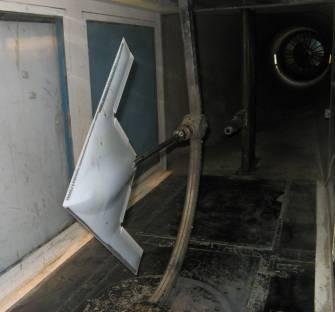
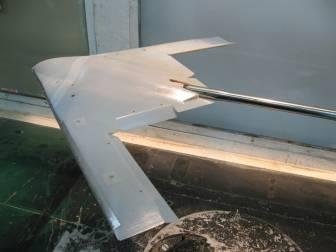
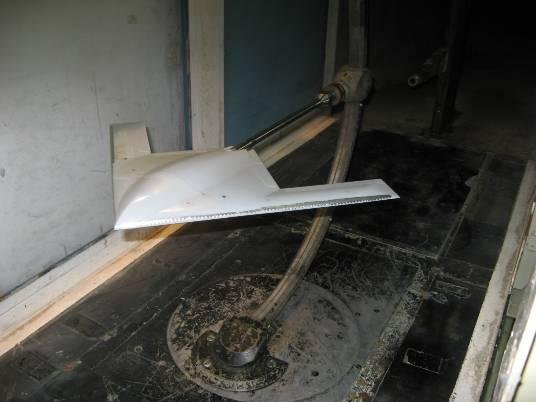
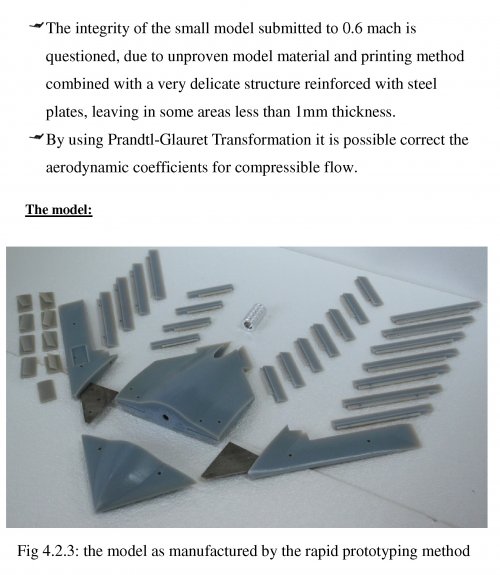
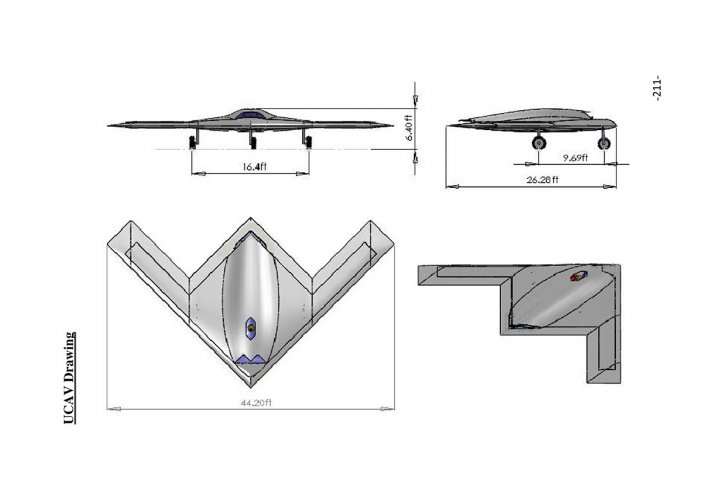
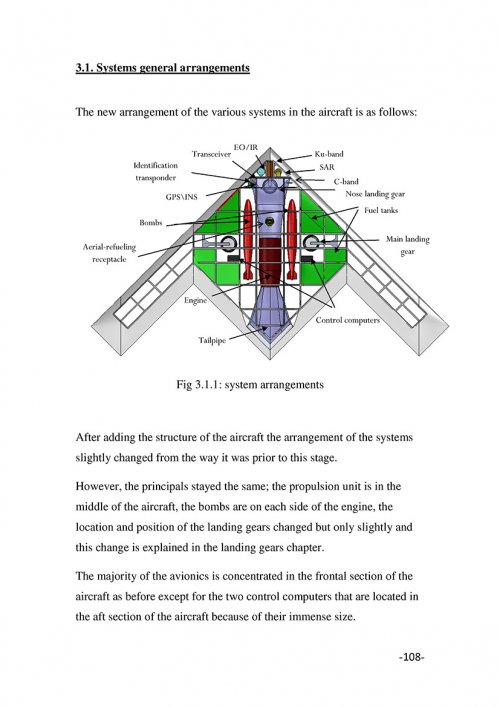
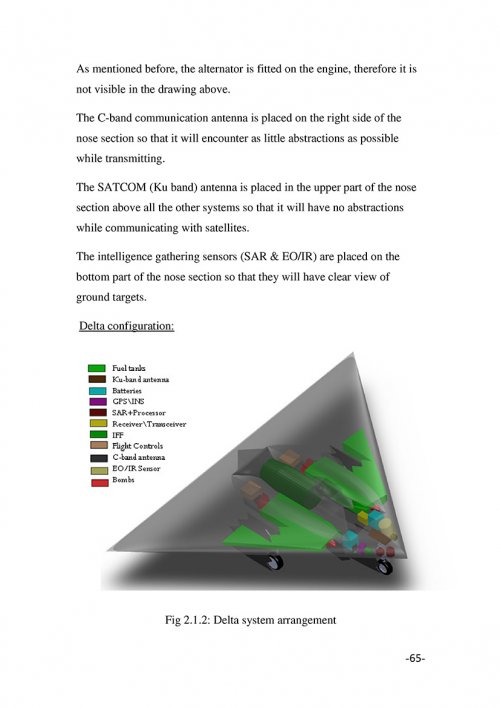
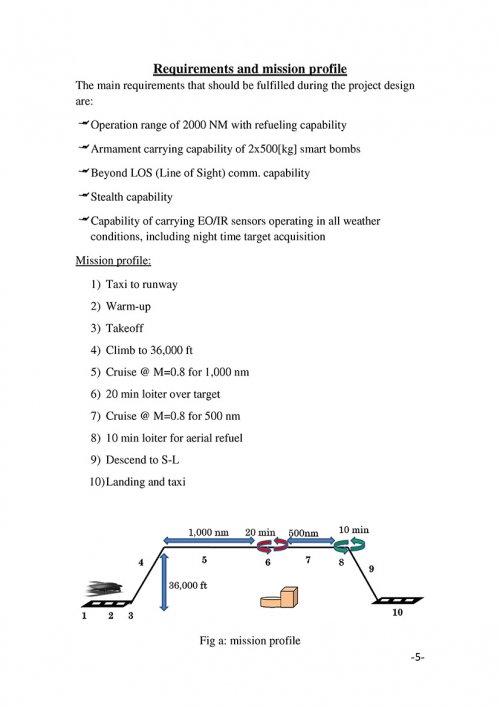
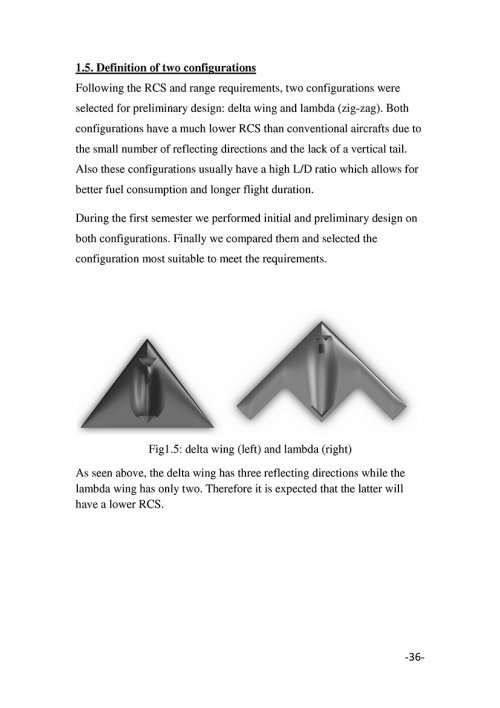
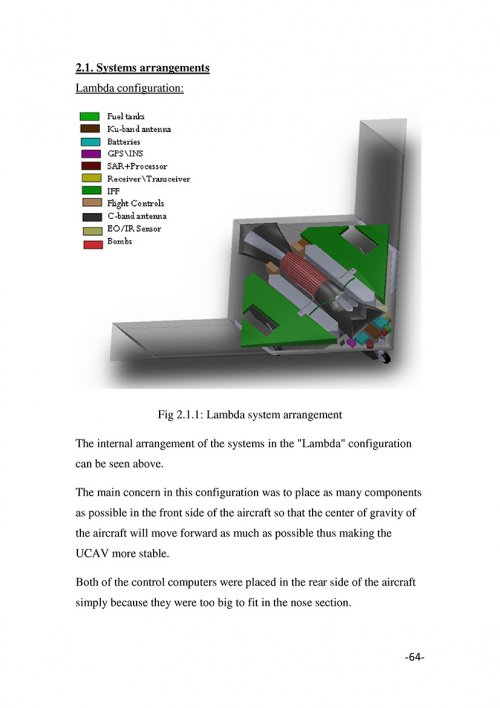
The sources told "Globes" that the size of the joint allocation by Israel and the US for the Moav project at the risk mitigation level amounted to $40 million for three years. The US bore 75% of the financial burden.
According to "Defense News," the project is based on a Moav-type air-to-air missile, which homes to its target using infrared sensors. The missile will be carried by a large drone, the HA-01, which will cruise at high altitude and be launched at a ballistic missile in the ascent phase. The ballistic missile will be destroyed, according to the plan, shortly after launch.
Globalsecurity said:In the late 1990s the Israelis began promoting the Moab system, in which unmanned aerial vehicles counter ballistic missiles during their boost phase. This effort involved using UAVs armed with Python 4 air-to-air missiles. Planners argued that an ability to operate at high altitudes and loiter for days virtually immune from attack by either surface-to-air missiles or fighters made them especially useful for engaging theater ballistic missiles soon after launch. Analysts found that high-altitude, long-endurance UAVs could complement terminal missile defense systems cost-effectively. They began developing the HA-10, a stealthy, long-endurance unmanned vehicle, but never built it, concluding that since American support for such a venture was unlikely, the required financing for the project would not be forthcoming. Zach Rosenberg reported 28 November 2012 that the Israeli military was developing a large, classified unmanned air vehicle (UAV) with features consistent with stealthy aircraft designs.
S. Tsach et.al. said:Within the framework of the advanced design activity, we examined a number of additional high altitude advanced configurations: e.g. HA10 configuration whose configuration is shown in Figure 10. The HA-10 configuration was proven in wind tunnel tests to have an aerodynamic efficiency (L/D) greater than 33.0.
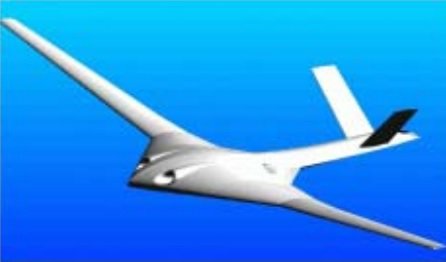
Ralph Sanders said:Missile Defense
Five years ago the Israelis began promoting the Moab system, in which unmanned aerial vehicles counter ballistic missiles during their boost phase. This effort involved using UAVs armed with Python 4 air-to-air missiles. Planners argued that an ability to operate at high altitudes and loiter for days virtually immune from attack by either surface-to-air missiles or fighters made them especially useful for engaging theater ballistic missiles soon after launch.
Analysts found that high-altitude, long-endurance UAVs could complement terminal missile defense systems cost-effectively. They began developing the HA–10, a stealthy, long-endurance unmanned vehicle, but never built it, concluding that since American support for such a venture was unlikely, the required financing for the project would not be forthcoming.
One American defense official expressed the reluctance to support the project in the following words: “Targeting a fast-moving missile could be extremely difficult, especially if the UAV is going to see it and then catch it in the first minute or so of its flight.” According to critics, communications among vehicles and command and control centers would not be fast enough to make launch decisions on time. The United States has concluded that using UAVs for boost-phase intercept may prove to be too great a technical and financial challenge.
Israel later used UAVs to destroy launch vehicles on the ground, specifically in hunting down Scud missiles. For its part, America has explored incorporating them into missile defense for warhead detection and monitoring. These vehicles may employ infrared sensor and data collection systems, hoping to track missiles during their midcourse flight.
The verdict on using UAVs for theater missile defense is still moot. In the meantime, the Israelis appear willing to pursue the matter, in the hope that additional research and development will someday provide the knowledge that will make them effective antiballistic missile weapons.
What follows is something I wrote before searching this site for HA-10. Very stupid of me. There's a whole discussion about it here:
https://www.secretprojects.co.uk/threads/israeli-boost-phase-intercept-system-ibis-ha-10.7015/
Anyway, previously in my universe:
Tried a very rudimentary search and came up with this:
https://www.globalsecurity.org/military/world/israel/uav.htm
Apart from the aforementioned article by Rosenberg, I don't know what Globalsecurity's sources are. In an ICAS presentation from 2004 ("History of UAV Development in IAI and Road Ahead", S. Tsach et.al.) a "HA-10" is mentioned and described briefly but the illustration (while stealthy) looks nothing like the minimalist planform sighted over Greece during the ongoing war.
?The Leading Sydtems W570


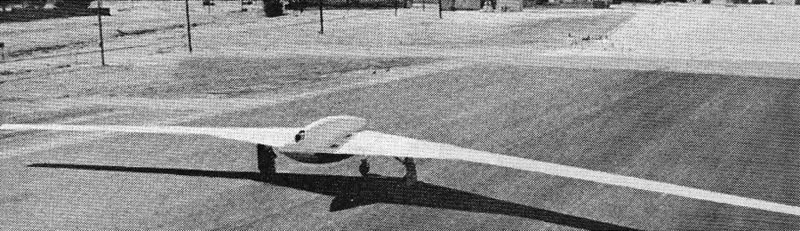
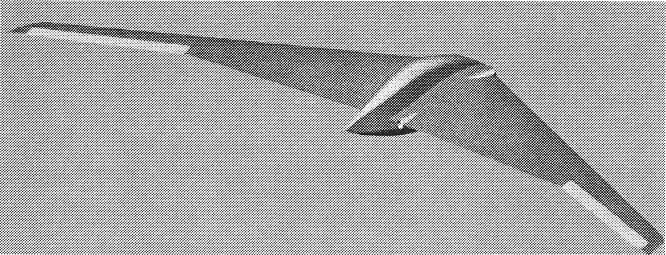
The IAF continued to conduct covert UAV flight activity at Ramon Airfield from 15 through 16 October. The IAF opened the RA-01 operations hangar screen and the gate to the RA-01 operations area, indicating an RA-01 airframe was transiting to or from the operations area at 1731Z 15 October. On 16 October, NGA observed personnel and ground equipment arrive within the RA-01 operations area, indicating pre or post-flight activity occurred.
The IAF continued covert UAV operations on 16 October: Israel's covert UAVs enable long-range, covert surveillance in iran and throughout the region.
Why isn't aircraft & military twitter lit about Israeli RA-01 stealth ISR platform we now know for sure of ?
Also, not much into Israeli stuff but this their home ? (built around the time first reports of Israeli stealthy long range ISR platform came out in the early 2010s)
