KF-21 Speculative Users

insidersource

ACCESS: Top Secret
Joined
24 March 2025
Messages
521
Reaction score
745
If Germany wants to save its aircraft industry, they either stomach a lower work share in FCAS, look for a new partners (Sweden?) or change their focus - perhaps looking at large combat drones.
I think Germany should partner with Korea on the KF-21. Germany could get a production line and all European sales could be delivered from that line. I'm sure Germany would help the KF-21 pick up additional sales in Europe.

Germany could assist in producing a replacement for the F414 engine to prevent the US from blocking any sales when competing against the F-35. MTU Aero Engines in Germany has a lot of experience with the EJ200. The proposed EJ230 would be perfect match.
 
I think Germany should partner with Korea on the KF-21. Germany could get a production line and all European sales could be delivered from that line. I'm sure Germany would help the KF-21 pick up additional sales in Europe.

Germany could assist in producing a replacement for the F414 engine to prevent the US from blocking any sales when competing against the F-35. MTU Aero Engines in Germany has a lot of experience with the EJ200. The proposed EJ230 would be perfect match.

The KF-21 doesn't provide any advantages over the German Eurofighters and F-35s.

The only options for Germany are replacing France with a more competent and especially a more cooperative partner, be it Sweden, Korea or Turkey so that Germany and Spain can continue with FCAS. Or provide a serious bid which would warrant two of the three GCAP members to boot the third one out in favor of Germany.

These are the only two routes available for a next generation fighter. Everything else, like fully indigenous development, large UCAV (which is coming anyway) etc. just leads to another 5th generation fighter. A niche the F-35 occupies at a lower price tag in Germany already, and is thus harder to justify to develop and fund from a political point of view.
 
Last edited:
The KF-21 doesn't provide any advantages over the German Eurofighters and F-35s.
The Block 3 KF-21 with internal weapon bays will provide a huge advantage over the Eurofighter.

Germany did not want to purchase a US fighter. They purchased the F-35 as a stop gap or bridging solution. This is why the order is small. The F-35 is the only stealthy aircraft that could get the job done.

Germany would no doubt prefer a full fleet of German produced block 3 KF-21 over US built and controlled F-35. Even if the KF-21 is slightly less capable in air-to-ground. The 35 F-35A are only kept for the nuclear deterrent mission.

Everything else, like fully indigenous development, large UCAV (which is coming anyway) etc.
Which could be perfectly controlled by the back seater in the twin seat KF-21. Good luck integrating this German drone into the F-35 avionics.

The KF-21 is perfect for Germany. The German order would be so large that they could take a full 50% of the program. All the early development has been done by Korea that vastly speeds up procurement. The KF-21 would provide a smooth transition for Germany industry. As the Eurofighter component production winds down the German parts suppliers can receive KF-21 workshare. There is no risk of a gap.

Supercruise wise, the EJ230 engine is estimated to have a dry thrust of 17,500lb. If we assume the Block 3 KF-21 gets an empty weight increase from 26,000lb to 29,000lb the thrust to weight ratio at dry thrust is the same as the F-22. The KF-21 will definitely supercruise well. The KF-21 would have a 25% higher thrust to weight ratio than the F-35.

Germany does not need a 1,000nm combat radius for the Pacific theatre. The KF-21 block 3 with EJ230 engines would effectively be a mini F-22. Perfect for western Europe and would have similar combat radius to a Eurofighter.

Once the KF-21 is built on a German production I can think of a few countries in Europe that would purchase the aircraft. The KF-21 will no doubt be cheaper than the French and Tempest 6th gen aircraft.
 
Last edited:
@insidersource you're suggesting that adopting and partially funding the development of an inferior aircraft is somehow preferable to simply buying more F-35s. F-35s for which personelle is being trained, for which infrastructure is being adapted, F-35s which are being integrated into the entire structure of the Luftwaffe already. The KF-21 cannot reasonably compete with the F-35 in Germany for these reasons and a couple others beyond that. While the Eurofighter has the benefit of being the indigenous fighter design, something the FCAS fighter component will succeed it in (and thus replace the Eurofighter and complement the F-35s, while the KF-21 would complement the Eurofighters and compete with the F-35 for the same niche).

KAI may be offered a seat the FCAS table if France does get kicked out (fingers crossed), but the KF-21 is outdated in light of the scope, goals and timeline projected for the FCAS project (as in something far more capable and sophisticated than the current crop of 5th generation fighters, a threshold the KF-21 hasn't even crossed yet as well). So the KF-21 isn't relevant to this discussion whatsoever.

Can someone move this to the KF-21 or FCAS thread?
 
@insidersource you're suggesting that adopting and partially funding the development of an inferior aircraft is somehow preferable to simply buying more F-35s.
The KF-21 Block 3 using EJ230 engines with the thrust to weight ratio of the F-22 would easily be at parity with the F-35A in air to air. They might have small strengths and weaknesses in certain areas. The KF-21 supercruising at Mach 1.5 with EJ230 engines will be great for the interception role. A mission where it will beat the slower F-35A. The twin seat version of the KF-21 will allow German drones to be rapidly intergraged while with the F-35 Germany would have to wait 5+ years for Lockheed to integrate their drone.

Complex strike missions the F-35A will hold an advantage over the block 3 KF-21. But Germany will have 35 F-35A for this mission. The KF-21 can perform everything else at rough parity to the F-35A.

If we go back 20 years the F-22 is superior to the Eurofighter. You could say Germany adopted and partially funded the development of the inferior Eurofighter. The Eurofighter was still a big upgrade for Germany. Germany was happy with the Eurofighter being generation behind the state of the art F-22. Most important was the Eurofighter was 30~% German.

The KF-21 block 3 would be a big upgrade over the Eurofighter. It is a generation behind the state of the art NGAD and F/A-XX but so was Eurofighter.

KAI may be offered a seat the FCAS table if France does get kicked out (fingers crossed), but the KF-21 is outdated in light of the scope, goals and timeline projected for the FCAS project (as in something far more capable and sophisticated than the current crop of 5th generation fighters, a threshold the KF-21 hasn't even crossed yet as well). So the KF-21 isn't relevant to this discussion whatsoever.
Why would KAI be interested in joining FCAS? The KF-21 has the first mover advantage. The KF-21 with non-US engines will be able to capture plenty of export orders to countries that aren't allowed the F-35. The KF-21 Block 3 will be operational 5-10 years before FCAS and Tempest. There are still plenty of F-16, Gripen C and classic Hornet operators that haven't purchased the F-35.

German industry having a KF-21 production line might see 500+ aircraft produced in Germany over 20 years for European Allies. This is more jobs for Germany than any other option.

The KF-21 without German engine technology might not gather many export sales. Korea would benefit from Germany. The large German order would increase the economy of scales which should see a significant price reduction per aircraft.
 
Elephants in the room:

(1)Kf-21 before blk. 3. doesn't provide anything euro fighter doesn't. In fact, it may end up worse as a more conservative aircraft, even being later build.
(2)blk.3 in Germany case is more or less a worse F-35, later. This isn't because it's inherent to this aircraft (it has many advantages over F-35), but because it's advantages all fall straight into previous Bullet point - Eurofighter does that, next year, domestically and often better.

I am honestly impressed by the lack of balls on German side. With hundred billion commitment they're still being bullied by everyone, including countries which are still working on their aircraft industry (which Germany, unlike them, does have), from scratch, for a fraction of money.

If you have money and hungry, not very experienced but 100% alive industry - just do your own fighter to your own requirements ffs.

Coming to South Korea which has an incompatible ready product maybe perfect option for Poland, but not Germany.
 
Elephants in the room:

(1)Kf-21 before blk. 3. doesn't provide anything euro fighter doesn't. In fact, it may end up worse as a more conservative aircraft, even being later build.
Reduced radar cross section? How could you dismiss this?

Now it's a complete guess of the relative radar cross sections. I would estimate the KF-21 block 3 with internal weapon bays would have a radar cross section about 1% the size of the Eurofighter.

Enemy fighters or SAM systems would be then detecting the Eurofighter at twice the distance of the KF-21. First look, first shoot, first kill. I would expect the KF-21 Block 3 to easily have a 10:1 kill ratio against the Eurofighter just from the detection range different.

(2)blk.3 in Germany case is more or less a worse F-35, later.
But the KF-21 coukd be built in Germany with 50% program ownership. The F-35 Germany makes no parts and Lockheed has complete control over the software. The KF-21 would arrive earlier than Tempest and FCAS.

Germany keeping 35 F-35A for the nuclear strike mission and filling the fleet with KF-21 would be a perfect. Let's say Germany goes to war in 2040. FCAS will not be ready. Germany will only have 35 F-35 and a fleet of old and unstealthy Eurofighter. Russia would probably have hundreds of Su-57 and SAM systems that could shoot at the Eurofighters 200 miles away.

With the KF-21 block 3 it's radar cross section would be lower enough to most likely beat the Su-57. Many on here think the Su-57 is over rated but I'm sure it could beat the Eurofighter.
 
Reduced radar cross section? How could you dismiss this?
Before block.3(KF-21EX), kf-21 doesn't have IWB, and up to a big debate how much it has reduced its RCS; eurofighter also has significant measures for that (ducted intakes being most important).

Between Kf-21 and newly updated Eurofighters - I'd be betting on eurofighters. More mature design with better supersonic flight performance and newer electronics.
Same for Germany-specific requirements - KF-21EA is nice, but Quadriga is already on delivery path. What's the point.
With the KF-21 block 3 it's radar cross section would be lower enough to most likely beat the Su-57. Many on here think the Su-57 is over rated but I'm sure it could beat the Eurofighter.
Kf-21 is in fact yet to approach rcs reduction measures we know on Su-57; Turks on Kaan are at least showing all the right pieces.

Korea only declared intention to develop KF-21 into true LO aircraft, that probably meaning that entire process of cleaning of the airframe and doing all the hotspot/edge treatments is still to come. For now, KF-21 is somewhat fat and very modest (non canard delta) 4.5 gen aircraft. Being edgy isn't really being stealth.

But the KF-21 coukd be built in Germany with 50% program ownership. The F-35 Germany makes no parts and Lockheed has complete control over the software. The KF-21 would arrive earlier than Tempest and FCAS.
KF-21EX will arrive more or less together with GCAP, even before we try adding German parts in.
 
Last edited:
I think Germany should partner with Korea on the KF-21. Germany could get a production line and all European sales could be delivered from that line. I'm sure Germany would help the KF-21 pick up additional sales in Europe.

Germany could assist in producing a replacement for the F414 engine to prevent the US from blocking any sales when competing against the F-35. MTU Aero Engines in Germany has a lot of experience with the EJ200. The proposed EJ230 would be perfect match.
Not going to happen and of no practical benefit to this thread.
 
Don't the Block 1 and 2 aircraft have IWBs but they're non-functional?
Yes the space for IWB is clearly shown in the photos for the block 1 aircraft. Two very deep central bays to suit 2,000lb class bombs giving a similar capacity to the F-35. The conformal missiles only take up a small portion of the IWBs.

Korea is taking an iterative development approach. Conformal meteor missiles with avionics that are air-to-air only would no doubt knock billions off the development cost and allows it to enter service many years early. This development approach would have a lot to do with the smaller Korean budget.

If a large partner joined the KF-21 program today and was willing to provide $1 billion per year over many years I'm sure the internal weapon bays could appear by 2030.

KF-21EX will arrive more or less together with GCAP, even before we try adding German parts in.

This is only because Korea is intentionally spreading out the development as they are funding nearly the whole project. If a major partner joined and needed the weapon bays then that development could be fast tracked with the extra funds. If Germany for example joined the KF-21 today as a 50% partner I'm sure the first KF-21 with weapon bays and EJ230 engines could fly by 2030.
 
the German should go for KF-21 EX (Block 3+). This version; which is they focuses on Pair Unmanned+Manned. Gen 5.5 (5.75)

I think it is very good potential for them use it as good all-round and range good enough to cover Germany; Poland is considering buying it (KF-21 Block 3 or EX version).

KF-21 will have:
  • Missiles:
    Air-to-air missiles:
    Meteor[234][235][236][237]
    IRIS-T[234][235]

    Korean short-range air-to-air missile (In development)[238][239]
    Korean long-range air-to-air missile (In development)
    Air-to-surface missiles:
    KALCM Cheonryong (Block 2) (In development)
    Anti-ship missiles:
    Korean Hypersonic anti-ship missile (In development)
    Bombs:
    GBU-12 Paveway II (Block 2)
    GBU-38 Joint Direct Attack Munition (Block 2)
    GBU-31 Joint Direct Attack Munition (Block 2
    GBU-54 Joint Direct Attack Munition (Block 2)
    GBU-56 Joint Direct Attack Munition (Block 2)

    GBU-39 Small Diameter Bomb (Block 2)
    KGGB (Block 2)
    Mark 82 bomb (Block 2)
    Mark 84 bomb (Block 2)

Current German use:
Eurofighter T2, T3 and T4
Canon: Mauser BK-27[79]
Air-Air missiles: AIM-9L, AIM-120B, IRIS-T, AIM-120C5, Meteor[80][81][82][83]
Air-ground missiles: AGM-88E[85][86] Brimstone 3
Guided bombs: GBU-48 Paveway III, GBU-54 Laser-JDAM,[84][87][78]
Pods: Rafael Litening III, Litening V ordered[88]

Lockheed Martin F-35 Lightning II
Canon: GAU-22/A
Air-Air missiles: AIM-9X, AIM-120 AMRAAM, AIM-132 ASRAAM, Meteor
Air-Surface missile: AGM-158 Joint Air to Surface Standoff Missile, AGM-158C LRASM
Guided bombs: Joint Direct Attack Munition, Paveway

see Bold of them which Both Use same weapon so Bonus they are already Integrated already, which is a good thing.

second option is go for KAAN or Partner with Sweden, or Join Tempest.

third option; F35 Twin Engine ? and German already has F35 producation might good for them carry on F-35 Twin Engine Version, Only if this actually happen.

realism possible happen: the German bite the bullet and accept FCAS with French full control (I think French let German full control MBT project and French buy them as fair trade or Drone CCA). <----- I think this is more likely an income result.

anyway about these

Good see KF-21 did well process and devoleped i think once they build Block 3 prototype then the Poland will interest.. possible the German.

 
Supercruise wise, the EJ230 engine is estimated to have a dry thrust of 17,500lb. If we assume the Block 3 KF-21 gets an empty weight increase from 26,000lb to 29,000lb the thrust to weight ratio at dry thrust is the same as the F-22. The KF-21 will definitely supercruise well. The KF-21 would have a 25% higher thrust to weight ratio than the F-35.
Supercruise requires high exhaust gas velocity, not just sheer thrust.

It's why a plane with a late-model F110 cannot supercruise but one with an F119 with the same thrust can.
 
Koreas iterative development also has a lot to do the the aircraft the KF-21 plans to replace.

The low capability KF-5E was delivered in the 1980's.
The medium capability KF-16C was delivered in the 1990's
The high capability F-15K was delivered in the early 2000's.

As you can see the KF-5E needs to be replaced first but it is a low end aircraft. The KF-21 only needs the most basic features to be a huge upgrade. Currently the KF-5E only does basic air policing so the KF-21 block 1 with no IWBs and air-to-air only is still a massive upgrade.

The KF-16C needs to be replaced after 2030. The KF-21 needs the Block 2 air-to-ground avionics to replace the KF-16C fleet. As the KF-16C is only medium capability the KF-21 again doesn't need internal weapons bays to be a huge upgrade.

The F-15K doesn't need to be replaced until 2040. The KF-21 would need internal weapons bays and a low radar cross section to perform the higher end missions of the F-15K.

The F-15K replacement is why the schedule for internal weapon bays is 10-15 years. It doesn't take 15 years to fit weapon bay doors. The space is already there. Adding internal weapon mounts, doors and performing weapon separation tests would only take a few years. If a major partner joins the the KF-21 program and requires the high end capability sooner then the weapon bays would arrive quickly.

I think it is very good potential for them use it as good all-round and range good enough to cover Germany; Poland is considering buying it (KF-21 Block 3 or EX version).
It's interesting how polarising this is.

Many people on the internet think the KF-21 would be a flawless fit for Germany. I'm not the first to come up with this idea. Yet some people consider it pure fantasy and the possibility shouldn't even be discussed in this thread.

Poland is looking at buying KF-21. Polish Air Force’s chief took a test flight in the KF-21 3 months ago.

I think there is big incentive for countries to order 100+ aircraft to then get their own assembly line. They can then sell aircraft to regional allies which would sustain their production line for 20 years.

Saudi Arabia would be ideal. They have the F-15C and Tornado to replace soon. This would be an easy 100+ aircraft order. Jordan, UAE, Bahrain and Egypt are strong allies that won't get access to the F-35 any time soon. While Saudi Arabia isn't well know for having an aerospace industry they have lots of funds to contribute to development and would make a great salesman.
 
Supercruise requires high exhaust gas velocity, not just sheer thrust.

It's why a plane with a late-model F110 cannot supercruise but one with an F119 with the same thrust can.
The engine discussion is quite relevant to the KF-21 as Korea needs a second engine option.

Eurofighter with the EJ200 can supercruise at Mach 1.5 with no external stores. The EJ200 clearly has high exhaust velocity to supercruise. An EJ230 being uprated would have even higher exhaust velocity.

The KF-21 with IWBs and EJ230 would have the same thrust to weight ratio as the Eurofighter. A Mach 1.5 supercruise speed for the KF-21 wouldn't be unrealistic. I would be conservative and say a Mach 1.3 supercruise speed due to the wing layout. Delta canards have slightly better supersonic drag.

This is 25-30% faster than the F-35A. The extra speed will provide advantages in many air-to-air mission profiles such as interception.

The current KF-21 with the F414 should already be supercruise capable but we haven't heard a peep out of KAI regarding speeds and acceleration figures.

Also regarding the F110 and F119 comparison. The F414 and EJ200 are much closer to the F119 in terms of bypass ratio. The less slow bypass air an engine has the higher the exhaust velocity.

F414 bypass ratio 0.25:1
F119 bypass ratio 0.3:1
EJ200 bypass ratio 0.4:1
F110 bypass ratio 0.76:1

The F110 has more slow bypass air. The F414 is supercruise capable which is why NASA's X-59 supersonic test aircraft uses it. This test aircraft can supercruise with the F414.

It is also worth noting how GE gained thrust going from the F404 to F414. The bypass ratio reduced from 0.34 to 0.25. It is highly likely the proposed EJ230 would have a slightly lower bypass ratio than the EJ200. It would be even more supercruise capable.

We just saw the US block F110 sales to Turkey. I think there is a risk of the US blocking KF-21 sales due to it using the F414 engine. I think a good short term strategy would be to offer the EJ200 as a second engine option. Just like how the F-16 and F-15 has two engine options.
 
Last edited:
It's interesting how polarising this is.

Many people on the internet think the KF-21 would be a flawless fit for Germany. I'm not the first to come up with this idea. Yet some people consider it pure fantasy and the possibility shouldn't even be discussed in this thread.

Poland is looking at buying KF-21. Polish Air Force’s chief took a test flight in the KF-21 3 months ago.
Well, because it's a good fit for Poland, not a good fit for Germany. Poland needs an America-affiliated fleet, ASAP, but without long lead time associated with american platforms. Poland replaces relatively low capability units (SU-22s, Mig-29s), i.e. FA-50 blk.20 and KF-21 make a lot of sense, and KF-21 upgrade path forward, including korean future stand off munitions, is very attractive.
Poland doesn't have that much of related domestic industry as well, so it's a relatively straightforward path.*

For Germany, it just doesn't offer enough to warrant any move, especially after Germany proceeded with, first, Quadriga (which includes small fleet of dedicated SEAD EF-2000EK) and now after a full fleet upgrade starting next year, including finally integration of Taurus(neo).

Given that this fleet upgrade brings EF to a higher standard than existing KF-21 - there's just no catch in doing that. Germany already replaced one foreign sourced 4th gen platform with domestic 4.5 gen platform in the past. Doing same in reverse 30 years later, for a lot of money at their own expense - that's frankly stupid.

Edit later:
*Though tbh even here there's a trap KAI dug for themselves: being F414 bird, it doesn't stack up all that well with F404 FA50s. Shall Poland swallow F-15EX price - it will work better.
The Eurofighter with the EJ200 can supercruise at Mach 1.5 with no internal stores. The EJ200 clearly has high exhaust velocity to supercruise. An EJ230 being uprated would have even higher exhaust velocity.
Eurofighter supercruises(and performs the way it performs over mach 1) because it was designed to do that. You're doing kerbal space program design here.
And even by your own numbers, your suggestion is to use 10 years and tens of billions to get worse performance than what's already available.
Why?
 
Last edited:
I think you meant external stores as the Typhoon has no IWB (Although aren't there plans for one in future tranches?).
Eurofighter is advertised(and probably should, as it makes sense) to supercruise at that speed with normal a2a loadout - which is 6 missiles(4 conformal amraams and 2 wvraams). I.e. no mistake.
Somewhat less if we add supersonic tank and meteors (which are draggier).

But KF-21, IWB or no IWB, is a chubbier M=1.6, F414 design. IWBs don't come free in the first place - as they (obviously) push you to have airframe around the iwb volume. I.e. you're paying with drag penalty for that in almost any imaginable case.
 
Many people on the internet think the KF-21 would be a flawless fit for Germany. I'm not the first to come up with this idea. Yet some people consider it pure fantasy and the possibility shouldn't even be discussed in this thread.

Poland is looking at buying KF-21. Polish Air Force’s chief took a test flight in the KF-21 3 months ago.

The reason this idea is dismissed is rather simple, because unlike Poland for example Germany has a sizeable aviation sector. And while foreign purchases occur, like the F-35A for example, they deliver a much needed capability or are a necessity. In case of the F-35 it's both as it's meant to replace the Tornados not only as strike fighters/fighter bombers but also continue the nuclear mission with US weapons. However German industrial participation made the deal sweeter as it already was and thus the F-35 was an easy pick, despite Super Hornet pitches before. And with FCAS in development and the Eurofighter being expected to serve for many years to come, it was seen as politically acceptable to hand the Tornados niche to a foreign design. The F-35 also has the benefit of being a proven aircraft, being widely operated within NATO and for what it is at the end of the day it's a good value.

The KF-21 would realistically compete for the niche that the F-35 has already secured for itself. The Eurofighter is not only here to stay for now and being upgraded, it's replacement will be FCAS and that's an undertaking that's, when delivering what's projected, exceeds the KF-21 in terms of scope and capability by magnitudes. It is after all a true next generation fighter program, with a system of systems approach as seen with the likes of NGAD.

So between the domestic and venerable Eurofighter, the proven, convenient and accessible F-35 and the hypothetical FCAS there is no place for an unproven aircraft from a small country which doesn't have it's full capability implemented yet and would overall not offer any advantage over the F-35 or in its current form even the Eurofighter, let alone the FCAS in the 2040s.

That's why Luftwaffe KF-21s are quite rightfully regarded as something belonging in an alt-history thread, because it's just that unrealistic. Now, if KAI wants to access the European market and also develop a competitive next generation system, from how things are looking there may be an empty seat at the FCAS table soon. But that's a different topic of speculation and discussion.

All of this doesn't mean the KF-21 isn't good, I personally view it rather positively. It's just not a good or realistic fit for Germany, which was the point being contested here. For many other countries it's a viable option worth looking into.
 
I think Germany should partner with Korea on the KF-21. Germany could get a production line and all European sales could be delivered from that line. I'm sure Germany would help the KF-21 pick up additional sales in Europe.

Germany could assist in producing a replacement for the F414 engine to prevent the US from blocking any sales when competing against the F-35. MTU Aero Engines in Germany has a lot of experience with the EJ200. The proposed EJ230 would be perfect match.
This post aged very well. At the time I knew FCAS was highly likely to collapse.

The reason this idea is dismissed is rather simple
Not so simple after all

All of this doesn't mean the KF-21 isn't good, I personally view it rather positively. It's just not a good or realistic fit for Germany, which was the point being contested here. For many other countries it's a viable option worth looking into.

Do you honestly think Germany can make a fighter better than the F-35 by itself? The KF-21 Block 3 will be operational with internal weapon bays long before Europe gets their act together.
 
Do you honestly think Germany can make a fighter better than the F-35 by itself?
Of course. The industrial players have the necessary skills and the Verteidigungsministerium can get the necessary money. The only substantial issue will be engines, but if push comes to shove, these can be sourced and produced under license from the US if a domestic solution doesn't materialize in an acceptable timeline.
 
Of course. The industrial players have the necessary skills and the Verteidigungsministerium can get the necessary money. The only substantial issue will be engines, but if push comes to shove, these can be sourced and produced under license from the US if a domestic solution doesn't materialize in an acceptable timeline.
You underestimate America's ability to sacrifice long-term relationships and leverage for short-term idiocy...

OTOH, Germany could technically end up producing a more advanced aircraft simply due to technological progress over time and the operational experience it would gain from the F-35.

This is where F-35 participation benefited the broader Turkish aerospace and engine industries, enabling them to develop a competitive heavy stealth fighter. I don't really know much about the rest of Germany's industrial participation, but Rheinmetall will even replace TAI as the sole non-US source of central fuselage production on a 1:1 basis.

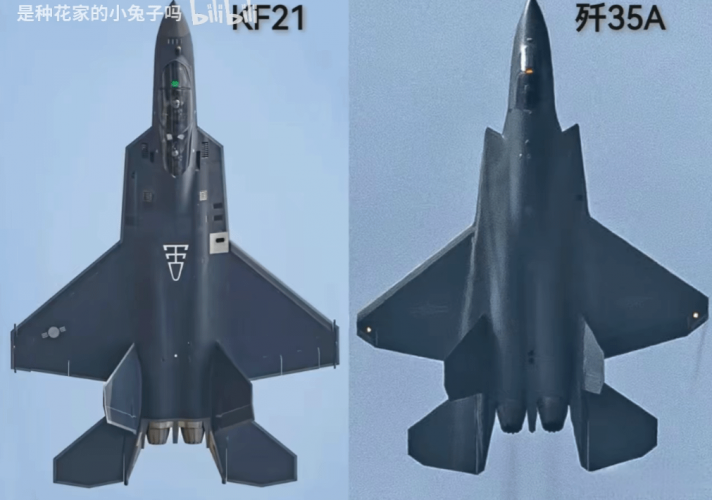
The primary role of such a hypothetical aircraft wouldn't even need to be deep strike, as Germany will already have the F-35 for that. They could instead develop a German J-35A-equivalent powered by a further development of the EJ200 (à la the EJ230/270 or WS-19) to complement it with superior A-A performance, had they not wasted years on the stillborn FCAS project... The impact of the F-35's role is reflected not only in how KAI/ROKAF ended up shaping the KF-21, but also in the preliminary design of the Kaan as a Superbug/KF-21-class medium fighter before the aircraft had to be redesigned due to changed requirements.

Edit: And this "German J-35A-equivalent powered by a further development of the EJ200 (à la the EJ230/270 or WS-19)" could've had a spillover effect on the further development of the Eurofighter as well, helping to close a probable capability gap during the development of such a hypothetical German stealth fighter; which'd be broadly similar to the Rafale F5 effort, albeit more comprehensive.
 
Last edited:
The primary role of such a hypothetical aircraft wouldn't even need to be deep strike, as Germany will already have the F-35 for that. They could instead develop a German J-35A-equivalent powered by a further development of the EJ200 (à la the EJ230/270 or WS-19) to complement it with superior A-A performance, had they not wasted years on the stillborn FCAS project...
You just described the KF-21 block 3.

The KF-21 powered by two EJ230 would have superior thrust to weight and wing loading compared to the F-35. The low bypass EJ200 has proven supercruise capability unlike the medium bypass F135 on the F-35. The KF-21 with its longer fuselage and greater wing sweep angle will offer better transonic performance. The KF-21 with 25,000lb thrust EJ230 engines would have a higher thrust to weight ratio than the F-22 and Eurofighter. The KF-21 would have superior A-A performance and it would compliment the strike F-35.

Sweden would also be far more likely to buy a $100 million 5th gen fighter over a $200 million 6th gen fighter.

To say Germany needs a J-35 like aircraft in one sentence and then saying it doesn't need the KF-21 is quite ridiculous. The J-35 and KF-21 block 3 would be incredibly similar in role, layout and specification. It would be like saying a country needs a Rafale but the Eurofighter is inappropriate.
 
Last edited:
You just described the KF-21 block 3.

The KF-21 powered by two EJ230 would have superior thrust to weight and wing loading compared to the F-35. The low bypass EJ200 has proven supercruise capability unlike the medium bypass F135 on the F-35. The KF-21 with its longer fuselage and greater wing sweep angle will offer better transonic performance. The KF-21 with 25,000lb thrust engines would have superior A-A performance and it would compliment the strike F-35.

Sweden would also be far more likely to buy a $100 million 5th gen fighter over a $200 million 6th gen fighter.
:rolleyes:

Screenshot 2026-06-11 174436.png

And no, as much as I like the Boramae, comparing the J-35A (or a hypothetical German equivalent in this case) to the KF-21 doesn't really do it any justice...
 
And no, as much as I like the Boramae, comparing the J-35A (or a hypothetical German equivalent in this case) to the KF-21 doesn't really do it any justice...

KF-21 vs J-35 specs
Length: 17.3m vs 16.9m
Wingspan: 11.5m 11.2m
Gross weight: 28,000kg vs 25,600kg
Fuel capacity: 7,200kg vs 6,000kg
Thrust: 2x 21,000lb vs 2x 22,000lb
Max speed: Mach 1.8 vs Mach 1.81

kf-21-and-j-35-side-by-side-v0-i3ro832s8ntf1.png

How can you say Germany needs a J35 like aircraft but the the KF-21 block 3 is unsuitable?
 
KF-21 vs J-35 specs
Length: 17.3m vs 16.9m
Wingspan: 11.5m 11.2m
Gross weight: 28,000kg vs 25,600kg
Fuel capacity: 7,200kg vs 6,000kg
Thrust: 2x 21,000lb vs 2x 22,000lb
Max speed: Mach 1.8 vs Mach 1.81

View attachment 815048

How can you say Germany needs a J35 like aircraft but the the KF-21 block 3 is unsuitable?
You're looking at this from a purely "medium-class vs. medium-class" perspective.

The KF-21 as it stands is fundamentally a 4.5-generation aircraft and is therefore not really comparable to the J-35A, especially since plans to further develop it into a proper LO aircraft through a comprehensive Block 3 upgrade have been set aside in favor of a Korean 6th-generation program.

Moreover, the J-35A is a proper match for the PLA(AF)/(NAF)'s requirements for what could very well be the most technologically demanding and complex aerial warfare environment ever, against large multinational F-35 fleets as well as future platforms such as the F-47 and F/A-XX. It's already equipped with the WS-19, which delivers excellent performance despite being tightly packaged within an engine bay originally designed around the RD-33. It is also architecturally very efficient and provides a solid basis for extracting even more performance in the future. The J-35A is also not unlikely to already feature GaN-on-SiC technology, on top of fielding a large radar array.

The KF-21 simply doesn't feature the same degree of RCS-reduction measures or raw sensor performance (sawtoothed paneling from tip to end, MAWS, conformal arrays, cleaned-up external geometry, serrated LOAN nozzles, internalized pods with faceted housings, etc.) beyond a broadly LO fuselage shape in a clean configuration, whose RCS will inevitably be affected by external weapons carriage in any realistic combat scenario.

None of this is to the detriment of the KF-21's potential, because chasing that level of performance was never what ROKAF/KAI set out to do in the first place. They deliberately kept the requirements conservative so as not to overcomplicate development, introduce unnecessary risk, or delay the retirement of the KF-5 fleet -- which is something I personally have a great deal of respect for.

In all fairness, the KF-21 has already emerged as a highly capable platform in its own right, despite being developed under far more restrained requirements than many of its contemporaries. You can find my more detailed thoughts on the aircraft with a quick search...
 
Last edited:
The KF-21 as it stands is fundamentally a 4.5-generation aircraft and is therefore not really comparable to the J-35A, especially since plans to further develop it into a proper LO aircraft through a comprehensive Block 3 upgrade have been set aside in favor of a Korean 6th-generation program.
That is not true. The curreny plan is to make the KF-21 a proper LO aircraft with the Block 3.

It's already equipped with the WS-19, which delivers excellent performance despite being tightly packaged within an engine bay originally designed around the RD-33.
The EJ230 would also offer excellent performance in the tightly packed KF-21 engine bay.

The KF-21 simply doesn't feature the same degree of RCS-reduction measures
That is your opinion. The KF-21 block 3 could have a lower radar cross section than the J-35. Many people talked up the Su-57 stealth levels.

or raw sensor performance (sawtoothed paneling from tip to end, MAWS, conformal arrays, cleaned-up external geometry, serrated LOAN nozzles, internalized pods with faceted housings, etc.)
These features can all be added to a German KF-21 Block 4. It would be vastly faster and cheaper to just add these features to the KF-21 than designing a clean sheet design with the same features.

Many members here complain about the US not providing technology transfer and source codes with their aircraft. Germany would definitely get full access to the KF-21.

The transition to the KF-21 could be incredible smooth. Part manufacturering slowly transitions to German manufacturers. An initial order of 100 aircraft could be Korean spec Block 3. Then Germany and Korea co-develop some 6th gen features for a 100 Block 4 aircraft. For instance 25,000+lb thrust adaptive engines with shaft mounted starter/generators could be co-developed to provide Mach 1.5 supercruise.
 
The KF-21 as it stands is fundamentally a 4.5-generation aircraft and is therefore not really comparable to the J-35A, especially since plans to further develop it into a proper LO aircraft through a comprehensive Block 3 upgrade have been set aside in favor of a Korean 6th-generation program.
I think they themselves are undecided yet, especially since these can in principle be parallel developments.

But this will be shame of a century - leaving huge reservation for a bay in your 4.5 gen aircraft(comfortably fitting 2000lbs in center of mass. I.e. amount of wasted space, together with even more radical ducts, is extreme)...and using it for nothing at all. It's just too sad.
All of this doesn't mean the KF-21 isn't good, I personally view it rather positively. It's just not a good or realistic fit for Germany, which was the point being contested here. For many other countries it's a viable option worth looking into.
As is, KF-21, per my understanding, is broadly worse than the already available Eurofigher in almost every single way, with advantages limited to some future Korean weapon options (which is a very shaky advantage).

It's acceptable for a modest requirement learning program(just make it right), but to make a difference, KF-21 really needs Blk.3 and EA-21.
 
Last edited:
I think they themselves are undecided yet, especially since these can in principle be parallel developments.
You and snne are totally wrong. Korea are definitely fitting internal weapons bays into the KF-21.

Korea are not building a cleansheet 6th generation fighter. They plan to add 6th generation technology to the KF-21 and when combined with unmanned teaming it will be a 6th generation equivalent combination.

The Republic of Korea Ministry of National Defense has now formally positioned the KF-21 as the future backbone of Republic of Korea Air Force force posture, with future variants expected to integrate advanced stealth architecture, AI-supported decision systems, and manned-unmanned teaming capability.

https://defencesecurityasia.com/en/...oadmap-indo-pacific-airpower/#google_vignette


The South Korean proposal emphasized the advantage of using the existing KF-21 program to reduce development time. The project involves converting the KAI KF-21 Block III into a fifth-generation fighter and creating sixth-generation MUM-T systems (Manned-Unmanned Teaming - aviation systems that combine manned and unmanned aircraft) on its basis.

https://oboronka.mezha.ua/en/pivden...niy-vinishchuvach-shostogo-pokolinnya-301554/


Shin Dong-hak, vice-president of international business development at Korea Aerospace Industries (KAI), said.

The sixth-generation concept is already implemented [in the KF-21]. The first step is to apply stealth, which will happen around 2030. Then AI software will be installed, and … will be linked with the multi-role combat UAV,” Shin said.
https://www.scmp.com/news/china/mil...global-race-develop-sixth-generation-fighters


But this will be shame of a century - leaving huge reservation for a bay in your 4.5 gen aircraft(comfortably fitting 2000lbs in center of mass. I.e. amount of wasted space, together with even more radical ducts, is extreme)...and using it for nothing at all. It's just too sad.

There will be no sadness. The weapon bays are 100% coming. The KF-21 will surpass the J-35.

Germany would have to spend a huge amount of money to develop something equivalent to the KF-21 Block 3. A tiny fraction of the money would be needed to just join the KF-21 program.


As is, KF-21, per my understanding, is broadly worse than the already available Eurofigher in almost every single way,
Germany would be buying the Block 3 which is broadly superior to the Eurofighter in almost every single way.
 
Germany would be buying the Block 3 which is broadly superior to the Eurofighter in almost every single way.
What'll be the point with F-35 in service(and likely with second batch added)?
And, by late 2030s, likely German NGF will be in the air.

I would like to share your optimism (KF-21EX is the step which will make me like this plane), but I don't remember news about funding release for this development.
 
Germany, in collaboration with Saab and the United Kingdom, would be capable of introducing a European equivalent to the KF-21 into service within 5–7 years. Therefore, from a purely industrial perspective, purchasing the KF-21 makes little sense. It would be an interesting concept, however, to have a European platform designed to support all assets that will not be part of the F-35 fleet in Europe.
France seems to be caught in a "nuclear split"—it requires a delivery vehicle for its pré-alerte (pre-warning) mission, which must be capable of approaching the target sufficiently closely. The question arises whether it might be faster to reactivate the Plateau d'Albion base with new IRBMs as an interim solution.
 
What'll be the point with F-35 in service(and likely with second batch added)?
1) The KF-21 will be manufactured in Germany with 50% local content.
2) Germany will have access to the full avionics source code.
3) The US can not turn the KF-21 off remotely or stop supplying parts.
4) Any additional KF-21 sold in Europe could be assembled in Germany.
5) All of the advanced 6th gen technology to integrate into the KF-21 can include German scientists.

None of these apply to the F-35. Germany gets the full industry benefit while saving billions of dollars as all the hard work is done. Germany has a dislike to the USA and they would have preferred to not buy the F-35.
 
Back
Top Bottom