Kamov Projects

Это вариант «Миноги» с раздвоенным хвостом? Из модели десантного корабля 23900.

View attachment 781370

View attachment 781371

View attachment 781372
Это проект Ка-32-10. Ранний вариант. Разработка середины десятых годов. Когда из Ка-32 хотели сделать полноценный аналог Ми-8. Грузопассажирская версия на 32 человека и аппарель сзади.
 
( Development plans for the V80 helicopter (future Ka-50).
Top left: single-seat version.
Below: two-seat helicopter (future Ka-52).
But the most interesting is the third image. This is a design for an assault helicopter version. BMP
On the right is a comparison with a similar project for an assault helicopter by the Mil Design Bureau. Mi-40 (based on the Mi-28).
Comparison with the Sikorsky UH-60A.
And options for placing troops inside the VB)

 

Attachments

  • photo_2025-09-17_17-27-58.jpg
    photo_2025-09-17_17-27-58.jpg
    243.8 KB · Views: 1,178
Last edited by a moderator:
Assuming this is real, (no offense intended to the poster) It does not seem as practical as the Mi-40. I know that western soldiers would not be to keen on having the fuel sitting in the middle of the cabin space. The size comparison is a great demonstration of the benefit of counter-rotating main rotors can do for the size of a platform. I am curious if the decision to put the fuel in the middle of the cargo compartment was a decision to ensure the helicopter would fit into naval vessels.
@Griz- wonderful find. Thank you.
 
Last edited:
Если предположить, что это правда (без обид авторам поста), то он не так практичен, как Ми-40. Я знаю, что западные солдаты не были бы в восторге от размещения топливного бака в середине кабины. Сравнение размеров наглядно демонстрирует преимущества противовращения несущих винтов для платформы такого размера. Интересно, было ли решение разместить топливный бак в середине грузового отсека принято для того, чтобы обеспечить посадку вертолёта на военные корабли.
@Griz- замечательная находка. Спасибо.
Это 100% настоящий рисунок. Нашел его у бывшего работника ОКБ Камова
Про баки. Просто в центре вертолета в любом случае место занимал редуктор винта. Ничего полезного не разместить. И ради сохранения небольших габаритов. Надо было куда-то впихнуть доп баки.

(This is a 100% real drawing. Found it from a former employee of the Kamov design bureau.

About the tanks. Just in the centre of the helicopter in any case the place was occupied by the propeller gearbox. Nothing useful to place. And for the sake of keeping small dimensions. We had to cram the extra tanks in somewhere.)
 
Last edited by a moderator:
View attachment 786828
Планы развития вертолета В80 (Будущего Ка-50).
Сверху слева одноместная версия.
Ниже двухместный вертолет (будущий Ка-52).
Но самое интересное, третье изображение. Это проработка десантно штурмовой версии вертолета. БМП
Справа же, сравнение с аналогичным проектом десантно-штурмового вертолета ОКБ Миля. Ми-40 (на базе Ми-28).
Сравнение с Сикорским UH-60A.
И варианты размещения десанта внутри ВБМП.
Канал

( Development plans for the V80 helicopter (future Ka-50).
Top left: single-seat version.
Below: two-seat helicopter (future Ka-52).
But the most interesting is the third image. This is a design for an assault helicopter version. BMP
On the right is a comparison with a similar project for an assault helicopter by the Mil Design Bureau. Mi-40 (based on the Mi-28).
Comparison with the Sikorsky UH-60A.
And options for placing troops inside the VB)

Assuming this is real, (no offense intended to the poster) It does not seem as practical as the Mi-40. I know that western soldiers would not be to keen on having the fuel sitting in the middle of the cabin space. The size comparison is a great demonstration of the benefit of counter-rotating main rotors can do for the size of a platform. I am curious if the decision to put the fuel in the middle of the cargo compartment was a decision to ensure the helicopter would fit into naval vessels.
@Griz- wonderful find. Thank you.
Yes it was in fact some kind of replacement of Ka-29 for naval and land usage (more secure variant than Mi-8 in SAR missions and some others).
 
For those of us who don't know Russian here is data contained in the drawing:

1. All-up weight 10950 kg
2. Empty weight 7390 kg
3. Full payload 3560 kg (32,4%) including:
a) Crew (4 men) 360 kg
b) Assault cargo or 18 men 2000 kg
c) Fuel 1100 kg
d) Lubricants 100 kg
4. Max. speed 180 kph
5. Static ceiling 2000 m
6. Dynamic ceiling 4000 m
7. Range at 1000 m with 2000 kg payload 400 km

Engine: ASh-73V

The helicopter's dimensions may be read quite clearly, below the side view cabin's dimensions are given: 2.13 x 2.5 x 7.3 m (H x W x L)

In the Telegram post linked by youROKer there is a remark that this was one of several Ka-14 variants, there were also variants with two engines or 'other configurations'.

P.
 

Attachments

  • 1760183029310.png
    1760183029310.png
    502.3 KB · Views: 234
Another project "heavyweight" was
OKB proposed NI Kamov-based
a five-blade main rotor diameter of 125
meters with jet drive from turboreak?
tive engine. According to calculations, a similar
superheavy helicopter? valve could create
lift 600 tons, which allowed
transported on external sling cereals?
nogabaritnoe and heavy industrial
equipment weighing up to 250 tons!

My dear Mil,

from which year,and what was called, Ka.?.
 
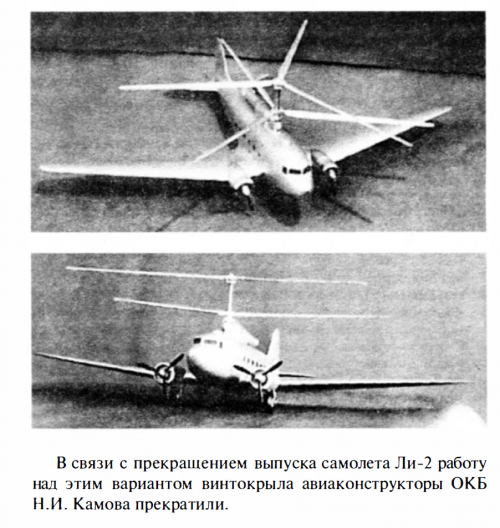
One more shot of Ka-Li 2 Vintokyl X

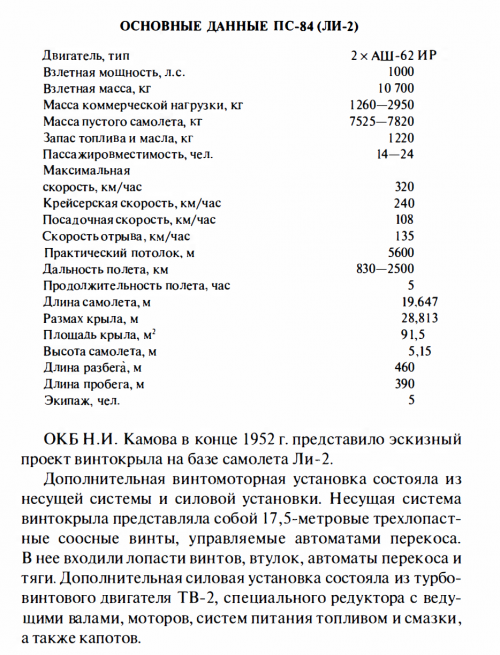
From this book,

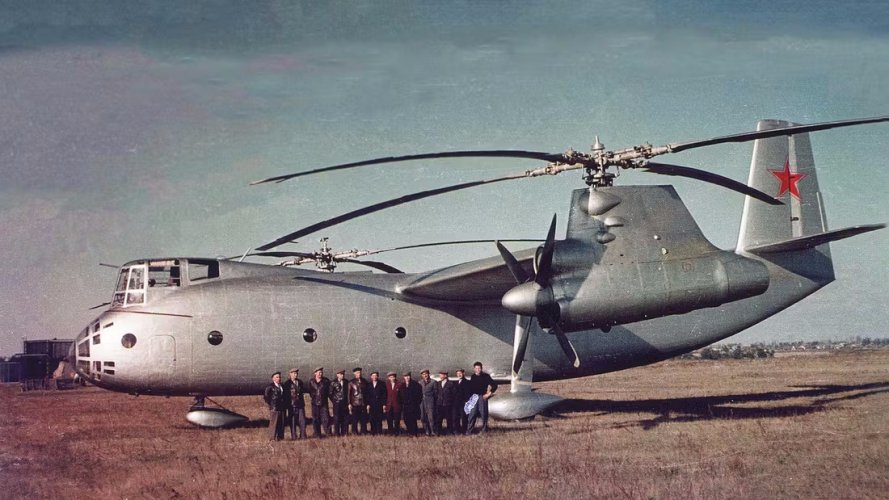
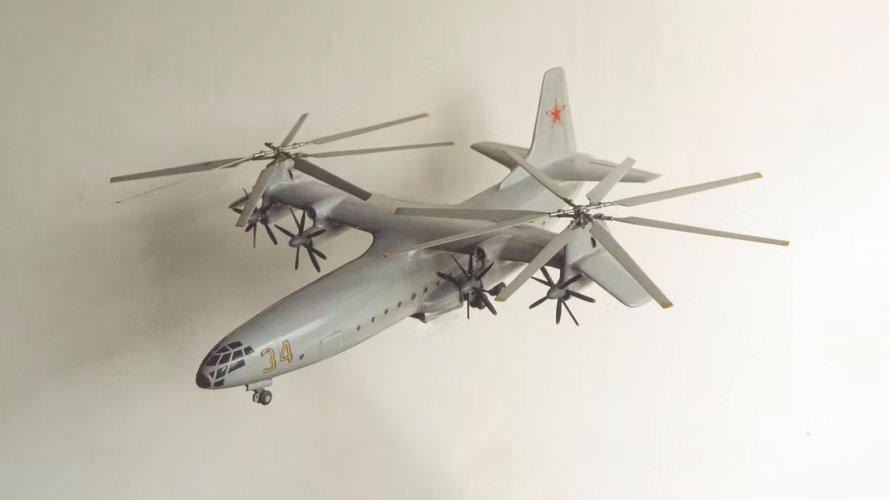
At the end of 1952, the Kamov Aircraft Design Bureau presented a preliminary design for a rotorcraft based on the Li-2 aircraft.
The auxiliary propeller-motor system consisted of a rotor system and a power plant. The rotorcraft's rotor system consisted of 17.5-meter, three-bladed coaxial rotors controlled by swashplates.
It included the rotor blades, hubs, swashplates, and thrusters. The auxiliary power plant consisted of a TV-2 turboprop engine, a special gearbox with drive shafts, motors, fuel and lubrication systems, and cowlings.

Due to the cessation of Li-2 production, the Kamov Design Bureau's designers ceased work on this rotorcraft variant.
 

Attachments

  • 2.png
    2.png
    746.7 KB · Views: 64
  • 1.png
    1.png
    222.2 KB · Views: 78
From this book,

At the end of 1952, the Kamov Aircraft Design Bureau presented a preliminary design for a rotorcraft based on the Li-2 aircraft.
The auxiliary propeller-motor system consisted of a rotor system and a power plant. The rotorcraft's rotor system consisted of 17.5-meter, three-bladed coaxial rotors controlled by swashplates.
It included the rotor blades, hubs, swashplates, and thrusters. The auxiliary power plant consisted of a TV-2 turboprop engine, a special gearbox with drive shafts, motors, fuel and lubrication systems, and cowlings.

Due to the cessation of Li-2 production, the Kamov Design Bureau's designers ceased work on this rotorcraft variant.


Was working on my files today and noticed I had this listed as "Project-X". Was that its actual project name? I find it a bit dubious.
 

Attachments

  • 2293352.jpg
    2293352.jpg
    294.6 KB · Views: 55
  • 2293351.jpg
    2293351.jpg
    82.3 KB · Views: 52
  • 2293350.jpg
    2293350.jpg
    250 KB · Views: 47
  • 2293349.jpg
    2293349.jpg
    96.2 KB · Views: 39
  • 2293348.jpg
    2293348.jpg
    73.2 KB · Views: 41
  • 2293347.jpg
    2293347.jpg
    206 KB · Views: 37
  • 2209940.jpg
    2209940.jpg
    118.5 KB · Views: 42
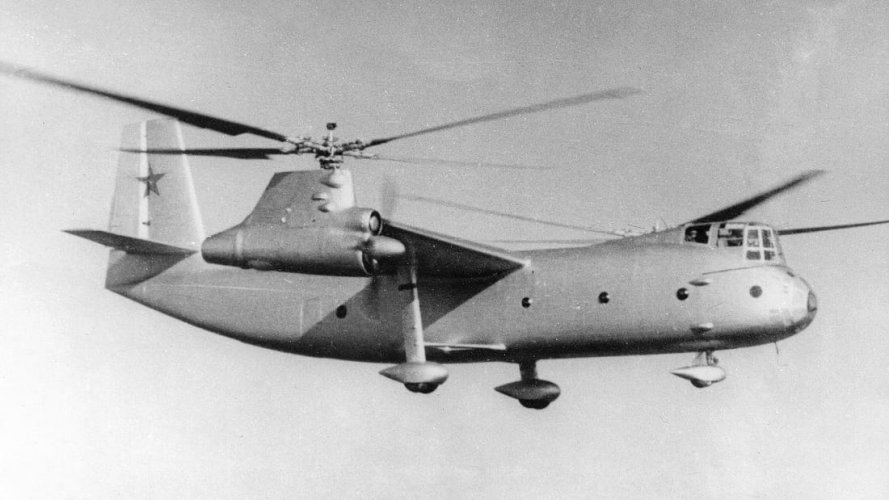
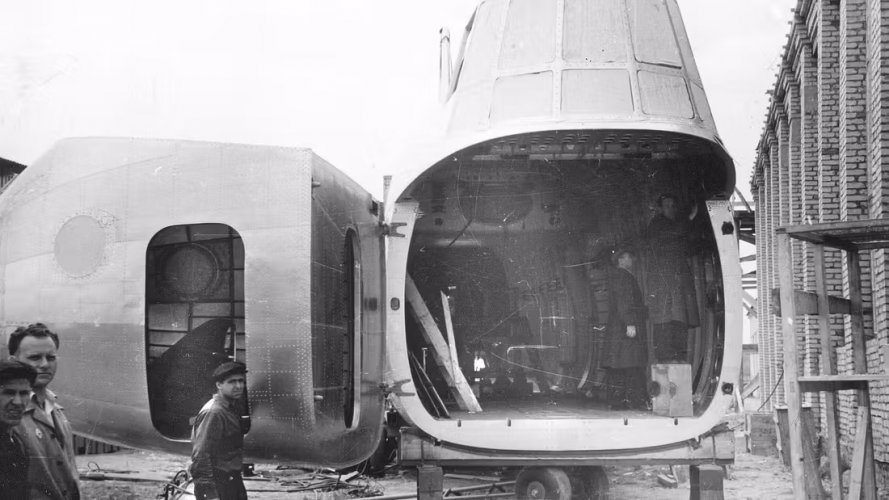
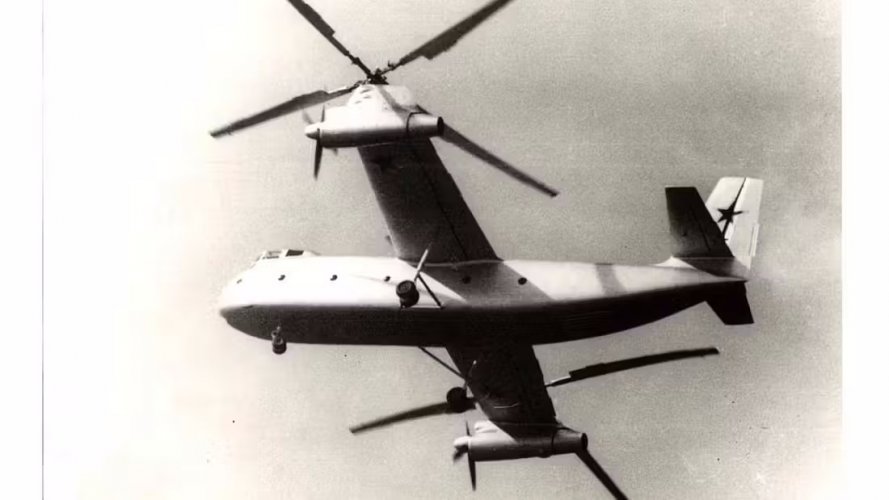
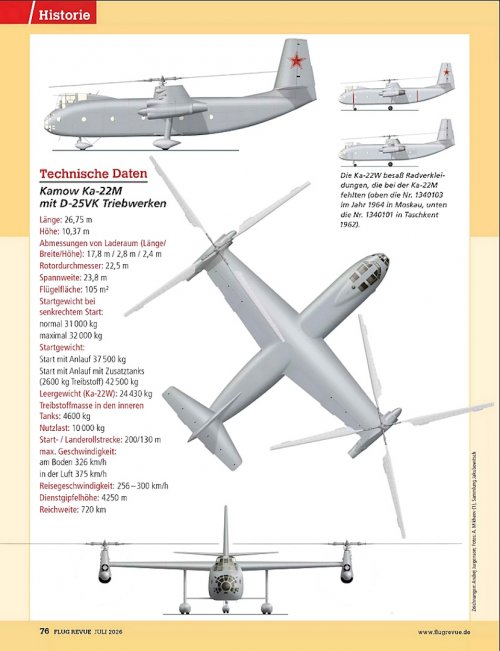
  • 20260604_Kamov_Ka-22M_FlugRevue_July_2026_page_76.jpg
    20260604_Kamov_Ka-22M_FlugRevue_July_2026_page_76.jpg
    214 KB · Views: 70
Last edited:
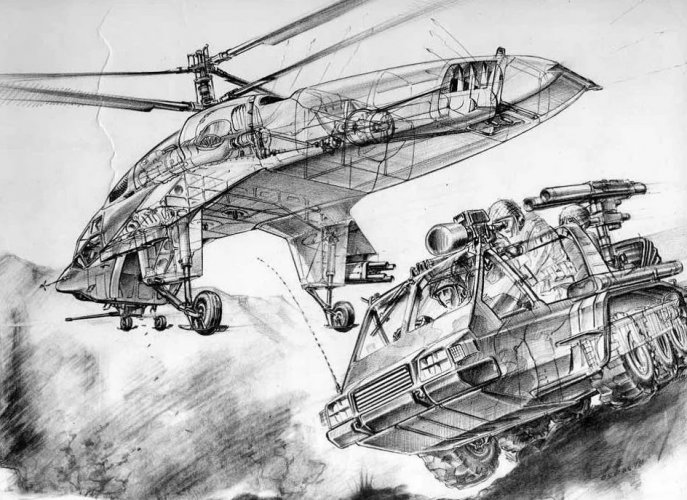
Hey folks, I came across this artistic concept of the Ka-40 by Aleksenko on Telegram. This isn’t the Ka-40 ASW helicopter project, so the moderator just moved my post to this topic. ;)
I haven't posted any artwork in quite a while, so here's one: an early-project artistic concept of the Ka-40 by Aleksenko (one of the artists in the Experimental Design Department of the Kamov Design Bureau during the 1980s and 1990s).
Source (Telegram, Russian):
https://t.me/vertolyotiki/8091
 

Attachments

  • photo_2026-03-24_22-30-05.jpg
    photo_2026-03-24_22-30-05.jpg
    170.1 KB · Views: 75
Last edited:

Similar threads

Back
Top Bottom