
Grey Havoc
ACCESS: USAP
- Joined
- 9 October 2009
- Messages
- 24,511
- Reaction score
- 18,191


The European Space Agency (ESA) has announced it is establishing a new presence in Tokyo, Japan, its first in Asia. ESA will now have a staff member working in the heart of Tokyo’s thriving innovation hub X-NIHONBASHI, reinforcing ESA’s long-standing and trusted partnership with Japan and working to deepen cooperation with the Japan Aerospace Exploration Agency (JAXA) and Japan’s vibrant and rapidly growing space ecosystem, including its start-up sector.
The announcement was made on 28 October 2025 by Eric Morel de Westgaver, ESA Director of Strategy, Legal and External Matters, during a keynote speech at Nihonbashi Space Week. Marking more than than 50 years of achievements shared by Europe and Japan he said:
“This is a treasured cooperation, older than ESA itself, dating back to Japan's cooperation with the European Space Research Organisation, one of ESA's precursor organisations. Today, ESA and JAXA are together in low Earth orbit with the Earth observation mission EarthCARE, travelling through the Solar System to Mercury with BepiColombo and closing in on the asteroid system Dimorphos with Hera.”
The speech also highlighted the growing cooperation between ESA and Japan, exemplified by new plans for Europe's Ramses and Japan's Destiny+ planetary defence missions to launch together.
Josef Aschbacher, ESA Director General said: “Our relationship with Japan is built on decades of trust and scientific excellence. The establishment of an ESA presence in Japan signals our clear intention to elevate our cooperation with Japan across all domains of space – from Earth observation and planetary defence to science, human and robotic exploration and commercialisation. This will allow us to foster closer ties not only with JAXA but also with Japan’s dynamic and innovative space industry.”
Hiroshi Yamakawa, JAXA President said: “JAXA warmly welcomes the establishment of ESA’s presence in Japan. Over the years, ESA and JAXA have built a strong partnership through collaborations across a wide range of space activities. In November 2024, we signed a joint statement on Next Big Cooperations. We are confident that ESA’s presence in Japan will enable closer communication, deepen the relationship between our two agencies, and contribute to addressing global challenges and advancing space science and technology.”
The decision to establish a permanent ESA presence in Japan follows the successful ESA delegation visit to Tokyo during Nihonbashi Space Week in November 2024, led by ESA Director General Josef Aschbacher. That visit culminated in the signing of the Joint Statement on Next Big Cooperations between ESA and JAXA, setting the course for an ambitious new chapter in European-Japanese space collaboration.
The Joint Statement on Next Big Cooperations outlines ambitious areas for future joint missions, including planetary defence, Earth observation, low Earth orbit and exploration, and space science. ESA’s representation in Japan will be based in an office situated at the X-IHONBASHI TOWER, operated jointly by Mitsui Fudosan Co., Ltd. and Cross U, key players in Japan’s open innovation landscape. The facility has become a nexus for the growing space business community in Japan, bringing together start-ups, academia, government agencies – and now ESA – to catalyse new ventures and collaborative opportunities.
By establishing a presence in Japan, ESA will be able to support joint programmatic initiatives on-site from Tokyo, facilitate inter-agency coordination, and act as a bridge between European and Japanese stakeholders in the governmental and commercial space sectors. The new ESA office in Tokyo builds on the model of ESA’s Washington Office, serving as a strategic outpost for deepening bilateral engagement.
Japan’s space sector continues to show global leadership and innovation, making it a natural and valued partner for ESA. With common interests and shared challenges – including sustainable use of space, climate monitoring, and fostering a competitive space economy – the ESA-Japan relationship stands as a cornerstone of global space cooperation.
Contact
ESA Newsroom and Media Relations
Email: media@esa.int


Dillon
@Dillonshrop06
The H-3 upper stage supporting Michibiki 5 has failed its planned second engine burn, which would have taken it from a ~250 x 460km Parking Orbit to a 390 x 36000km Geo-Transfer Orbit
This is likely a complete mission failure as Geo satellites rarely have enough fuel to get themselves all the way to GEO
Jonathan McDowell
@planet4589
The perigee of the QZS-5/H3 is hard to estimate given currently available data. Somewhere between -250 and +350 km, but I am currently leaning towards +200-ish
7:30 PM · Dec 21, 2025
Jonathan McDowell
@planet4589
It appears that the second burn of stage 2 may have shut down early, which will have left the payload in a transfer orbit with a much lower than planned apogee.
6:31 PM · Dec 21, 2025
Jonathan McDowell
@planet4589
And my latest estimate, leaning into the provided altitude-velocity data a bit more, is around 125 x 440 km, which likely means reentry on first or second orbit, alas. But again, uncertainties are large. Let's see if @S4S_SDA catalog the objects.
7:52 PM · Dec 21, 2025
Jonathan McDowell
@planet4589
Replying to
@T_De_La_Rosa
Unlikely that it survived past at most the second perigee.
Jonathan McDowell
@planet4589
·
From what little I can understand of the press conference, SECO-1 was 27 seconds late.
Some basic information from the (still on going) press conference:
* The 2nd stage liquid hydrogen tank pressure was observed to start decreasing during 1st stage flight, well before ignition (~T+200 seconds), and continued later into the flight.
* All timings of major events up to 2nd stage 1st ignition (SEIG-1) were nominal.
* SECO-1 was 27 seconds late. SEIG-2 was 15 seconds late and the 2nd burn almost immediately shut down.
* They can't confirm if the payload separation signal was sent, or whether it really happened.
Japan Aerospace Exploration Agency (JAXA) launched the MICHIBIKI No. 5, Quasi-Zenith Satellite System (QZS-5) aboard the 8th H3 Launch Vehicle (H3 F8) at 10:51:30 on December 22, 2025 (JST, the time is the 24-hour clock) from Tanegashima Space Center. However, the second stage engine’s second ignition failed to start normally and shut down prematurely. As a result, QZS-5 could not be put into the planned orbit, and the launch failed.
We would like to express our deepest apology to many people and entities, particularly those related to the QZS-5, local organizations and the public, who had high expectations for this project.
We have set up a special task force headed by President YAMAKAWA, and started investigations to find out the cause.
We will keep updated the information.
ispace, inc. has signed an agreement with the Japan Aerospace Exploration Agency (JAXA) to conduct a study on “Resource Optimization of a Lunar Lander Propulsion System Using Electric Pumps.”
Under the agreement, ispace and JAXA will jointly conduct a study on propulsion system optimization by applying an electric pump system to a lunar lander’s propellant feed system. The study aims to achieve overall propulsion system mass reduction while minimizing the associated increase in power consumption. Additionally, based on optimization results, the study will evaluate the functional and performance requirements of the electric pump systems for lunar lander applications to enable enhanced mission capabilities.
Generally, most satellites and space probes have employed a pressure-fed propulsion system in which high-pressure tanks supply propellant to engines. However, this approach requires thick tank walls to withstand the high internal pressure, resulting in increased system mass. These challenges become more pronounced as spacecraft become larger, such as the ispace Series 3 Lander being developed in Japan.
The fifth instalment of “MMX aims for Phobos” is in the September issue of ISAS News (No.534)! This month, we look at the role of the Super Hi-Vision (SHV) cameras & the Interplanetary Radiation Environment Monitor (IREM) in advancing exploration technology. (Article in Japanese)
At the #IAC2025, MMX was a highlight of the JAXA pavilion! A 1:20 scale MMX was on display, with a capsule used in balloon experiments to test the return of the sample in 2031. Friday welcomed the public who realised how large the spacecraft must be when they saw the capsule
The October issue (No. 535) of #ISASNews features our 6th instalment of “MMX Aims for Phobos!” on “decluttering” . There is only so much mass that we can launch, and a round-trip to Mars is heavy business. Decluttering and careful selection were essential before lift-off
Your message, to the Mars orbit!
Support MMX project by sending a message to be onboard the spacecraft launching in FY2026.
You’ll receive a certificate upon submission! ️
Apply now: http://goodluck-mmx.jp
Nov 10, 2025 – Jan 18, 2026
*English site coming soon.
Mitsubishi Electric who developed the MMX spacecraft system made this video to explain how MMX will let us know its position ️, even at distances as far as the Martian moons when the signal from the Earth will be weak (Subtitled in Japanese) :
The 7th instalment of “MMX Aims for Phobos!” Is out in the November issue of #ISASNews (No. 535)! Due to the distance between Earth and the Martian moon, Phobos, MMX must decide on its own where to land. Introducing the “autonomous descent technology”(In Japanese)

I also often made mistakes like this in KSP (Kerbal Space Program).
The French delegation, during its visit to Japan, visited the Mitsubishi Electric Kamakura Works (@ME_JP_official), where the rover “IDEFIX” — a powerful symbol of the strong cooperation between the two countries — is stored. This rover is designed to explore the surface of the Martian moons.
France expresses its gratitude to JAXA for the trust placed in French space expertise and sincerely wishes for the success of the Martian Moons eXploration (MMX) mission. ️
Will have to see what impact the recent failure of the H-3 launcher has on the MMX mission.The partnership is as pioneering in space as it is on Earth. During a visit to Mitsubishi Electric, Deputy Chief of Mission Aaron Snipe learned about @JAXA_jp’s groundbreaking, collaborative mission to send a probe to study Mars’ two moons and bring back the first samples from the larger one, Phobos. He also joined @ISAS_JAXA Director General Masaki Fujimoto and Mitsubishi Electric Senior General Manager Takashi Ichikawa to view Japan’s new HTV-X2 spacecraft, which will transport crucial life-support items and science and technology experiments to the @Space_Station later this year. @NASA
A U.S. space domain awareness payload hosted on Japan's Quasi-Zenith Satellite 6 successfully launched on a Japanese H-3 launch vehicle from the Yoshinobu Launch Complex at the Japan Aerospace Exploration Agency’s Tanegashima Space Center in Japan on February 2. This is the first bilateral U.S. Japan cooperative space effort focused on national security, and the first of two launches as part of the JAXA Quasi-Zenith Satellite System Hosted Payload program.
The satellite will be operated by Space Operations Command’s Mission Delta 2, which conducts Space Domain Awareness operations to identify, characterize, and exploit opportunities and mitigate vulnerabilities in the national security space terrain on behalf of the U.S. Space Force and U.S. Space Command. The satellite will deliver near real time data to the Space Surveillance Network bolstering the U.S. Department of Defense understanding of the Geosynchronous Orbit regime above the Indo-Pacific region.
The QZSS-HP program encompasses the integration, launch and operations of two U.S. payloads hosted on Japanese satellites. In preparation for launch, USSF and Massachusetts Institute of Technology Lincoln Laboratory teams have worked side-by-side with the NSPS and Mitsubishi Electric Corporation teams in Japan over the past two years to integrate and test the first hosted payload alongside its Japanese QZS-6 host.
Now delayed into at least Q2.The strategic partnership between the USSF and Japan's National Space Policy Secretariat originated through a December 2020 international agreement to jointly execute the Quasi-Zenith Satellite System-Hosted Payload program. The mission’s second payload aboard QZS-7 is on track for launch in early FY2026.
On January 7, 2026, we announced the launch postponement of MICHIBIKI No. 7, Quasi-Zenith Satellite System (QZS-7) aboard the 9th H3 Launch Vehicle (H3 F9). However, as further investigation into the launch failure of the 8th H3 Launch Vehicle (H3 F8) and an evaluation of its impact on subsequent launch vehicles remain necessary, the launch will not be conducted within the initially designated launch window, which was set through March 31, 2026.
We are continuing our efforts to determine the cause of H3F8 launch failure. The new launch schedule will be announced once confirmed.

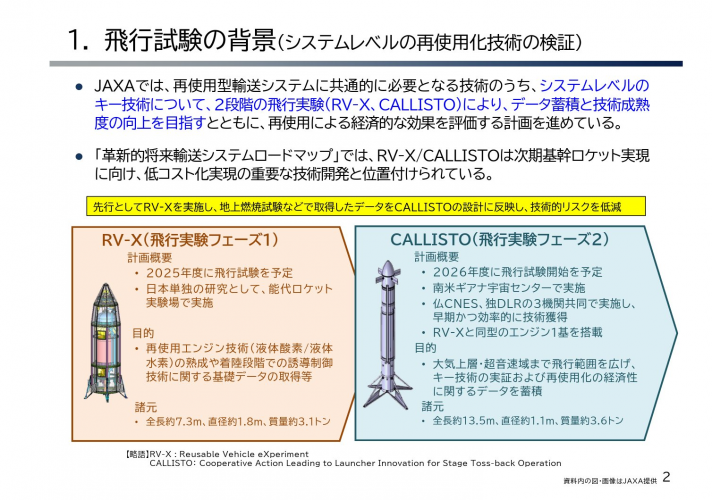
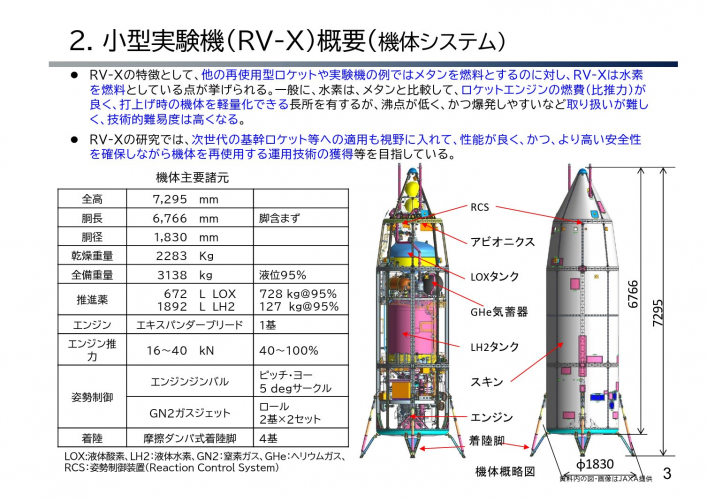
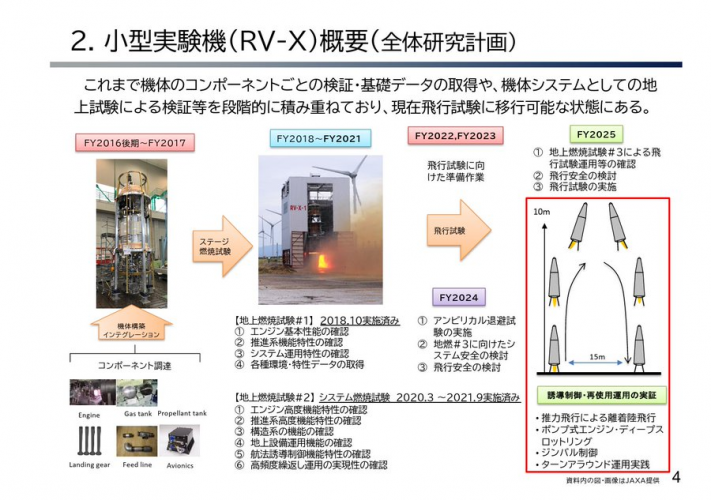
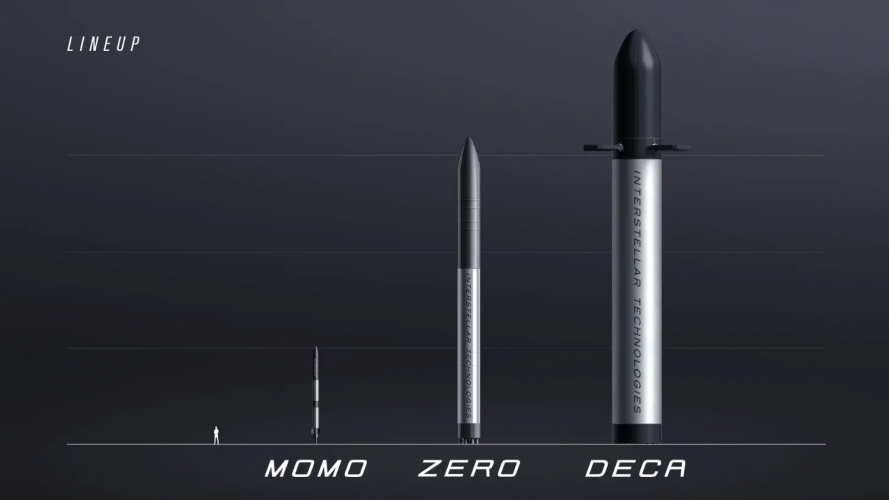
KAIROS launch anomaly, 5th March 2026:
View: https://youtu.be/EV-6wEfFczQ
With three consecutive failures, combined with the necessity of securing sponsors to finance the launch I suspect this will be the last we see of this launcher in action.
Private Japanese rocket comes up empty again, fails on 3rd-ever launch
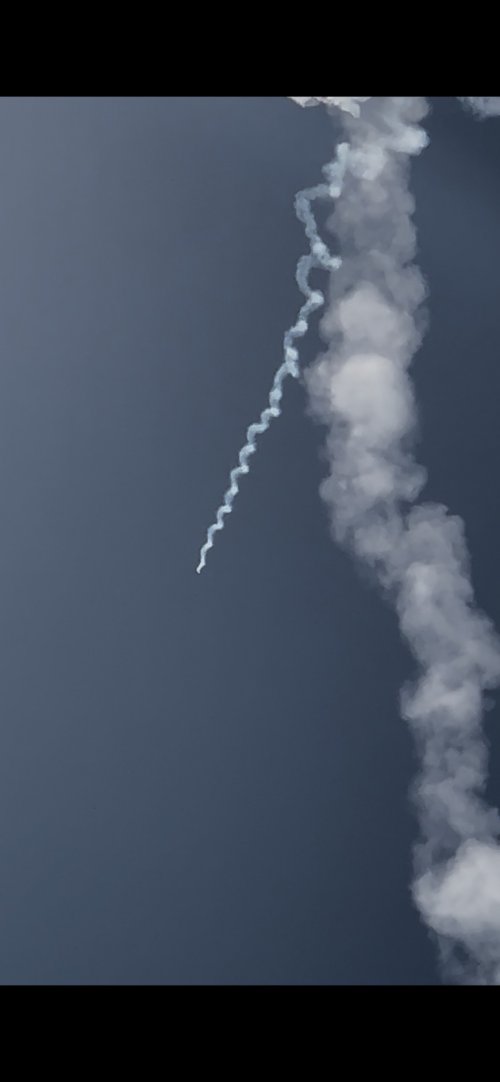
said the trouble is looks like by the AFTS.

At the press conference Q&AKAIROS launch anomaly, 5th March 2026:
JAXA Institute of Space and Astronautical Science
@ISAS_JAXA_EN
The Martian Moons eXploration (#MMX @mmx_jaxa_en) spacecraft has been successfully delivered to the JAXA Tanegashima Space Center! The mission will return a sample from the Martian moon, Phobos, and is scheduled to launch from Tanegashima in FY 2026.
Space development company Space Entry announced on Tuesday that it plans to put the Mobile Suit Gundam mascot character Haro aboard Kibō, the Japanese Experiment Module of the International Space Station (ISS),. Under its “Hello, Haro” mission, the company aims to send the “Minna no Haro” (Everyone's Haro) to the ISS to collect long-term data on the “feasibility of autonomous robots in outer space.”
About Enhanced Kairos
In addition to the "Current-Model Kairos"—which was utilized for the launches of the first through third vehicles—Space One is advancing the research and development of the "Enhanced Kairos." This enhanced model aims to boost launch capacity and improve the precision of satellite insertion into target orbits by upgrading the capabilities of the rocket's upper stage, including the incorporation of a methane-fueled engine. Concurrently, the company is proceeding with the expansion of launch facilities at "Spaceport Kii"—its proprietary launch site—to accommodate the Enhanced Kairos. While continuing the R&D of the Enhanced Kairos through the "Study on Upper Stage Capability Enhancement"—a project commissioned by the Ministry of Defense under an 8.5 billion yen contract—Space One aims to utilize this initiative to conduct flight demonstrations and further upgrade its launch site infrastructure.
After arrival at the JAXA Tanegashima Space Center’s Spacecraft Test & Assembly Building 2 (STA2), the #MMX spacecraft was unpacked from the shipping container! A crane was used to carefully lift the container and … a spacecraft was revealed!️
Overview of MMX Operation Preparation
MMX aims to be the world's first Martian sample return mission and is scheduled to launch in fiscal year 2026. Currently, the probe system is in the final stages of comprehensive flight model (FM) testing, and launch site operations will begin at the Tanegashima Space Center in April.
MMX is the largest and most complex sample return mission in the history of Japanese space science, and its operation must be far more challenging than any previous deep space exploration mission. Therefore, in order to minimize operational risks, we began operational considerations early in the development phase and focused on operational preparations.
As a core part of its operational preparation activities, MMX has established multiple operational working teams (WTs) to conduct operational studies, detailed design, and preparations for actual operation, including training plans, and has commenced operational training since last year. Another distinctive feature is the implementation of operational design CDRs (Detailed Design Review) and MORs (Mission Operational Readiness Review), which involve having the operational design results and operational preparation status reviewed from an external perspective.
MMX has developed a full software simulator (Integrated Spacecraft Simulator) that can simulate the dynamics of the spacecraft and the operation of the Integrated Mass Unit (SMU). This simulator is integrated into the ground system and used to verify operational procedures, as well as to conduct operational training using the simulator. From 2025, a flight version of the software will be implemented in the simulator, and it will be used for verification and training in a state closer to actual operation.
The operational training is planned to be conducted in three stages: a small-scale training exercise simulating a part of the operation with a minimum number of personnel, including the probe system manager, the navigation guidance and control system (GNC) manager, and the supervisor and commander who will direct the operation; a medium-scale training exercise with an operational structure on the scale of actual operations; and a large-scale training exercise that aligns with the timeline of actual operations and provides real-time functionality.
The training targets critical operations identified as important (initial launch critical, Martian orbital insertion, landing, Martian orbital departure, capsule separation, etc.), and small-scale training has been conducted so far, including nominal and offnominal exercises of initial launch critical operations and landing operations.
Currently, we are conducting the remaining small-scale training while identifying challenges and refining training methods for the medium-scale training that will begin in fiscal year 2026.
Regarding preparations for the operation of mission equipment
MMX will carry 11 scientific mission instruments and 2 instruments for acquiring exploration technology. These instruments have diverse observation methods, such as cameras, altitude measurement, and radiation measurement, and each has a different optimal observation timing. For example, some imaging instruments target the daytime surface of Phobos, while others investigate the Martian environment day and night. Furthermore, while data from some instruments will undergo data processing such as compression on board the spacecraft, there are constraints that prevent simultaneous observation and processing for some instruments. In addition, operational constraints such as downlink amount and processing time necessitate selecting and processing or downlinking only specific data. Therefore, in addition to the operating conditions of each instrument, it is necessary to consider the interference of observation, processing, and downlinking between multiple instruments, making the operation of MMX extremely complex.
In addition, the MMX probe is equipped with a data recorder in each of its exploration module, return module, and return capsule. Among these, the Recoverable Data Recorder (RDR), which is brought back to Earth, is one of MMX's distinguishing features. Because there are limitations to the amount of data that can be sent to Earth from the Martian sphere, large amounts of data are stored in this recorder and delivered to Earth along with collected samples in the capsule. However, obtaining information on the data storage status of this data recorder is difficult, so strict management of this large-capacity data recorder is necessary on Earth.
Thus, with MMX, it is important to adjust the observation timing and downlink priority for each instrument, and to plan observations, data transmission, and RDR read/write operations in advance. As one of the mission operation preparations being undertaken with MMX, we will introduce the "Data Recorder Address Management Tool." The data storage status on the spacecraft can be understood to some extent from the pointer information included in the bus system telemetry, but in some cases, it is necessary to decide which data to prioritize for processing or sending to the ground before receiving the telemetry. In addition, it is necessary to check when and under what conditions the incoming observation data was obtained by comparing it with information such as command history managed on the ground. For this reason, it is necessary to organize all related data, including not only telemetry but also ground system data management is crucial. This tool recreates the data storage status on the probe from the ground based on telemetry and command history. Furthermore, during the operational planning stage, it can assist in creating command parameters for processing and downlinking data specified by observation time and identification ID, and it can also investigate in advance how data will be saved and moved by anticipated commands. We expect that operational preparation, including this tool, will contribute to the success of MMX through future operational training, ground tests, and actual operations.
Launch Schedule of the 6th H3 Launch Vehicle (Type 30 Test Vehicle)
April 24, 2026 (JST)
Japan Aerospace Exploration Agency
The Japan Aerospace Exploration Agency (JAXA) hereby announces the scheduled launch of the 6th H3 Launch Vehicle (Type 30 Test Vehicle) as outlined below.
The 6th H3 Launch Vehicle will carry the Vehicle Evaluation Payload-5 (VEP-5) to conduct the flight demonstration. In addition, we will capitalize on the excess launch capability of the 6th H3 Launch Vehicle by providing launch and orbit insertion opportunities for 6 small secondary payloads (piggyback payloads), PETREL, STARS-X, BRO-22, VERTECS, HORN-L and HORN-R.
In response to the launch failure of the 8th H3 Launch Vehicle, final evaluations and inspections of the 6th H3 Launch Vehicle, including confirmation of the integrity of the Payload Separation System (PSS), will be conducted prior to liftoff. Furthermore, the additional flight data will be acquired to support the evaluation of the cause analysis and to improve the reliability of subsequent missions.
Launch Details
Launch date: June 10, 2026
Launch Window: 09:53:59 - 11:52:46 (JST)
*The time is the 24-hour clock
Reserved Launch Period:June 11, 2026 - June 30, 2026
Launch site:Yoshinobu Launch Complex, JAXA Tanegashima Space Center


