
You are using an out of date browser. It may not display this or other websites correctly.
You should upgrade or use an alternative browser.
You should upgrade or use an alternative browser.
Italian Dive Bomber Projects
- Thread starter hesham
- Start date

Airborne2001
ACCESS: Secret
- Joined
- 19 June 2020
- Messages
- 377
- Reaction score
- 541
Two Questions:
1. How heavy was the Fiat Cr. 44 supposed to be?
2. Why did the Ba. 88M, at least from what I have seen, have weaker engines than the Ba.88?
1. How heavy was the Fiat Cr. 44 supposed to be?
2. Why did the Ba. 88M, at least from what I have seen, have weaker engines than the Ba.88?

- Joined
- 26 May 2006
- Messages
- 38,289
- Reaction score
- 20,430
Hi,
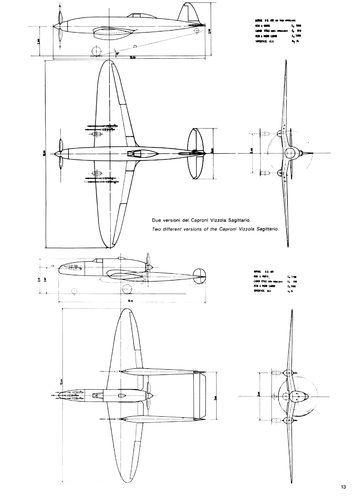
here is the Fiat CR.44 fightere bomber project and two Caproni
Vizzola dive bomber projects,also CANSA glider dive bomber project.
These projects were appeared in 1942,so for Caproni-Vizzola,may they took a higher number after later of its project F.7 ?!.
Last edited:
I don't have a reference at hand. But I seem to remember there was a reliability issue with the earlier engines.Two Questions:
1. How heavy was the Fiat Cr. 44 supposed to be?
2. Why did the Ba. 88M, at least from what I have seen, have weaker engines than the Ba.88?

tricci57
ACCESS: Restricted
- Joined
- 10 July 2019
- Messages
- 6
- Reaction score
- 6
Actally Tuffatori is a name or verb to define the dive. When you use the diving board on a pool, you "tuffi" or you are a "tuffatore" the Acapulco cliff divers they "tuffo" in the ocean, they do not bomb.Dear Silencer1,
"Picchiatelli" was a nickname, given from the italian crews, of the Junkers Ju 87 "Stuka" in Regia Aeronautica service. "Tuffatori" was the name of the aircraft type, a sort of italian word for the "dive-bomber" concept.
The italian aeronautical companies tried to develop a good dive-bomber, but with poor success. The problem was, from my point of view, that the headquarters of the Regia Aeronautica preferred a conventional horizontal speedy bomber and the dive-bomber solutions were not appreciated much: so the few aricraft aviable to make this role were generally nor improved or supported by the Air Minister.
The Regia Aeronautica, however, used a lot of aircraft as "assaltatori", a role like the air-support or air-attacker, but generally with old fighters, especially with the Fiat Cr.42 and the Macchi Mc 200, and the results were not so good.
Only the Breda Ba 65 saw a limited action in North Africa, bur the aircraft was too much old and obsolete to make good things.
I think that the Regia Aeronautica needed more fighters, able even to carry a bomb if necessary for ground support (like the Fw 190), and the dive-bomber aircraft was, for the italian industrial capacity, a luxury.
Off course this is just my thought
The Picchiatelli nickname is also depending on the context. It usually refreed to the "crackpot" the person that is a bit half crazy, Fiat CR.42or its a person with a bit of brain, between the amused and the extravagant, sometimes dissolutioned.
The assaltatore is the attacker; also assault, storm the field, rushed the field. the assaltatore was meant to be the aircraft on the attack mode.
The Breda65, also lacked manuevrability and just wasn't built to go up against hurricanes, spitfire, P-40 and alike. A lot of Italan pilots in the Northern Africa theatre always prefered the FIAT CR.42 and Macchi 200 insted of the Breda65, besides Breda never did build enough to support the effort.
The Italian general Staff in the Regia Aeronautica, never did place orders with FIAT, MAcchi, Breda or even the CRDA and others simply because the foresight was never there, and the resources to bring in to build he amount of aircraft was scarse and at best low and expensive. Other efforts went to the ground army machinery and the ships, if the resources where there, Italy could have had a larger marine fleet than dare I say? England. the technology on paper was there, the innovation and vision was there, the midnight oil for Italian engineers was available, but the General Staff kept the money purse tight to their chest. Anyway, I can go on and on .....let me know I love these discussions
tricci57
ACCESS: Restricted
- Joined
- 10 July 2019
- Messages
- 6
- Reaction score
- 6
nice try buddyA further explanation about the word "Picchiatelli". It is a pun made combining the word Picchiata (that means nosedive, but also beaten) and the popular utterance "Picchiatello" that means "nutty boy" (literally beaten in the head).
Silencer1
That now I am the Ruler of the Queen's Navee!
- Joined
- 3 August 2009
- Messages
- 943
- Reaction score
- 703

paolomiana
aviation freak since 1982
Hi all, we just released a book about the SIAI S.M.93. Text is both in Italian and English
for more info
https://gliarchiviritrovati.it/store/Blueprintfile-SIAI-S-M-93-Preordine-p599336767
for more info
https://gliarchiviritrovati.it/store/Blueprintfile-SIAI-S-M-93-Preordine-p599336767
- Joined
- 26 May 2006
- Messages
- 38,289
- Reaction score
- 20,430
View attachment 725607
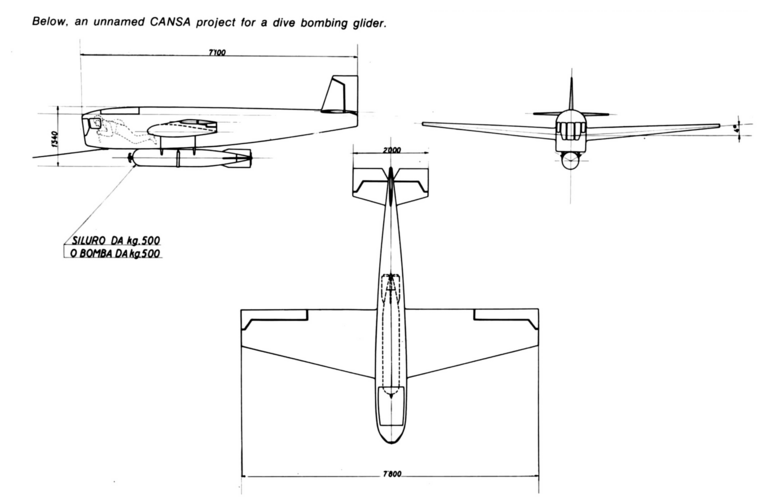
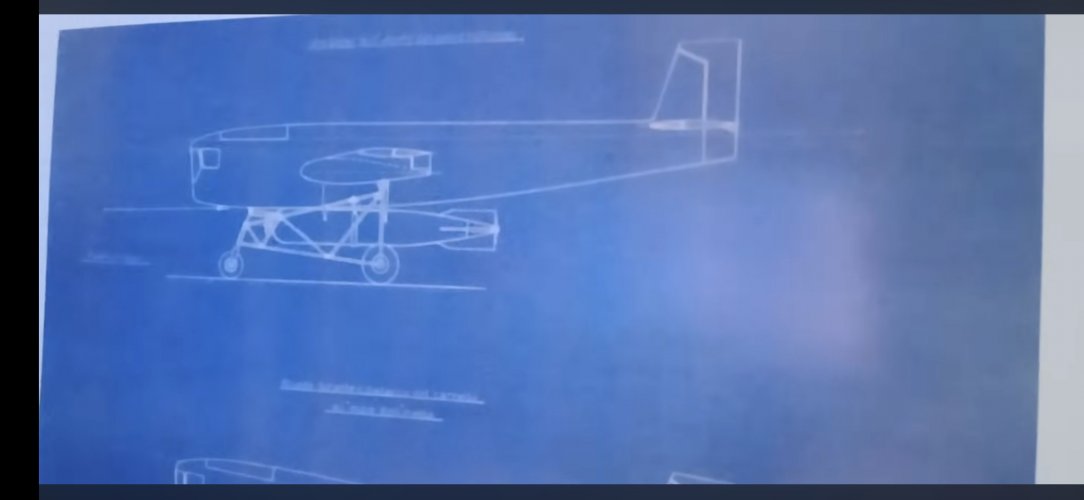
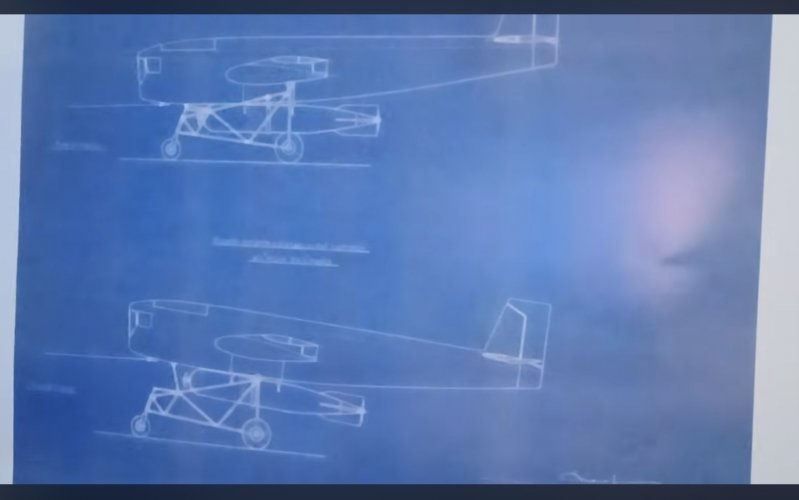
A better resolution image of the unnamed CANSA dive bombing glider, from Aerofan No.33 (March 1983).
We have it in post # 1.

- Joined
- 25 June 2009
- Messages
- 15,515
- Reaction score
- 9,447
PLEASE READ: "A better resolution image"We have it in post # 1.

archipeppe
ACCESS: Top Secret
- Joined
- 18 October 2007
- Messages
- 2,564
- Reaction score
- 3,918
A better resolution image of the unnamed CANSA dive bombing glider, from Aerofan No.33 (March 1983).
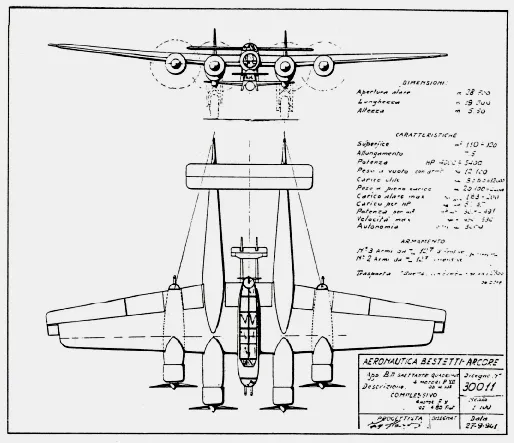
It looks really like the gliding part of the Bestetti-Nardi Saettante/Saetta duo.

Grey Havoc
ACCESS: USAP
- Joined
- 9 October 2009
- Messages
- 24,500
- Reaction score
- 18,176

lucamax
ACCESS: Secret
- Joined
- 2 March 2010
- Messages
- 336
- Reaction score
- 437
Hi all,
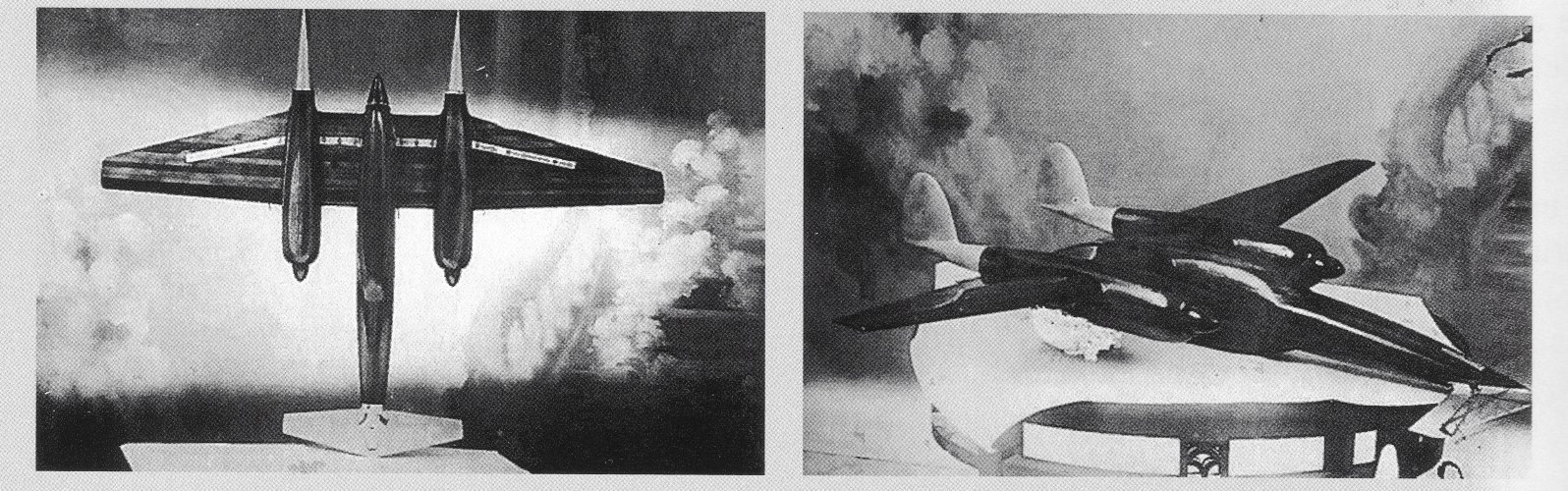
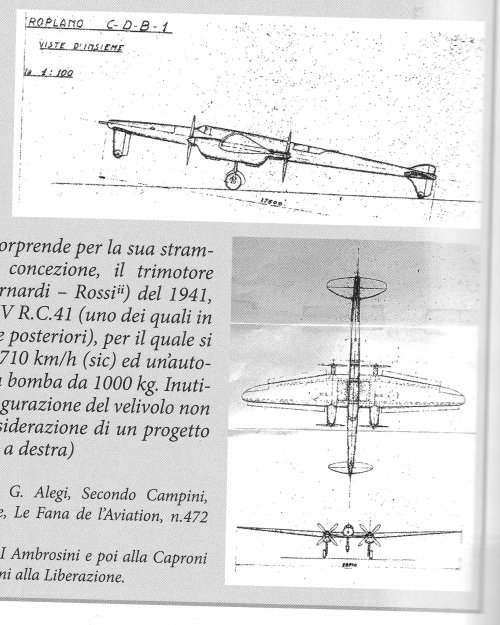
I've recently purchased the awsome book "Alcioni, Cicogne, Sparvieri e Picchiatelli", written by Giulio Cesare Valdonio, and in the chapter dedicated to dive assault / dive bomber projectsI discovered theese two unknown prohects: the Alfa Romeo G-2 and the Caproni - De Bernardi - Rossi.
Very little is known about that projects:
- Alfa Romeo G-2 was probably designed by Ing. Lorenzo Gatti while he was working at Pomigliano d'Arco. The pictures was casually discovered at the Politecnico di Torino.
- Caproni - De Bernardi - Rossi, dated 1941. was a 3-engine equipped with 3 Isotta Fraschini Delta IV R.C. 41 (one of them was in the fuselage and powered 2 pushing propellers). Was expected 710 km/h of max speed and a 1.400 km range with 1.000 kg of bombs.
The quality of the book printing is not so good, so I tried my best to scan..
Cheers!
I've recently purchased the awsome book "Alcioni, Cicogne, Sparvieri e Picchiatelli", written by Giulio Cesare Valdonio, and in the chapter dedicated to dive assault / dive bomber projectsI discovered theese two unknown prohects: the Alfa Romeo G-2 and the Caproni - De Bernardi - Rossi.
Very little is known about that projects:
- Alfa Romeo G-2 was probably designed by Ing. Lorenzo Gatti while he was working at Pomigliano d'Arco. The pictures was casually discovered at the Politecnico di Torino.
- Caproni - De Bernardi - Rossi, dated 1941. was a 3-engine equipped with 3 Isotta Fraschini Delta IV R.C. 41 (one of them was in the fuselage and powered 2 pushing propellers). Was expected 710 km/h of max speed and a 1.400 km range with 1.000 kg of bombs.
The quality of the book printing is not so good, so I tried my best to scan..
Cheers!
Attachments
- Joined
- 26 May 2006
- Messages
- 38,289
- Reaction score
- 20,430
- Alfa Romeo G-2 was probably designed by Ing. Lorenzo Gatti while he was working at Pomigliano d'Arco. The pictures was casually discovered at the Politecnico di Torino
Amzing find my dear Lucamax,
and can I ask you about this one,if it was related to Ambrosini
or not ?.
lucamax
ACCESS: Secret
- Joined
- 2 March 2010
- Messages
- 336
- Reaction score
- 437
Don't know. According to the author the project was just a twin engine canard bomber made by Alfa Romeo.Amzing find my dear Lucamax,
and can I ask you about this one,if it was related to Ambrosini
or not ?.
No others documents or information are available.
Airborne2001
ACCESS: Secret
- Joined
- 19 June 2020
- Messages
- 377
- Reaction score
- 541
Savoia-Marchetti tried to fix it, but it wasn't seen as good enough by the Regia Aeronautica higher ups:
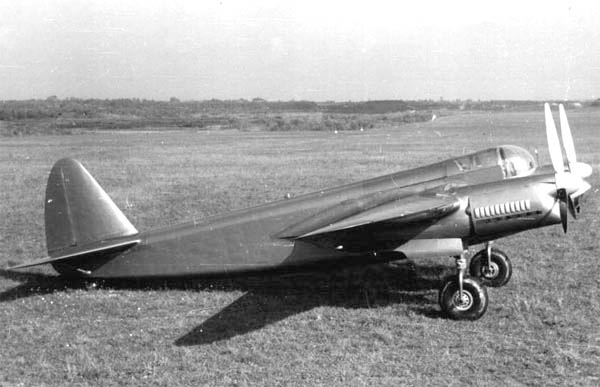
This is the SM.86. It was much faster, wasn't underpowered, and it actually functioned more properly. The main issues were the lack of a rear facing turret and the low bombload. Also, it was only fast in comparison with the SM.85, when it reality its speed was on par with the single engine fixed-landing gear Stuka. It saw service tests of Greece in the hopes of getting a production order, but it failed to attract interest. Isotta-Fraschini Deltas or even Assos as replacements would've allowed for a higher speed, a turret, and a bigger bombload.
Last edited:
- Joined
- 26 May 2006
- Messages
- 38,289
- Reaction score
- 20,430
here is the Breda Ba.201 alternative cockpit position drawings A & B,but the drawing "A" was actually built.
As we know in this competition for dive bomber,the main tenders
were;
CANSA FC.12,Caproni Ca.355,Savoia SM.93,Piaggio P.122 and Breda Ba.201.

!Mark
ACCESS: Confidential
- Joined
- 4 August 2019
- Messages
- 177
- Reaction score
- 291
Amazing find, now I want to purchase this book too! Are there more rare and unknown projects described in the book?Hi all,
I've recently purchased the awsome book "Alcioni, Cicogne, Sparvieri e Picchiatelli", written by Giulio Cesare Valdonio, and in the chapter dedicated to dive assault / dive bomber projectsI discovered theese two unknown prohects: the Alfa Romeo G-2 and the Caproni - De Bernardi - Rossi.
Very little is known about that projects:
- Alfa Romeo G-2 was probably designed by Ing. Lorenzo Gatti while he was working at Pomigliano d'Arco. The pictures was casually discovered at the Politecnico di Torino.
- Caproni - De Bernardi - Rossi, dated 1941. was a 3-engine equipped with 3 Isotta Fraschini Delta IV R.C. 41 (one of them was in the fuselage and powered 2 pushing propellers). Was expected 710 km/h of max speed and a 1.400 km range with 1.000 kg of bombs.
The quality of the book printing is not so good, so I tried my best to scan..
Cheers!
lucamax
ACCESS: Secret
- Joined
- 2 March 2010
- Messages
- 336
- Reaction score
- 437
Dear,Amazing find, now I want to purchase this book too! Are there more rare and unknown projects described in the book?
the book is outstanding and it covers a lot of italian bombers airplanes and projects.
The volume is similar to the book "Frecce, saette, folgori e veltri. Storia critica dei Caccia italiani della seconda guerra mondiale", which is dedicated to fighters.
I suggest you to by both!
If you want I can send you the index of the book.
But...... here the darkside of the volume: the book is printed with low quality. The pictures and expecially the drawings are in low resolution, so you can se a lot of pixels.
I'm very angry about the editor choise to print with such bad quality "paper and ink" (expecially if you think that the volme is edited by Rivista Aeronautica...).
Anyway: take the books, because the quality of the research and the text are at the top!
Cheers.
!Mark
ACCESS: Confidential
- Joined
- 4 August 2019
- Messages
- 177
- Reaction score
- 291
View attachment 725607
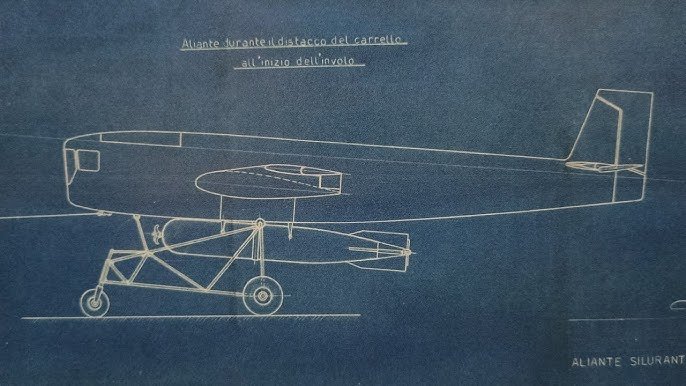
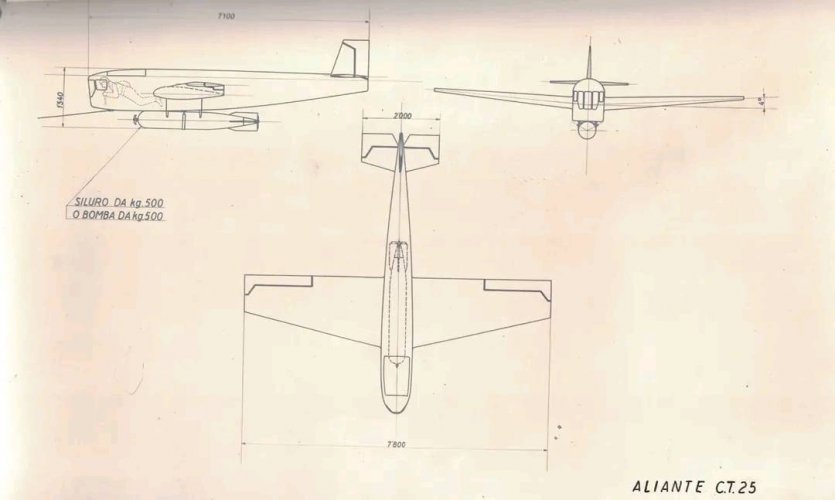
A better resolution image of the unnamed CANSA dive bombing glider, from Aerofan No.33 (March 1983).
Apparently it's name was CANSA Aliante Silurante CT 25, it also had a detachable undercarriage with 3 wheels.
I've known this project for many years but only now found this extra info, and these images are also quite new
Attachments
Similar threads
-
Caproni Vizzola Sagittario Dive Bomber Project
- Started by Ankarus
- Replies: 1
-
 Regia Aeronautica's DSSE « Guidonia I » high altitude bomber (1938)
- Started by Stargazer
- Replies: 6
-
 Regia Aeronautica Long Range Bomber Competition - 1938
- Started by Antonio
- Replies: 51
-
 Programma Bombardieri Normali (Normal Bomber Program)
- Started by lucamax
- Replies: 26
-
