
You are using an out of date browser. It may not display this or other websites correctly.
You should upgrade or use an alternative browser.
You should upgrade or use an alternative browser.
Fisher's Warship Proposals
- Thread starter Tzoli
- Start date

Mera A Firewing
ACCESS: Confidential
- Joined
- 26 February 2024
- Messages
- 58
- Reaction score
- 40
I use a tablet.It's DA's thing you had to check them in a PC browser or see them in PC browser mode in mobile phones. This error only applies to cellphone browsers
Mera A Firewing
ACCESS: Confidential
- Joined
- 26 February 2024
- Messages
- 58
- Reaction score
- 40
It turns alot of people are having the same issues of the show full description not showing up, could be a glitch or something.Same.
Looks to only be a issue on phones and tablets, fine on pc. Seems to be some sort of bug because it worked fine last week and some of the text is getting cut off half way.I'm not having any issues viewing them with Firefox.

00-PureEvil-00
ACCESS: Confidential
- Joined
- 5 September 2021
- Messages
- 69
- Reaction score
- 145
What's even more strange, is that I can open full post descriptions in mobile browser... but not for Tzoli's posts. Like DA has something against Tzoli personally.
Well that is wired because it doesn't work anymore for me.What's even more strange, is that I can open full post descriptions in mobile browser... but not for Tzoli's posts. Like DA has something against Tzoli personally.
Last edited:
Well that is wired because it doesn't work for anyone for me.
You might want to check your wiring, then.
 It does work for me.
DRW

- Joined
- 22 April 2012
- Messages
- 2,274
- Reaction score
- 2,848
Fisher recycled the HMS Uncatchable name for the destroyer leader/scout HMS Swift. In late 1911/early 1912 he advocated for, via Churchill, a Super-Swift for which details are scant but:
37 knots
6 x 4" guns
600 tons of oil; apparently sufficient for an endurance of 2,400nm at 16 knots
Cost: £250,000
There was an armoured version with 2" of tensile steel around all the vitals with "great strengthening" of the general structure for a cost of 160 tons, 0.75 of a knot in speed, and an extra £2,200. The Arethusa's were ordered instead.
At the same time, in the same letters, Fisher also discussed a Super-Lion with Churchill:
30 knots
Oil fired
10 "improved" guns (I assume these to be the 15" given the timing)
10 submerged torpedo tubes
"Size and subdivision" over armour
Cost: £1,995,000
Fisher also advocated for a "Super-Submarine", presumably some variation of the 1,000 ton patrol boats, e.g. the enlarged 'E' class proposals, that culminated in the Nautilus. Fisher viewed the Super-Swift as a scout for the Super-Submarine. Combined with the Super-Lion they were the only ships Fisher believed should have been in the 1912/13 programme.
37 knots
6 x 4" guns
600 tons of oil; apparently sufficient for an endurance of 2,400nm at 16 knots
Cost: £250,000
There was an armoured version with 2" of tensile steel around all the vitals with "great strengthening" of the general structure for a cost of 160 tons, 0.75 of a knot in speed, and an extra £2,200. The Arethusa's were ordered instead.
At the same time, in the same letters, Fisher also discussed a Super-Lion with Churchill:
30 knots
Oil fired
10 "improved" guns (I assume these to be the 15" given the timing)
10 submerged torpedo tubes
"Size and subdivision" over armour
Cost: £1,995,000
Fisher also advocated for a "Super-Submarine", presumably some variation of the 1,000 ton patrol boats, e.g. the enlarged 'E' class proposals, that culminated in the Nautilus. Fisher viewed the Super-Swift as a scout for the Super-Submarine. Combined with the Super-Lion they were the only ships Fisher believed should have been in the 1912/13 programme.
Last edited:
Mera A Firewing
ACCESS: Confidential
- Joined
- 26 February 2024
- Messages
- 58
- Reaction score
- 40
In regards to the Incomparable designs and those that use diesel engines so how many diesel engines are need to power each of the designs?
Last edited by a moderator:

- Joined
- 1 February 2011
- Messages
- 3,348
- Reaction score
- 5,043
One on each shaft for the first designs and two on the very fast ones.
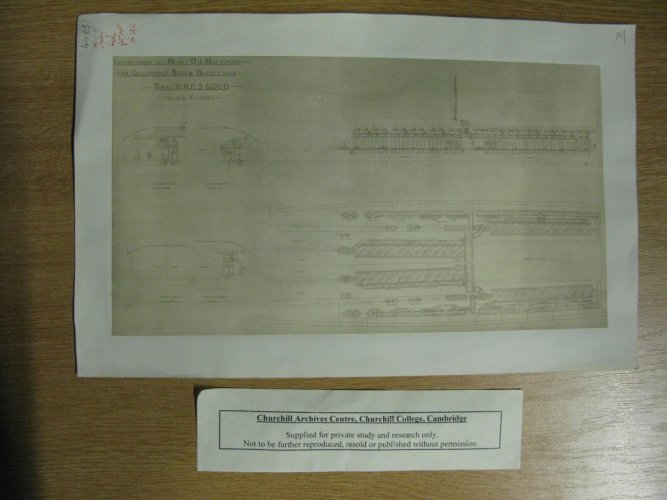
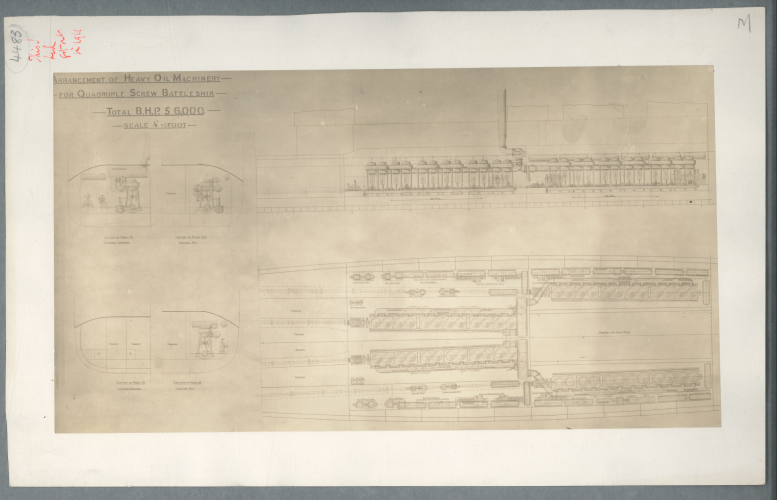
Will post the original drawings for the early versions and my friend's interpretation of the hull on the faster ones.
Will post the original drawings for the early versions and my friend's interpretation of the hull on the faster ones.
Last edited:
Mera A Firewing
ACCESS: Confidential
- Joined
- 26 February 2024
- Messages
- 58
- Reaction score
- 40
Like what manufacturer would've made those diesel engines and if so are they the cathedral type, I just want to know about that detail.One on each shaft for the first designs and two on the very fast ones.
Will post the original drawings for the early versions and my friend's interpretation of the hull on the faster ones.
Like what manufacturer would've made those diesel engines and if so are they the cathedral type, I just want to know about that detail.
I share your curiosity about the diesels. I have long suspected that Fisher overestimated the power and underestimated the weight for the diesels of the day. Marine diesels were still a relatively new technology at that point, and I don't know of any contemporary (WW1, 1920s) diesels that could have delivered what Fisher wanted.
DRW
Firefinder
ACCESS: Top Secret
- Joined
- 5 October 2019
- Messages
- 1,262
- Reaction score
- 2,388
The only one That likely could was a double acting one undergoing testing.I share your curiosity about the diesels. I have long suspected that Fisher overestimated the power and underestimated the weight for the diesels of the day. Marine diesels were still a relatively new technology at that point, and I don't know of any contemporary (WW1, 1920s) diesels that could have delivered what Fisher wanted.
DRW
By MAN.
Aka Maschinenfabrik Augsburg-Nürnberg.
A German Company.
For the High Seas Fleet.
Which is... Yeah...
https://oldmachinepress.com/2017/12/20/man-double-acting-diesel-marine-engines/
- Joined
- 1 February 2011
- Messages
- 3,348
- Reaction score
- 5,043
No, it would be of a Vickers design, under development at that time.
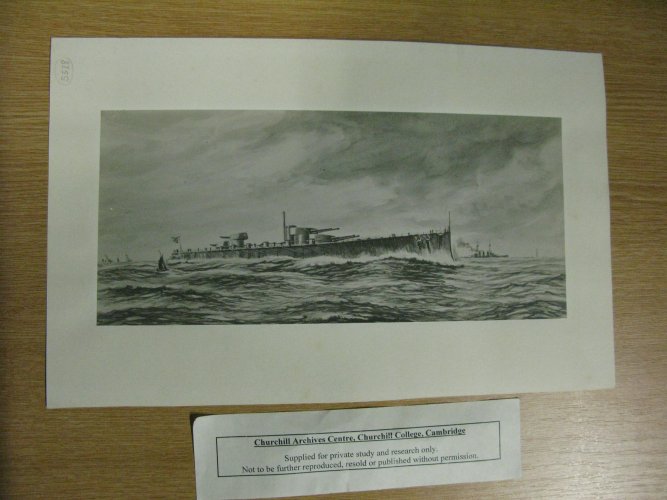
Vickers Design 623 aka Incomparable Design A:
Artist Impression of the time:

View attachment V623.dwg-1.png
Vickers Design 623 aka Incomparable Design A:
Artist Impression of the time:
View attachment V623.dwg-1.png
Attachments
Last edited:
- Joined
- 1 February 2011
- Messages
- 3,348
- Reaction score
- 5,043
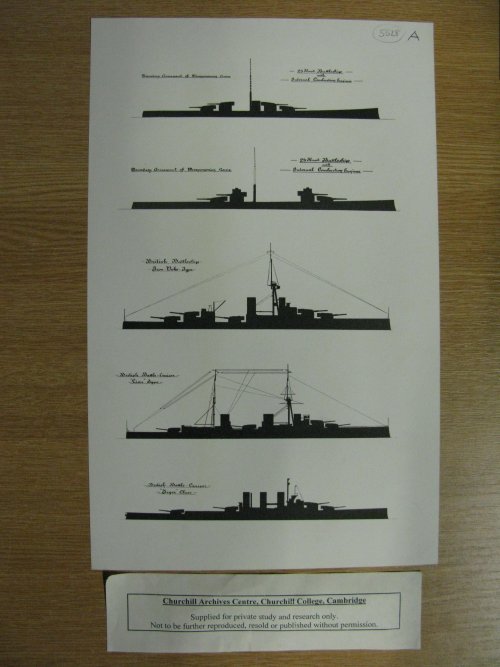
Silhouettes:

Also these threads could be useful:
https://www.tapatalk.com/groups/all...wered-g3-battle-cruiser-t8853-s75.html#p27386https://www.tapatalk.com/groups/alltheworldsbattlecruisers/viewtopic.php?p=27947#p27947https://www.tapatalk.com/groups/alltheworldsbattlecruisers/viewtopic.php?p=20384#p20384
Also these threads could be useful:
https://www.tapatalk.com/groups/all...wered-g3-battle-cruiser-t8853-s75.html#p27386https://www.tapatalk.com/groups/alltheworldsbattlecruisers/viewtopic.php?p=27947#p27947https://www.tapatalk.com/groups/alltheworldsbattlecruisers/viewtopic.php?p=20384#p20384
Last edited:
Mera A Firewing
ACCESS: Confidential
- Joined
- 26 February 2024
- Messages
- 58
- Reaction score
- 40
Maybe Harland & Wolff or Vickers would've made them?I share your curiosity about the diesels. I have long suspected that Fisher overestimated the power and underestimated the weight for the diesels of the day. Marine diesels were still a relatively new technology at that point, and I don't know of any contemporary (WW1, 1920s) diesels that could have delivered what Fisher wanted.
DRW

Grey Havoc
ACCESS: USAP
- Joined
- 9 October 2009
- Messages
- 24,510
- Reaction score
- 18,190
Though Harland & Wolff didn't really get in to the in-house manufacture of such engines until around 1921.
The only one That likely could was a double acting one undergoing testing.
By MAN.
Aka Maschinenfabrik Augsburg-Nürnberg.
A German Company.
For the High Seas Fleet.
Which is... Yeah...
https://oldmachinepress.com/2017/12/20/man-double-acting-diesel-marine-engines/
IIRC, the diesels being proposed were a Vickers proposal and described as 'skeletal' by the person looking through the Fisher Papers.
From John French on the Battlecruisers board
A very interesting design feature of the Vickers battleship diesels is the fact that they are modular units. Each module consists of four 70-inch, 2,500hp cylinders. To increase HP, additional modules are simply attached in series. The V-F designs use four, three module engines; each producing 15,000bhp. Obviously, there are practical limits on how long an engine inside a ship can be. Four modules appear to be the maximum practical length for a single engine compartment, although it may be possible to insert transverse bulkheads between modules and allow a single engine to run through multiple compartments.
Another design feature that radically departs from what I would consider a normal diesel engine is that these modules are skeletal constructions. They are literally stripped to the bone leaving the crankshaft and piston rods in full view. The crankshaft bed is connected to the cylinder housings only by twelve tubular supports. Compared to more regular diesel engine design, such as those used on Deutschland class panzerschiffe, this diesel system should be very lightweight. The probable aim being; the less weight absorbed by machinery, the more weight available for other aspects of a warship design such as firepower and armour protection. The V-T design carries more and thicker armour than the Admiralty Queen Elizabeth design and both have the capacity to carry 8x16-inch guns instead of 8x15-inch guns: armour and firepower superiorities that arise from the more compact diesel machinery.
They are described in one of the posts by John French on the Battlescruisers board listed above by Tzoli , though not sure which
Last edited:
IIRC, the diesels being proposed were a Vickers proposal and described as 'skeletal' by the person looking through the Fisher Papers.
From John French on the Battlecruisers board
A very interesting design feature of the Vickers battleship diesels is the fact that they are modular units. Each module consists of four 70-inch, 2,500hp cylinders. To increase HP, additional modules are simply attached in series. The V-F designs use four, three module engines; each producing 15,000bhp. Obviously, there are practical limits on how long an engine inside a ship can be. Four modules appear to be the maximum practical length for a single engine compartment, although it may be possible to insert transverse bulkheads between modules and allow a single engine to run through multiple compartments.
Another design feature that radically departs from what I would consider a normal diesel engine is that these modules are skeletal constructions. They are literally stripped to the bone leaving the crankshaft and piston rods in full view. The crankshaft bed is connected to the cylinder housings only by twelve tubular supports. Compared to more regular diesel engine design, such as those used on Deutschland class panzerschiffe, this diesel system should be very lightweight. The probable aim being; the less weight absorbed by machinery, the more weight available for other aspects of a warship design such as firepower and armour protection. The V-T design carries more and thicker armour than the Admiralty Queen Elizabeth design and both have the capacity to carry 8x16-inch guns instead of 8x15-inch guns: armour and firepower superiorities that arise from the more compact diesel machinery.
Interesting. Were any of these "skeletal" diesels ever built?
DRW
Interesting. Were any of these "skeletal" diesels ever built?
DRW
Not that I know of, not sure if any more was found on them that I missed on the Battlecruisers board.
Not that I know of, not sure if any more was found on them that I missed on the Battlecruisers board.
Hmm. Then there's no telling how well they would have worked. In theory, they could work, but there's always the possibility of unforeseen problems.
DRW
- Joined
- 5 May 2007
- Messages
- 2,024
- Reaction score
- 4,298
Given the description of the proposed engines, I'd revise that to 'likelihood', if not 'certainty', of unforeseen problems.Hmm. Then there's no telling how well they would have worked. In theory, they could work, but there's always the possibility of unforeseen problems.
DRW
- Joined
- 1 February 2011
- Messages
- 3,348
- Reaction score
- 5,043
Second photo, here:Given the description of the proposed engines, I'd revise that to 'likelihood', if not 'certainty', of unforeseen problems.
Firefinder
ACCESS: Top Secret
- Joined
- 5 October 2019
- Messages
- 1,262
- Reaction score
- 2,388
It looks like they try to build a diesel out of a Steam Piston engine.
That's...
Oh that going to cause nightmares.
It will run but after a few days at best the stresses are going to warp that frame into a mess.
There's a reason why diesel engines are fully in closed. Sure open crank diesels WERE a thing, but they generally were single or double cylinders.
Steam can get away with being open due to it being a fairly smooth expansion.
Diesel is an explosion with all that implies.
To say nothing of all the junk that got into the workings.
That's...
Oh that going to cause nightmares.
It will run but after a few days at best the stresses are going to warp that frame into a mess.
There's a reason why diesel engines are fully in closed. Sure open crank diesels WERE a thing, but they generally were single or double cylinders.
Steam can get away with being open due to it being a fairly smooth expansion.
Diesel is an explosion with all that implies.
To say nothing of all the junk that got into the workings.
- Joined
- 5 May 2007
- Messages
- 2,024
- Reaction score
- 4,298
Likely including various extremities of engineering artificers.To say nothing of all the junk that got into the workings.
- Joined
- 1 February 2011
- Messages
- 3,348
- Reaction score
- 5,043
Here.Silhouettes:
View attachment 785869
Also these threads could be useful:
https://www.tapatalk.com/groups/all...wered-g3-battle-cruiser-t8853-s75.html#p27386https://www.tapatalk.com/groups/alltheworldsbattlecruisers/viewtopic.php?p=27947#p27947https://www.tapatalk.com/groups/alltheworldsbattlecruisers/viewtopic.php?p=20384#p20384
As for why: Reducing silhouette to the absolute minimum. The less thick and tall objects on the hull the more difficult for the enemy to spot the ship. Telescopic mack (mast+stack) which would be retracted before battle, Diesel smoke already barely visible compared to coal smoke would aid tge "stealthiness" of the ship as well.
- Joined
- 1 February 2011
- Messages
- 3,348
- Reaction score
- 5,043
That is we are not sure. As the silhoutte drawing exists, and paintings of the other proposals too exists, as well as the diesel engine arrangement drawings, implies that detailed drawings was likely created. As to where these are stored we do not know.I see. I imagine not much work was done to determine how that would function in combat, what with all the turret mechanisms below the bridge. Thanks for the links!
As a sidenote my friend suggests that the model displayed in the hall of the Fisher Residence at Kilverstone Hall was actually not of the battlecruiser Renown but actually HMS Citadel (the commonly mis-interpreted HMS Incomparable with 3x2 18" cannons on a Renown like hull)
Similar threads
-
-

-
-
Postwar Royal Navy Battleships? (NOT including the Vanguard!)
- Started by Blacktail
- Replies: 82
-